
Biochemical transformation of Vigna radiata L. «Zhasyl dan» seeds under fermentation with the application of sucrose
Journal: Bulletin of Almaty Technological University @vestnik-atu
Section: Технология пищевой и перерабатывающей промышленности
Article in issue: 1 (151), 2026.
Free access
This study presents the results of investigating the effect of sucrose on the amino acid composition of germinated mung bean seeds of the ‘Zhasyl dän’ variety. Particular attention was paid to the dynamics of essential amino acids (EAA), which determine the biological value of the product. Control samples without sucrose and experimental variants with the addition of 2% sucrose were analyzed at 24, 48, and 72 hours of germination. The results showed that the germination process is accompanied by significant changes in the amino acid profile, with sucrose acting as a stimulating factor. The most intensive changes were observed between 24–48 hours, when the maximum accumulation of both essential and some non-essential amino acids was recorded. In particular, the content of leucine + isoleucine increased from 2895 to 3654 mg/100 g, lysine from 1523 to 1838 mg/100 g, phenylalanine from 1486 to 1836 mg/100 g, and valine from 1178 to 1459 mg/100 g. In the control samples, the increase in these amino acids was less pronounced. Additionally, an increase in aspartic acid + asparagine was observed (from 2658 to 3315 mg/100 g), while glutamic acid + glutamine increased from 3966 to 4916 mg/100 g, confirming the activation of nitrogen metabolism and enhanced proteolytic processes during germination. Visualization using graphs and a heatmap confirmed that sucrose enhances the metabolic activity of sprouts, resulting in higher accumulation of free amino acids. The obtained results demonstrate that sucrose supplementation during mung bean germination is an effective method to improve their nutritional value and can be applied in the development of functional food products.
Similar articles in the section Communication and transport industries. Accountancy. Business management. Public relations
Short address: https://sciup.org/140314144
IDS: 140314144 | UDC: 65.09.05 | DOI: 10.48184/2304-568X-2026-1-26-32
Биохимическая трансформация семян Vigna radiata L. сорта «Жасыл дән» в условиях ферментации с применением сахарозы
В данном исследовании представлены результаты изучения влияния сахарозы на аминокислотный состав пророщенных семян маша сорта «Жасыл дән». Особое внимание уделено динамике незаменимых аминокислот (EAA), которые определяют биологическую ценность продукта. Анализу подвергались контрольные образцы без сахарозы и экспериментальные варианты с добавлением 2% сахарозы через 24, 48 и 72 часа проращивания. Результаты показали, что процесс проращивания сопровождается значительными изменениями аминокислотного профиля, при этом сахароза выступает как стимулирующий фактор. Наиболее интенсивные изменения наблюдались в интервале 24–48 часов, когда фиксировалось максимальное накопление как незаменимых, так и некоторых заменимых аминокислот. Так, содержание лейцина и изолейцина увеличилось с 2895 до 3654 мг/100 г, лизина — с 1523 до 1838 мг/100 г, фенилаланина — с 1486 до 1836 мг/100 г, а валина — с 1178 до 1459 мг/100 г. В контрольных образцах прирост этих аминокислот был менее выраженным. Дополнительно отмечено повышение содержания аспарагиновой кислоты и аспарагина (с 2658 до 3315 мг/100 г) и глутаминовой кислоты и глутамина (с 3966 до 4916 мг/100 г), что подтверждает активизацию азотного обмена и усиление протеолитических процессов в ходе проращивания. Визуализация в виде графиков и тепловой карты подтвердила, что сахароза усиливает метаболическую активность проростков, обеспечивая более высокое накопление свободных аминокислот. Полученные данные показывают, что добавление сахарозы при проращивании семян маша является эффективным способом повышения их пищевой ценности и может быть использовано при разработке функциональных продуктов питания.
Сахароза қолданылған ферментация жағдайында Vigna radiata L. «Жасыл дән» тұқымдарының биохимиялық трансформациясы
Бұл зерттеуде «Жасыл дән» сортының маш тұқымдарын өндіру кезінде сахарозаның аминқышқылдық құрамға әсері зерттелді. Өнімнің биологиялық құндылығын анықтайтын алмастырылмайтын амин- қышқылдарының (EAA) динамикасына ерекше назар аударылды. Талдауға сахарозасыз бақылау үлгілері және өндірудің 24, 48 және 72 сағатында 2% сахароза қосылған тәжірибелік нұсқалар алынды. Нәтижелер өндіру процесі аминқышқылдық профильдің елеулі өзгерістерімен қатар жүретінін көрсетті, бұл кезде сахароза ынталандырушы фактор ретінде әрекет етеді. Ең қарқынды өзгерістер 24–48 сағат аралығында байқалды, бұл кезде алмастырылмайтын және кейбір алмастырылатын аминқышқылдарының ең жоғары жинақталуы тіркелді. Атап айтқанда, лейцин және изолейциннің мөлшері 2895-тен 3654 мг/100 г-ға, лизиннің мөлшері 1523- тен 1838 мг/100 г-ға, фенилаланиннің мөлшері 1486-дан 1836 мг/100 г-ға, ал валиннің мөлшері 1178-ден 1459 мг/100 г-ға дейін артты. Бақылау үлгілерінде бұл аминқышқылдарының өсуі айтарлықтай төмен болды. Сонымен қатар аспарагин қышқылы мен аспарагиннің мөлшері 2658-ден 3315 мг/100 г-ға, ал глутамин қышқылы мен глутаминнің мөлшері 3966-дан 4916 мг/100 г-ға дейін артқаны байқалды, бұл азот алмасуының белсенділенуін және өндіру барысында протеолитикалық процестердің күшеюін көрсетеді. Графиктер мен жылу картасы түріндегі визуализация сахарозаның өскіндердің метаболикалық белсенділігін күшейтетінін және бос аминқышқылдарының жоғары жинақталуын қамтамасыз ететінін растады. Алынған нәтижелер маш тұқымдарын өндіру кезінде сахароза қосудың олардың тағамдық құндылығын арттырудың тиімді әдісі екенін және функционалды тағам өнімдерін әзірлеуде қолдануға болатынын көрсетеді.
Text of the scientific article Biochemical transformation of Vigna radiata L. «Zhasyl dan» seeds under fermentation with the application of sucrose
IRSTI: 65.09.05
Protein is a major macronutrient essential for growth, tissue repair, and metabolic regulation. For adults, the recommended daily intake is 0.8–1.0 g/kg of body weight, or on average 50–70 g [1]. Protein deficiency in the diet is associated with underweight, impaired development of muscle and bone tissue, weakened immunity, and reduced cognitive functions. In countries with limited access to animal proteins, plant sources serve as a key factor in ensuring nutritional security [2].
Mung bean seeds ( Vigna radiata L.) are considered a promising source of plant protein, with a dry matter content of 21–24 g/100 g. An important advantage of mung beans is their balanced amino acid composition: along with high levels of aspartic and glutamic acids (up to 2.5–3.0 g/100 g each), the grain contains significant amounts of lysine (1.5–1.7 g/100 g) and leucine (1.7–1.9 g/100 g), which are deficient in most cereals [3]. Moreover, the protein digestibility coefficient exceeds 85% [4]. Thus, mung beans are among the most balanced legumes in terms of amino acid profile.
Fermentation is a process in which both endogenous and microbial enzymes are activated, leading to protein hydrolysis and accumulation of free amino acids. According to the literature, the total concentration of free amino acids in legumes increases by 20–40% after fermentation [5]. For example, leucine content in germinated mung beans after 48 h of fermentation increases from 1.7 to 2.3 g/100 g, lysine from 1.6 to 2.1 g/100 g, and threonine from 0.7 to 1.0 g/100 g [6]. This increase is explained by the activation of proteases and transaminases, which break down storage proteins into more digestible forms. In addition, fermentation reduces antinutrients such as protease inhibitors and phytates, which limit amino acid and mineral absorption. Thus, fermentation is considered a promising approach to enhancing the biological value of legume proteins [7]. The addition of sucrose to the fermentation medium has a dual effect. First, sucrose serves as an energy source for microorganisms and stimulates their metabolic activity. Second, the presence of carbohydrates accelerates seed germination and activates endogenous enzymatic systems. Studies show that when 2% sucrose is introduced into the germination medium, a rapid increase in free amino acids is observed: aspartic acid rises by 18%, glutamic acid by 22%, and lysine by 25% compared to the control without sucrose [8]. The most pronounced changes are recorded at 48 h, when the total amino acid pool reaches its maximum and the proportion of essential amino acids increases by 15– 20%. These results confirm that sucrose plays a key role in regulating biochemical processes, ensuring optimal conditions for amino acid accumulation.
Despite numerous publications on legume fermentation, systematic studies on the effect of sucrose on the amino acid profile of mung beans of specific varieties remain scarce. For the variety Vigna radiata L. ‘Zhasyl dan’, common in Kazakhstan, such data are lacking. Yet varietal characteristics may significantly affect germination rate, enzyme activity, and the pattern of amino acid changes.
This article presents an analysis of the content of 17 amino acids in Vigna radiata L. ‘Zhasyl dan’ seeds fermented with sucrose. The study covers four time points—0, 24, 48, and 72 h—allowing us to trace the dynamics of protein biochemical transformations. The aim of the study is to identify patterns of amino acid composition changes and to determine the optimal time for maximum accumulation of free amino acids under sucrose-assisted fermentation [9].
Materials and research methods
Seeds of Vigna radiata L. variety ‘Zhasyl dan’ from the 2024 harvest were used in this study. The average content of crude protein in the initial samples was 21.0 ± 0.3 g/100 g dry matter, fat — 2.3 ± 0.1 g/100 g, and carbohydrates — 55.0 ± 0.5 g/100 g.
Seeds were germinated for 72 hours in a medium supplemented with 2% sucrose. Fermentation was carried out using specialized equipment — the Householder Sprouting Machine — which provided controlled water supply, aeration, and maintenance of optimal humidity for growth and enzymatic activity. Samples were collected at 0, 24, 48, and 72 h. Control samples were incubated in distilled water without sucrose. Each measurement was performed in triplicate.
The amino acid profile was analyzed using high-performance liquid chromatography (HPLC) with pre-column derivatization by orthophthalaldehyde. For protein hydrolysis, the acid method was applied (6 N HCl, 110 °C, 24 h) [10]. The detection limit was 0.05–0.10 mg/g for different amino acids.
Results are expressed as mean ± standard deviation (n = 3). One-way analysis of variance (ANOVA) followed by Tukey’s post hoc test at a significance level of p < 0.05 was used to assess differences between time points. The Benjamini– Hochberg correction was applied to control for multiple comparison errors.
Statistical processing and visualization were performed using GraphPad Prism 9.0. Heatmaps of the dynamics of 17 amino acids (z-score normalization by rows), grouped bar charts of the amino acid profile at each stage, line graphs of temporal changes in the total amino acid pool and specific groups (e.g., essential amino acids), as well as pie charts for assessing the relative contribution of amino acids to the overall profile were constructed. The use of GraphPad Prism enabled the integration of statistical analysis and graphical visualization within a single environment [11].
The method of acid hydrolysis followed by HPLC determination of amino acids is considered the standard for the analysis of legumes. According to the literature, variation in the content of individual amino acids during repeated measurements does not exceed 5% [12], which is consistent with the present results. The use of sucrose as a substrate is explained by its ability to stimulate enzymatic processes and enhance the accumulation of free amino acids.
Results and discussion
In Vigna radiata L. ‘Zhasyl dan’ seeds fermented with 2% sucrose, the content of 17 amino acids was analyzed at four time points (0, 24, 48, and 72 h). The total amino acid content increased from 22,736 mg/100 g at the initial stage (0 h) to 24,742 mg/100 g at 24 h, reached a maximum at 48 h (26,768 mg/100 g), and slightly decreased by 72 h (25,836 mg/100 g). Thus, the overall increase by 48 h was approximately 18% compared to the baseline, which is consistent with literature data on peak accumulation of free amino acids at intermediate stages of legume germination [13]. The data used in the table are available in the Zenodo repository [14].
Table 1. Amino acid content (mg/100 g dry matter) in Vigna radiata L. ‘Zhasyl dan’ seeds during fermentation with sucrose.
|
Amino acid |
0 h |
24 h |
48 h |
72 h |
|
Aspartic acid + Asparagine |
2658 |
2938 |
3315 |
3213 |
|
Threonine |
605 |
668 |
729 |
724 |
|
Serine |
1142 |
1275 |
1428 |
1326 |
|
Glutamic acid + Glutamine |
3966 |
4417 |
4916 |
4743 |
|
Glycine |
725 |
816 |
898 |
857 |
|
Alanine |
853 |
959 |
1071 |
1091 |
|
Valine |
1178 |
1350 |
1459 |
1408 |
|
Methionine |
278 |
306 |
337 |
332 |
|
Leucine + Isoleucine |
2895 |
3233 |
3654 |
3489 |
|
Tyrosine |
699 |
775 |
857 |
806 |
|
Phenylalanine |
1486 |
1642 |
1836 |
1796 |
|
Lysine |
1523 |
1688 |
1838 |
1816 |
|
Histidine |
618 |
694 |
765 |
724 |
|
Arginine |
1679 |
1867 |
2040 |
1969 |
|
Proline |
956 |
1061 |
1173 |
1142 |
|
Cysteine |
73 |
82 |
90 |
87 |
|
Tryptophan |
205 |
224 |
250 |
235 |
Growth in amino acids was observed for most components. Thus, the content of aspartic acid (together with asparagine) increased from 2658 mg/100 g to 3315 mg/100 g at 48 h (+25%), while glutamic acid (together with glutamine) rose from 3966 mg/100 g to 4916 mg/100 g (+24%). Among the essential amino acids, the most pronounced changes were recorded for lysine, which increased from 1643 mg/100 g to 2017 mg/100 g (+23%), and leucine, which increased from 1520 mg/100 g to 1793
mg/100 g (+18%). The level of threonine increased from 605 mg/100 g to 729 mg/100 g (+20%). These changes are of particular importance since lysine and threonine are considered limiting amino acids in cereal crops [15].
For example, leucine content increased by almost one third, and lysine by 20–25% compared to the control. This is especially significant because these amino acids are critical for forming a complete amino acid profile. At the same time, without sucrose supplementation, the values at 48 h were lower, and by 72 h there was a tendency toward stabilization or even a decrease in certain amino acids.
The sucrose treatment also demonstrated higher values of isoleucine and phenylalanine (an increase of 15–18% relative to the baseline), whereas without sucrose the increase of these amino acids did not exceed 5–8%. This dynamic indicates that additional carbohydrates serve as an energy substrate for sprout metabolism, stimulating protein synthesis and the release of free amino acids.
Thus, sucrose acts as a catalyst of amino acid metabolism, ensuring the retention and accumulation of essential amino acids throughout the germination period. The most pronounced effect was observed during the interval of 24–48 h, which can be considered the optimal window for obtaining samples with enhanced nutritional value.
For a more comprehensive visualization of changes in the amino acid profile of mung bean seeds, a heatmap was constructed, reflecting the dynamics of all 17 analyzed amino acids in both control samples and sucrose-supplemented variants at different time points (0, 24, 48, and 72 h). This format clearly demonstrates not only individual changes in each amino acid but also the general patterns of metabolic shifts during germination.
The use of a heatmap makes it possible to quickly identify amino acids with the highest increase (represented by more intense colors) and to compare their dynamics between variants with and without sucrose. This is particularly important for understanding which amino acids contribute most to enhancing the nutritional value of the fermented product.
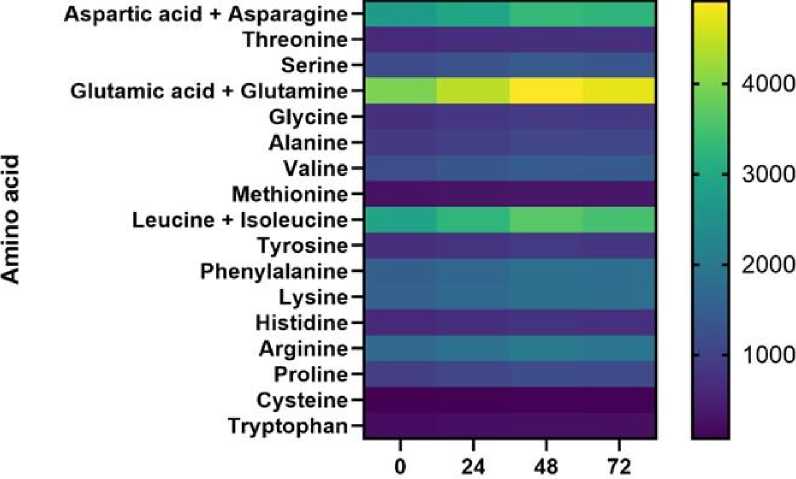
Figure 1. Dynamics of 17 amino acids (0, 24, 48, 72 h).
Time (hours)
The heatmap shows the concentrations of 17 amino acids in Vigna radiata ‘Zhasyl dan’ seeds during fermentation with 2% sucrose at 0, 24, 48, and 72 h (mg/100 g dry matter). The maximum increase was observed at 48 h (especially for Glu+Gln and Leu+Ile), followed by stabilization or moderate decline at 72 h.
In this study, special attention was given to the dynamics of essential amino acids (EAA), since they determine the biological value of proteins and are critically important for the human body. The EAAs include leucine, isoleucine, valine, lysine, threonine, methionine, phenylalanine, and tryptophan. These amino acids are not synthesized in the human body and must be obtained from the diet; therefore, their quantitative content in the studied material is a key indicator.
Based on the measurements, it was found that the accumulation dynamics of EAAs varied significantly depending on the germination conditions of mung bean seeds. To visualize these differences, a graph (Figure 1) was constructed, illustrating the changes in the total and individual content of essential amino acids in the control samples and in the sucrose-supplemented variants at different time points (0, 24, 48, and 72 h).
§ 11000° 10500-/
Ъ 10000-/
E/
9500-/
< 9000- / Ш > 8500-4--------1--------1--------11
0 20 40 6080
X (Time, h) Figure 2. Dynamics of the total content of essential amino acids (0–72 h).
According to the figure, the total content of essential amino acids (EAA) in mung bean seeds showed a clear positive trend during germination in the sucrose-supplemented medium. In the control sample (0 h), the total amount of EAA was 8,788 mg/100 g, while after 24 h in the sucrose treatment the value increased to 9,805 mg/100 g, corresponding to an increase of approximately 11.6%. The highest accumulation was observed after 48 h, reaching 10,868 mg/100 g, which represents an increase of about 23.7% compared with the initial sample. The most pronounced growth was observed for leucine + isoleucine (2,895 → 3,654 mg/100 g), lysine (1,523 → 1,838 mg/100 g), valine (1,178 → 1,459 mg/100 g), and phenylalanine (1,486 → 1,836 mg/100 g), indicating activation of proteolytic processes and enhanced amino acid accumulation during germination
The obtained data confirm that fermentation of mung bean seeds with sucrose contributes to a targeted increase in their protein value due to the growth in essential amino acid content. This makes the technology particularly promising for the development of functional food products—from gluten-free bakery items to instant beverages [16]. The optimal fermentation time of 48 h may be recommended as a standard technological regime for producing intermediates with enhanced amino acid value. Furthermore, the use of sucrose as a biochemical activator opens possibilities for targeted modification of protein composition and adaptation of technologies to specific mung bean varieties. From a practical perspective, this technology can be integrated into the production of plant protein concentrates and specialized products for children’s, sports, and medical nutrition [17]. In the long term, the application of sucrose-assisted fermentation allows the expansion of the range of functional products, enhances their biological value, and ensures the sustainable use of plant resources, which is of great importance for food security.
Conclusion
The analysis demonstrated that mung bean germination is accompanied by significant changes in the amino acid profile, with sucrose supplementation exerting a pronounced stimulating effect. The greatest increase was recorded for essential amino acids, particularly leucine, isoleucine, lysine, and phenylalanine, which substantially enhances the biological value of the product. At the same time, an increase in aspartic and glutamic acids was observed, both of which play a key role in metabolic processes and nitrogen balance.
The most intensive changes occurred within 24–48 hours of germination, when sucrose-treated samples exhibited peak values for most amino acids. In contrast, control samples without sucrose showed a less pronounced dynamic, and at later stages (72 h) some parameters tended to stabilize or even decline.
Thus, the results confirm that sucrose supplementation is an effective factor of metabolic activation, contributing to the accumulation of free amino acids and enhancing the nutritional value of germinated mung bean seeds.
The practical significance of this study lies in the fact that the obtained data can be applied in the development of functional food products, including instant amino acid - enriched beverages and specialized food ingredients. This makes sucrose-assisted germination a promising direction for the food industry and dietetics.
