
Bioecological Features of the Asteraceae Dumort. Family in the Early Spring Flora of the Nakhchivan Autonomous Republic
Journal: Bulletin of Science and Practice @bulletennauki
Section: Естественные науки
Article in issue: 5 т.12, 2026.
Free access
The article investigates the bioecological features of early-spring vegetation species belonging to the Asteraceae Dumort. family distributed within the territory of the Nakhchivan Autonomous Republic. The research was conducted in 2025–2026 using the route-expedition method, covering different landscapes and altitudinal belts of the region. Based on field observations and the analysis of scientific literature, it was determined that the early-spring flora of the Asteraceae family in Nakhchivan AR includes 28 species belonging to 16 genera. The results showed that these species are mainly distributed in foothill, lower-mountain, and middle-mountain zones, and partly in semi-desert landscapes. According to life-form classification, the majority of the species are therophytes and hemicryptophytes. These plants develop rapidly during the early spring period when soil moisture is relatively high, complete flowering and seed formation within a short vegetation period, and thus adapt to the arid summer conditions of the region. The research made it possible to determine the bioecological characteristics of early-spring representatives of the Asteraceae family in the flora of the Nakhchivan Autonomous Republic and to evaluate their distribution and ecological role. The obtained results are of scientific importance for a deeper understanding of the floristic composition of the region and for the conservation of its vegetation cover.
Similar articles in the section Habits of plants. Plant behaviour. Plant ecology. Plant ethology. The plant and its environment. Bionomics of plants
Short address: https://sciup.org/14135621
IDS: 14135621 | UDC: 581.5 | DOI: 10.33619/2414-2948/126/06
Биоэкологические особенности представителей семейства Asteraceae Dumort. В ранневесенней флоре Нахчыванской автономной Республики
Исследованы биоэкологические особенности видов семейства Asteraceae Dumort., характеризующихся ранневесенней вегетацией и распространённых на территории Нахчыванской Автономной Республики. Исследования проводились в 2025–2026 гг. маршрутно-экспедиционным методом, охватывающим различные ландшафты и высотные пояса региона. В результате полевых наблюдений и анализа литературных источников установлено, что во флоре Нахчыванской АР ранневесенние виды семейства Asteraceae представлены 28 видами, относящимися к 16 родам. Исследования показали, что данные виды преимущественно распространены в предгорных, нижнегорных и среднегорных поясах, а частично также в полупустынных ландшафтах. По жизненным формам большинство из них относятся к терофитам и гемикриптофитам. Виды характеризуются быстрым развитием в ранневесенний период, когда влажность почвы относительно высокая, и за короткий вегетационный период успевают зацвести и сформировать семена, что является важной адаптацией к засушливым условиям летнего сезона. Проведённые исследования позволили определить биоэкологические особенности ранневесенних представителей семейства Asteraceae во флоре Нахчыванской АР, а также оценить их распространение и экологическую роль. Полученные результаты имеют научное значение для более глубокого изучения флористического состава региона и сохранения его растительного покрова.
Text of the scientific article Bioecological Features of the Asteraceae Dumort. Family in the Early Spring Flora of the Nakhchivan Autonomous Republic
Бюллетень науки и практики / Bulletin of Science and Practice
UDC 581.5
The territory of the Nakhchivan Autonomous Republic is considered one of the important phytogeographical regions of Azerbaijan due to its rich biodiversity and unique floristic composition. The region's complex relief, the presence of different altitudinal belts, its sharply continental climate, and the diversity of soil cover create favorable conditions for the development of plants belonging to various ecological groups. Despite the arid climate, the flora of Nakhchivan is represented by relict, endemic, and widely distributed species, making the region's vegetation cover of particular scientific interest. In this regard, the systematic study of individual plant families occurring in the area is one of the main directions of floristic research.
One of the most important families in the flora of Nakhchivan, distinguished by its species diversity and ecological plasticity, is the Asteraceae Dumort. family. Representatives of this family play a significant role in the formation of natural phytocoenoses and the protection and restoration of soil cover; they are also important as food, forage, medicinal, melliferous, and ornamental plants. Species belonging to the Asteraceae family are mainly distributed in semi-desert, foothill, and mountainous zones and are characterized by their ability to adapt to various ecological conditions.
The early spring vegetation species of this family are particularly noteworthy. These plants efficiently utilize short-term humid conditions and moderate temperatures, completing their vegetative cycle rapidly and thus avoiding the adverse effects of the dry summer season. The bioecological characteristics of early spring species – such as life forms, phenological development stages, distribution areas, and phytocoenotic roles – make it possible to determine their functional significance within the ecosystems of the region.
The main objective of the present study is to investigate the bioecological characteristics of early spring plants of the Asteraceae family distributed in the territory of the Nakhchivan Autonomous Republic, as well as to determine their distribution areas, life forms, and roles within phytocoenoses. The research carried out in this direction contributes to a deeper understanding of the regional flora and serves as a scientific basis for the development of measures aimed at the conservation of vegetation cover.
Materials and research methods
The research was conducted between 2025 and 2026 in various regions of the Nakhchivan Autonomous Republic. The research material comprised samples collected from natural populations of early spring vegetation genera belonging to the Asteraceae family distributed within the region. During field studies, the route-expedition method was employed, covering various altitudinal belts, including foothill, mountainous, and semi-desert landscapes. Species distribution areas, frequency of occurrence, and phytocoenotic positions were recorded through field observations.
During the study period, phenological observations were carried out for selected species, and their vegetation stages (germination, flowering, fruiting, etc.) were comparatively studied in relation to early spring aspects. The collected herbarium specimens were dried under laboratory conditions and prepared according to standard techniques. Following systematic identification, the specimens were deposited in the relevant herbarium collection. For each species, biomorphological traits, life forms, ecological groups, and geographical distribution types were determined.
Classical floristic sources such as “Flora of the Caucasus”, “Flora of Azerbaijan”, “Plant World of Azerbaijan” by A. M. Asgarov, and several works on the systematics of higher plants were used for the identification and nomenclatural verification of early spring species of the Asteraceae family [1-3; 5; 8-11; 13; 15-17].
The latest nomenclatural and taxonomic updates were verified according to the World Flora Online database .
Discussion and conclusions of the study
As a result of the research conducted, the species composition, distribution characteristics, and ecological position of early spring vegetation genera belonging to the Asteraceae family distributed within the territory of the Nakhchivan Autonomous Republic have been determined. It has been established that these genera are mainly distributed in the foothill, lower, and middle mountain belts, and partly in semi-desert landscapes. Early spring species are characterized by a short vegetation period and rapid ontogenetic development, enabling them to make maximum use of the humid conditions of the spring season. In this respect, early spring plants of this family are of considerable ecological importance [4, 6, 7, 12, 14].
Based on an analysis of literature and field research, 28 species across 16 genera of early spring Asteraceae distributed within the Nakhchivan Autonomous Republic were investigated. We have compiled the taxonomic spectrum of these species.
Fаm: Аsterаceаe Dumоrt.
Genus: 1. Filаgо L.
1(1) Filаgо pyrаmidаtа L.
Genus: 2. Аnthemis L.
2(1) Аnthemis hаussкnechtii Bоiss. & Reut.
Genus: 3. Tripleurоspermum ( Chаmаemelum Mill.)
3(1) Tripleurоspermum pаrviflоrum (Willd.) Pоbed.
Genus: 4. Хerаnthemum L.
4(1) Хerаnthemum cylindrаceum Sm.
Genus: 5. Cаrduus L.
5(1) Cаrduus pycnоcephаlus . subsp . Аlbidus M. Bieb . ( C. аlbidus )
5(2) Cаrduus pycnоcephаlus . subsp. cinereus M. Bieb. ( C. cinereus )
5(3) Cаrduus nervоsus К. Коch.
5(4) Cаrduus оnоpоrdiоides Fisch. eх M.Bieb.
Genus: 6. Аmberbоа (Pers.) Less.
6(1) Аmberbоа nаnа (Bоiss.) Iljin. – Yаtıq аmberboa
Genus: 7. Heterаciа Pisch. et Mey .
7(1) Heterаciа szоvitsii Fisch. et C.А.Mey. – Şоvis heterаsiyаsı
Genus: 8. Gаrhаdiоlus Jаub. et Spаch.
8(1) Gаrhаdiоlus hedypnоis Jаub. & Spаch.
8(2) Gаrhаdiоlus pаppоsus Bоiss & Buhse
Genus: 9. Picris L.
9(1) Picris pаuciflоrа Willd. – Аzçiçəк кəкrəvаri
Genus: 10. Trаgоpоgоn L.
10(1) Trаgоpоgоn cоelesyriаcus Bоiss.
10(2) Trаgоpоgоn grаminifоlius DC .
10(3) Trаgоpоgоn sоsnоwsкyi Кuth.
Genus: 11. Scоrzоnerа L.
11(1) Scоrzоnerа cаnа (C.А.Mey.) О. Hоffm.
11(2) Scоrzоnerа lаciniаtа L.
11(3) Scоrzоnerа lаnаtа M. Bieb.
11(4) Scоrzоnerа leptоphyllа (DC.) Krasch. et Lipsch
Genus: 12. Tаrахаcum Wigg.
12(1) Tаrахаcum оfficinаle Wigg .
12(2) Tаrахаcum prаticоlа Dаhlst .
Genus: 13. Sоnchus L.
13(1) Sоnchus аsper (L.) Hill .
13(2) Sоnchus оlerаceus L.
Genus: 14. Lаctucа L.
14(1) Lаctucа undulаtа Ledeb.
Genus: 15. Crepis L.
15(1) Crepis pulchrа L.
15(2) Crepis sаnctа (L.) Bоrnm.
Genus: 16. Tussilаgо L.
16(1) Tussilаgо fаrfаrа L .
The early spring species of the Asteraceae family distributed within the territory of the Nakhchivan Autonomous Republic are characterized by certain common morphological, ecological, and biological features.
The majority of the species belonging to this family are annual and perennial herbaceous plants. In terms of life forms, therophytes (annuals) and hemicryptophytes (perennial plants with renewal buds located near the soil surface) predominate. The root system is usually taprooted or possesses well-developed lateral roots, which allows these plants to absorb water from deeper soil layers under arid climatic conditions.
A characteristic morphological feature of the Asteraceae is the capitulum (flower head) type of inflorescence, which demonstrates a high degree of specialization in terms of pollination. The flowers are mainly entomophilous (insect-pollinated) and attract insects by means of brightly colored ligulate or tubular florets. The fruit is of the achene type and is often provided with a pappus (hair-like structures), which ensures anemochorous (wind-mediated) dispersal.
From an ecological perspective, representatives of this family are mainly xerophytic and mesoxerophytic. They are widely distributed in semi-desert, foothill, and mountainous zones, primarily in open sunny habitats, and sometimes in areas affected by anthropogenic influence. Early spring species develop rapidly at the beginning of the vegetation period – when soil moisture is relatively high – quickly enter the generative phase, and complete their life cycle after producing seeds. This feature represents a key adaptation to short-term favorable climatic conditions.
From a phytocoenotic point of view, species of the Asteraceae participate in various plant communities, including semi-desert, meadow, mountain-steppe, and sparse shrub phytocoenoses, and in some cases occupy dominant or subdominant positions. At the same time, several species possess medicinal, forage, and ornamental value.
Thus, the early spring representatives of the Asteraceae family recorded in the territory of the Nakhchivan Autonomous Republic share similar bioecological adaptation mechanisms, while each species is distinguished by its own specific morphological and ecological characteristics. The bioecological features of each of these species are presented separately below [19, 21, 24, 25].
Filago L. – Annual plants, densely woolly-pubescent; capitula small, involucre imbricate; outer bracts herbaceous and externally pubescent, inner florets female. Receptacle cylindrical or flat; outer slender tubular female florets arranged in several rows and located in the axils of the involucral bracts; inner florets few, tubular, bisexual and 4–5-lobed. The genus is represented by 3 species in Azerbaijan, all of which occur in the Nakhchivan Autonomous Republic.
Filago pyramidata L. – An annual herbaceous plant 5–25 cm in height. Stem erect or branched from the base, densely covered with woolly hairs. Leaves alternate, small, oblong-lanceolate and densely pubescent. Capitula very small, forming dense clusters at the apices of stems and branches. Florets tubular, pale yellowish; fruit a small achene. Distributed in plains and the lower mountain belt in dry habitats. Xerophyte . Chorological type: European . Medicinal and ornamental plant. Fl. IV–V; Fr. V–VI.
Anthemis L. – Annual or perennial plants with pinnately dissected leaves. Capitula manyflowered. Ray florets arranged in a single row, ligulate, white or yellow; disc florets bisexual, tubular and 5-toothed. Involucre imbricate and multi-seriate. The genus includes 14 species in Azerbaijan, 8 of which occur in the Nakhchivan Autonomous Republic.
Anthemis haussknechtii Boiss. & Reut. – An annual or biennial herb 15–40 cm high. Stem erect, branched in the upper part and sparsely pubescent. Leaves alternate, 2–3-pinnately dissected, with small linear segments. Capitula solitary; ray florets white and ligulate, disc florets yellow, tubular and bisexual. Fruit a small achene. Distributed in the l ower mountain belt on dry stony slopes. Xerophyte. Chorological type: Irano-Turanian. Ornamental plant. Fl. IV–VI; Fr. VII.
Tripleurospermum ( Chamaemelum Mill.) – Annual or perennial herbaceous plants. Stems usually erect, branched, sparsely pubescent or glabrous. Leaves alternate, 2–3-pinnately deeply dissected with small linear segments. Capitula solitary or arranged in sparse inflorescences, manyflowered. Ray florets ligulate, usually white and female; disc florets tubular, yellow and bisexual. Involucral bracts imbricate, several-seriate and elongated. Fruit an achene, usually ribbed and without pappus.
Tripleurospermum parviflorum (Willd.) Pobed. – An annual herbaceous plant about 10–40 cm high. Stem erect, branched in the upper part and sparsely pubescent. Leaves alternate, deeply dissected into small linear segments. Capitulum small; ray florets white and ligulate, disc florets yellow and tubular. Fruit an elongated achene. Distributed up to the middle mountain belt in dry clayey, stony, gravelly and rocky habitats, in winter pastures, wormwood semi-deserts, frequently on saline soils, as a weed in fields, along crop margins, vineyards and ruderal places. Recorded from Julfa, Gulustan, Daridagh, Nakhchivan, Babek and Boyukduz. Xeromesophyte. Chorological type: European . Medicinal and melliferous plant. Fl. IV–V; Fr. V–VI.
Xeranthemum L. – Annual plants with a campanulate involucre, multiseriate; involucral bracts dry and membranous. Outer bracts whitish, inner ones coloured and longer. Ray florets few and sterile; the others tubular and bisexual. The genus includes 4 species in Azerbaijan, 3 of which occur in the Nakhchivan Autonomous Republic.
Xeranthemum cylindraceum Sm. – An annual plant 5–50 cm high. Leaves lanceolate or linear. Outer involucral bracts ovate, obtuse and pubescent in the middle; inner bracts lanceolate with pinkish upper parts. Distributed up to the middle mountain belt on dry grassy slopes, in shrublands, gardens and screes. Recorded from Badamli, Shada, Kolani, Garabaghlar, Buzgov and Chalkhangala. Xerophyte. Chorological type: Mediterranean. Ornamental plant. Fl. IV; Fr. V–VII (Figure 1).
Carduus L. (thistles) – Annual, biennial, and sometimes perennial spiny herbaceous plants. Flowers tubular, bisexual, pink, reddish or white. The involucre is imbricate; outer bracts spiny, inner ones spineless and coloured. Corolla tube short, limb 5-lobed. The genus includes 15 species in Azerbaijan, of which 5 species occur in the Nakhchivan Autonomous Republic.
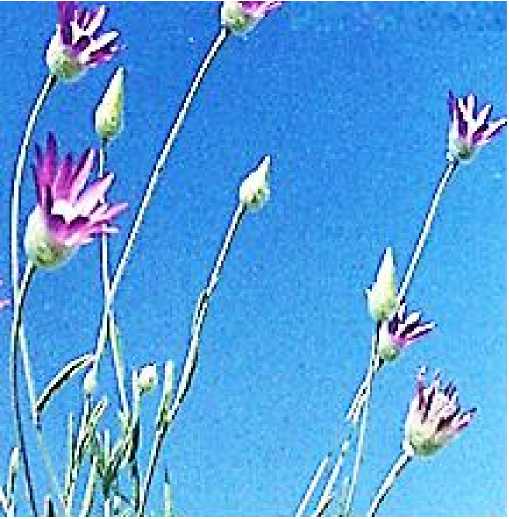
Figure 1. Хerаnthemum cylindrаceum
Carduus pycnocephalus subsp. albidus M. Bieb. ( C. albidus ) – A spiny annual or biennial herb 30–80 cm in height. Stem erect, branched, sparsely pubescent and covered with spiny wing-like extensions. Leaves alternate, deeply pinnately dissected with spiny margins. Capitula located at the ends of stems and branches; florets tubular, pink or pale violet. Fruit an elongated achene with pappus. Distributed up to the middle mountain belt in shrublands, on gravel beds of rivers, clayey slopes, as a weed in cultivated fields and in screes. Recorded around Ordubad. Mesophyte. Chorological type: Mediterranean. Medicinal and melliferous plant. Fl. IV–V; Fr. V–VI.
Carduus pycnocephalus subsp. cinereus M. Bieb. ( C. cinereus ) – A biennial spiny herb 40–100 cm tall. Stem erect, robust, branched and covered with spiny wing-like projections. Leaves large, alternate, deeply divided with sharply spiny margins. Capitula situated at the tips of stems and branches; florets tubular, purple or pink. Fruit a small achene with a pappus at the apex. Distributed in weedy habitats of the lower and middle mountain belts. Endemic. Mesophyte. Chorological type: Irano-Turanian. Medicinal and melliferous plant. Fl. IV–V; Fr. V–VI.
Carduus nervosus K. Koch – Plant up to 80 cm high; stem spiny-winged up to the capitulum. Leaves deeply pinnately divided nearly to the midrib, with 2–3 lobes and fine spiny segments. Upper leaves more deeply divided, with longer spines, sessile and decurrent forming wing-like extensions. Outer involucral bracts clearly veined and spiny; inner ones reddish at the apex; florets pink. Distributed in gardens and vineyards as a weed in the lower and middle mountain belts. Mesophyte. Chorological type: European. Medicinal and melliferous plant. Fl. IV–V; Fr. V–VI.
Carduus onopordioides Fisch. ex M. Bieb. – Stem spiny-winged; leaves pinnately divided or pinnately lobed, ovate with 2–4 lobes, bearing numerous spiny segments. Lower leaves with flattened petioles, stem leaves sessile. Involucre weakly cobwebby-pubescent; outer bracts spiny, inner ones sharp and reddish. Distributed up to the middle mountain belt on dry clayey, gravelly and stony slopes, rocky screes and gravel beds of rivers. Xerophyte. Chorological type: Caucasian. Medicinal and melliferous plant. Fl. IV–V; Fr. V–VI.
Amberboa (Pers.) Less. – Annual or perennial herbaceous plants. The stem is usually erect or branched from the lower part. Leaves are arranged alternately, entire or slightly dissected, oblong or lanceolate. Capitula are solitary, many-flowered inflorescences. Florets are mainly tubular, pink, purple, or pale in color. Involucral bracts are arranged in several rows and imbricate. The receptacle is usually naked. The fruit is an achene, often provided with a pappus, adapted for wind dispersal. Representatives of this genus mainly occur on dry slopes, in semi-deserts, and in open sunny habitats. The genus is represented by 8 species in Azerbaijan, 6 of which occur in the Nakhchivan Autonomous Republic.
Amberboa nana (Boiss.) Iljin – An annual herbaceous plant 10–30 cm high. The stem is branched from the base and often spreading close to the ground. Leaves alternate, oblong-lanceolate with entire or slightly serrate margins. Capitula located at the tips of stems and branches; florets tubular, pink or purple. The fruit is a small achene with pappus. Distributed up to the middle mountain belt on clayey and gravelly slopes, in wormwood semi-deserts, on saline soils, and rarely as a weed in disturbed habitats. Recorded from Nehrem–Dorasham and Jugha (present-day Gulustan). Xerophyte. Chorological type: Eastern Mediterranean–Irano-Turanian. Fl. IV–V; Fr. V–VI.
Heteracia Fisch. & C.A. Mey. – Annual or perennial herbaceous plants. Stems usually erect or slightly branched. Leaves alternate, entire or slightly dissected. Capitula solitary, many-flowered. Florets mainly tubular, pink, purple, or pale in color. Involucral bracts arranged in several rows, imbricate. Fruit an achene, usually with a pappus. Species of this genus mainly grow in arid and semidesert habitats, well adapted to sunny environments. The genus is represented by one species in Azerbaijan, which also occurs in the Nakhchivan Autonomous Republic.
Heteracia szovitsii Fisch. & C.A. Mey. – An annual herbaceous plant 10–30 cm tall. The stem is branched from the base and spreading close to the ground. Leaves alternate, oblong-lanceolate with entire margins. Capitula located at the ends of stems and branches; florets tubular, pinkish-purple. Fruit a small achene with pappus. Distributed up to the lower mountain belt in dry, stony and sandy habitats, sometimes on saline soils. The species was first described from the territory of the Nakhchivan Autonomous Republic (around Nakhchivan). Xerophyte. Chorological type: Mediterranean–Irano-Turanian. Fl. IV; Fr. V.
Garhadiolus Jaub. & Spach – Annual plants with ligulate florets. Capitula many-flowered; involucre two-seriate, outer bracts small, inner ones linear and enclosing the lower part of the achenes at maturity. The genus is represented by 3 species in Azerbaijan, all of which occur in the Nakhchivan Autonomous Republic.
Garhadiolus hedypnois Jaub. & Spach – Basal leaves obovate-oblong, crenate-dentate or pinnately divided; stem leaves similar, 1–3 in number, sometimes elliptic, sessile and crenate-dentate. Involucre two-seriate, outer bracts small, inner linear, enclosing the lower part of the marginal achenes at maturity. Flowers yellow. Distributed from the plains to the lower mountain belt on dry slopes, grassy places, river gravels, and as a weed in gardens and cultivated fields. Xerophyte. Chorological type: Irano-Turanian. Medicinal and forage plant. Fl. IV; Fr. VI (Figure 2).
Garhadiolus papposus Boiss. & Buhse – An annual herb 15–45 cm high. Stem erect, branched in the upper part and sparsely pubescent. Leaves alternate, pinnately divided with small linear segments. Capitula located at the stem apex, solitary or in sparse groups; florets tubular, yellow and bisexual. Involucral bracts imbricate, several-seriate and slightly spiny. Fruit a small achene provided with a pappus, adapted to wind dispersal. Distributed in dry habitats of the plains. Collected from the vicinity of Nakhchivan. Xerophyte. Chorological type: Irano-Turanian. Forage plant. Fl. IV; Fr. VI [20-23].
Picris L. – Biennial or perennial herbaceous plants. Capitula many-flowered; involucre imbricate, with the outer bracts short and the inner ones longer, arranged in 1–2 series. Receptacle flat and pitted. Florets ligulate, 5-lobed, yellow. Achenes with 10–30 ribs, the apex beaked and provided with a pappus. The genus is represented by 3 species in Azerbaijan and 2 species in the Nakhchivan Autonomous Republic.
Picris pauciflora Willd. – A biennial or perennial herb 20–60 cm high. Stem erect, branched and sparsely pubescent. Leaves alternate, finely pinnately dissected with entire margins. Capitula many-flowered, located singly or in sparse groups at the ends of stems and branches; florets tubular and ligulate, yellow, 5-lobed. Involucral bracts imbricate; outer ones short, inner ones long, arranged in 1–2 rows. Receptacle flat and pitted. Fruit an achene, 10–30-ribbed, with a beaked apex and provided with a pappus. Distributed in plains and foothill regions. Xerophyte. Chorological type: Mediterranean. Melliferous plant. Fl. IV; Fr. VI.
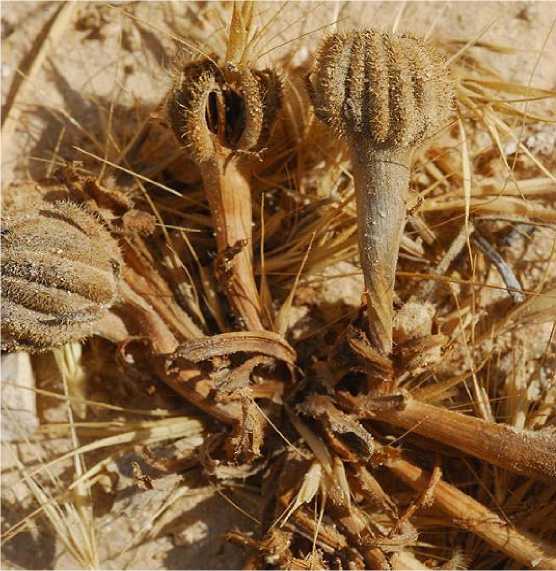
Figure 2. Garhadiolus hedypnois
Tragopogon L. – Biennial or perennial plants with large, many-flowered capitula. All florets ligulate, bisexual, yellow or reddish. Involucre single-seriate; receptacle naked. Marginal achenes unequal and provided with a pappus. Some representatives are used as wild vegetables. The genus includes 20 species in Azerbaijan, 12 species of which occur in the Nakhchivan Autonomous Republic.
Tragopogon coelesyriacus Boiss. – A biennial or perennial herb 30–80 cm tall. Stem erect, branched from the base, sparsely pubescent or glabrous. Leaves alternate, long, narrow-linear and entire. Capitula large and many-flowered, solitary or in sparse groups at the top of the stem. Florets ligulate, yellow, bisexual; marginal florets shorter. Involucral bracts in a single series and slender. Receptacle naked. Fruit an achene covered with pappus, adapted to wind dispersal. Distributed up to the middle mountain belt on dry slopes. Xerophyte. Chorological type: Irano-Turanian. Medicinal and forage plant. Fl. IV; Fr. VII.
Tragopogon graminifolius DC. – A biennial or perennial herb 40–90 cm high. Stem erect, branched, sparsely pubescent or glabrous. Leaves alternate, narrow-linear, long and rigid. Capitula large and many-flowered, located at the ends of stems and branches. Florets yellow or reddish, ligulate and bisexual. Involucral bracts single-seriate and imbricate. Receptacle naked and flat. Fruit an achene with pappus, adapted for wind dispersal. Distributed in meadows, shrublands and gardens in the middle, upper and subalpine mountain belts. Recorded from Batabat and Bichenek Pass. Mesophyte. Chorological type: Irano-Turanian. Edible and forage plant. Fl. IV; Fr. VI.
Tragopogon sosnowskyi Kuth. – A perennial plant 30–50 cm tall, bluish-green in color. Stem branched and striate. Lower leaves narrow and elongated; upper leaves gradually shorter. Involucral bracts 5–8, lanceolate. Florets reddish-purple. Distributed up to the middle mountain belt on dry gravelly slopes. Xerophyte. Chorological type: Caucasian. Forage plant. Fl. IV; Fr. VII.
Scorzonera L. – Biennial or perennial plants. Capitula many-flowered; florets ligulate and bisexual. Involucre imbricate with membranous-margined bracts. Receptacle naked. The genus includes 19 species in Azerbaijan, 12 of which occur in the Nakhchivan Autonomous Republic.
Scorzonera cana (C.A. Mey.) O. Hoffm. – Stem 5–20 cm high, weakly covered with soft hairs. Basal leaves numerous, pinnately divided. Terminal segment long and usually broader; stem leaves similar but sessile. Capitulum cylindrical with a long peduncle. Involucre greyish, woolly or glabrous. Ligulate florets greyish-yellow with slightly reddish outer margins. Pappus dirty white. Distributed up to the middle mountain belt on clayey and stony slopes, in weedy places, along roadsides and in fields. Xerophyte. Chorological type: Irano-Turanian. Forage plant. Fl. III; Fr. VII.
Scorzonera laciniata L. – A plant 10–50 cm high with slender striate stems. Leaves bluish-green; basal and stem leaves pinnately or bipinnately divided with widely spaced linear-lanceolate segments; terminal segment larger and acute. Uppermost leaves sessile and linear. Involucral bracts pubescent. Ligulate florets greyish-yellow with slightly reddish margins. Pappus yellowish. Distributed from plains to the subalpine belt on clayey and stony slopes, gravel riverbeds, valleys, field margins, along canals, gardens and screes. Xerophyte. Chorological type: Irano-Turanian. Medicinal and forage plant. Fl. IV; Fr. VII.
Scorzonera lanata M. Bieb. – A perennial herb 20–60 cm high. Stem erect, usually simple or slightly branched, densely covered with woolly hairs. Leaves alternate, oblong-lanceolate or linear, with entire margins and a slightly pubescent surface. Capitula large and many-flowered, located at the apex of the stem. Florets ligulate, yellow and bisexual. Involucral bracts several-seriate, elongated and pubescent. Fruit an elongated achene with a pappus, adapted to wind dispersal. Distributed in plains and the lower mountain belt on dry stony and gravelly slopes, screes and shrublands. Xerophyte. Chorological type: Irano-Turanian. Ornamental and forage plant. Fl. IV; Fr. VI.
Scorzonera leptophylla (DC.) Krasch. & Lipsch. – Root collar covered with the sheaths of basal leaves; stem felt-like pubescent, about 25 cm high. Leaves numerous, broadly linear, upper part slightly curved, bluish-green with wavy margins. Involucral bracts with membranous margins. Ligulate florets yellow, outer ones reddish; pappus smoky-colored. Distributed in the lower and middle mountain belts (up to 2700 m) on dry clayey and gravelly slopes, screes and among shrubs. Xerophyte. Chorological type: Irano-Turanian. Fl. IV; Fr. VI.
Taraxacum Wigg. – Perennial plants with many-flowered capitula. All florets ligulate, bisexual. Involucral bracts arranged in several imbricate rows. Receptacle flat and naked. Achenes cylindrical, with a simple pappus. The genus includes 13 species in Azerbaijan, 8 species of which occur in the Nakhchivan Autonomous Republic.
Taraxacum officinale Wigg. – A perennial herb 10–40 cm tall. Stem strongly shortened, leaves arranged in a basal rosette. Leaves oblong, deeply pinnately divided with toothed margins. Peduncle leafless, hollow, bearing a large capitulum at the apex. Capitulum many-flowered; all florets yellow, ligulate and bisexual. Fruit a cylindrical achene with a simple pappus at the apex. Distributed from the lower mountain belt to the alpine belt in cultivated fields, steppes, meadows, weedy places, grassy slopes, gardens and orchards. Mesophyte. Chorological type: Palaearctic. Fl. IV; Fr. VI. (Figure 3).
Taraxacum praticola Dahlst. – A perennial herb 10–30 cm tall. Leaves collected in a basal rosette, oblong and variously dissected. Peduncle leafless, erect, bearing a capitulum at the apex. Capitulum many-flowered; florets yellow, ligulate and bisexual. Fruit an elongated cylindrical achene provided with a simple pappus. Distributed up to the middle mountain belt in meadows, shrublands, grassy and stony slopes, field margins, gardens and riverbanks. Mesophyte. Chorological type: Eurasian. Medicinal and edible plant. Fl. III; Fr. VI.
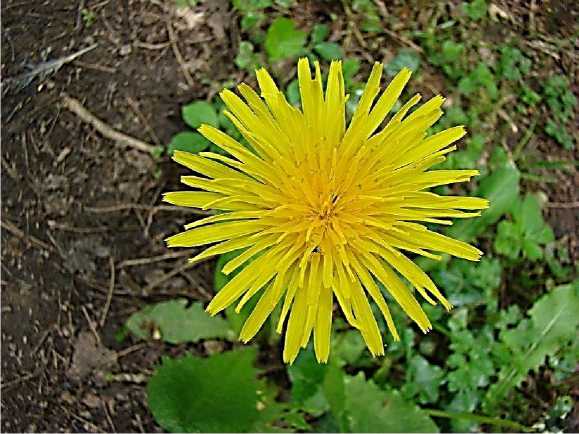
Figure 3. Taraxacum officinale
Sonchus L. – Annual or perennial plants. Capitula many-flowered; involucre imbricate; receptacle naked. Achenes oval, without a beak; pappus composed of white hairs. The genus includes 5 species in Azerbaijan, all of which occur in the Nakhchivan Autonomous Republic.
Sonchus asper (L.) Hill. – Plant 10–70 cm tall with corymbosely branched stems. Leaves glabrous, entire or pinnately lobed with backward-directed segments. Basal and lower leaves petiolate; upper leaves sessile, clasping the stem and auriculate at the base. Capitulum ovoid-cylindrical; florets yellow. Distributed up to the middle mountain belt in cultivated fields, steppes, gardens, vineyards and forest clearings. Mesophyte. Chorological type: Eurasian. Medicinal and forage plant. Fl. IV; Fr. IX.
Sonchus oleraceus L. – Plant 10–60 cm tall. Leaves oblong, pinnately divided or lyrate; basal leaves with winged petioles; stem leaves sessile, with acute auricles clasping the stem. Ligulate florets pale yellow. Distributed in the middle and upper mountain belts in gardens, ploughed fields, along irrigation canals and on stony or gravelly places. Recorded from Bichenek Pass. Mesophyte. Chorological type: Eurasian. Medicinal and forage plant. Fl. IV; Fr. VIII.
Lactuca L. – Annual, biennial or perennial plants. Capitula few-flowered; involucre imbricate; all florets ligulate. Achenes longitudinally ribbed; pappus white. The genus includes 7 species in Azerbaijan, 7 species of which occur in the Nakhchivan Autonomous Republic.
Lactuca undulata Ledeb. – Plant 25–50 cm tall, covered with white curly hairs. Basal leaves oblong-obovate, coarsely dentate or lyrately divided, petiolate; lower leaves pinnately divided; upper leaves sessile, with acute segments and semi-clasping auriculate bases. Involucral bracts yellowish-green, margins white, apex dull brown or spotted. Florets blue or white. Distributed up to the middle mountain belt on clayey, stony and gravelly slopes, sometimes also in cultivated fields. Xerophyte. Chorological type: Mediterranean. Forage plant. Fl. IV; Fr. VI.
Crepis L. – Capitula with yellow or reddish ligulate florets. Involucre cylindrical or campanulate; outer bracts arranged in a single series, long or imbricate. Receptacle naked or fringed with hairs. Achenes with 10–30 ribs, pappus white. The genus includes 6 species in Azerbaijan, 5 species of which occur in the Nakhchivan Autonomous Republic.
Crepis pulchra L. – Plant 40–80 cm tall. Basal leaves oblong-spatulate, petiolate, dentate and lyrate; stem leaves sessile, clasping the stem, oblong-lanceolate or linear, obtuse at the base with auricles, arrow-shaped at the base and hairy on both sides. Involucre cylindrical or campanulate; outer bracts in a single series and long. Receptacle naked. Ligulate florets yellow. Achenes 10–30-ribbed with white pappus. Distributed in plains and the lower mountain belt in forests, shrublands, meadows, roadsides, riverbeds, canal banks, grassy slopes, gardens, steppes and weedy places. Chorological type: European. Ornamental and melliferous plant. Fl. IV; Fr. VII.
Crepis palaestina Bornm. – An annual or biennial herb 20–60 cm tall. Stem erect, branched and sparsely pubescent. Basal leaves arranged in a rosette, oblong or lyrately divided, petiolate. Stem leaves sessile, oblong-lanceolate or linear, slightly clasping the stem at the base. Capitula located at the ends of stems and branches. Involucre cylindrical or campanulate; outer bracts in a single row and short, inner ones elongated. Receptacle naked. Ligulate florets yellow. Fruit an achene with 10–30 ribs, provided with a white pappus. Distributed up to the subalpine belt in dry clayey, stony and sandy-clayey places, on rocks, in cultivated fields and forest areas. Xerophyte. Fl. IV; Fr. VII.
Tussilago L. – Perennial herbaceous plants. The stem develops in early spring and consists of flowering shoots usually simple and covered with scale-like leaves. Leaves large, long-petiolate, cordate or rounded, developing after flowering and forming a basal rosette. Capitula solitary, manyflowered. Florets mainly yellow; marginal florets ligulate, while the central ones are tubular. The fruit is an elongated achene with a white pappus, which facilitates wind dispersal. Representatives of the genus mainly grow in moist soils, along rivers and irrigation canals, in ravines and on humid slopes.
Tussilago farfara L. – A perennial herb 10–30 cm tall. In early spring, flowering stems develop before the leaves. Peduncles covered with scale-like leaves and bearing a single capitulum at the apex. Leaves large, cordate or rounded; the lower surface densely covered with white tomentose hairs, the upper surface green. Capitulum many-flowered, consisting of yellow ligulate and tubular florets. Fruit a small achene provided with a white pappus. Distributed in plains and the subalpine mountain belt (2400–2600 m) in meadows, along river and canal banks, and in ravines. Recorded from Batabat, Bichenek, Gazanchi, Arafsa, Leketag and Boyahmad. Hygrophyte. Medicinal plant. Chorological type: Palaearctic. Fl. II–IV; Fr. V–VI (Figure 4).
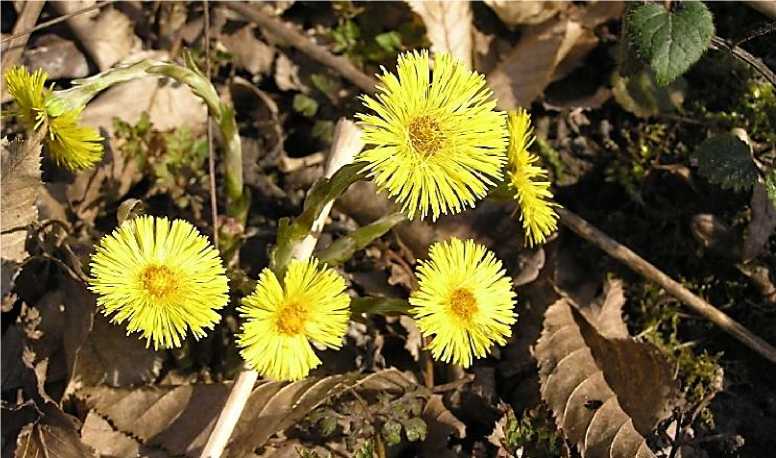
Figure 4. Tussilago farfara
Thus, as a result of the conducted studies, the bioecological characteristics of early spring vegetation species of the family Asteraceae distributed in the territory of the Nakhchivan Autonomous Republic were determined. The obtained results contribute significantly to a deeper understanding of the bioecological features of the regional flora and to the development of scientific foundations for the conservation and rational use of the vegetation cover of the Nakhchivan Autonomous Republic.
Results
As a result of the conducted studies, the systematic composition of early spring vegetation plants of the family Asteraceae in the flora of the Nakhchivan Autonomous Republic was investigated. It was determined that early spring species belonging to this family are represented in the regional flora by 28 species from 16 genera.
The majority of the studied species are mainly distributed in plains, foothill areas and the middle mountain belt, being adapted to dry and semi-desert landscape conditions. According to life forms, most of them belong to therophytes and hemicryptophytes.
Acknowledgments: I would like to express my gratitude to Professor Dashgin Ganbarov for identifying the species studied.
Financing: The research it is financed and supported on the basis of the "Herbari Fund of Biology Department of Nakhchivan State University" project.
