
Consumer attitudes toward millet and factors associated with its acceptance
Журнал: Вестник Алматинского технологического университета @vestnik-atu
Рубрика: Технология пищевой и перерабатывающей промышленности
Статья в выпуске: 3 (153), 2026 года.
Бесплатный доступ
Modern food systems face increasing pressure to support sustainable and healthy diets, which has renewed interest in nutrient-rich and climate-resilient crops such as millet. Despite its nutritional and functional potential, millet remains underutilised in contemporary diets. This study aimed to assess consumer awareness of and attitudes toward millet, willingness to incorporate it into the diet, and factors associated with its acceptance. A quantitative cross-sectional online survey was conducted among 270 respondents in Kazakhstan using a multilingual questionnaire in Kazakh, Russian, and English. The data were analysed using descriptive statistics. The results showed that 67.0% of respondents always checked product ingredients, indicating considerable attention to food composition, while more than 80% regularly consumed cereal products. At the same time, millet remained comparatively underutilised despite generally favourable attitudes toward it: more than 70% of respondents rated millet between 8 and 10 points. In addition, 61.1% preferred beverages containing fruit, cereal, or berry ingredients, suggesting openness to diversified product formulations. The findings reveal a gap between positive consumer attitudes toward millet and its actual integration into everyday diets. This suggests that nutritional awareness alone may not be sufficient to encourage regular consumption. Sensory appeal, product familiarity, direct tasting experience, clear product information, and availability may play an important role in supporting consumer acceptance. The findings provide practical guidance for the development and promotion of millet-based products adapted to contemporary healthy eating practices.
Короткий адрес: https://sciup.org/140316610
IDS: 140316610 | УДК: 65.09.03 | DOI: 10.48184/2304-568X-2026-3-68-74
Отношение потребителей к просу и факторы, связанные с готовностью к его потреблению
Современные продовольственные системы испытывают возрастающее давление, связанное с необходимостью обеспечения устойчивого и здорового питания, что вновь усиливает интерес к питательно ценным и устойчивым к климатическим изменениям культурам, таким как просо. Несмотря на свой пищевой и функциональный потенциал, просо по-прежнему недостаточно широко представлено в современном рационе. Целью данного исследования являлась оценка осведомлённости потребителей о просе и их отношения к нему, готовности включать его в рацион, а также факторов, связанных с готовностью потребителей выбирать и употреблять продукты на его основе. Количественный поперечный онлайнопрос был проведён среди 270 респондентов в Казахстане с использованием многоязычной анкеты на казахском, русском и английском языках. Данные были проанализированы с применением методов описательной статистики. Результаты показали, что 67,0% респондентов всегда обращают внимание на состав продуктов, что свидетельствует о значительном внимании к составу пищевых продуктов, тогда как более 80% регулярно потребляют зерновые продукты. В то же время просо по-прежнему сравнительно редко включается в повседневный рацион, хотя его восприятие респондентами преимущественно положительное: более 70% участников оценили просо на 8–10 баллов. Кроме того, 61,1% участников предпочли напитки с фруктовыми, зерновыми или ягодными добавками, что указывает на открытость потребителей к более разнообразным продуктовым рецептурам. Полученные результаты выявили разрыв между положительным отношением потребителей к просу и его фактическим включением в повседневный рацион. Это свидетельствует о том, что одной лишь осведомлённости о пищевой ценности может быть недостаточно для формирования регулярного потребления. Сенсорная привлекательность, знакомство с продуктом, непосредственный опыт дегустации, понятная информация о продукте и его доступность могут играть важную роль в формировании готовности потребителей включать просо и продукты на его основе в рацион. Полученные данные имеют практическое значение для разработки и продвижения продуктов на основе проса, адаптированных к современным принципам здорового питания.
Тұтынушылардың тарыға көзқарасы және тары өнімдерін қабылдау факторлары
Қазіргі азық-түлік жүйелерінде тұрақты және салауатты тамақтануды қамтамасыз ету қажеттілігі тары сияқты тағамдық құндылығы жоғары және климаттық өзгерістерге төзімді дақылдарға деген қызығушылықты арттыруда. Тағамдық және функционалдық әлеуетіне қарамастан, тары қазіргі рационда әлі де жеткілікті деңгейде қолданылмайды. Зерттеудің мақсаты тұтынушылардың тары туралы хабардарлығын, оған деген көзқарасын, оны рационға енгізуге дайындығын және тары негізіндегі өнімдерді таңдауға байланысты факторларды бағалау болды. Қазақстанда 270 респонденттің қатысуымен қазақ, орыс және ағылшын тілдеріндегі көптілді сауалнама негізінде сандық көлденең онлайнзерттеу жүргізілді. Деректер сипаттамалық статистика әдістерімен талданды. Нәтижелер респонденттердің 67,0%-ы тағам өнімдерінің құрамына үнемі назар аударатынын, ал 80%-дан астамы дәнді дақылдардан жасалған өнімдерді тұрақты тұтынатынын көрсетті. Сонымен қатар тарыға деген жалпы көзқарас оң болғанымен, оның күнделікті рационда тұтынылу деңгейі салыстырмалы түрде төмен болып қалуда: респонденттердің 70%-дан астамы тарыны 8–10 балл аралығында бағалаған. Қатысушылардың 61,1%-ы жеміс, дәнді дақыл немесе жидек қоспалары бар сусындарды таңдаған. Зерттеу нәтижелері тұтынушылардың тарыға деген оң көзқарасы мен оны күнделікті рационда нақты тұтыну деңгейі арасында алшақтық бар екенін көрсетті. Бұл тағамдық құндылық туралы хабардарлықтың өзі тұрақты тұтынуды қалыптастыру үшін жеткіліксіз болуы мүмкін екенін көрсетеді. Өнімнің сенсорлық тартымдылығы, онымен таныстық, дегустациялық тәжірибе, өнім туралы түсінікті ақпарат және қолжетімділік тары мен тары негізіндегі өнімдерді рационға енгізуге дайындыққа ықпал етуі мүмкін. Алынған нәтижелер салауатты тамақтану қағидаттарына сәйкес тары негізіндегі өнімдерді әзірлеу және ілгерілету үшін практикалық маңызға ие.
Текст научной статьи Consumer attitudes toward millet and factors associated with its acceptance
IRSTI: 65.09.03
In recent decades, global food systems have come under increasing pressure from climate change, water scarcity, and the need to ensure food security for a growing population [1]. In this context, crops capable of maintaining stable yields under adverse environmental conditions are of particular importance. Millets, a group of smallgrained cereals, have attracted growing attention due to their adaptability to arid and semi-arid environments [2].
One representative of this group is common millet (Panicum miliaceum L.), a crop known for its short growing season, strong tolerance to drought and heat, and low soil fertility requirements. These agronomic traits make millet a promising option for sustainable agri-food systems, particularly under conditions of climate variability and limited water availability [2, 3].
In addition to its resilience to environmental stress, millet offers notable nutritional and functional benefits. The grains are rich in dietary fibre, plant protein, B vitamins, and a range of macro- and micronutrients, including iron, magnesium, and zinc [4, 5]. They also contain various bioactive compounds, such as phenolic compounds and antioxidants, which may contribute to the prevention of chronic non-communicable diseases [3]. Moreover, millet-based products typically have a relatively low glycaemic index, making them a promising component of functional and dietary nutrition [4, 6].
Despite their well-recognised benefits, millets remain under-represented in modern diets in many countries. This is often linked to limited consumer awareness and established dietary habits, as well as structural constraints such as limited product availability and diversification, which restrict their wider market integration [7].
In Kazakhstan, millet has a long-standing tradition in national cuisine and is used in dishes such as tary, talkan, zhent and maisok [8]. However, in modern urban food environments, the range of industrially produced millet-based products remains limited, potentially constraining its broader consumption. Against this background, it is important to examine consumer perceptions of millet, awareness of its nutritional value, and the factors associated with its inclusion in everyday diets [9]. Although millet is generally recognised for its nutritional and cultural value, positive perceptions do not necessarily translate into regular consumption. Therefore, a better understanding of the relationship between favourable attitudes toward millet and its actual consumption is particularly relevant in the context of Kazakhstan. This study aimed to assess consumers’ awareness of and attitudes toward millet, their willingness to incorporate it into their diets, and the factors associated with its acceptance and consumption. Data were collected through a multilingual questionnaire (Kazakh, Russian, and English), facilitating broader participation across different language groups.
Materials and research methods
The study was conducted as a quantitative descriptive cross-sectional online survey aimed at examining consumers’ awareness, attitudes, and preferences regarding millet (tary) as a component of a healthy diet and a potential ingredient in functional foods. A total of 270 respondents from Kazakhstan participated in the survey.
Data were collected using a structured questionnaire comprising 14 closed-ended and semi-closed-ended questions covering respondents’ demographic characteristics, perceptions of healthy eating, factors considered when choosing food products, cereal consumption patterns, attitudes toward millet, and willingness to try millet-based products.
To ensure the survey was accessible to different language groups, the questionnaire was prepared in three languages: Kazakh, Russian and English. Participants were recruited using a nonprobability convenience sampling approach. Data collection was carried out online using the Google Forms platform. The electronic questionnaire link was distributed through WhatsApp groups and Telegram channels. The survey was conducted from 26 June to 9 July 2025.
The sample was not designed to be statistically representative of the entire population of Kazakhstan. Therefore, the results should be interpreted as descriptive patterns within the surveyed group rather than as population-level estimates. The online format may also have influenced the composition of the sample by favouring respondents with regular access to digital technologies.
Before analysis, the dataset was screened for duplicate and incomplete questionnaires, which were removed to improve overall data quality. The cleaned responses were transferred to Microsoft Excel and processed in IBM SPSS Statistics 26.0. Descriptive statistics, including frequencies and percentages, were used to summarise response distributions and identify the main patterns in consumer attitudes and food-choice behaviour. As the analysis was descriptive, no inferential statistical analyses were performed, and no causal relationships between respondent characteristics and millet acceptance were assessed. Participation in the survey was voluntary, and all respondents were informed in advance about the purpose of the study and the conditions of participation. The survey was conducted anonymously and did not collect names, e-mail addresses, telephone numbers, or other direct personal identifiers. Formal ethics committee approval was not obtained for this study.
Results and their discussion
Based on responses from 270 participants, the survey examined dietary attitudes, the factors considered when making food choices, and perceptions of cereals, including millet. Alongside socio-demographic characteristics, the analysis considered views on healthy eating, food consumption patterns, and the role of millet within the broader context of functional foods.
Respondents aged 31-40 made up the largest group in the sample. By comparison, 49 participants were aged 19-30, 47 were aged 41-50, and 74 were aged 50 and above. This age profile suggests a stronger representation of middle-aged and older adults, which is important to bear in mind when interpreting responses related to dietary practices.
Table 1. Age profile of the respondents
|
Age group |
n |
% |
|
19-30 |
49 |
18.1 |
|
31-40 |
100 |
37.0 |
|
41-50 |
47 |
17.4 |
|
50+ |
74 |
27.4 |
|
Total |
270 |
100 |
Most respondents were employed, while 47 participants were unemployed and all other social categories together made up only about 7% of the sample. As a result, the findings largely reflect the views and behaviours of economically active individuals. This sample composition should therefore be considered when interpreting the findings.
For most respondents, healthy eating was not linked to just one idea, but rather to a combination of dietary principles. A balanced diet was the most common interpretation (37.4%), followed by regular and moderate eating habits (29.3%). Another 24.4% associated healthy eating with a combination of all the listed factors, whereas only 8.9% placed particular emphasis on reducing the consumption of animal-based products. These responses indicate that healthy eating was most commonly understood in terms of dietary balance and regular, moderate food consumption.
When choosing food products, respondents focused on a combination of several characteristics rather than a single dominant attribute. The most common combination was «price, quality, expiration date» chosen by 30.7% of respondents. A nearly identical share of participants (29.6%) preferred the combination «safety, expiration date, quality». Another 27.0% of respondents reported the combination «quality, price, nutritional value», while 12.6% selected «nutritional value, quality, manufacturer». Across all response categories, product quality emerged as a common criterion, while other considerations varied according to consumer priorities. These findings indicate that respondents also paid considerable attention to product composition and nutritional information.
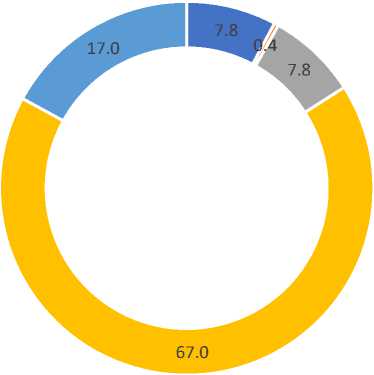
Overall, 67.0% of respondents reported always checking product ingredients, while a further 17.0% did so when time permitted. The remaining 15.9% did not pay attention to product ingredients, relied on a trusted producer, or reported not consuming processed foods (Figure 1). These findings support the importance of clear and accessible labelling in consumer food-choice decisions [9, 10].
-
■ I buy from a trusted producer, so I do not pay attention
-
■ I don’t consume processed foods
-
■ No, I don't pay attention
-
■ Yes, always
-
■ Yes, if I have time
Figure 1. Attention to product ingredients (%).
The results show that 38.9% of respondents prefer drinks without additives, while 61.1% favour products with fruit, cereal, or berry ingredients, indicating interest in both basic and flavoured options. Together with the observed preference for fruit and cereal-based flavours and the regular consumption of cereals, these findings point to strong potential for developing innovative fermented drinks.
Cereals are a regular part of respondents’ diets: 29.6% consume them daily, while more than half do so several times a week. These findings suggest that more than 80% of respondents regularly consume cereal products, indicating frequent cereal consumption within the surveyed group (Figure 2). However, this consumption pattern is strongly dominated by traditional crops such as rice, oats, and buckwheat, while millet remains comparatively underutilised, suggesting a gap between its nutritional potential and actual dietary practice.
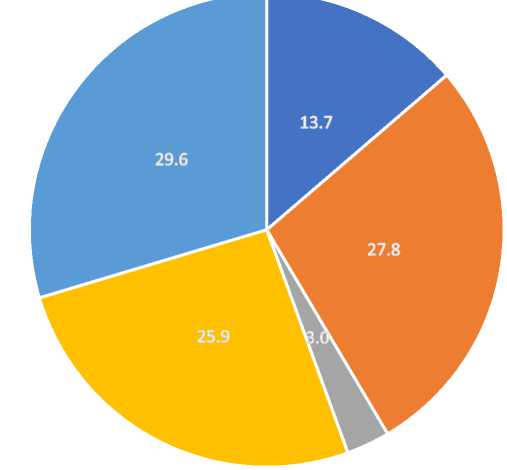
Figure 2. Frequency of cereal consumption among respondents (%)
-
■ 2–3 times a month
-
■ About twice a week
-
■ Never, I don't like them
-
■ Yes, 3–4 times a week
-
■ Yes, daily
Despite the relatively low frequency of millet consumption, respondents generally expressed favourable attitudes toward millet: more than 70% rated it between 8 and 10 points, and 142 participants gave it the highest possible score. This contrast between favourable attitudes and limited actual consumption represents one of the key findings of the study.
The results suggest an attitude–consumption gap: respondents may have favourable perceptions of millet and recognise its nutritional value, yet this positive perception does not necessarily translate into regular dietary use. Similar patterns have been reported in previous studies, where limited awareness, habitual dietary practices, insufficient product diversification, sensory appeal, familiarity, and perceived product attributes were identified as important factors shaping the acceptance of milletbased and functional foods [7, 11–14].
This indicates that consumer acceptance should not be interpreted solely in terms of awareness or favourable attitudes. Familiarity with the product, sensory appeal, opportunities for tasting, and the availability of convenient and attractive millet-based products may also be relevant to the transition from positive perception to actual consumption. Studies on food labelling further indicate that clear and accessible product information can contribute to consumer trust and food-choice decisions [9, 10].
From this perspective, tastings and product exposure may be particularly important because they provide direct sensory experience and reduce uncertainty toward less frequently consumed foods. Thus, the wider adoption of millet-based products may depend not only on communicating their nutritional value, but also on developing products that are appealing in taste, texture, and format and that can be easily incorporated into everyday eating practices.
Similar patterns can be observed in Kazakhstan. Millet has a long-standing cultural and dietary presence in the country, yet its use in contemporary food products remains relatively limited. The present findings add a consumer-level perspective to this context by showing that favourable attitudes toward millet may coexist with limited regular consumption. Thus, in the Kazakhstani setting, familiarity with millet as a traditional food does not necessarily translate into its consistent use in modern dietary practices.
Previous studies conducted in Kazakhstan have highlighted the nutritional and technological potential of millet and the growing interest in cereal-based functional products [15]. The present study complements these findings by focusing on consumer perceptions and food-choice behaviour. Taken together, the results suggest that wider adoption of millet-based foods may require not only technological product development, but also greater attention to sensory appeal, product format, accessibility, and consumer experience.
Several limitations should be considered when interpreting the findings. First, employed respondents accounted for approximately 75% of the sample, which limits the social diversity of the surveyed group and may have influenced the observed foodchoice patterns. Second, the use of an online questionnaire may have favoured individuals with regular access to digital technologies and greater digital literacy. In addition, the sample was not designed to provide nationally representative estimates for the population of Kazakhstan. Consequently, the findings should be interpreted as descriptive patterns within the surveyed group. Future studies using broader and more balanced sampling strategies would help assess whether these patterns are consistent across different sociodemographic groups.
The practical implications of the findings can be directly linked to the observed consumer responses. Since 67.0% of respondents reported always checking product ingredients, clear and accessible product information should be considered an important element in the development and presentation of millet-based foods. In addition, 61.1% of respondents preferred beverages containing fruit, cereal, or berry ingredients, suggesting that diversified product formulations may increase consumer interest. At the same time, the observed gap between favourable attitudes toward millet and its relatively limited regular consumption indicates that positive perceptions alone may not be sufficient to encourage habitual use. Therefore, opportunities for tasting and direct product experience, together with sensory appeal and product availability, may help support the transition from interest to actual consumption. These findings suggest that successful promotion of millet-based products should combine clear communication of their nutritional value with attractive sensory characteristics, convenient product formats, and opportunities for consumer exposure.
Overall, millet-based products show considerable potential. However, their successful introduction depends on combining nutritional and functional value with sensory appeal, product accessibility, and clear communication with consumers.
Conclusion
The findings show that millet (tary) can be seen not only as a traditional product, but also as a promising part of a modern healthy diet. Although it is still consumed at relatively low levels, respondents’ interest in healthy eating and their attention to product composition create a solid basis for the wider introduction of millet-based products.
A key challenge appears to be translating favourable attitudes toward millet into more regular consumption. In practice, this suggests that sensory appeal, product availability, and clear communication of nutritional benefits may be particularly important, as they may help reduce uncertainty and encourage consumers to try new products.
In general, the results point to the need for a more integrated approach that combines product development, sensory quality, and effective communication with consumers. The findings can support both the development and promotion of millet-based functional products, as well as educational initiatives aimed at improving awareness of their nutritional value among different population groups.
