
Денсаулыққа арналған электрондық трикотаж: мониторинг, терапия және комфорт
Journal: Bulletin of Almaty Technological University @vestnik-atu
Section: Технология текстиля и одежды, дизайн
Article in issue: 1 (151), 2026.
Free access
Бұл зерттеу күнделікті қолдануға ыңғайлы және созылмалы аурулары бар адамдардың қажеттіліктеріне арнайы бейімделген трикотаждан жасалған Е-трикотаж бұйымдарын жасауға бағытталған. Біз ұсынған өнімдерге қыздыратын элементтері мен адамның дене температурасын өлшейтін арнайы датчиктері бар кеудеше мен тізеқаптар жатады. Өнімдердің ыңғайлы құрылымы оларды спортшылар жаттығу кезінде және күнделікті өмірде қолдануға мүмкіндік береді. Бұйымдар қосарланған біртегіс, пресс және ластик 2X2 өрімдерімен жүн иірім жібінен тоқылған. Тізеқаптарды дайындау барысында әртүрлі тығыздықтағы қосарланған біртегіс өрімінен үлгілер әзірленген. Тізеқаптардың екі шеті оның форматұрақтылығын сақтау мақсатында созылмалы ластик өрімімен тоқылған, бұл бұйымның сырғып кетпеуін қамтамасыз етеді. Кеудешенің негізгі бөлігі үшін пресс өрімі таңдалған, өйткені ол жоғары пішін тұрақтылық қамтамасыз етеді және рельефті, әрі көлемді бұйым тоқуға мүмкіндік береді, сондықтан пресс өрімі жылы киімдер үшін өте қолайлы. Кеудешенің төменгі бөлігінде электронды элементтерді орнату үшін қажетті құрылымдық беріктік пен монтаж мүмкіндігін қамтамасыз ету мақсатында қосарланған біртегіс өрімі қолданылған. Қыздырғыш элементтер мен дене температурасын өлшейтін датчиктер бұйымдарға қосарланған біртегіс өрімімен тоқу барысында әдейі жасалған тесіктер арқылы еңгізілген.
Similar articles in the section Various industries, trades and crafts

Short address: https://sciup.org/140314167
IDS: 140314167 | UDC: 677.21 | DOI: 10.48184/2304-568X-2026-1-204-209
Электронный трикотаж для здоровья: мониторинг, терапия и комфорт
Исследование направлено на создание Е-текстиля из трикотажа, подходящего для ежедневного использования и специально адаптированного для нужд людей с хроническими заболеваниями. Нами предлагаются безрукавка и наколенники, оснащенные подогревающими элементами и специальным датчикам для измерения температуры тела человека. Комфортная конструкция изделий позволяет использовать их как спортсменам во время тренировок, так и в повседневной жизни. Изделия разработаны из шерстяной пряжи с использованием переплетений: двойная кулирная гладь, пресс и ластик 2Х2. В процессе разработки наколенников были исследованы образцы различной плотности с использованием двойной кулирной глади. Края наколенников связаны ластиком для обеспечения надежной фиксации благодаря его высокой формоустойчивости. Для основной части безрукавки было выбрано переплетение пресс, так как оно обеспечивает хорошую формоустойчивость и позволяет создать рельефность и объемность, что делают его популярным для теплых вещей. Двойная кулирная гладь была применена при формировании нижней части безрукавки для обеспечения необходимой конструктивной прочности и возможности последующего монтажа электронного элемента. Интеграция в изделия элементов подогрева и датчика температуры тела осуществляется через специально предусмотренные отверстия, которые были образованы в процессе вязания двойной кулирной гладью.
Electronic knitwear for health: monitoring, therapy, and comfort
This study explores the development of smart electronic textiles (E-textiles) crafted from knitted fabrics, designed for everyday wear and specifically engineered to meet the needs of individuals with chronic conditions. We propose the design of a vest and knee braces equipped with heating elements and specialised sensors for monitoring human body temperature. The ergonomic structure of these garments ensures their suitability for both athletes during training sessions and for everyday wear. The products are made from wool yarn using various knitting techniques, including double jersey, press stitch, and 2x2 ribbing. During the development of the knee braces, samples of varying densities were examined, employing the double jersey technique. The edges of the braces were finished with ribbing to ensure secure fixation due to its superior dimensional stability. For the main section of the vest, a press stitch was selected, providing excellent shape retention, a three-dimensional texture, and enhanced thermal insulation—qualities that make it ideal for warm clothing. The lower part of the vest incorporates double jersey knitting to ensure structural integrity and facilitate the integration of electronic components. The heating elements and temperature sensors are integrated through specially designed openings formed during the knitting process using double jersey construction.
Text of the scientific article Денсаулыққа арналған электрондық трикотаж: мониторинг, терапия және комфорт
Over the past decade, the textile industry has witnessed significant advancements due to the adoption of innovative technologies. Smart and intelligent textiles, as well as electronic textiles (E-textiles), have emerged as transformative solutions within the sector.
Although smart textiles are no longer a futuristic concept, their widespread application remains an imminent reality. Imagine garments that autonomously adapt to environmental conditions, delivering optimal comfort. For individuals with chronic health conditions, “smart” medical garments equipped with sensors will monitor their health status and even initiate therapeutic interventions. Athletes are already experiencing the benefits of smart textiles, including temperature regulation, enhanced aerodynamics, and real-time data collection during training [1–5].
Electronic textiles, or E-textiles, represent a subclass of smart and intelligent textiles incorporating electronic components [6–9]. Sensors may be externally attached, as seen in products from major sportswear brands such as Adidas, Nike, and Under Armour, or seamlessly integrated into the fabric itself, as implemented by Samsung, Alphabet, Ralph Lauren, and Flex.
We foresee a future in which smart textiles become an integral part of everyday life, offering not only convenience and practicality but also addressing the needs of individuals with chronic health conditions.
Consequently, our research focuses on the development of smart knitwear tailored for daily use and specifically adapted for individuals with chronic diseases [10–12].
Materials and methods
The primary objects of this study were a knitted vest and knee braces made from wool yarn (merino, 32X2 tex). The knitting structures applied included double jersey, press stitch, and 2x2 ribbing. Additionally, supplementary components such as heating elements were integrated into the garments to provide thermal comfort.
The double jersey knitting structure consists of two layers of interlocked loops. Due to this dual-layer configuration, the fabric demonstrates enhanced stability and superior resistance to stretching and deformation compared to single-layer jersey fabrics. Double jersey was employed in the formation of the lower section of the vest and the primary structure of the knee braces to ensure the required mechanical strength and facilitate subsequent integration of electronic components.
The press stitch knitting technique was selected for the main part of the vest. This method allows for the creation of varied textures and patterns, ranging from simple vertical stripes to complex geometric designs. The press stitch was favoured due to its ability to provide dimensional stability and aesthetic appeal, making it highly suitable for warm garments.
The selection of wool yarn was based on several key factors: wool fibres possess a unique structure that imparts excellent functional properties. The scaly surface of the fibres offers high thermal insulation and breathability. Additionally, wool’s hygroscopicity, driven by its amino acid residues, enables effective moisture absorption, maintaining an optimal microclimate. Wool also exhibits inherent antimicrobial properties and is resistant to odour development. Its durability and ecological sustainability make wool an attractive material for textile applications.
Results and discussion
During the development of the knee braces, samples of varying knitting densities were examined, specifically focusing on two different knitting depths: 350 and 330 (Figure 1). Experimental findings revealed that a knitting depth of 330, achieved through double jersey knitting, provided optimal structural stability for the knee braces. This density demonstrated superior shape retention compared to samples with a knitting depth of 350.
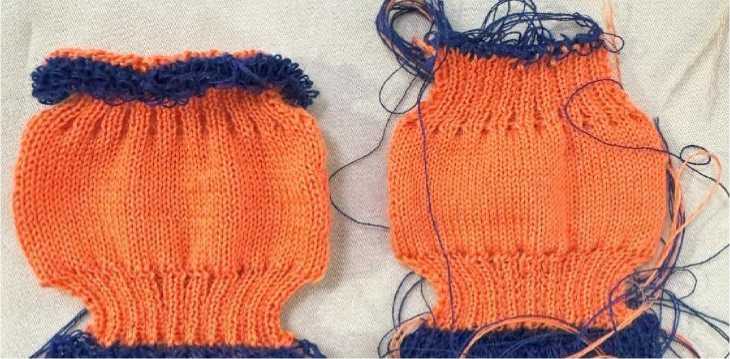
Figure 1. Samples of varying densities for knee braces
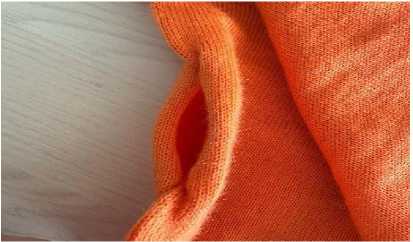
Heating elements were seamlessly integrated into the knee braces through precision-engineered openings formed during the double jersey knitting process. (Figure 2). The edges of the knee braces were finished with ribbing, ensuring secure placement on the body due to the ribbing’s excellent form stability.
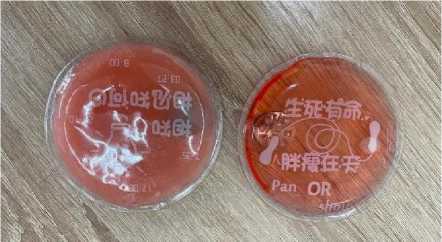
Figure 2. Heating components for the knee braces: a - heating element; b - opening for inserting the heating element
б
The resulting knee braces combined comfort and functionality, making them suitable for daily wear. Their design was specifically adapted to meet the needs of individuals with chronic conditions (Figure 3).
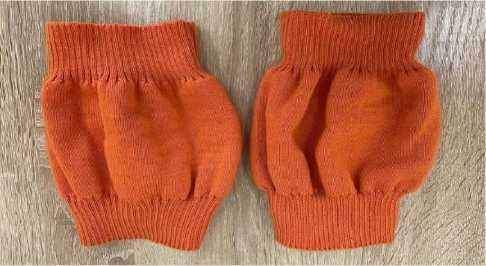
Figure 3. Heated knee pads
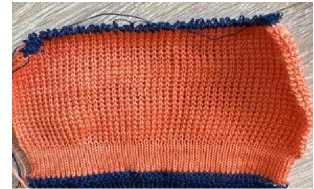
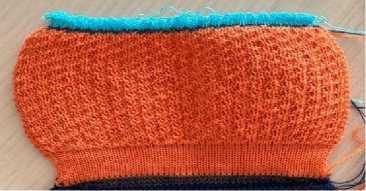
In addition to the knee braces, we developed a vest equipped with electronic components. Its ergonomic design allows it to be used both by athletes during training and by individuals in their daily routines. To determine the optimal knitting structure for the vest, samples employing both the fang and press stitch techniques were tested at different knitting densities (Figure 4).
а
Figure 4. Knitted structure samples: a- fang stitch; b- press stitch
б
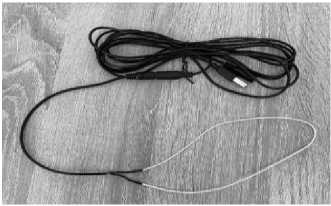
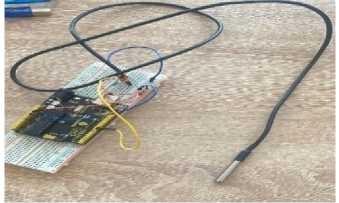
The press stitch was ultimately selected for the main body of the vest due to its superior dimensional stability and its ability to create three-dimensional textures. Double jersey was used in the lower portion of the vest to ensure structural strength and to allow for the installation of electronic components (Figures 5 and 6).
а
Figure 5 . Electronic components: a – heating element; b – temperature sensor for body monitoring
б
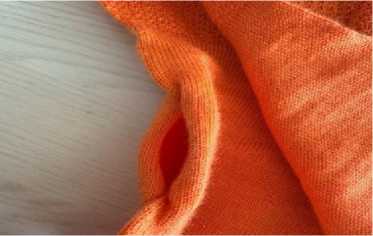
Figure 6. Lower part of the vest: with an opening for inserting the electronic element
Through the adaptation of the textile construction and knitting structures, we successfully developed garments capable of providing heating through integrated heating elements. A temperature sensor was embedded in the armhole area of the vest to monitor the wearer’s body temperature (Figure 7).
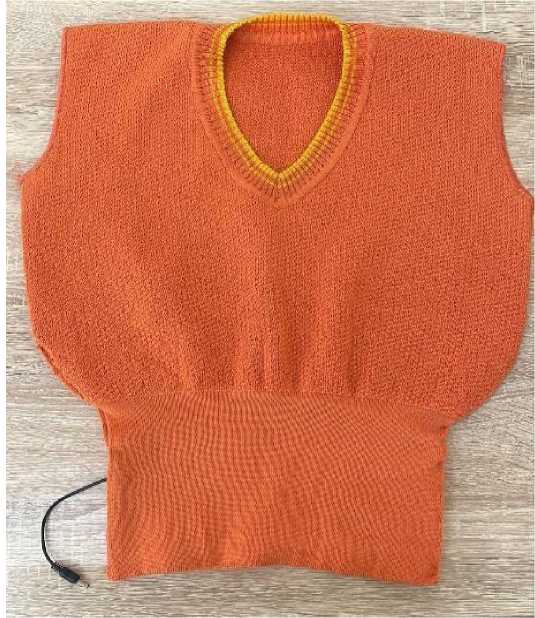
Figure 7. Vest with integrated electronic components
This design combines the functionality of a conventional vest with the enhanced capabilities of embedded electronics. The vest is intended to monitor the wearer’s body temperature while providing comfort and protection against hypothermia in various situations. It is particularly beneficial for individuals with specific health needs and athletes engaged in winter sports. Additionally, the vest can offer comfort to vehicle drivers by preventing the cooling of the back muscles before the car’s seat heating system becomes operational.
Conclusion
This study highlights the feasibility of developing smart knitted garments with seamlessly integrated electronic components, offering a unique combination of functionality, comfort, and manufacturability. The selection of press stitch in combination with double jersey knitting allowed for an optimal balance between the effective integration of electronic elements, comfort during wear, and aesthetic appeal. The outcomes of this research open new avenues for expanding the range of electronic textiles, which are increasingly in demand in both sports and active lifestyle markets, as well as for everyday use by individuals with varying needs.
