
Dirty money in sports: An analysis of money laundering mechanisms in the global sports industry
Journal: Sport Mediji i Biznis @journal-smb
Article in issue: 2 vol.12, 2026.
Free access
Money laundering in the global sports industry represents a growing threat, driven by high financial volumes, transnational transactions, and limited transparency in sports finance. This study examines how criminal networks exploit professional sports—particularly football—to integrate illicit funds into legitimate financial flows. The research is designed as a narrative literature review combined with qualitative case study analysis. A method approach is employed, including content analysis of regulatory frameworks and academic literature, semi-structured expert interviews, and in-depth examination of two prominent cases: the FIFA corruption scandal (2015) and the Belgian football fraud case (2017–2019). Data from international organizations such as FATF, UNODC, ICSS, and SIGA are systematically analyzed. The findings identify recurring money laundering mechanisms in professional sports, most notably inflated player transfer fees, fictitious sponsorship agreements, betting manipulation, and the use of offshore ownership structures. The analysis further reveals significant institutional and regulatory vulnerabilities, including weak financial oversight, inconsistent enforcement of anti–money laundering (AML) regulations, limited transparency in ownership and sponsorship arrangements, and insufficient internal compliance capacities within sports organizations. Football emerges as the most exposed sport due to its global reach, transfer market structure, and high commercial revenues. The study concludes that existing AML frameworks in sport remain largely reactive and fragmented, particularly in a transnational context. Strengthening financial oversight, enhancing transparency, establishing dedicated compliance units, and improving international regulatory coordination are essential to safeguarding the integrity of professional sports. These findings contribute to sport governance and sport business literature by offering policy-relevant insights into risk management and integrity protection in the global sports industry.
Short address: https://sciup.org/170213399
IDS: 170213399 | UDC: 343.9.024:336.7]:796.332(4) | DOI: 10.58984/smb2602172j
Text of the scientific article Dirty money in sports: An analysis of money laundering mechanisms in the global sports industry
Received: 16.1.2026 DOI:
Money laundering in professional sports is most commonly conducted through sponsorship agreements, player transfers, ticket sales, betting activities, and investments in sports organizations, where high financial volumes and complex transactional structures provide opportunities to disguise illicit funds (FATF, 2009; Unger & Ferwerda, 2011). Among all sports, professional football represents the most exposed sector due to its global transfer market, extensive commercial revenues, and transnational financial flows (UNODC, 2021; ICSS, 2019). This phenomenon has attracted increasing academic and policy attention due to its implications for financial integrity and governance in global sport.Although sport is traditionally associated with fairness, competition, and global unity, the rapid commercialization and internationalization of the sports industry have significantly increased its vulnerability to financial crime (Kuwelker, Diaconu, & Kuhn, 2022; Shchokin et al., 2023). Opaque ownership structures, weak financial oversight, and inconsistent regulatory enforcement create favorable conditions for criminal networks to exploit legitimate sports-related transactions for the purpose of money laundering (Li, 2023; Mravec, 2025).
Despite the growing body of literature, a clear research gap remains. Existing studies predominantly focus on descriptive accounts of individual cases or isolated mechanisms, with limited efforts to develop a systematic and conceptually structured typology of money laundering practices in sport. Furthermore, there is a lack of integrative approaches that combine case study evidence, institutional reports, and expert insights into a unified analytical framework.
Against this background, this study aims to provide a systematic and analytically grounded examination of money laundering in professional sports, with a particular focus on football.
The primary objective of the study is to identify and develop a typology of recurring laundering mechanisms based on qualitative evidence derived from international case studies and expert insights.
By focusing analytically on the identification and typology of laundering mechanisms, this study contributes to the sport business and sport governance literature through an empirically grounded and conceptually structured analysis of money laundering risks in professional sports.
Several high-profile cases illustrate how money laundering operates in sport. The Belgian "Operation Clean Hands" scandal revealed a network of corruption involving clubs, agents, and referees, leading to multiple charges related to money laundering and fraud.
Similarly, investigations into South American football have exposed systematic abuses involving criminal networks and sports federations (UNODC, 2021).
FIFA and UEFA have also implemented financial fair play regulations, though critics argue enforcement is inconsistent and often lacks transparency (European Parliament, 2020).
The global nature of sport complicates enforcement. Differences in national laws, limited data sharing, and loopholes in ownership disclosure laws hinder effective action (Unger & Ferwerda, 2011; OECD, 2009). Club ownership structures, particularly involving offshore entities, further obscure the financial trail.
Additionally, there is limited training among sports organizations in identifying suspicious transactions, and most rely heavily on external audits rather than in-house compliance mechanisms (ICSS, 2018).
Technology such as AI and blockchain is being considered to improve transparency and traceability in sports finance (SIGA, 2022). There is also growing advocacy for harmonized international regulatory standards and the creation of independent anti-money laundering units within sports bodies.
To achieve this aim, the research is guided by a set of interrelated questions that address the structural, operational, and regulatory dimensions of money laundering in sport. Specifically, the study examines: (RQ1) how structural characteristics of the sports sector, particularly football, create opportunities for money laundering; (RQ2) what the most common laundering mechanisms are and how they facilitate the integration of illicit funds into legitimate financial flows; (RQ3) how effective existing regulatory and enforcement
Joksimović, M., Grujić Vučkovski, B., & Ristanović, V. (2026). Dirty money in sports: An analysis of money laundering mechanisms in the global sports industry, Sport media and business , 12(2), 156-172 frameworks are in mitigating these risks; and (RQ4) how governance structures, transparency, and internal compliance systems influence the vulnerability of sports organizations. By addressing these questions through a qualitative, multi-source analytical approach, the study provides a comprehensive understanding of financial crime risks in sport and offers practical implications for strengthening institutional resilience and regulatory effectiveness.
Method and Subject of Research and Data Collection
The research design is analytically oriented toward the identification and typology of money laundering mechanisms, rather than the formal evaluation of regulatory effectiveness.
The methodological framework integrates both inductive and deductive reasoning, allowing patterns to emerge from empirical evidence while simultaneously assessing them within established theoretical and regulatory frameworks. Data collection was conducted through a systematic, multi-source approach between 2023 and 2025. The primary sources included official and publicly available documents issued by leading international organizations involved in combating financial crime in sport, such as the Financial Action Task Force (FATF), the United Nations Office on Drugs and Crime (UNODC), the International Centre for Sport Security (ICSS), and the Sport Integrity Global Alliance (SIGA).
Document inclusion criteria were as follows: (1) verified or official source, (2) direct relevance to financial crime and sport integrity, and (3) sufficient analytical depth to support qualitative assessment.
The research was conducted between 2023–2025 using a systematic multi-source approach integrating document analysis, case studies, and expert interviews.
To complement the documentary analysis, purposively selected case studies were included to provide empirically grounded insights. Two high-profile international cases were analyzed in detail: the FIFA Corruption Scandal (2015), focusing on bribery schemes, illicit payments, and money laundering involving senior officials and sports marketing executives, and the Belgian Football Fraud Scandal (2017–2019), examining organized crime involvement, inflated player transfers, fictitious consultancy fees, and laundering through football transactions.Case selection followed a purposive sampling strategy, prioritizing analytical relevance, availability of verified documentation, and significance for sport governance and financial regulation.
Case materials included court documents, investigative reports, audit findings, and official statements. The analysis focused on identifying laundering typologies and structural vulnerabilities exploited within each case. Additionally, semi-structured qualitative
Joksimović, M., Grujić Vučkovski, B., & Ristanović, V. (2026). Dirty money in sports: An analysis of money laundering mechanisms in the global sports industry, Sport media and business , 12(2), 156-172 interviews were conducted with fifteen experts, including specialists in sports law, compliance officers, and representatives of sports governing bodies. Participants were selected based on their professional experience and direct involvement in sports governance or financial regulation.
Interviews explored operational characteristics of laundering mechanisms, enforcement challenges, and perceived institutional weaknesses. All interviews were transcribed and subjected to thematic coding to identify recurring patterns and expert consensus. Data analysis was performed using qualitative content analysis supported by systematic coding and thematic categorization. A comparative analytical approach was applied to examine similarities and differences across data sources and cases, enabling the refinement of typological classifications. The triangulation of documentary evidence, case studies, and expert interviews enhanced the validity and reliability of the findings.The coding process was conducted in two stages: open coding (identification of recurring financial practices and transaction patterns) and axial coding (grouping these into higher-order laundering typologies). To ensure analytical consistency and transparency, NVivo software (QSR International, Australia) was used for data organization, coding, and cross-case comparison (Allsop et al., 2022).The combined methodological approach provides analytically grounded insights into recurring money laundering mechanisms and the structural conditions that enable them. While the study does not aim for statistical generalization, it ensures methodological rigor, internal coherence, and transparency.The methodological design ensures internal coherence between research design, data collection, and qualitative analysis procedures, while acknowledging that further empirical research using quantitative financial data could complement the findings.
Results
This study applied a qualitative methodological framework combining content analysis, comparative case study analysis, and expert interviews. This method approach enabled a systematic examination of money laundering mechanisms in global sports and ensured triangulation of data sources, thereby increasing the reliability of the empirical findings.
The content analysis covered official reports and policy documents issued by international regulatory and enforcement bodies, including the Financial Action Task Force (FATF), the United Nations Office on Drugs and Crime (UNODC), and the International Centre for Sport Security (ICSS), as well as relevant academic literature and legal frameworks related to antimoney laundering (AML) in sport (Verschuuren, 2018).
The analysis focused on three main thematic categories: financial vulnerabilities in sports institutions, dominant laundering mechanisms (e.g., inflated player transfers, betting manipulation, sponsorship abuse), and regulatory and jurisdictional gaps.
The empirical data reveal significant regional disparities in reported sports-related crime. As shown in Table 1, Europe accounts for the largest share of reported cases worldwide (38%), followed by the Middle East and North Africa (27%), Asia (18%), and the Americas (12%).
Africa represents the smallest share (5%), which may reflect both lower detection rates and underreporting due to weaker monitoring mechanisms.
Table 1. Geographic Distribution of Sports Crime Reports.
|
Region |
Share (%) |
|
Europe |
38 |
|
Middle East & North Africa |
27 |
|
Asia |
18 |
|
Americas |
12 |
|
Africa |
5 |
Source : Author’s own elaboration, based on data.
The analysis identifies distinct, continent-specific typologies of money laundering in the sports sector, reflecting regional institutional, regulatory, and market characteristics. Table 2 presents a comparative overview of the dominant laundering methods and structural vulnerabilities observed across continents, based on synthesized evidence from international reports and case studies.
Table 2. Typology of money laundering in sports by continent.
|
Continent |
Typology and Methods of Money Laundering in Sports |
|
Europe |
Inflated player transfers and overvalued sponsorship agreements in professional football; match-fixing and illegal betting facilitated by organized crime networks; use of offshore tax havens and shell companies to obscure ownership; exploitation of loopholes in Financial Fair Play (FFP) regulations; use of cryptocurrencies in unregulated betting markets. |
|
Asia |
Match-fixing in cricket and football, particularly in South and Southeast Asia; cross-border laundering through online betting platforms; bribery and corruption within sports federations and governing bodies; laundering through club investments and fictitious sponsorship arrangements; weak or uneven AML enforcement mechanisms. |
|
Americas |
Links between organized crime (including drug cartels) and professional football clubs; underground betting operations and ticket fraud; governance corruption and embezzlement within sports organizations; tax evasion and opaque ownership structures; limited cross-border regulatory coordination. |
|
Australia |
Illegal online betting via offshore platforms; match-fixing in minor leagues and niche sports; existing AML legislation (AML/CTF Act 2006) with uneven enforcement; laundering through broadcasting rights and merchandise revenues; relatively lower exposure to transnational criminal networks. |
Continent Typology and Methods of Money Laundering in Sports
High levels of corruption and weak institutional capacity; fake tournaments and sham sponsorships used to introduce illicit funds; misuse of donor and
Africa development funds within sports federations; minimal AML compliance structures at club level; illicit betting and use of “smurfing” techniques to avoid detection.
Source : Based on FATF (2022), UNODC (2022), ICSS (2019), and academic literature.
Across all regions, the findings indicate recurring vulnerabilities linked to player transfers, betting activities, sponsorship arrangements, and ownership opacity. However, the specific manifestation of laundering techniques varies significantly by continent, reflecting differences in regulatory capacity, governance standards, and market structures. This comparative typology provides an empirical foundation for understanding regional risk profiles and informs targeted policy and regulatory responses discussed in the following section.
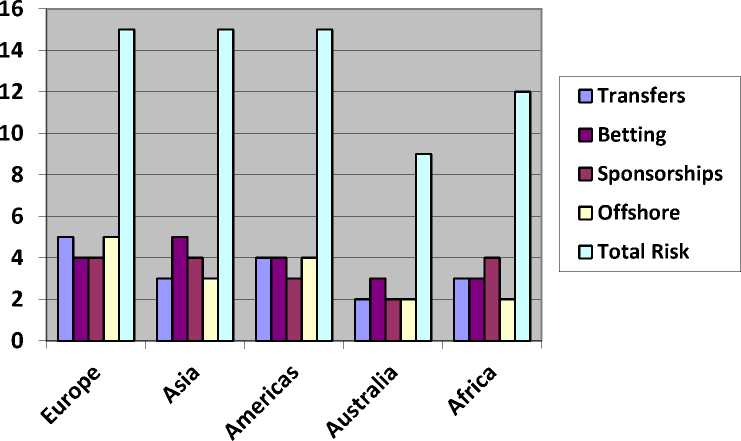
Table 3 presents a comparative assessment of money laundering risk factors across continents based on transfers, sponsorships, betting, and offshore structures. Europe records the highest overall risk score (18), followed by Asia and the Americas (15 each). Africa shows a moderate risk level (12), while Australia has the lowest cumulative risk score (9).
Table 3. Money laundering risk factors in sports by continent.
Continent Transfers Sponsorships Betting Offshore Total Risk
|
Europe |
5 |
4 |
4 |
5 |
18 |
|
Asia |
3 |
4 |
5 |
3 |
15 |
|
Americas |
4 |
3 |
4 |
4 |
15 |
|
Australia |
2 |
2 |
3 |
2 |
9 |
|
Africa |
3 |
4 |
3 |
2 |
12 |
Legend: Risk levels (1–5) indicate the assessed severity of each money laundering factor in sports organizations: 1 – Very low risk; 2 – Low risk; 3 – Moderate risk; 4 – High risk; 5 – Very high risk; Transfers – Risk associated with inflated or suspicious player transfers;
Sponsorships – Risk linked to fictitious, overvalued, or opaque sponsorship deals; Betting – Risk related to match-fixing, illegal betting markets, or manipulation of odds; Offshore – Risk from opaque ownership structures, shell companies, or cross-border fund movements; Total Risk – Sum of the individual risk scores across the four categories for each continent. A higher total indicates a greater overall exposure to money laundering in sports within that region.
Source : Author’s own elaboration, based on data.
Chart 1 illustrates both the magnitude and composition of these risks, allowing for the identification of dominant laundering channels in each region.
Chart 1 . Money laundering risk factors in sports by continent.
Source : Author’s own elaboration, based on data.
The findings also reveal substantial internal weaknesses in sports organizations’ AML frameworks. As shown in Table 5, the most severe vulnerabilities include the absence of internal compliance units, offshore ownership structures, and limited financial transparency, all assessed as severity level 5 (very high risk). Weak Know Your Customer (KYC) procedures and poor international cooperation are rated as severity level 4 (high risk), while insufficient AML training represents a moderate risk, severity level 3. Risk scores (1–5) were assigned based on thematic coding of case data and expert judgment during analysis rounds. The data presented in Table 5 were compiled from multiple sources, including international case studies (e.g., FIFA 2015 Corruption Scandal, Belgian Football Fraud 2017–2019), regulatory reports from the Financial Action Task Force (FATF, 2022), the United Nations Office on Drugs and Crime (UNODC, 2022), and the International Centre for Sport Security (ICSS, 2019). Key vulnerabilities were identified through thematic coding of qualitative data using NVivo (QSR International, Australia), including expert interviews with sports compliance officers and analysis of organizational reports.
-
Tabl e 5 . Key AML vulnerabilities in sports organizati ons .
AML Weakness Severity (1–5)
No internal compliance unit5
Offshore ownership5
Weak KYC procedures4
Poor international cooperation4
Limited financial transparency5
Low AML training3
Legend: Severity levels indicate the assessed risk of each vulnerability for facilitating money laundering - 1 - Very low risk; 2 - Low risk; 3 - Moderate risk; 4 - High risk; 5 -Very high risk.
Source : Author’s own elaboration, based on data.
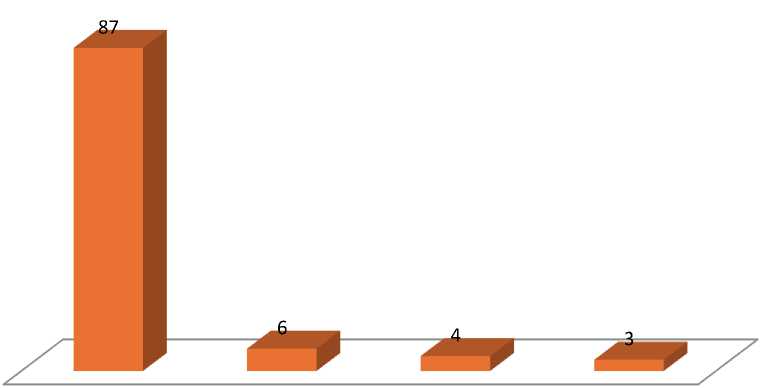
Data from processed cases further illustrate the scale of financial crime in sport. According to UNODC estimates, illegal betting, match manipulation, and organized crime connections in sport generate up to USD 1.7 trillion annually (UNODC, 2022). High-profile cases, such as the embezzlement and illegal betting activities involving a former NFL employee, demonstrate how sports institutions can be exploited for large-scale financial misconduct. Table 6 presents the sports most affected by financial crime, while Chart 2 provides a graphical representation of the sports most affected by financial crime.
-
Table 6. Sports most affected by financial crime.
Sport Share of Allegations (%)
Football87
Tennis6
Handball4
Athletics3
Source : Author’s own elaboration, based on data.
Chart 2. Sports most affected by financial crime.
■ Share of Allegations (%)
Football Tennis Handball Athletics
Source : Author’s own elaboration, based on data.
Additional empirical evidence from the Sport Integrity (SI) Hotline indicates more than 240 reported allegations of corruption in sport (ICSS, 2019). Football accounts for 87% of all reported cases (Table 6), confirming its dominant exposure compared to other sports such as tennis (6%), handball (4%), and athletics (3%). The chart (Chart 2) visually represents the relative share of reported cases per sport, with vertical bars labeled according to percentage values for clarity.
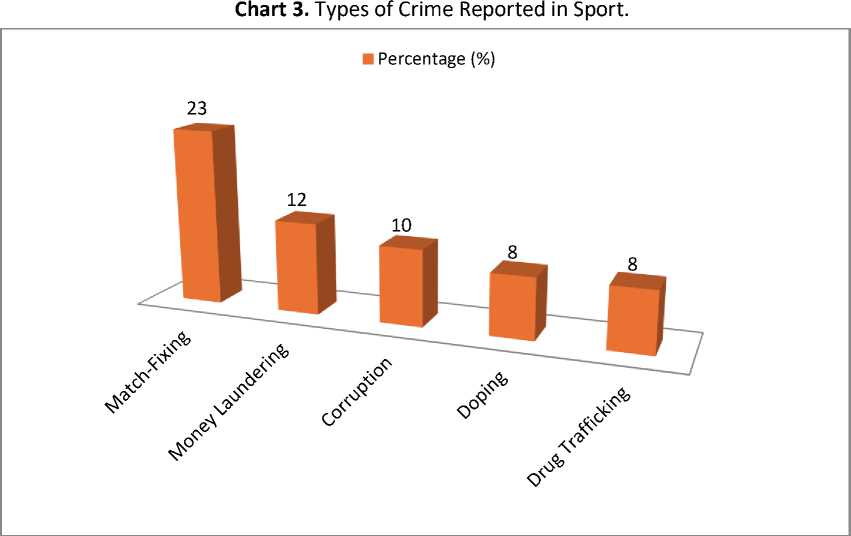
Table 7 presents the types of crime reported in sport, while Chart 3 provides a graphical representation of the types of crime reported in sport.
-
Tabl e 7. Types of crime reported in sp ort.
Crime Type Percentage (%)
Match-Fixing23
Money Laundering12
Corruption10
Doping8
Drug Trafficking8
Other Crimes39
Source : Author’s own elaboration, based on data ICSS Hotline.
Source : Author’s own elaboration, based on data ICSS hotline.
Reported crime types (Table 7 and Chart 3) show that match-fixing represents 23% of cases, followed by money laundering (12%) and corruption (10%). Doping and drug trafficking each account for 8%, while other crimes comprise 39% of reports.
Overall, the research results demonstrate clear and consistent empirical patterns of money laundering and related financial crime within the global sports sector. The findings reveal pronounced regional disparities in reported cases, well-defined continent-specific laundering typologies, and recurrent risk factors linked to player transfers, betting markets, sponsorship arrangements, and offshore ownership structures. Across all analyzed data sources, professional football emerges as the most exposed sport, accounting for the vast majority of reported allegations. In addition, the results highlight significant internal AML vulnerabilities within sports organizations, particularly the absence of compliance units, limited financial transparency, and weak KYC procedures. Taken together, these findings provide a comprehensive empirical foundation for further interpretation and policy-oriented discussion in the subsequent section.
Discussion
The findings of this study provide a systematic insight into the structural, operational, and regulatory dimensions of money laundering in professional sports, particularly football. The discussion below explicitly addresses the research questions (RQ1–RQ4) and critically links
Joksimović, M., Grujić Vučkovski, B., & Ristanović, V. (2026). Dirty money in sports: An analysis of money laundering mechanisms in the global sports industry, Sport media and business , 12(2), 156-172 the results presented in Tables 1–7 and Charts 1–3 to existing literature and practical mechanisms of illicit financial flows.
The study confirms that the professional sports sector is highly susceptible to money laundering due to weak financial oversight and opaque ownership structures. As illustrated in Table 5, the absence of internal compliance units, limited transparency in ownership, and weak KYC procedures represent the most severe internal vulnerabilities (severity level 5). These organizational weaknesses facilitate the infiltration of illicit funds by providing minimal scrutiny of incoming financial flows, allowing criminals to integrate illegal revenues into legitimate sports operations (Kuwelker et al., 2022; Shchokin et al., 2023). For example, offshore ownership structures enable the layering of illicit funds, while inadequate KYC protocols hinder the identification of high-risk entities, corroborating findings from FATF (2022) and UNODC (2022). These findings directly address RQ1 by highlighting how structural vulnerabilities create opportunities for money laundering in professional sports
These mechanisms demonstrate that money laundering in sports is not incidental but structurally embedded within high-risk activities, aligning with the comparative analysis in Table 4 and the typology in Table 3. These mechanisms directly answer RQ2 by detailing the operational strategies through which illicit funds are integrated into legitimate sports finance.
The results indicate that existing anti-money laundering (AML) measures remain largely reactive. While some jurisdictions, particularly in Europe, have implemented Financial Fair Play (FFP) regulations and comprehensive AML frameworks, uneven enforcement allows transnational criminal networks to exploit loopholes (FATF, 2022). For instance, Table 4 shows Europe has the highest total risk score (18), highlighting that even well-regulated regions remain vulnerable due to the complexity and mobility of illicit financial flows. This observation supports previous critiques regarding the fragmented implementation of AML measures in sport (Kuwelker et al., 2022; Shchokin et al., 2023). Regulatory gaps are particularly evident in Asia and Africa, where limited cross-border cooperation and uneven monitoring exacerbate the risk of laundering through betting markets and sponsorship abuse. This analysis addresses RQ3 by evaluating the effectiveness and limitations of current regulatory and enforcement mechanisms in mitigating money laundering risks.
At the organizational level, deficiencies such as the lack of internal compliance units, insufficient AML training, and limited transparency significantly constrain the detection and prevention of illicit financial flows. Chart 3 and Table 7 demonstrate the relative severity of these vulnerabilities, which amplify the sector’s exposure to criminal exploitation. Consistent with prior studies, such as those by ICSS (2019) and UNODC (2022), these weaknesses create an environment in which laundering can occur with minimal oversight. Notably, high implementation costs, resistance to digitalization, and insufficient expertise further impede proactive risk management. These organizational insights respond to RQ4 by showing how internal governance and institutional factors influence susceptibility to money laundering.
Overall, the discussion demonstrates that the mechanisms and vulnerabilities identified in this study correspond closely with existing literature. Empirical patterns from international case studies (e.g., FIFA 2015, Belgian football 2017–2019) and quantitative risk assessments (Tables 1–6) illustrate how organizational, regional, and regulatory factors intersect to facilitate money laundering. By linking Tables 1–7 and Charts 2–3 to RQ1–RQ4, this study provides a coherent narrative that contextualizes both the prevalence and the structural embedding of illicit financial flows in sport.
Beyond mere description, the study elucidates the practical functioning of money laundering in sports. For example, layering through inflated transfers is often combined with sponsorship schemes and offshore transactions to create complex financial pathways that are difficult to trace. Betting-related laundering typically exploits weakly regulated or online platforms, where winnings are reintegrated into the legitimate economy. These mechanisms are not only theoretically supported by the literature (Cindori & Manola, 2020; Joksimović et al., 2024) but also empirically evident in the case studies analyzed.
The synthesis of empirical evidence and literature indicates that money laundering in sports is systemic, regionally differentiated, and closely tied to organizational deficiencies. Strengthening internal compliance, improving transparency, harmonizing international regulations, and promoting proactive risk management are essential steps to mitigate these vulnerabilities. The study underscores the need for both preventive measures and enhanced cross-border cooperation to effectively counteract money laundering in professional sports.
Future studies could significantly enhance the understanding, relevance, and practical impact of research on sports-related money laundering: Expansion to other sports and regions – Broader comparative studies involving underrepresented sports (e.g., basketball, athletics, esports) and regions with limited reporting could uncover novel laundering typologies and institutional vulnerabilities. Longitudinal analysis – Tracking cases and regulatory interventions over time would allow for the assessment of trends, effectiveness of AML measures, and the evolution of laundering mechanisms in response to policy changes. Quantitative modeling – Integrating quantitative methods, such as network analysis or financial modeling, could complement qualitative insights and enable the prediction of high-risk transactions or organizational behaviors. Technological and digital dimensions – Future research should investigate the impact of emerging technologies, including cryptocurrencies, blockchain-based sponsorships, and digital betting platforms, on laundering patterns. Policy evaluation and enforcement studies – Empirical assessment of the effectiveness of existing regulations, cross-border cooperation, and internal compliance practices could provide actionable recommendations for sports governing bodies and financial authorities.
By addressing these areas, future research could not only deepen the empirical understanding of money laundering in sports but also offer evidence-based guidance for more effective prevention, detection, and policy interventions, thereby enhancing the practical and scholarly contribution of the field.
Conclusion
Money laundering in sports represents a complex and growing challenge, characterized by recurring operational patterns, structural vulnerabilities, and opaque financial arrangements. Professional football is particularly susceptible, with empirical evidence highlighting the use of inflated player transfers, fictitious sponsorship agreements, and betting manipulation as key mechanisms through which illicit funds are systematically integrated into legitimate financial flows. Empirical evidence from this study—including case analyses, charts, and tables—confirms that these mechanisms are widely employed and systematically exploit weaknesses in regulatory oversight and organizational transparency.
The study demonstrates that structural, operational, and regulatory vulnerabilities in professional sports create ideal conditions for money laundering. High financial volumes, complex transactions, and opaque ownership structures facilitate illicit activities, while inconsistencies in anti-money laundering (AML) enforcement leave gaps for exploitation. Regulatory mechanisms such as UEFA’s Financial Fair Play offer some mitigation, but enforcement gaps, cross-border loopholes, and emerging technologies, including cryptocurrencies, continue to challenge effective oversight.
Regional analysis reveals pronounced disparities. Europe and the Middle East/North Africa report the highest incidences of sports-related financial crime, while Africa and parts of Asia remain under-monitored, reflecting both reporting limitations and weaker institutional frameworks. Football dominates the affected sports landscape, followed by tennis, handball, and athletics. Common crime types—match-fixing, money laundering, and corruption— underscore the structural vulnerabilities within the sector.
Addressing these risks requires coordinated, proactive efforts. Sports governing bodies, regulatory authorities, financial institutions, and governments must enhance transparency, implement rigorous internal controls, enforce thorough due diligence, and foster international collaboration. Only a unified, well-regulated, and transparent approach can mitigate the risk of illicit financial activity and safeguard the integrity of sports.
Ultimately, protecting the sports sector from money laundering is essential not only for fairness and ethical competition but also for maintaining public trust and preserving its economic value. Targeted preventive measures, consistent enforcement, and proactive global cooperation are critical to ensuring that professional sports remain resilient against exploitation.
Joksimović, M., Grujić Vučkovski, B., & Ristanović, V. (2026). Dirty money in sports: An analysis of money laundering mechanisms in the global sports industry, Sport media and business , 12(2), 156-172 Support: Paper is a part of research financed by the Ministry of Science, Technological Development and Innovation of the Republic of Serbia and agreed in decision no. 451-0366/2024-03/200054 and research result on project U 01/2023 Green Economy in The Era of Digitization, Faculty of Finance, Banking, and Auditing, Alfa BK University in Belgrade, Republic of Serbia.
