
Effect of collagen hydrolysate and plant antioxidant on the texture parameters of cooked sausages
Journal: Bulletin of Almaty Technological University @vestnik-atu
Section: Технология пищевой и перерабатывающей промышленности
Article in issue: 1 (151), 2026.
Free access
In the meat industry, it is important to enrich meat products with plant-based functional components, which improves their nutritional value but also changes the mechanical properties of the matrix. The aim of this study was to evaluate the effect of collagen hydrolysate and cranberry powder on the structural and mechanical properties of cooked sausages. The study was conducted using a standard two-cycle scheme on a structurometer, and the hardness, springiness, cohesion, resilience and chewiness of cooked sausage products were determined. Approximation was performed using simple linear models and paired correlation analysis. The addition of 10% collagen hydrolysate led to a slight decrease in indicators relative to the control, while the addition of cranberry powder (1–3%) at a fixed level of hydrolysate (10%) caused a dose-dependent decrease in all indicators, which was confirmed by linear trends with a high explanation of variance (R²=0,89–0,99). Pairwise correlation analysis showed very strong inverse correlations for cranberries with TPA (r =-0,92…-0,98, p=0,0045–0,0250), while moderate negative correlations without statistical significance were obtained for hydrolysate (r=-0,50…-0,80, p>0.05). The results indicate that cranberry powder is the main factor in reducing the structural and mechanical properties, and further research is needed to establish the limits for the amount of functional ingredient to be added. Further research is planned in the RSM method, taking into account the interactions of factors, with organoleptic evaluation, as well as rheological and microstructural analysis.
Similar articles in the section Communication and transport industries. Accountancy. Business management. Public relations
Short address: https://sciup.org/140314152
IDS: 140314152 | UDC: 65.59.31 | DOI: 10.48184/2304-568X-2026-1-88-97
Пісірілген шұжықтардың құрылым сипаттамаларына коллаген гидролизатының және өсімдік антиоксидантының әсері
Ет өнеркәсібінде өсімдік текті функционалдық құрамдастармен байыту өзектілігі жоғары, бұл тағамдық құндылықты арттырумен қатар, матрицаның механикалық қасиеттерін өзгертеді. Осы зерттеудің мақсаты – пісірілген шұжықтардың құрылымдық-механикалық қасиеттеріне коллаген гидролизаты мен мүкжидек ұнтағының әсерін бағалау. Зерттеу құрылымометрде стандартты екі циклдық схема бойынша жүргізіліп, қаттылық, серпімділік, когезия, қалпына келгіштік және шайналғыштық анықталды. Аппроксимация қарапайым сызықтық модельдермен және жұптық корреляциялық талдаумен орындалды. 10 % коллаген гидролизатын енгізу бақылаумен салыстырғанда көрсеткіштердің шамалы төмендеуіне әкелді, ал гидролизат деңгейі 10 % болғанда мүкжидек ұнтағын 1–3 % қосу барлық көрсеткіштердің дозаға тәуелді төмендеуін туғызды, бұл жоғары дисперсия түсіндіруімен (R²=0,89–0,99) сызықтық трендтермен расталды. Жұптық корреляциялық талдау мүкжидек үшін TPA-мен өте күшті кері байланыстарды көрсетті (r=−0,92…−0,98, p=0,0045–0,0250), ал гидролизат үшін статистикалық маңыздылығы жоқ орташа теріс байланыстар алынды (r=−0,50…−0,80, p>0,05). Нәтижелер құрылымдық-механикалық көрсеткіштерді төмендетуде негізгі фактор мүкжидек ұнтағы екенін көрсетеді; функционалдық ингредиенттің енгізу шектерін белгілеу үшін қосымша зерттеулер қажет. Алдағы жұмыстар факторлар өзара әрекеттесуін ескеретін RSM тәсілінде, органолептикалық бағалаумен, сондай-ақ реологиялық және микроструктуралық талдаумен жоспарлануда.
Влияние гидролизата коллагена и растительного антиоксиданта на структурные характеристики вареных колбас
В мясной отрасли является актуальным обогащение мясных изделий растительными функциональными компонентами, что улучшает их пищевую ценность, но одновременно меняет механические свойства матрицы. Целью работы было оценить влияние гидролизата коллагена и порошка клюквы на структурно-механические свойства варёных колбас. Исследование проводилось по стандартной двухцикловой схеме на структурометре, где определяли твердость, упругость, когезию, устойчивость и пережёвываемость вареных колбасных изделий. Аппроксимация проводилась простыми линейными моделями и парным корреляционным анализом. Внесение 10% гидролизата коллагена приводило к незначительному снижению показателей относительно контроля, тогда как добавление клюквенного порошка (1–3%) при фиксированном уровне гидролизата (10%) вызывало дозозависимое уменьшение всех показателей, что подтверждено линейными трендами с высоким объяснением дисперсии (R²=0,89–0,99). Парный корреляционный анализ показал для клюквы очень сильные обратные связи с TPA (r =−0,92…−0,98, p=0,0045–0,0250), для гидролизата получены умеренные отрицательные зависимости без статистической значимости (r=−0,50…−0,80, p>0,05). Полученные результаты указывают, что главным фактором понижения показателей структурно-механических свойств выступает порошок клюквы и необходимо провести дальнейшее иследование для установления лимитов количества внесения функционального ингредиента. Дальнейшие исследования планируются в формате RSM с учётом взаимодействий факторов, с органолептической оценкой, а также с реологическим и микроструктурным анализом.
Text of the scientific article Effect of collagen hydrolysate and plant antioxidant on the texture parameters of cooked sausages
IRSTI 65.59.31
In the preceding two decades, the notion of "functional ingredients" in the domain of meat technology has undergone a transition, evolving from a niche to a mainstream reformulation strategy. This evolution is driven by the dual objectives of enhancing nutritional profiles while maintaining product quality. The seminal work of Jiménez-Colmenero and colleagues established meat products as conduits for bioactive constituents and delineated core strategies (e.g. fat and salt replacement, incorporation of antioxidants, fibres, and peptides) that deliver health benefits beyond basic nutrition [1]. Subsequent reviews have consolidated these approaches, highlighting seven principal groups of functional constituents (fatty acids, minerals, vitamins, plant antioxidants, dietary fibres, probiotics, bioactive peptides) and emphasising that technological performance (e.g. water-binding, emulsion stability, and texture) is as critical as the physiological function when formulating "healthier" meat products [2].
A significant trend in the field of "cleanlabel" enrichment involves the utilisation of plant fibres and fruit by-products. In the context of sausage models, dietary fibres and pomaces have been observed to modulate Texture Profile порошок клюквы, варёная колбаса, анализ
Analysis (TPA) readouts via water binding, viscosity, and microstructural effects. For instance, inulin and grape pomace altered the hardness, gumminess and chewiness of Spanish-style sausages, whereas in some Frankfurt-type systems TPA remained unchanged, emphasising the matrix-and dose-dependence of fibre effects. Mechanistically, insoluble fibres have been shown to form an auxiliary 3-D network that competes with, or reinforces, the myofibrillar gel. Furthermore, differences in particle size and hydrophobicity have been demonstrated to tune water distribution and emulsion stability [3].
The appeal of berries lies in their phenolic profile (proanthocyanidins, anthocyanins), which is responsible for their antimicrobial and antioxidant properties. In the context of fermented sausages, the incorporation of 5 g/kg cranberry powder has been shown to significantly influence the microbiota, predominantly comprising Pediococcus and Staphylococcus species, with a proportion exceeding 90%. This intervention has been observed to enhance the colour and quality attributes of the product, thereby validating its function as a natural nitrite adjunct.
In meat-containing cooked sausages, cranberry extract at 0,01–0,03% retarded oxidative processes with an optimum sensory result around 0,02%. Aside from redox effects, polyphenols interact with muscle proteins: recent reviews indicate that covalent and non-covalent phenolic– protein binding can alter protein conformation and gelation, which may, in turn, alter TPA metrics— for example, lower springiness or hardness at higher phenolic loads—via changes in crosslinking and water immobilization. These interactions provide a mechanistic rationale for dose-dependent softening observed in some berry-enriched systems. [4, 5].
Gelatin (collagen) and hydrolysates are widely used texturizers and fat replacers. Their effects on TPA depend upon source, molecular weight distribution, and addition level. In cooked sausage, 1% addition of duck skin gelatin hydrolysate enhanced cohesiveness and chewiness without changing pH or cooking loss, thereby suggesting that low-level hydrolysates can strengthen the gel network [6]. For chicken burgers, partial substitution of fat with collagen hydrolysate at 50-75% increased hardness and chewiness. Consumer acceptance was not altered at 50% replacement, suggesting that collagen can restore some of the structure lost due to fat reduction. On the other hand, in meatballs, the addition of fish gelatin reduced hardness by 26,4% while also increasing yield and moisture retention, revealing that collagen origin/thermal behavior— for example, the melting point of fish gelatin—can soften the bite and improve juiciness. Altogether, these studies have shown bidirectional TPA effects governed by dose, matrix characteristics, and gelatin characteristics rather than any one trend [7]. These studies have established that domestic researchers confirm that both berry additives and protein hydrolysates substantially affect the structural and mechanical properties of meat systems [8]. For the berry powders, M. Serikkyzy et al. showed better organoleptic and structural-chemical characteristics of semismoked sausages with goji berries (0,3–0,7%) compared to the control, stressing that the plant components specifically affected the product matrix [9]. In parallel, changes in technological/structural indicators were described in works on protein hydrolysates in cooked sausages when 3–7% and 5% of hydrolysate in combination with purslane was used, affecting the consistency of the emulsion [10]. The recent study on the mixture 'collagen hydrolysate + cranberry' in cooked sausages recorded a significant improvement in quality and oxidative stability, underlining that the combined addition of protein and phenolic components changes the behavior of the gel network and, as a result, the texture profile [11].
The aim of the research was to investigate the structural and mechanical characteristic changes in cooked sausages after addition of collagen hydrolysate and cranberry powder.
Materials and research methods
Cooked sausages with low-value animal byproducts were produced at the Educational and Scientific Center for Meat Processing of Almaty Technological University (Almaty, Kazakhstan).
Fetlock joints were cleaned, washed, and cut (80–100 g). After defatting (t=60–65°C; τ=45–50 min), the material was cooled (to t=45°C) and hydrolyzed enzymatically (t=45°C; τ=24 h) with BLT-7 (1%). Enzymes were inactivated (t=95±2°C; τ=30 min) and the hydrolysate was spray-dried (inlet t=135–140°C; outlet t=85–90°C) for subsequent use.
Cranberry berries were dried (t=40–45 °C for 12–16 h) using dehydrator (FD1104, Redmond, Russia) in order to preserve polyphenols and vitamin C, then milled to a homogeneous powder (Grindomix GM 200, Retsch, Germany).
Deboned and trimmed meats and beef fat were coarsely ground (CE 660F, la Minerva, Italy). The mince was salted and maturated (t=2±2°C for 8–12 h), and then treated using bowl cutter (K30Neo, Talsa, Spain) with spices, ice, and the functional additives (collagen hydrolysate and cranberry powder). The prepared emulsion was stuffed into casings and rested (t=0–4°C; τ=2 h). Thermal treatment was carried out in a smoke– cook chamber (UK-3\1M100, Tekhtron+, Russia) under controlled conditions, including roasting (t=80–100°C; τ=65–140 min) and cooking (t=76– 85°C; τ=50–150 min), and were chilled in a room at t=8°C to a core temperature of t=0–15°C.
The formulation of cooked sausage products developed using low-value by-products is presented in Table 1.
Table 1. Formulations of experimental cooked sausages with low-value by-products
|
Ingredients |
Sample 1 (Control) |
Sample 2 |
Sample 3 |
Sample 4 |
Sample 5 |
|
Raw materials, kg per 100 kg |
|||||
|
Poultry meat (chicken fillet) |
45 |
40 |
40 |
40 |
40 |
|
Beef, trimmed |
45 |
40 |
39 |
38 |
37 |
|
Bovine visceral raw fat |
10 |
10 |
10 |
10 |
10 |
|
Protein hydrolysate from low-value by-products |
– |
10 |
10 |
10 |
10 |
|
Cranberry powder |
– |
– |
1 |
2 |
3 |
|
Spices, g per 100 kg |
|||||
|
Salt |
2000 |
2000 |
2000 |
2000 |
2000 |
|
Sugar |
100 |
100 |
100 |
100 |
100 |
|
Black pepper |
50 |
50 |
50 |
50 |
50 |
|
Nutmeg |
25 |
25 |
25 |
25 |
25 |
Texture Profile Analysis (TPA) were performed on a Structurometer ST-2 texture analyzer. Prior to testing, samples were prepared as rectangular prisms of 100×20×20 mm. Each specimen was placed on the stationary lower platform and compressed by a cylindrical indenter 36 mm mounted on the moving upper crosshead. The test followed the instrument routine “ST-2 Texture Profile Analysis_TPA”. The probe was driven into the sample to a depth of 5 mm at 0,5 mm/s, then fully withdrawn to the start position. A second compression to 10 mm was subsequently applied at 0,5 mm/s, after which the probe returned to the origin. Force–time data acquisition and primary processing were carried out with the ST-2 instrument software packages “ST-2” and “Algorithm”.
From the TPA curves, the following responses were calculated in accordance with the instrument’s method definitions: Hardness (g/mm²), Springiness (%), Cohesiveness (%), Resilience (%), and Chewiness (g/mm²).
For each formulation, not less than three independent replicates were measured. The arithmetic mean across replicates was reported as the final result. Results are presented as mean ± SE (standard error of the mean), calculated across replicates. Data handling and statistical analysis were performed in Microsoft Excel and STATISTICA.
Pearson correlation analysis was used to assess associations between factor levels (X 1 , X 2 ) and texture responses (Y 1 –Y 5 ). Correlations were calculated using formulation-level mean values as independent observations (n equals the number of formulations; df = n - 2) and evaluated using a twotailed significance criterion (p<0,05). If multiple correlations were tested simultaneously within the same factor (five texture responses), a Bonferroni-adjusted threshold was additionally considered.
Results and discussion
All formulations were profiled on the Structurometer using a standard two-cycle TPA routine. The resuts are summarized as bar-plots where the height of each bar corresponds to the mean value calculated from replicate measurements. The vertical error bars indicate the variability around the mean and reflect the reproducibility of the measurements. The fitted trendline illustrates the overall direction of change across the sample series and provides a visual assessment of the presence of a consistent tendency.
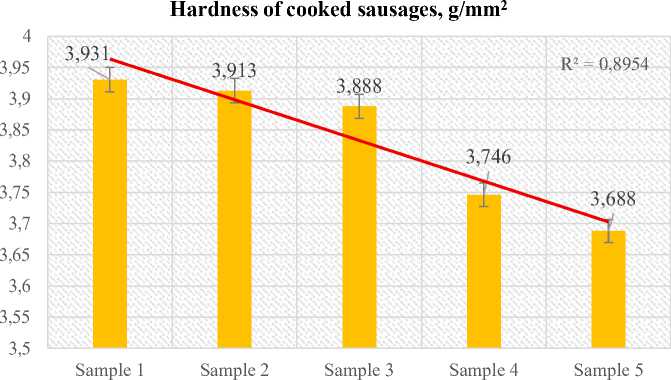
Figure 1. Hardness (Y 1 ) indicators of various experimental samples of cooked sausages
Hardness denotes the peak force during the first compression and reflects the initial bite firmness of the product (primary mechanical descriptor in TPA). In Figure 1, the control (Sample 1) showed the maximum (3,931 g/mm²), whereas the Sample 5 was the minimum (3,688 g/mm²). Introducing 10% collagen hydrolysate (Sample 2) reduced hardness of sausage by 0,46%
(3,913 g/mm²). At the same collagen level, adding cranberry powder led to further declines and at 3% cranberry (Sample 5) hardness was reduced by 6,18% than control. A linear trendline (R² = 0,895) confirms the overall decrease across the series of cooked sausage samples.
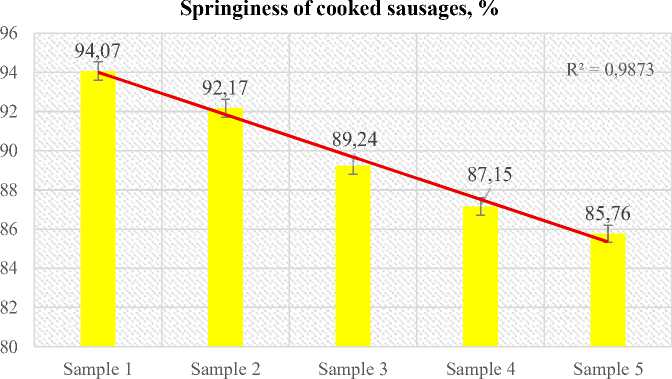
Figure 2. Springiness (Y 2 ) indicators of various experimental samples of cooked sausages
Springiness is the extent to which a sample returns to its original height after the first compression in TPA. It is computed from the force–time (or force–distance) curve as the ratio of the recovered distance between the first and second compressions to the initial compression distance. As can be seen in Figure 2, the control sample of cooked sausages (Sample 1) showed the maximum springiness —94,07%. When 10% collagen hydrolysate was added (Sample 2), springiness decreased to 92,17%, which is a 2,02% decrease compared to the control. The addition of cranberry powder with the same hydrolysate content was accompanied by a further decrease in springiness. The minimum value was observed in Sample 5 (85,76%), where the index decreased by 8,83% relative to the control. The trend line (R² = 0,9873) confirms a steady decrease in springiness with an increase in the concentration of additives in the recipe.
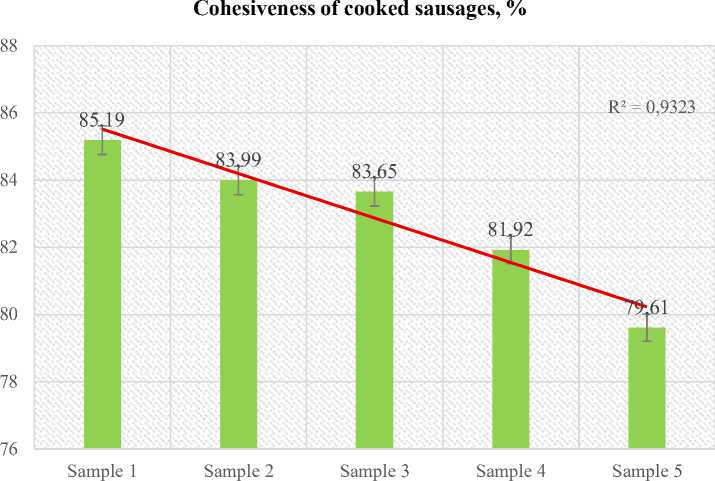
Figure 3. Cohesivenes (Y 3 ) indicators of various experimental samples of cooked sausages
Cohesiveness quantifies the internal bonding of the sample and its resistance to breakdown on the second bite. In TPA it is computed as the area ratio of the second to the first compression from the force–time curve. As can be seen in Figure 3, the control sample (Sample 1) showed the maximum cohesion – 85,19%. When 10% hydrolysate was added to cooked sausages (Sample 2), cohesion decreased to 83.99% (-1,41% relative to the control). The addition of cranberry powder at a fixed level of hydrolysate was accompanied by a further decrease in the indicator: at 1% powder – 83,65%, at 2% – 81,92%, at 3% cohesion decreased to 79,61%. The trend line (R² = 0,9323) also confirms a steady decrease in cohesion with increasing additive concentration.
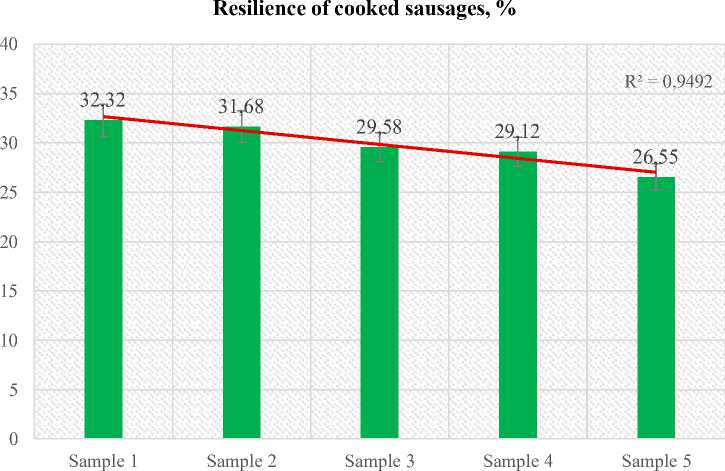
Figure 4. Resilience (Y 4 ) indicators of various experimental samples of cooked sausages
Resilience is the instantaneous elastic recovery upon release after the first compression in TPA. It is computed as the ratio of the unloading work to the loading work in the first cycle, i.e., the fraction of deformation energy returned immediately. As can be seen in Figure 4, the control sample of cooked sausages (Sample 1) showed the highest stability — 32,32%. When 10% hydrolysate was added (Sample 2), stability decreased by 1,98% to 31,68%. The addition of cranberry powder at a fixed level of hydrolysate was accompanied by a further decrease in the indicator, and when 3% of the functional ingredient was added, stability decreased by 17,85% from the control and amounted to 26,55%. The trend line (R² = 0,9492) also confirms the steady downward trend of the indicator across the series of samples as the volume of additives increased.
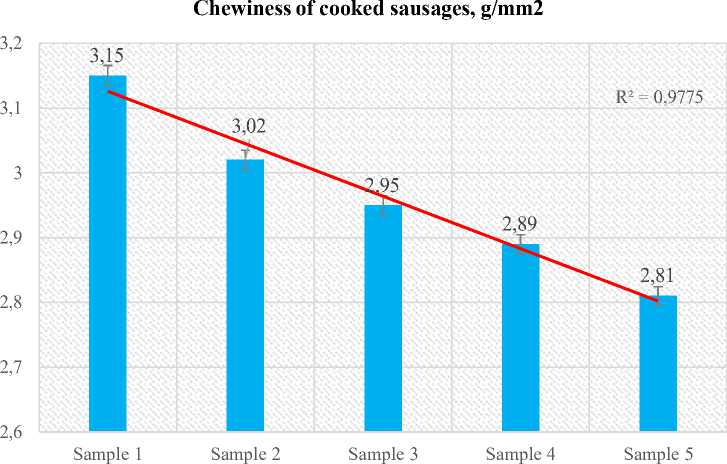
Figure 5. Chewiness (Y 5 ) indicators of various experimental samples of cooked sausages
Chewiness is the work required to chew a solid sample until it is ready to swallow. In TPA it is computed as Gumminess×Springiness and reported as g/mm². As can be seen in Figure 5, the control sample of cooked sausage (Sample 1) showed the maximum chewability — 3,15 g/mm², while Sample 5 showed the minimum — 2,81 g/mm². The trend line (R² = 0,9775) confirms a steady downward trend in chewability as the amount of plant ingredients in the cooked sausage recipe increases.
Results of research shows that the addition of functional ingredients is accompanied by a decrease in the structural and mechanical properties of the experimental samples of cooked sausages. To quantitatively verify and confirm the correlation, a paired correlation analysis was performed between factors X 1 (collagen hydrolysate) and X 2 (cranberry powder) and TPA responses Y 1 –Y 5 (Y 1 — Hardness, Y 2 — Springiness, Y 3 — Cohesiveness, Y 4 — Resilience, Y 5 — Chewiness).
Table 2. Formulations of experimental cooked sausages using low-value by-products
|
X–Y Correlation |
Pearson Correlation Coefficient (r) |
Coefficient of Determina-tion (R²) |
t statistic |
p-value |
Expected Y change for +1% X |
|
X 1 Collagen hydrolysate correlation with Y 1-5 Texture Profile properties |
|||||
|
X 1 Collagen hydrolysate – Y 1 Hardness |
-0,501056 |
0,251057 |
-1,00282 |
0,3898 |
-0,01223 |
|
X 1 Collagen hydrolysate – Y 2 Springiness |
-0,712979 |
0,508339 |
-1,76118 |
0,1764 |
-0,54900 |
|
X 1 Collagen hydrolysate – Y 3 Cohesivenes |
-0,598102 |
0,357726 |
-1,29263 |
0,2866 |
-0,28975 |
|
X 1 Collagen hydrolysate – Y 4 Resilience |
-0,603400 |
0,364092 |
-1,31060 |
0,2812 |
-0,30875 |
|
X 1 Collagen hydrolysate – Y 5 Chewiness |
-0,802679 |
0,644294 |
-2,33108 |
0,1020 |
-0,02325 |
|
X 2 Cranberry powder correlation with Y 1-5 Texture Profile properties |
|||||
|
X 2 Cranberry powder – Y 1 Hardness |
-0,975635 |
0,951864 |
-7,70220 |
0,0045 |
-0,08165 |
|
X 2 Cranberry powder – Y 2 Springiness |
-0,960381 |
0,922332 |
-5,96874 |
0,0094 |
-2,53647 |
|
X 2 Cranberry powder – Y 3 Cohesivenes |
-0,965732 |
0,932639 |
-6,44483 |
0,0075 |
-1,60471 |
|
X 2 Cranberry powder – Y 4 Resilience |
-0,974493 |
0,949637 |
-7,52115 |
0,0048 |
-1,71029 |
|
X 2 Cranberry powder – Y 5 Chewiness |
-0,923643 |
0,853116 |
-4,17425 |
0,0250 |
-0,09176 |
In the correlation analysis of X 1 Collagen hydrolysate indicators moderate negative correlations were recorded for all TPA responses. The Pearson Correlation Coefficient ranged from r=-0,501 (X 1 Collagen hydrolysate – Y 1 Hardness) to r=-0,803 (X 1 Collagen hydrolysate – Y 5 Chewiness). Given the sample size, statistical significance for establishing correlations was not achieved (p-values of X 1 –Y 1-5 correlations do not meet the condition p<0,05), so the results should be interpreted as a trend. The slope estimates show the expected change in response when X 1 increases by 1%: hardness to -0,012 g/mm², springiness to -0,549%, cohesion to -0,290%, resilience to -0,309%, chewiness to -0,023 g/mm². The strongest correlation was found between X 1 Collagen hydrolysate and Y 5 Chewiness (r=-0,803, R²=0,644), but even this does not pass the p<0,05
threshold for this sample size. In summary, collagen hydrolysate produces a moderate, uniform weakening of all structural and mechanical indicators.
In the correlation analysis of X 2 Cranberry powder indicators very strong and mostly statistically significant inverse correlations are observed for TPA responses. The X 2 –Y 1-5 correlations show high Pearson correlation coefficient values (from r=-0,924 to r=-0,976) with high coefficient of determination values (from R²=0,853 to R²=0,952). With the sample size, statistical significance for establishing relationships was achieved (p-values of X 1 –Y 1-5 correlations meet the condition p<0,05). After a simple Bonferroni correction (α=0,01), four out of five responses remain significant (except for Y 5 Chewiness, p=0,0250). According to the slopes, each +1% of cranberries is associated with a decrease in: hardness -0,08165
g/mm², springiness -2,536%, cohesion -1,605%, resilience -1,710%, chewability -0,0918 g/mm². Y 2 Springiness and Y 4 Resilience are the most sensitive to X 2 (large slopes and high R²), which is consistent with the linear trends in the graphs (R²=0,93–0,99). The correlation analysis indicates that cranberry powder is the main driver of the decrease in cohesive properties and «bite hardness».
Research on emulsion meat products shows a consistent trend: the introduction of collagen hydrolysates (3–6 kDa low molecular weight peptides) is often accompanied by a weakening of TRA indicators (hardness, cohesion, chewiness) due to the «plasticizing» effect, dilution of the myofibrillar network and the absence of the hydrolysate's own gelling ability. A review by León-López A. et al. emphasises that, unlike gelatin, collagen peptides do not form gels, are highly soluble in cold water and act as a functional additive in the matrix without a carrier structure, which predetermines the softening of the texture at certain doses and replacement schemes [12]. In technologically similar systems, Kawata K. et al. showed that an increase in the proportion of connective tissue (epimysium – a source of collagen) in meat emulsion linearly reduces hardness, gumminess and chewiness and weakens the strength of the cooked matrix (p<0,01), illustrating the negative relationship «more collagen – weaker TPA profile» [13]. Some studies report opposite effects when using gelatin/fibrous collagen or very high levels of fat replacement: for example, when fat was partially replaced with hydrolysate, changes in hardness were observed at certain levels, indicating the role of form, dose, and fat/water/protein phase ratios as moderators of the effect. Scientists agree in their studies that hydrolysates are more likely to soften, while gelatin and collagen fibres can locally increase elasticity and strength characteristics due to a different gel structure [14, 15].
For cranberry powder and other berry powders with high polyphenol and fibre content, a similar vector of influence on TPA metrics has been described. In their work on dry fermented sausages, Lau et al. note that an increase in the level of cranberry powder has a negative effect on the quality indicators of the product, including texture characteristics [16]. Parallel studies on models with cherry powder, a polyphenolic analogue of cranberry powder, show a dose-dependent decrease in hardness, elasticity, and chewiness with an increase in the proportion of vegetable powder — that is, a typical «softening» of the TPA profile with an increase in the polyphenol-fibre component [17]. Mechanistically, this effect is explained by a decrease in pH and competition between fibre particles for water, in particular a deterioration in WHC and gel strength upon acidification, as well as interactions between polyphenols and proteins — inhibition of myosin disulphide cross-linking and disruption of thermogel maturation. Classic studies on the effect of pH on myofibrillar gels show that removal from the isoelectric region and acidification impair water retention and mechanical strength, while shifting to neutral values improves WHC and structure. Therefore, the acidity of berry powders can weaken the texture of the emulsion [18]. At the same time, studies by Jongberg S. et al. on meat emulsions show that plant polyphenols dose-dependently disrupt disulphide cross-linking, reducing stability and texture stability. This is a universal mechanism relevant to cranberry polyphenols [19]. In summary, data on cranberry powder and other berry ingredients with high polyphenol-fiber content consistently indicate a dose-dependent inverse relationship between dose and TPA in emulsified meat systems, especially at medium/high doses and without technological compensation (ions, salt, phosphates, carrier protein, moisture) [20].
Conclusion
The study showed a consistent decrease in the structural and mechanical characteristics of cooked sausages when functional ingredients were added. The addition of 10% collagen hydrolysate (X 1 =10%) was accompanied by only a slight decrease in indicators compared to the control, whereas at a fixed hydrolysate level of 10%, a sequential increase in the proportion of cranberry powder (X 2 = 1–3%) led to a monotonic decrease in Hardness (Y 1 ), Springiness (Y 2 ), Cohesiveness (Y 3 ), Resilience (Y 4 ), and Chewiness (Y 5 ). The linear trends for each characteristic had a high explained variance (R² = 0,89–0,99). Correlation analysis confirmed the difference in the effects of the factors: moderate negative correlations were recorded for collagen hydrolysate, which did not reach statistical significance at this volume, while for cranberry powder, very strong and predominantly significant inverse correlations with TPA metrics were identified (|r|=0,92–0,98; p<0,05), with noticeable response slopes for each +1% addition. These results indicate that the main driver of the decrease in the structural and mechanical characteristics of cooked sausages in the studied system is the plant component, while collagen hydrolysate at the applied dose of 10% has a milder, more balanced effect. The practical significance of the study is to justify setting limits for the plant component to preserve target sensory and textural properties and based on the results 10% collagen hydrolysate (X 1 ) and 2% cranberry powder
(X 2 ) were selected as optimal levels to balance functional enrichment and acceptable TPA texture. Further research is needed with an expanded RSM experimental design to test interactions, organoleptic evaluation, and micro-structural and rheological analysis.
Gratitude, conflict of interest (financing)
The study was conducted as part of the project № АР 19680380 “Development of technology for obtaining animal-derived ingredients – collagen peptide hydrolysates – and the creation of functional meat products based on them”.
There is no conflict of interest.
