
Effect of molecular hydrogen barbotage and functional additives on the physicochemical and microbiological stability of katyk
Журнал: Вестник Алматинского технологического университета @vestnik-atu
Рубрика: Технология пищевой и перерабатывающей промышленности
Статья в выпуске: 3 (153), 2026 года.
Бесплатный доступ
The physicochemical, microbiological and technological stability indicators of katyk enriched with molecular hydrogen were investigated in this study. The research objects included control katyk, katyk treated with molecular hydrogen, katyk enriched with functional additives, and samples where molecular hydrogen and functional components were applied together. Molecular hydrogen was introduced into the product by bubbling H₂ gas with a purity of 99.99% at a flow rate of 0.5–1.0 L/min for 7 minutes at 4–10 °C. During storage, active acidity (pH), water activity, oxidation–reduction potential (ORP), color parameters and microbiological indicators were determined. The obtained results showed that the combined application of molecular hydrogen and functional additives slowed down the acidification process of the product and contributed to maintaining pH stability. At the end of storage, the pH value of the control sample decreased to 3.52, while in the combined treatment sample it remained at 4.13. Water activity results indicated stabilization of the moisture state. ORP analysis demonstrated the formation of a reducing environment in H₂-treated samples: the values were recorded in the negative range (approximately from −150 to −350 mV), unlike the control samples with positive ORP values, indicating a decrease in the intensity of oxidative processes. Microbiological analysis showed that the combined treatment reduced the amount of Enterobacteriaceae, yeasts and molds while maintaining lactic acid bacteria. In this sample, Enterobacteriaceae reached 5.90±0.95 log₁₀ CFU/g, yeasts and molds were 6.10±0.30 log₁₀ CFU/g, and lactic acid bacteria were maintained at 6.65±0.20 log₁₀ CFU/g. The results confirm that the combination of molecular hydrogen bubbling and functional additives is a promising approach for improving the storage stability and quality characteristics of katyk.
Короткий адрес: https://sciup.org/140316613
IDS: 140316613 | УДК: 65.63.33; 65.63.03 | DOI: 10.48184/2304-568X-2026-3-91-99
Влияние барботажа молекулярным водородом и функциональных добавок на физико-химическую и микробиологическую стабильность катыка
В работе исследованы физико-химические, микробиологические и технологические показатели стабильности катыка, обогащенного молекулярным водородом. Объектами исследования являлись контрольный катык, катык, обработанный молекулярным водородом, образец с функциональными добавками, а также катык с совместным применением молекулярного водорода и функциональных компонентов. Молекулярный водород вводился путем барботажа газом H₂ чистотой 99,99% со скоростью 0,5–1,0 л/мин в течение 7 минут при температуре 4–10 °C. В процессе хранения определяли активную кислотность (pH), активность воды, окислительно-восстановительный потенциал (ORP), цветовые параметры и микробиологические показатели. Полученные результаты показали, что совместное применение молекулярного водорода и функциональных добавок замедляет процесс подкисления продукта и способствует сохранению стабильности pH. В конце хранения значение pH контрольного образца снизилось до 3,52, тогда как в комбинированном образце сохранялось на уровне 4,13. Показатели активности воды свидетельствовали о стабилизации состояния влаги. Анализ ORP показал формирование восстановительной среды в образцах, обработанных H₂: значения находились в отрицательном диапазоне (примерно от −150 до −350 мВ), в отличие от контрольных образцов с положительными значениями ORP, что указывает на снижение интенсивности окислительных процессов. Микробиологический анализ показал, что комбинированная обработка снижала количество Enterobacteriaceae, дрожжей и плесеней при сохранении молочнокислых бактерий. В данном образце количество Enterobacteriaceae составило 5,90±0,95 log₁₀ КОЕ/г, дрожжей и плесеней — 6,10±0,30 log₁₀ КОЕ/г, а молочнокислых бактерий — 6,65±0,20 log₁₀ КОЕ/г. Полученные данные подтверждают, что сочетание барботажа молекулярным водородом и функциональных добавок является перспективным методом повышения стабильности хранения и улучшения качества катыка.
Молекулалық сутекпен барботаждаудың және функционалдық қоспалардың қатықтың физика-химиялық және микробиологиялық тұрақтылығына әсері
Жұмыста молекулалық сутекпен байытылған қатықтың физика-химиялық, микробиологиялық және технологиялық тұрақтылық көрсеткіштері зерттелді. Зерттеу нысандары ретінде бақылау қатығы, молекулалық сутекпен өңделген қатық, функционалдық қоспалармен байытылған үлгі және молекулалық сутек пен функционалдық компоненттер бірге қолданылған қатық үлгілері алынды. Молекулалық сутек өнімге 99,99% тазалықтағы H₂ газын 0,5–1,0 л/мин жылдамдықпен 7 минут бойы 4–10 °C температура аралығында барботаждау арқылы енгізілді. Сақтау барысында белсенді қышқылдық (pH), су белсенділігі, тотығу-тотықсыздану потенциалы (ORP), түстік параметрлері және микробиологиялық көрсеткіштері анықталды. Алынған нәтижелер молекулалық сутек пен функционалдық қоспаларды бірге қолдану өнімнің қышқылдану процесін баяулатып, pH көрсеткішінің тұрақтылығын сақтауға ықпал ететінін көрсетті. Сақтау соңында бақылау үлгісінде pH 3,52 деңгейіне дейін төмендесе, біріктірілген өңдеу үлгісінде бұл көрсеткіш 4,13 деңгейінде сақталды. Су белсенділігінің нәтижелері өнімдегі ылғал күйінің тұрақтануын көрсетті. ORP талдауы H₂ өңделген үлгілерде тотықсыздандырғыш ортаның қалыптасқанын анықтады: көрсеткіштер теріс диапазонда (шамамен −150-ден −350 мВ-қа дейін) тіркеліп, бақылау үлгілерінің оң ORP мәндерінен ерекшеленді, бұл тотығу процестерінің баяулағанын көрсетеді. Микробиологиялық талдау нәтижесінде біріктірілген өңдеу Enterobacteriaceae, ашытқылар мен зеңдердің мөлшерін төмендетіп, сүтқышқылды бактерияларды сақтауға мүмкіндік бергені анықталды. Аталған үлгіде Enterobacteriaceae мөлшері 5,90±0,95 log₁₀ КОЕ/г, ашытқылар мен зеңдер 6,10±0,30 log₁₀ КОЕ/г, ал сүтқышқылды бактериялар 6,65±0,20 log₁₀ КОЕ/г құрады. Зерттеу нәтижелері молекулалық сутекпен барботаждау мен функционалдық қоспаларды бірге қолдану қатықтың сақтау тұрақтылығын арттыру және сапалық көрсеткіштерін жақсарту үшін перспективалы әдіс екенін көрсетті.
Текст научной статьи Effect of molecular hydrogen barbotage and functional additives on the physicochemical and microbiological stability of katyk
IRSTI: 65.63.33; 65.63.03
In recent years, molecular hydrogen (H₂) has been considered as a promising functional agent for the food industry due to its high diffusion capacity, selective antioxidant properties and potential role in stabilizing product quality. Molecular hydrogen is being increasingly actively studied in the agrifood chain “from farm to product”, but it is precisely in the dairy industry that the evidence base is still limited and at the stage of formation. At the same time, from a regulatory point of view, hydrogen is permitted for use in food systems in the EU as the food additive E949 according to the Quantum satis principle, and in 2025 EFSA reaffirmed the absence of safety concerns in existing applications [1, 2].
The growing interest in the use of molecular hydrogen in the food industry is associated with its pronounced antioxidant properties and its ability to inhibit oxidative processes, which are the main cause of food spoilage. Hydrogen has been proven to reduce oxidative damage to lipids, proteins and other biomolecules, which directly affects the preservation of the organoleptic and functional characteristics of food [3].
The scientific literature presents several main approaches to introducing molecular hydrogen into food systems, including direct dissolution in gas, high-pressure saturation, obtaining hydrogen-rich water (HRW) by electrolysis, and the use of nanobubble technologies [4]. However, the effectiveness of these methods varies significantly. Traditional dissolution methods are characterized by low H₂ content due to high volatility and limited solubility, which reduces the reproducibility of the technological effect [5]. In contrast, technologies based on the formation of nanobubbles ensure stable distribution of gas in the liquid phase and long-term preservation of its functional properties [5]. It has been proven that the introduction of gases, including H₂, CO₂ and N₂, can significantly affect the structural, mechanical and physicochemical properties of food systems, especially complex colloidal matrices such as milk [6].
The effect of hydrogen is primarily associated with the selective reduction of oxidative stress and participation in the regulation of redox homeostasis. For dairy products, this is especially important, since the quality of milk, cheese, yogurt and powdered milk ingredients largely depends on lipid oxidation, the preservation of volatile aromatic compounds and the stability of bioactive components. Consequently, scientific interest in H₂ in the dairy industry is determined not only by the idea of creating a “functional product”, but also by the possibility of managing quality and shelf life without strict chemical preservatives [7–9].
Three main directions for the use of hydrogen are being formed in the dairy industry. The first direction is associated with the use of hydrogen-rich water (HRW) in the feeding or watering of dairy animals to change the composition and biological value of milk. The second is the direct introduction of hydrogen into the food system or technological environment as a factor affecting oxidative processes, sensory properties and product preservation. The third is the use of H₂ in packaging and storage, where it is considered as a potential component of a modified gas atmosphere [10, 11].
Unlike many studies devoted to the use of hydrogen for post-harvest storage, some experimental studies show its ability to affect microbial processes in food systems. The introduction of hydrogen into milk increases the acid formation of Streptococcus thermophilus by 10% and the reducing activity of Lactobacillus delbrueckii spp. Bulgaricus by 13.7%, which leads to faster acid accumulation and enhanced fermentation. This makes it possible to consider hydrogen not only as a factor for stabilizing quality, but also as a tool for controlling biotechnological processes, opening up new prospects for its use in the development of functional food products [12].
The use of molecular hydrogen (H₂) and hydrogen-enriched water makes it possible to significantly improve food products. The addition of 2–4% H₂ to packaging and the use of hydrogen water reduce the formation of biogenic amines and the content of heavy metals; thus, HRW is a “green” technology that makes it possible to control the level of heavy metals [13].
The use of molecular hydrogen in dairy products is considered one of the new technological approaches aimed at increasing the storage stability of the product. It was found that storing fresh cheese samples in a reducing gas atmosphere containing 4% H₂ made it possible to extend their shelf life chees [14].
Studies conducted on high-milk-fat products also confirm the role of hydrogen gas in stabilizing quality. In the study by Koyuncu and Batur, samples of thick cream stored in a gas atmosphere of 96% N₂ + 4% H₂ showed lower rates of oxidation, lipolysis and microbiological growth compared with the control sample [15].
These data provide grounds for considering molecular hydrogen as a promising factor aimed at stabilizing the quality of dairy products and extending their shelf life.
In recent years, the concept of “hydrogen-assisted food processing” has emerged, which considers hydrogen as a new technological factor capable of being integrated into various stages of food production. As part of this approach, hydrogen is used in fermentation, drying, cooling and packaging processes, including modified atmosphere technologies that make it possible to regulate oxidation-reduction processes and increase product stability.
Despite significant progress in the study of molecular hydrogen in food systems, its use in the dairy industry remains limited. In particular, there are no systematic studies aimed at assessing the effect of H₂ on the structural-mechanical properties of dairy products, the stability of protein aggregates and fermentation processes. In addition, the issues of scaling hydrogen introduction technologies and integrating them into existing production lines have not been sufficiently studied.
In this regard, a promising direction is the development of scientifically based technological solutions for the use of molecular hydrogen in the dairy and related food industries, including the creation of functional products with improved antioxidant properties and extended shelf life.
Some studies have shown that molecular hydrogen H₂ has antioxidant and antiinflammatory effects. In the European Union, molecular hydrogen is permitted to be added to food (E949) without limitation (quantum satis), no daily limit is specified, and it is recognized as having no side effects in food use. Currently, the use of hydrogen in terms of maintaining food quality and extending shelf life is beginning to be recognized as an important method.
There are still very few published studies on the use of molecular hydrogen in the food industry. Since the enrichment of food products with hydrogen is a relatively new direction, it increases the relevance of the study. Therefore, this work aimed to comprehensively study the physicochemical, microbiological and antioxidant properties of katyk enriched with molecular hydrogen.
Materials and methods
Materials: pasteurized cow’s milk, protein precipitate of buttermilk, dry milk whey, soy concentrate, flaxseed cake, molecular hydrogen source.
Treatment with molecular hydrogen was carried out by the barbotage method. Hydrogen gas (H₂, purity 99.99%) was supplied to the product at a rate of 0.5–1.0 L/min.
The barbotage duration was 7 minutes, and the time parameter was strictly controlled. The treatment temperature was maintained within the range of 4–10 °C.
This treatment method was aimed at changing the oxidation-reduction state of the product and increasing its antioxidant properties. After treatment, the samples were immediately hermetically sealed and placed under storage conditions.
The active acidity of the product was determined by the potentiometric method. Measurements were carried out using Hanna HI3221 and Thermo Scientific Lab Star PH111 devices.
The instruments were calibrated with pH 4.01 and 7.00 buffer solutions. The measurement accuracy was ±0.01. After the electrode was immersed in the sample, the stabilized value was recorded within 1–2 minutes.
Measurements were carried out during storage at 0, 24, 48 and 72 hours.
Water activity was determined by the hygrometric method using a Smart Water Activity Meter HD-6 device.
The measurement temperature was 25.0 ±0.5°C, and the accuracy was ±0.003. The samples were equilibrated for 20–30 minutes beforehand.
The indicators were determined in order to assess storage dynamics.
Oxidation–reduction potential (ORP) was determined using a Hanna HI3221 meter equipped with a platinum electrode and an Ag/AgCl reference electrode.
The stabilized value was recorded within 30–60 seconds, and the results were expressed in millivolts (mV). ORP values were determined to assess changes in the antioxidant status of the samples during storage.
Color parameters were determined according to the CIELAB system using a HunterLab MiniScan EZ spectrophotometer.
Measurements were carried out under the conditions of a D65 light source, a 10° observer angle and an 8 mm aperture. Each sample was measured three times, and the average value was calculated.
Microbiological analysis was carried out according to standard methods. Samples were taken in an amount of 5 g, homogenized in 45 mL of peptone water, and decimal dilutions were prepared in the range of 10⁻¹–10⁻⁶.
The detected microorganisms:
– Enterobacteriaceae – on MacConkey agar, 37±1 °C, 24 hours;
– Yeasts and molds – 25±1 °C, 3–5 days;
– Lactic acid bacteria – on MRS agar, 37±1 °C, 48–72 hours.
The results were presented in log₁₀ CFU/g units.
Results and discussion
Dynamics of changes in pH indicators
Sample 1 – control sample (katyk);
-
Sample 2 – katyk subjected to barbotage treatment with molecular hydrogen;
-
Sample 3 – katyk with functional additives added (protein precipitate of buttermilk, dry milk whey, soy concentrate, flaxseed cake and table salt);
Sample 4 – katyk subjected to barbotage treatment with molecular hydrogen and introduced functional additives (protein precipitate of buttermilk, dry milk whey, soy concentrate, flaxseed cake and table salt).
pH dynamics
■ Sample 1 ■ Sample 2 ■ Sample 3 ■ Sample 4
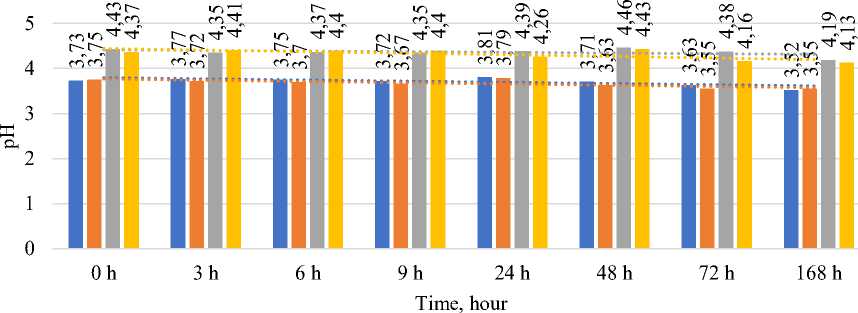
Figure 1. Dynamics of changes in pH indicators in katyk samples depending on storage time
The dynamics of changes in pH indicators (Figure 1) showed that in all studied samples they changed depending on storage time. At the initial stage (0 h), the pH values of the samples were recorded in the range of 3.7–4.5, confirming that the product was characterized by an acidic environment. During the first 24 hours, a gradual decrease in pH indicators was observed in all samples, with values decreasing to approximately 3.7–3.9, which indicates the active course of acidification processes. In the subsequent stages, especially at 48 hours, the lowest pH values were observed; in the control samples this decrease was more pronounced and reached approximately 3.5–3.7. In the samples barbotaged with hydrogen, the decrease in pH proceeded more slowly and was found to be maintained at a relatively stable level. Starting from 72 hours, a tendency toward stabilization of pH indicators was observed, especially in the sample with functional additives introduced and treated with hydrogen, where the pH values were maintained at a high level (approximately 4.0–4.1), indicating a slowdown in the acidification rate. At the final stage of storage (168 h), although the pH slightly decreased in all samples, the general pattern was preserved: the lowest values were recorded in the control samples, while the highest values were recorded in the sample treated with hydrogen and supplemented with additives. In general, the obtained results prove that the combined effect of molecular hydrogen and functional additives slows down acidification processes in the product and increases pH stability.
■ Sample 1 ■ Sample 2 ■ Sample 3 ■ Sample 4
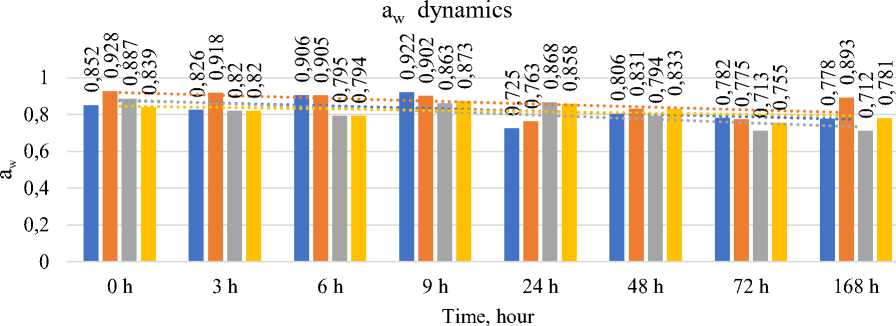
Figure 2. Dynamics of changes in water activity (a w ) in katyk samples depending on storage time
Dynamics of changes in water activity
The dynamics of changes in water activity (aw) (Figure 2) showed a decreasing trend in all studied samples as storage time increased. At the initial stage, aw values were recorded at a high level, approximately in the range of 0.80–0.95, which characterizes the high moisture content of the product. In the control sample (Sample 1), the aw indicator gradually decreased during storage from an initial level of approximately 0.90–0.92 to 0.75–0.78 at 72 hours, after which a slight increase was observed at 168 hours. In the sample barbotaged with hydrogen (Sample 2), aw values were initially at the highest level and gradually decreased during storage to approximately 0.85– 0.80; however, at the final stage, a tendency toward an increase was observed again. In the sample with functional additives introduced (Sample 3), water activity decreased significantly, reaching the lowest values between 24 and 72 hours (approximately 0.68–0.75), which is explained by an increase in bound water and compaction of the structure. In the sample treated with hydrogen and supplemented with additives (Sample 4), aw indicators changed more steadily, remaining approximately within the range of 0.72–0.82, and the rate of decrease was observed to be slower compared with the other samples. In general, as storage time increased, a decrease in water activity was recorded in all samples, while the combined use of molecular hydrogen and functional additives ensured the stability of aw indicators and showed an effective impact on regulating the moisture state of the product.
ORP dynamics
Time, hour…
■ Sample 1 ■ Sample 2 ■ Sample 3 ■ Sample 4
-
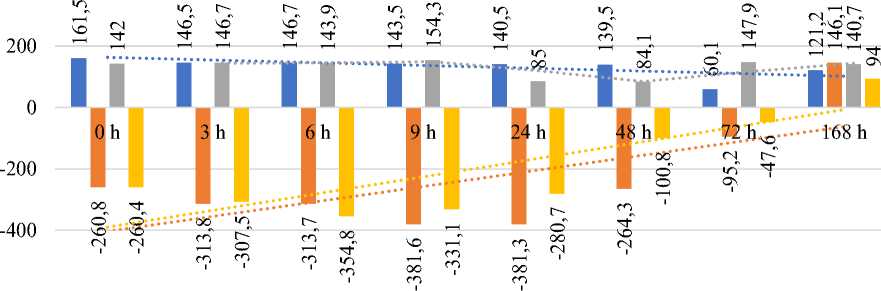
Figure 3. Dynamics of changes in ORP in katyk samples depending on storage time
The dynamics of changes in oxidation– reduction potential (ORP) (Figure 3) demonstrated significant differences among the studied samples. In the control sample (Sample 1), the initial ORP value was recorded at approximately +150 mV and gradually decreased during storage, reaching about +50 mV after 72 hours, followed by an increase again at 168 hours. In the sample containing functional additives (Sample 3), ORP values remained within the positive range throughout the entire storage period; although a decrease was observed between 24 and 48 hours, the values subsequently increased and reached approximately +130–150 mV during 72–168 hours.
In contrast, the hydrogen-bubbled samples (Sample 2 and Sample 4) exhibited negative ORP values from the initial stage, indicating the formation of a reducing environment. In Sample 2, the ORP value initially was approximately -150 mV, decreased to around -350 mV during storage, and then gradually increased, approaching the positive range by 168 hours. In Sample 4, ORP values showed relatively stable fluctuations, varying from approximately -200 mV to -100 mV, and increased to about +90 mV at the final stage.
Overall, although changes in ORP values were observed in all samples with increasing storage time, the molecular hydrogen-treated samples maintained a reducing environment for a longer period, indicating a slowdown of oxidative processes and demonstrating their enhanced antioxidant stability.
Changes in color indicators
L* dynamics
Sample 1 Sample 2 Sample 3 Sample 4
А) ।-------------------------------------------------------------------------------------------- b* dynamics
Sample 1 Sample 2 Sample 3 Sample 4
В)
* 7
-1
Sample 1 Sample 2 Sample 3 Sample 4
С)
-
Figure 4. Changes in color indicators (L, a, b*) of katyk samples depending on storage time
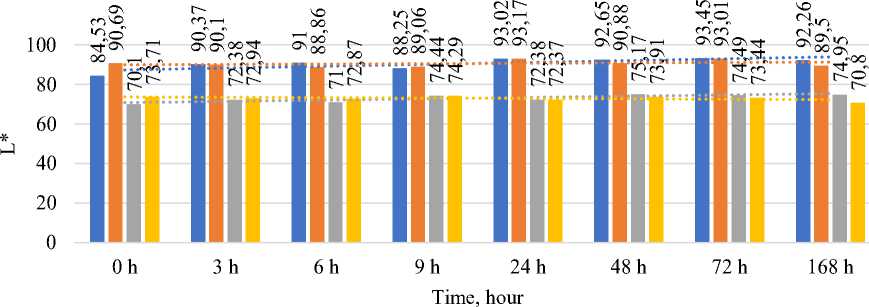
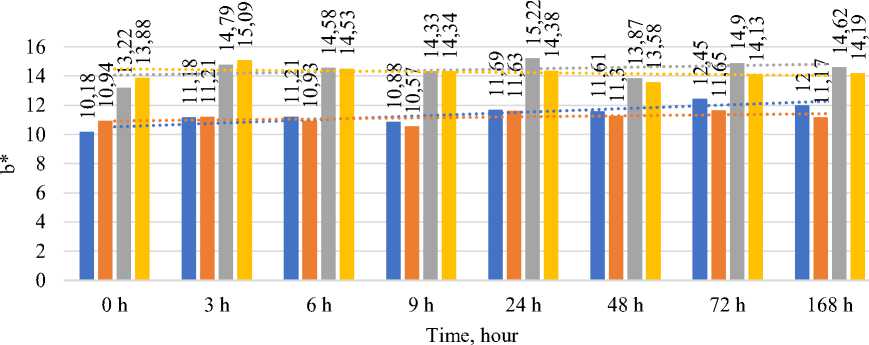
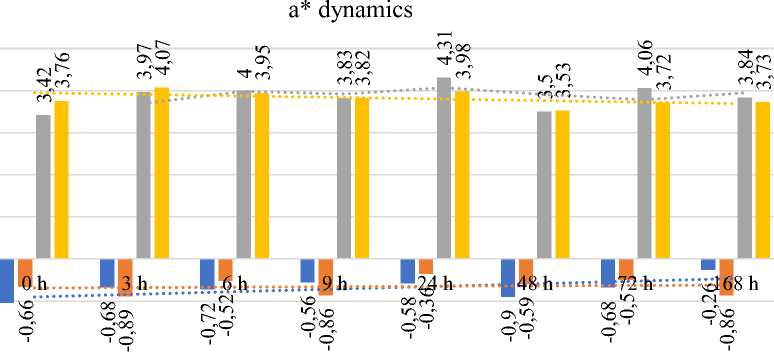
The dynamics of changes in color parameters (L*, a*, b*) (Figure 4) showed clear differences between the studied samples. The L* indicator showed a gradual decreasing trend in all samples as storage time increased: in the control sample, it decreased from approximately 96 to 85; in the hydrogen-treated sample, from 94 to 86; while in the sample with functional additives introduced, this indicator decreased more markedly, from 85 to 70, and in the sample treated with hydrogen and additives, it decreased from 83 to 72. The a* indicators remained positive in all samples and showed an increasing trend with some fluctuations during storage: in the control sample, they were recorded in the range of 2.5–3.2; in the hydrogen- treated sample, 2.8–3.5; in the sample with functional additives introduced, 3.5–4.5; and in the combined sample, 3.2–4.2. The b* indicators were also characterized by high values in all samples and showed a gradual increasing trend over time: in the control sample, they changed within the range of 9– 12; in the hydrogen-treated sample, 10–13; in the sample with functional additives introduced, 13–16; and in the combined sample, 12–15. In general, during storage, a decrease in lightness and an intensification of the yellow-reddish hue were observed in all samples, which was found to be associated with the course of physicochemical changes and structural transformations.
Table 1. Comparative characteristics of microbiological indicators in katyk samples (log₁₀ CFU/g)
|
Indicator |
Sample 1 |
Sample 2 |
Sample 3 |
Sample 4 |
|
Enterobacteriaceae |
6,24 ± 1,15 |
6,05 ± 1,05 |
6,15 ± 1,10 |
5,90 ± 0,95 |
|
Yeasts and molds |
6,70 ± 0,45 |
6,45 ± 0,40 |
6,50 ± 0,42 |
6,10 ± 0,30 |
|
Lactic acid bacteria |
6,35 ± 0,20 |
6,55 ± 0,25 |
6,45 ± 0,22 |
6,65 ± 0,20 |
Microbiological indicators
The results of the conducted study showed that the microbiological indicators of katyk samples changed depending on the treatment methods used.
For Enterobacteriaceae (MacConkey), the indicator in the control samples was determined at the level of 6.24 ± 1.15 log CFU/g, while in the samples treated by barbotage with molecular hydrogen, this value decreased to 6.05 ± 1.05 log CFU/g. In the samples with functional additives introduced, the indicator remained at the level of 6.15 ± 1.10 log CFU/g, while in the samples where additives and hydrogen were used together, the lowest value was recorded – 5.90 ± 0.95 log CFU/g. The obtained results show that the combined use of molecular hydrogen and functional additives contributes to a decrease in the number of opportunistic microflora.
For yeasts and molds (GFM), 6.70 ± 0.45 log CFU/g was determined in the control samples, while in the hydrogen-treated samples the indicator decreased to 6.45 ± 0.40 log CFU/g. In the samples with additives, this value was 6.50 ± 0.42 log CFU/g, while when additives and hydrogen were used together, it was recorded at the level of 6.10 ± 0.30 log CFU/g. This indicates that molecular hydrogen and functional additives may affect the reduction of the intensity of microbial contamination.
For lactic acid bacteria (MRS), 6.35 ± 0.20 log CFU/g was determined in the control samples. In the hydrogen-treated samples, this indicator increased to 6.55 ± 0.25 log CFU/g, while in the samples with functional additives introduced it was at the level of 6.45 ± 0.22 log CFU/g. In the samples where additives and hydrogen were used together, the highest amount of lactic acid bacteria was recorded – 6.65 ± 0.20 log CFU/g. This indicates the possible favorable effect of the studied treatment methods on the vital activity of beneficial microflora.
In general, it was found that barbotage with molecular hydrogen and the use of functional additives affected the changes in the microbiological indicators of katyk, contributing to a decrease in opportunistic microorganisms and molds and to the maintenance of the number of lactic acid bacteria at a relatively high level.
Conclusions
The results of the conducted study showed that the method of barbotage with molecular hydrogen has a positive effect on the physicochemical, microbiological and technological stability indicators of katyk. Especially in the sample where molecular hydrogen and functional additives were used together, the rate of product acidification slowed down, and the pH indicator remained at a higher level at the end of storage compared with the control sample. This is explained by the strengthening of the buffer system in the katyk matrix, the effect of functional components and the ability of molecular hydrogen to change the oxidation-reduction environment.
Changes in water activity indicators showed that functional additives contribute to moisture binding in the product structure. Components such as protein precipitate of buttermilk, dry milk whey, soy concentrate and flaxseed cake increase the dry matter content of the product and make it possible to improve structural stability. When used together with molecular hydrogen, this effect contributed to the stabilization of the moisture state of the product during storage.
The analysis of oxidation–reduction potential (ORP) confirmed the effect of molecular hydrogen on the formation of a reducing environment in katyk. Samples treated with H₂ showed significantly lower ORP values compared with the control sample, with values shifting into the negative range during storage. This indicates a decrease in oxidative processes in the product matrix. The maintenance of a reduced oxidation–reduction environment may contribute to improved antioxidant stability, slower quality deterioration, and better preservation of the functional properties of the fermented dairy product.
In terms of color indicators, a decrease in the L* value and an increase in the b* indicator were observed in the samples with functional additives introduced. This is associated with the natural color of plant-based components and an increase in the proportion of dry matter in the product composition. Therefore, functional additives are an important technological factor that, along with increasing the nutritional value of the product, also affects its appearance.
The results of microbiological analysis showed that the combined use of molecular hydrogen and functional additives contributed to a relative decrease in opportunistic and microflora. In the combined treatment sample, the amounts of Enterobacteriaceae and yeasts and molds were lower compared with the control sample, while the number of lactic acid bacteria was maintained at a high level. This indicates that molecular hydrogen may have a positive effect on the microbiological balance in katyk and supports the viability of beneficial microflora.
In general, the combined use of the molecular hydrogen barbotage method with functional additives was evaluated as an effective technological solution that makes it possible to increase the storage stability of katyk, regulate the acidification process, maintain the number of beneficial lactic acid bacteria and improve the quality indicators of the product. This method is promising for improving traditional fermented dairy products in a functional direction.
Funding information
This research was funded by the Committee of Science of the Ministry of Science and Higher Education of the Republic of Kazakhstan (grant No. BR24992914).
