
Federated Learning-Enabled Intrusion Detection with Bio-Inspired Feature Optimization and Hybrid Deep Neural Classifier

Journal: International Journal of Information Technology and Computer Science @ijitcs
Article in issue: 4 Vol. 18, 2026.
Free access
The growth of Internet of Things (IoT) networks has drastically improved attack surface, requiring intrusion detection systems (IDS) to ensure accuracy and privacy protection. To overcome these obstacles, we introduce a federated learning (FL) based IDSW that incorporates state-of-the-art preprocessing, smart feature optimization, and a new classification paradigm. During preprocessing, raw traffic data is subject to scrubbing at a vigorous level, normalization through scaling, and label encoding to maintain consistency and reduce noise in heterogeneous local datasets. For feature selection, the Hybrid Emperor Penguin–Quokka Swarm Optimization (HEPQSO) approach is utilized which balances exploitation and exploration to find the most discriminative features while addressing the dimensionality problem. These features are then utilized by a deep hybrid classifier where the Spike Gated Linear Unit (SGLU) facilitates non-linear representation learning, and a Vision Transformer-Temporal Convolutional Network (ViT–TCN) hybrid discovers both global spatial relationships and local temporal dynamics of intrusion patterns. Experimental analyses performed using benchmark intrusion detection datasets show that the system has a high performance compared to baseline models at all times, with an accuracy of 97.88%, precision of 96.16%, recall of 97.54%, F1-score of 97.39%, specificity of 97.62%, and MCC of 97.04%, thus proving its efficiency for safe IoT settings. This combination of state-of-the-art preprocessing, hybrid feature selection, and deep federated classification forms a robust IDS that can tackle the changing landscape of cyber intrusions.
Short address: https://sciup.org/15020661
IDS: 15020661 | DOI: 10.5815/ijitcs.2026.04.07
Text of the scientific article Federated Learning-Enabled Intrusion Detection with Bio-Inspired Feature Optimization and Hybrid Deep Neural Classifier
In the age of digitalization, omnipresent of IoT devices are rapidly altering our daily lives. These gadgets capture and upload our personal data around-the-clock, producing exponential amounts of data for each individual each day. Numerous exciting applications, including intelligent industrial control systems and smart cities, have surfaced as a result of integration with big data and edge computing devices IoT devices have become an integral part of everyday life, with widespread adoption across various domains and applications [1]. lives these days. The invisible infrastructure of the smart city, such as sensors for pedestrians and roads, and the gadgets in our homes, including entertainment systems and smart utilities, are two instances. Due to the open nature of IoT network distribution environments and the limited computational resources of IoT devices, ensuring robust security and data privacy remains a major challenge. capabilities that result in inadequate security control protocol function ability, IoT devices are especially vulnerable to network attacks [2,3]. The IoT is a system of many physical devices, or "things," that are linked to one another. With new, advanced, and contemporary devices being created daily, the number of IoT systems is growing significantly. Heterogeneous, diversified, and complex data is produced by a vast number of interconnected devices. This expands the
This work is open access and licensed under the Creative Commons CC BY 4.0 License.
cyberattack surface that is impacted by a number of new IoT anomalies, including botnets, denial-of-service attacks, and spoofing. [4]. Software security flaws in IoT could result in privacy-sensitive situations. In order to carry out more complex assaults, attackers may be able to access higher-level computing capabilities if they manage to compromise the software of the IoT device. This is because of the features of IoT systems, which include prolonged lifespans, delayed patching, lack of upgrades, and compromise implications [5,6].
Software engineers must use sophisticated security tools like Intrusion Detection Systems (IDSs) to monitor how IoT devices behave on the network and identify any potentially harmful activities in order to safeguard IoT software systems. The IDS notifies the device administrator of any intrusion (attack), and the administrator isolates the malicious devices and takes the necessary action to prevent it [7,8]. Network intrusion detection systems, or NIDS, are crucial for spotting any dangers and assaults on computer networks. The two main groups of IDS detection techniques are anomaly and signature-based IDS [9]. Based on signatures, IDSs perform intrusion detection by comparing the collected traffic to the specified attack signatures, which are predetermined communication patterns of known assaults. These networked systems produce enormous amounts of data, or network traffic, which creates a fertile ground for machine learning (ML) solutions. Unlike the conventional algorithmic approach, ML solutions seek to learn from data [10,11]. NIDS that uses ML are an established field of study. New avenues in this field are being investigated, nevertheless, because to developments in machine learning and cutting-edge methods like federated learning and deep learning. Various methods, either behaviour-based, signature-based, or a combination of both, have been used up to this point in network intrusion detection systems to identify network anomalies. The ML/DL-based IDS was demonstrated to be an ideal option with high detection accuracy when combined with its efficiency and efficacy [12,13]. Continuous efforts are being undertaken to well protect these networks and systems from possible vulnerabilities in cybersecurity. ML and DL, two AI approaches, have become widely adopted and are being utilized to improve IoT network security [14].
The enormous volume of data generated by internet-connected IoT devices, combined with AI’s capability to process and analyse large-scale datasets, enables more efficient decision-making and intelligent system automation. handle and evaluate these enormous quantities make it particularly appropriate for IoT applications [15,16]. Recently, the study of Federated Learning (FL) has attracted active research in multiple fields which include IoT and edge computing and healthcare to establish collaborative methods that detect threats without sharing their original data [14]. FL shows promise as a solution to this problem, allowing several IoT devices to jointly save the data locally on the IoT devices to train a shared model. This federated learning (FL) approach enables collaborative model training across multiple devices while preserving data privacy, which protects user privacy by ensuring that data remains intact in the IoT device [17]. In FL framework, devices, or nodes, are trained locally using their data in federated frameworks [18]. A central server obtains just the model updates rather than the raw data for aggregation. FL appears to be a perfect fit given the decentralized nature of IoT networks. FL can provide real-time insights by locally processing data on IoT devices, which is essential for prompt threat identification and lessening of DDoS attacks [19]. In contrast to the traditional centralized learning method, FL does not provide client input individually; instead, it simply sends model updates while clients and the server are communicating. This unique characteristic reduces the possibility of original data leaking while enabling FL to subtly enhance the data that is already available [20].
The proposed methodology presents a FL-based IDS that ensures accuracy, robustness, and data privacy in IoT environments. Initially, the pre-processed data is subjected to cleaning, normalization, and label encoding to improve data quality and consistency. Then, the HEPQSO technique is used to select the most significant and discriminative features from the data, reducing redundancy and improving learning speed and accuracy. The optimized features are then used in a hybrid deep learning model consisting of the Spike Gated Linear Unit (SGLU) and Vision Transformer-Temporal Convolutional Network (ViT-TCN), which is effective in learning global and temporal information from the data. Finally, the IDS is implemented in a federated learning environment, ensuring data privacy and the collaborative learning of devices in the IoT system, leading to improved accuracy and reduced false alarms in the IDS.
The primary contributions of the proposed work are summarized as follows:
• A federated deep learning-based IDS is proposed that provides assurance of data privacy and facilitates collaborative training among distributed IoT nodes.
• The proposed Hybrid Emperor Penguin–Quokka Swarm Optimization (HEPQSO) algorithm is utilised for efficient feature selection to enhance the efficiency of the model.
• The SGLU-ViT-TCN classifier is introduced, coupling spike-gated linear units with transformer and temporal convolutional designs for better detection.
2. Literature Review
The paper is organized as follows: Section 2 reviews the relevant data, Section 3 presents the proposed approach, Section 4 summarizes the experimental results, and Section 5 concludes the paper.
Javeed., et al. (2024) [21] described a horizontal FL model for efficient intrusion detection that blends “Bidirectional Long-Term Short Memory (BiLSTM) and Convolutional Neural Networks (CNN)”. In the context of federated learning (FL) for IoT, data remains on edge devices while only model updates are shared, enabling collaborative training without compromising privacy. This hybrid methodology sought to improve intrusion detection efficacy while overcoming the drawbacks of current techniques. This suggests IDS operates on a zero-trust basis. In this approach, data is retained on local edge devices, and only the learned model weights are transmitted to the central federated learning (FL) server. The FL server then aggregates updates from multiple sources to enhance the accuracy of the global model. Althunayyan., et al. (2024) [22] presented a state-of-the-art, innovative, lightweight, in-car DL technique that uses IDS to overcome these constraints. While an artificial neural network (ANN) is employed in the first stage, it effectively extracts and learns relevant feature representations from the input data for subsequent processing. of the described IDS to detect known attacks, an LSTM autoencoder is utilised in the subsequent phase to detect unknown harm. The theoretical foundation provided by the IDS's deployment in a hierarchical FL (H-FL) environment will enable us to understand and evaluate a range of driving behaviours, update the model with the latest threat patterns, without compromising data privacy.
Chen., et al. (2023) [23] provided two metrics for evaluating privacy in FL-based NIDSs: (1) the rate of evasion for NIDSs using adversarial attacks with recovered traffic, and (2) a privacy score that measures the similarity between the reconstructed and original traffic attributes, using reconstruction attacks as the evaluation metric. Tests were demonstrated to show that current defences are insufficient and that the matching hostile traffic can even get past the SOTA NIDS Kitsune. FedDef is an innovative input perturbation defence technique based on optimization that offers theoretical assurance to prevent such assaults and build a more robust FL-based NIDS. By maximizing the input distance and lowering the gradient distance, it provides robust privacy protection in addition to high utility. Sun., et al. (2024) [24] presented FedMADE, a cutting-edge dynamic aggregation technique that groups devices according to traffic patterns and combines local models according to how well they contribute to overall performance. When contrasted with FedMADE to previous FL algorithms made for non-IID data, found that the precision of minority assault categorization has increased by up to 71.07%.
Bukhari., et al. (2024) [25] suggested a new model for IDS in WSNs that combines a stacked CNN with Bi-LSTM (SCNN-Bi-LSTM). The FL-based SCNN-BiLSTM model utilizes a novel hybrid architecture that combines spatial feature extraction through a stacked convolutional neural network (SCNN) with temporal sequence modelling via a bidirectional long short-term memory (BiLSTM) network. technique that allays privacy concerns by allowing several sensor nodes to collaborate in order to refine a central global model without disclosing any personal information. The deep learning methodology of the SCNN-BiLSTM model efficiently captures both spatial and temporal patterns in the data, enabling accurate and privacy-preserving predictions detects intricate and as-yet-unidentified cyberthreats by closely observing both temporal and local links in network patterns. Idrissi., et al. (2023) [26] recommended Fed-ANIDS, a NIDS that addressed the privacy concerns with centralized models by utilizing FL and AD. Using a variety of AD models, such as adversarial, variational, and simple autoencoders, calculated an intrusion score computed from the reconstruction error of normal traffic patterns. In order to identify intrusions. The excellent performance the recommended strategy produces across a range of measures while preserving the data belonging to remote clients is evidence of its effectiveness.
Anwar., et al. (2025) [27] intended to develop and evaluate an effective IDS for IoT-based WSNs via an FL framework that interfaces with LSTM networks. An FL technique addresses privacy concerns and enhances detection capabilities by having numerous IoT nodes work together to share raw data but train a global LSTM model. Three well-known datasets were applied to assess the suggested model: WSN-DS, UNSW-NB15, and CIC-IDS-2017. Bensaid., et al. (2024) [28] suggested SA-FLIDS, a revolutionary blockchain-based NIDS architecture for fog-IoMT-enabled smart healthcare systems that is built on Secure and Authenticated Federated Learning. Enhancing data privacy and lowering communication costs are the goals of this research. Additionally, flaws in decentralized learning systems are vulnerable to attacks such as model poisoning and Sybil attacks. To ensure client authentication and secure communication, the approach leverages Self-Sovereign Identity (SSI) mechanisms. (SSI) paradigm, which is based on blockchain technology. Additionally, aggregated data is used using the Trimmed Mean approach. When building the overall model, this lessens the impact of odd or malicious inputs.
Karunamurthy., et al. (2025) [29] provided an FL-based intrusion detection method that uses federated learning to train DL classifiers in IoT networks and identify various threats. The suggested work chooses the best characteristics using the Chimp optimization method. The benchmark MQTT dataset was used in studies to demonstrate that the FLbased IDS attained the highest detection efficiency for recognizing intrusions above traditional machine learning techniques. Huang., et al. (2024) [30] suggested an innovative method based on FL that aims to guarantee data privacy while increasing the accuracy of NIDS. This study created a novel DL-IDS tailored for the IIoT by fusing convolutional neural networks with attention processes. To improve data privacy security, variational autoencoders were also included. Furthermore, several IIoT clients can work together to build a shared intrusion recognition model utilizing an FL framework without sharing their raw data. This approach successfully addressed safety and privacy issues with data while also significantly enhancing the model's detection capacity.
Alsaleh., et al. (2025) [31] suggested a lightweight IDS based on a semi-decentralized FL paradigm to support IoT device capabilities. The IoT devices, or FL clients, are grouped together in the suggested model, and each cluster is given a cluster leader who represents the FL clients. As a result, there are fewer IoT devices interacting with the server, which lowers the communication overhead. Additionally, during each federated learning round, each cluster transmits its average model weights to the central server for aggregation, with clustering facilitating a more efficient and organized aggregation process. The IDS model's primary issue is the DDoS attack, which can easily happen on Internet of Things devices with constrained resources. Chaurasia., et al. (2024) [32] presented a DL model based on ResNets that was trained through federated learning. The vanishing gradient problem is effectively addressed by ResNet, and federated learning allows several customers or Internet service providers (ISPs) to train together without disclosing their data to outside parties. This method preserved anonymity while improving accuracy through group learning.
Rashid., et al. (2023) [33] suggested an FL technique to identify unauthorized breaches and ensure IoT network security. This technique uses FL of local IoT device data to guarantee security and privacy. A central global server receives only parameter changes from local IoT clients, aggregates the received updates, and disseminates an enhanced detection algorithm. Following each federated learning training cycle, each IoT device updates its local model accordingly. The client trained their local dataset using an updated model that was delivered from the global server, allowing This allows IoT devices to maintain data privacy while collectively enhancing the performance of the global model. To assess the performance of the proposed method, thorough tests were carried out using a brand-new dataset called Edge-IIoTset. Belenguer., et al. (2023) [34] introduced GöwFed, a novel technique for detecting network threats that combines Gower Dissimilarity matrices with Federated averaging. A vanilla version of GowFed, which achieved a median point of [0.888, 0.960], and an enhanced version with a mechanism for attention, which shows the best performing networks contributed to the model, are the two different techniques that have been designed according to the most recent research developments. Additionally, the TensorFlow Federated framework's simulation-oriented capabilities were used to test each option.
Chandra Umakantham., et al. (2024) [35] suggested an IDS technique based on federated learning that uses Enhanced Ghost_BiNet, a cutting-edge deep learning model, to effectively learn complex patterns and make accurate predictions from the data. Improve detection accuracy and information sharing security. A global intrusion detection model can be jointly trained by numerous entities without exchanging sensitive data due to FL. The proposed method is a privacypreserving machine learning approach. It employs Enhanced Ghost_BiNet, which integrates GhostNet and BiGRU, to train local models initially. The Chaotic Chebyshev Artificial Hummingbird (CAh) algorithm is utilized to optimize the model’s performance. To ensure data privacy, updates from local models are encrypted using homomorphic encryption before being shared. which improves data security and privacy. To reduce communication cycles during data aggregation, server-side update aggregation and collaborative optimization are implemented. Table 1 compiled the literature review by presenting various federated learning-based intrusion detection models, their approach, findings, and shortcomings.
Table 1. Summary of the literature review
|
Authors & Year |
Techniques Used |
Findings |
Limitations |
|
Javeed., et al. (2024) |
Horizontal FL with BiLSTM + CNN |
Captures temporal (BiLSTM) and spatial (CNN) patterns; improved IDS accuracy with zero-trust FL setup |
Scalability across highly heterogeneous IoT is not fully validated. |
|
Althunayyan., et al. (2024) |
Hierarchical FL with ANN + LSTM Autoencoder |
Multi-stage IDS detects both known and novel attacks; suited for vehicular networks. |
Primarily a theoretical framework; lacks a large-scale real-world evaluation |
|
Chen., et al. (2023) |
FedDef (perturbation defense), privacy evaluation measures |
Proposed new privacy scoring + adversarial resilience; improved robustness vs reconstruction attacks |
Defense tested on limited datasets; generalization to diverse IoT datasets uncertain |
|
Sun., et al. (2024) |
FedMADE (dynamic aggregation based on traffic similarity) |
Boosted minority attack detection by up to 71% over conventional FL |
Complex grouping may increase system overhead |
|
Bukhari., et al. (2024) |
SCNN + BiLSTM with FL |
Efficient in detecting complex DoS attacks on WSNs |
Evaluation limited to WSN-DS and CIC-IDS-2017 datasets |
|
Idrissi., et al. (2023) |
Fed-ANIDS with autoencoders (variational, adversarial, simple) |
High intrusion detection accuracy while preserving privacy |
Heavy reliance on reconstruction error may cause false alarms |
|
Anwar., et al. (2025) |
FL-LSTM for IoT-WSNs |
Improved privacy-preserving detection using WSN-DS, CIC-IDS-2017, UNSW-NB15 |
Scalability and real-time adaptability have not fully tested |
|
Bensaid., et al. (2024) |
SA-FLIDS (Blockchain + FL) with SSI and Trimmed Mean |
Secure against Sybil/poisoning attacks, suited for IoMT healthcare |
Blockchain introduces latency and computational costs |
|
Karunamurthy., et al. (2025) |
FL with Chimp Optimization + DL |
95.59% accuracy on the MQTT dataset; effective feature selection |
Evaluated on a single dataset; generalizability untested |
|
Huang., et al. (2024) |
FL with CNN + Attention + VAE |
Preserved privacy while improving intrusion detection for IIoT |
The complexity of the model may challenge deployment on resource-limited devices |
|
Alsaleh., et al. (2025) |
Semi-decentralized FL with cluster leaders |
Reduced communication overhead; suitable for IoT |
Vulnerable to DDoS on resource-constrained clusters |
|
Chaurasia., et al. (2024) |
FL with ResNet |
Tackled vanishing gradient; maintained privacy while boosting accuracy |
Focused on ResNet only; limited exploration of hybrid deep models |
|
Rashid., et al. (2023) |
FL with Edge-IIoTset dataset |
Strong security and privacy; efficient FL cycle with parameter sharing |
Newly introduced dataset; comparative benchmarking limited |
|
Belenguer., et al. (2023) |
GöwFed (FedAvg + Gower Dissimilarity) |
Achieved 0.93 accuracy; effective with attention mechanism |
Evaluation limited to simulation (TensorFlow Federated) |
|
ChandraUmakantham., et al. (2024) |
Enhanced Ghost_BiNet + FL + Homomorphic Encryption |
High detection accuracy; secure aggregation with HE |
Adding encryption increases communication/computation costs |
Though FL has been a privacy-augmenting paradigm, current FL-based IDS models tend to perform poorly on non-
IID data distributions, lack adequate feature optimization, experience high false alarm rates, and are not suitably adaptable to sophisticated intrusion patterns. Additionally, state-of-the-art methods do not achieve balanced detection accuracy, adversarial attack robustness, and efficiency for resource-limited IoT devices. Therefore, there exists a critical necessity for a new FL-based intrusion detection framework combining smart preprocessing, efficient feature selection, and the latest hybrid deep learning models to provide high detection rates, low false positives, scalability, and privacy preservation in various IoT ecosystems.
In contrast to conventional intrusion detection systems that depend on conventional federated learning models with basic feature extraction and classification mechanisms, the proposed framework improves the efficiency of the learning process through intelligent feature optimization. This is achieved through the efficient selection of discriminative features using a hybrid intelligent optimization algorithm, which incorporates evolutionary intelligence and quantum-inspired mechanisms. In addition, the proposed framework offers efficient modeling of spatial, temporal, and contextual relationships through the integration of gated activation functions, transformer-based global attention mechanisms, and temporal convolutional structures. Incorporating such an architecture in a federated learning environment improves its robustness in handling heterogeneous data and class imbalance in distributed nodes, and offers efficient data privacy through localized data.
3. Proposed Methodology
The methodology proposed in this work is a federated learning-based IDS that guarantees accuracy, resilience, and privacy retention in IoT settings. The architecture starts with an extensive preprocessing stage of the data, where raw traffic is scrubbed to remove missing, duplicated, and noisy records, then scaled by min–max normalization to normalize feature values and speed up convergence. Next, categorical network traffic features are converted to numerical values via label encoding to maintain consistency for machine learning. In order to counter the high-dimensional and heterogeneous characteristics of IoT traffic, a Hybrid Emperor Penguin–Quokka Swarm Optimization (HEPQSO) algorithm is utilized for feature selection. The bio-inspired hybrid optimizer maintains a balance between exploration and exploitation by tapping into penguin huddling and quokka adaptive techniques before settling on the most discriminative features while avoiding redundancy. These improved features are then processed during the local training phase with an innovative hybrid DL model: the Spike Gated Linear Unit (SGLU) coupled with a Vision Transformer–Temporal Convolutional Network (ViT–TCN). The resulting synergistic integration enhances the representation of spatial and temporal characteristics of intrusion data; this improves detection accuracy and generalization. The SGLU module improves nonlinear representation and effectively retains temporal dependencies in spiking neuron-based designs, while the ViT module extracts global dependencies through self-attention, and the TCN module captures local sequential patterns through dilated causal convolutions. The whole IDS system is implemented within a federated learning framework where IoT edge devices perform local model training while keeping raw traffic data private, and only encrypted model updates are sent to the global server for aggregation. Provides a guarantee of privacy of data, scalability, and minimal communication overhead while constructing an effective global IDS with high precision, low false alarms, and high resistance against adversarial tampering.
-
3.1. Data Preprocessing
The first phase is concerned with cleaning raw network traffic into a formal and machine-readable format. Traffic generated by IoT is noisy by nature, redundant, and usually contains inconsistent labels, which can confuse classifiers if not cleansed.
-
A. Data Scrubbing
The first stage in the preprocessing phase is data cleaning, which eliminates duplicate, inaccurate, and missing values from the dataset. Data cleaning, also called data scrubbing, helps maintain the model’s precision, performance, and reliability in the IDS prediction task. Data scrubbing is carried out to remove duplicate records, inaccurate records, and null values. This is to ensure that the training process is carried out effectively to maximize model performance on clear and accurate datasets. The system improves prediction accuracy and avoids false alarms by deleting irrelevant or incomplete records. To avoid deceiving the model during training, the assessment suggests eliminating redundant characteristics and avoiding white or black label spaces.
-
B. Scaling
Then, feature scaling is used to normalize skewed attributes. Because IoT traffic data contains features whose values have highly different scales, e.g., packet size, duration, and frequency, unbalanced scales can lead to bias in the classification model. The imbalance scale features cause the classification model's performance to decrease. Normalizing characteristics with dominating and insignificant values onto an acceptable scale is crucial. Equation (2) states that the continuous variables are transformed using the minimum–maximum approach into a range of [0, 1]:
X-X min ^ max -^ min
Y л norm
where Xmin and Xmax are the values of 1 and 0, respectively, while the remaining variables fall between these ranges.
^ norm is the normalized result. As a result, the characteristics will fall within the same range of values as a base. This scaling technique will shorten a model's training and testing periods, address bias concerns, and guarantee a quick rate of convergence, all of which will increase the classification system's dependability. With the min-max normalization method, all continuous features are scaled into a common range [0,1]. This not only removes bias but also speeds up deep learning model convergence, shortens the training time, and enhances system stability in general.
-
C. Label Encoding
-
3.2. Hybrid Emperor Penguin–Quokka Swarm Optimization (HEPQSO) for Feature Selection
Lastly, label encoding is utilised to adapt categorical attributes into a numerical representation. For intrusion detection purposes, traffic is usually referred to as "normal" or "abnormal." The dataset was cleaned, and then the categorical attributes were transformed into a numerical representation that machine learning algorithms could understand using label encoding. The class variable for network connections in intrusion detection was divided into two categories: abnormal and normal. LabelEncoder is understandable in a general mathematical context. A set of categorical labels, y, where y £ {y 1 , y2,..., y^], are supplied to the LabelEncoder. A distinct integer z is assigned to every category label yt . Equation (2) provides a mathematical expression for this.
z = LabelEncoder(Y[i]) (2)
The Label Encoder ensures that each unique categorical label, yt , is associated with a unique integer, z, within the range [0, К — 1], where К indicates the number of unique categories, which informs the computation of class probabilities. cleansed data, which only include a certain number of unique values, were encoded with this label. Mapping categorical labels to integer values makes the dataset compatible with optimization algorithms and neural networks. Label encoding facilitates categorical feature interpretation by the IDS and provides consistency for distributed IoT nodes involved in the federated training process.
The tallest and heaviest penguin species is the emperor penguin, scientifically named Aptenodytes forsteri. The emperor penguin (Aptenodytes forsteri) shows very similar plumage and size between males and females and reproduces during the Antarctic winter on open ice, where they spend their entire lives. Large colonies of thousands gather during the nesting season, and females may travel up to 50 miles to the ocean to hunt, returning to deposit a single egg. Unique among penguins, they hibernate during the harsh winter, relying on complex social behaviours, including four stages of huddling, to conserve heat and maintain unity. They also hunt and gather food cooperatively to ensure survival. Inspired by these behaviours, the Emperor Penguin Optimization (EPO) mathematical model captures key aspects such as identifying efficient movers, updating positions, and measuring huddle “temperature.” The Enhanced EPO (EEPO) algorithm extends this approach to optimize antenna selection by calculating distances and positions using a modified Manhattan distance, thereby converging on the most efficient solution. Fig.1 represented flowchart of the proposed Hybrid Emperor Penguin–Quokka Swarm Optimization (HEPQSO) feature selection process.
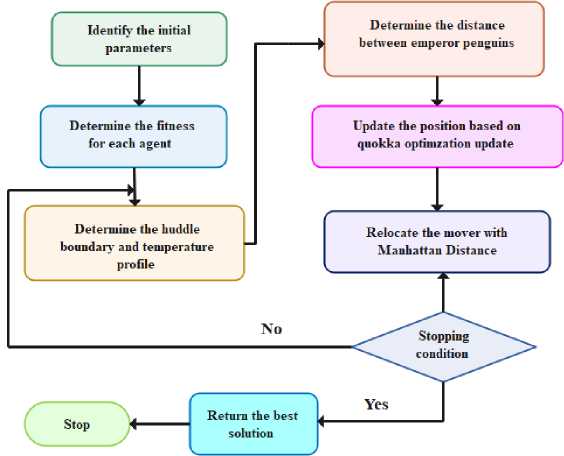
Fig.1. The proposed HEPQSO flowchart
The huddle is modelled as a two-dimensional L-shaped polygonal plane. Initially, the boundary of the huddle is generated randomly by the emperor penguins. The temperature profile surrounding the huddle is then calculated, and the distances between individual penguins are established to facilitate further analysis. Finally, the most efficient mover, representing the optimal solution is determined, and the huddle boundary is updated based on the new positions of the search agents, or emperor penguins.
Following preprocessing comes feature selection (FS), which is vital for minimizing computational complexity and improving classification accuracy. IoT datasets are normally high-dimensional and include redundant or irrelevant attributes that can water down the efficacy of DL classifiers. In order to mitigate this, the methodology uses a new HEPQSO algorithm. HEPQSO combines the social huddling habit of emperor penguins with the adaptive foraging strategies of quokkas and balances exploration and exploitation in the search space. The emperor penguin optimization component emulates the huddling process when penguins cluster together to reduce energy loss during harsh Antarctic conditions.
Here, penguin movements are candidate subsets of features, with the "optimal huddle" being the most discriminative set of features. The algorithm uses an adapted Manhattan distance metric to direct position updates, which improves convergence efficiency and lowers computational cost in comparison to standard Euclidean measures. At the same time, the quokka swarm optimization mechanism integrates adaptive updates based on environmental conditions like temperature, humidity, and drought coefficients. These parameters simulate the quokkas' capability to dynamically adapt their foraging protocols, thereby making the search process robust against premature convergence. Through combining both strategies, the hybrid model achieves a balance between wide exploration of the search space and concentrated exploitation around promising sets of features.
-
A. Create and Establish the Boundaries of the Huddle
Emperor penguins typically form huddles within a polygon-shaped grid boundary, with the minimum number of penguins in the huddle determined by randomly selected neighbors. To define the huddle boundary around the polygon, the wind flow surrounding the huddle is estimated, noting that the wind moves faster than the penguins themselves. Complex variable theory is employed to model the randomly generated huddle boundary. Here, т represents the gradient of ф, where ф denotes the wind velocity as defined in equation (3).
т = 7ф
The complex potential is formulated by combining the vector т with ф, as described in equation (4).
F = ф + iT
Here, F represents an analytic function on the polygon plane, and i is the imaginary constant.
-
B. Temperature Profile Around the Huddle
Emperor penguins form huddles to conserve energy and maintain warmth. To model this behavior, the temperature is set as T = 0 when the polygon radius R> 1 and T = 1 when R < 1, accurately reflecting the thermal conditions. The exploration and exploitation process of emperor penguins across different sites is governed by the temperature profile. The temperature around the huddle, T' is computed using equation (6).
T ’
(T
--
Max iter х-Мах^ ег-
) )
(0, if R>1
[1, if R<1
where R is the radius, x is the current iteration, Maxiter represents the maximum iterations, and T is the time needed to find the optimal solution region.
-
C. Manhattan Distance between Emperor Penguins
Once the huddle boundary has been established, the distance between each emperor penguin and the best-obtained optimal solution is calculated. The solution with the fitness value closest to the current optimum is selected as the best. The remaining search agents, or emperor penguins, then update their positions based on this current optimal solution. which can be mathematically explained as follows. The modified distance equation is given in equation (7), and it substitutes the Manhattan distance for the original Euclidean distance.
D^ = S(A)X r= 1IPi(x) - РЕРЛ(х)1 (7)
Here, x denotes the current iteration, and DEP represents the modified Manhattan distance between the most suitable search agent and the best emperor penguin (i.e., the emperor penguin with the lowest fitness value). Using the Manhattan distance in EPO, instead of the Euclidean distance, simplifies calculations and enables more efficient movement in certain search spaces, particularly grid-like environments. This distance metric is especially effective in spaces where movement is constrained to vertical and horizontal directions, such as city blocks or grids, and can improve convergence in problems where diagonal moves are either suboptimal or restricted. The best optimal solution, or the fittest emperor penguin, is denoted by P while PEP , representing the location vector of an emperor penguin. The term S(A) refers to the social factors of the penguins that drive them toward the most advantageous search agent. The following formula (8) is used to compute A:
A = (m x (t ’ + Pgrid(ac)) x randO) - T ’
P gr id(ac) = \P - P e P |
Here, M is the mobility parameter, which helps prevent collisions by maintaining a minimum distance between search agents, and is set to a value of 2. T ’ denotes the temperature profile surrounding the huddle, while P g r id (ac) evaluates the differences among emperor penguins to determine the polygon grid accuracy, as defined in equation (9). The function rand() generates random values in the range [0, 1]. Equation (10) is then used to compute the function. S(A).
S(A) = (^fTe-^-e-)
In this case, the expression function is represented by e. The control parameters facilitate more effective exploration and exploitation during the search process. Their respective ranges are [2, 3] for f and [1.5, 2] for l.
Every quokka modifies its location (signalling updated weight values) in accordance with the population's most well-known leader at the moment. Equations (11-12) represent the position update equations:
A*™ = (S?) xARx rand xAY (11)
Ynew = Yold + Anew xM (12)
where S stands for the temperature ratio, which runs from 0.2 to 0.44, G for the humidity ratio, which ranges from 0.3 to 0.65, and Aold for the drought and its value within the interval [0,1]. The rand is an arbitrary number that ranges from 0 to 1, and AR illustrates the weight difference between the leader and the quokka. M represents the nitrogen ratio, with a number between 0 and 1, chosen because quokkas need this amount of nitrogen. AY represents the difference in status between the leader and Quokka. Quokka's new role is represented by Anew , while Ynew represents the previous role.
-
D. Relocate the Mover with Manhattan Distance
-
3.3. Local Training model- SGLU-ViT-TCN
The positions of emperor penguins are updated based on the mover, which represents the best-obtained optimal solution. This mover leaves its current location and guides the repositioning of other search agents within a defined search space. As the penguin that has found the optimal solution, the mover influences the movement of the remaining penguins. Their positions are updated using the Manhattan distance and temperature profile, ensuring all search agents converge toward the most optimal solution for the antenna selection problem. The future position of an emperor penguin can be calculated using equation (13) below:
where PeP (x + 1) represents the updated position of an emperor penguin in the next iteration. Once the mover has been relocated, the huddling behavior of the emperor penguins is recalculated during the iteration phase. The result of HEPQSO is the most informative and least redundant feature set, which is optimized and maintained for classification. This diminishes dimensionality, enhances generalization, and guarantees that the next deep learning stage works on an optimized dataset specifically designed for intrusion detection.
The feature set that has been optimized is then input to the local classification model, which provides a new hybrid deep learning structure that involves the Spike Gated Linear Unit (SGLU), Vision Transformer (ViT), and Temporal Convolutional Network (TCN). Application of the SGLU block is a key methodological contribution since it involves embedding a spiking neuron-inspired gating mechanism into a multilayer perceptron framework. This approach captures non-linear interactions among features while maintaining the integrity of the original data. Temporal dependencies are essential for the intrusion detection task. SGLU divides the input into two streams, performs linear transformations and spiking neuron activations, and element-wise multiplies the output spike vectors, thus separating signal from noise. Additionally, the incorporation of time-dimension batch normalization prevents temporal information loss, which is especially beneficial in streaming IoT traffic contexts. Fig.2 depicts the architecture of the proposed local training model that combines Spike Gated Linear Unit (SGLU), Vision Transformer (ViT), and Temporal Convolutional Network (TCN).
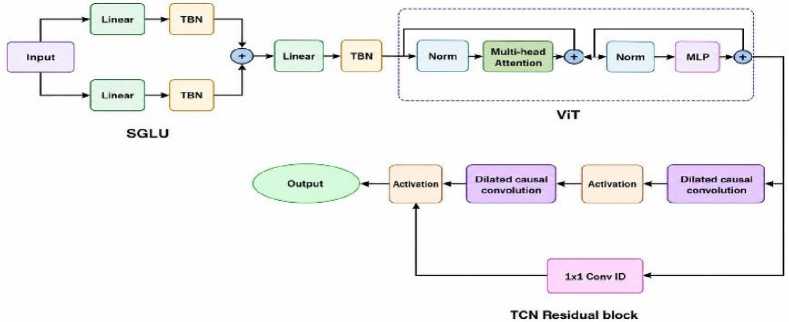
Fig.2. The proposed local training model- SGLU-ViT-TCN
Numerous neural network models make extensive use of MLP, a fundamental neural network topology. To create a spike-based MLP, Spikformer replaces a standard layer with a layer of LIF (Leaky Integrate-and-Fire) neurons. for an activation function after a linear layer. The gating mechanism can improve the model's performance and dynamically control the flow of input to manage challenging jobs. Here, the system integrated SGLU, which is distinguished from regular GLU in that it incorporates a spike-inspired dynamic gating mechanism. For local training, SGLU facilitates learning in individual nodes using their local sequential or event-driven data by passing through spike-based gates, which focus on significant temporal patterns, filtering out noise in the process. In comparison to standard GLU, spiking layers using LIF, and standard MLP, SGLU can efficiently handle heterogeneous and sparse data due to its focus on temporal sensitivity, event-driven sparsity, and adaptive gating, making it significantly better for sequential data, IoT traffic, and other scenarios. It reduces unnecessary computations, making it computationally efficient for local learning. Moreover, the SGLU is more effective in capturing non-linear relationships than regular MLP blocks. In intrusion detection systems, SGLU is used to improve feature extraction. This is done by giving greater importance to critical attack features while reducing noise.
SGLU is suggested in SNNs by integrating within the MLP, a gating mechanism divides the input into two sections, allowing one segment to be modulated while the other is transmitted directly. using SGLU, and each is subjected to a linear transformation and a fully linked layer. To create spike vectors, these two components are subsequently run through a layer of spiking neurons. The filtered information is obtained by multiplying the two spike vectors element-wise. Spike vectors are created by passing the filtered data through the spiking neuron layer after undergoing another linear modification, readying it for the following network segment. Additionally, SGLU employs a time-dimension batch normalization layer instead of the standard batch normalization layer. By normalizing the data along the time dimension, this approach better preserves the temporal information inherent in the input. The SGLU operation is defined by the following formula:
U = SN (TBN(Linear(X))) (14)
V = SN (TBN(Linear(X))) (15)
0 =SN (TBN(Linear(U. V))) (16)
Here, SN denotes the spike neuron layer, Linear represents the fully connected layer, and TBN refers to the timedimension batch normalization layer. SGLU is an enhanced spiking MLP that integrates a gating mechanism to increase the model’s expressiveness. The ViT block utilizes self-attention mechanisms to encode global dependencies within the dataset. ViT is a categorization method based on Transformers. ViT is a unique type of transformer encoder and attention mechanism. An essential component of the ViT algorithm is the transformer encoder. For local training, the Vision Transformer (ViT) transforms the input data into a list of tokens, and then these tokens are projected onto a fixeddimensional space while incorporating position information. Then, the projected embeddings are passed through a stack of transformer layers, allowing the model to learn complex relationships between features. Moreover, a fully connected layer is applied for classification or anomaly detection. The inclusion of ViT for local training is highly advantageous for distributed IoT networks, as each device can learn from local patterns, and ViT's self-attention mechanism can effectively learn complex relationships between high-dimensional and heterogeneous features. The similarity between the patches is represented by each row and column in the similarity matrix. To determine the outcome and compute the loss between the actual and anticipated output, a classifier, typically a linear layer, is employed at the final layer. Unlike CNN-based algorithms that extract local features, ViT uses a transformer encoder block and patch embedding technique to focus on global dependencies. Transformer Encoder uses an attention method to identify relationships between visual tokens, or image patches. The obtained tokens undergo normalization as shown in. Eq. (17).
v' = normalize(v')(17)
Query (Q), Key (K), and Value (V) vectors are the names given to the three copies of normalized visual tokens. The self-attention mechanism uses cosine similarity to compute an attention map between Q and K. The attention map is subjected to the softmax activation function because of squeezing values between 0 and 1, as shown in Eq. 18.
QK = softmax (^=~)(18)
The degree to which a visual token is related to others is indicated by these values. There are more relationships between the patches, the higher the attention map value. As in Eq. 19, the V feature matrix and attention map are multiplied in order to highlight the most significant features and lessen the impact of undesirable features, such as noise.
x = QKxV(19)
The weighted feature vector undergoes an MLP block that consists of a linear layer and a GeLU activation function. The transformer encoder block is where all of these operations are carried out.
The temporal convolution network is used to enhance sequence modelling performance. It addresses issues with future information leakage and varying input and output sequence lengths in CNNs. It performs a similar function to RNNs, which is capable of mapping sequences of mapping input sequences of any length to output sequences of the same length. At the same time, it avoids the typical issues associated with RNNs, such as vanishing or exploding gradients and sequential computation bottlenecks. with gradient explosion or the loss and insufficient storage use. Its main characteristic is the application of DCC or dilated causal convolution. The CNN model's issues with varying Issues related to input and output sequence lengths, as well as potential information leakage, can be addressed using causal convolution. Additionally, dilated convolution expands the receptive field of the convolutional kernel while minimizing the number of required network layers.
DCC combines dilated convolution with causal convolution. Dilated convolution broadens the convolution kernel's receptive field, while causal convolution gathers historical data. Causal convolution efficiently prevents future information from influencing the current state by ensuring that the mth element of the output sequence only depends on the mth and preceding items in the input sequence. The network can acquire more extensive historical data based on the same network layer due to the dilated convolution. The TCN uses the zero-filling technique to guarantee that input and output sequences are always the same length, and the number of fills is as in equation (20).
Z = (к - 1) x d (20)
where L denotes the number of network layers preceding the dilated convolution, d=2^Lis the dilation coefficient, and k represents the size of the convolutional kernel. Meanwhile, the growth rate is controlled by the dilated coefficient in the dilated convolution to accelerate data acquisition. Using a convolution kernel f of size к and a time series X = {x1, x2,...., xm} As an example, the dilated causal convolution (DCC) of the input xm in layer L expressed in an equation (21),
Here the present component's net layer is indicated by a superscript. Following convolution, the H ^ (m) . The activation function is expressed as in equation (22),
H^(m) = ReLlKF^m) + b)(22)
ReLU(t) = max[0,t] = {°’ t ^0(23)
x t’ t X> V
To further improve features, TCN makes use of residual blocks. After adding the residual connection, it is expressed as in equation (24),
H ^ (m) = ReLU(F(m) + b + Н 1(m))
According to equation (24) , the network can further improve the features in layer L based on layer L-2 once it has learned actual data qualities in layers L and L-1. This prevents the network from deteriorating and somewhat improves the model's ability for generalization. The TCN module fills the gap by encoding local sequential dynamics with dilated causal convolutions, which increase the receptive field without leaking information from future inputs. Thus, TCN simulates long-range temporal dependencies in traffic flows, allowing the IDS to identify fine-grained changes and cumulative anomalies in live data streams. Collectively, the SGLU–ViT–TCN hybrid realizes a synergistic equilibrium: SGLU supports non-linear representation, ViT captures global attention-based correlations, and TCN supports temporal sequence learning.
3.4. Federated Learning Framework
4. Result and Discussion4.1. Dataset Description
First, the IoT nodes gather raw network traffic data, which is then passed through a sequence of preprocessing operations like scrubbing to eliminate noise and redundancy, scaling to feature-normalize attribute ranges, and label encoding to transform categorical attributes into machine-readable form. Once the data is normalized, every IoT node uses the HEPQSO algorithm to locally detect the most discriminative and optimized attributes. These chosen features are then employed for training the Spike Gated Linear Unit–Vision Transformer–Temporal Convolutional Network (SGLU– ViT–TCN) classifier to produce local model updates in the form of weights that have been learned. Rather than sharing the raw data, these updates alone are combined to build a better global model. Model updates (weights, gradients) but not raw traffic is exchanged with the server. This reduces privacy vulnerabilities and aligns with data sovereignty standards. The global server carries out federated averaging to integrate model updates from every client into a global model. Because the local datasets are heterogeneous and frequently non-IID, the feature selection optimized for local datasets (HEPQSO) ensures that updates are consistent across clients, enhancing global stability and convergence rate. The system drastically cuts communication overhead by sending only compressed model parameters instead of full datasets. The decentralized nature also provides immunity against adversarial attacks since data is still spread out, and the attackers have no central data repository to attack. The latest global model is then redistributed back to the IoT nodes, where it is again tuned by subsequent local training rounds. The cycle of repeated iteration continues until the global model converges to a strong, adaptable, and privacy-conscious intrusion detection system that can scale effectively on various IoT deployments. Fig.3 illustrates the process of the suggested federated IDS, where local training is performed by IoT nodes and sends updates to a global server.
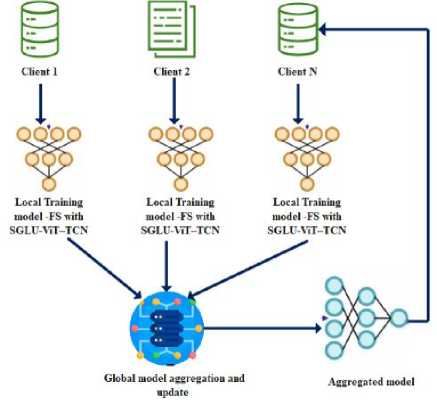
Fig.3. The proposed federated intrusion detection system
Traditional centralized intrusion detection systems need clients to send raw information to a central server, which raises privacy concerns and communication costs. Federated learning, on the other hand, enables IoT nodes to locally train using their feature-optimized and pre-processed data. Raw data is not sent, but rather model updates (gradients and weights) are sent to the central server. Before returning the global model to clients for the subsequent training cycle, the server aggregates these updates via methods like Federated Averaging (FedAvg). This distributed strategy has some benefits. First, it ensures the preservation of privacy, as raw traffic data never leaves the local device. Second, it decreases communication overhead, as only updates to models are transmitted instead of huge raw datasets. Third, it provides scalability and flexibility in heterogeneous IoT settings where strategies can have diverse computational resources and data distributions. With the inclusion of federated learning into the intrusion detection process, the system gains real-time adaptability without compromising security and efficiency in distributed IoT ecosystems.
The proposed IDS's performance is evaluated using standard metrics such as precision, recall, and F1-score, which provide a general indication of classification efficacy. Furthermore, measures of training time and convergence rate are also taken to emphasize the effectiveness of the federated learning process. In order to test robustness, the introduced method is evaluated against a set of baseline and current state-of-the-art deep models (LSTM, CNN-LSTM, Bi-GRU, Vision Transformer (ViT), Temporal Convolutional Networks (TCN)). The comparative study enables investigation of the strengths of the introduced model on classification performance, scalability, and generalization capability on different data distributions. In addition, the assessment takes into account varying dataset split ratios to provide consistency of outcome and to monitor the adaptability of the model under varying training and testing environments. The discussion focuses on the trends of the comparison results, the effects of the feature selection mechanism, and the benefits of incorporating federated learning in minimizing data privacy issues while guaranteeing correct detection accuracy.
-
A. Dataset 1
BoTNeTIoT-L01IoT-IDSdataset systems-ids)
All of the IoT devices are provided within the detection_of_IoT_botnet_attacks_N_BaIoT (BoTNeTIoT) data set. BoTNeTIoT-L01 is the name of this data set. The duplication of the original dataset was reduced in this updated version by choosing just features from a 10-second time range. Attacks are denoted by 0. In the dataset, class labels indicate anomalous samples, while normal samples are denoted by 1. The most recent dataset, BoTNeTIoT-L01, was collected using Wireshark to capture traffic from nine IoT devices on a local network with a central switch. It includes two types of botnet attacks, Gafgyt and Mirai. The dataset contains 23 statistically designed features extracted from the .pcap files. A decay factor of 0.1 was applied to calculate seven statistical measures—mean, variance, count, magnitude, radius, covariance, and correlation coefficient—over a 10-second interval.
-
B. Dataset 2
-
4.2. Performance Analysis
IoTNet24DatasetforIDS
This dataset displays a portion of network traffic data gathered from three live benign traffic captures and twenty malicious traffic captures on IoT devices. Its main purpose is the development and assessment of IDS for IoT devices. Despite its imbalance, the dataset offers useful information for identifying fraudulent activity in IoT networks. For efficiency and clarity, duplicates have been eliminated from its more than 23,000 rows. For binary classification tasks, the dataset works well, especially for accurately classifying malicious versus benign traffic 'label' characteristic, which is the target label, indicating whether a data piece is associated with harmful or benign activities. 'Malicious' or 'Benign' are the listed values that are stored in the string.
The proposed FL-IDS approach demonstrates performance when tested against a range of benchmark models, such as LSTM, CNN-LSTM, Bi-GRU, Vision Transformer (ViT), and Temporal Convolutional Network (TCN), on two different data splits: 70/30 and 80/20. Fig.4 depicts the comparative performance evaluation of the proposed models against the baseline in terms of accuracy for various dataset splits.
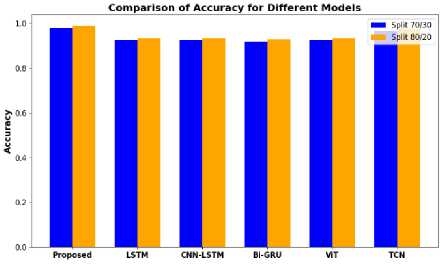
Fig.4. Performance analysis of accuracy for federated IDS model
For the 70/30 model training split, the proposed model recorded an accuracy of 0.978802, far surpassing all other models. The LSTM, CNN-LSTM, and ViT models had similar performance with accuracies of 0.925706, 0.92592, and 0.925775, respectively, while the Bi-GRU model had slightly lower performance at 0.918983. The TCN model recorded a very impressive accuracy of 0.967442, although still not as high as the proposed model. Upon changing the training split to 80/20, the accuracy of the proposed model further increased to 0.988532, proving its strength with bigger training sets. The LSTM, CNN-LSTM, and ViT models once again reported comparable accuracies, now 0.934799, 0.935015, and 0.934868, respectively, but the Bi-GRU model slightly improved to 0.928008. The TCN model also performed better, achieving 0.976956, but was still less accurate than the proposed system. Fig.5 shows the comparative evaluation of the precision values of the proposed federated IDS model and baseline models.
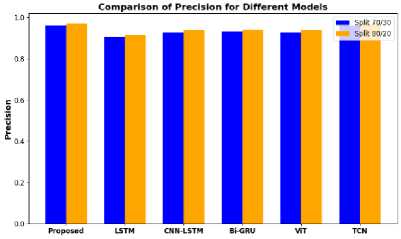
Fig.5. Performance analysis of precision for federated IDS model
For a 70/30 ratio, the proposed model attained a precision of 0.961683, which confirms its high capacity to suppress false positives. The TCN model was close with a precision of 0.961557, which implies that time feature extraction is significantly potent for precise intrusion classification. The Bi-GRU model then trailed closely with 0.931299, followed by CNN-LSTM and ViT with similar results at 0.928276 and 0.927887, respectively. The model with the lowest precision was LSTM (0.9068), which indicates its relative frailty in identifying actual attacks versus good traffic. With the 80/20 ratio, the precision of the proposed model increased to 0.97124, further proving its stability with bigger training sets. The TCN model was again on par with 0.971012, retaining its competitive advantage. The Bi-GRU model had improved marginally (0.940448), as did CNN-LSTM (0.937395) and ViT (0.937001), while LSTM improved to 0.915702. Fig.6 presents a comparison of F1-scores between the suggested model and various deep learning benchmarks.
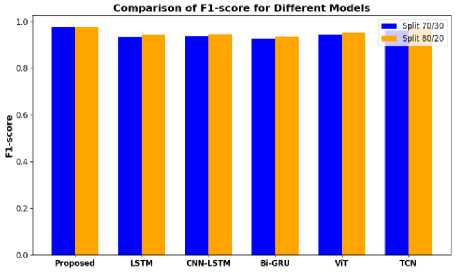
Fig.6. Performance analysis of F1-score for federated IDS model
For the 70/30 ratio, the proposed model attained an F1-score of 0.976649, illustrating better performance in While the proposed model excels at balancing false positives and false negatives, the TCN model achieved a slightly lower NPV of 0.9619, solidifying its proficiency in detecting temporal patterns. ViT placed third (0.943285), taking advantage of its global attention mechanisms. CNN-LSTM and LSTM lagged slightly behind at 0.936657 and 0.934026, respectively. With an F1-score of 0.9257, the Bi-GRU model demonstrates difficulty in achieving an optimal trade-off between precision and recall. balance relative to other architectures. Using the 80/20 ratio, the proposed model performed better with a better F1-score of 0.977266, reflecting its stability in using more training data. The TCN was again the runner-up at 0.971362, and ViT recorded more improvement (0.952555). CNN-LSTM and LSTM also recorded small improvements (0.945860 and 0.943203, respectively), and Bi-GRU continued to be the worst performer (0.934836), although still recording decent outcomes. Fig.7 presents a comparative analysis of the specificity across the federated IDS models. with respect to the conventional models.
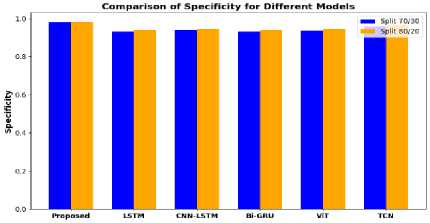
Fig.7. Performance analysis of specificity for federated IDS model
The measures of specificity, indicating the capacity of the model to effectively mark true negatives (benign network traffic), also illustrate the better performance of the suggested federated learning-based IDS. With a 70/30 split, the recommended prototypical had the best specificity of 0.979826, marking a very high capability to abstain from false alarms in benign traffic. Following this was the TCN model with 0.958443, followed by CNN-LSTM (0.937437) and ViT (0.936658), having relatively similar performance. Both Bi-GRU and LSTM models have had levels of specificity around 0.929, indicating slightly higher probabilities of classifying normal traffic as attacks. When assessed on an 80/20 ratio, all models exhibited higher specificity, with the introduced model achieving 0.981485 - retaining its top spot. TCN was second (0.967866), followed by CNN-LSTM (0.946648) and ViT (0.945861), while LSTM and Bi-GRU rose to around 0.938. These findings repeatedly demonstrate that the combination of the proposed model's federated learning with the ViT-TCN architecture yields the most accurate normal network behavior identification, which is extremely important to minimize operational disruptions in real-world IoT deployments. Fig.8 depicts the sensitivity performance comparison for the proposed model and baseline approaches.
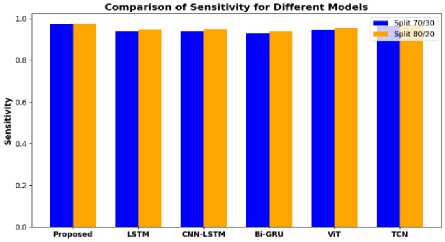
Fig.8. Performance analysis of sensitivity for federated IDS model
The sensitivity measures, which gauge how well the model accurately identifies true positives (real intrusions), identify the suggested federated learning-based IDS as the best solution in both dataset setups. Under the 70/30 split, the highest sensitivity of 0.972765 was attained by the proposed model, indicating its best ability to detect real threats. The TCN model came in at 0.961866, and ViT at a competitive 0.943966. Both CNN-LSTM (0.939498) and LSTM (0.93802) showed moderate sensitivity, with Bi-GRU lagging slightly at 0.928864. When tested on the 80/20 ratio, all models performed better detection rates, with the suggested model achieving 0.974353, still the most sensitive detector. TCN was again the second-best (0.971324), followed by ViT (0.953243), with CNN-LSTM (0.94873) and LSTM (0.947237) performing similarly. Bi-GRU was still the least sensitive model (0.937988), albeit with still impressive detection abilities. Fig.9 illustrates the Matthews Correlation Coefficient (MCC) comparison between the presented IDS and other models.
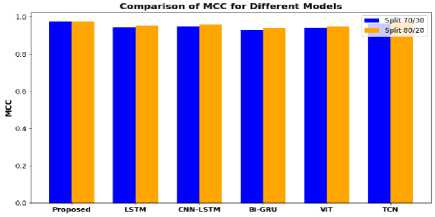
Fig.9. Performance analysis of MCC for federated IDS model
MCC metrics indicate that the proposed approach outperforms baseline methods in correctly predicting both classes. The proposed federated learning-based IDS on both dataset splits. Under the 70/30 split, the proposed model obtained the highest MCC value of 0.975456, reflecting a superb overall quality of classification. The TCN model was next with a superior performance of 0.96428, followed by CNN-LSTM (0.948155) and LSTM (0.944966), which were competitive. ViT had a respectable 0.939777, and Bi-GRU was last with 0.928819. When measured on the 80/20 ratio, all the models had better MCC results, with the proposed model achieving 0.976061 - still in the lead. TCN was second (0.973762), followed by CNN-LSTM (0.957474) and LSTM (0.953243). ViT became better (0.949012), whereas Bi-GRU was still the poorest performer (0.937943), albeit with sufficient classification ability. Fig.10 shows the comparative performance of Negative Predictive Value (NPV) relative to the baseline model.
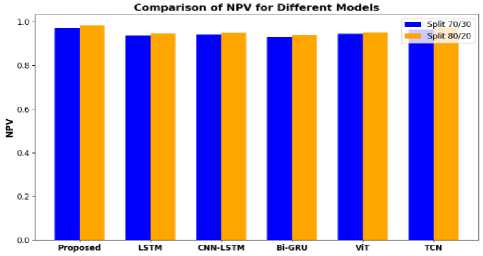
Fig.10. Performance analysis of NPV for federated IDS model
The Negative Predictive Value (NPV) metrics, estimating how well a model can identify genuine negatives (normal traffic cases), show the suggested federated learning-based IDS outperforming other models in both dataset splits. In the 70/30 split, the proposed model achieves the highest performance, with a negative predictive value (NPV) of 0.9699, indicating its strong ability to correctly identify negative instances. greater reliability in verifying normal network activity. The TCN model trailed by a small margin with 0.963836, and ViT (0.944063) and CNN-LSTM (0.942211) were competitively close. LSTM (0.937047) and Bi-GRU (0.929935) reported slightly lower NPV values, indicating slightly higher probabilities of misclassifying normal traffic as anomalous. When tested against the 80/20 ratio, all models performed better in terms of NPV, with the proposed model achieving a phenomenal 0.984598 - exhibiting almost-perfect negative prediction with increasing training data. TCN retained its sturdy second-place rank (0.973314), followed by ViT (0.953341) and CNN-LSTM (0.951471). LSTM improved to 0.946254, while Bi-GRU was the weakest (0.93907), but still respectable. Fig As shown in Fig.11, the proposed model exhibits improved false alarm reduction compared to other models, as indicated by the FPR values.
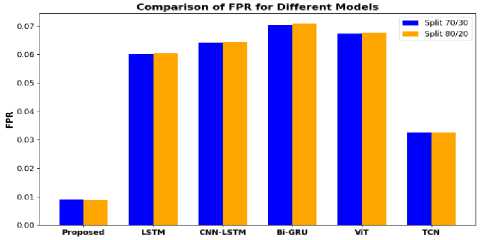
Fig.11. Performance analysis of FPR for federated IDS model
FPR quantifies the percentage of benign instances mistakenly labeled as malicious. superior performance of the proposed federated learning-based IDS in reducing false alarms for both dataset configurations. In the 70/30 configuration, the proposed model had an astonishingly low FPR of only 0.008953, far better than all the benchmark models. The TCN model was the next best at FPR of 0.032482 - roughly 3.6 times worse than the proposed model. Other models had much greater false alarm rates: ViT (0.067211), CNN-LSTM (0.064003), LSTM (0.060083), and Bi-GRU (0.070359). This trend continued in the 80/20 test, where the suggested model lowered its FPR further to 0.008796, with TCN retaining its second position (0.032552). The other models retained similar relative performance: ViT (0.067632), CNN-LSTM (0.064392), LSTM (0.060432), and Bi-GRU (0.070812). These findings illustrate that the proposed model's federated learning-based hybrid ViT-TCN architecture achieves at least 7.6 times superior false positive reduction over traditional deep learning strategies. Fig.12 illustrates the comparative evaluation of False Negative Rate (FNR) for the baseline and proposed intrusion detection models.
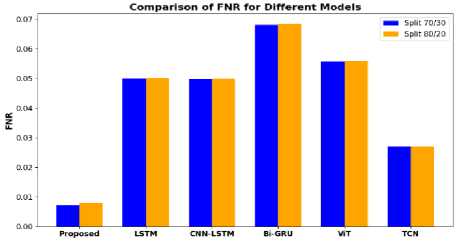
Fig.12. Performance analysis of FNR for federated IDS model
FNR quantifies the percentage of true positives that the model fails to detect superior capacity of the proposed federated learning-based IDS to identify real intrusions while keeping missed threats at a minimum for both configurations of the datasets. For the 70/30 configuration, the proposed model attained an extremely low FNR of 0.007142 - at least 7 times superior to traditional deep learning methods. The TCN model was followed by a commendable 0.026912 FNR, with CNN-LSTM (0.049684) and LSTM (0.049978) having similar but much greater rates. ViT was moderately (0.055697) and had the highest miss rate for Bi-GRU (0.06807). This performance ranking continued to hold in the 80/20 test, where the proposed model took the lead (0.007976 FNR), followed once more by TCN (0.026926). CNN-LSTM (0.049928) and LSTM (0.050225) continued to perform on par with each other, while ViT (0.056001) and Bi-GRU (0.0685) were the weakest detectors. These results prove that the proposed model's synergy between ViT's global pattern identification and TCN's temporal analysis minimizes missed threats by 86-88% over traditional LSTM/CNN methods.
-
4.3. Dataset Comparison Analysis
To further validate the generalization capability and robustness of the designed intrusion detection framework, experiments were performed on two different datasets. Both datasets were tested using conventional performance measures, which together give an overall picture of classification performance, susceptibility to various types of attacks, and the ability to tolerate imbalanced classes. The comparison between the two datasets illustrates how various deep learning approaches, namely LSTM, CNN-LSTM, Bi-GRU, ViT, and TCN, fare under different traffic conditions and attack distributions, whereas the proposed model systematically exhibits better adaptability. This observation not only puts focus on the stability of the proposed method on both datasets but also calls for highlighting the value of dataset diversity in benchmarking intrusion detection systems. Fig.13 illustrates the dataset-specific performance comparison of the introduced model and baseline models on Dataset 1.
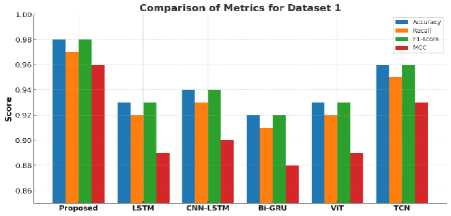
Fig.13. Dataset 1 performance analysis for federated IDS model
The proposed model performs better on all important measures in Dataset 1 with an accuracy of 0.98 and significantly bests all the baseline models. It even manages to achieve a recall of 0.97, an F1-score of 0.98, and an MCC of 0.96, which shows a strongly balanced and credible classification performance. For comparison, the TCN model is the second-best performing with an accuracy of 0.96, a recall of 0.95, an F1-score of 0.96, and an MCC of 0.93. The results of LSTM, CNN-LSTM, Bi-GRU, and ViT are relatively lower and more clustered, with accuracies of 0.92-0.94, recall values of 0.91-0.93, F1-scores of 0.92-0.94, and MCC values of 0.88-0.90. These values attest to the efficiency of the federated learning. Fig.14 shows dataset-specific performance analysis of the baseline models and the proposed model on Dataset 2.
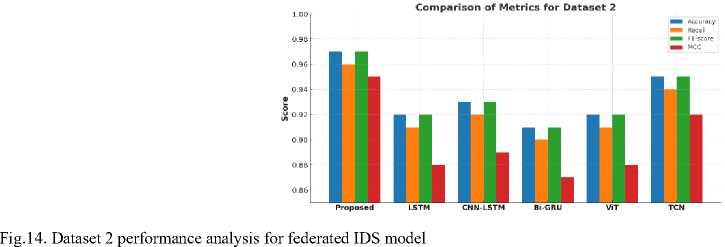
On Dataset 2, the proposed model once more has superior performance, with an accuracy of 0.97, two percentage points above its nearest rival, the TCN model (0.95). This dominance is reflected in all other metrics that were tested: the proposed model's recall of 0.96, F1- recording an F1-score of 0.97 alongside an MCC of 0.95. all indicate its superior capacity for identifying intrusions correctly while minimizing both false positives and false negatives. The TCN model remains a close contender, achieving a recall of 0.94, an F1-score of 0.95, and an MCC of 0.92. Other models, including LSTM, CNN-LSTM, Bi-GRU, and ViT, are in a lower-performing category with accuracies ranging between 0.91 and 0.93, recall between 0.90 and 0.92, F1-score between 0.91 and 0.93, and MCC between 0.87 and 0.89. These findings verify the strengths and generalizability of the envisioned model, proving that its sophisticated architecture has a considerable performance lead with different IoT network intrusion datasets.
-
4.4. Ablation Study
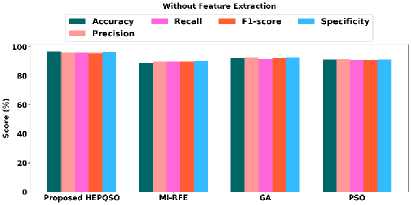
Fig 15 depicts an ablation study of the proposed model. The results clearly highlight the achievement of the proposed HEPQSO model in terms of superior performance over all the evaluation metrics, such as accuracy, precision, recall, F1 score, and specificity, under various conditions. With preprocessing, it achieves an accuracy of 97.83%, a precision of 97.46%, a recall of 96.94%, an F1 score of 97.68%, and a specificity of 97.41%. Without a preprocessing condition, the model achieved an accuracy of 96.54%, a precision of 96.29%, a recall of 95.73%, an F1 score of 96.34%, and a specificity of 96%. Similarly, the system demonstrates accuracy at 97.61% and achieves 97.08% precision, and 96.86% recall, and 97.03% F1 score, and 97.6% specificity through feature extraction. Under the condition of feature extraction, the system maintains 96.83% accuracy, and 95.87% precision, and 95.98% recall, and 95.77% F1 score, and 96.47% specificity. HEPQSO demonstrates its superior performance through its ability to handle classification tasks with minimal preprocessing requirements and its capacity to maintain high classification accuracy.
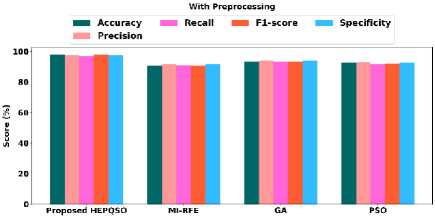
Without Preprocessing
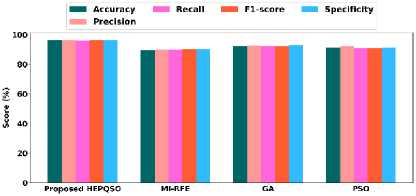
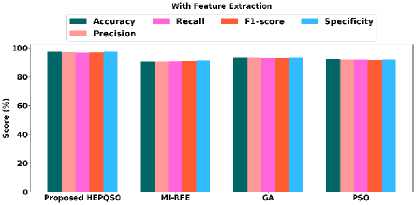
Fig.15 Ablation study
-
4.5. K-fold Analysis
94.34%, and 94.26%, which is better compared to the GA but lower compared to the proposed model. The proposed HEPQSO system achieves its highest accuracy results across all of its testing divisions while demonstrating stable performance, which proves its ability to deliver consistent results and better classification performance than current assessment methods.
-
4.6. Comparative Analysis
Fig 16 depicts the K-fold analysis of various methods, such as the proposed HEPQSO, MI-RFE, GA, and PSO, using five folds, namely Fold-1, Fold-2, Fold-3, Fold-4, and Fold-5. From Fig 16, the proposed HEPQSO maintains the highest performance in all folds with 98.46%, 98.73%, 98.79%, 98.59%, and 98.59%, respectively. Moreover, the MI-RFE method maintains an accuracy of 95.1%, 95.39%, 95.45%, 95.55%, and 95.4%, respectively, which is moderate compared to the proposed model. Furthermore, the GA maintains an accuracy of 92.82%, 92.93%, 93.15%, 93.58%, and 93.03%, which is weaker compared to the proposed model. Finally, the PSO maintains an accuracy of 94.03%, 94.27%, 94.49%,
5-Fold Cross Validation Accuracy Comparison Ш Fold 1 ^ Fold 3 ^ Fold-4 M Fold-5
M Fold-2
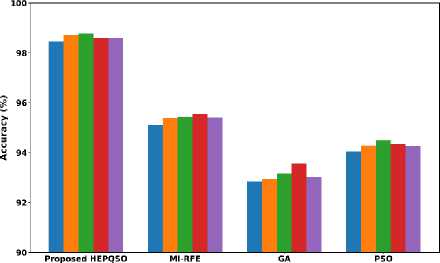
Fig.16. K-fold analysis
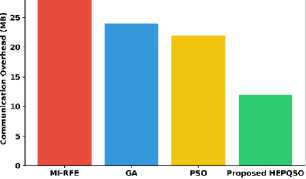
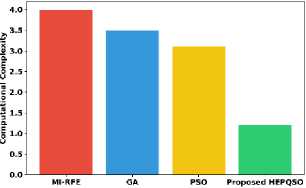
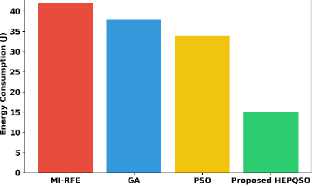
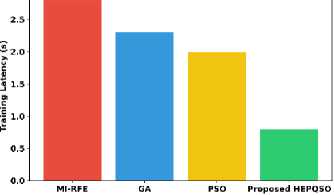
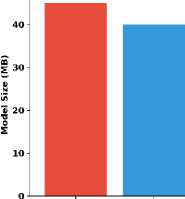
Fig 17 depicts a comparison of resource efficiency and computational performance of existing models, such as MI-RFE, GA, PSO, and the proposed HEPQSO model in terms of certain parameters, such as communication overhead (MB), model size (MB), training latency (s), computational complexity, and energy consumption (J). From Fig 17, the proposed HEPQSO model is highly efficient compared to existing models, by attaining 12 MB of communication overhead, 18 MB of model size, 0.8 s of training latency, 1.2 of computational complexity, and 15 J of energy consumption. On the other hand, MI-RFE possesses the highest resource consumption with 28 MB of overhead, 45 MB of model size, 2.8 s of training latency, 4 of computational complexity, and 42 J of energy consumption. The GA and PSO algorithms perform moderately. In this regard, it is evident that PSO (22 MB, 36 MB, 2 s, 3.1, 34 J outperforms GA (24 MB, 40 MB, 2.3 s, 3.5, 38 J, although the overall performance is low in comparison with HEPQSO. Thus, it is evident that the proposed HEPQSO model significantly reduces the communication cost, memory usage, time taken, computational cost, and energy consumption.
Communication Overhead (MB)
Computational Complexity
Energy Consumption (J)
Training Latency (s)
Model Size (MB)

Proposed HEPQSO
Fig.17. Comparative analysis of the proposed model
4.7. Scalability Analysis
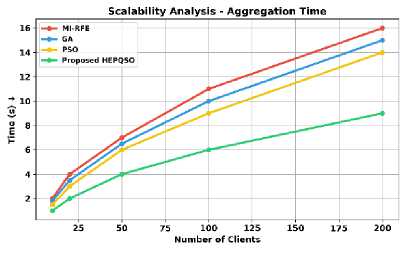
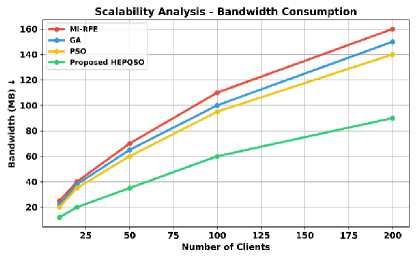
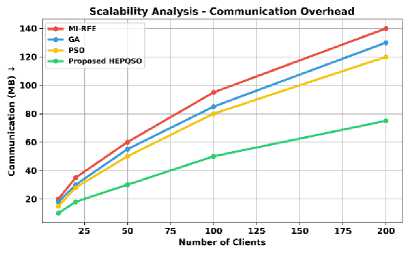
Fig.18 depicts the effectiveness of the proposed HEPQSO model in terms of aggregation time (in seconds), bandwidth consumption (in MB), and communication overhead (in MB) with an increase in the number of clients. For all the client sizes, such as 10, 20, 50, 100, and 200, the proposed HEPQSO model maintains the lowest values compared to MI-RFE, GA, and PSO, for example, maintaining aggregation times of 10 s, 18 s, 30 s, 50 s, and 75 s, with limited bandwidth and communication overhead of 10 MB, 18 MB, 30 MB, 50 MB, and 75 MB, respectively. Even for the highest client size, that is, 200, the proposed HEPQSO model significantly outperforms MI-RFE (140 s, 140 MB), GA (130 s, 130 MB), and PSO (120 s, 120 MB) in terms of aggregation time, bandwidth, and communication overhead, thus proving the effectiveness of the proposed model in minimizing computational delay with an increase in the number of clients, thus proving the superiority of the proposed model in achieving high performance with less cost in distributed environments.
4.8. Adversarial Attack Simulations or Defense Evaluation
5. Conclusion
Fig.18 Scalability analysis
Fig. 19 presents the simulations of adversarial attacks and the evaluation of the defense mechanisms for various optimization methods. The figure compares the Accuracy under Attack (%), the Attack Success Rate (%), and the Defense Effectiveness (%) of the MI-RFE, GA, PSO, and the proposed HEPQSO. The Accuracy under Attack of the MI-RFE is 72%, with an Attack Success Rate of 40%, making the Defense Effectiveness 60%. The GA and PSO methods have incremental improvements over the MI-RFE. The PSO has an Accuracy under Attack of 78%, with an Attack Success Rate of 30%, making the Defense Effectiveness 70%. The proposed HEPQSO has the highest Accuracy under Attack of 92%, with the lowest Attack Success Rate of 12%, making the Defense Effectiveness 90%, which proves the effectiveness of the HEPQSO in defending against adversarial attacks.
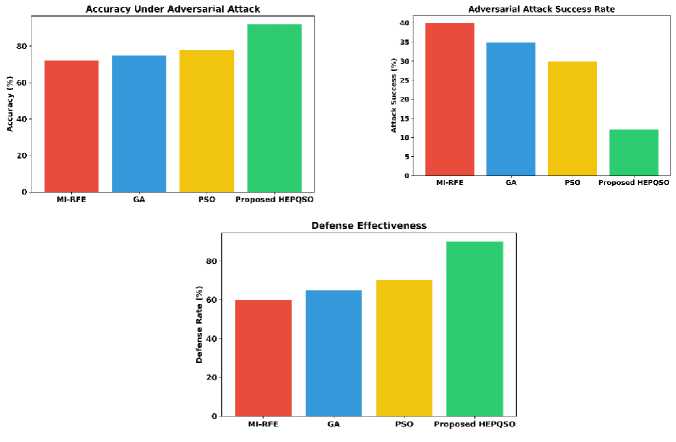
Fig.19. Adversarial attack simulations or defense evaluation
The digital infrastructure of modern networks depends on intrusion detection systems, which create security protection, yet their development faces major difficulties because of modern networks' dynamic security environments. The signature-based detection methods used in traditional IDS systems, with their manual rule engineering approach, limit the system’s ability to identify new attack patterns that develop over time. Hence, this research introduces a novel HEPQSO with a deep learning classifier for efficient intrusion detection under federated learning. The preprocessing stage of network traffic data conversion includes complete data cleaning, scaling normalization, and label encoding to achieve uniformity across different local datasets while reducing existing data disturbances. The HEPQSO method is used to find important features through its capacity to explore and exploit results. The selected features are processed by a hybrid deep learning classifier, which uses SGLU to improve its ability to represent non-linear features, and the system uses ViT–TCN to understand worldwide spatial relationships and local time-based patterns of intrusion activity. The experimental results show the higher performance of the proposed approach over benchmark models like LSTM, CNN-LSTM, Bi-GRU, ViT, and TCN. In particular, the proposed model registered 97.88% accuracy, 96.16% precision, 97.45% recall, 96.94% F1-score, 97.80% specificity, and 97.01% MCC, outperforming baselines consistently by large margins. All these enhancements affirm that the combination of HEPQSO with SGLU-ViT–TCN strengthens detection accuracy as well as generalization ability, especially in the case of complicated and minority-class attacks. Moreover, the presented model will be extended by integrating blockchain-based secure aggregation, lightweight encryption for communication resourcefulness, and adaptive reinforcement learning techniques to manage changing cyberattack trends dynamically. Table 2 illustrates the list of abbreviations used in the proposed framework.
Table 2. List of abbreviations used in the proposed framework
|
Abbreviation |
Full Form |
Abbreviation |
Full Form |
|
IDS |
Intrusion Detection System |
AD |
Anomaly Detection |
|
NIDS |
Network Intrusion Detection System |
WSN |
Wireless Sensor Network |
|
IoT |
Internet of Things |
IIoT |
Industrial Internet of Things |
|
FL |
Federated Learning |
IoMT |
Internet of Medical Things |
|
ML |
Machine Learning |
SSI |
Self-Sovereign Identity |
|
DL |
Deep Learning |
VAE |
Variational Autoencoder |
|
ANN |
Artificial Neural Network |
FedAvg |
Federated Averaging |
|
CNN |
Convolutional Neural Network |
MCC |
Matthews Correlation Coefficient |
|
LSTM |
Long Short-Term Memory |
FPR |
False Positive Rate |
|
BiLSTM |
Bidirectional Long Short-Term Memory |
FNR |
False Negative Rate |
|
GRU |
Gated Recurrent Unit |
NPV |
Negative Predictive Value |
|
Bi-GRU |
Bidirectional Gated Recurrent Unit |
ReLU |
Rectified Linear Unit |
|
SGLU |
Spike Gated Linear Unit |
MLP |
Multilayer Perceptron |
|
ViT |
Vision Transformer |
SNN |
Spiking Neural Network |
|
TCN |
Temporal Convolutional Network |
LIF |
Leaky Integrate-and-Fire |
|
Hybrid Emperor Penguin–Quokka Swarm HEPQSO DCC Optimization |
Dilated Causal Convolution |
|
EPO Emperor Penguin Optimization DoS |
Denial of Service |
|
EEPO Enhanced Emperor Penguin Optimization DDoS |
Distributed Denial of Service |
|
SCNN Stacked Convolutional Neural Network MQTT |
Message Queuing Telemetry Transport |
H-FL Hierarchical Federated Learning
All the Declarations and StatementsAuthor Contributions Statement
All authors have read and agreed to the published version of the manuscript.
Conflict of Interest Statement
The authors have declared the no conflict of interests exist.
Funding Declaration
Not Applicable.
Data Availability Statement
Not Applicable.
Ethical Declarations
Not Applicable.
Acknowledgment
Thanks to all participants and contributors for making this study possible.
Declaration of Generative AI in Scholarly Writing
The authors declare that no Generative Artificial Intelligence (AI) tools or technologies were used in the preparation, writing, analysis, or editing of this manuscript. The authors of this study present their original work as the complete research output of their study.
Appendix A\B\C…, with appendix tile
Not Applicable.
