
Gre Fılla: A Pre-Pottery Neolithic Settlement at the Taurus Foothills
Journal: Brief Communications of the Institute of Archaeology @ksia-iaran
Article in issue: 283, 2026.
Free access
Gre Fılla, located to the south of the Southeast Taurus range, was inhabited by settled hunter-gatherers. Period V dates to 9300–8800 cal. BC, and Period IV to 8800–7550 cal. BC. The wild animal bones indicate, beside hunting, the early domestication. Period V has pit-shelters and a communal structure, and Period IV, pit-shelters, single-room structures with rounded corners and communal pit-structures. Burials under the floors are attested in both periods. Periods IVC-B is planned as quadrangular dwellings surrounding communal pit-structures. The structures were burned and filled, each rebuilt into the fill of the previous one. The communal pit-structures became common open places in Period IVA, and the dwellings became larger. Chipped stone tools include obsidian and flintstone, the ground stone artefacts grinding stones, pestles, hammers, flat axes, plaques, grooved stones, labrets and beads. Bone was used for awls and decorated plaques, and horns for sickle or hilts. Copper chisels point to early metallurgy. The finds and special structures require skilled craftsmanship, indicating a complex society.
Short address: https://sciup.org/143186095
IDS: 143186095 | DOI: 10.25681/IARAS.0130-2620.283.53-65
Гре-Фылла: поселение докерамического периода в предгорьях Тавра
На поселении Гре-Фылла, расположенном южнее Юго-Восточного Тавра, обитали оседлые охотники-собиратели. Период V датируется cal. 9300–8800 до н. э., период IV относится к cal. 8800–7550 до н. э. Помимо охоты находки костей диких животных указывают на начальный период доместикации животных. В слоях периода V обнаружены ямы-убежища и сооружение, предназначенное для общего пользования; в слоях периода IV – ямы-убежища, постройки, состоящие из одной комнаты с закругленными углами, и сооружения общего пользования в виде ямы. Захоронения под полом идентифицированы в слоях обоих периодов. Четырехугольные в плане жилища в слоях периодов IVC-B окружают постройки в виде ям общего пользования. Ямные постройки сжигались и засыпались грунтом, на месте засыпанной ямы сооружалась новая постройка. В период IVA на месте ямных построек появилось общее открытое пространство, размер жилищ увеличился. Встречены каменные орудия из обсидиана и кремня, а также орудия из шлифованного камня – терочники, пестики, молотки, плоские топоры, бляшки, камни с бороздами, лабреты и бусины. Для изготовления шил и декорированных бляшек использовали кость, серпы или рукояти делали из рога. Медные тесла указывают на зарождение металлургии. Для производства найденных предметов и сооружения специальных построек требовались умения и навыки, наличие которых является свидетельством комплексной структуры общества.
Text of the scientific article Gre Fılla: A Pre-Pottery Neolithic Settlement at the Taurus Foothills
The Pre-Pottery Neolithic of South-Eastern Anatolia is defined by subterranean structures with T-shaped and I-shaped stela. The construction and contexts of these structures allowed them to be defined as special or communal buildings associated with beliefs. The small shelters surrounding these structures define these as communal structures used for ritual activities, public meetings and social interactions.
The Neolithic period of the Upper Tigris region is mainly defined by the excavations at Çayönü and salvage excavations carried out at Körtik Tepe, Hallan Çemi, Demirköy, Hasankeyf Höyük, Gusir Höyük and Boncuklu Tarla within the Ilısu Dam project in the last two decades. Recent salvage excavations conducted at Gre
Fılla brought out data regarding settled hunter-gatherers in the northernmost part of the region ( Ökse , 2021; Ekinbaş Can , 2022; 2025b). The mound is located at the upper course of the Ambar River, at the foothills of the Uzuncaseki Mountains to the south of the Southeast Taurus range. These low rolling hills constitute suitable meadows and grasslands for sheep breeding, while the high heathlands for goat breeding.
The excavations at Gre Fılla have been conducted in two sectors. The North Sector includes all settlement periods. Period V, the PPNA settlement on the virgin soil dates to 9300–8800 cal. BC. Period IV, the PPNB settlement with four phases dates to 8800–7550 cal. BC ( Ökse , 2021; 2022). The levels of Phase IVD was affected by numerous floods creating a deposit of ca. 1,5 m accumulated before ca . 8750 cal. BC ( Okse , 2022. P. 30), and the uppermost level was constructed on the flood deposits. The levels of phases IVC and IVB represent a continuous occupation throughout the middle PPNB, and Phase IVA was inhabited in the late PPNB. The South Sector consist solely of levels constructed on the virgin soil, indicating expansion of the settlement towards the south in Phase IVC.
Environmental Conditions and Subsistence Economy
Following the Preboreal Cold Period, the temperatures increased by an average of 1,8–4 °C in the Near East, in cal. 9500 BC. The Early Holocene period is marked by warmer and more humid climate than today, while oak forests and rich herbaceous species including wild cereals became widespread ( Erinç , 1980. P. 68–70). According to the increase in steppe plants and pistachio pollen determined in the Van Lake cores, a dry climate prevailed in summer and a temperate climate in winter ( Wick et al ., 2003. P. 670–673).
Under these conditions, the piedmont was covered with steppes and open forests bearing oak, heather, bush, alder, hornbeam, wild rose and wild hazelnut. The southeastern Taurus Mountains and their foothills became open woodlands of oak and juniper, grassy steppe vegetation and river valley species throughout the Holocene. These conditions offered favourable natural environment for wild animals. In the Pre-Pot-tery Neolithic period, settlements were established close to these open woodlands. The lower Uzuncaseki mountain range, ca. 5 km to the north of Gre Fılla, is still covered by open oak forests. Since wild species dominate the animal bone assemblage ( Silibolatlaz , 2022), its close location to these oak forests seem to had allowed daily hunting activities of the inhabitants.
In North Mesopotamia, hunting and gathering dominate in 9500–8500 BC ( Gaastra et al ., 2021. P. 61). The PPNA settlements bear wild cattle, sheep-goats, pigs, red deer, gazelles, foxes, rabbits, turtles, donkeys, rodents, reptiles and a large number of birds and fish, but no domestic animals ( Peters et al. , 2014). Also, the grain consumed in several settlements are wild species ( Riehl et al ., 2012. P. 130–104). The wild animal bones from Gre Fılla include adult wild boar, red deer, wild cattle, sheep, goat and fallow deer, indicating hunting activities throughout the Pre-Pottery Neolithic Period ( Silibolatlaz , 2022).
The decreased body sizes of pig and cattle bones indicates that the community controlled wild animals by luring them to kites, as already attested in the plateaus around the Harran Plain (Çelik, Tolon, 2018; Şahin, Massa, 2025). According to the existence of domestic pig and cattle bones in the upper levels, the early stages of domestication began in Gre Fılla IV, and increased young male sheep, goat, pig, and cattle bones point to selective hunting (Silibolatlaz, 2025). The bones of wild animals decreased and the bones of domestic animals increased over time in the Near East (Arbuckle, Hammer, 2019. P. 400).
Due to the arid periods in 8500–8000 and 7500–7000 cal. BC, the number of sheep and goats, which are better adapted to drought, has increased, contrary to cattle and pigs ( Gaastra et al ., 2021. P. 68). Seeds found in these levels include grains such as wheat and barley, and legumes such as bitter vetch, chickpeas, lentil and peas, indicating the early stages of plant domestication ( Willcox et al. , 2009). In 8300–8100 BC, the temperatures increased (2 °C warmer than today) and relative humid (up to 40 % than today) climatic conditions prevailed in the Near East ( Migowski et al. , 2006). Under these conditions, the water levels of several lakes rose, trees and shrubs increased and forest expanded, and Gre Filla IVD suffered floods.
During the warm and humid climate in ca. 7500 BC (9,4 ka climate event) ( Bond et al ., 2001), strong summer showers, multi-centennial changes occurred in regional moisture availability ( Regattieri et al ., 2023. P. 2). Under these conditions, hunting and foraging of wild animals and plants as well as herding a small number of species (goats) and cultivation (pulse and cereal crops) in surrounding plains have developed ( Riehl et al. , 2014. P. 202), and the settlement at Gre Fılla IVC grew.
PPNA Architecture of Gre Fılla V
In this period Gre Fılla was a small village comprising pit-shelters having rounded and/or quadrangular plans with rounded corners, and wattle-and-daub infrastructures ( Ekinba? Can , 2025c. P. 258-262) (Fig. 1). The individuals buried below their floors were laid in hocker position, and were buried with personal ornaments and a few tools. In one of these, around two individuals, horns of wild oxen, wild goats and wild deer have been placed, and a dog was laid at one side, indicating a special burial, may be the burial of shamans?
A structure with two outer attachments of the oval structure have different properties is the earliest communal structure (Ibid. P. 74). The western unit can be accessed from outside, and the eastern unit is accessible from the main room. The floor of the eastern unit is stone-paved and is higher than the main room, resembling a seat for one person, addressing the people in the main room. Three stelae were embedded in the stone masonry of western, southern and eastern walls. An altar was placed in front of the southern stele, laid horizontal in front of the wall while abandoning.
Similar structures have been recovered in several PPNA sites in the Upper Tigris region. The rounded structures in Çayönü ( Erim Özdoğan , 2011a) are pit-shelters, and those at Gusir Höyük ( Karul , 2011), Hasankeyf Höyük ( Miyake et al ., 2012), Boncuk-lu Tarla ( Kodaş , 2018), Hallançemi ( Rosenberg , 2011a) and Demirköy ( Rosenberg , 2011b) are communal structures. Parallels are recovered at Karahantepe ( Karul , 2023) with round-planned pit-shelters clustered around communal pit-structures, similar to Gre Fılla. This pattern has been recovered at several other sites located in the plateaus to the east of the Middle Euphrates region ( Ökse , 2024).
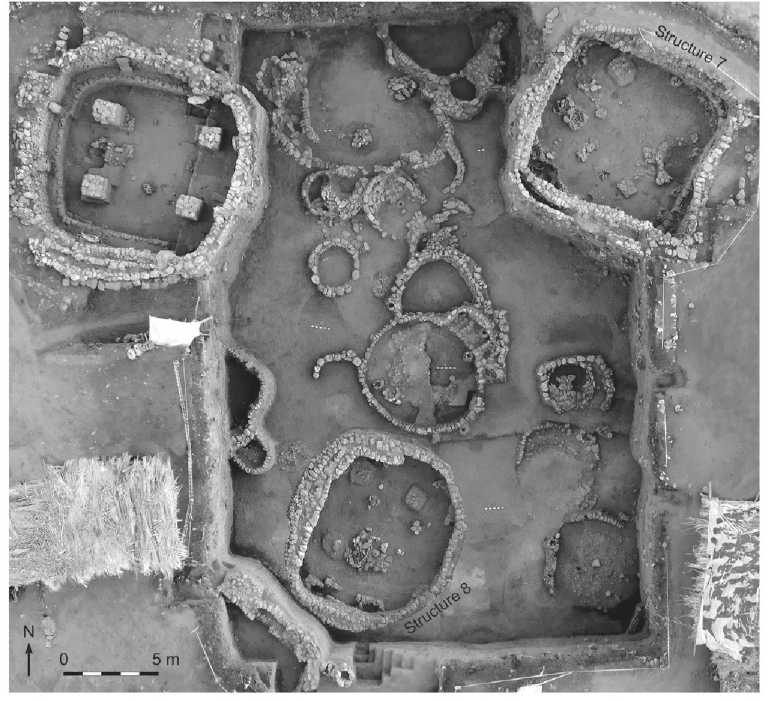
Fig. 1. Gre Fılla V-IVD: PPNA and Early PPNB North Sector Architecture (excavation archive)
Early PPNB Architecture of Gre Fılla IVD
The small village comprising quadrangular single-room structures with rounded corners appear along with round pit-shelters, composed of 2–3 small rooms were affected by floods, indicating multiple floods ( Ekinba^ Can , 2025c. P. 264-268). Although most of these structures have stone foundations, one of these is a two-chambered wattle-and-daub hut. Under the floors of some structures, burials have been recovered, similar to those from Period V, indicating continuity.
The latest level established on the flood deposits represent the earliest pre-planned PPNB settlement scheme. The earliest levels of the communal pit-structures were recovered in the northern sector (Fig. 1). Structure 8 is oval planned, has four post bases and a stone-built altar between the southern post-bases. Structure 7 has a quadrangular plan with rounded corners, also with four post bases and a stone-built altar between the eastern post-bases.
Middle PPNB Architecture of Gre Fılla IVC-B
The settlement was pre-planned as quadrangular buildings surrounding oval subterranean structures, indicating small quarters within the settlement, and the communal pit-structures and quadrangular dwellings were used simultaneously throughout Phases IVC-B, representing social cohesion ( Ökse , 2024) (Fig. 2). The buildings of Phase IVC are composed of one large chamber, occupying areas of ca. 14–27 sq. m, sometimes including narrow storage units. In Phase IVB, these single-chamber dwellings became larger (22–32 sq. m), and buttressed walls are frequently attested ( Ekin-baş Can 2025c. P. 269–291).
Similar settlement layouts appear at diverse sites in the Upper Tigris region. Quadrangular dwellings are attested around rounded structures at Gusir Höyük ( Karul , 2011), rounded dwellings around communal structures at Hasankeyf Höyük ( Miyake et al ., 2012), and rounded or quadrangular planned round cornered dwellings around communal structures at Karahantepe ( Karul , 2023), while the layout at Jerf el-Ahmar ( Stordeur , 2000) with quadrangular dwellings around communal structures resembles Gre Fılla IV. Though located close to each other, the cell-planned and grill-planned structures from Çayönü ( Erim Özdoğan , 2011a) differ slightly from those at Gre Fılla.
Four communal pit-structures equipped with four quadrangular stone-built pillars were uncovered. According to burned wood remains on the floors, these were covered with a roof constructed with tree trunks. The northern Structure 8 and the Southern Structure 8 have relatively simple plans consisting of four pillars and an altar between southern pillars. Structure 8 has two stone phalluses erected at the eastern and western walls opposite to each other. Between the southern pillars, stone-built altars were constructed at each level. A deep stone bowl accompanied with a flat stone attached to its rim give the impression of a ritual behaviour, presumably for bloody sacrifices. A ring-shaped entrance stone was attached to the south-eastern corner. Structure 8 in the southern sector is also a quadrangular pit-structure with rounded corners and four stone-built pillars. Between the southern pillars, stone-built altars were placed at each level. A deer antler was stacked into the southern face of the north-western pillar. The antlers seem to have been used as symbolic objects, similar to those at Hal-lançemi, Gusir Höyük and Hasankeyf Höyük ( Karul , 2020. P. 88).
The northern structures 7 and 15 show a more complicated plan. Structure 7 has four internal units at four corners, each associated with one of the pillars, all bounded to each other by means of stone rows running along each wall. The Structure has five stelae; one placed horizontal on a slot between both eastern pillars, three placed in the middle of the stone rows running along the northern, western and southern walls, and one at the corner unit with terrazzo floor. An entrance stone seems to had been placed at one edge of the wooden roof.
Structure 15 has eight undecorated stelae erected on the bank and on the eastern platform, attached to the related walls, demonstrating an assemblage of participants facing the central area. Similar banks are known from Hallançemi and Gusir Höyük
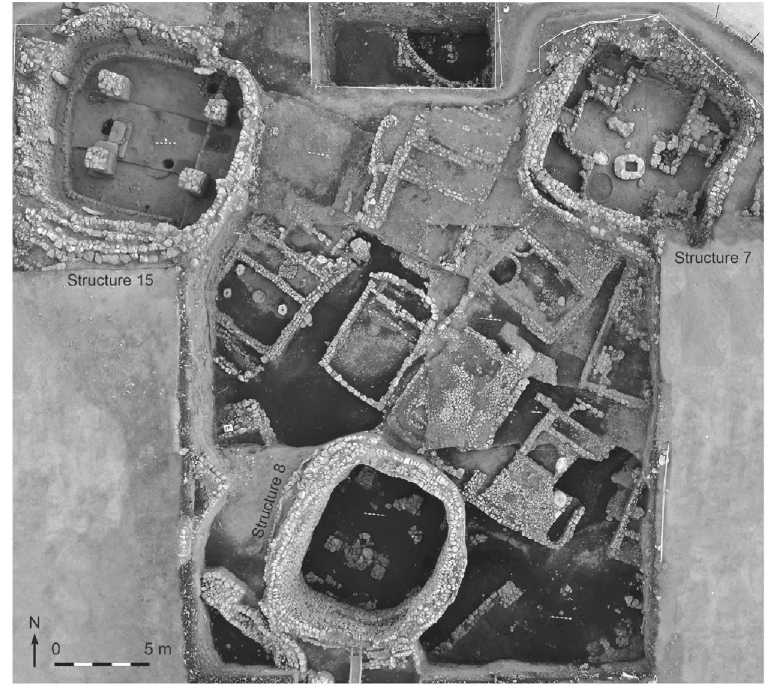
Fig. 2. Gre Fılla IVC-B: Middle PPNB North Sector Architecture (excavation archive)
( Karul , 2020. P. 88). The entrance stone with wide quadrangular opening has snake reliefs. Similar entrance stones are known from Göbeklitepe ( Schmidt , 2011).
The structure has two altar complexes; a western comprising an L-shaped altar-table, a phallus and stone trays, and an eastern, including several altars ( Ekinbaş Can , 2025a), two with human faces in relief, as well as two boar statues and a small human statue on and in front of a clay platform, demonstrating a complex ritual activity. Shallow stone trays with a hole in the middle were placed on pits filled with medium sized stones, allowing space in-between, presumably for libation, are found in two of the structures. Mortar with pestles as well as high stemmed altars are suitable for crushing several substances, such as grains, legumes, seeds or spices are found in the structure. Ten pestles deposited in a niche in the eastern wall give the impression that the pestles were stacked here after the ceremony is over.
Each level of all structures had been demolished and burned. Hereafter, these were filled with rubble, before another one was built on top of it. All fill layers were inclined from the oval walls towards the center of all structures, indicating that the filling material was thrown collectively from all sides. Several layers of fill include considerable numbers of animal bones, horns and small finds varying at each phase. The fills consisting of medium-sized lime stones and mud brick debris, include small finds, broken chipped stone and ground stone artefacts, beads, baked clay figurines, clay lumps or malachite pieces at different fill layers, demonstrating rituals during burying processes (Ökse, 2021; 2022). The wooden roofs were demolished and burned on the floor. Burying buildings was a standardized process throughout the Neolithic Period (Özdoğan, 2018; Karul, 2021). This repetitive ritual requires a collective practice with a social organization.
All structures had been re-built into the fill of the previous one. Since the new level was constructed into the fill of the previous one, the main chamber shrunk gradually over time. Also, the pillars were placed on top of each other, with minor shifts. The quadrangular dwellings are also multi-levelled, each built on top of the previous one only with minor shifts. The rebuilding phenomenon on the same place indicates the importance of these locations, signifying their spiritual meaning.
Late PPNB Architecture of Gre Fılla IVA
In the uppermost levels, the subterranean structures came out of use and became common open places ( Ekinbaş Can , 2025c. P. 292–300) (Fig. 3). The cell-planned buildings occupy larger areas (48–50 sq. m) and have several internal storages, pointing to the emergence of individuality in the community. The buildings are similar to those in Sumaki Höyük ( Erim Özdoğan , 2011b. P. 24, 37) and Cafer Höyük ( Cau-vin et al ., 2011. P. 1–2. Fig. 5; 6).
Small Finds
Small finds comprise mostly stone artefacts. The Shelmo Formation, formed during the Upper Miocene period, provides rich stone resources expanding to the south., and flint stones are also available in the vicinity of ca . 2 km in diameter. Basalt can be obtained from the Karacadağ Massive, ca . 70 km to the west, and granitic rock formations are found in the Elazığ and Muş regions, ca . 100 km to the northeast and northwest. Bingöl/Solhan obsidian sources are ca . 110 km, and Nemrut Dağ 220 km away ( Ökse , 2020). Thus, the inhabitants seem to have obtained the raw material in distances recovered within a few days’ walk.
Obsidian and flint were used in equal proportions in the chipped stone assemblage ( Ağırsoy , 2024). More than the half is Bingöl obsidian and Nemrut Obsidian makes more than one fifth of the artefacts ( Mu^kara, Konak , 2021). The Period V deposits include a rich variety of scalene triangular microliths, indicating a highly mobile life style ( Ağırsoy , 2025. P. 69). In Period IV, retouched tools are the most intensive group, followed by worn pieces with notches. Blades are dominant, followed by notched tools, front scrapers, splitting tools, microliths, points, scrapers, drills, backed blades, sickle elements, knives and pickaxes.
Ground stone artefacts include a great variety of grinding stones, pestles and hammers, pestles, flat axes, plaques and grooved stones used for producing bone artefacts.
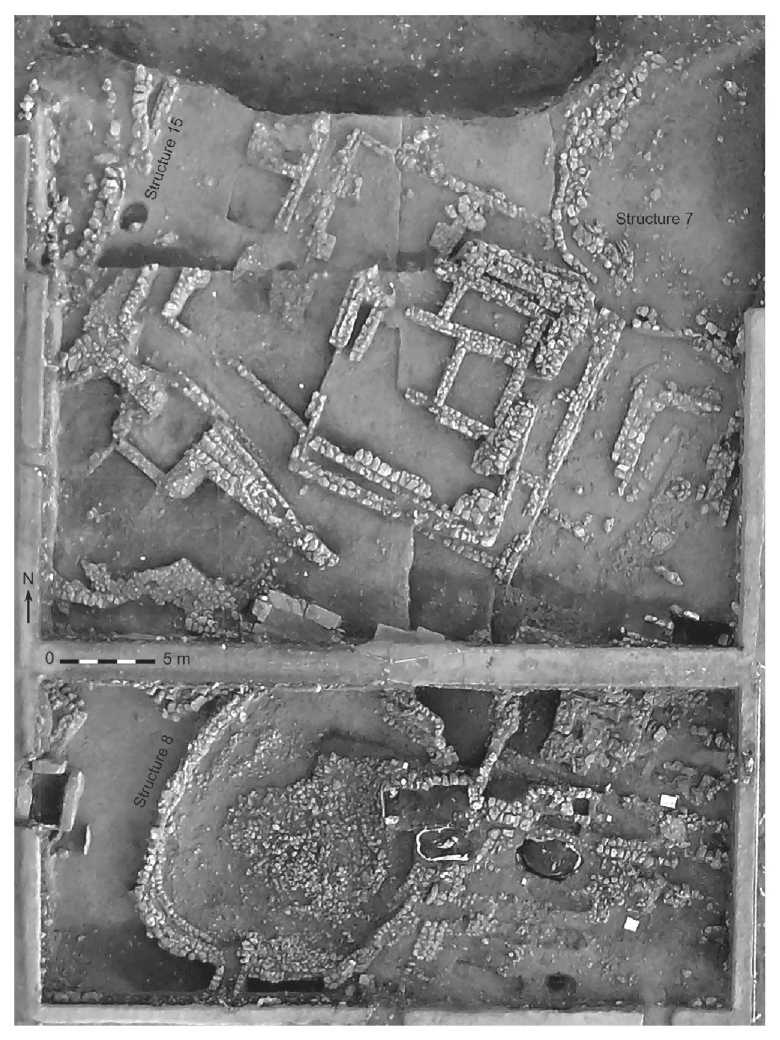
Fig. 3. Gre Fılla IVA: Late PPNB North Sector Architecture (excavation archive)
Personal ornaments comprise stone labrets and beads, indicating a high-quality performance ( Ekinbaş Can , 2024). Bone was used in pins and decorated plaques, and horns were used as sickle or hilts. A few copper chisels and beads indicate the earliest metal production in the PPNB. A large number of bone awls and plaques have been recovered, and horn was used as pickaxe, tool grips, and slot for sickle blades.
Among several miniature stone chisels, cupper chisel axes hafted into horn handles found in two buildings dating to (7586–7502 cal. BC) and (8296–8197 cal. BC), placing Phases IVB-A among the earliest settlements performing primitive annealed copper production ( Muşkara, Aydın , 2022; Muşkara et al ., 2025), such as those at Çayönü ( Özdoğan, Özdoğan , 1999). The closest copper reserves are at Lice, ca. 20 km to the north, and at Ergani, ca. 40 km to the west ( Ökse , 2020), a day’s walk from the settlement.
Depictions
Some grooved stones along with stone vessels and stone and bone plaques were decorated with incised figures. some bone artefacts were decorated with incised patterns, and sculpture was produced of limestone in Phases IVC-B ( Çiftçi , 2026. P. 42–72). The boar statues from the communal pit-structure 15, differ from those found in Göbeklitepe ( Kornienko , 2018) by their calm stance. Two of the high stemmed altars bear human faces and a small human statue with crossed arms, similar to those recovered at Çayönü ( Erim Özdoğan , 2011a), Göbekli Tepe ( Schmidt , 2011) and Karahantepe ( Karul , 2023). One small statue found in the southern section depicts a kneeled person with arms crossed on the stomach, probably in praying position.
A reference to the clothing of the Pre-Pottery Neolithic inhabitants are bone awls, suggesting leather garments. Another reference is the existence of lower chin bones and very few articular bones belonging to furry animals, such as bear, wild cat, wolf and beaver ( Silibolatlaz , 2022). Indicating the use of their hides, similar to a fox tail-vertebra and the depiction of clothing of fox hide on stele at Göbekli Tepe ( Kornienko , 2018. P. 17). The schematic figure on a stone vessel from Gre Filla V may depict a human with a horned costume, parallel to those found at several PPNA sites in North Mesopotamia ( Ökse , 2023. P. 305–307). Horned costumes may have been used during hunting horned wild, so that the hunters can get as close as possible to the herd.
Numerous terracotta figurines found in quadrangular buildings of Gre Filla IV are interpreted as stylised bird figures. So far, no parallels of these figures are known from the Fertile Crescent ( Qiftqi , 2026. P. 36. Fig. 3.3). Nearly all these figures were broken and thrown away, indicating incantation rituals, resembling scapegoat practices.
Social Analysis and Conclusions
The PPNA settlement seems to had been a small village with semi-subterranean pit-shelters, rounded and quadrangular with rounded corners. The PPNB architecture comprise simultaneous usage of rectangular dwellings surrounding subterranean communal pit-structures. The sophisticated symbolism and burial traditions, finds and special structures requiring skilled craftsmanship indicate complex societies with a social and skill-based division of labour, organizing the workforce symbolically and for common purposes throughout the Pre-Pottery Neolithic period (Özdoğan, Karul, 2020).
The communal structures might have been places where the community came together, conversed, entertained, hosted guests, and perhaps made decisions. The altars and sculpture indicate ritual performances. Collective ceremonies for relaxing the psyche and motivating the participants increases social solidarity required for daily life and for securing the hunting ground. The rituals were probably managed by leading members of the community, maybe believed to have special powers, comparable to shamans. Since all pit-structures were dark places, these might have preferred for relaxing and mystical feel for collective meditation and communication with the superhuman world.
A horizontal hierarchy is apparent as producing various artefacts as well as hunting and foraging. The phalluses as well as sculptures of male boars and humans leaves the impression of a community where masculine power was emphasized. Given that a community needs a governing body to organize its labour in hunting, gathering, procurement of raw materials, construction, and burying and rebuilding public structures, the existence of a vertical hierarchy is expected.
