
Health effects of polyphenols and flavonoids
Journal: Bulletin of Science and Practice @bulletennauki
Section: Естественные науки
Article in issue: 11 т.11, 2025.
Free access
Plants are the most important source of compounds that are very beneficial for the human body, including antioxidants. Therefore, the study of compounds in plants and their use in human nutrition is of great importance in our time. In this regard, this research work was aimed at studying the health effects of flavonoid and polyphenolic compounds, which are relevant in modern times. The article examines the works of many local and foreign researchers and summarizes the results obtained. It has been determined that flavonoids of natural origin have been the focus of increasing attention of researchers for many years and are widely used. Polyphenols have been the subject of many scientific studies due to their positive effects on health. These studies investigate how polyphenols act in the body and by what mechanisms they improve health. This is mainly due to their valuable medicinal value, as they are a source for capillary-strengthening, anti-inflammatory, choleretic, anti-sclerotic, anti-cancer, etc. preparations. Recently, attention has also been paid to the antioxidant properties of flavonoids. The role of polyphenols in preventing cardiovascular disease has been highlighted in many studies in recent years. Polyphenols lower blood pressure by dilating blood vessels, inhibit the oxidation of LDL (bad cholesterol), and increase HDL (good cholesterol) levels.
Similar articles in the section Threats to the environment
Short address: https://sciup.org/14135429
IDS: 14135429 | UDC: 504.054 | DOI: 10.33619/2414-2948/120/08
Влияние полифенолов и флавоноидов на состояние здоровья человека
Растения являются важнейшим источником соединений, чрезвычайно полезных для организма человека, в том числе антиоксидантов. Поэтому изучение соединений, содержащихся в растениях, и их использование в питании человека имеет большое значение в наше время. В связи с этим, данная исследовательская работа была направлена на изучение влияния на здоровье флавоноидных и полифенольных соединений, что актуально в наше время. В статье рассматриваются работы многих отечественных и зарубежных исследователей и обобщаются полученные результаты. Установлено, что флавоноиды природного происхождения на протяжении многих лет находятся в центре внимания исследователей и широко применяются. Полифенолы стали предметом многочисленных научных исследований в связи с их положительным влиянием на здоровье. Полифенолы улучшают здоровье. Это обусловлено их ценной лекарственной ценностью, поскольку они являются источником капилляроукрепляющих, противовоспалительных, желчегонных, антисклеротических, противораковых и других препаратов. Внимание уделяется также антиоксидантным свойствам флавоноидов. Роль полифенолов в профилактике сердечно-сосудистых заболеваний была отмечена во многих исследованиях последних лет. Полифенолы снижают артериальное давление, расширяя кровеносные сосуды, ингибируют окисление липопротеинов низкой плотности и повышают уровень липопротеинов высокой плотности.
Text of the scientific article Health effects of polyphenols and flavonoids
Бюллетень науки и практики / Bulletin of Science and Practice Т. 11. №11 2025
UDC 504.054
The study of important compounds in the composition of useful plants and their use in human nutrition is one of the most important issues of our time. The main natural antioxidants present in foods and protecting the human body from harmful free radicals are mainly vitamins, carotenoids, polyphenolic compounds and flavonoids. These compounds are mainly abundant in various vegetables, fruits, grains and medicinal plants [2].
Fruits and vegetables contain many substances necessary for the human body: sugars, organic acids, nitrogenous substances, fats, aromatic and coloring substances, mineral salts, vitamins, enzymes, glucosides, phytoncides and pectin substances, which increase the human body's resistance to various diseases and are of great importance in human nutrition. One of the pressing issues of modern science is the identification of new raw materials sources of biologically active substances, the development of methods for their complex processing in order to create effective preparations and therapeutic agents. Flavonoids are a large class of small-molecule polyatomic phenols of plant origin. The study of their structure, physicochemical properties, functions in plants, and biological activities against other organisms began in the 1930s [5, 8].
Flavonoids are one of the most common types of polyphenols and are commonly found in fruits, vegetables, and tea. Flavonoids are known for their antioxidant properties and have protective effects against cardiovascular diseases and some types of cancer by reducing cellular oxidation. For example, epigallocatechin gallate (EGCG) found in green tea and resveratrol found in grape skins have been studied for their anti-inflammatory and anti-carcinogenic effects [7].
Material and methods
In many studies, as well as in our own research, the most commonly used methods have been chromatographic and spectroscopic research methods [6; 9]. Hexane and ethanol extracts of the fruits of the species were obtained, the phytochemical composition was studied by applying chromatographic and spectral methods. The ethanol extract contains flavones chrysoeriol [3, 4, 5,7] at 249 nm wavelength, baicalein [5-7] at 247, 366 nm wavelength, apigenin 7-Oglucoside at 386 nm and luteolin [3-5, 7] at 291 nm wavelength compounds were identified.
Also, the fact that the fruits of the rose hip are rich in biologically active substances, the possibility of extracting oil from the seeds, creates a basis for the development of complex processing schemes of the plant. Spectral analyzes were performed using a Hitachi U-2900 UV-VIS spectrophotometer, and chromatographic analyzes were performed using a column 60108-712 HYPERSEP SI, 10G/75ml/10PKG and a DC-fertigfolien ALUGRAM SIL G/UV254 thin layer [8, 11].
Results Research on polyphenols
Polyphenols are plant-derived bioactive compounds that exhibit antioxidant, antiinflammatory, vascular protective, and metabolic effects. Recent studies have highlighted that flavonoid diversity may be associated with better health outcomes [7].
Бюллетень науки и практики / Bulletin of Science and Practice Т. 11. №11 2025
Polyphenolic compounds are aromatic compounds containing one or more hydroxyl groups. They are mainly divided into two groups: phenolic acids and flavonoids. Phenolic compounds are the most common compounds in plants, as more than 8000 types of phenolic compounds have been identified in plants, of which flavonoids are the largest group, estimated to contain 5000 types [4].
Tocopherol, ascorbic acid, carotenoids and flavonoids found in plants are natural antioxidants belonging to the phenolic compounds. Some of the phenolic compounds affect the taste of fruits and vegetables, especially the formation of two main taste elements such as bitterness and astringency in the mouth. Proanthocyanidins are believed to be the cause of the astringency that occurs in the mouth when eating certain foods. Another group of them is responsible for the yellow and red-blue colors of fruits and vegetables. Phenolic compounds are important compounds that affect heart function. For example, high intake of flavonoids in regular tea, onions, and apples has been shown to reduce deaths from heart disease in the elderly [3].
Polyphenols are known for their ability to reduce oxidative stress. Oxidative stress is a condition that damages cells as a result of the accumulation of free radicals and is associated with chronic diseases such as cardiovascular diseases, diabetes and cancer. Polyphenols help protect cells by neutralizing these free radicals. Also, polyphenols inhibit inflammatory pathways. In one study, flavonoids were found to lower inflammatory markers and improve heart health [2].
Research on flavonoids
Flavonoids of natural origin have been the focus of researchers for many years, and have been used for medicinal purposes, mainly as a source of capillary-strengthening, anti-inflammatory, choleretic, sclerotic, anti-tumor and other drugs. In recent years, their antioxidant properties have attracted more attention. In this regard, the search for plant sources for the extraction of flavonoids and the study of their antiradical and antioxidant activities is relevant. Effective and low-toxic natural substances with antioxidant activity are widely used in the food, cosmetics and pharmaceutical industries to solve many technological problems and improve the quality of products [6].
Of the flavonoid classes, flavones, flavonones, isoflavones, flavonols, flavon-3-ols, and anthocyanins are of great interest. In plants, flavonoids are generally synthesized in the form of glycosidic derivatives and participate in the formation of blue, cyan, red, and orange colors in the leaves, flowers, and fruits of plants. In addition to various fruits and berries, flavonoids are found in seeds, nuts, grains, spices and medicinal plants, as well as in various beverages, wine (especially red wine) and tea. One of these compounds, rutin, is a flavonoid with strong antioxidant properties. Rutin is a bioactive flavonoid-containing compound. As an antioxidant compound, it prevents the oxidation of vitamin C [9].
In one comprehensive review focusing on the effects of plant flavonoids, a major subgroup of the polyphenols, on mammalian cells and the implications for inflammation, heart disease, and cancer, Middleton stated: “certain plants and spices containing flavonoids have been used for thousands of years in traditional Eastern medicine. Western medicine has not yet used flavonoids therapeutically, even though their safety record is exceptional”. In the decade since this review has been written, much novel information on the interrelationships of polyphenols and health has been obtained [10].
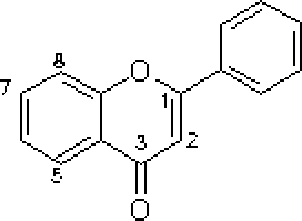
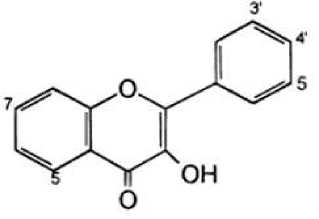
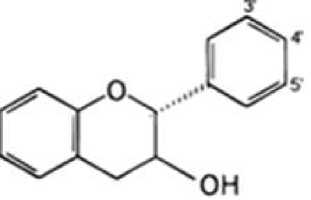
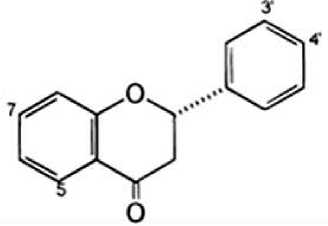
Flavonoids are natural compounds that are various derivatives of benzo-γ-pyrone (chromone). The basic structure of flavonoids is a flavan nucleus consisting of 15 carbon atoms (C6 -C3- C6), consisting of two benzene rings (A and B), connected to each other by a pyrone heterocycle (ring C) (Figure 1).
Бюллетень науки и практики / Bulletin of Science and Practice
The main classification feature for the division of flavonoid compounds into classes within the family is the structure of the central C ring. The distinguishing elements are the presence or absence of: 1) an oxo group at the C-4 position (in the C ring); 2) a hydroxyl group at the C-3
position in the A ring; and 3) a double bond between the C-2 and C-3 atoms in the C ring (Figure 2, 3).
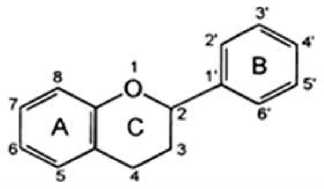
Figure 1. Basic structure of flavonoids
Flavonol
Flavone
Flavan-3-ol
Figure 2. Chemical structure of some flavonoids
Flavanone

Figure 3. Neutralization of free radicals by flavonoids
Discussion
Research on the effects of polyphenolic compounds and flavonoids on human health. Since the level of flavonoids in the blood and their metabolites is not very detailed, it is difficult to show the overall effect of flavonoids or their role as antioxidants. However, several studies have shown an inverse correlation between the amount of flavonoids entering the body and lung cancer. As a result of some epidemiological studies, it has been noted that flavonoid products have a protective effect against ischemic heart disease [7].
Бюллетень науки и практики / Bulletin of Science and Practice Т. 11. №11 2025
According to Halliwell and Gutteridge, the antioxidant effects of flavonoids (in vitro) include the removal of reactive oxygen species from the environment, which play a role in the formation of free radicals, neutralization of free radicals, and protection of the antioxidant defense system. Flavonoids fulfill almost all of the above criteria. Flavonoids inhibit enzymes such as xanthine oxidase (14) and kinase C (21), which catalyze the formation of superoxide anion [4].
Flavonoids (dihydroflavonols, flavonol-3-glycosides and flavones) with an o-dihydroxy group in the B ring of the molecule show strong antiradical activity. All the flavonoids studied have a C-4 hydroxyl group in their molecules. The results obtained show that the presence of this hydroxyl group in the molecule is not very important for the antiradical activity of this group of flavonoids. The antiradical activities of this group of flavonoids are stronger in the presence of certain structural features in the molecule: an unsaturated bond in the C ring (C2-C3) and a hydroxyl group at the C-3 position. The structure of the flavone-apigenin contains a C2-C3 double bond and a hydroxyl group at the C-4 position [3].
Natural flavonoids have been the focus of increasing attention of researchers for many years due to their many other properties and are widely used. This is mainly due to their valuable medicinal properties, such as capillary strengthening, anti-inflammatory, choleretic, antisclerotic, anticancer, etc. as a source of preparations. Recently, attention has also been paid to the antioxidant properties of flavonoids. Natural compounds with effective and non-toxic antioxidant activity are used in solving many technological problems, in the food and cosmetic industries to improve the quality of products. However, flavonoid-containing plants attract the attention of researchers as a source of a wide range of medicinal preparations. They have valuable anti-inflammatory, capillarystrengthening, choleretic, anti-radiation, anti-tumor, immunomodulatory, antimicrobial and other properties [1].
The role of polyphenol metabolites as bioactives is presented, underlining that specific target enzymes such as NADPH oxidases or lipoxygenases provide a basis for molecular action of polyphenols, rather than unspecific direct antioxidant effects. Cautionary words are given for the use of non-compositional assays of ‘total antioxidant capacity’ (TAC) in blood plasma. Enhanced interest emerges for polyphenols in the gastrointestinal tract. Recommendations for health professionals and the public are summarized, as well as prospects and challenges for future research. Polyphenols are part of the natural defense system of plants. However, it is interesting that these compounds work like a protective shield not only for plants, but also for us. With their antioxidant, anti-inflammatory and even anti-cancer properties, polyphenols protect us without noticing in the vegetables, fruits, tea, coffee and whole grains that we put on our plates every day [7].
-
1. Cardiovascular health. Increasing flavonoid intake may reduce the risk of cardiovascular disease and overall mortality, and flavan-3-ols in particular may reduce blood pressure.
-
2. Metabolic diseases. Increasing polyphenol intake helps reduce the risk of fatty liver and insulin resistance.
-
3. Aging. May have a positive effect on aging due to its antioxidant and anti-inflammatory effects.
Cancer-Preventing Effects. Polyphenols can inhibit the proliferation of cancer cells and stop their spread. Polyphenols such as flavonoids and stilbenes can trigger apoptotic mechanisms (cell death) in cancer cells, helping to destroy them. Additionally, phenolic acids can inhibit the growth of cancer cells and prevent metastasis (the spread of cancer) [9].
Food Sources:
In terms of bioavailability, quercetin aglycones are better absorbed with fat. Gut microbes break down polyphenols into bioactive metabolites.
In many studies conducted by us, the polyphenol and flavonoid content of a number of plants has been determined. The discovery of polyphenol and flavonoid compounds in the composition of some useful plants proves that their beneficial properties are related to these compounds. Flavonoids are highly diversified plant pigments that are present in a wide range of fruits, vegetables, nuts, and beverages. They are regularly consumed in the human diet and have various biological activities including anti-inflammatory, anti-cancer, and antiviral properties. The flavonoids maybe one of the safest non-immunogenic drugs because they are small organic compounds which have been normally absorbed by the human body for long time. During the past decades, the patents on their health effects have inflated very much and the yearly number of the patents is on an increasing trend. Recent mechanistic studies in molecular level make it possible that specific flavonoids are identified to have a wide range of biological properties that can contribute to the beneficial effects on human health [7].
Result
In addition to their physiological roles in plants, flavonoids are important components of human nutrition, despite their lack of nutritional value. Several epidemiological studies have shown that the consumption of fresh fruits and vegetables has protective effects against cancer, heart disease, and other diseases, as well as premature aging. In general, the abundant consumption of fruits and vegetables is a major factor in maintaining good health and increasing resistance to chronic diseases. Based on a number of studies conducted by us and the results of studies conducted in different regions of the world, it can be concluded that the flavonoids and polyphenolic compounds contained in many plants, fruits and vegetables play an important role in their protective effects. These observations have also been confirmed by some in vivo and in vitro studies conducted on animals.
