
Influence of oleaster powder on the quality of mechanically aerated yeast-free bread
Журнал: Вестник Алматинского технологического университета @vestnik-atu
Рубрика: Технология пищевой и перерабатывающей промышленности
Статья в выпуске: 3 (153), 2026 года.
Бесплатный доступ
This study investigates the effect of oleaster (Elaeagnus angustifolia L.) powder, with and without the stone, on the quality of mechanically aerated yeast-free bread produced using mechanical dough aeration, deep-freezing of dough semi-finished products, and subsequent microwave thawing before baking. The study is relevant to the growing demand for bakery products with enhanced nutritional value and to advances in frozen dough technologies that reduce dough preparation time while ensuring consistent quality of the final products. The aim of the research was to evaluate the influence of different levels of oleaster powder, with and without the stone, on the rheological, sensory, physicochemical, and nutritional properties of mechanically aerated yeast-free bread and to determine the optimum formulation. Modern analytical methods were employed, including the evaluation of dough rheological properties using the Mixolab and CT-2 Structurometer, sensory assessment, determination of physicochemical characteristics, chemical composition, vitamin and mineral contents, and mathematical modeling of the experimental data. The results demonstrated that incorporating oleaster powder improved the nutritional and biological value of bread, enhanced the structural–mechanical properties of the dough, and increased the contents of vitamins and minerals. The best overall performance was achieved with the formulation containing 20% stone-free oleaster powder, which provided the optimum combination of crumb porosity, specific volume, sensory quality, and chemical composition. The developed formulation and processing technology can be applied in the industrial production of functional bakery products and frozen mechanically aerated yeast-free dough semi-finished products.
Короткий адрес: https://sciup.org/140316609
IDS: 140316609 | УДК: 65.33.29 | DOI: 10.48184/2304-568X-2026-3-54-67
Влияние порошка джиды на качество сбивного бездрожжевого хлеба
В статье представлены результаты исследования влияния порошка джиды (Elaeagnus angustifolia L.) с косточкой и без косточки на качество сбивного бездрожжевого хлеба, изготовленного с использованием технологии механического аэрирования теста, глубокой заморозки полуфабрикатов и последующего СВЧ-размораживания перед выпечкой. Актуальность исследования обусловлена необходимостью разработки новых видов хлебобулочных изделий повышенной пищевой ценности и совершенствования технологий производства замороженных полуфабрикатов, позволяющих сократить продолжительность тестоприготовления и обеспечить стабильное качество готовой продукции. Целью исследования являлось изучение влияния различных дозировок порошка джиды с косточкой и без косточки на реологические, органолептические, физико-химические и пищевые показатели сбивного бездрожжевого хлеба, а также определение оптимальной рецептуры. В работе использованы современные методы оценки качества хлебобулочных изделий, включая исследование реологических свойств теста с применением приборов Mixolab и Structurometer CT-2, органолептический анализ, определение физико-химических показателей, химического состава, содержания витаминов и минеральных веществ, а также математическое моделирование экспериментальных данных. Установлено, что внесение порошка джиды способствует повышению пищевой и биологической ценности хлеба, улучшению структурно-механических свойств теста и увеличению содержания витаминов и минеральных веществ. Наилучшие результаты получены при использовании 20 % порошка джиды без косточки, обеспечивающего оптимальное сочетание пористости, удельного объема, органолептических характеристик и химического состава готовых изделий. Практическая значимость работы заключается в возможности использования разработанной рецептуры и технологии при производстве функциональных хлебобулочных изделий и замороженных сбивных бездрожжевых полуфабрикатов на предприятиях хлебопекарной промышленности.
Жиде ұнтағының ашытқысыз механикалық аэрацияланған нанның сапасына әсері
Мақалада қамырды механикалық аэрациялау технологиясы негізінде дайындалған, жартылай фабрикаттары терең мұздатылып, пісіру алдында микротолқынды пеште жібітілген ашытқысыз нанның сапасына сүйекті және сүйексіз жиде (Elaeagnus angustifolia L.) ұнтағының әсерін зерттеу нәтижелері ұсынылған. Зерттеудің өзектілігі тағамдық құндылығы жоғары жаңа нан-тоқаш өнімдерін әзірлеу және қамырды дайындау уақытын қысқартып, дайын өнімнің тұрақты сапасын қамтамасыз ететін мұздатылған жартылай фабрикаттарды өндіру технологияларын жетілдіру қажеттілігімен негізделеді. Зерттеудің мақсаты – сүйекті және сүйексіз жиде ұнтағының әртүрлі мөлшерінің механикалық аэрацияланған ашытқысыз нанның реологиялық, органолептикалық, физика-химиялық және тағамдық көрсеткіштеріне әсерін анықтау, сондай-ақ оңтайлы рецептураны негіздеу. Зерттеу барысында нантоқаш өнімдерінің сапасын бағалаудың заманауи әдістері қолданылды. Қамырдың реологиялық қасиеттері Mixolab және Structurometer CT-2 аспаптарының көмегімен зерттелді, дайын өнімнің органолептикалық және физика-химиялық көрсеткіштері, химиялық құрамы, витаминдер мен минералдық заттардың мөлшері анықталды, сондай-ақ тәжірибелік деректерге математикалық модельдеу жүргізілді. Зерттеу нәтижелері жиде ұнтағын қолдану нанның тағамдық және биологиялық құндылығын арттырып, қамырдың құрылымдық-механикалық қасиеттерін жақсартып, витаминдер мен минералдық заттардың мөлшерін көбейтетінін көрсетті. Ең жоғары нәтижелер сүйексіз жиде ұнтағының 20 % мөлшерін қолданған кезде алынды. Бұл үлгі кеуектілігі, меншікті көлемі, органолептикалық қасиеттері және химиялық құрамы бойынша ең жоғары көрсеткіштерге ие болды. Зерттеу нәтижелерінің практикалық маңызы әзірленген рецептура мен технологияны нан пісіру кәсіпорындарында функционалдық нан-тоқаш өнімдері мен мұздатылған механикалық аэрацияланған ашытқысыз жартылай фабрикаттар өндірісінде қолдану мүмкіндігімен сипатталады.
Текст научной статьи Influence of oleaster powder on the quality of mechanically aerated yeast-free bread
One of the priority directions in the development of the bakery industry is the creation of bread products with enhanced nutritional and biological value.
Contemporary research on incorporating plant-derived raw materials has demonstrated that such ingredients can significantly improve the nutritional and biological characteristics of bakery products without the need for complex technological processes or synthetic additives. Among the most promising approaches is the use of powders obtained from berries, fruits, and wildgrowing plants, since they not only enrich bread with essential nutrients, particularly vitamins, dietary fiber, and natural antioxidants, but also expand the range of functional bakery products while preserving their desirable consumer characteristics and overall product quality [1-5].
The incorporation of plant powders can also affect the water absorption capacity of dough, its rheological and structural-mechanical properties, the formation and development of the gluten network, and the technological characteristics of the dough during processing. Consequently, experimental determination of the optimal dosage of such powders and the corresponding technological parameters is essential to ensure stable product quality and desirable functional properties [4, 5].
Of particular interest to the bakery industry of Kazakhstan is the utilization of the fruits of Elaeagnus angustifolia L. (oleaster), a plant widely distributed throughout the regions of Central Asia. These fruits are distinguished by their exceptionally high content of dietary fiber, phenolic compounds, naturally occurring sugars, minerals, and vitamins. In addition, available studies indicate that oleaster fruits possess considerable antioxidant capacity, with research focused on the chemical composition of oleaster fruits and on methods for their drying and processing. At the same time, there is evidence that the application of non-conventional doughprocessing technologies, including microwave (MW) treatment, contributes to the preservation of the functional properties of fruit-derived raw materials while simultaneously enhancing their technological value [1-3, 6-9].
Another relevant and rapidly developing area of bakery technology is the production of yeast-free whipped dough, in which the porous structure is formed through the mechanical incorporation of air into the dough system. This technological approach makes it possible to substantially reduce dough preparation time, shorten the overall production cycle, and improve manufacturing efficiency without the use of baker`s yeast [8, 9].
Additional technological advantages of the whipped dough process become particularly evident when frozen semi-finished products are employed. Modern deep-freezing technology enables centralized dough production, followed by transportation over long distances and baking immediately before sale, thereby reducing production costs and decreasing labor intensity. According to recent studies, frozen dough technology represents one of the most rapidly developing sectors of the bakery industry, since the processes of deep freezing and subsequent thawing markedly influence the protein-starch matrix of dough, moisture distribution, and the rheological as well as structural-mechanical properties of both dough and the finished bread [10-14].
Despite the considerable number of published studies, there remains a substantial lack of information on the integrated use of oleaster powder prepared both with and without the stone in the production of yeast-free whipped bread from frozen dough followed by microwave (MW) thawing. Furthermore, the influence of these technological factors on the organoleptic characteristics and biochemical composition of bread, including the contents of proteins, carbohydrates, vitamins, minerals, and dietary fiber, has not been sufficiently investigated. In addition, no studies have reported mathematical optimization of the formulation based on a comprehensive evaluation of bread quality indicators.
Therefore, the aim of the present study was to investigate the effect of oleaster powder produced from fruits both with and without the stone on the quality characteristics of yeast-free whipped bread manufactured using deep-freezing technology followed by microwave (MW) thawing, and to determine the rational formulation parameters through mathematical modeling and a comprehensive assessment of the bread quality indicators.
Materials and research methods
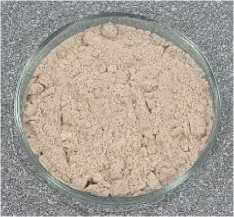
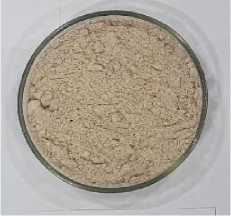
First-grade wheat baking flour (GOST 26574-2017) [15], table salt (GOST R 515742018) [16], food-grade citric acid (GOST 9082004) [17], drinking water complying with sanitary and hygienic requirements, and Elaeagnus angustifolia L. powder prepared from fruits with and without stones were used as the research materials. The powder was produced under laboratory conditions from previously dried fruits by grinding them into a powder (Figure 1). The experimental studies were carried out in the laboratory of the Research Institute of Food Technologies of Almaty Technological University.
a)
b)
Figure 1. Elaeagnus angustifolia L. powder: (a) prepared from fruits without stones; (b) prepared from fruits with stones
Seven variants of yeast-free whipped dough were prepared for the study: a control sample without the addition of Elaeagnus angustifolia powder; three experimental samples in which part of the flour was replaced with Elaeagnus angustifolia powder prepared from fruits with stones at levels of 10, 20, and 30%; and three experimental samples in which part of the flour was replaced with Elaeagnus angustifolia powder prepared from fruits without stones at levels of 10, 20, and 30% of the flour weight.
The control sample consisted of yeast-free whipped bread prepared according to a formulation containing 100 g of first-grade wheat baking flour, 10 g of table salt, 5 g of food-grade citric acid, and drinking water in an amount calculated to obtain dough with the specified moisture content. In the experimental samples, part of the wheat flour was replaced with Elaeagnus angustifolia L. powder prepared from fruits with stones or from fruits without stones at levels of 10, 20, and 30% of the flour weight. Accordingly, the amount of wheat flour was reduced to 90, 80, and 70 g, while the amount of Elaeagnus angustifolia L. powder was 10, 20, and 30 g, respectively. The amount of table salt (10 g), food-grade citric acid (5 g), and the quantity of added drinking water remained unchanged in all the samples under investigation.
The dough was prepared using a laboratory mechanical dough aeration unit equipped with a sealed high-pressure chamber with a capacity of 5 L, a whisk-type rotor, a programmable drive, and a pressure control sensor with an accuracy of ±0.1 MPa. Atmospheric air served as the gas medium. Each batch weighed 300 g, approximately 20% of the chamber's working volume, ensuring effective saturation of the dough mass with air.
Before mixing, all dry ingredients (flour, table salt, citric acid, and Elaeagnus angustifolia powder) were weighed on laboratory scales with an accuracy of ±0.01 g and pre-mixed for 1 min to ensure uniform distribution of the powder in the flour mixture. Drinking water at 18-20°C was then added in the amount required to achieve the specified moisture content, after which the mixture was transferred into the whipping chamber.
To prepare the experimental bread samples, the dough was mixed at a rotor speed of 1000 rpm for 4 min, ensuring uniform distribution of the ingredients, hydration of the flour, and formation of the dough’s protein–starch structure. At the second stage, the chamber was hermetically sealed, atmospheric air was supplied until the pressure reached 4.0 ± 0.1 MPa, and the dough was mechanically whipped at a rotor speed of 500 rpm for 1.5 min. The combination of elevated pressure and mechanical treatment ensured uniform distribution of fine air bubbles and formation of a stable aerated dough structure. For the mathematical modeling, a separate experimental series was conducted in which the mixing shaft rotational speed (x₁) and mixing time (x₂) were varied according to the experimental design within the ranges of 225–1125 rpm and 3–9 min, respectively, while the dough freezing temperature (x₃) was varied at -14, -27, and -38°C. The remaining technological conditions, including the pressure and mechanical aeration conditions, were maintained as described above.
After whipping, the pressure inside the chamber was gradually reduced to atmospheric pressure. The dough was then removed, shaped into dough pieces, and deep-frozen. Freezing was carried out in a POLAIR CR5-G blast freezer (Russia) at temperatures of -14, -27, and -38°C according to the experimental design until the temperature at the center of the dough piece reached -18°C, which required approximately 6090 min depending on the freezing temperature. After freezing, the dough semi-finished products were hermetically packed in food-grade polyethylene bags and stored at -18 ± 2°C for 30 days.
Before baking, the dough pieces were thawed in a domestic microwave oven at 800 W for 2-3 min until the temperature at the center of the dough reached 20 ± 2°C. After thawing, the bread was baked in a convection oven at 200 ± 5°C for
-
35 min. The finished products were cooled at room temperature (22-24°C) for 1-2 h, after which the analyses were performed.
The organoleptic evaluation of the finished bakery products was conducted in accordance with GOST 27842-88 [18] by a tasting panel based on the following characteristics: appearance, share, surface condition, crust and crumb color, pore structure, taste, and aroma. In addition, a comparative evaluation of the samples was performed using the differential sensory analysis method with a 100-point scoring scale.
The physicochemical characteristics were determined in accordance with the applicable standards: moisture content according to GOST 21094-75 [19], porosity according to GOST 566996 [20], and acidity according to GOST 5670-96 [21]. In addition, the contents of proteins, fats, carbohydrates, dietary fiber, vitamins, and minerals were determined using generally accepted analytical methods, and the nutritional value of the finished products was calculated.
The structural and mechanical properties of the dough and bread crumb were also investigated. Rheological characteristics were measured using a CT-2 Structurometer. For the dough samples, total deformation (Hi), plastic deformation (H2), and elastic deformation (Нз) were measured. Total deformation characterized the dough system's ability to deform under an external load. Plastic deformation reflected the extent of irreversible structural changes and the dough's moldability. Elastic deformation characterized the dough's ability to recover its original shape after the load was removed and served as an indirect indication of gluten network development and the structural integrity of the dough system.
The structural and mechanical properties of the bread crumb were determined after cooling the products at room temperature for 2 h. Crumb samples were cut from the central part of the loaf and formed into cylinders or plates with a thickness of 25 mm. Texture profile analysis was performed using the single-cycle compression method to 40% of the initial sample height at an indenter speed of 1.0 mm/s. Crumb hardness was determined from the maximum compression force recorded on the force-deformation curve. Each determination was performed in at least three replicates.
Mathematical modeling and statistical analysis of the experimental data were used to evaluate the influence of the factors on bread quality. All experiments were performed in triplicate. The results are presented as the mean and standard deviation. Differences between the mean values were assessed at a significance level of p < 0.05.
Results and discussion
Before low- temperature treatment, the main physicochemical properties of the mechanically aerated dough were determined. The results showed that the moisture content of the investigated dough samples ranged from 51 to 56 %, while the acidity varied from 4.53 to 5.52 degrees. The control sample had a moisture content of 52.0 % and an acidity of 5.2 degrees. It was established that the addition of Elaeagnus angustifolia L. powder, whether prepared from fruit with stones or without, did not significantly affect the dough' s moisture content. The slight differences observed among the experimental samples indicate that comparable conditions for the hydration of proteins and starch were maintained, which is particularly important for the formation of a stable aerated structure in mechanically whipped dough.
It should be noted that the acidity of all the investigated samples remained within the technologically acceptable range for yeast- free dough. The results indicate that the incorporation of Elaeagnus angustifolia L. powder did not disturb the acid-base balance of the dough system and did not create unfavorable conditions for the formation of the semi- finished product structure. Since no significant differences in moisture content or acidity were observed, the subsequent analysis focused on the structural-mechanical and rheological properties of the dough.
After mechanical aeration, the dough pieces were hermetically packed and deep- frozen at temperatures of- 14, - 27, and —38 °C. After storage, the semi- finished products were thawed using microwave (MW) treatment and then baked. Since the stability of the aerated structure during freezing is primarily determined by the rheological properties of the dough, particular attention was paid to the analysis of the Mixolab results and the structural-mechanical characteristics obtained using the CT- 2 Structurometer.
Figures 2 and 3 present the Mixolab curves and CT- 2 Structurometer data obtained for the samples that demonstrated the most optimal characteristics.
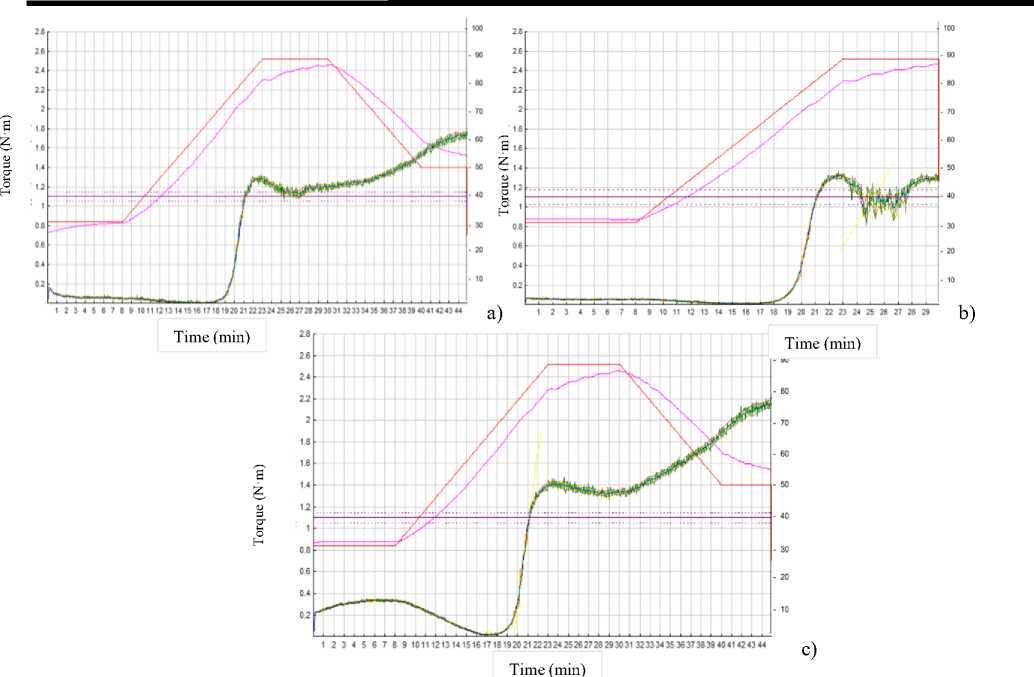
Figure 2. Mixolab curves: a) control sample of yeast-free whipped dough; b) yeast-free whipped dough containing 20% Elaeagnus angustifolia L. powder prepared from fruits without stones; c) yeast-free whipped dough containing 10% Elaeagnus angustifolia L. powder prepared from fruits with stones
The rheological evaluation of the dough using the Mixolab showed that adding Elaeagnus angustifolia L. powder significantly affected dough hydration, gluten network formation, and thermo-mechanical stability. The highest rheological performance was observed in the sample containing 20% Elaeagnus angustifolia L. powder prepared from fruits without stones. Compared with the control, this dough exhibited a longer development time, greater stability under mechanical stress, and a more stable proteinstarch complex during heating, indicating the formation of a stronger three-dimensional dough structure.
The high Mixolab values for this sample are likely linked to the chemical composition of Elaeagnus angustifolia L. powder prepared from fruits without stones. The fruit pulp contains substantial amounts of pectic substances, soluble dietary fiber, and naturally occurring sugars with high water-binding capacity. These components promote a more uniform distribution of moisture, stabilize the protein–starch matrix, and help retain the dispersed gas phase formed during mechanical aeration. In addition, soluble polysaccharides may act as natural cryoprotectants, reducing moisture migration and minimizing structural damage to the dough during freezing and subsequent thawing.
The second-highest rheological performance was observed in the sample containing 10% Elaeagnus angustifolia L. powder prepared from fruits without stones. Although the effect was somewhat less pronounced than in the 20% formulation, this sample still exhibited greater dough stability and higher resistance to mechanical stress than the control, confirming the beneficial effect of a moderate level of the plant powder on dough structure formation.
Slightly lower rheological performance was observed in dough prepared with Elaeagnus angustifolia L. powder obtained from fruits with stones. Among these samples, the 10% formulation performed best. According to the CT-2 Struc-turometer data, this sample exhibited relatively high plasticity and satisfactory elasticity; however, its ability to recover its structure after mechanical loading was lower than that of the sample containing powder prepared from fruits without stones.
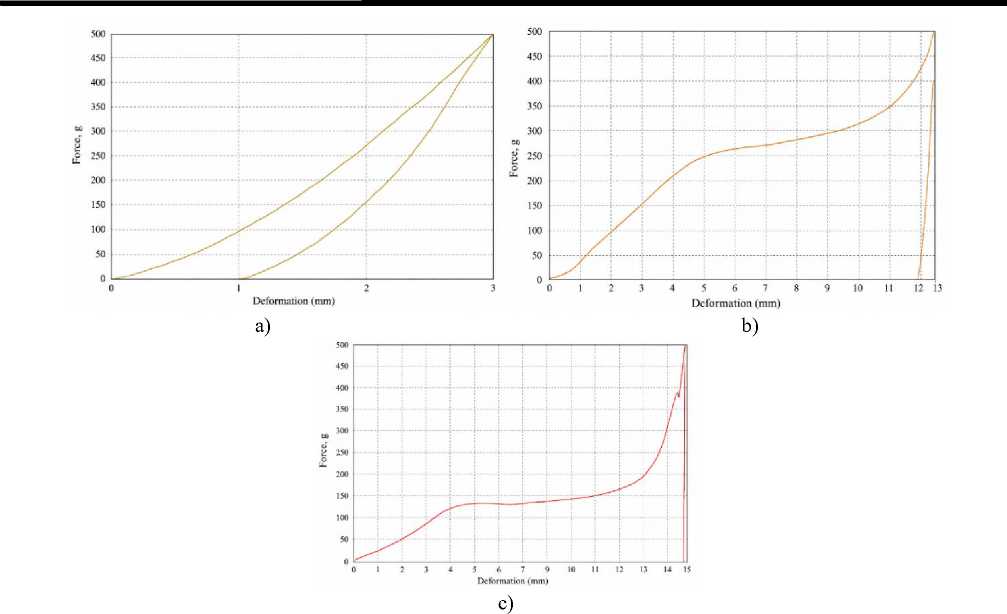
Figure 3. CT-2 Structurometer curves: a) control sample of yeast-free whipped dough; b) yeast-free whipped dough containing 20% Elaeagnus angustifolia L. powder prepared from fruits without stones; c) yeast-free whipped dough containing 10% Elaeagnus angustifolia L. powder prepared from fruits with stones
The results can be explained by the chemical composition of the raw materials used in the study. Unlike the fruit pulp, the stone contains considerably higher amounts of insoluble dietary fiber and lignocellulosic components. As the dosage increases, these particles partially disrupt the continuity of the gluten network, limit its extensibility, and reduce the dough's ability to retain the finely dispersed gas phase [8, 9]. At a low level of incorporation (10%), this effect is practically insignificant; however, with increasing powder content, the influence of the coarse particles becomes more pronounced.
The results of the structural–mechanical analysis were fully consistent with the Mixolab data. The highest values of total, plastic, and elastic deformation were observed in the dough containing 20% Elaeagnus angustifolia L. powder prepared from stone-free fruits, indicating an optimal balance between plasticity and elasticity of the dough system and a high capacity to withstand mechanical loading without destroying the developed structure. In contrast, the control sample exhibited the lowest values of the investigated parameters, indicating a less developed threedimensional structure of the mechanically aerated dough.
Thus, the results obtained using two independent analytical methods—Mixolab and structural–mechanical analysis—showed the same pattern of changes in the rheological properties of the dough. Incorporating 20% Elaeagnus angustifolia L. powder prepared from stone-free fruits had the most favorable effect on the development of the structural–mechanical characteristics of mechanically aerated yeast-free dough, whereas among the samples containing powder prepared from fruits with stones, the formulation with 10% powder proved to be the most preferable. These findings suggest that using Elaeagnus angustifolia L. powder prepared from stone-free fruits promotes the formation of a more stable protein–starch matrix with an enhanced ability to preserve the aerated structure during freezing, thawing, and subsequent baking.
After mechanical aeration, the dough pieces were shaped, hermetically packed in food-grade polyethylene bags, and deep-frozen in a POLAIR CR5-G blast freezer at temperatures of -14, -27, and -38°C until the temperature at the center of the dough piece reached -18°C. Freezing time ranged from 60 to 90 min, depending on the freezing temperature. After freezing, the semi-finished products were stored at -18 ± 2°C for 30 days. Before baking, the frozen dough was thawed in a microwave oven at 800 W for 2-3 min until the temperature at the center of the dough piece reached 20 ± 2°C, after which the bread was baked in a convection oven at 200 ± 5°C for 35 min. The finished products were cooled at room temperature for 1-2 h, after which their organoleptic, physicochemical, and structural-mechanical characteristics were determined.
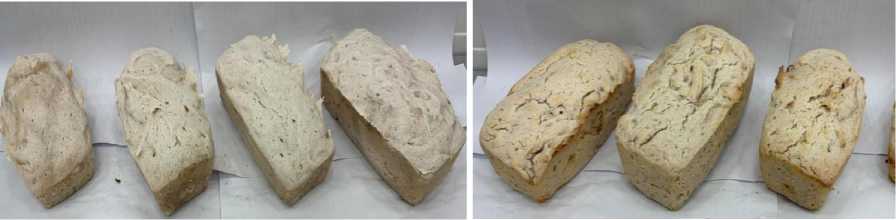
The appearance of the whipped bread containing powder prepared from fruits with stones and without stones is shown in Figure 4. For convenience, the bread samples were designated as follows: Sample No. 1—bread containing 10%
Elaeagnus angustifolia L. powder prepared from stone-free fruits; Sample No. 2—bread containing 20% Elaeagnus angustifolia L. powder prepared from stone-free fruits; Sample No. 3—bread containing 30% Elaeagnus angustifolia L. powder prepared from stone-free fruits; Sample No. 4— bread containing 10% Elaeagnus angustifolia L. powder prepared from fruits with stones; Sample No. 5—bread containing 20% Elaeagnus angustifolia L. powder prepared from fruits with stones; and Sample No. 6—bread containing 30% Elaeagnus angustifolia L. powder prepared from fruits with stones.
Control №1) №2)
№3) №4) №5) №6)
Figure 4. Appearance of yeast-free whipped bread containing Elaeagnus angustifolia L. powder
The incorporation of Elaeagnus angustifolia L. powder had a noticeable effect on the appearance, crumb structure, taste, and aroma of the finished bread. According to the sensory evaluation results, the highest scores were obtained by the samples containing 10% and 20% Elaeagnus angustifolia L. powder prepared from stone-free fruits. These bread samples were characterized by a regular shape, well-developed volume, a uniform, fine-walled, porous crumb structure, an elastic crumb, and a pleasant lightbrown crust color. The taste and aroma were harmonious, with delicate fruity notes characteristic of Elaeagnus angustifolia fruits that did not adversely affect the traditional sensory properties of the bread.
When the level of Elaeagnus angustifolia L. powder was increased to 30%, regardless of whether it was prepared from fruits with or without stones, the bread quality deteriorated noticeably. The finished products exhibited a smaller loaf volume, a less developed porous structure, and a denser crumb. The reduction in sensory scores was most likely associated with the excessive amount of dietary fiber, which restricted the development of the gluten network and reduced the dough's ability to retain the gas phase formed during mechanical aeration. In addition, the increased content of the plant powder enhanced the dough's water-binding capacity, resulting in a denser, less aerated crumb.
Further studies were carried out to determine the physicochemical properties of the bread samples (Table 1).
Table 1. Effect of Elaeagnus angustifolia L. powder on the physicochemical properties and volumetric characteristics of yeast-free whipped bread prepared with powder from fruits with stones and without stones
|
Sample |
Moisture content. % |
Acidity. degrees |
Porosity. % |
Specific volume. cm3/100 g |
H/D ratio |
|
Control |
41.8 |
5.0 |
53.6 |
200 |
0.42 |
|
№1 |
42.6 |
5.2 |
54.6 |
233 |
0.48 |
|
№2 |
43.4 |
5.7 |
63.1 |
255 |
0.50 |
|
№3 |
42.8 |
6.5 |
60.8 |
231 |
0.46 |
|
№4 |
42.1 |
5.6 |
48.4 |
212 |
0.40 |
|
№5 |
42.4 |
6.2 |
56.6 |
240 |
0.42 |
|
№6 |
43.2 |
6.8 |
54.7 |
222 |
0.37 |
As shown in Table 1, incorporating Elaeagnus angustifolia L. powder significantly affected the quality characteristics of yeast-free whipped bread. The best results were observed for Sample No. 2 (20% Elaeagnus angustifolia L. powder prepared from fruits without stones), which had the highest porosity (63.1%), specific volume (255 cm3/100 g), and height-to-diameter (H/D) ratio (0.50). Sample No. 1 also showed higher values than the control for all parameters, though the improvement was less pronounced. At 30%, the volumetric characteristics of the bread decreased, likely due to a weakened gluten network caused by the high dietary fiber content. Among samples containing Elaeagnus angustifolia L. powder prepared from fruits with stones, Sample No. 5 recorded the highest values; however, its characteristics were still inferior to those of the corresponding samples prepared with powder from fruits without stones. The moisture content of the bread samples changed only slightly, whereas acidity increased consistently with higher levels of Elaeagnus angustifolia L. powder.
Table 2. Chemical composition of yeast-free whipped bread containing Elaeagnus angustifolia L. powder prepared from fruits with stones and without stones
|
Parameter |
Control |
Sample No. 1 |
Sample No. 2 |
Sample No. 3 |
Sample No. 4 |
Sample No. 5 |
Sample No. 6 |
|
Protein, g/100 g |
7.60 |
7.72 |
7.90 |
7.83 |
7.80 |
8.02 |
8.10 |
|
Fat, g/100 g |
1.20 |
1.23 |
1.26 |
1.28 |
1.34 |
1.42 |
1.55 |
|
Carbohydrates, g/100 g |
50.8 |
50.5 |
50.1 |
49.6 |
50.0 |
49.5 |
49.0 |
|
Vitamin A, mg/100 g |
0.010 |
0.015 |
0.020 |
0.023 |
0.013 |
0.016 |
0.018 |
|
Vitamin E, mg/100 g |
2.00 |
2.25 |
2.55 |
2.75 |
2.15 |
2.35 |
2.50 |
|
Vitamin C, mg/100 g |
2.0 |
3.6 |
4.8 |
5.5 |
2.8 |
3.5 |
4.2 |
|
Vitamin Bi, mg/100 g |
0.30 |
0.32 |
0.34 |
0.36 |
0.33 |
0.36 |
0.39 |
|
Vitamin B2, mg/100 g |
0.05 |
0.08 |
0.10 |
0.12 |
0.08 |
0.11 |
0.13 |
|
Vitamin Вз, mg/100 g |
3.50 |
3.55 |
3.62 |
3.68 |
3.60 |
3.68 |
3.75 |
|
Vitamin Bs, mg/100 g |
0.42 |
0.46 |
0.50 |
0.53 |
0.45 |
0.50 |
0.55 |
|
Vitamin Вб, mg/100 g |
0.52 |
0.54 |
0.56 |
0.58 |
0.55 |
0.58 |
0.61 |
|
Folate (Vitamin Bs), ^g/100 g |
22 |
25 |
28 |
30 |
24 |
27 |
29 |
|
Iron, mg/100 g |
1.40 |
1.55 |
1.68 |
1.75 |
1.72 |
1.88 |
2.05 |
|
Potassium, mg/100 g |
145 |
162 |
178 |
186 |
155 |
170 |
182 |
|
Calcium, mg/100 g |
25 |
30 |
33 |
35 |
36 |
40 |
44 |
|
Magnesium, mg/100 g |
24 |
28 |
30 |
32 |
31 |
35 |
38 |
|
Phosphorus, mg/100 g |
95 |
103 |
108 |
112 |
109 |
116 |
121 |
|
Sodium, mg/100 g |
395 |
394 |
392 |
390 |
393 |
392 |
390 |
|
Zinc, mg/100 g |
1.20 |
1.25 |
1.30 |
1.35 |
1.32 |
1.40 |
1.48 |
As shown in Table 2, adding Elaeagnus angustifolia L. powder improved the nutritional value of yeast-free whipped bread. All experimental samples contained more protein, vitamins, and minerals than the control. Among samples prepared with Elaeagnus angustifolia L. powder from stoneless fruits, Sample No. 2 (20%) exhibited the most favorable technological and nutritional characteristics. This sample had higher levels of protein, vitamins A, C, E, and B-group vitamins, as well as potassium, calcium, magnesium, and phosphorus. Increasing the powder content to 30% further raised certain biologically active compounds; however, this was accompanied by deterioration in the bread's sensory and structural–mechanical properties.
Samples prepared with Elaeagnus angustifolia L. powder from fruits with stones had higher levels of protein, fat, and minerals, particularly iron, calcium, magnesium, phosphorus, and zinc, likely due to the high concentration of minerals and structural components in the stones. The highest values for most of the investigated parameters were observed in Sample No. 6 (30% powder prepared from fruits with stones); however, considering overall technological characteristics, this sample was inferior to Sample No. 2. These results indicate that incorporating 20% Elaeagnus angustifolia L. powder prepared from stoneless fruits provides the most rational combination of high sensory and physicochemical characteristics with enhanced nutritional and biological value of the finished bread.
To gain a more comprehensive understanding of the relationship between the chemical composition and the technological characteristics of yeast-free whipped bread, a mathematical analysis of the experimental data was conducted. The resulting relationships enabled identification of the factors that exert the greatest influence on the formation of the bread structure and its consumer properties. To further evaluate the influence of the main technological parameters on the nutritional characteristics of the finished bread, mathematical modeling was performed using experimental data from a separate series of experiments. A second-order rotatable central composite design for three factors was used to develop the mathematical model of the investigated technological process. The factors were varied according to the experimental design within the following ranges: x₁ – rotational speed of the mixing shaft, 225– 1125 rpm; x₂ – mixing time, 3–9 min; and x₃ – dough freezing temperature, -14, -27, and
-
-38°C. The remaining technological conditions were maintained as described in the Materials and Methods section.
The optimization criterion was defined as the maximum retention of vitamin C:
^ 3 4 K nax
As a result of the statistical processing of the experimental data, the coefficients of the second-order regression equation were obtained.
The reproducibility variance was calculated as follows:
$20 = 0-3603
rep
Adequacy variance:
S^v = 4.0657
The calculated value of the Fisher (F) test was:
Ft = 11.2852
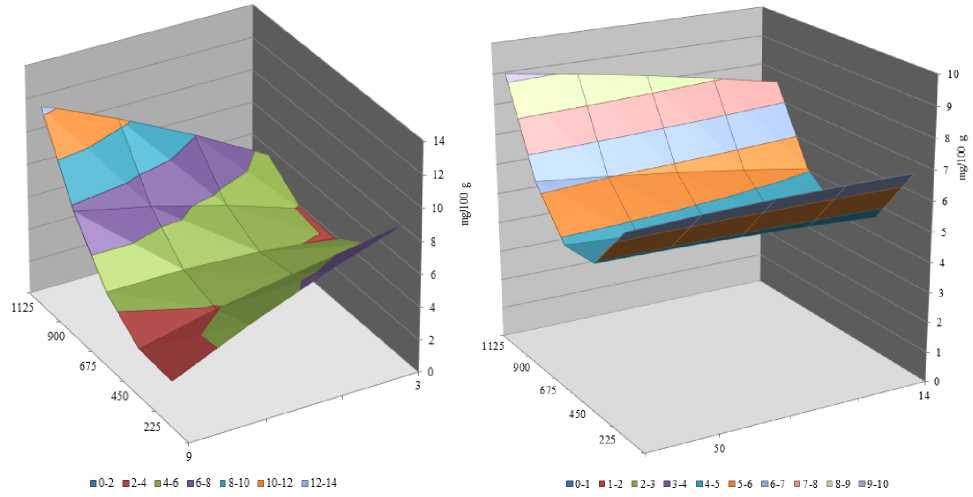
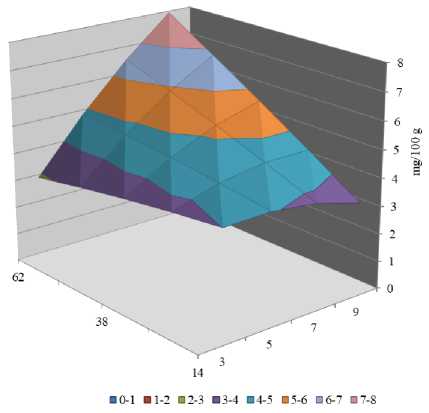
The Fisher test confirmed that the developed mathematical model was adequate for analyzing and predicting the vitamin C content of the finished bread. The response surface plots (Figure 5) illustrate the combined effects of mixing shaft rotational speed, mixing time, and dough freezing temperature on vitamin C retention. Among the factors studied, freezing temperature (x₃) had the strongest effect. As the freezing temperature decreased from -14 to -38°C, the predicted vitamin C content increased to 6–10 mg/100 g. This may reflect a lower rate of oxidative processes and better preservation of water-soluble vitamins at lower temperatures.
a) b)
c)
Figure 5. Response surface plots illustrating the effect of technological factors on the vitamin C content of the finished products ( Zj ): a) effect of mixing shaft rotational speed and mixing time; b) effect of mixing shaft rotational speed and dough freezing temperature; c) effect of mixing time and dough freezing temperature
Vitamin B₁ content (Z₄), expressed in mg/100 g, served as the second response variable in the mathematical model. The same second-order regression model was used to assess how mixing shaft rotational speed, mixing time, and dough freezing temperature affect vitamin B₁ content.
Reproducibility variance:
5r2D = 0.00068
rep
Adequacy variance:
SO, = 0.0004362
The calculated value of the Fisher (F) test was:
Ft = 0.6414
The Fisher test confirmed that the mathematical model was adequate for describing and predicting the vitamin B₁ content of the finished bread. The response surface plots from the model are presented in Figure 6.
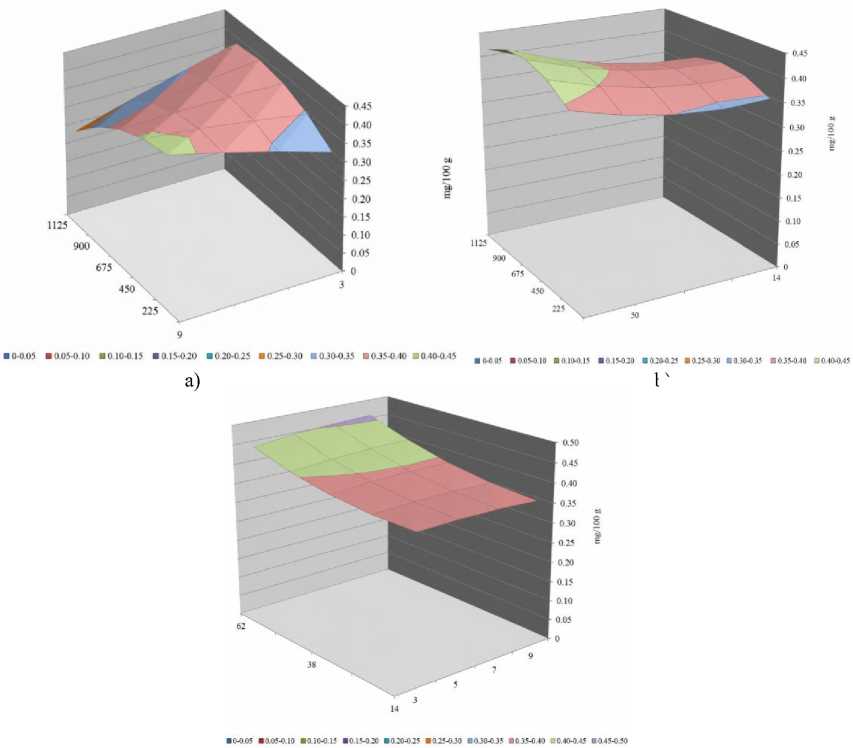
b)
c)
Figure 6. Response surface plots illustrating the effect of technological factors on the vitamin B₁ content of the finished products (Z₄): a) effect of mixing shaft rotational speed and mixing time; b) effect of mixing shaft rotational speed and dough freezing temperature; c) effect of mixing time and dough freezing temperature
The response surface plots indicate that vitamin B₁ content was affected by the technological factors studied, though the changes were less pronounced than those observed for vitamin C. The surfaces were relatively smooth, indicating that variations in mixing speed and time had a moderate effect on vitamin B₁ content. Freezing temperature also influenced vitamin B₁ retention. Within the investigated range of -14 to -38°C, lower freezing temperatures were associated with better preservation of vitamin B₁. Overall, the results indicate that the selected mixing and freezing conditions can help maintain the nutritional value of the finished bread.
The mathematical modeling results showed that the technological factors affected the retention of vitamins C and B₁ in the finished bread to different degrees. Freezing temperature had the most pronounced effect on vitamin retention, while mixing shaft rotational speed and mixing time had a less pronounced effect. The results of the mathematical modeling complemented the experimental findings and supported the selection of 20% Elaeagnus angustifolia L. powder prepared from fruit without stones as the most rational formulation.
Thus, the results of the experimental studies and mathematical modeling complement each other and confirm that incorporating 20% Elaeagnus angustifolia L. powder, prepared from fruit without stones, is the most rational technological approach for producing yeast-free whipped bread with high consumer quality and enhanced nutritional value.
Conclusion
The present study investigated the effect of Elaeagnus angustifolia L. powder made from fruits with and without stones on the quality of mechanically aerated, yeast-free bread produced from deep-frozen dough semi-finished products using microwave thawing before baking. The results showed that adding oleaster powder improved the bread's nutritional profile, increasing protein, vitamin, and mineral content compared with the control sample. Among the formulations studied, the bread containing 20% Elaeagnus angustifolia L. powder from stoneless fruits showed the most favorable combination of technological, physicochemical, sensory, and nutritional characteristics. This formulation achieved a porosity of 63.1%, a specific volume of 255 cm³/100 g, and an H/D ratio of 0.50, while also increasing protein, vitamin, and mineral content compared with the control. Increasing the powder content to 30% further increased some nutritional components but negatively affected the bread's structural and sensory properties. Mathematical modeling showed that mixing shaft rotational speed, mixing time, and dough freezing temperature affected the retention of vitamins C and B₁ to varying degrees. Among these factors, freezing temperature had the most pronounced effect on vitamin retention. Within the investigated range of -14 to -38°C, lower freezing temperatures were associated with better preservation of water-soluble vitamins. The developed models were confirmed to be adequate by the Fisher test and can be used to evaluate the effect of the studied technological parameters on vitamin retention. Overall, the results indicate that using 20% Elaeagnus angustifolia L. powder from stoneless fruits is a promising approach for producing mechanically aerated, yeast-free bread with improved nutritional value while maintaining satisfactory technological and sensory quality.
Funding
The results presented in the article were obtained as part of research funded by the Committee on Education and Science of the Republic of Kazakhstan under grant No. AP23490384, titled "Development of an Innovative Technology for the Accelerated Production of Frozen Dough Enriched with Plant-Based Ingredients" (2024–2026).
