
Influence of the Para-Aminobenzoic Acid–NiSO₄·7H₂O Complex on In Vitro Proliferation of Gisela-5
Journal: Bulletin of Science and Practice @bulletennauki
Section: Естественные науки
Article in issue: 12 т.11, 2025.
Free access
In this study, we synthesised a coordination compound resulting from the interaction of para-aminobenzoic acid (PABA) with nickel (II) sulfate heptahydrate (NiSO₄·7H₂O). To clarify its structural features, the complex was examined by FT-IR spectroscopy and thermogravimetric analysis (TGA). Its biological influence was tested on Gisela-5 rootstock grown in vitro through microclonal propagation. The compound was added to Murashige and Skoog (MS) medium at four concentrations: 0.5, 1.0, 1.5, and 2.0 mg·100 mL⁻¹. The treatment containing 1.5 mg·100 mL⁻¹ promoted the highest proliferation rate, nearly 90%. These observations suggest that the PABA-NiSO₄·7H₂O complex may act as a useful biostimulant for enhancing plant tissue culture growth.
Similar articles in the section General ecology and biodiversity
Short address: https://sciup.org/14135500
IDS: 14135500 | UDC: 574.47: | DOI: 10.33619/2414-2948/121/07
Влияние комплекса пара-аминобензойной кислоты и NiSO₄·7H₂O на in vitro пролиферацию растения Gisela-5
В исследовании синтезировали координационное соединение, полученное в результате взаимодействия пара-аминобензойной кислоты (PABA) с гептагидратом сульфата никеля (NiSO₄·7H₂O). Для изучения его структурных особенностей комплекс был исследован методом ИК-спектроскопии (FT-IR) и термогравиметрического анализа (TGA). Его биологическое влияние оценивалось на подвое Gisela-5, выращенном in vitro методом микроклонального размножения. Соединение было внесено в среду Мурасиге и Скоога (MS) в четырех концентрациях: 0,5; 1,0; 1,5 и 2,0 мг·100 мл⁻¹. Наибольший уровень пролиферации был отмечен при концентрации 1,5 мг·100 мл⁻¹, почти 90%. Эти результаты позволяют предположить, что комплекс PABA-NiSO₄·7H₂O может служить эффективным биостимулятором для повышения роста растительных тканей in vitro .
Text of the scientific article Influence of the Para-Aminobenzoic Acid–NiSO₄·7H₂O Complex on In Vitro Proliferation of Gisela-5
Бюллетень науки и практики / Bulletin of Science and Practice
UDC 574.47: 504.4.064
Modern approaches are increasingly used in the mass propagation of plants. Among these, microclonal propagation has become one of the most effective techniques, playing a central role in the rapid progress of plant biotechnology. The Murashige and Skoog (MS) medium [1, 17] remains the standard nutrient base for in vitro culture and is often modified to meet specific experimental aims. Tissue culture is widely applied around the world to produce disease-free and genetically stable planting material [21].
Supplementation of the nutrient medium with macro- and microelements has been shown to improve plant growth and proliferation, and in some cases, to influence cell division and differentiation. Nickel (Ni) is recognised as an essential microelement in plant physiology. Nickeldependent enzymes contribute to key metabolic processes in plants [4, 8].
On the other hand, para-aminobenzoic acid (PABA) plays an important role in folate biosynthesis [14, 16].
The application of metal–ligand complexes in plant tissue culture may help uncover new mechanisms that stimulate morphogenesis and growth. In this context, PABA–Ni(II) complexes combine the biological activity of the organic ligand with the catalytic function of the metal. The present study therefore aimed to synthesise a PABA–Ni(II) complex, characterise its structure using FT-IR and thermogravimetric analyses, and evaluate its effect on the in vitro proliferation phase of Gisela-5.
Materials and Methods
Plant material. Explant samples were obtained from the Gisela-5 rootstock and used as the plant material for in vitro culture experiments.
Chemical substances and synthesis. The PABA–Ni(II) complex was synthesised using stoichiometric ratios of the reagents. A solution containing 2.75 g of para-aminobenzoic acid (PABA) (GOST 6-09-3395-78; 0.01 mol) and 1.67 g of sodium bicarbonate (NaHCO3) (GOST 2156-76; 0.02 mol) was prepared in 80 mL of distilled water in a 300 mL round-bottom flask. The mixture was heated to 60–70 °C and stirred for 5 min using a Daihan Scientific Hotplate Stirrer (MSH-20A). Separately, 2.81 g (0.02 mol) of nickel(II) sulfate heptahydrate (NiSO4’7H2O) (GOST 4465-74) was accurately weighed on a Kern ABJ220-4NM analytical balance and dissolved in a small volume of ultrapure water in a 200 mL beaker. The metal salt solution was stirred for 4 min at 70 °C, then cooled to 25 °C. The resulting mixture was filtered through standard filter paper to obtain a green precipitate [2, 4].
The precipitate was stored in the dark at 20 °C for 48 h, after which transparent green crystals appeared. The crystals were dried over anhydrous calcium chloride (CaCl2) in a desiccator until constant weight was achieved [8, 21].
Elemental composition was determined using a Carlo Erba CHNSO elemental analyser. The reaction yield was calculated as 79.45 %.
Theoretical element composition (%): C – 18.05; H – 1.53; Ni – 22.92
Empirical formula: (NH2-C6H4-COO)2Ni(n>4H2O
Experimental element composition (%): C – 18.22; H – 1.10; Ni – 22.81
Spectroscopy and thermal analysis. The FT-IR spectrum was recorded between 4000–250 cm-1 using the KBr tablet method [15] (Figure 1).
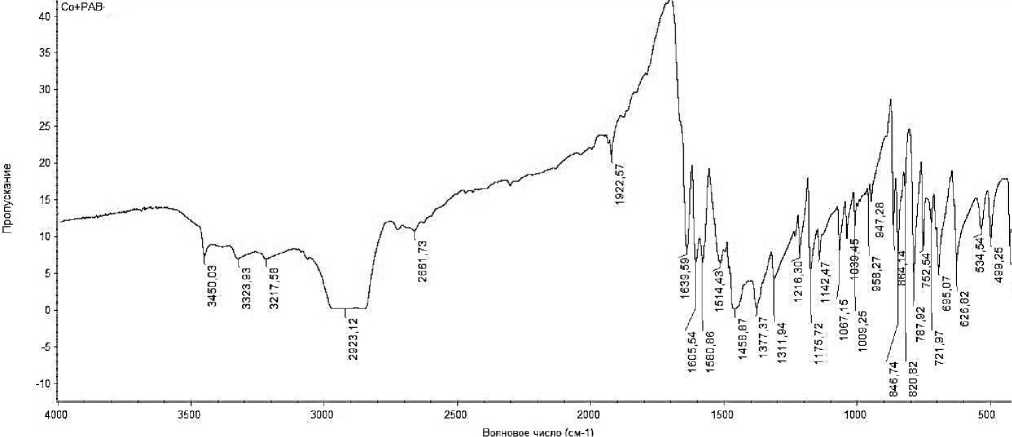
Figure 1. FT-IR spectrum of the synthesized PABA-Ni(II) complex [(NH2-C6H4
COO)2Ni(II)-4H2O]
The infrared (IR) spectrum of the complex displays a strong absorption band at 1600 cm“i, corresponding to the asymmetric stretching vibration of the carboxylate group, v_as(COO“), and a band at 1374 cm“i, assigned to the symmetric stretching vibration, v_s(COO“). The difference between these two bands (Δν = ν_as – ν_s) can be used to determine the coordination mode of the carboxylate oxygen atoms with the Ni(II) centre. In general, a Av value below 200 cm“i indicates a bidentate or bridging bidentate coordination, whereas a Av value above 200 cm_i suggests monodentate or ionic interaction. For this complex, Av was calculated as 226 cm“i, indicating that the carboxylate oxygens of the para-aminobenzoate ligands interact with Ni(II) primarily through ionic bonding [12]. These results confirm the proposed coordination mode of the synthesized complex.
Thermogravimetric analysis . Thermogravimetric analysis was carried out using a NETZSCH STA instrument, and the stages of thermal decomposition were described [3] (Figure 2).
As shown in Figure 2, the thermal decomposition of the complex compound proceeds through four main stages.
Stage 1 occurs in the temperature range of 171–210°C, during which the four water molecules incorporated in the complex are released. The liberation of these coordinated water molecules from the coordination sphere is evidenced by an endothermic peak observed around 195°C.
Stage 2 takes place between 210 and 360 °C, during which the dehydrated structure undergoes transformation into a dimeric configuration.
Stage 3 occurs in the range of 360–450°C. At this stage, the dimeric structure decomposes, leaving a hydrocarbon residue and forming NiCO3. This process is confirmed by the exothermic effect observed at approximately 445°C.
Stage 4 takes place from 450 to 720°C, during which NiCO3 decomposes to yield NiO as the final product.
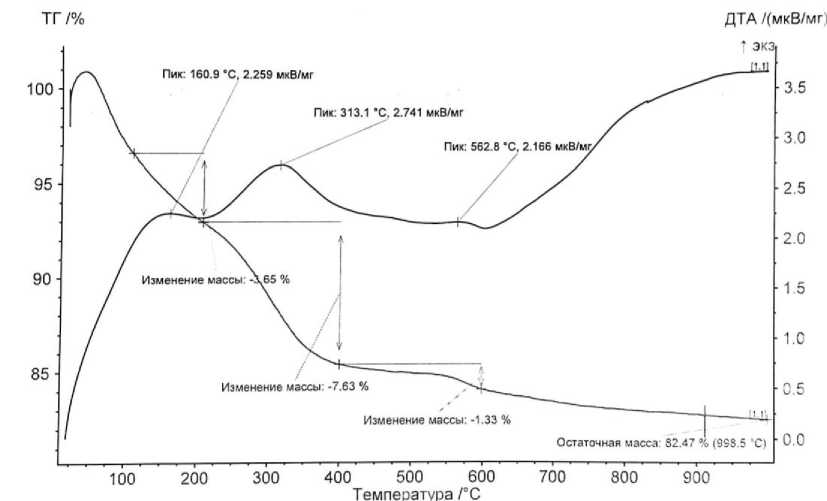
Figure 2. Thermogravimetric analysis of the complex compound
In vitro Conditions. The growth and development of plant cells under in vitro conditions largely depend on the chemical composition of the culture medium. Fundamental components of plant tissue culture media include inorganic and organic nutrients, vitamins, and plant growth regulators [7, 14, 16].
For the acquisition of plant material, it is essential to prioritise specimens aged between 1.5 and 2 years. In this study, explants were collected from one-year-old branches of the Gisela-5 rootstock. Sterilisation was performed in three stages using Fairy detergent, the fungicide Captan, and sodium hypochlorite (NaOCl). The explants were subsequently rinsed with distilled water under a laminar flow hood prior to culture initiation [9].
The MS-based culture medium was prepared according to the standard protocol, supplemented with sucrose (30 g·L⁻¹), agar (6 g·L⁻¹), and the required hormonal components. To evaluate the effect of the synthesized PABA-Ni(II) (PABT-Ni) complex, the compound was added to the MS microelement stock at concentrations of 1.0, 1.5, and 2.0 mg·100 mL⁻¹. The standard MS medium without any added complex was used as a control.
Proliferation and Evaluation. Plants that successfully completed the initiation phase were transferred to the proliferation stage. The nutrient medium for proliferation was prepared with 3% sucrose and 7% agar. A complex mixture of microelements, including the synthesized PABA-Ni(II) complex, was added to the stock solution in the same proportions for the treated groups. Propagation was carried out over four successive passages, each lasting 23 days. The composition of the nutrient medium was maintained consistently across all passages. Cultures were grown under controlled conditions in a climate chamber set to 23°C and 55% relative humidity. Compared with the control group, plants cultured in the medium containing the complex exhibited faster growth. At the end of each passage, during the subculture process, an average of four new shoots per plant was observed in the treated group, whereas the maximum number of new shoots in the control group was 2-3.
Synthesis and Yield. The crystalline material obtained from the synthesis of the complex was isolated with a yield of approximately 79.5%. FT-IR Analysis. The infrared spectrum revealed the asymmetric stretching of the carboxylate group at ~1600 cm⁻¹, and symmetric stretching in the range of 1346–1377 cm⁻¹. The calculated Δν value (~223 cm⁻¹) indicates an ionic or monodentate mode of coordination.
Thermal Analysis. Thermogravimetric (TGA) and differential scanning calorimetry (DSC) analyses showed that the thermal decomposition of the complex proceeds through four main stages: (1) loss of crystallization water, (2) dimerization and oxidation-related transformations, (3) decomposition of the ligand, and (4) formation of the metal oxide. These stages were observed in the temperature range of 170–720°C.
Biological Effect-Proliferation. The addition of the PABA–Ni(II) complex to the MS medium at a concentration of 1.5 mg·100 mL⁻¹ significantly enhanced the proliferation efficiency. On average, the proliferation success rate in the 1.5 mg·100 mL⁻¹ treatment group reached approximately 90%, compared with 60–70% in the control. The average number of new shoots per explant per passage was 4 in the treated group, compared with 2–3 in the control. These results indicate that the synthesized complex is stable and effective, demonstrating considerable potential for application in plant biotechnology (Table).
Table
Proliferation of Gisela-5 under different concentrations of the PABA–Ni(II) complex
|
Concentration (mg·100 mL⁻¹) |
Proliferation Success (%) |
Average Number of New Shoots per Explant |
Note |
|
Control (0) |
~65 |
2.5 |
— |
|
0.5 |
~70 |
2.8 |
Slight improvement over control |
|
1.0 |
~75 |
3.2 |
Gradual increase observed |
|
1.5 |
~90 |
4.0 |
Maximum stimulation observed |
|
2.0 |
~80 |
3.8 |
Slight reduction in effect, suggesting dose-dependent response |
Discussion
The results of this study indicate that the application of the PABA–Ni(II) complex at lower concentrations (1.0–1.5 mg·100 mL⁻¹) can effectively stimulate proliferation in Gisela-5. Potential mechanisms underlying this effect include the optimization of cellular metabolism by Ni ions as enzymatic cofactors (e.g., Ni-dependent enzymes such as urease and Ni-SOD) and the role of PABA in folate biosynthesis, which supports cell division and metabolic activity [1, 5].
However, excessive concentrations of Ni may induce toxicity, highlighting the importance of concentration optimization [10, 11].
Recent studies also demonstrate the concentration-dependent effects of PABA on root development and the cell cycle, which are consistent with our findings [13].
FT-IR and thermogravimetric analyses confirmed that the complex is stable, and the mode of carboxylate–Ni coordination may influence ligand bioactivity [3, 15].
Micropropagation techniques for Gisela-5 have been extensively studied. Nodal explants cultured on MS, DKW, and WPM media supplemented with BAP and kinetin combinations have been tested, and MS medium containing 2 mg BAP + 0.5 mg kinetin resulted in an average of 3.1 microshoots per explant [6].
Investigated tissue culture methods for Gisela-5 in plant biotechnology [18. 19].
Assessment of the effect of treating ‘GiSelA 5’ softwood cuttings with biostimulants and synthetic auxin on their root formation and some of their physiological parameters. These studies demonstrate that although in vitro propagation is critical, cutting techniques can occasionally yield superior results [18].
The stimulatory properties of PABA and its organic salt complexes have also been documented in previous studies. For instance, Sumălan et al. (2020) reported that p-aminobenzoate salts enhanced root development and productivity in tomato plants [17]. Such complexes may combine ligand activity with the effects of the metal ion, resulting in enhanced biological efficacy.
Ni ions are considered essential microelements in plants, playing a critical role in Ni-dependent enzymes such as urease [20]. In soils, Ni exhibits a tendency to form complexes with carboxylate groups [9]. The present findings suggest that the PABA–Ni complex can stabilize Ni ions in plant tissues through carboxylate ligands. This coordination may facilitate efficient Ni bioavailability, enhancing metabolic activity at the cellular level.
Conclusion
The findings of this study indicate that the PABA–Ni(II) complex at a concentration of 1.5 mg·L⁻¹ exerts the maximum stimulatory effect on plant proliferation, whereas a concentration of 2.0 mg·L⁻¹ leads to a slight reduction in efficacy. This dose-dependent response suggests that higher metal concentrations may pose a risk of metal toxicity, potentially affecting plant physiological processes. FT-IR analysis revealed a Δν value of approximately 223 cm⁻¹, indicating ionic-type coordination. This coordination mode suggests that the ligand is peripherally bound to the metal ion, which may enhance its gradual release and bioactivity within plant tissues. Thermogravimetric results confirmed that the complex exhibits stable, stepwise degradation, implying a controlled release of ions within the tissue. Overall, this study demonstrates the potential of the PABA–Ni(II) complex to stimulate in vitro proliferation in Gisela-5. However, the current investigation was limited to a single plant species and a narrow range of concentrations. Future studies should include dose-dependent evaluations across diverse plant species (fruits, grains, and seed plants) and should incorporate enzymatic assays (e.g., urease activity, Ni-SOD, and ROS markers) to elucidate the underlying cellular mechanisms of complex activity.
