
Integration of digital identification systems into B2B service architectures
Journal: Economics and Business: Theory and Practice @economyandbusiness
Article in issue: 1 (131), 2026.
Free access
The article examines the architecture and integration practices of digital identification systems within B2B services, with a focus on interface compatibility, protocol standardization and operational reliability under high load. It analyzes the use of protocols such as OAuth 2.0, OpenID Connect, SAML and SCIM in combination with architectural approaches including REST, gRPC and GraphQL. The empirical component is based on case studies of integrating identification solutions into external B2B environments, including corporate channels, digital platforms and offline infrastructures. The importance of standardized API contracts and technical documentation is emphasized as a key factor in reducing onboarding time and increasing system robustness. The findings provide a substantiated framework for designing identification components in B2B service architectures with regard to requirements of reliability, interoperability and scalability.
Similar articles in the section Special auxiliary subdivision for computing






Short address: https://sciup.org/170212560
IDS: 170212560 | DOI: 10.24412/2411-0450-2026-1-176-183
Интеграция систем цифровой идентификации в архитектуру B2B-сервисов
В статье рассматриваются архитектура и практики интеграции цифровых идентификационных систем в B2B-сервисы с акцентом на интерфейсную совместимость, стандартизацию протоколов и эксплуатационную надежность при высокой нагрузке. Анализируется применение таких протоколов, как OAuth 2.0, OpenID Connect, SAML и SCIM, в сочетании с архитектурными подходами REST, gRPC и GraphQL. Эмпирическая часть основана на кейсах интеграции идентификационных решений во внешние B2B-среды, включая корпоративные каналы, цифровые платформы и офлайн-инфраструктуру. Подчеркивается важность стандартизации API-контрактов и технической документации для сокращения времени онбординга и повышения устойчивости систем. Полученные результаты позволяют обоснованно подойти к проектированию идентификационных компонентов в архитектуре B2B-сервисов с учетом требований надежности, совместимости и масштабируемости.
Text of the scientific article Integration of digital identification systems into B2B service architectures
Digital identification serves as a critical enabler in the digitization of B2B business processes, facilitating secure, scalable access to corporate digital services. Growing distributed architectures, cloud solutions, and automated onboarding processes increase the demands on the reliability and interoperability of the identification components. As ecosystems grow more complex and regulatory requirements intensify, the formalization of API contracts, the standardization of authentication protocols, and the operational stability of identification services under load have become critically important.
The aim of this study is to examine the architectural approaches and integration practices for digital identification systems in B2B services, with a focus on API compatibility, protocol standardization, and operational resilience. The novelty of this work lies in integrating a theoretical overview of digital identification protocols and architectures (OAuth 2.0, OpenID Connect, SAML, SCIM; REST, gRPC, GraphQL) with an empirical analysis of concrete integration projects in B2B environments and their comparison with the practices of leading international digitalidentity providers. Based on this material, the study demonstrates how the formalization of API contracts and the use of standardized integration approaches are linked to reduced onboarding time, improved authentication stability, higher verification-flow conversion rates and lower operational costs, thereby providing practical guidelines for designing identification modules within B2B architectures. The findings can be directly applied in professional settings when planning and implementing digital-identity integrations in corporate services.
Methods
The study relies on a combination of theoretical-analytical and case-oriented approaches. At the theoretical level, it examines academic and industry publications on digital identification, the standards and guidelines governing the use of OAuth 2.0, OpenID Connect, SAML and SCIM, as well as architectural approaches such as REST, gRPC and GraphQL in B2B environments. At the empirical level, the paper analyzes internal projects involving the integration of digital identification into external B2B services, comparing their outcomes with the practices of leading international digital-identity providers. The key performance indicators examined include onboarding time, authentication stability, response latency, verification-flow conversion rates and operational maintenance costs, along with the influence of architectural choices on the fulfillment of contractual SLAs. These metrics were selected because they directly reflect the availability and reliability of identification services, the integration complexity faced by B2B clients, and the overall cost of ownership of digital-identity architecture.
Theoretical foundations of digital identification
Digital identification represents the process of establishing and subsequently verifying the digital representation of a subject-a user, organization, or device-within an information system [1]. In the broader sense, digital identity is about a set of attributes that certify a subject's association with some entity in order for it to ensure authorized access to digital resources. The digital identifiers may be unique, permanent, pseudony-mized, or generated dynamically, according to the security requirements, trust levels, and system architecture.
According to the report by Grand View Research, the global market for digital identity solutions was valued at approximately $39.07 billion in 2024 (fig. 1).
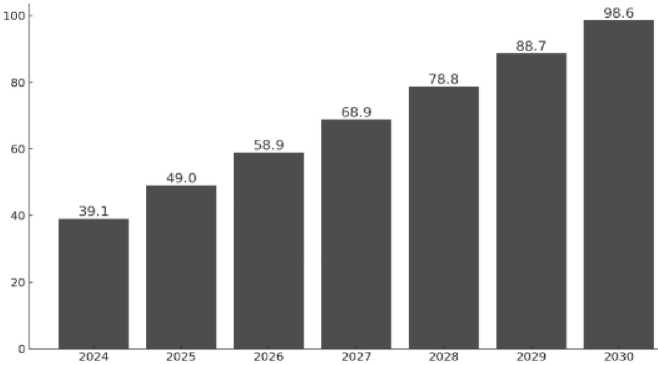
Figure 1. Global market size of digital identity solutions, billion dollars [2]
These data underscore that digital identification is becoming one of the most rapidly expanding segments of digital infrastructure, exerting a direct influence on the architecture of corporate services. The sustained growth of the market through 2030 indicates the emergence of longterm demand for scalable and standardized identification solutions that ensure security, interoperability, and operational efficiency in the B2B environment.
Several types of digital identifiers can be distinguished [3, 4]:
-
- Static identifiers (e.g., login, tax identification number) – remain unchanged throughout the subject’s lifecycle within the system.
-
- Dynamic identifiers – may change during each interaction session (e.g., temporary access tokens, session IDs).
-
- Pseudonymous identifiers – enable the anonymization of a subject while preserving the ability to identify them when necessary (e.g., decentralized identifiers, DID).
-
- Federated identifiers – used in systems with cross-domain authorization, where the subject is identified through an external provider (e.g., Google, Microsoft ID).
-
- Attestation identifiers – accompanied by credentials that verify specific properties of a subject, as in KYC systems or legal-entity verification.
The variety of digital identifier types reflects the evolution of web architectures-from simple monolithic systems to today's distributed cloud platforms-where the management of identity became one of the central elements of both security and scalability [5]. While the interactions between services and users continue to increase, identifiers have moved away from static values to dynamic, federated, and attestation-based models, which ensure flexibility, interoperability, and compliance with state-of-the-art privacy and access-control requirements.
In the B2B context, digital identification is very different compared to B2C due to the structural and regulatory specifics of organizational actors. While B2C prioritizes user experience and rapid onboarding for individuals, B2B involves legal entities and authorized representatives, requiring more complex attribution, verification procedures and compliance measures (table 1).
Table 1. Differences between B2C and B2B digital identification contexts [6, 7]
|
Criterion |
B2C context |
B2B context |
|
Subject of identification |
Individual (natural person) |
Legal entity and authorized corporate representatives. |
|
Identification depth |
Single-layer (end user) |
Multi-layer (organization + individual roles and access levels). |
|
Identification purpose |
Streamlined access, minimal user friction |
Access control, regulatory and contractual compliance. |
|
Integration with IT infrastructure |
Relatively autonomous user identity |
Integration with internal client systems (SCIM, LDAP, corporate domains, etc.). |
|
Legal validity |
Usually not required |
Often required: authority verification, use of digital signatures, registry validation. |
|
Security and SLA requirements |
Basic protection, focused on user experience |
High demands for uptime, data protection, and documented architecture. |
|
Onboarding and maintenance |
Fast, large-scale, automated |
Longer, customized, includes legal agreements and integration procedures. |
Contemporary digital identification systems rely on formalized protocols that ensure interoperability, scalability, and protection in interactions among the components of the system [8]. This includes OAuth 2.0, which represents one of the most widely used solutions for delegated authorization without the transmission of sensitive credentials; OpenID Connect (OIDC), an extension of OAuth with added authentication features and the exchange of identity information in JWT format; and SAML 2.0, mainly used in corporate and governmental domains where XML-based authentication assertions are required. Regarding digital identity management across systems, the SCIM protocol allows the centralized synchronization of user accounts. Running in parallel, FIDO2/ WebAuthn enables passwordless authentication based on cryptographic methods and biometric verification.
Hybrid architectures prevail in B2B environments: OAuth and OIDC for external platform integration, SAML for enterprise identity provider connectivity, and SCIM for role and access management balance usability, security, and scalability. Standard protocols and stable API contracts provide the backbone of predictable identification within a distributed system, while access management itself becomes a multilayered and formalized model. With increasing digital identity markets and ever-tightening requirements for regulatory and SLA compliance, methodical design for one's identity infrastructure is a matter of operational resilience and technological competitiveness.
Architectural approaches to integrating digital identification into B2B services
Effective integration of digital identification services into B2B products is impossible without ensuring interface-level interoperability between modules that are often developed by different teams or external vendors. As architectures become more complex and evolve from monolithic systems to distributed microservice environments, the requirements for API interfaces have increased substantially – both in terms of formalization and resilience under load [9]. In practice, three architectural approaches have gained the widest adoption: REST, gRPC, and GraphQL, each imposing specific constraints on the design of the identification component.
REST APIs are the dominant interaction style because of their simplicity, wide adoption, and compatibility with most web clients and gateways. This trend is supported by the findings of the Postman 2023 State of the API report, which surveyed more than 40,000 developers worldwide (fig. 2).
In the context of digital identification, REST provides a predictable endpoint structure for registration, authentication, token refresh, and access-rights management operations. However, REST interfaces may become inefficient in high-frequency interaction scenarios or require multiple requests to retrieve related data.
gRPC, built on the HTTP/2 protocol and leveraging the binary Protocol Buffers format, offers significantly higher performance and lower latency compared with REST. It is particularly valuable in distributed microservice-based B2B architectures where response speed and connection stability are critical. gRPC is well-suited for identification scenarios involving intensive authorization flows and real-time access-control verification.
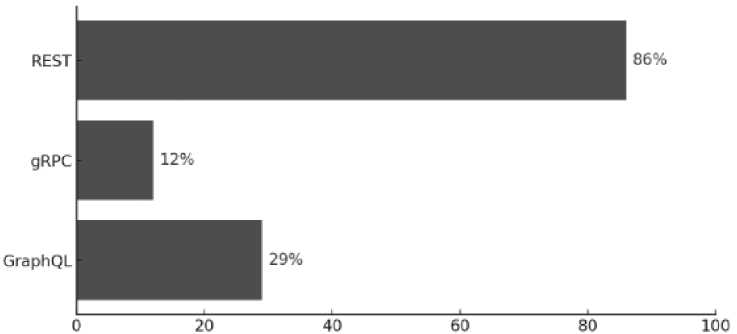
Figure 2. Share of respondents using different API architectural styles [10]
GraphQL provides flexibility by allowing clients to request only the fields they need in a single query, reducing client-side overhead and improving responsiveness. In the context of digital identification, this can be applied when generating adaptive user interfaces in B2B services that require varying levels of subject-attribute detail.
Selecting an optimal architectural style for designing an identification layer in B2B systems requires consideration not only of the technical characteristics of the API but also of the nature of interaction with internal and external components (table 2).
Table 2. Comparative applicability of API architectures for digital identification in B2B systems [11, 12]
|
Characteristic |
REST API |
gRPC |
GraphQL |
|
Maturity and adoption |
High; de facto standard for web services. |
Common in high-throughput microservice architectures. |
Gaining traction in frontend-driven and schema-flexible systems. |
|
Use cases in digital identification |
Registration, login, to- ken/session management. |
Real-time authorization, role validation. |
User attribute retrieval, access personalization. |
|
Network characteristics |
Scalable but can be verbose under high-frequency access |
Optimized for low latency and high request volume. |
Reduces over-fetching by allowing precise data queries. |
|
Integration with existing B2B infrastructure |
Easy to implement and widely supported |
Requires protobuf setup and dedicated tooling. |
Demands schema design but facilitates frontend flexibility. |
|
Security and observability support |
High; extensively documented and supported. |
Requires additional setup for tracing and logging. |
Dependent on implementation; query complexity must be controlled. |
As the comparative analysis shows, the choice of an API architectural style depends on the nature of identification tasks, performance requirements, and the specific characteristics of corporate infrastructure. However, regardless of the chosen approach, stability and predictability of integration in the B2B environment can be achieved only when interaction points are strictly formalized. For this reason, the standardization of API contracts becomes an essential stage in designing the identification layer.
The formalization and standardization of API contracts is a critical prerequisite for the scalability of digital identification in B2B systems, as an API contract defines methods, data formats, error models and authorization rules, ensuring reproducible behavior across environments through formats such as OpenA-PI/Swagger, Protocol Buffers and GraphQL SDL. In ecosystems where identification services interact with diverse external systems – including marketplaces, partner APIs and digital procurement platforms – standardized contracts reduce integration errors and onboarding time [13], while precision in B2B sales and tendering processes directly affects access speed and operational transparency.
Consistent API design also unifies logging, tracing and error handling, simplifying large-scale operations. Ensuring reliable digital identification further requires high operational stability under peak load, supported by TLS encryption, token rotation, data signing (e.g., JWT RS256), least-privilege access policies, rate limiting, protection against brute-force and replay attacks, and architectural support for multifactor authentication such as OTP or FIDO2.
In high-load environments with continuous interaction between digital identification services and external B2B systems, ensuring fault tolerance becomes critically important. Failures in the identification module can block business operations, violate SLA commitments, and undermine client trust. To mitigate these risks, the architecture must incorporate a set of engineering mechanisms designed to maintain stable operation during component failures or surges in traffic (table 3).
Table 3. Technical mechanisms for ensuring fault tolerance in digital identification modules
|
Category |
Description and purpose |
Technological examples |
|
Replication and redundancy |
Maintaining multiple service instances to ensure availability in case of node failure |
Authentication service clustering, StatefulSets |
|
Load balancing and routing |
Distributing incoming traffic across instances to prevent overload |
API Gateway, NGINX, HAProxy, Ku-bernetes Services |
|
Auto-scaling |
Dynamically increasing the number of service instances based on real-time load |
Kubernetes Horizontal Pod Autoscaler, Cloud Scaling |
|
Failure detection and Isolation |
Identifying non-functional components and isolating failures to prevent cascading issues |
Circuit Breaker, Health Checks, Retry Policies |
Particular attention should be given to the decomposition of the identification service into microservices: separating components responsible for session management, token storage, authorization verification, and security monitoring enhances error isolation and improves resilience in the event of individual node failures.
Thus, the architecture for integrating digital identification into B2B products must be built at the intersection of standardized protocols, formalized interfaces, and operational resilience, ensuring uninterrupted functioning under large-scale and security-critical interaction conditions.
Practical models for integrating digital identification into B2B services
The practical integration of digital identification into B2B products demonstrates substantial variability depending on infrastructure maturity, security requirements and the number of interacting parties. Empirical analysis of several large-scale projects reveals recurring engineering and organizational patterns that affect onboarding time, authentication stability, verification-flow conversion and the operational costs of system maintenance. The practical examination presented below is based on an internal study conducted through the author’s direct involvement in integration projects implementing digital identification systems within major B2B services.
This case study is based on an internal project to integrate a digital identification service into an external B2B environment. During the initial deployments, the average integration cycle increased from about one month to roughly three months, accompanied by a sharp growth in support tickets and repetitive inquiries, while a pipeline of 52 further integrations was pending. Analysis of integration steps, support requests and interviews with client developers showed that the key issue was the lack of clear step-by-step documentation and formally specified API requirements for authentication and access control. A benchmark of developer portals from providers such as Google Auth and national digital identity platforms confirmed that comprehensive workflows and auxiliary materials are critical for reducing integration complexity.
In response, the team introduced a structured requirements document for the identification layer, standardized API contracts with clear authorization rules and data formats, and a concise integration guide with scenarios and diagnostics. All materials were consolidated on an internally maintained portal, supported by targeted training for external teams. As a result, integration time fell from about three months to three weeks, errors decreased by roughly 55 %, and repetitive support requests dropped by around 70 %, allowing the integration pipeline to scale without overloading the team and aligning the process with best practices in digital identity.
In the second internal case, a major national digital identity provider faced an ambitious objective: to deliver approximately 10 million authentications in the external B2B segment within roughly six months. Market analysis, legal constraints and partner requirements led to a twopronged strategy that combined direct integrations with large corporate customers and a scalable solution for small and medium-sized enterprises. Three major platforms in the transport and public services sectors were selected as pilots, while a commercial incentive programme was launched for sales units and an identification module was developed for a widely used website builder, enabling accelerated integration for a large number of B2B clients.
By the end of the reporting period, the three major platforms accounted for around 7 million authentications, the SME sales channel contributed approximately 3 million authentications (about 5,000 connected clients), and the websitebuilder module was adopted by nearly 2,000 companies, generating a further 0.7 million authentications. In total, external authentications reached roughly 10.7 million, corresponding to about $0.21 million in additional revenue at an average price of $0.02 per operation. This example demonstrates that a standardized digital identification service can be scaled and embedded into heterogeneous B2B architectures through a combination of direct integrations, channel incentives and modular marketplace solutions.
Another illustrative example is an integration project between a corporate mobility platform and a large international bank , implemented on the basis of API interaction. In this case, the product team on the mobility side was responsible for designing and supporting the API integration, on which the conclusion and subsequent expansion of a major B2B contract depended (with the recurring payment increasing from approximately $130,000 to $200,000 per month). Initial analysis showed that a substantial part of the risks was linked not only to the integration architecture but also to a deficit of expertise in API concepts and technical communication. To address this gap, an accelerated learning plan was implemented, including a specialised API integration course (completed within one month), mentoring from banking-sector API experts, and systematic participation in joint technical sessions with the client’s team.
As a result, the integration was completed within the agreed timeline, the contract was scaled up, and a 360-degree feedback assessment of cooperation with the technical team reached 4.5 out of 5. Building on the established architec- tural and communication practices, approximately 20 additional API integrations with large enterprise customers were implemented, collectively generating around 30,000 rides. This case demonstrates that the maturity of integration processes and the deliberate development of API-related expertise have a direct impact on the robustness and scalability of B2B services.
Comparison of empirical integration data with the practices of Experian, TransUnion, Equifax and Google Auth shows that onboarding time is primarily reduced through strict API-contract standardization (OpenAPI/Swagger, protobuf, SDL), while limiting the amount of disclosed attributes improves verification conversion and lowers legal friction. Well-developed developer portals with clear workflows, FAQs, documentation and auto-generated SDKs further accelerate client integration, and microservice decomposition of the identification layer increases resilience in line with modern B2B requirements.
Examples from U.S. companies illustrate these patterns. Equifax Biometrics, integrated into the digital onboarding flow of a major oil and gas enterprise, reduced fuel-card application processing from over two weeks to just 1-2 hours while lowering fraud and operational costs through end-to-end biometric verification [14]. Another case is Snyk’s integration of a unified identification layer via Okta : SSO and Azure Active Directory federation enabled onboarding within seconds and doubled user-activation conversion, while giving enterprise clients granular role-based access management [15].
These cases demonstrate that effective digital identification practices combine architectural formalization, interface standardization, data-security robustness and UX-oriented integration, following approaches adopted by leading international digital identity providers.
Conclusion
The analysis of architectural and practical aspects of digital identification in B2B services demonstrates that resilience, scalability and standardized API interaction are fundamental to effective integration. Empirical results show that shorter onboarding times, greater authentication stability and reduced operational overhead stem from formal API contracts, layered protocols such as OAuth, OIDC and SAML, and fault-tolerant engineering practices. The maturity of documentation and the technical expertise of teams also proved essential for reducing integration complexity and support demands.
Looking ahead, the role of digital identification in B2B environments is likely to grow, extending from automated sales and marketplace platforms to digitized offline and legally significant verification processes. Further consolidation of standards, broader adoption of self-sovereign identity approaches and deeper alignment with corporate security and DevOps workflows are expected, underscoring the need to treat identification modules as strategic elements of modern B2B digital architecture.
