
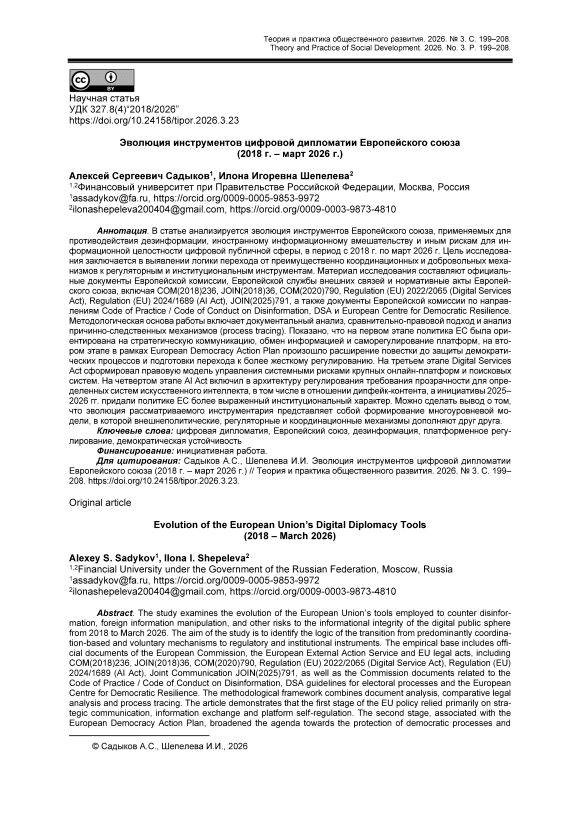
Эволюция инструментов цифровой дипломатии Европейского союза (2018 г. - март 2026 г.)
Журнал: Теория и практика общественного развития @teoria-practica
Рубрика: Право
Статья в выпуске: 3, 2026 года.
Бесплатный доступ
В статье анализируется эволюция инструментов Европейского союза, применяемых для противодействия дезинформации, иностранному информационному вмешательству и иным рискам для информационной целостности цифровой публичной сферы, в период с 2018 г. по март 2026 г. Цель исследования заключается в выявлении логики перехода от преимущественно координационных и добровольных механизмов к регуляторным и институциональным инструментам. Материал исследования составляют официальные документы Европейской комиссии, Европейской службы внешних связей и нормативные акты Европейского союза, включая COM(2018)236, JOIN(2018)36, COM(2020)790, Regulation (EU) 2022/2065 (Digital Services Act), Regulation (EU) 2024/1689 (AI Act), JOIN(2025)791, а также документы Европейской комиссии по направлениям Code of Practice / Code of Conduct on Disinformation, DSA и European Centre for Democratic Resilience. Методологическая основа работы включает документальный анализ, сравнительно-правовой подход и анализ причинно-следственных механизмов (process tracing). Показано, что на первом этапе политика ЕС была ориентирована на стратегическую коммуникацию, обмен информацией и саморегулирование платформ, на втором этапе в рамках European Democracy Action Plan произошло расширение повестки до защиты демократических процессов и подготовки перехода к более жесткому регулированию. На третьем этапе Digital Services Act сформировал правовую модель управления системными рисками крупных онлайн-платформ и поисковых систем. На четвертом этапе AI Act включил в архитектуру регулирования требования прозрачности для определенных систем искусственного интеллекта, в том числе в отношении дипфейк-контента, а инициативы 2025-2026 гг. придали политике ЕС более выраженный институциональный характер. Можно сделать вывод о том, что эволюция рассматриваемого инструментария представляет собой формирование многоуровневой модели, в которой внешнеполитические, регуляторные и координационные механизмы дополняют друг друга.
Похожие статьи в разделе Международные отношения. Мировая политика. Внешняя политика
Короткий адрес: https://sciup.org/149151074
IDS: 149151074 | УДК: 327.8(4)“2018/2026” | DOI: 10.24158/tipor.2026.3.23
Evolution of the European Union’s digital diplomacy tools (2018–March 2026)
The study examines the evolution of the European Union’s tools employed to counter disinformation, foreign information manipulation, and other risks to the informational integrity of the digital public sphere from 2018 to March 2026. The aim of the study is to identify the logic of the transition from predominantly coordination-based and voluntary mechanisms to regulatory and institutional instruments. The empirical base includes official documents of the European Commission, the European External Action Service and EU legal acts, including COM(2018)236, JOIN(2018)36, COM(2020)790, Regulation (EU) 2022/2065 (Digital Service Act), Regulation (EU) 2024/1689 (AI Act), Joint Communication JOIN(2025)791, as well as the Commission documents related to the Code of Practice / Code of Conduct on Disinformation, DSA guidelines for electoral processes and the European Centre for Democratic Resilience. The methodological framework combines document analysis, comparative legal analysis and process tracing. The article demonstrates that the first stage of the EU policy relied primarily on strategic communication, information exchange and platform self-regulation. The second stage, associated with the European Democracy Action Plan, broadened the agenda towards the protection of democratic processes and prepared the shift to a more binding regulatory approach. The third stage was shaped by the Digital Service Act, which established a legal model for the management of systemic risk posed by large online platforms and search engines. The fourth stage was marked by the AI Act, which introduced transparency obligations for certain AI systems, including deepfake-related content, while the initiatives of 2025-2026 gave the policy a more pronounced institutional dimension. The article concludes that the evolution of the EU’s instruments should be interpreted as the emergence of a multi-level model in which external action, regulation and coordination complement each other.
Текст научной статьи Эволюция инструментов цифровой дипломатии Европейского союза (2018 г. - март 2026 г.)
Введение . Цифровизация политической коммуникации изменила не только каналы распространения информации, но и саму логику политического воздействия в международной среде (Андреева, 2025; Литвак, Помозова, 2024). Если на ранних этапах обсуждение цифровой дипломатии концентрировалось преимущественно на практиках внешнеполитической коммуникации государств и международных организаций в социальных медиа, то к середине 2020-х гг. в поле анализа вошло также функционирование цифровой публичной сферы. Для Европейского союза данный сдвиг особенно показателен. Именно в ЕС в течение сравнительно короткого периода были созданы документы и правовые акты, в которых борьбу с дезинформацией и иностранным информационным вмешательством постепенно связали с регулированием платформ, требованиями к прозрачности и институциональными механизмами демократической устойчивости.
Вместе с тем само понятие «инструменты цифровой дипломатии» применительно к Европейскому союзу требует оговорок. В строгом смысле слова не все рассматриваемые в статье меры относятся к дипломатии как к внешнеполитической практике. Digital Services Act (DSA)1 и AI Act2 являются прежде всего актами внутреннего регулирования цифровой среды. Однако в условиях, когда крупнейшие платформы и поставщики цифровых технологий действуют трансгранично, а нормы ЕС обладают выраженным внешним регуляторным эффектом, данные инструменты оказываются сопряжены с внешним измерением политики Союза. Поэтому в настоящей статье под инструментами цифровой дипломатии ЕС понимаются не только коммуникационные практики, но и такие нормативные и институциональные механизмы, которые формируют внешне значимые правила цифровой среды и используются ЕС для защиты информационной целостности, демократических процедур и доверия к публичной дипломатии.
Актуальность темы определяется тремя обстоятельствами. Во-первых, с 2018 г. в ЕС наблюдается последовательное расширение политики регулирования цифровой информационной среды: от дезинформации как преимущественно информационной проблемы к системным рискам платформенной среды и далее к вызовам, связанным с генеративным искусственным интеллектом. Во-вторых, после вступления в силу DSA и принятия AI Act исследование данной динамики уже невозможно ограничивать лишь анализом «мягкого права» (soft law) и политических коммуникаций. В-третьих, инициативы 2025–2026 гг., включая European Democracy Shield (JOIN(2025)791)3 и European Centre for Democratic Resilience (ECDR)4, показывают переход к более устойчивой институциональной конфигурации.
Цель исследования состоит в выявлении логики эволюции инструментов ЕС в области противодействия дезинформации, иностранному информационному вмешательству и связанным рискам цифровой публичной сферы в период с 2018 г. по март 2026 г. Для достижения поставленной цели решаются следующие задачи:
-
1) уточнить теоретические основания анализа взаимосвязи цифровой дипломатии и регуляторной политики ЕС;
-
2) охарактеризовать исходный этап формирования политики ЕС по борьбе с дезинформацией в 2018–2020 гг.;
-
3) определить значение European Democracy Action Plan (COM(2020)790) (EDAP)1 как переходного звена между добровольными и обязательными механизмами;
-
4) проанализировать роль Digital Services Act в институционализации управления системными рисками;
-
5) раскрыть место AI Act и инициатив 2025–2026 гг. в формировании новой архитектуры демократической устойчивости;
-
6) оценить исследованный опыт ЕС и обозначить пределы его возможной применимости для России.
Хронологические рамки исследования охватывают период с апреля 2018 г., когда было опубликовано сообщение Европейской комиссии COM(2018)2362, по март 2026 г., когда ECDR начал практическую работу.
Теоретико-методологические основания исследования . В литературе внешнее влияние Европейского союза традиционно объясняется через концепцию «нормативной силы», предложенную И. Маннерсом, и через более позднюю идею «эффекта Брюсселя», разработанную А. Бредфорд. Первая позволяет рассматривать ЕС как актора, распространяющего нормы и стандарты, вторая – как политико-экономический механизм экстерриториального воздействия, осуществляемого посредством регулирования крупнейшего рынка (Bradford, 2020; Manners, 2002). Для настоящей статьи принципиально важно, что нормативное воздействие ЕС в цифровой среде осуществляется не только с помощью дипломатических заявлений или внешнеполитических инициатив, но и через правовые режимы, к которым вынуждены адаптироваться транснациональные платформы и поставщики технологий.
В то же время прямое отождествление такого регулирования с цифровой дипломатией представляется методологически некорректным. Поэтому более уместно говорить о пересечении двух исследовательских полей. С одной стороны, цифровая дипломатия в современных работах описывается как процесс, в котором цифровые технологии меняют формы публичной дипломатии, стратегической коммуникации и международного представительства (Manor, Huang, 2022). С другой стороны, исследования в сфере алгоритмического управления показывают, что сами условия циркуляции информации все в большей степени задаются инфраструктурными посредниками, а потому анализ публичной коммуникации без учета правил платформ становится неполным (Dijck, 2020; Srivastava, 2023).
Для рассматриваемой темы важен и третий аспект – изменение самих рамок угрозы. Если в документах 2018–2020 гг. доминировал термин «дезинформация» (disinformation), то в последующей практике Европейской службы внешних связей (European External Action Service (EEAS)) все более заметной становится категория «иностранная манипуляция информацией и вмешательство» (foreign information manipulation and interference (FIMI)). Как показывают современные исследования, данный концепт позволил сместить акцент с проблемы дезинформации как таковой к организованным внешним воздействиям (Proto et al., 2025). Такое разграничение существенно, поскольку оно разводит внутреннее регулирование цифровой среды и внешнеполитическое измерение информационной безопасности, хотя на практике оба уровня все чаще оказываются взаимосвязанными.
Методологическую основу исследования составляют документальный анализ, сравнительно-правовой подход и анализ причинно-следственных механизмов (process tracing). Документальный анализ используется для сопоставления целей, адресатов, механизмов и правовой природы ключевых актов ЕС. Сравнительно-правовой подход позволяет проследить различия между кодексами, рекомендациями и регламентами. Process tracing применяется для реконструкции последовательности переходов от одного типа инструмента к другому. При таком подходе предметом анализа являются не только отдельные документы, но и институциональная логика, образующая единую траекторию развития.
Материал исследования включает официальные документы Европейской комиссии, Европейской службы внешних связей, EUR-Lex, а также академические публикации, посвященные цифровой дипломатии, дезинформации, DSA, FIMI и искусственному интеллекту.
Корпус источников был сформирован по трем критериям. Первый критерий – хронологическая значимость, т. е. принадлежность документа к одному из ключевых этапов эволюции политики ЕС в рассматриваемой сфере. Второй – функциональная значимость, т. е. наличие в документе нового механизма, новой институциональной роли или новых рамок проблематизации. Третий критерий – непосредственная релевантность теме информационной целостности, дезинформации, платформенного регулирования, FIMI или ИИ. В результате в корпус исследования были включены COM(2018)2361, JOIN(2018)362, Code of Practice on Disinformation 2018 г.3, Strengthened Code of Practice on Disinformation 2022 г.4, COM(2020)7905, Regulation (EU) 2022/20656 и руководство избирательными процессами в рамках DSA, Regulation (EU) 2024/16897, JOIN(2025)7918 и материалы Европейской комиссии по ECDR (таблица 1).
Таблица 1. Этапы эволюции инструментов ЕС в сфере противодействия дезинформации и защиты информационной целостности цифровой среды9
Table 1 . Stages of Evolution of EU Instruments in the Field of Countering Disinformation and Protecting the Information Integrity of the Digital Environment
|
Период, г. |
Ключевые документы |
Правовая природа |
Основные адресаты |
Функциональное значение |
|
2018–2020 |
COM(2018)236, JOIN(2018)36, Code of Practice on Disinformation (2018) |
Сообщение, добровольный кодекс |
Институты ЕС, государства-члены, онлайн-платформы, рекламная индустрия |
Постановка проблемы, институциональная координация, запуск саморегулирования платформ |
|
2020–2022 |
COM(2020)790 final, 2022 Strengthened Code of Practice on Disinformation |
План действий и усиленный механизм саморегулирования |
Институты ЕС, платформы, медиасектор, участники политической рекламы |
Расширение повестки до защиты демократических процессов и подготовка перехода к более жесткому регулированию |
|
2022–2024 |
Regulation (EU) 2022/2065 (DSA), руководство избирательными процессами в рамках DSA |
Регламент и направляющие разъяснения Комиссии |
Крупнейшие онлайн-платформы, крупнейшие онлайн-поисковые системы, национальные координаторы цифровых услуг |
Переход к управлению системными рисками, включая электоральные риски |
|
2024 – март 2026 |
Regulation (EU) 2024/1689 (AI Act), European Centre for Democratic Resilience |
Регламент и институциональнополитические инициативы |
Поставщики определенных ИИ-систем, институты ЕС, государства-члены, участники платформ сотрудничества |
Дополнение платформенного регулирования технологической прозрачностью и институционализация демократической устойчивости |
Документальный анализ применялся по единой схеме. Для каждого акта формировались: 1) вид документа и его правовая природа; 2) основные адресаты; 3) объект воздействия; 4) предусмотренные механизмы; 5) институциональные последствия для последующих этапов политики.
Метод process tracing используется для выявления последовательности институциональных изменений в инструментарии политики ЕС. Анализ фокусируется на переходе от программной постановки проблемы дезинформации к добровольным механизмам саморегулирования платформ, последующей программной интеграции вопросов дезинформации и защиты демократических процессов, формированию режима управления системными рисками цифровых платформ, а также дальнейшему расширению регуляторной рамки за счет регулирования технологий искусственного интеллекта и создания новых механизмов демократической устойчивости (таблица 2).
Таблица 2 . Сопоставление ключевых документов и механизмов по этапам эволюции
Table 2 . Comparison of Key Documents and Mechanisms by Stages of Evolution
|
Документ |
Дата |
Объект регулирования/ координации |
Ключевой механизм |
Значение для общей траектории |
|
COM(2018)236 Tackling Online Disinformation: a European Approach |
26 апреля 2018 г. |
Дезинформация в онлайн-среде, прозрачность происхождения информации, исследовательский доступ к данным |
Политическая рамка, ориентированная на прозрачность, медиаграмотность, фактчекинг и взаимодействие с платформами |
Первичная постановка проблемы на уровне Комиссии |
|
JOIN(2018)36 Action Plan against Disinformation |
5 декабря 2018 г. |
Координация институтов ЕС и государств-членов, аналитические возможности, стратегическая коммуникация |
Совместный план действий Комиссии и верховного представителя Союза по иностранным делам и политике безопасности |
Институционализация антидезинформационной повестки и усиление внешнего измерения |
|
Code of Practice on Disinformation (2018), Strengthened Code of Practice (2022) |
2018 г., 16 июня 2022 г. |
Поведение платформ, рекламной индустрии и иных участников цифровой экосистемы |
Саморегулирование/ координация на основе обязательств, мониторинга и публичной отчетности |
Промежуточное звено между мягким регулированием и рамкой DSA |
|
COM(2020)790 final, European Democracy Action Plan |
3 декабря 2020 г. |
Выборы, политическая реклама, свобода и плюрализм СМИ, дезинформация |
Комплексная политическая программа защиты демократических процессов |
Расширение повестки и подготовка перехода к новым правовым инструментам |
|
Regulation (EU) 2022/2065 – Digital Services Act |
19 октября 2022 г. (применение с 17 февраля 2024 г.) |
Посреднические сервисы, для VLOPs/VLOSEs – системные риски цифровой среды |
Оценка и снижение системных рисков, аудит, доступ к данным, надзор и санкции |
Ключевой правовой поворот в регулировании платформ |
|
Руководство избирательными процессами в рамках DSA |
26 апреля 2024 г. |
Риски для целостности электоральных процессов на VLOPs/VLOSEs |
Рекомендованные меры до выборов, во время их проведения и после них |
Специализация режима DSA применительно к электоральной сфере |
|
Regulation (EU) 2024/1689 – AI Act |
13 июня 2024 г. |
Определенные ИИ-системы, случаи генерации и модификации контента |
Рискориентированное регулирование и прозрачность для определенных категорий систем |
Добавление технологического аспекта к платформенному регулированию |
|
JOIN(2025)791 European Democracy Shield, European Centre for Democratic Resilience |
12 ноября 2025 г., 24 февраля 2026 г. |
Устойчивость демократий, FIMI, дезинформация, раннее предупреждение и координация |
Политическая рамка и организационная площадка обмена и координации |
Институциональное оформление более широкой повестки демократической устойчивости |
Дополнительным ограничением исследования является сознательный отказ от оценки эффективности конкретных мер правоприменения. Статья не ставит задачу анализа всех кейсов исполнения DSA или практики применения AI Act, поскольку такой подход потребовал бы отдельного эмпирического дизайна и, вероятно, более длительного временного промежутка. Соответственно, предметом настоящей работы выступает прежде всего институционально-нормативная эволюция, а не измерение фактической результативности уже принятых решений.
Этап I. Формирование повестки: дезинформация, координация и саморегулирование (2018–2020 гг.) . Отправной точкой рассматриваемой траектории стало сообщение Европейской комиссии Tackling Online Disinformation: A European Approach (COM(2018)236), опубликованное 26 апреля 2018 г. В документе была зафиксирована сама проблема воздействия дезинформации на демократические процессы и доверие граждан. Комиссия предложила набор мер направленной политики, включавшей повышение прозрачности происхождения информации, поддержку медиаграмотности, развитие фактчекинга, исследовательского доступа к данным и сотрудничества с онлайн-платформами.
Следующим шагом стало совместное сообщение Action Plan against Disinformation (JOIN(2018)36) от 5 декабря 2018 г., подготовленное Комиссией и верховным представителем Союза по иностранным делам и политике безопасности. В нем были предусмотрены усиление аналитических возможностей ЕС, координация между институтами и государствами-членами, взаимодействие с платформами и поддержка независимых медиа. Именно на этом этапе заметнее проявилась связка внутреннего и внешнего измерений. Проблема дезинформации рассматривалась одновременно как вопрос зашиты демократических процессов внутри ЕС и как вызов, связанный с внешним информационным вмешательством.
Практическим инструментом первого этапа стал документ Code of Practice on Disinformation 2018 г. Кодекс имел добровольный характер и строился на обязательствах платформ, рекламной индустрии и иных участников цифровой экосистемы. Его значение состояло в том, что он впервые закрепил ожидания ЕС в отношении прозрачности политической рекламы, дезинформации и сотрудничества с исследовательским сообществом. Вместе с тем именно добровольная природа кодекса оказалась его главным ограничением, так как он зависел от готовности частных компаний выполнять взятые на себя обязательства и не содержал полноценного механизма принуждения.
В 2022 г. данный документ был существенно пересмотрен и расширен: Strengthened Code of Practice on Disinformation закрепил 44 обязательства, 128 мер, а также более развитую систему мониторинга. Появление усиленной версии кодекса не отменяло его мягкий правовой характер, однако показывало, что ЕС стремится превратить саморегулирование в более серьезную форму координации, сопрягаемую с последующим режимом DSA. В 2025 г. кодекс был интегрирован в рамку DSA как Code of Conduct on Disinformation, что дополнительно подтвердило преемственность между добровольными и принудительными инструментами.
Следовательно, для 2018–2020 гг. характерно сочетание трех элементов: постановка проблемы на уровне программных документов Комиссии, институциональная координация в совместных актах Комиссии и EEAS, а также опора на саморегулирование платформ. Данный этап еще не создавал жесткого правового режима, однако уже формировал концептуальный и организационный каркас последующих преобразований.
Этап II. Переход к защите демократических процессов. European Democracy Action Plan . Промежуточным звеном между ранней антидезинформационной повесткой и последующим правовым регулированием платформ стал European Democracy Action Plan (COM(2020)790 final), опубликованный 3 декабря 2020 г. В сравнении с актами 2018 г. он существенно расширил проблемное поле. Если ранние документы фокусировались прежде всего на дезинформации и координации ответных мер, то EDAP прямо связал информационную целостность с состоянием демократических институтов, электоральных процедур, медиасреды и политической рекламы.
EDAP важен по нескольким причинам. Во-первых, он закрепил более широкую нормативную рамку, в которой борьба с дезинформацией рассматривается как часть защиты демократии, а не как изолированная задача. Во-вторых, план действий обозначил необходимость большей прозрачности политической рекламы и подготовки новых правил для онлайн-посредников. В-третьих, он соединил несколько направлений политики: избирательную устойчивость, свободу и плюрализм СМИ, а также противодействие дезинформации.
Именно в EDAP можно увидеть подготовку перехода к DSA. План не создавал сам по себе нового общеобязательного правового режима для платформ, однако ясно показывал, что прежних добровольных механизмов недостаточно. На уровне политической программы ЕС перешел от вопроса «как координировать усилия» к вопросу «какие обязательства должны быть возложены на цифровых посредников, влияющих на публичную сферу». Следует подчеркнуть, что EDAP также усилил значение электорального измерения. Если в 2018 г. выборы упоминались как одна из сфер риска, то в 2020 г. защита электоральных процессов стала отдельным направлением политики. Именно этот аспект позднее получил развитие в руководстве избирательными процессами в рамках DSA и в более поздних инициативах по демократической устойчивости.
Этап III. Правовой поворот. Digital Services Act . Качественный перелом в развитии политики ЕС был связан с принятием Regulation (EU) 2022/2065 on a Single Market for Digital Services (Digital Services Act). Регламент был принят 19 октября 2022 г., опубликован в Official Journal 27 октября 2022 г., вступил в силу через 20 дней после публикации, а общее применение его положений началось с 17 февраля 2024 г. Для крупнейших онлайн-платформ и онлайн-поисковых систем отдельные нормы начали применяться раньше – с момента, определяемого статьей 92 DSA.
В контексте темы исследования ключевое значение имеют статьи 34 и 35 DSA, посвященные оценке и снижению системных рисков. Регламент закрепил подход, в рамках которого крупнейшие онлайн-платформы и онлайн-поисковики обязаны выявлять, анализировать и при необходимости снижать системные риски, включая риски для электоральных процессов и базовых прав. В отличие от ранних кодексов и документов речь идет уже о юридически значимых обязательствах.
Именно здесь происходит наиболее заметный сдвиг от «мягкого права» к обязательному для исполнения (enforceable regulation). Дезинформация в DSA не регулируется как единая, автономная категория запрещенного контента. Такой подход, как справедливо подчеркивается в научной литературе, позволил избежать чрезмерно широкой и потенциально проблемной для свободы выражения модели. Вместо этого акцент был перенесен на системные риски, прозрачность платформенных процессов, процедуры снижения рисков и подотчетность онлайн-платформ и онлайн-поис-ковых систем (Fathaigh et al., 2025; Nenadic, 2019). Для политической среды это означало переход к контролю за институциональными обязанностями платформ.
Большое влияние оказали принципы Guidelines for providers of VLOPs and VLOSEs on the mitigation of systemic risks for electoral processes, принятые Комиссией 26 апреля 2024 г.1 Они содержат рекомендации по мерам, которые онлайн-платформы и поисковые системы могут применять до избирательных кампаний, во время их проведения и после, включая внутреннюю организацию работы, взаимодействие с национальными регуляторами, экспертным и гражданским обществом, а также меры, связанные с контентом, созданным с использованием генеративного ИИ.
Особого внимания заслуживает трансформация аппарата, сопровождавшая институциональные изменения. В ранних актах ЕС, особенно в COM(2018)236, центральной идеей выступала дезинформация. При этом даже тогда проблема описывалась как вопрос, затрагивающий прозрачность источников, рекламные механизмы, алгоритмическое распространение и общественное доверие.
В последующей практике внешнеполитических структур ЕС, прежде всего EEAS, заметно усиливается рамка FIMI. Ее значение состоит в том, что она делает акцент на организованных манипулятивных практиках, связанных с внешними субъектами, координацией действий и воздействием на политические процессы. В исследовательской литературе подчеркивается, что этот поворот позволил ЕС встроить антидезинформационную политику в более широкую повестку стратегической автономии, внешней безопасности и устойчивости демократий (Proto et al., 2025).
В аналитическом отношении важно не смешивать FIMI-повестку с Digital Services Act. DSA регулирует обязанности платформ и поисковых систем внутри ЕС и основан на логике системных рисков и подотчетности. FIMI же выступает преимущественно внешнеполитической категорией. Однако в политике ЕС эти аспекты постепенно начинают сближаться. Именно этим объясняется, почему более поздние инициативы, такие как European Democracy Shield и ECDR, одновременно отсылают к дезинформации, FIMI, демократической устойчивости и цифровой среде. В данном контексте можно говорить о формировании общей рамки целостности информации, в которой внутренне-правовой и внешнеполитический уровни оказываются связанными, хотя и не тождественными.
Данный вывод показывает, что эволюция политики ЕС не сводится к замене одной терминологии другой. Скорее, дезинформация выступает как исходная проблема, системные риски – как юридическая категория, а FIMI – как внешнеполитическая категория, подчеркивающая характер угрозы.
Этап IV. Искусственный интеллект и институционализация демократической устойчивости (2024 – март 2026 г.) . Следующий этап связан не столько с отказом от логики DSA, сколько с ее расширением. Принятие документа Regulation (EU) 2024/1689 (AI Act) включило технологии искусственного интеллекта в более широкую архитектуру регулирования цифровой среды. Регламент был принят 13 июня 2024 г. и предусматривал поэтапное применение различных блоков норм. Для задач настоящей статьи существенны прежде всего требования прозрачности, а также положения, связанные с грамотностью в области ИИ (AI literacy).
Необходимо подчеркнуть, что AI Act не вводит универсальной обязанности маркировать любой сгенерированный контент. Регламент предусматривает дифференцированный подход и распространяет требования к прозрачности на определенные категории ИИ-систем и определенные ситуации их использования. Особое значение имеют правила, относящиеся к дипфейк-кон-тенту. В этих случаях нужно информировать пользователей о том, что изображение, аудио- или видеоматериал был искусственно создан или изменен, если отсутствуют специальные исключения, предусмотренные самим регламентом. Такая конструкция существенно точнее, чем распространенное в публицистике упрощенное представление о «всеобщей маркировке ИИ-контента».
Политическое значение AI Act заключается в том, что он дополняет платформенное регулирование технологическим аспектом. Если DSA регулирует распространение и модерацию контента на платформах и в поисковых сервисах, то AI Act адресно рассматривает часть рисков на уровне инструментов генерации и использования ИИ-систем. Следовательно, к середине 2020-х гг. в ЕС сложилась двухуровневая модель: платформенная подотчетность в рамках DSA и технологическая прозрачность в рамках AI Act.
С 2025 г. данная модель получает дальнейшее институциональное развитие. Инициатива European Democracy Shield: Empowering Strong and Resilient Democracies (JOIN(2025)791 final) от 12 ноября 2025 г. закрепляет более широкую политическую рамку защиты демократии и подчеркивает необходимость общеевропейской координации в ответ на FIMI, дезинформацию и иные угрозы демократическим процессам. В данном случае особенно важно, что речь идет уже не только о цифровой политике в узком смысле, но и о связке между информационной целостностью, гражданским участием, институциональной устойчивостью и механизмами раннего предупреждения.
Практическим продолжением этой логики стало формирование European Centre for Democratic Resilience. Первое совещание состоялось в Брюсселе 29 января 2026 г., а 24 февраля 2026 г. Комиссия объявила о начале работы центра как новой площадки обмена между институтами ЕС, государствами-членами и гражданским обществом. В задачах ECDR прямо указаны улучшение осведомленности, развитие систем раннего предупреждения и укрепление устойчивости к FIMI и дезинформации. Тем самым к марту 2026 г. можно констатировать появление более постоянной институциональной инфраструктуры, в которой политика борьбы с дезинформацией, рамки DSA, повестка FIMI и подход к обеспечению устойчивости демократии оказываются организационно сближены.
Итак, в 2024 г. – марте 2026 г. произошло усложнение модели управления рисками цифровой среды. К уже существующему регуляторному режиму платформ добавились требования к ИИ-системам и новые механизмы координации демократической устойчивости.
Обсуждение результатов . Анализ позволяет выделить несколько принципиальных характеристик эволюции рассматриваемых инструментов.
Во-первых, речь идет о последовательном усложнении правовой природы мер. В 2018– 2020 гг. доминировали совместные политические сообщения и добровольные обязательства платформ. В 2022–2024 гг. центральное место занял регламент прямого действия. В 2024– 2026 гг. к нему добавились нормы AI Act и новые организационные механизмы демократической устойчивости. Иными словами, траектория развития действительно идет от координации и «мягкого права» к обязательствам и далее к институциональной консолидации.
Во-вторых, предмет регулирования постепенно смещался. На раннем этапе основным объектом внимания была дезинформация. Затем центр тяжести переместился к платформенным системным рискам, связанным с тем, как цифровые посредники структурируют публичную дипломатию. Наконец, на современном этапе в поле регулирования вошли и технологии создания контента, прежде всего генеративный ИИ и дипфейк-инструменты. Это смещение показывает, что ЕС все меньше ограничивается реакцией на отдельные информационные эпизоды и все больше стремится регулировать инфраструктурные и технологические условия информационной среды.
В-третьих, анализ подтверждает необходимость разведения двух уровней политики ЕС. С одной стороны, EEAS и связанная с ним FIMI-повестка относятся преимущественно к внешнеполитическому и стратегическому измерению. С другой стороны, Комиссия и законодательные акты ЕС выстраивают внутренний правовой режим регулирования платформ и ИИ. Смешение этих уровней ведет к концептуальной неопределенности. Однако и жесткое их разделение сегодня было бы неуместным, так как именно в точке пересечения внутреннего регулирования и внешней политики возникает та модель, которая позволяет говорить о значимой цифровой политике ЕС.
В-четвертых, исследование показывает, что современная политика ЕС не сводится к ограничению контента как такового. Более корректно говорить о комбинации прозрачности, оценки рисков, доступа к данным, процедурной подотчетности и организационной координации. Это особенно важно для политологического анализа, поскольку позволяет избежать упрощенной трактовки европейской модели как модели «жесткой цензуры платформ». Напротив, логика официальных документов строится на сочетании правоприменения и процедурных гарантий, хотя практическая реализация этой модели, безусловно, остается предметом отдельной дискуссии.
Исследованный опыт Европейского союза в сфере цифровой дипломатии можно оценить как одну из наиболее институционально оформленных моделей регулирования цифровой публичной сферы. Его сильная сторона состоит в поэтапном переходе от координационных и добровольных механизмов к юридически обязательному управлению системными рисками платформ, а затем к дополнению этой модели требованиями к прозрачности в отношении отдельных систем искусственного интеллекта и механизмами демократической устойчивости. В таком случае подход ЕС характеризуется формированием модели, сочетающей рискориентированное регулирование, координацию публичных акторов и институциональные формы защиты демократических процессов. Однако данный подход не лишен ограничений. Его практическая результативность зависит от качества правоприменения, реальной готовности платформ соблюдать установленные требования и сохранения баланса между снижением информационных рисков и защитой свободы выражения. Поэтому опыт ЕС следует рассматривать как сложную модель правового и политического реагирования на вызовы цифровой среды (Gregorio, Pollicino, 2025).
Для России практическая ценность данного опыта состоит в демонстрации необходимости многоуровневого подхода к регулированию цифровой публичной сферы, при котором меры противодействия дезинформации, требования к платформенной подотчетности, механизмы прозрачности технологически сложного контента и инструменты институциональной координации рассматриваются в единой системе. Вместе с тем использование этого опыта в российском контексте возможно лишь с учетом различий в устройстве государственной системы, принципов регулирования и внешнеполитических приоритетов. По этой причине полезным представляется не полное заимствование отдельных решений ЕС, а учет общей логики его подхода к регулированию цифровой среды.
Заключение . Период с 2018 г. по март 2026 г. позволяет рассматривать политику Европейского союза в области противодействия дезинформации, иностранному информационному вмешательству и иным рискам цифровой публичной сферы как относительно целостную траекторию институционального и нормативного развития.
На первом этапе были сформированы базовые рамки политики через COM(2018)236, JOIN(2018)36 и Code of Practice on Disinformation. На втором этапе European Democracy Action Plan расширил повестку до защиты демократических процессов и подготовил переход к более жесткому регулированию платформ. На третьем этапе Digital Services Act создал правовую модель управления системными рисками крупнейших онлайн-платформ и онлайн-поисковых систем. На четвертом этапе AI Act добавил к этой модели технологический аспект, а European Democracy Shield и European Centre for Democratic Resilience обозначили движение к более устойчивой институциональной конфигурации.
Основной вывод исследования состоит в том, что эволюция рассматриваемых инструментов представляет собой формирование многоуровневой архитектуры. В ее рамках стратегическая коммуникация, внешнеполитическая FIMI-повестка, платформенное регулирование, требования прозрачности к ИИ-системам и механизмы демократической устойчивости дополняют друг друга. Именно поэтому анализ политики ЕС в данной сфере нуждается в одновременном учете международно-политического, институционального и правового измерений. Следовательно, опыт ЕС представляет интерес как значимый сравнительный ориентир для выработки многоуровневых подходов к регулированию цифровой публичной сферы.
Перспективы дальнейших исследований связаны с изучением практики применения DSA и AI Act, а также с анализом того, насколько новые институты демократической устойчивости способны превратить нормативные установки ЕС в устойчивые механизмы координации и раннего реагирования.
