
К вопросу сохранения национальной культуры и фольклорно-этнографических традиций
Рубрика: Культурология
Статья в выпуске: 2, 2024 года.
Бесплатный доступ
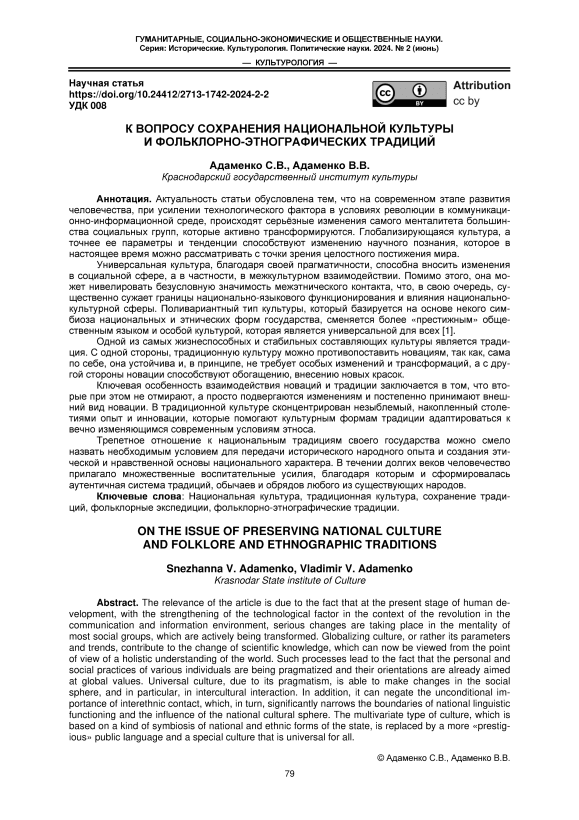
Актуальность статьи обусловлена тем, что на современном этапе развития человечества, при усилении технологического фактора в условиях революции в коммуникационно-информационной среде, происходят серьёзные изменения самого менталитета большинства социальных групп, которые активно трансформируются. Глобализирующаяся культура, а точнее ее параметры и тенденции способствуют изменению научного познания, которое в настоящее время можно рассматривать с точки зрения целостного постижения мира. Универсальная культура, благодаря своей прагматичности, способна вносить изменения в социальной сфере, а в частности, в межкультурном взаимодействии. Помимо этого, она может нивелировать безусловную значимость межэтнического контакта, что, в свою очередь, существенно сужает границы национально-языкового функционирования и влияния национально-культурной сферы. Поливариантный тип культуры, который базируется на основе некого симбиоза национальных и этнических форм государства, сменяется более «престижным» общественным языком и особой культурой, которая является универсальной для всех [1]. Одной из самых жизнеспособных и стабильных составляющих культуры является традиция. С одной стороны, традиционную культуру можно противопоставить новациям, так как, сама по себе, она устойчива и, в принципе, не требует особых изменений и трансформаций, а с другой стороны новации способствуют обогащению, внесению новых красок. Ключевая особенность взаимодействия новаций и традиции заключается в том, что вторые при этом не отмирают, а просто подвергаются изменениям и постепенно принимают внешний вид новации. В традиционной культуре сконцентрирован незыблемый, накопленный столетиями опыт и инновации, которые помогают культурным формам традиции адаптироваться к вечно изменяющимся современным условиям этноса. Трепетное отношение к национальным традициям своего государства можно смело назвать необходимым условием для передачи исторического народного опыта и создания этической и нравственной основы национального характера. В течении долгих веков человечество прилагало множественные воспитательные усилия, благодаря которым и сформировалась аутентичная система традиций, обычаев и обрядов любого из существующих народов.
Похожие статьи в разделе Цивилизация. Культура. Прогресс
Короткий адрес: https://sciup.org/14138098
IDS: 14138098 | УДК: 008 | DOI: 10.24412/2713-1742-2024-2-2
On the issue of preserving national culture and folklore and ethnographic traditions
The relevance of the article is due to the fact that at the present stage of human development, with the strengthening of the technological factor in the context of the revolution in the communication and information environment, serious changes are taking place in the mentality of most social groups, which are actively being transformed. Globalizing culture, or rather its parameters and trends, contribute to the change of scientific knowledge, which can now be viewed from the point of view of a holistic understanding of the world. Such processes lead to the fact that the personal and social practices of various individuals are being pragmatized and their orientations are already aimed at global values. Universal culture, due to its pragmatism, is able to make changes in the social sphere, and in particular, in intercultural interaction. In addition, it can negate the unconditional importance of interethnic contact, which, in turn, significantly narrows the boundaries of national linguistic functioning and the influence of the national cultural sphere. The multivariate type of culture, which is based on a kind of symbiosis of national and ethnic forms of the state, is replaced by a more «prestigious» public language and a special culture that is universal for all. One of the most viable and stable components of culture is tradition. On the one hand, traditional culture can be contrasted with innovations, since, by itself, it is stable and, in principle, does not require special changes and transformations, and on the other hand, innovations contribute to enrichment, the introduction of new colors. The key feature of the interaction of innovations and traditions is that the latter do not die off, but simply undergo changes and gradually take on the appearance of an innovation. Traditional culture concentrates the unshakable experience and innovations accumulated over centuries, which help cultural forms of tradition adapt to the ever-changing modern conditions of the ethnic group. The most effective way to solve the most pressing issues in the field of education of morality, spirituality and culture is to turn to the sources of spirituality and, of course, the revival of national traditions. A reverent attitude towards the national traditions of one's state can be safely called a necessary condition for the transfer of historical national experience and the creation of an ethical and moral foundation of national character. For many centuries, mankind has made numerous educational efforts, thanks to which an authentic system of traditions, customs and rituals of any of the existing peoples has been formed. This system is characterized by the fact that through it the uniqueness of national and spiritual cultures is reproduced, each of which is unique and has its own psychology and character, in the conditions of generational continuity.
Текст научной статьи К вопросу сохранения национальной культуры и фольклорно-этнографических традиций
Введение . Сохранение культуры означает акт поддержания древней культуры, будь то больших наций или малых коренных племен. Этого можно добиться путем исследования языков, восстановления найденных исторических артефактов, имеющих значение для местной культуры или наследия, поощрения сохранения и использования языков или ритуалов, символических для них.
Хотя это кажется наиболее очевидным, что нужно сделать, этого происходит недостаточно из-за недостаточной осведомленности, в результате чего, не только культура, но также традиции и языки в конечном итоге перестают существовать.
Наследие страны и ее история подтверждают их идентичность как людей, которые могут быть представлены миру, приобретая чрезвычайную ценность. Сохранение культурного наследия, такого как места, здания, святыни, ориентиры и даже памятники, имеющие историческое и культурное значение. Это отражает наследие, которое формирует веру, стремления и ценности человека, сохраняя целостность людей.
Еще одним важным аспектом сохранения своего наследия и культуры является передача знаний о ней из поколения в поколение. Ценность этого чрезвычайно важна как для групп меньшинств, так и для более крупных наций. Если люди будут продолжать допускать вымирание наследия и культуры, будущие поколения станут менее динамичными. Вместо этого мы должны учиться на этих перспективах и знаниях, накопленных поколениями – кто знает, может быть, они помогут нам решить наши текущие проблемы.
Каждая страна имеет свою собственную культуру и национальную самобытность, которые отличают ее от других обществ. Это можно определить через язык, верования, ценности и нормы, которые, в совокупности, составляют образ жизни в любом обществе.
У каждой культуры свой уникальный взгляд на мир, решение проблем и разные взгляды на религию. Культура также определяет, кто такой человек и откуда он родом.
Сохранение всех различных культур со всего мира поможет защитить взгляды коренных жителей. Если мы не перестанем задумываться о важности сохранения культуры, все эти вековые традиции и наследие начнут исчезать, и мы потеряем нашу самобытность.
Все начинается с осознания. Нация способна сохранить свою культуру и наследие, внедряя их в систему образования. Обучение будущего поколения важности своей культуры и наследия должно поощряться и надежно охраняться с помощью знаний.
В современном мире средства массовой информации также играют чрезвычайно важную роль в повышении осведомленности и формировании понимания местной культуры и традиций.
Мы все должны начать играть активную роль в сохранении наших материальных и нематериальных культурных ценностей. Это делается для того, чтобы будущие поколения могли оценить богатую историю России.
На современном этапе сохранение и возрождение традиционной культуры государства является приоритетной идейно-нравственной и эстетической задачей нынешней социально-культурной политики страны [2, с. 43].
Основной задачей структурных подразделений государства является не только решение каких-либо проблем, связанных с финансами, но и способствовать повышению престижа профессий, имеющих непосредственную связь с фольклорными традициями и традиционной культурой, в целом. Также, необходимо делать все, чтобы подрастающее поколение развивало и сохраня- ло национальный фольклор, в любом его проявлении. Цель всех без исключения работников народной культуры – передача опыта и увлеченности культурными традициями России, от истинных мастеров к молодому поколению.
Необходимо добиться эффективной работы в деле сохранения культурного наследия, создавая равные условия для творчества всех этнокультурных групп в нашей стране. Сегодня идёт процесс выработки целостной долговременной стратегии работы в этой сфере и продумываются концептуальные подходы к решению вопросов сохранения нематериального культурного наследия.
Само по себе, понятие «народная художественная культура» (НХК) включает в себя две основные группы:
– духовные ценности, которые создавались в течении исторического существования человечества всех без исключения этнических групп;
– различные виды традиционного художественного творчества.
Все они были накоплены в процессе эволюции этноса, бережно сохранялись и распространялись.
Что касается художественной культуры, то в нее входят фольклорное искусство и творчество, особенности народного быта и жизненный уклад, вероисповедание и отношение к мифологии, традиционное целительство, а также популярные социальные любительские практики масс [2].
Являясь довольно сложной динамической системой, НХК имеет в своем арсенале множество функций. Основополагающей принято считать именно человекотворческую функцию, так как с ней связаны остальные, а некоторые даже вытекают из нее.
Начнем с функции трансляции социального опыта, являющейся одной из самых важных. В течении многих столетий в НХК формировались логичные и целесообразные поведенческие стереотипы для благоприятной жизни в природе и социуме, проверенные не одним поколением, помогающие народу выживать, а также сохранять свое здоровье в физическом и духовном плане.
Следующей мы рассмотрим – познавательную функцию. Ключевой особенностью данной функции является то, что НХК, накапливая в себе богатейший социальный опыт большинства поколений людей, имеет свойство сохранять драгоценные знания о мире, а также она способна создавать подходящие условия для мирового освоения и познания.
Регулятивная функция НХК имеет прямо отношение к идентификации различных граней людей и социальной человеческой деятельности. Данную функцию можно изучить при рассмотре- нии сферы межличностных отношений, бытовой жизни и труда, в которой регулируются действия и поступки индивидов, а также их выбор духовных и материальных ценностей, которые базируются на общепринятых нормативных системах так как право и мораль.
Знаковая или семиотическая функция является одной из главных в системе НХК. Функция, в данном случае, рассматривается с точки зрения уникальной знаковой системы, которая овладевает народной культурой. Язык, который является главным средством общения, становится значимой и незаменимой частью НХК.
Далее мы переходим к ценностной функции. Она характеризуется тем, что в ее сущности отражается самое важное качество НХК, заключающееся в том, что функция является системой ценностей, формирующие у людей ценностные ориентации и потребности.
Благодаря всем этим функциям, происходит эффективное использование народной художественной культуры в образовательной, культурной и социальной деятельности современного общества.
Источники и методология . Мы опирались на труды коллег, а также на собственный опыт в сфере сохранения и развития традиционной культуры нашего края и страны. Методологически мы ориентировались на семиотическую, герменевтическую, феноменологическую методологию толкования традиционной культуры с точки зрения ее сохранения, развития и популяризации.
Обсуждение . Сохранению национальной культуры и фольклорно-этнографических традиций, безусловно, способствуют культурные учреждения различного типа, которые есть в любом из городе, станице или селе, без исключения. Самой важной функцией для них является стремление к популяризации фольклорного искусства и НХК.
На современном этапе развития с помощью методологических служб происходит продуманное руководство народной художественной культурой, которое, безусловно, позитивно отражается на его функционировании и развитии.
Методическое руководство, методическое обеспечение – понятия, с которыми связана всякая сколько-нибудь организованная практика. Методическое обеспечение способствует эффективному развитию всех областей человеческой деятельности. Качественная методика является неотъемлемым свойством качественной работы [3, с. 15].
Задачи методической деятельности в области управления народным художественным творчеством:
– постоянное изучение и анализ новейших достижений теории и практики по народному художественному творчеству, внедрение передового опыта;
– создание системы повышения профессионального мастерства работников культуры на основе изучения новейших достижений методики, новаторских приёмов и методов;
– внедрение системы информационнометодического обеспечения учреждений культуры с использованием современных технологий;
– оказание практической помощи учреждениям культуры в освоении новых методов работы с людьми в области народного художественного творчества, инновационных форм и передовых методик организации;
Конечная цель методического обеспечения – достижение наивысшего уровня работы культурно-досуговых учреждений в области народного художественного творчества.
Не стоит забывать о том, что для того, чтобы сохранить национальную традиционную культуру на государственном уровне, существует порядка полутора десятка экспедиций, реализованных в Год культурного наследия народов России, которые стали началом новой программы ГРДНТ. Ее первыми результатами остались довольны и ученые, выезжавшие «в поля», и представители регионов, и Минкультуры РФ.
На подготовительном этапе специалисты также обращаются к коллегам из нужного региона. Те, в свою очередь, делятся имеющейся информацией: архивными материалами, записями и видео. Развитая сеть домов народного творчества упрощает кооперацию. Непосредственно во время экспедиции ученые из «центра» и местные эксперты тоже часто действуют вместе, дополняя знания друг друга [7].
Главный источник информации для исследователей – пожилые люди. Многие из них, если не являются хранителями традиций сами, то, по крайней мере, еще помнят рассказы, услышанные от родителей, дедов и прадедов.
Обработанные и упорядоченные материалы по итогам экспедиций попадают в реестр объектов нематериального культурного наследия. Для специалистов, занимающихся народоведением, это важнейший свод знаний о традициях и фольклоре. Помимо подробного описания, составленного учеными, архива фото и видео, в реестре также содержится подробная библиография. С ее помощью исследователь может глубже погрузиться в изучение того, что его заинтересовало. Также в карточке обязательно указывается, жива ли еще та или иная традиция или же о ней осталась только память [7, с. 33].
Еще одним важным шагом для популяризации нематериального культурного наследия станет «Золотая антология народной культуры», которую издадут в 2024 году. Часть традиций предложили включить в нее сами регионы, стремясь представить себя с самой лучшей стороны.
Среди 100 традиций, песен, обрядов, вошедших в сборник, есть и те, что были зафиксированы исследователями во время прошлогодних экспедиций. Например, жители Калининградской области поделились с учеными сведениями о том, как в регионе добывали и обрабатывали янтарь до появления современных промышленных способов.
Стоит также отметить важность совместной работы ученых и народных творческих коллективов, которые параллельно стремятся к одной цели – сберечь российские традиции.
Народное творчество жило в сети домов культуры само по себе, а ученые работали отдельно. А теперь они помогают друг другу, как, собственно, и должно быть [7].
Свою лепту в сохранение культурного наследия вносит и нацпроект. Благодаря программе ремонта и строительства домов культуры и клубов, россияне получают площадки, где получают возможность комфортно общаться с единомышленниками и заниматься любимым творчеством.
Фестивали, смотры, конкурсы – это демонстрация творчества. Это та же популяризация и, она очень важна для коллективов и зрителей. Ничего нет важнее, чем обмен опытом, идеями и проектами.
Результаты . Стоит отметить, что основным действенным условием для развития традиционного искусства является организация деятельности коллективов, которые работают в различных жанрах. Для того, чтобы осознанно говорить о преемственности духовных и нравственных традиций народа, необходимо заняться глубинным изучением инструментального и вокального материала, обрядов, традиций и ремесел.
С помощью создания собственного творческого коллектива можно реализовать следующие цели:
-
– пропаганду фольклора;
-
– преемственность поколений;
-
– развитие народной культуры;
-
– повышение культурного уровня в социуме и реализация музыкального потенциала всех участников коллектива [8. с. 17].
Приобщится к фольклору своего региона возможно только лишь изучив специфические особенности истории края и роли его по отношению к государству. Для того, чтобы достигнуть данной цели, можно организовать этнографическую выставку в каком-либо из клубных учреждений и даже создать клубное формирование.
К счастью, в наше время фольклорные коллективы являются весьма востребованными, также как и фольклорные праздники и фестивали. Даже эстрадные исполнители нередко включат в свой репертуар народный фольклор. Хореогра- фы не остаются в стороне и часто используют традиционные элементы в своих танцевальных постановках.
Для того, чтобы народное художественное творчество активно развивалось, регулярно проводятся различные конкурсы, фестивали, спектакли и региональные праздники. При организации подобного мероприятия стоит руководствоваться каким-либо из народных обрядов, а точнее, к примеру, можно воссоздать один из его этапов или небольшой фрагмент.
Не менее важным направлением в деятельности культурно-досуговых учреждений является внедрение в практику работы народных игр. Народные традиции играют важную роль в воспитательном процессе.
Заключение . В условиях глобализации традиционная культура часто подвергается нападкам как консервативная и несоответствующая духу времени, но именно в ней концентрируются базовые ценности народа.
Традиционный опыт поколений, понимание сущности традиций, а значит, культурных норм, сегодня нужны для преобразований как в общественной, так и частной жизни.
Проблема изучения факторов сохранения традиционной культуры относится к числу комплексных и является предметом исследования в культурологии, социологии, этнографии, лингвистике, фольклористике, этнопедагогике и других науках [6].
Осознавая народную культуру как высокую духовную ценность, важно чувствовать ответственность за творческую интерпретацию фольклорных традиций. При этом необходимо быть понятным современному человеку, донести до него духовные идеи народной культуры, укрепить ценностное отношение к национальным культурным традициям и пробудить интерес к их познанию и сохранению. Именно тогда он сможет ощутить себя участником культурного процесса, приобщиться к историческим традициям.
