
Managerial Information Use and Innovation in Service Microenterprises: Implications for Learning, Competence Development, and Quality Improvement
Journal: International Journal of Cognitive Research in Science, Engineering and Education @ijcrsee
Article in issue: 2 vol.14, 2026.
Free access
Managerial learning and competence development are important for service microenterprises seeking to use business information effectively, adopt innovations, and improve their operations. This study examines managerial perceptions of information use, innovation, institutional support, and professional development needs in service microenterprises in Serbia, with particular attention to their implications for learning, competence development, and quality improvement. A descriptive survey was conducted from June to December 2024 using a convenience sample of 224 owners, directors, managers, and other representatives of microenterprises located in three municipalities of Belgrade. Data were collected through a structured closed-ended questionnaire and analysed using descriptive statistics. Results show that innovation management was highly valued as a contributor to competitiveness, while technological processes and customer-oriented changes received particularly favourable assessments. Respondents associated innovation with market expansion, service quality, operational flexibility, and efficiency, but also identified financial, technological, and knowledge-related constraints. Institutional support was considered particularly important through financial incentives, assistance with technology acquisition, and access to financing. Training preferences focused on export activities, public procurement, marketing and sales, quality standards, and financial management, indicating demand for practically applicable managerial competencies. Business information was also recognized as relevant to successful operations. Overall, the findings indicate that quality improvement in service microenterprises can be supported by strengthening managerial competencies, information use, innovation capacity, and continuing professional learning.
Short address: https://sciup.org/170213614
IDS: 170213614 | UDC: 343.9:004.8 | DOI: 10.23947/2334-8496-2026-14-2-399-412
Text of the scientific article Managerial Information Use and Innovation in Service Microenterprises: Implications for Learning, Competence Development, and Quality Improvement
Quality improvement has become one of the main strategic priorities for service microenterprises operating in increasingly dynamic and uncertain business environments. In such conditions, sustainable organizational performance depends not only on the implementation of formal Quality Management Systems (QMS), but also on managers’ ability to acquire, interpret, and effectively use relevant business information, support informed decision-making, encourage innovation, and continuously improve organizational practices. Recent studies indicate that the effectiveness of innovation processes depends substantially on the quality of managerial decision-making, which is strongly influenced by the availability, interpretation, and application of relevant information ( Holubčík et al., 2024 ). At the same time, quality management and organizational learning are increasingly recognized as complementary management approaches that jointly support continuous organizational improvement and long-term competitiveness ( Tajouri et al., 2025 ).

© 2026 by the authors. This article is an open access article distributed under the terms and conditions of the Creative Commons Attribution (CC BY) license .
Quality Management Systems (QMS), supported by the application of international ISO standards, provide organizations with a structured framework for improving quality, increasing operational efficiency, and strengthening long-term competitiveness. Beyond standardization, effective implementation of QMS requires the integration of managerial practices that support continuous improvement, organizational adaptability, and innovation. In service organizations, sustainable business performance depends on management’s ability to adapt organizational processes to continuous environmental, technological, and market changes ( Bogetić et al., 2018 ). Successful implementation of QMS also requires commitment and support at all managerial levels, since managers play a central role in initiating organizational change and encouraging innovation. Timely and reliable business information represents an important trigger for organizational change, informed managerial decision-making, and business efficiency ( Bourke and Roper, 2017 ; Holubčík et al., 2024 ). Consequently, high service quality increasingly depends on managers’ ability to combine quality management principles with innovation, informed decision-making, and continuous organizational improvement.
In increasingly competitive and uncertain business environments, effective risk management represents an important component of quality management because it enables organizations to identify potential threats, reduce operational uncertainty, and respond more systematically to unexpected changes ( Weck- enmann et al., 2015 ; Ahmad et al., 2017 ). In service organizations, risk management should be integrated with quality standards and continuous improvement practices rather than treated as a separate managerial activity. Such integration can support more responsible decision-making, strengthen organizational adaptability, and improve the organization’s ability to respond to changing customer and market requirements.
Continuous improvement in service enterprises requires not only the application of quality management concepts and techniques, but also the continuous development of employee and managerial competencies. Contemporary quality management increasingly relies on a broad set of competencies, including human, methodological, conceptual, and contextual capabilities, which enable managers and employees to implement quality principles effectively and respond to changing organizational requirements ( Martin et al., 2021 ). In small and medium-sized enterprises, successful implementation of TQM also depends on leadership commitment, employee engagement, and the ability to adapt quality management practices to organizational characteristics, thereby strengthening competitiveness, operational efficiency, and sustainable performance ( Masudin et al., 2025 ). At the same time, growing customer expectations continue to increase the need for high-quality services, cost efficiency, and shorter service delivery times, which further strengthens the role of continuous improvement in contemporary quality management practices.
In this context, quality improvement support systems have evolved from approaches primarily focused on perceived quality toward more integrated perspectives that incorporate human resources, organizational processes, information use, innovation, and continuous improvement ( Weckenmann et al., 2015 ). Accordingly, contemporary approaches to quality management extend beyond the implementation of formal standards and increasingly emphasize the integration of managerial competencies, organizational learning, and the effective use of information to support innovation and continuous improvement ( Martin et al., 2021 ; Tajouri et al., 2025 ).
Although previous studies have extensively examined quality management, innovation, and organizational performance, less attention has been devoted to understanding how managers in service microenterprises perceive the combined role of business information, innovation, institutional support, and quality improvement in organizational development. Recent evidence suggests that the successful use of information and communication technologies in SMEs depends not only on technological infrastructure but also on managerial capabilities, organizational readiness, employee competencies, and institutional support, all of which contribute to innovation and competitiveness ( Yuwono et al., 2024 ). Accordingly, this study aims to examine how managers in Serbian service microenterprises assess the role of business information use, innovation, institutional support, and quality improvement, with particular attention to managerial learning and competence development. Empirical attention is directed towards innovation and competitiveness, the acceptance and perceived effects of innovation, forms of external support, training needs, and the importance attributed to business information in successful operations. By considering these dimensions jointly within the specific setting of service microenterprises, the research contributes to the existing literature by providing empirical insight into their relevance for managerial learning, competence development, and quality improvement.
Theoretical Background
Quality improvement in service organizations is increasingly recognized as a multidimensional process that extends beyond the implementation of formal quality standards. Contemporary approaches emphasize the importance of integrating quality management practices with managerial decision-making, organizational learning, innovation, and the effective use of business information. In service microenterprises, these elements are particularly important because limited organizational resources increase the need for competent management, continuous learning, and institutional support. Accordingly, the theoretical background of this study is organized around four interrelated themes: Quality Management Systems, managerial information use and decision-making, organizational learning and managerial competencies, and institutional support for quality improvement.
Quality Management Systems and continuous improvement
The ISO 9000 family of standards establishes a widely accepted basis for the development and operation of quality management systems. Its practical value, however, does not lie solely in formal compliance with prescribed requirements. The effects of QMS implementation also depend on how quality principles are incorporated into everyday organizational practices, managerial commitment, and the way procedures are actually applied. Evidence from ISO 9001-certified organizations shows that organizational commitment and the consistent application of procedures are closely associated with the development of quality culture, which in turn contributes to operational performance ( Bakhtiar et al., 2023 ).
In practice, a QMS brings together quality objectives, process management, leadership, strategic planning, resource allocation, performance monitoring, and the regular review of organizational activities. Continuous improvement is embedded in this process through the Plan–Do–Check–Act (PDCA) cycle, which links planning and implementation with evaluation and corrective action. For small and mediumsized enterprises, these elements cannot simply be transferred from larger organizations without adjustment; they need to reflect available resources, organizational capabilities, and the specific context in which the enterprise operates ( Susanto et al., 2026 ).
Beyond formal systems and procedures, the successful implementation of quality management also depends on the development of a strong quality culture. Recent research emphasizes that quality culture is shaped by organizational values and the behaviours through which these values are expressed in everyday practice. Greater alignment between organizational values and employee behaviours strengthens quality culture, facilitates continuous improvement, and enhances organizations’ ability to adapt to changing internal and external conditions ( Fundin et al., 2025 ).
Within the ISO 9000 framework, quality management is approached through a combination of customer orientation, leadership, employee participation, process management, continuous improvement, evidence-based decision-making, and effective relationship management. Rather than functioning as isolated principles, these elements provide an integrated framework for managing quality and supporting organizational development across different operational contexts. Contemporary research further suggests that the effectiveness of QMS depends not only on compliance with formal requirements but also on managerial competencies, organizational learning, and the effective acquisition and use of business information, which together support innovation and long-term organizational performance ( Martin et al., 2021 ; Tajouri et al., 2025 ).
Managerial information use and decision-making
Effective quality management depends not only on standardized procedures and organizational processes but also on managers’ ability to acquire, interpret, and use relevant business information. In dynamic business environments, informed decision-making enables organizations to respond more effectively to changing customer requirements, technological developments, and competitive pressures. The quality of managerial decisions increasingly depends on the availability of reliable information and managers’ capability to transform that information into appropriate organizational actions. Consequently, effective information use has become an important prerequisite for innovation, continuous improvement, and sustainable organizational performance ( Holubčík et al., 2024 ).
Managerial decision-making represents a critical component of quality improvement because oganizational performance increasingly depends on managers’ ability to transform available information into effective organizational actions. Recent research indicates that business analytics has become an important source of information for monitoring organizational performance, evaluating results, and implementing corrective actions. However, strategic decisions are rarely based solely on analytical information. Managers also combine business analytics with professional experience, stakeholder perspectives, and expert knowledge to support long-term planning and organizational development (Orjatsalo et al., 2025).
The effective use of information is particularly important in small and medium-sized enterprises, where managerial decisions are often made under conditions of limited financial, technological, and human resources. Recent evidence indicates that the successful adoption of information and communication technologies depends not only on technological infrastructure but also on managerial capabilities, organizational readiness, employee competencies, and institutional support ( Yuwono et al., 2024 ). Strengthening these organizational capabilities supports more informed managerial decision-making, facilitates the implementation of quality management practices, and contributes to continuous quality improvement in service organizations.
Organizational learning, managerial competencies, and innovation
Organizational learning is increasingly recognized as one of the key mechanisms through which quality management contributes to continuous improvement. Rather than representing separate management approaches, Total Quality Management (TQM) and organizational learning reinforce one another by promoting knowledge sharing, employee involvement, problem-solving, and continuous process improvement. Recent research suggests that these approaches should be viewed as complementary because they jointly support organizational adaptability, innovation, and long-term competitiveness ( Tajouri et al., 2025 ).
Managerial and employee competencies play a central role in the successful implementation of qualityrelated activities. Contemporary approaches emphasize that quality management requires a combination of human, methodological, conceptual, and contextual competencies, enabling managers to integrate quality principles into everyday organizational practices. Beyond technical knowledge, quality management professionals are expected to facilitate collaboration, support organizational change, communicate effectively, and promote a culture of continuous improvement. Developing these competencies strengthens organizational learning and enhances the organization’s capacity to achieve sustainable quality improvement ( Martin et al., 2021 ).
Organizational learning and managerial competencies provide the foundation for innovation and improved organizational performance. Empirical evidence indicates that organizations with stronger learning capabilities are more likely to develop innovative practices and achieve higher performance levels. Organizational learning enables managers to recognize changing customer needs, adapt organizational resources, and support continuous innovation, thereby strengthening organizational adaptability and long-term competitiveness. Furthermore, organizations that integrate organizational learning with customer-focused strategies are better positioned to improve organizational performance by responding more effectively to dynamic market conditions ( Yuliansyah et al., 2021 ).
Institutional support, communication, and quality improvement
Institutional support is particularly relevant for service microenterprises operating with limited financial, technological, and organizational resources. Access to funding, technology, training opportunities, and professional networks can help these enterprises strengthen quality-related practices and build greater capacity for innovation. Evidence also suggests that sustainable improvements in quality and business performance are shaped by the interaction between internal capabilities and the wider support environment in which firms operate ( Masudin et al., 2025 ).
Institutional support is most effective when combined with organizational efforts to develop managerial capabilities, employee competencies, and innovation-oriented practices. Access to appropriate technologies, training opportunities, and collaborative networks enables organizations to strengthen quality management processes, improve operational efficiency, and respond more effectively to changing market requirements. In small and medium-sized enterprises, these factors contribute to building organizational resilience and creating favourable conditions for sustainable quality improvement ( Yuwono et al., 2024 ; Masudin et al., 2025 ).
Within quality management, communication serves as a practical link between planned procedures and their implementation in everyday work. When information is exchanged clearly and on time, responsibilities are easier to coordinate and quality-related decisions can be made with less delay. Inter-organizational communication can significantly influence the relationship between quality management practices and project performance, indicating that the benefits of quality initiatives depend partly on how effectively participants communicate during their implementation ( Shah et al., 2022 ). This also highlights the importance of communication strategies that support employee involvement, clarify expectations, and facilitate coordinated action.
For service microenterprises, quality improvement is shaped by several closely connected managerial and organizational factors. Formal quality systems provide structure, while the practical effects of those systems depend on how managers use information, develop competencies, support learning, introduce innovations, communicate with stakeholders, and make use of available institutional support. These theoretical considerations provide the basis for interpreting the empirical findings on managers’ assessments of innovation and competitiveness, innovation adoption and its perceived effects, institutional support, training needs, and the importance of business information for successful operations. Viewed together, these areas also allow the findings to be considered from a learning perspective, in which access to and use of information, competence development, and innovation represent interconnected aspects of managerial adaptation and quality improvement.
Materials and Methods
The empirical investigation was conducted to examine managerial perceptions of factors related to innovation, competitiveness, business information use, institutional support, and quality improvement in service microenterprises. A quantitative descriptive survey approach was adopted to provide an overview of managers’ assessments of innovation practices and outcomes, external support mechanisms, and training needs relevant to managerial competence development. The study was designed to describe response patterns across the examined areas rather than to test causal relationships between variables.
Data collection
Data were collected between June and December 2024 through a structured questionnaire administered to owners, directors, managers, and other organizational representatives of service microenterprises located in the Belgrade municipalities of Voždovac, Čukarica, and Palilula. A convenience sampling approach was adopted, resulting in 224 valid responses. Given the organizational focus of the research, the sample was defined in terms of respondents’ roles as representatives of service microenterprises and the business context in which they operated, rather than individual sociodemographic characteristics. Accordingly, the responses reflect a managerial and organizational perspective on the practices and support needs examined in the study. The survey was distributed through several communication channels, including e-mail, telephone communication, Viber groups, and direct personal contact. Respondents took part in the survey by choice, without providing information that would reveal their identity. Prior to responding, they received an explanation of the research purpose and were advised that the information obtained would remain confidential and be used solely for research.
Instrument development and data analysis
The questionnaire consisted of closed-ended questions covering business information use, innovation and competitiveness, technological and customer-oriented innovation, perceived effects of innovation, institutional support, and managerial training needs. Different response formats were used according to the content of individual question groups. Selected managerial assessments were measured using a five-point Likert scale, while other items used multiple-choice, three-category, or binary response formats. Frequencies (n) and percentages (%) were calculated for categorical and multiple-response items, while mean values (M) and standard deviations (SD) were additionally calculated for the five-point Likert-scale assessments. The results were presented in tables and figures to facilitate comparison across the examined areas.
Results
The research findings provide insight into the role of innovation, institutional support, and managerial practices in improving competitiveness and quality in service microenterprises. The results are presented through managers’ assessments of competitiveness factors, innovation adoption, innovation outcomes, institutional support, and training needs.
Innovation and competitiveness
Innovation management was assessed positively in relation to the competitiveness of service microenterprises (N = 224, M = 4.08, SD = 0.96). Figure 1 shows that responses were concentrated in the two highest categories of the five-point Likert scale, “completely agree” and “mostly agree” (n = 179; 79.9%).
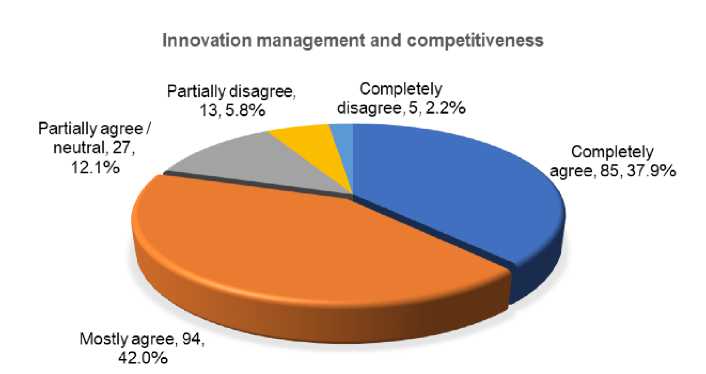
Figure 1. Managers’ assessment of the contribution of innovation management to competitiveness
As shown in Table 1, the application of innovations and innovativeness emerged as the most prominent factor influencing the competitiveness of service microenterprises, followed by cost leadership and fragmented industries, while a focus on specific market niches was less frequently identified.
Table 1. Factors influencing competitiveness
|
Factor |
n |
% |
|
Focus on specific market niches |
30 |
13.4 |
|
Fragmented industries |
51 |
22.8 |
|
Cost leadership |
63 |
28.1 |
|
Application of innovations and innovativeness |
96 |
42.9 |
Note. Respondents could select up to two answers (N = 224)
Technological innovations were generally well accepted among the surveyed managers. Full acceptance was higher for the introduction of new technological processes (n = 141; 62.9%) than for the introduction of new products or services (n = 114; 50.9%), as shown in Table 2.
Table 2. Acceptance of technological innovations in service microenterprises
|
Type of innovation (N = 224) |
Fully accept |
Partially accept |
Do not accept |
|||
|
n |
% |
n |
% |
n |
% |
|
|
Introduction of a new product/service |
114 |
50.9 |
65 |
29.0 |
45 |
20.1 |
|
New type of technological process |
141 |
62.9 |
61 |
27.2 |
22 |
9.8 |
Sociological innovations directly related to customers and internal business processes received the strongest support. Full acceptance was highest for new ways of satisfying customers (n = 164; 73.2%) and changes in operating methods (n = 150; 67.0%), whereas lower levels of full acceptance were recorded for new state measures regarding business conditions and new types of institutions within society (Table 3).
Table 3. Acceptance of sociological innovations in service microenterprises
|
Type of innovation (N = 224) |
Fully accept |
Partially accept |
Do not accept |
|||
|
n |
% |
n |
% |
n |
% |
|
|
New ways of satisfying customers |
164 |
73.2 |
25 |
11.2 |
35 |
15.6 |
|
Changes in operating methods |
150 |
67.0 |
40 |
17.9 |
34 |
15.2 |
|
New state measures regarding business conditions |
110 |
49.1 |
85 |
38.0 |
29 |
12.9 |
|
New types of institutions within society |
87 |
38.8 |
76 |
33.9 |
61 |
27.2 |
Innovation effects were recorded across multiple dimensions of business performance. The most frequently reported effects were an expanded product and/or service assortment (n = 196; 87.5%), the withdrawal of obsolete products or services (n = 191; 85.3%), and entry into new markets and increased market share (n = 188; 83.9%). Improvements in product and service quality were also reported by a substantial proportion of respondents (n = 176; 78.6%), alongside effects related to operational flexibility, efficiency, and environmental performance (Table 4).
Table 4. Effects of innovation in service microenterprises
|
Achieved effects (N = 224) |
n |
% |
|
Product and/or service assortment expanded |
196 |
87.5 |
|
Existing products/services became obsolete and withdrawn |
191 |
85.3 |
|
Entry into new markets and increase in market share |
188 |
83.9 |
|
Product and service quality improved |
176 |
78.6 |
|
Greater flexibility in production or service provision |
171 |
76.3 |
|
Increased possibilities for higher production and/or service delivery |
165 |
73.7 |
|
Greater production economy / lower costs per product |
161 |
71.9 |
|
Environmental protection – reduction of harmful impacts |
158 |
70.5 |
Institutional support for innovation
Managers assessed several forms of institutional support for encouraging innovation in service microenterprises. The highest level of complete agreement was recorded for incentives related to taxes and contributions (n = 164; 73.2%), followed by assistance in acquiring new technology and equipment (n = 137; 61.2%) and access to attractive credit lines (n = 125; 55.8%). Lower levels of complete agreement were recorded for finding strategic partners (n = 92; 41.1%) and cooperation with large companies (n = 85; 37.9%) (Table 5).
Table 5. Institutional support for encouraging innovativeness
|
Type of incentive (N = 224) |
Completely agree |
Partially agree |
Do not agree |
|||
|
n |
% |
n |
% |
n |
% |
|
|
Cooperation with large companies |
85 |
37.9 |
94 |
42.0 |
45 |
20.1 |
|
Finding strategic partners |
92 |
41.1 |
72 |
32.1 |
60 |
26.8 |
|
Providing incentives (taxes and contributions) |
164 |
73.2 |
54 |
24.1 |
6 |
2.7 |
|
Assistance in acquiring new technology and equipment |
137 |
61.2 |
47 |
21.0 |
40 |
17.9 |
|
Attractive credit lines for financial resources |
125 |
55.8 |
76 |
33.9 |
23 |
10.3 |
Training related to export issues received the highest level of preference (n = 204; 91.1%), followed by understanding and participation in public procurement (n = 184; 82.1%), marketing concepts and sales improvement (n = 181; 80.8%), and introduction to quality standards (n = 168; 75.0%). Financial management was also frequently selected (n = 157; 70.1%), whereas training for business beginners received the lowest level of preference (n = 62; 27.7%) (Table 6).
|
Table 6. Preferred ARRA training modules |
||||
|
Type of training (N = 224) |
Included |
Not included |
||
|
n |
% |
n |
% |
|
|
Possibility of applying innovations |
114 |
50.9 |
110 |
49.1 |
|
Training for business beginners |
62 |
27.7 |
162 |
72.3 |
|
Preparation of business plans and cooperation with banks |
119 |
53.1 |
105 |
46.9 |
|
Financial management |
157 |
70.1 |
67 |
29.9 |
|
Export issues (for first-time exporters) |
204 |
91.1 |
20 |
8.9 |
|
Marketing concepts and sales improvement |
181 |
80.8 |
43 |
19.2 |
|
Electronic and information business operations |
129 |
57.6 |
95 |
42.4 |
|
Introduction to quality standards |
168 |
75.0 |
56 |
25.0 |
|
Education about the single European market |
121 |
54.0 |
103 |
46.0 |
|
Understanding and participation in public procurement |
184 |
82.1 |
40 |
17.9 |
The importance of information for successful business operations was assessed positively overall (N = 224, M = 3.40, SD = 1.41). Responses were most frequently concentrated in the two highest categories of the five-point Likert scale, “completely agree” and “mostly agree” (n = 119; 53.1%), as shown in Figure 2.
Importance of information for successful business operations
Completely disagree, 31,
Completely agree, 67,
Partially agree/ neutral, 40, 17.9%
Partially disagree, 34, 15.2%
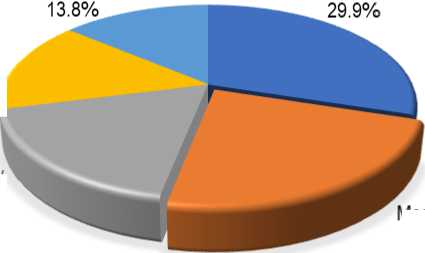
Mostly agree, 52,23.2%
Figure 2. Managers’ assessment of the importance of information for successful business operations
Discussion
Innovation emerges as a central element of competitiveness in service microenterprises. A high assessment of the contribution of innovation management to competitiveness (M = 4.08, SD = 0.96), together with the identification of innovation and innovativeness as the most frequently selected competitiveness factor, suggests that managers perceive innovation as an important component of competitive positioning. This result is consistent with earlier research emphasizing entrepreneurial creativity as an important source of new ideas and innovation in small enterprises (Walls et al., 2011). Subsequent research has shown that firms’ capacity to acquire and apply knowledge can support innovative activity and contribute to improved business outcomes (Yuliansyah et al., 2021), while innovativeness has been found to exert a significant effect on MSME performance, both directly and through the development of marketing capabilities (Octasylva et al., 2022). More recent research also shows that stronger innovation capabilities are associated with better MSME performance, partly because they help firms build competitive advantage that translates innovation into improved business outcomes (Ziedan and Darmawan, 2026). Taken together, these results suggest that the competitive role of innovation in service microenterprises is reflected not only in the introduction of new products, services, or technologies, but also in the development of capabilities that enable firms to learn, adapt, differentiate themselves, and sustain performance in changing market conditions.
A closer look at technological and sociological innovation provides further insight into how innovation is understood in service microenterprises. Although the introduction of new technological processes received stronger support than the introduction of new products or services, the highest level of acceptance across the examined forms of innovation was recorded for new ways of satisfying customers, followed by changes in operating methods. This pattern suggests that innovation in service microenterprises is not perceived exclusively in technological terms, but also through process improvement and customer-oriented practices. Such a broader understanding is consistent with the view of innovation as a complex process involving the generation and implementation of ideas and their adaptation to organizational and environmental requirements ( Romero and Martínez-Román, 2012 ). More recent empirical evidence strengthens this interpretation. Customer orientation has been shown to positively affect SME performance, with innovation capabilities partially mediating this relationship ( Bekata and Kero, 2025 ). The role of customer information and dynamic marketing capabilities in developing adaptive strategies and improving marketing performance in MSMEs has also been emphasized ( Andreas and Hiong, 2025 ). In the context of the present study, the strong acceptance of technological processes, customer-oriented changes, and changes in operating methods points to the complementary role of technological, process, and customer-oriented innovation in strengthening the adaptability of service microenterprises.
Innovation effects identified in the present study further demonstrate its broader organizational relevance. Respondents associated innovation with an expanded product and service assortment, entry into new markets, improvements in service quality, greater operational flexibility, higher efficiency, and reduced harmful environmental impacts. This multidimensional pattern is consistent with recent systematic evidence showing that business model innovation in MSMEs contributes to economic performance, competitive advantage, environmental performance, and organizational resilience, while its effectiveness depends on organizational capabilities, managerial orientation, institutional conditions, and ecosystem support ( Priya and Mathew, 2026 ). Recent research suggests that SMEs with stronger innovation capabilities are better positioned to improve their market results, partly because these capabilities help them develop advantages that strengthen their competitive position ( Machado-Licona et al., 2026 ). Evidence from service organizations also links innovation-oriented practices with more favourable customer responses, particularly in highly competitive environments ( Nwachukwu and Vu, 2022 ). The relationship between innovation and operational outcomes is also supported by evidence that core competencies, including innovation capability, resource management, and market responsiveness, contribute significantly to operational efficiency in MSMEs ( Adoe, 2025 ). From a quality management perspective, TQM has been shown to enhance organizational performance while simultaneously strengthening innovation capability, which serves as an important mechanism linking quality management with performance and sustainability outcomes ( Xu et al., 2026 ). Although this evidence comes from a manufacturing context, it still supports the view that quality practices, innovation capability, and performance are closely connected. In the present study, innovation was similarly associated with market expansion, customer-related outcomes, service quality, operational efficiency, and adaptability.
External support becomes especially important when these outcomes are considered alongside the resource constraints faced by service microenterprises. Stronger support for financial incentives, assistance in acquiring technology and equipment, and access to attractive credit lines suggests that managers primarily associate external support with overcoming financial and technological barriers to innovation. Limited resources can make it difficult for smaller firms to finance technological change, develop new capabilities, or pursue innovation without outside assistance. Access to finance, digital infrastructure, skills development, and appropriate regulatory arrangements have therefore been recognized as relevant elements of the wider environment supporting MSME transformation (Supriadi et al., 2023). Financial support also needs to be considered in relation to the changing ways in which smaller firms obtain funding, particularly as Fintech solutions create additional financing opportunities alongside public support measures (Abu et al., 2025). Recent systematic evidence also identifies resource constraints and institutional pressures among the factors shaping innovation-related strategic responses in MSMEs and emphasizes the importance of institutional conditions and ecosystem support for sustainability and resilience (Priya and Mathew, 2026). Empirical evidence additionally highlights the contribution of innovation and digital IT capabilities to MSME performance and the relevance of targeted financial incentives for strengthening technological adaptability and resilience (Probohudono et al., 2025). Viewed in this context, the preferences expressed by managers in the present study indicate that institutional support is most valuable when it reduces resource barriers and enables service microenterprises to acquire the financial and technological capabilities required for innovation.
Managerial capability development represents another important dimension of support for service microenterprises. Preferences for training related to export activities, public procurement, marketing and sales, quality standards, and financial management indicate a pronounced orientation towards specialized knowledge that can be applied directly to market development and business operations. By contrast, the considerably lower preference for training aimed at business beginners suggests that respondents place greater value on function-specific competencies than on general introductory business knowledge. This pattern is consistent with earlier research showing that effective MSME management requires a combination of competencies related to financial decision-making, market development, interpersonal relations, and entrepreneurial activity, while gaps in these areas may create a need for continuous education and targeted business development programmes ( Ng’ora et al., 2022 ). More recent empirical evidence confirms the broader importance of managerial capabilities, showing that managerial skills have a significant positive effect on MSME performance and supporting capability-building initiatives focused on managerial competence as a means of strengthening competitiveness and long-term performance ( Indrapraja et al., 2026 ). The particularly strong preference for export-related training can be interpreted in light of the capabilities required for successful international market participation. Export capability has been shown to depend on the development and interaction of technological, innovation, and entrepreneurial capabilities, with entrepreneurial orientation playing an important role in translating innovation capability into export readiness ( Anggadwita et al., 2026 ). Complementary evidence indicates that an outward-looking entrepreneurial posture and the firm’s ability to reconfigure resources and respond to change both contribute significantly to export performance, while the latter capability also mediates the relationship between entrepreneurial orientation and export outcomes ( Sriboonlue and Sriboonlue, 2026 ). Viewed together, these results indicate that training needs in service microenterprises are closely associated with the development of specific managerial and strategic capabilities required for market expansion, operational decision-making, and improved business performance.
Information represents an additional managerial resource relevant to the development of service microenterprises. Although respondents generally recognized its importance for successful business operations, the mean assessment (M = 3.40, SD = 1.41) was more moderate than their assessment of the contribution of innovation management to competitiveness. This result may indicate that the value of information is recognized, but not necessarily translated into equally strong or systematic informationbased managerial practices. Previous research has emphasized that effective managerial decision-making depends not only on access to information but also on managers’ ability to interpret and use it in ways that support organizational learning and adaptation ( Holubčík et al., 2024 ). In the MSME context, management accounting information systems have similarly been regarded as a means of providing timely, accurate, and relevant information to support managerial decision-making and reduce uncertainty ( Siahaan et al., 2022 ). Access to technical information and external knowledge sources has also been identified among the factors relevant to the development of innovation capabilities in MSMEs ( Kalathingal and Ambrammal, 2025 ). From this perspective, the importance attributed to information by respondents can be understood not only in terms of its immediate role in managerial decision-making but also as part of the knowledge base that enables service microenterprises to recognize changes, develop innovation capabilities, and adapt their activities to evolving business conditions.
Considered as a whole, the findings extend previous research by showing how innovation, managerial learning needs, information use, and institutional support are reflected simultaneously in the perceptions of managers in service microenterprises. Rather than treating these dimensions as separate aspects of business development, the present study reveals a distinctive pattern: strong recognition of innovation and its business effects is accompanied by substantial demand for specialized training and external support, while the importance assigned to business information remains comparatively more moderate. This contrast is particularly relevant because it points to a potential gap between innovation orientation and the information- and knowledge-related capabilities needed to support it. The contribution of the study therefore goes beyond confirming the importance of innovation for microenterprise development; it draws attention to managerial learning and competence development as elements that may help connect information use, innovation activities, and available institutional support with quality improvement. By documenting this pattern in Serbian service microenterprises, the findings add context-specific empirical evidence to the literature on learning, innovation, and managerial capability development in small firms.
Conclusion
This study examined the role of innovation, managerial information use, and institutional support in the development and competitiveness of service microenterprises. The results indicate that innovation occupies a prominent position in managers’ perceptions of competitiveness, with particular importance attributed to technological processes, customer-oriented changes, and improvements in operating methods. Innovation was also associated with a broad range of outcomes, including product and service renewal, market expansion, service quality, operational flexibility, efficiency, and environmental improvements. At the same time, respondents emphasized the importance of external support, particularly financial incentives, assistance in acquiring technology and equipment, and access to favourable financing, while their training preferences were strongly oriented towards export activities, public procurement, marketing, quality standards, and financial management. Information was also considered important for day-to-day business decisions, although respondents evaluated its contribution less strongly than innovation management.
The results therefore point to a broader set of conditions behind the development of service microenterprises. Innovation is important, but managers also rely on practical knowledge, usable business information, and external support when adapting to market changes. Opportunities for process improvement, differentiation, and market expansion are easier to pursue when firms have the necessary managerial skills and access to financial, technological, and institutional resources. Competitiveness therefore reflects more than innovation alone; it is also shaped by the capabilities available inside the enterprise and the support accessible from its wider environment. In this respect, the acquisition and managerial interpretation of relevant business information can support learning and competence development, facilitate innovation adoption, and ultimately contribute to quality improvement in service microenterprises.
From a practical perspective, the results point to the need for a more integrated approach to supporting service microenterprises. Managers should strengthen their capacity to identify and implement innovations, use relevant information in decision-making, and develop competencies related to market expansion, quality management, finance, and technology. Continuing managerial education and targeted training can support this process by linking competence development more closely to the practical needs identified by service microenterprises. At the institutional level, support measures should combine financial incentives and improved access to financing with assistance in technology acquisition, specialized training, and opportunities for business cooperation. Particular attention should be given to programmes that respond to the expressed needs of enterprises, especially those related to export activities, public procurement, marketing and sales, and quality standards. Aligning institutional support with these needs may enable service microenterprises to use their limited resources more effectively and strengthen their capacity for innovation and competitive development.
Interpretation of the findings requires some caution because of the sample coverage and research design. Data came from a convenience sample of service microenterprises in selected areas of Serbia, so the patterns observed here may not be representative of microenterprises operating elsewhere or under different economic and institutional conditions. A further constraint arises from the cross-sectional design: managerial perceptions were recorded at one point in time, without capturing possible changes in innovation practices, capabilities, or support needs over time.
Future research may extend the present findings by examining larger and more diverse samples across different service activities and geographical areas. Such an approach would allow similar patterns to be explored beyond the setting covered here. Longitudinal studies could trace changes in managerial practices, learning needs, and innovation capabilities as enterprises develop. Further research could also examine the relationships among business information use, managerial competencies, institutional support, innovation, and business performance using analytical approaches that allow these associations to be tested directly. Such evidence could provide a clearer understanding of how these factors interact through managerial learning processes in supporting quality improvement and the development of service microenterprises.
Acknowledgements
The authors would like to express their gratitude to all individuals who contributed to the preparation of this research, including those who provided valuable comments, language support, and manuscript review.
Funding
This research did not receive any specific grant from funding agencies in the public, commercial, or not-for-profit sectors.
Conflict of Interest
The authors declare no conflict of interest.
Data Availability Statement
The original contributions presented in this study are included in the article. Further inquiries can be directed to the corresponding author.
Institutional Review Board Statement
Not applicable.
Informed Consent Statement
Not applicable.
Author Contributions
Conceptualization, A.P., A.S., and S.M.; methodology, A.P., A.S., and N.L.; formal analysis, A.P. and A.S.; investigation, A.P., A.S., N.L., and T.O.; data curation, A.P. and N.L.; writing—original draft preparation, A.P., S.M., and B.B.; writing—review and editing, A.S., S.M., T.O., and B.B.; visualization, A.P. and T.O.; supervision, S.M. and B.B. All authors have read and agreed to the published version of the manuscript.
