
Маркетинговые модели в малом и среднем бизнесе
Журнал: Вестник факультета управления СПбГЭУ @vfu-spgeu
Рубрика: Инновации маркетинговых моделей и управление покупательским опытом в условиях диджитал трансформации
Статья в выпуске: 3-2, 2018 года.
Бесплатный доступ
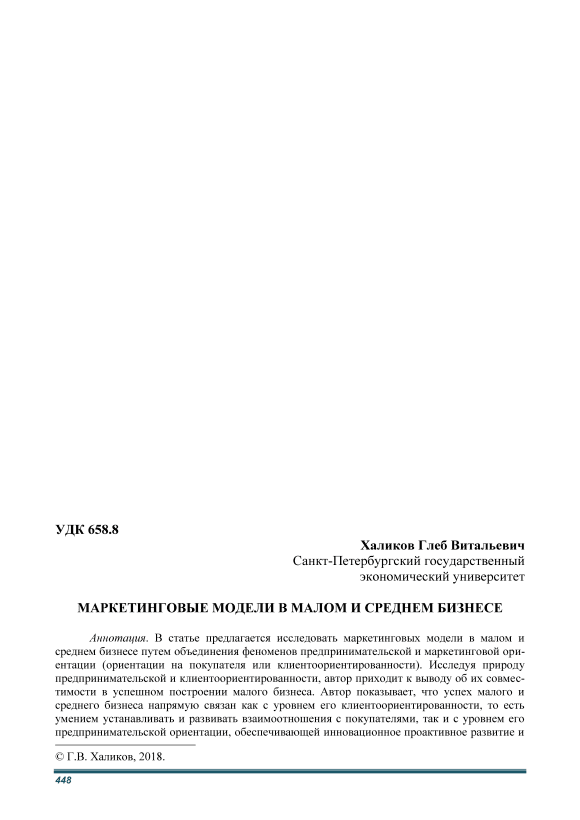
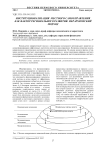
В статье предлагается исследовать маркетинговых модели в малом и среднем бизнесе путем объединения феноменов предпринимательской и маркетинговой ориентации (ориентации на покупателя или клиентоориентированности). Исследуя природу предпринимательской и клиентоориентированности, автор приходит к выводу об их совместимости в успешном построении малого бизнеса. Автор показывает, что успех малого и среднего бизнеса напрямую связан как с уровнем его клиентоориентированности, то есть умением устанавливать и развивать взаимоотношения с покупателями, так и с уровнем его предпринимательской ориентации, обеспечивающей инновационное проактивное развитие и взятие рисков. Совмещение двух типов ориентации позволяет сформировать четыре типа маркетинговых моделей в МСБ: Модель проактивной рыночной ориентации, модель реактивной ориентации на покупателя, модель предпринимательского маркетинга взаимодействия и модель внутреннего автономного маркетинга.
Похожие статьи в разделе Организация производства. Управление. Экономика предприятий


Короткий адрес: https://sciup.org/148319721
IDS: 148319721 | УДК: 658.8
Marketing models in small and middle business
The article proposes to investigate marketing models in small and medium business by combining the phenomena of entrepreneurial and market orientation (customer orientation). Investigating the nature of entrepreneurial and customer-oriented, the author comes to the conclusion about their compatibility in the successful development of small businesses. The author shows that the success of small and medium-sized businesses is directly related both to the level of customer-orientedness, that is, the ability to establish and develop relationships with buyers, and with the level of its entrepreneurial orientation that provides innovative proactive development and risk taking. The combination of two types of orientation makes it possible to get four types of marketing models in SMEs: the Model of proactive market orientation, the model of reactive customer orientation, the model of entrepreneurial interaction marketing and the model of internal autonomous marketing.
Список литературы Маркетинговые модели в малом и среднем бизнесе
- Гулакова О.В., Ребязина В.А., Смирнова М.М. Специфика клиентоориентирован-ности компаний на российском рынке: результаты эмпирического исследования//Вестник СПб. ун-та. Сер. Менеджмент. 2015. Вып. 4, С. 39-73.
- Третьяк О.А., Рожков А.Г. Ориентация на клиента: моделирование и диагностика//Вестник Российского экон. ун-та им. Г.В. Плеханова. 2012. №4(46). С. 76-84.
- Ширшова О.И., Юлдашева О.У. Маркетинговая ориентация компании: развитие теории и практики. СПб.: Изд-во СПбГЭУ, 2016.
- Юлдашева О.У., Ширшова О.И. Маркетинговая ориентация компаний: методология исследования и измерения. Корпоративное управление и инновационное развитие экономики Севера//Вестник НИЦ корпоративного права, управления и венчурного инвестирования СыкГУ. 2013. №3. С. 96-112.
- Atuahene-Gima, K., & Ko, A. (2001). An empirical investigation of the effect of market orientation and entrepreneurship orientation alignment on product innovation. Organization Science, 12(1), pp.54-74.
- Berthon, P., Hulbert J.M., PittL. 1999. To serve or create? Strategic orientations toward customers and innovation. California Management Review, 42(1), pp. 37-58.
- Deshpande, R., Webster, F.E. Jr. (1989), Organizational culture and marketing: defining the research agenda, Journal of Marketing, Vol. 53, January, pp. 3-15.
- Farley J.U., Deshpande R. Charting the Evolution of Russian Firms from Soviet "Producer Orientation" to Contemporary "Market Orientation". Journal of Global Marketing. 2005. Vol. 19. N 2. P. 7-26.
- Lumpkin, G.T., Dess, G.G., 1996. Clarifying the entrepreneurial orientation construct and linking it to performance. Academy of Management Review 21 (1), pp.135-172.
- Matsuno, K., Mentzer, J.T., Ozsomer, A., 2002. The effects of entrepreneurial proclivity and market orientation on business performance. Journal of Marketing. 66(3), pp.18-32.
- Miller, D. and P. H. Friesen (1982). Innovation in conservative and entrepreneurial firms: Two models of strategic momentum, Strategic Management Journal, 3, pp. 1-25.
- Narver, J.D. and Slater, S.F. (1990), The effect of a market orientation on business profitability, Journal of Marketing, Vol. 5, October, pp. 20-35.
- Webb, J.W., Ireland, R.D., Hitt, M.A., Kistruck, G.M., Tihanyi, L., 2011. Where is the opportunity without the customer? An integration of Marketing activities, the entrepreneurship process? And institutional theory. Journal of the Academy of Marketing Science, 39 (4), pp.537-554.
- Wiklund, J. and Shepherd, D.A. 2011, Where to from here? EO-as-experimentation, failure, and distribution of outcomes. Entrepreneurial Theory and Practice, 35 (5), pp. 925-946.
