
Measuring Parental Overprotection: Testing the Unidimensional and Two-Dimensional Structures of the POM Turkish Form
Journal: International Journal of Progression and Development in Education (IJPADE) @ijpade
Article in issue: 1 vol.4, 2026.
Free access
The purpose of this study is to examine the psychometric properties of the Turkish form of the Parental Overprotection Measure (POM), developed to assess parents' overprotective attitudes toward their children. The study group consisted of 186 participants, specifically parents of children aged 60–72 months attending public preschools in the X district of X. Linguistic equivalence of the scale was established through forward and back-translation methods. Confirmatory Factor Analysis (CFA) conducted to test construct validity supported the unidimensional structure, consistent with the original form. Following the analysis, Item 15—which showed low discriminative power due to the collective structure and child-rearing habits in Turkish culture—was removed from the scale. The goodness-of-fit indices for the final 18-item form were found to be at adequate levels (RMSEA = .088; CFI = .943; TLI = .936; SRMR = .060). The reliability coefficients were calculated as McDonald’s Omega (.917) and Cronbach's Alpha (.915), indicating that the instrument possesses a high level of internal consistency. Furthermore, the two-factor structure of the scale, consisting of "restriction" and "comfort" dimensions, was also examined and reported. The findings demonstrate that the Turkish form of the Parental Overprotection Measure is a valid and reliable assessment tool for determining the overprotective attitudes of parents with preschool-aged children.
Short address: https://sciup.org/170213578
IDS: 170213578 | DOI: 10.5281/zenodo.21114987
Text of the scientific article Measuring Parental Overprotection: Testing the Unidimensional and Two-Dimensional Structures of the POM Turkish Form
1Corresponding author consequences on children’s psychosocial adjustment during early childhood, a period marked by rapid development of autonomy and emotional regulation skills.
Overprotective parenting—which involves practices such as excessive focus on the child’s needs, attempting to resolve potential problems in advance, providing extraordinary assistance and protection, and exhibiting intrusive behaviors (Urone et al., 2024)—can convey implicit messages to children that the world is unsafe and unpredictable and that they cannot effectively cope on their own; while also limiting children’s opportunities to experience the natural consequences of their behaviors and realistically assess risks by restricting their daily activities (Meyer et al., 2022). Research indicates that overprotective parenting behaviors may lead children to develop insecure attachment patterns with their caregivers and make it difficult for them to express themselves in their social environments (Jiao & Segrin, 2021; 2023; Salmin et al., 2021). This situation can result in children having difficulty adapting to new environments, preferring to play alone, and struggling to develop independence. Indeed, overprotective and controlling parenting negatively affects the adjustment levels of preschool children (Ryoo& Shin, 2018);
In recent years, a significant increase in overprotective parenting attitudes has been observed. Somers and Settle (2010) argue that the growing prevalence of this parenting style over time is rooted in six key factors. According to them, families’ preference for becoming parents at older ages and having fewer children compared to the past, technological advancements, the growing emphasis on education in tandem with changes in social structure, heightened concerns about child safety due to rising crime rates, and the increasing social acceptance of helicopter parenting are cited as key factors contributing to the spread of overprotective parenting. Given that this trend has the potential to directly impact a child’s developmental experiences, particularly during early childhood, it necessitates a systematic examination of overprotective parenting attitudes.
The Parental Overprotection Measure (POM), developed by Edwards and colleagues (2010a, 2010b) to assess overprotective parenting behaviors based on parental reports, was designed for studies involving preschool-aged children. The psychometric properties of the scale were first comprehensively reported by Rapee and colleagues (2024) based on the original English version. Accordingly, the aim of this study is to adapt the POM into Turkish and to examine its validity and reliability properties in a Turkish sample. To this end, the structural validity of the scale was examined using confirmatory factor analysis (CFA); both the original unidimensional structure of the scale and its bidimensional structure, as suggested in previous psychometric studies, were tested. Furthermore, the internal consistency of the scale was evaluated using Cronbach's alpha and McDonald's omega coefficients.
METHOD
Model
This study is a scale adaptation study. In this study, the ‘Parental Overprotection Measure’ has been adapted to Turkish culture to enable the examination of parents’ overprotective behaviors.
Participants
The study group consisted of families of children attending public kindergartens in the X district of X Province, aged between 60 and 72 months. An appropriate sampling method was used to select the study group. Accordingly, families were reached with the assistance of preschool teachers from the researchers’ immediate network. A total of 186 parents agreed to participate in the study. In the study group, 48.4% (n=90) of the parents have sons, and 51.6% (n=96) have daughters.
Data Collection Process
The research data were collected from a total of 186 parents in the defined sample group. Prior to the study, the necessary ethical approval was obtained. The data collection tools were converted into digital forms by transferring them to an online platform (Google Forms). Participants were informed about the purpose of the study, data confidentiality, voluntary participation and that the study would be used exclusively for scientific purposes. Accordingly, access to the scale items was granted to participants who approved the Informed Consent Form added to the introduction section of the form. The online form consists of a Personal Information Form used to determine demographic characteristics and the Parental Overprotectiveness Scale, which was adapted for this study. The time required to complete the form averaged 8–10 minutes, and the data collected at the end of the process were recorded for analysis.
Data collection tools
The study utilized the Parental Overprotection Measure along with a demographic information form that identified the students’ schools and the children’s genders.
Parental Overprotection Measure
The POM is a 19-item instrument designed to assess overprotective behaviors and attitudes among caregivers of preschool-aged children. Items are scored on a 5-point Likert scale (0 – not at all; 4 – very much). The original items were either created by the authors or adapted from existing measures to reflect a caregiver's overt behaviors or reactions stemming from the desire to protect or comfort a child in response to perceived or anticipated threats in situations involving a preschool-aged child (Rapee et al., 2024).
An examination of the scale's development process reveals that the 19-item version was first used in a longitudinal study (Edwards et al., 2010a; Edwards et al., 2010b), yielding Cronbach's alpha values of .85 and .87, respectively, and test-retest reliability coefficients of .79 for mothers and .78 for fathers over a 12-month interval. Initial validity evidence was criterion-based rather than factor-analytic. The first factor-analytic study was conducted by Okawa et al. (2024) in Japan, revealing a two-factor structure with high reliability (McDonald's Omega: .92 for both fathers and mothers). Rapee et al. (2024) subsequently examined the scale's factor structure through exploratory factor analysis, identifying four dimensions with eigenvalues greater than 1; however, the scree plot suggested a two-or three-dimensional structure. Given that the exploratory results did not yield clearly interpretable subscales, a single-factor solution — consistent with international usage — was adopted as the primary structure, alongside a reported two-dimensional solution comprising 16 items loading onto two subscales (Restriction: 10 items, α = .89, ω = .89; Comfort: 6 items, α = .74, ω = .74). Three items, though not loading onto either subscale, were retained in total score calculations due to their construct relevance. Full-scale reliability was α = .89 and ω = .90, with item-total correlations ranging from .27 to .67. Test-retest reliability (n = 86; M interval = 37 days) was .78 for the total score, .76 for the Restriction subscale, and .76 for the Comfort subscale.
The Turkish adaptation followed the procedural guidelines recommended by the International Test Commission (ITC, 2017), encompassing forward translation, synthesis, back-translation, expert committee review, and a pilot study. Three independent bilingual experts performed forward translations, after which a consensus-based preliminary Turkish version was developed to ensure cultural and conceptual equivalence. Two language experts with no prior exposure to the original scale performed back-translation. The back-translated items were then reviewed by an expert committee and compared with the original English version; final adjustments were made for grammatical accuracy and cultural appropriateness. A pilot study was subsequently conducted to evaluate item clarity and readability, following which minor phrasing revisions were applied before the scale was administered for psychometric evaluation.
Data Analysis
Analyses were conducted to establish the validity and reliability of the scale adapted during the analysis process. Confirmatory factor analysis was performed to assess validity, while Cronbach’s alpha and McDonald’s Omega reliability coefficients were calculated to assess reliability.
The analyses were designed to align with the validity and reliability studies of the original form. Additionally, as proposed by Rapee et al. (2024), the aim was to demonstrate how the unidimensional and two-dimensional structures function across different cultures. Accordingly, a unidimensional DFA analysis was first conducted using the scale scores. Similarly, Cronbach’s Alpha and McDonald’s Omega coefficients were calculated for the unidimensional scale. Following the unidimensional analysis, the structure was also examined and reported in a two-dimensional format.
Before conducting confirmatory factor analysis, the assumptions of the technique were examined. In this study, the WLSMV method was used instead of the maximum likelihood method, which is typically used for continuous variables under normal conditions. Since the scale items were on a 5-point Likert scale (ordinal/categorical), an underlying latent normal distribution was assumed (Muthén, 1984), and the WLSMV estimator—which yields more robust results than the Maximum Likelihood (ML) method for such data structures—was preferred (Flora & Curran, 2004). Although this method does not require as strict assumptions as ML, it produces biased estimates in cases of extreme skewness (Bandalos, 2014;
FINDINGS
Findings regarding the unidimensional version of POM
The CFA model conducted for the unidimensional structure of the Parental Overprotection Measure, along with standardized path coefficients and error estimates, is presented in Figure 1.
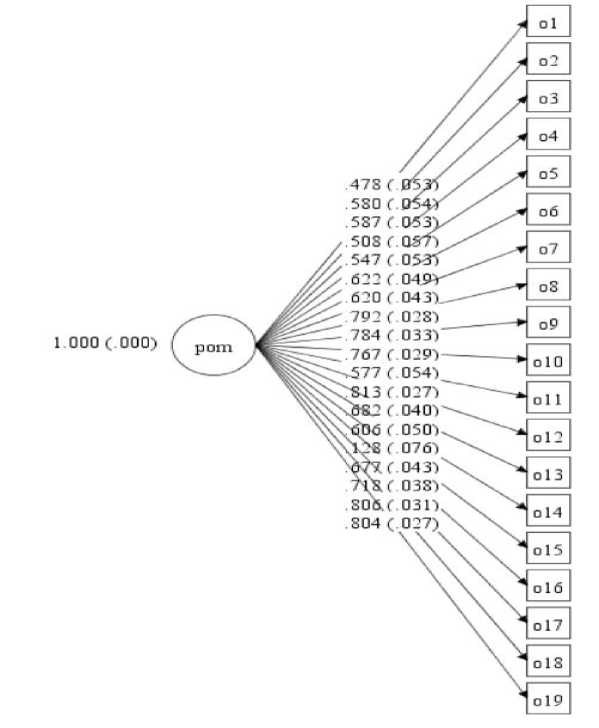
Figure 1 . Unidimensional model of the parental overprotection measure (19 items)
According to Figure 1, the standardized factor loadings for the unidimensional structure of the scale range between .128 and .813. All items in the scale, except for Item 15, are statistically significant (p < .05). Item 15, however, is not statistically significant (p = .057). The WLSMV (Weighted Least Squares Mean and Variance Adjusted) estimation method was employed for item estimation. The obtained model-data fit indices are as follows: χ² /df= 372.531/152; RMSEA = .088; CFI = .936; TLI = .928; SRMR = .065. For the reliability estimation of the scale, the McDonald’s Omega and Cronbach’s Alpha internal consistency reliability coefficients were calculated. Initially, in the analysis conducted over 19 items, McDonald’s Omega was calculated as .910 and Cronbach’s Alpha as .906. Following the exclusion of Item 15 from the model, the internal consistency coefficients for the final 18-item form increased to .917 for McDonald’s Omega and .915 for Cronbach’s Alpha. The CFA diagram obtained after the exclusion of Item 15, which did not exhibit a statistically significant loading, is presented in Figure 2.
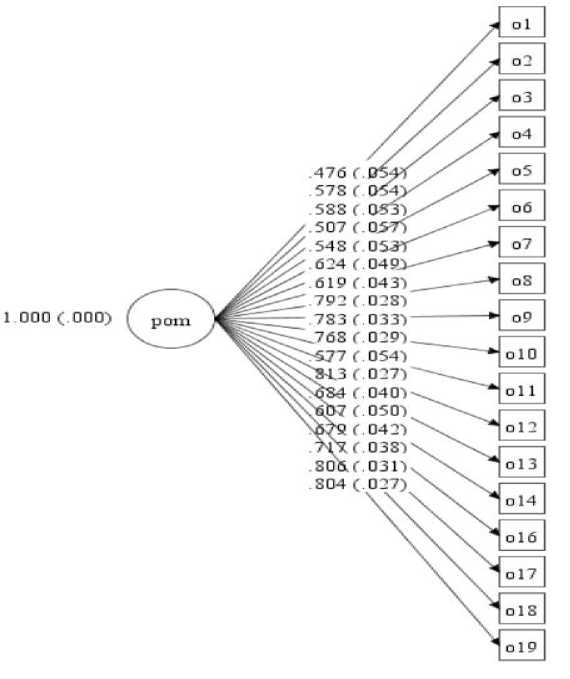
Figure 2 . CFA diagram of the parental overprotection measure (18 items)
The standardized path coefficients presented in Figure 2 range between .476 and .813. The model-data fit indices are as follows: χ² /df = 329.696/135; RMSEA = .088; CFI = .943; TLI = .936; SRMR = .060. While the obtained CFI (.943) and TLI (.936) values indicate a good fit, the RMSEA (.088) value is within the acceptable limits specified in the literature (Browne & Cudeck, 1993; MacCallum et al., 1996).
Findings regarding the two-dimensional version of POM
The two-dimensional structure of the scale, as proposed by Rapee et al. (2024) and Okawa et al. (2024), was examined. The CFA diagram is presented in Figure 3.
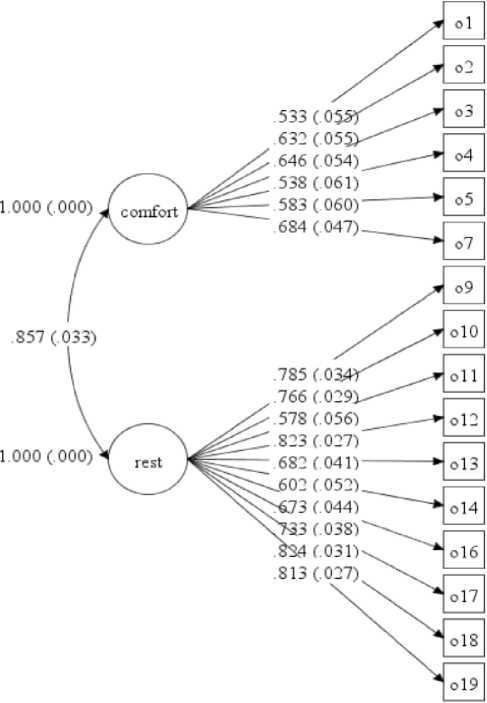
Figure 3 . CFA diagram of the parental overprotection measure (2-factor, 16 items)
Figure 3 presents the CFA diagram of the overprotection scale, consisting of two sub-dimensions named restriction and comfort. In this diagram, the standardized factor loadings of the six items in the comfort subscale range between .533 and .684, while the standardized factor loadings of the ten items in the restriction subscale range between .578 and .834. In this model, both Rapee et al. (2024) and Okawa et al. (2024) stated that the model-data fit of the two-dimensional structure of the scale was superior. The fit indices for the two-dimensional model of the current study are as follows: χ² /df = 252.186/103; RMSEA = .088; CFI = .948; TLI = .940; SRMR = .057. The Cronbach’s Alpha reliability coefficients were calculated as .712 for the comfort subscale, .894 for the restriction subscale, and .902 for the total score; the McDonald’s Omega reliability coefficients were calculated as .715 for the comfort subscale, .894 for the restriction subscale, and .905 for the total score.
Total score correlations were calculated for Item 6, Item 8, and Item 15. Accordingly, the correlation of Item 6 with the total score was found to be moderately positive and statistically significant (r = .572; p < .01); the correlation of Item 8 with the total score was found to be positively strong and statistically significant (r = .725, p < .01). The total score correlation for Item 15, however, was not statistically significant (r = .088; p = .235).
DISCUSSION AND CONCLUSION
In this study, the psychometric properties of the Turkish form of the Parental Overprotection Measure (POM), developed to assess the overprotective attitudes of parents with preschool-aged children, were examined. Validity evidence for the scale was calculated using confirmatory factor analysis, while reliability evidence was computed using Cronbach's alpha and McDonald's omega reliability estimates. During these calculations, the validity and reliability studies of the scale in its original development language, English, were reviewed. Accordingly, although the scale has a long history of use in the field, it is quite recent in terms of the estimation of its psychometric properties. Until the initiative by Rapee et al. in 2024, there was little concern regarding the presentation of statistical evidence for the scale. In 2024, validity and reliability studies for the scale were initiated in both Australia and Japan. This was followed by the study conducted by Elfström and Åhlen (2025). The study by Elfström and Åhlen (2025) was not taken as a reference point in this research due to differences in the age range of the sample (4–12 years), which is considerably broader than the preschool period (60–72 months) and may introduce developmental variability.
Rapee et al. (2024) concluded that the unidimensional structure was the best option, though they also examined the two-dimensional scale for exploratory purposes; conversely, Okawa et al. (2024) stated that the scale possessed a two-dimensional structure. Rapee et al. (2024) noted that in this twodimensional structure, three items failed to load on either dimension. In the current study, the original form was adhered to, and both unidimensional and two-dimensional results have been reported. Items 6 and 8, which were in the original form but were excluded from the dimensional analyses in the Turkish adaptation because they disrupted the statistical fit of the model, exhibit moderate to high significant correlations with the total score of the scale. This indicates that these items contribute to the general overprotection score but differ in their sub-dimensional structuring.
Findings regarding the unidimensional structure demonstrate that the scale can be utilized as a valid and reliable measurement tool within the Turkish culture. The results of the Confirmatory Factor Analysis (CFA), conducted to test the construct validity of the scale, support the unidimensional structure in alignment with the original form and the recommendations of Rapee et al. (2024). Analysis revealed that in the model initially tested with 19 items, Item 15 did not exhibit a statistically significant loading (p = .057). Following the exclusion of this item from the model, an improvement in the goodness-of-fit indices was observed, and the model was determined to provide an adequate fit to the data. The goodness-of-fit indices obtained for the final 18-item unidimensional model warrant a nuanced interpretation rather than a straightforward endorsement. The CFI (.943) and TLI (.936) values meet the threshold for good fit (≥ .90; Hu & Bentler, 1999), and the SRMR (.060) is well within the acceptable range (< .08). However, the RMSEA value of .088, while falling within the acceptable limits established in the literature (Browne & Cudeck, 1993; MacCallum et al., 1996), approaches the upper boundary of acceptability (< .10) and does not reach the stricter good-fit threshold of < .06 recommended in more recent guidelines (Hu & Bentler, 1999). This pattern — strong CFI/TLI alongside a moderately elevated RMSEA — is not uncommon in scale adaptation studies with modest sample sizes, as RMSEA is known to be sensitive to sample size and model parsimony; it tends to be inflated in smaller samples and models with fewer degrees of freedom (Kenny et al., 2015). Taken together, the overall fit profile is best characterized as adequate rather than excellent, and future studies with larger samples are encouraged to re-evaluate model fit under more optimal conditions.
In the Turkish adaptation study, the item that did not show a statistically significant loading is: "When I need to go out, I only leave my child with close friends or relatives." Rather than reflecting overprotective parenting in the Turkish context, this item appears to be influenced by culturally normative caregiving practices. When examining the cultural habits regarding why this item did not function within the Turkish context, it is thought that the primary point to address may be the practices stemming from the collectivistic structure of Turkish culture.
Leaving a child with grandparents or close friends is not a situation that evokes overprotection in Turkish culture. It is a cultural norm (Hofstede, 2001; Kağıtçıbaşı, 2017) and is consistent with the natural flow of life. While not trusting a "stranger as a caregiver" might be an indicator of anxiety for a Western parent, for a Turkish parent, distrusting a stranger as a caregiver is quite common; leaving the child with a grandmother is rational and constitutes the use of cultural capital (Coleman, 1988; Sunar, 2002). Since almost every family with the opportunity experiences this, it is thought that the high proportion of individuals responding positively to this item limited the variance.
When examining the literature aimed at determining parenting attitudes in Türkiye, it is observed that instruments such as the Parental Attitude Scale (PAS) developed by Karabulut-Demir and Şendil (2008) or the PSDQ adapted by Önder and Gülay (2009) generally treat overprotection as a subdimension of broader parenting styles or as a part of controlling approaches. However, these instruments may remain limited in independently measuring the specific and overt behaviors of parents in early childhood arising from the desire to protect or comfort their children against potential threats. At this point, the Parental Overprotection Measure (POM), adapted into Turkish through this study, holds the distinction of being one of the first psychometrically validated scales for parents of preschool-aged children in Türkiye that focuses directly and exclusively on overprotective behaviors. The findings reveal that the 18-item structure of the scale yields reliable results in Turkish culture both unidimensionally and bidimensionally, thereby filling a significant gap in the field as an essential measurement tool. According to the reliability evidence of the scale, the McDonald’s Omega (.917) and Cronbach’s Alpha (.915) values calculated for the final 18-item form demonstrated high reliability, consistent with the values reported in the original form (Rapee et al., 2024) ranging from .85 to .87, and the value of .92 obtained in the Japanese adaptation (Okawa et al., 2024). The coefficients obtained from the reliability analyses prove that the measurement tool possesses a very high level of internal consistency. This finding indicates that the scale can measure parental overprotection in a reliable and error-free manner within Turkish culture, just as it does in different cultures. When the two-dimensional structure is examined, it can be stated that the original twodimensional structure of the scale is generally preserved in Turkish culture. A direct comparison of the fit indices across the two models provides informative insight. The two-factor model (χ²/df = 252.186/103; RMSEA = .088; CFI = .948; TLI = .940; SRMR = .057) yielded marginally better fit than the unidimensional model (χ²/df = 329.696/135; RMSEA = .088; CFI = .943; TLI = .936; SRMR = .060). The improvement in CFI (ΔCFI = .005) and the reduction in the χ²/df ratio indicate a slight advantage for the two-factor solution in terms of model-data fit, consistent with the findings reported by Okawa et al. (2024) in the Japanese adaptation. Notably, however, the RMSEA values were identical across both models (.088), suggesting that the gain in fit is modest rather than substantial. Furthermore, the two-factor model required the exclusion of three items from the factor structure — including Items 6 and 8, which demonstrated meaningful correlations with the total score (r = .572 and r = .725, respectively) — limiting the content coverage of the subscales. Considered together, these findings suggest that while the two-factor structure offers a marginally superior statistical fit, the unidimensional 18-item model provides a more parsimonious and content-representative solution for researchers seeking a global overprotection score. This interpretation aligns with the recommendation of Rapee et al. (2024), who similarly prioritized the unidimensional scoring approach for practical use despite acknowledging evidence of underlying multidimensionality.
Since this is an adaptation study, no exploratory purpose was pursued; therefore, exploratory factor analyses (EFA) were not conducted. However, following the approach of Rapee et al. (2024)—and considering both the long-standing use of the scale in numerous studies and the supporting statistical evidence—the correlations of Items 6, 8, and 15 with the total scale score were examined. These items were included in the original scale but could not be incorporated into the dimensional analysis in the Turkish adaptation due to the nature of the model's fit. Correlation results revealed that Items 6 and 8 were moderately to highly correlated with the total score. However, Item 15 did not function within the two-dimensional structure either. These findings indicate that the conventional structure of the scale is preserved and that Items 6 and 8 can also be utilized within the two-dimensional structure; however, Item 15 must be excluded from the scale. Reliability values demonstrate that the twodimensional structure of the scale also yields reliable results. When all the findings are evaluated together, it can be concluded that the 18-item version of the scale produces valid and reliable results within Turkish culture. Researchers who wish to obtain a general overprotection score should use the 18-item form, while those who intend to work with sub-dimensions should utilize the specific subdimensions accordingly. In conclusion, with its 18-item structure, the Turkish form of the POM (Parental Overprotection Measure) is a reliable tool for researchers who wish to both obtain a unidimensional general score and conduct more detailed analyses through sub-dimensions.
RECOMMENDATIONS
The reporting of this study was conducted in both unidimensional and two-dimensional forms, adhering to the original scale reporting. The use of the unidimensional structure is also considered important as it has been the long-standing format of the scale. However, if researchers require information regarding subdimensions, the use of the two-dimensional scale can be suggested for this purpose. Within the scope of this study, it was aimed to run a bifactor model to reveal both general and specific factors; however, the results obtained were not reported as they did not align with the literature. This situation is thought to be related to the sample size of the study. Therefore, examining the bifactor model results of the scale in larger groups can be suggested. The current study is limited to the families of children attending public preschools in the İzmit district of Kocaeli. In addition, although the sample size (N = 186) was sufficient to conduct the planned confirmatory factor analyses, it may be considered relatively limited for evaluating more complex multidimensional models. Therefore, the stability and generalizability of the factor structure should be confirmed in future studies using larger samples. In future studies, in order to test the psychometric power of the scale more comprehensively, data could be collected from larger and more heterogeneous groups from different socio-economic levels and different regions of Turkiye. Although the low factor loading of item 15 is primarily associated with cultural norms, it should also be considered that this situation may be a statistical limitation resulting from the sample size (n=186). Therefore, it is recommended to retest the functionality of this item in larger groups in future studies.
The measurement tool can be used in longitudinal studies examining the change in parents' overprotective parenting attitudes over time and the effects of these attitudes on children's future developmental periods (elementary school, middle school). Furthermore, it may also allow for cross-cultural comparative studies investigating the differences between the collective structure in Turkish culture and the individualistic structure in Western societies regarding the perception of overprotection. Teachers working in the preschool period and guidance services can use this scale to detect risky parenting attitudes early. Particularly for parents who score high in the "restriction" subdimension, intervention programs can be developed to support children's autonomy and risk-taking skills.
Ethical Text
This manuscript adheres to the journal’s writing guidelines, publication principles, research and publication ethics, and institutional ethical standards. Full responsibility for any potential ethical violations related to the manuscript rests solely with the authors.
Author(s) Contribution Rate
The authors’ contribution rates are directly proportional to the order of authorship.
Conflicts of Interest
The authors declare that there are no financial or personal conflicts of interest with any institution, organization, or individual regarding this study.
Ethical Approval
This research was conducted in accordance with the ethical approval granted by the Kocaeli University Social and Human Sciences Ethics Committee (Decision Date: 06.03.2025; Decision No: E-94094268-605-771641).