
Melissa officinalis L. (Lemon Balm): Flavonoid Composition and Antioxidant Properties
Journal: Bulletin of Science and Practice @bulletennauki
Section: Естественные науки
Article in issue: 12 т.11, 2025.
Free access
Melissa officinalis L. belongs to the genus Melissa L. (commonly known as lemon balm) of the family Lamiaceae Martynov. This plant, possessing strong pharmacological properties, has been extensively studied in several countries, including Turkey, Iran, Algeria, France, Germany, Italy, Romania, Bulgaria, North America, and many others. To analyze the harmonization of the effects of Melissa officinalis L. in folk medicine and modern medical science and to strengthen the flavonoid content of the plant cultivated by the population in the Nakhchivan Autonomous Republic. Because polyphenol and flavonoid compounds have a special role in each pharmacological effect. Plant material of Melissa officinalis L. was obtained from a private household in the Ordubad district of the Nakhchivan Autonomous Republic. The study was conducted at the Biomedicine Center of Nakhchivan State University. Extracts were prepared separately from the leaves and flowers of the plant using 70% ethanol. The total flavonoid content was determined using the colorimetric method described by Fukumoto and Mazza. The total flavonoid content in the leaves of M. officinalis L. was determined to be 6.1777±0.466969 mg quercetin equivalents per g of dry sample, while in the flowers it was approximately two times lower - 3.5557±0.2688 mg QE/g dry sample. Collecting up-to-date scientific data on the medicinal properties of Melissa officinalis L. and studying its flavonoid composition in relation to the region of cultivation will facilitate future research on the extraction process and promote the broader application of this plant in medicine and pharmacology.
Similar articles in the section Special auxiliary subdivision for theoretical aspects, characteristics, factors, etc. in biology
Short address: https://sciup.org/14135514
IDS: 14135514 | UDC: 57.085.2 | DOI: 10.33619/2414-2948/121/12
Melissa officinalis L. (мелисса лекарственная): состав флавоноидов и антиоксидантные свойства
Melissa officinalis L. относится к роду Melissa L. (широко известному как мелисса) семейства яснотковых (Lamiaceae Martynov). Это растение, обладающее сильными фармакологическими свойствами, было тщательно изучено в ряде стран, включая Турцию, Иран, Алжир, Францию, Германию, Италию, Румынию, Болгарию, Северную Америку и многие другие. Для анализа гармонизации эффектов Melissa officinalis L. в народной медицине и современной медицинской науке и для усиления содержания флавоноидов в растении, выращиваемом населением в Нахчыванской Автономной Республике. Поскольку полифенольные и флавоноидные соединения играют особую роль в каждом фармакологическом эффекте, растительный материал Melissa officinalis L. был получен из частного домохозяйства в Ордубадском районе Нахчыванской Автономной Республики. Исследование проводилось в Центре биомедицины Нахчыванского государственного университета. Экстракты готовили отдельно из листьев и цветков растения с использованием 70% этанола. Общее содержание флавоноидов определялось колориметрическим методом, описанным Фукумото и Мацца. Общее содержание флавоноидов в листьях мелиссы лекарственной ( M. officinalis L.) составило 6,1777±0,466969 мг кверцетин-эквивалентов на 1 г сухого образца, тогда как в цветках оно было примерно в два раза ниже - 3,5557±0,2688 мг кверцетина/г сухого образца. Сбор современных научных данных о лекарственных свойствах мелиссы лекарственной ( Melissa officinalis L.) и изучение её флавоноидного состава в зависимости от региона произрастания будет способствовать дальнейшему исследованию процесса экстракции и более широкому применению этого растения в медицине и фармакологии.
Text of the scientific article Melissa officinalis L. (Lemon Balm): Flavonoid Composition and Antioxidant Properties
Бюллетень науки и практики / Bulletin of Science and Practice
UDC 57.085.2
Melissa officinalis L. belongs to the genus Melissa L. (commonly known as lemon balm) of the family Lamiaceae Martynov [2, 3].
The plant is native to Southern Europe and the Mediterranean region. In nature, it is found in the Mediterranean basin and Western Asia, while it is currently widely cultivated in Europe and North America. Melissa officinalis L. has long been known in folk medicine as a medicinal plant, especially during the Middle Ages. The famous physician Avicenna [2] recommended its use to strengthen heart function. According to ethnobotanical studies, this plant is known for its beneficial effects in relieving headaches, toothaches, asthma, bronchitis, stress, insomnia, nervousness, and depression [1, 14].
Due to its strong pharmacological properties, Melissa officinalis has been extensively investigated in countries such as Türkiye, Iran, Algeria, France, Germany, Italy, Romania, Bulgaria, North America, and others. Modern medical science continues innovative research aimed at expanding its therapeutic applications [12, 13].
The chemical composition of Melissa officinalis samples includes 15.3% moisture, 5.7% ash (indicating mineral content), 7.375% protein, 0.94% lipids, and 70.68% carbohydrates. The concentrations of mineral elements were determined as follows: Na – 83.34 ppm, Mn – 16.41 ppm, Fe – 119.4 ppm, Zn – 29.160 ppm, and Ni – 6.589 ppm [11].
The plant is rich in secondary metabolites such as flavonoids, terpenoids, phenolic acids, tannins, and essential oils. The main active components of Melissa officinalis include geranial, neral, citronellal, and geraniol (terpenoids); ursolic acid and oleanolic acid (triterpenes); rosmarinic, caffeic, and chlorogenic acids (phenolic acids); as well as quercetin, rhamnocitrin, and luteolin (flavonoids) [14].
With its pleasant lemon-like aroma, Melissa officinalis is also widely used in foods, syrups, and culinary applications. The purpose of this study is to analyze the correlation between the traditional medicinal uses and scientifically established pharmacological effects of Melissa officinalis L., and to determine the flavonoid content of the plant cultivated under the environmental conditions of the Nakhchivan Autonomous Republic. Polyphenolic and flavonoid compounds play a crucial role in the pharmacological activity of this species.
Materials and Methods
The Melissa officinalis L. plant sample was obtained from a private household in the Ordubad district of the Nakhchivan Autonomous Republic. The research material was collected at the end of May, during the full vegetation period of the plant, and at the beginning of June, during the full flowering stage. In the Biomedicine Center of Nakhchivan State University, the leaf parts and the inflorescence of the plant were dried separately. Herbarium specimens of the plant were prepared.
Preparation of the Extract. For the extraction process, 2 g of dried plant material (both leaf and flowering parts) were mixed with 50 mL of 70% ethanol and stirred on a magnetic stirrer for 24 hours. The mixture was then filtered through Whatman filter paper and stored at 4°C.
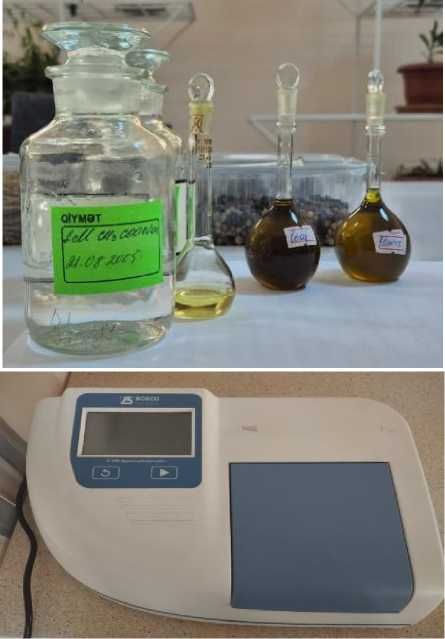
Figure 1. Laboratory equipment, experimental work
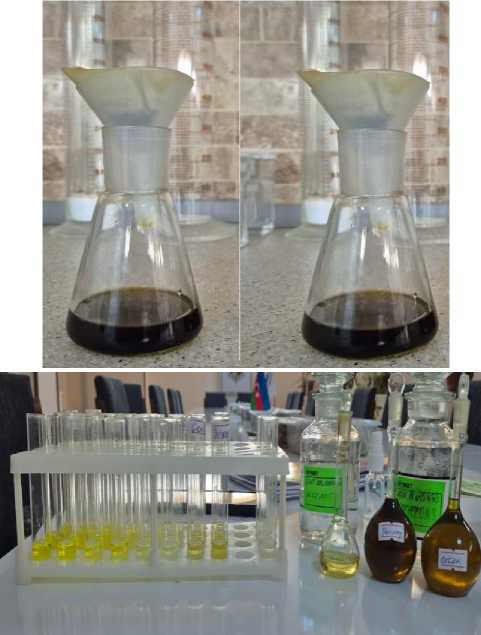
Total Flavonoid Content. The total flavonoid content was determined using the colorimetric method described by Fukumoto and Mazza. This method is based on the reaction of flavonoids with aluminum nitrate. For the determination of flavonoid content in the extracts, 0.25 mL of extract, 2.15 mL of ethanol, 0.05 mL of 10% Al(NO3)3 solution, and 0.05 mL of 1.0 M NH4CH3COO solution were added to each of three test tubes. The mixtures were vortexed and kept in the dark for 40 minutes. Absorbance was then measured at 415 nm. The total flavonoid content was expressed as milligrams of quercetin equivalents per gram of dry sample, using quercetin as the standard [15, 16]. The metrological characteristics of the obtained mean results were analyzed using the Statistical Package for the Social Sciences (SPSS) software.
Results
Calibration and Linearity. For the construction of the calibration curve, quercetin standard solutions of different concentrations (0.5, 0.25, 0.125, 0.0625, 0.03125, and 0.015625 mg/mL) were prepared from a 1 mg/mL stock solution. These solutions were analyzed in triplicate, and absorbance was measured at a wavelength of 415 nm. The mean absorbance values were plotted against the corresponding concentrations to obtain the calibration curve. The curve was found to be linear in the concentration range of 0.5-0.015625 mg/mL (Figure 1). The correlation coefficient (R²) was determined to be 0.9943. The total flavonoid content was expressed as milligrams of quercetin equivalents per gram of dry sample (Figure 2).
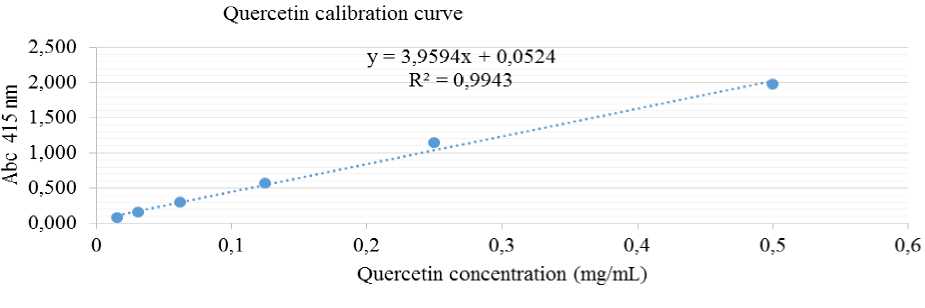
Figure 2. Standard calibration curve of quercetin
From the calibration curve, the equation y = 3.9594x+0.0524 was obtained. Based on this equation, the total flavonoid content in the leaf and flower extracts of Melissa officinalis L. was determined.
Table 1
SPECTROPHOTOMETRIC RESULTS mg/g
Yarpaq Çiçək
mg/ml sf 0,04 0,04
abc1 abc2 abc3 net1 net2 net3 fs1 fs2 fs3 gs1 gs2 gs3 ort/g ss
1 1,118 0,977 1,043 1,1142 0,9732 1,005 0,268172 0,23256 0,2405 6,7043 5,814 6,0148 6,1777 0,466969
0,589 0,668 0,601 0,5852 0,6642 0,5972 0,134566 0,154518 0,137597 3,36415 3,86295 3,439925 3,555675 0,268791
Table 2
TOTAL FLAVONOID CONTENT (MG/G) IN ETHANOL EXTRACTS OF DRIED LEAVES AND FLOWERS of Melissa officinalis L.
|
Total flavonoid content (mg of QUE g-1 dry sample)) Leaf Flower |
|
|
Mean±Std |
6,1777 ± 0,466969 3,555675±0,268791 |
|
İntervals |
6,7043- 5,814 3,86295±3,36415 |
In Tables 1 and 2, the total flavonoid content, expressed as quercetin equivalents, is presented as the mean value ± standard deviation (SD). The highest flavonoid content was observed in the leaves of Melissa officinalis L. (6.1777±0.466969 mg QE/g dry sample).
Discussion
Melissa officinalis L. is a medicinal plant with a wide range of therapeutic effects. It has been increasingly studied in medical research due to its sedative, antidepressant, memory-enhancing, antioxidant, and antibacterial activities. The significant role of phenolic-flavonoid compounds and terpenes and terpenoids, which are the main constituents of its essential oil, in these pharmacological effects is well recognized. These compounds, possessing strong antioxidant properties, contribute to the plant’s protective effects against the development of degenerative diseases such as Alzheimer’s disease, cardiovascular disorders, cancer, and dermatological conditions.
Virchea L. et al. (2021) investigated the flavonoid content of Melissa officinalis collected during the flowering period in the Sibiu region of Romania [9]. According to their results, the total flavonoid content in the aerial parts of the plant was 0.965 g/100 g. In our study, the flavonoid content in the leaves and flowers of the plant was 6.1777 mg/g and 3.555 mg/g, respectively. Moradi M.A. (2016) and colleagues, based on research conducted at Shahrekord University of Medical Sciences (Iran), reported that the total flavonoid content of a 70% ethanol/water extract of Melissa officinalis L. was 12.5±2.11 mg/g, expressed as rutin equivalents [10].
Cunha F. et al. (2016) suggested that ethanol extracts from the leaves of Melissa officinalis could be used as natural products with anti- Leishmania and anti- Trypanosoma activity [8]. Their study indicated that the antiparasitic effects of the plant are associated with the presence of compounds such as rutin, quercetin, caffeine, and ellagic acid in significant amounts.
Ożarowski et al. (2016) reported that a hydroethanolic extract from the leaves of Melissa officinalis contained 21.15 g/100 g of rosmarinic acid [6]. This polyphenolic compound is notable for its strong antioxidant and anti-inflammatory activities, highlighting its potential therapeutic significance.
Perry N.S.L. et al. (2017) demonstrated that oral administration of an extract containing sage, rosemary, and Melissa officinalis (SRM) at selected doses and durations significantly improved memory in healthy individuals under 63 years of age [7]. These findings suggest that extracts of the studied plants may have adjunctive therapeutic potential for Alzheimer’s patients and the elderly. Pharmacological studies have also documented the antioxidant and anticholinesterase activities of M. officinalis in various research works, emphasizing its potential as a therapeutic agent in Alzheimer’s disease [5]. However, clinical application of the plant remains limited, indicating the need for further innovative research.
Medicinal plants are considered powerful tools in the treatment of human diseases. This study provides a new perspective on the potential of Melissa officinalis and encourages researchers to further explore and deepen understanding of its therapeutic capabilities.
Conclusion
The chemical composition of plants can vary depending on the climatic and geographical conditions of their growing regions. Investigating the total flavonoid content of Melissa officinalis L. (lemon balm) cultivated under the conditions of the Nakhchivan Autonomous Republic provides a scientific basis for recommending the use of this plant in future dietary supplements. This approach is closely related to the health-promoting significance of flavonoid-containing compounds, which are well known for their antioxidant properties.
This plant has considerable potential for use in both the pharmaceutical and food industries to support human health. Collecting up-to-date scientific information on the therapeutic properties of Melissa officinalis will facilitate its application in food products and further expand its utilization.
