
Modification in the muscle structure of mutton under the action of a salting mixture enriched with lactic acid bacteria
Journal: Bulletin of Almaty Technological University @vestnik-atu
Section: Технология пищевой и перерабатывающей промышленности
Article in issue: 1 (151), 2026.
Free access
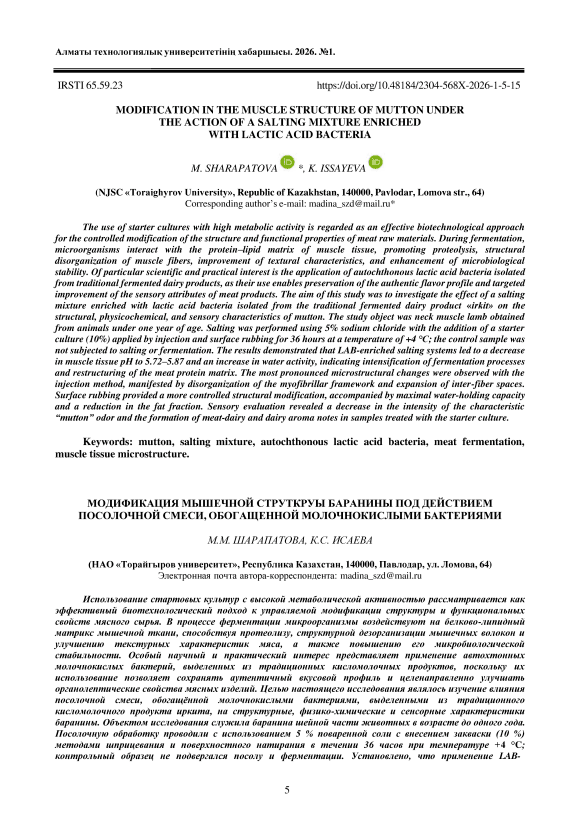
The use of starter cultures with high metabolic activity is regarded as an effective biotechnological approach for the controlled modification of the structure and functional properties of meat raw materials. During fermentation, microorganisms interact with the protein–lipid matrix of muscle tissue, promoting proteolysis, structural disorganization of muscle fibers, improvement of textural characteristics, and enhancement of microbiological stability. Of particular scientific and practical interest is the application of autochthonous lactic acid bacteria isolated from traditional fermented dairy products, as their use enables preservation of the authentic flavor profile and targeted improvement of the sensory attributes of meat products. The aim of this study was to investigate the effect of a salting mixture enriched with lactic acid bacteria isolated from the traditional fermented dairy product «irkit» on the structural, physicochemical, and sensory characteristics of mutton. The study object was neck muscle lamb obtained from animals under one year of age. Salting was performed using 5% sodium chloride with the addition of a starter culture (10%) applied by injection and surface rubbing for 36 hours at a temperature of +4 °C; the control sample was not subjected to salting or fermentation. The results demonstrated that LAB-enriched salting systems led to a decrease in muscle tissue pH to 5.72–5.87 and an increase in water activity, indicating intensification of fermentation processes and restructuring of the meat protein matrix. The most pronounced microstructural changes were observed with the injection method, manifested by disorganization of the myofibrillar framework and expansion of inter-fiber spaces. Surface rubbing provided a more controlled structural modification, accompanied by maximal water-holding capacity and a reduction in the fat fraction. Sensory evaluation revealed a decrease in the intensity of the characteristic “mutton” odor and the formation of meat-dairy and dairy aroma notes in samples treated with the starter culture.
Similar articles in the section Communication and transport industries. Accountancy. Business management. Public relations
Short address: https://sciup.org/140314142
IDS: 140314142 | UDC: 65.59.23 | DOI: 10.48184/2304-568X-2026-1-5-15
Модификация мышечной струткруы баранины под действием посолочной смеси, обогащенной молочнокислыми бактериями
Использование стартовых культур с высокой метаболической активностью рассматривается как эффективный биотехнологический подход к управляемой модификации структуры и функциональных свойств мясного сырья. В процессе ферментации микроорганизмы воздействуют на белково-липидный матрикс мышечной ткани, способствуя протеолизу, структурной дезорганизации мышечных волокон и улучшению текстурных характеристик мяса, а также повышению его микробиологической стабильности. Особый научный и практический интерес представляет применение автохтонных молочнокислых бактерий, выделенных из традиционных кисломолочных продуктов, поскольку их использование позволяет сохранять аутентичный вкусовой профиль и целенаправленно улучшать органолептические свойства мясных изделий. Целью настоящего исследования являлось изучение влияния посолочной смеси, обогащённой молочнокислыми бактериями, выделенными из традиционного кисломолочного продукта иркита, на структурные, физико-химические и сенсорные характеристики баранины. Объектом исследования служила баранина шейной части животных в возрасте до одного года. Посолочную обработку проводили с использованием 5 % поваренной соли с внесением закваски (10 %) методами шприцевания и поверхностного натирания в течении 36 часов при температуре +4 °C; контрольный образец не подвергался посолу и ферментации. Установлено, что применение LAB-обогащённых посолочных систем приводит к снижению pH мышечной ткани до 5,72–5,87 и увеличению активности воды, что отражает интенсификацию ферментационных процессов и перестройку белковой матрицы мяса. Наиболее выраженные микроструктурные изменения выявлены при шприцевочном способе внесения закваски и проявлялись в дезорганизации миофибриллярного каркаса и расширении межволоконных пространств. Поверхностное натирание обеспечивало более контролируемую модификацию структуры при максимальной влагоудерживающей способности и снижении жировой фракции. Сенсорный анализ показал снижение интенсивности характерного «бараньего» запаха и формирование мясомолочных и молочных оттенков аромата в образцах с закваской.
Сүтқышқыл бактерияларымен байытылған тұздық қоспасының әсерінен қой етінің бұлышықет құрылымының модификациясы
Метаболикалық белсенділігі жоғары стартерлік культураларды пайдалану ет шикізатының құрылымдық және функционалдық қасиеттерін басқарылатын түрде модификациялаудың тиімді биотехнологиялық тәсілі ретінде қарастырылады. Ферментация процесі барысында микроорганизмдер бұлшықетінінің ақуыз-липидті матриксіне әсер етіп, миофибриллярлық және саркоплазмалық ақуыздардың протеолизін, бұлшықет талшықтарының құрылымдық дезорганизациясын қамтамасыз етеді, нәтижесінде еттің текстуралық сипаттамалары жақсарып, микробиологиялық тұрақтылығы артады. Ерекше ғылыми және практикалық қызығушылық дәстүрлі қышқыл сүт өнімдерінен бөлініп алынған автохтонды сүтқышқыл бактерияларын қолдануға бағытталған, өйткені олардың пайдаланылуы өнімнің аутентикалық дәмдік бейнесін сақтауға және ет өнімдерінің органолептикалық қасиеттерін мақсатты түрде жақсартуға мүмкіндік береді. Осы зерттеудің мақсаты дәстүрлі қышқыл сүт өнімі – «іркіттен» бөлініп алынған сүтқышқыл бактерияларымен байытылған тұздық қоспасының қой етінің құрылымдық, физика-химиялық және сенсорлық сипаттамаларына әсерін зерттеу болып табылады. Зерттеу нысаны ретінде бір жасқа дейінгі малдан алынған мойын бөлігінің қой еті пайдаланылды. Тұздау өңдеуі 5 % ас тұзын және 10 % ашытқы қолдану арқылы шприцтік енгізу және беткейлік жағу әдістерімен +4 °C температурада 36 сағат ішінде жүргізілді; бақылау үлгісі тұздауға және ферментацияға ұшыратылмады. Зерттеу нәтижелері LAB-пен байытылған тұздық жүйелерін қолдану бұлшықет тінінің pH көрсеткішін 5,72–5,87 аралығына дейін төмендетіп, су белсенділігінің артуына әкелетінін көрсетті, бұл ферментациялық процестердің қарқындануын және еттің ақуыздық матрицасының қайта құрылуын айқындайды. Микроқұрылымдық өзгерістердің ең айқын көрінісі ашытқының шприцтік енгізу әдісінде байқалып, миофибриллярлық құрылымының дезорганизациясы мен талшықаралық кеңістіктердің ұлғаюымен сипатталды. Ал беткейлік жағу әдісі құрылымның неғұрлым басқарылатын модификациясын қамтамасыз етіп, ылғал ұстау қабілетінің жоғарылауымен және май фракциясының төмендеуімен ерекшеленді. Сенсорлық талдау нәтижелері ашытқы қолданылған үлгілерде қой етіне тән иістің қарқындылығының төмендеп, ет-сүттік және сүттік хош иіс реңктерінің қалыптасқанын көрсетті.
Text of the scientific article Modification in the muscle structure of mutton under the action of a salting mixture enriched with lactic acid bacteria
IRSTI 65.59.23
Mutton occupies an important position in global meat production and traditional dietary systems, particularly in regions with well-developed sheep farming. It is considered a valuable type of meat raw material with high nutritional and biological value and serves as a source of high-quality complete protein, providing essential amino acids in physiologically optimal proportions, as well as B-group vitamins and mineral elements. One hundred grams of lamb contains approximately 18 g of highly digestible protein, predominantly represented by myofibrillar and connective tissue fractions, which determines its significance in the human diet [1].
The quality of lamb and its perception by consumers are largely determined by the structure of muscle tissue. The spatial organization of myofibrils, the degree of sarcomere contraction, the condition of connective tissue, and the nature of interprotein interactions directly affect the tenderness, juiciness, and textural properties of meat products [2]. Lamb, especially that obtained from adult animals, is characterized by an increased content of connective tissue and thermally stable collagen, which reduces its tenderness and necessitates the application of technological approaches aimed at targeted modification of meat structure and sensory characteristics. It has been established that lamb tenderness is determined by muscle fiber thickness, connective tissue content, and fat level, while a reduction in muscle fiber diameter is associated with improved textural and sensory properties of meat.
Meat aging is traditionally regarded as one of the key technological processes ensuring the improvement of textural properties through the activation of endogenous proteolytic systems. During post-mortem storage, calpains and cathepsins are activated, leading to partial degradation of myofibrillar proteins, weakening of the muscle framework, and an increase in meat tenderness [3-5]. However, conventional aging methods are characterized by long processing times, limited controllability of proteolytic reactions, and increased microbiological risks, which necessitates the development of alternative, biologically oriented, and technologically controllable approaches to modifying meat structure [6].
Meat salting represents an important technological stage that exerts a complex effect on the structural and functional properties of muscle tissue. Sodium chloride promotes the extraction of myofibrillar proteins, alters their hydration, enhances water-holding capacity, and creates favorable conditions for meat aging. The use of curing mixtures allows not only uniform salt distribution but also targeted modification of meat structure through the incorporation of functional components [7].
Of particular interest is the application of curing mixtures enriched with lactic acid bacteria (LAB), which possess pronounced biological and technological potential. LAB are capable of fermenting available carbohydrates with the production of organic acids, resulting in a controlled decrease in pH, activation of proteolytic processes within muscle tissue, and the formation of a favorable microbiological environment [8,9]. In fermented meat products, representatives of the genera Lactobacillus and Staphylococcus, particularly Lactobacillus sakei, play a key role in ensuring microbiological stability through the production of lactic and acetic acids and the reduction of pH to values around 5. Acidic conditions promote the coagulation of muscle proteins and changes in their water-holding capacity, thereby influencing the texture of the final product and inhibiting the growth of pathogenic and spoilage microorganisms [10]. Due to their pronounced antimicrobial activity and their ability to create unfavorable conditions for undesirable microflora, LAB have recently been increasingly considered not only as technological agents of fermentation but also as promising tools for the biopreservation of meat products [11,12]. In the context of growing consumer concern regarding food additive safety and the desire to reduce the use of synthetic preservatives, lactic acid bacteria and their metabolites – including organic acids and bac-teriocins – are regarded as effective natural anti-microbial agents capable of inhibiting pathogenic and spoilage microorganisms, thereby contributing to improved microbiological stability and extended shelf life of meat products
In addition to structural characteristics, a major factor limiting the consumer acceptance of mutton is its characteristic odor. The flavor and aroma profile of mutton is associated with the presence of a complex mixture of volatile compounds, among which branched-chain fatty acids, as well as aldehydes, phenols, and ketones, play a predominant role. Branched-chain fatty acids, including 4-methyloctanoic and 4-methylnonanoic acids, are considered the principal contributors to the characteristic “sheepy” odor of mutton [13]. Alterations in the microenvironment of muscle tissue, particularly pH reduction induced by lactic acid bacteria (LAB), may influence the biotransformation of these compounds and, consequently, the intensity of the characteristic lamb odor.
In this context, the application of curing systems enriched with LAB is of particular interest as a biologically oriented alternative to the use of isolated proteolytic enzymes. Unlike commercial enzyme preparations, LAB provide a complex biochemical impact that includes controlled pH reduction, suppression of undesirable microflora, and targeted biotransformation of protein and lipid substrates [14]. This multifactorial mechanism of action may contribute to the development of a more balanced aromatic profile and to the attenuation of the specific lamb odor. In contrast, the use of exogenous enzymes, often associated with rapid and intensive proteolysis, may be characterized by limited controllability and less predictable changes in volatile compounds. This highlights the relevance of investigating LAB-enriched curing systems from the perspective of simultaneous control over both structural and aromatic properties of meat raw materials [15].
Recent studies have demonstrated that LAB strains isolated from traditional fermented dairy products exhibit pronounced antagonistic activity, high resistance to stress factors inherent to the meat environment, and probiotic potential [16,17]. Historical evidence supporting the effectiveness of such approaches can be found in traditional Kazakh cuisine, where fermented dairy products rich in autochthonous microflora - such as «ayran, kurt, kumys» and others - have long been used not only as dietary components but also in meat processing and preservation technologies. The immersion of meat raw materials in fermented dairy media functioned as a natural biopreservation mechanism, promoting the development of LAB that inhibited the growth of pathogenic microflora while ensuring product stability without deterioration of organoleptic properties [18].
Thus, the use of authentic starter cultures isolated from traditional fermented dairy products in mutton curing technology can be considered a promising direction in sustainable biotechnology, combining enhanced microbiological safety, controlled modification of muscle tissue structure, and reduction of the intensity of characteristic mutton odor. Despite the growing interest in biologically active curing systems, the effects of LAB-enriched curing mixtures on structural changes in mutton muscle tissue remain insufficiently investigated.
Therefore, the aim of the present study was to investigate changes in the muscle structure of mutton under the action of a curing mixture enriched with lactic acid bacteria and to evaluate their effects on the structural, physicochemical, and sensory characteristics of meat raw material.
Materials and research methods
Object of the Study. Mutton obtained from animals aged up to one year and sampled 24 h post mortem was used as the object of the study. For experimental purposes, defect-free neck muscle tissue was selected, with the longissimus cervicis muscle used as the model muscle. Prior to the experiments, the meat raw material was stored under refrigerated conditions at 4 °C.
Source and Preparation of Lactic Acid Bacteria. Lactic acid bacteria (LAB) were isolated from the traditional fermented dairy product « irkit» (a type of ayran or katyk). The isolated strains were identified to the genus and species levels using classical microbiological methods. The selected strains were characterized based on their ability to grow in a meat-based medium and their tolerance to acidic conditions.
For salting, a starter culture mixture was prepared, including LAB at a concentration of 107108 CFU/ g, which was 10% of the mass of the brine system, as well as sodium chloride (NaCl) at a concentration of 5%.
Microbiological research methods. Microbiological studies included standard methods of isolation and identification of microorganisms using nutrient media and subsequent identification of bacteria in accordance with GOST 10444.11-2013. Bacteria of the genus Lactobacillus included microaerophilic, gram-positive, rod-shaped, immobile, non-spore-forming and catalase-negative microorganisms.
The process of isolating pure crops included three stages:1) obtaining a cumulative culture; 2) isolation of pure culture; 3) control of its purity.
To isolate pure cultures, tenfold dilutions of the cumulative culture were carried out in sterile saline solution. A drop of the appropriate dilution (10“3 or 10-4) was applied to the surface of a dense GMF-AGAR nutrient medium (TU 9385-05839484474-2009) in Petri dishes. Incubation was carried out in a thermostat at a temperature of 36.7 ± 1 °C for 48 hours. The grown colonies were analyzed according to morphological and cultural characte-ristics. Cell viability was determined according to GOST 32901-2014.
Table 1. Meat processing technology and experimental scheme
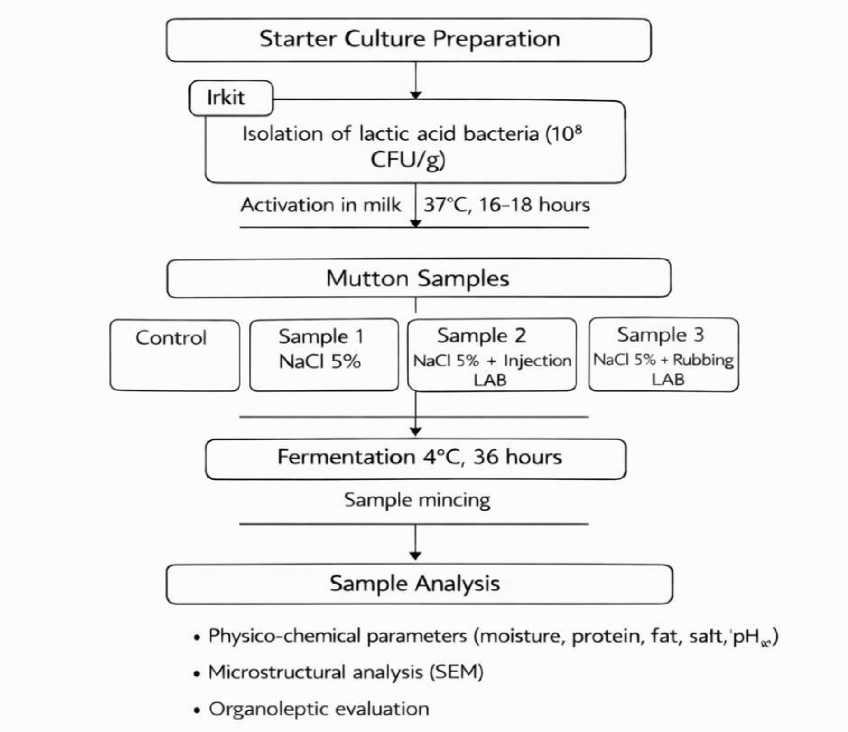
Mutton without the addition of NaCl and starter culture with lactic acid bacteria was used as a control sample. This approach made it possible to evaluate the contribution of biologically active starter culture to changes in the structural, physico-chemical and sensory characteristics of meat compared with traditional salt salting. Two methods of applying a salting system enriched with lactic acid bacteria were used in the work: syringe injection and surface rubbing. The syringe method provided a more uniform distribution of salt and microorganisms in the thickness of the muscle tissue, contributing to the intensification of fermentation processes and structural changes. Surface rubbing imitated traditional salting methods and had a predominant effect on the surface layers of meat. A comparative analysis of these options made it possible to evaluate the effect of the method of applying the salting system on the structural and organoleptic parameters of mutton.
The processed meat raw materials were kept at a temperature of 4 ° C for 36 hours under conditions.
Physico-chemical analysis of meat samples. The mass fraction of moisture, protein, fat, and table salt was determined using an «Infralume» infrared analyzer. Before analysis, the meat samples were crushed and thoroughly mixed until a homogeneous mass was obtained. The measurements were carried out in accordance with generally accepted methods of analysis of meat raw materials and meat productsthat meet the requirements for storing chilled meat.
Determination of the active acidity (pH) of meat. The active acidity was determined by the potentiometric method in accordance with GOST 9793-2016. A 10 g meat sample was homogenized with 90 ml of distilled water (1:10 ratio). The pH meter was calibrated using standard buffer solutions with pH 4.00, 7.00 and 9.18. Measurements were carried out at a temperature of 20 ± 1 °C after stabilization of the electrode readings.
Determination of water activity (Aw). The water activity was determined using an HD-6 device in accordance with GOST 31747-2012. Pieces of meat weighing 50 g were selected for analysis, which were previously homogenized to a homogeneous state using a sterile homogenizer. The prepared sample was placed in the measuring chamber of the device, ensuring tight filling without the formation of air gaps.
Microstructural analysis. Microstructural analysis was performed by scanning electron microscopy (SEM) on a JEOL JSM-6 microscope at an accelerating voltage of 7-8 kV, magnification of ×100, ×200 and ×500, and a chamber pressure of 3940 Pa. Representative micrographs were obtained for each sample, which were used for comparative analysis of the state of myofibrils and connective tissue. Experimental studies were conducted in the laboratories of the Scientific Research Institute of Agroinnovations and Biotechnologies of the Toraighyrov University, as well as in the Laboratory of Physico-chemical analysis of food products named after Doctor of technical sciences, Professor K. Zh. Amirkhanov Shakarim University.
Results and discussion
During the microbiological analysis of the fermented milk product «irkit», the approximate identification of lactic acid bacteria strains was isolated and determined, their cultural and morphological characteristics were determined.
As a result of studying the morphological properties of the grown colonies, it was found that the studied bacterial insulators are immobile, do not form spores and are characterized by a positive gram color, which indicates that they belong to typical representatives of the Lactobacillaceae family (Single oval cocci, diplococci, cell size 0.8-1.0 microns).
The morphological and cultural properties of lactobacilli were used to identify them. According to the Bergey determinant, the isolated lactic acid bacteria were classified as Lacticaseibacillus and Lactococcus .
For fermentation of skimmed milk in order to obtain a starter culture, strains of lactic acid bacteria L. casei LC-01 belonging to the genus Lactobacillus were used.
The starter culture was pre-activated in skimmed milk at 37 °C for 24 hours until a titer of 10⁸ CFU/ml was reached.
During fermentation of raw materials, the titer of cells of lactic acid microorganisms was: 10⁷ CFU/ml; strain. After introducing a starter culture (bacteria of the genus Lactobacillus) into the raw material and then keeping it in a thermostat (at t – 37 ° C), it was found that the casein protein coagulated and formed a dense clot and whey.
The resulting starter culture based on skimmed milk with a consortium of lactic acid bacteria isolated from the traditional irkit product demonstrated favorable organoleptic characteristics and a high titer of viable cells (at least 10⁸ CFU/ml). During the thermostating process, an optimal level of acidity was achieved, corres-ponding to a pH value of 4.35–4.18, which indicates the active metabolic activity of microorganisms and the suitability of this starter culture for effective use as a starter culture during fermentation and salting of mutton meat products.
After biotechnological treatment of mutton using lactic acid bacteria-based starter cultures, four samples were examined: control (without the addition of NaCl and starter culture), sample 1 (NaCl 5%), sample 2 (NaCl 5%+ starter culture syringe method), sample 3 (NaCl )5%+ starter culture rubbing method) Each sample was ground in a meat grinder after fermentation.
The results of the study show that the method of processing and salting significantly affects the physico-chemical characteristics of mutton. In the experimental samples, compared with the control, changes in the mass fraction of moisture, protein, fat and salt were observed, reflecting the restructuring of the structure of muscle tissue under the influence of technological factors.
An increase in the mass fraction of moisture in the S2 (syringe) and S3 (rubbing) samples indicates an improvement in the water retention capacity of meat, probably due to salt exposure and loosening of myofibrillary proteins. The maximum moisture content in S3 (68.73%) may be due to the uniform distribution of salt during rubbing and lower water losses compared to liquid salting.
The protein growth in S1 and S3 is explained by the concentration effect and a change in the protein matrix, which helps to retain moisture and reduce exudation, which confirms the literature data on the positive effect of salt and mechanical treatments on the functional properties of proteins [7].
Table 2. Results of studies of physico-chemical parameters
|
Sampels |
Protein (%) (%) |
Moisture (%) |
Fat (%) |
Salt (%) |
|
Control |
14,18 |
52,50% |
29,12% |
0,93 |
|
S1 (NaCl5%) |
16,28 |
56.35 |
21.45 |
4,17 |
|
S2 (NaCl5% +syringe LAB) |
14,75 |
61,95 |
18,61 |
3,47 |
|
S3(NaCl5% +rubbing LAB) |
16,48 |
68,73 |
10,68 |
2,69 |
A decrease in fat in all experimental samples, especially in O3 (10.68%), is associated with a redistribution of lipids and an increase in the proportion of bound moisture, which reflects a weakening of the structural bonds of fatty inclusions.
An increase in the salt content confirms the effectiveness of the salting methods: the highest value in S1 (4.17%) is associated with the use of a 5% solution, while S2 and S3 show differences in the mechanisms of salt penetration and its distribution.
Thus, the method of salting and processing comprehensively affects the physico-chemical properties of mutton, determining its functional characteristics, structural features of muscle tissue and potential sensory qualities. The (S3) grating method seems to be the most promising, as it provides an optimal combination of high moisture retention, moderate salt content and fat reduction, which helps preserve the elastic fiber structure, reduce shrinkage and increase juiciness, which is especially important in the development of fermented and functional meat products.
Active acidity (pH) is an important indicator of biochemical and microbiological processes in meat raw materials, as it determines the state of muscle proteins, enzyme activity and microbiological stability of the product.
Table 3. Results of pH and Aw studies of the research samples
|
Indicator |
Control |
S1(NaCl 5%) |
S2 (NaCl5% +syringe LAB |
S3(NaCl5% + rubbing LAB) |
|
pH (GOST 9793-2016) |
6.23 |
5.88 |
5.72 |
5.87 |
|
Active water (Aw) (ГОСТ 31862-2012.) |
0.55 |
0.86 |
0.93 |
0.90 |
The obtained results indicate a pronounced effect of salting treatments on the acidity of mutton muscle tissue. In the control sample, the pH value was 6.23, corresponding to the initial state of meat without salting or fermentative intervention. In the experimental samples (Samples 1–3), a significant decrease in pH was observed, reaching a range of 5.88–5.72, which indicates the intensification of acidforming processes. The most pronounced pH reduction was recorded in the sample treated by injection with a LAB-enriched curing mixture (pH 5.72), reflecting high metabolic activity of lactic acid bacteria and intensive production of organic acids. Lower pH values compared with the surface-rubbed sample (pH 5.87) suggest a more uniform distribution of microorganisms within the muscle tissue and a higher intensity of fermentation processes.”
Water activity (Aw) is a key factor determining microbiological stability and the intensity of fermentation processes in meat raw materials. In the control sample, the Aw value was 0.55, indicating limited moisture availability and low biochemical activity.
During salting only with salt (5% NaCl), water activity increased to 0.86 due to osmotic redistribution of moisture within the muscle tissue. The use of a LAB-enriched curing system resulted in a further increase in Aw, most pronounced under injection treatment (0.93), indicating more uniform hydration of the muscle tissue and favorable conditions for LAB metabolic activity. In the surfacerubbed variant, the Aw value was slightly lower (0.90), which can be attributed to limited moisture diffusion into the deeper tissue layers.
Thus, the method of applying the LAB-enriched salting system c affects the moisture distribution in mutton and, in combination with a decrease in pH, determines the direction and controllability of fermentation processes.
The results of microstructural analysis of samples. Scanning electron microscopy revealed pronounced differences in the microstructure of mutton muscle tissue, depending on the method of salting after 36 hours of exposure (Fig. 2). In the control sample (a), which was not salted, the muscle fibers retain a relatively ordered and dense structure. Myofibrils are oriented mainly in parallel, the inter- fiber spaces are poorly expressed, and signs of destruction of connective tissue elements are minimal. This morphology corresponds to the initial state of the muscle tissue and is consistent with higher pH values and low water activity, indicating a limited flow of enzymatic and diffusion processes.
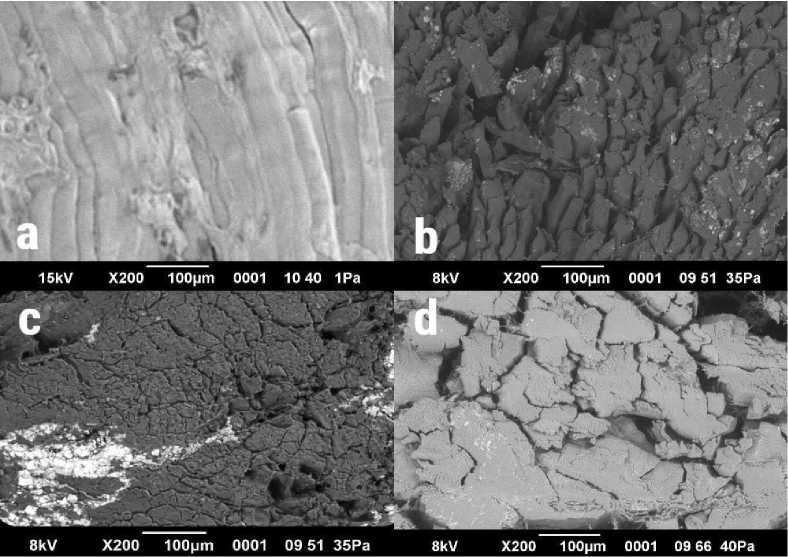
Figure 1. Microstructure of mutton samples after 36 hours of fermentation: a - control sample, b – Sample 1 (NaCl 5%), c – Sample 2 (NaCl5% +syringe LAB), d – Sample 3 (NaCl5% + rubbing LAB)
In the sample treated only with salt (NaCl 5%) (b), the initial signs of structural disor-ganization are observed: partial stratification of muscle fibers, increased interfibrillary gaps and the appearance of microcracks. These changes may be related to the osmotic effect of salt, extraction of myofibrillary proteins, and changes in their degree of hydration. However, in general, the muscular framework remains relatively intact, which indicates a limited degree of structural modification with traditional salt salting.
The most pronounced structural changes were recorded in a sample with a syringe injection of a salty mixture enriched with LAB (c). Micrographs show significant destruction of the integrity of the myofibrillary framework, pronounced fiber stratification, expansion of the inter-fiber spaces and disruption of the connective tissue structure. These changes indicate an intensive course of fermentation processes due to the uniform distribution of LAB in the thickness of muscle tissue, an active decrease in pH and an increase in proteolytic transformations. This microstructure correlates with the lowest pH values and high water activity recorded for this variant.
In a sample with surface rubbing with a salt mixture enriched with LAB(d), structural changes are also pronounced, but they are less intense compared to the syringe method. There is a partial destruction of muscle fibers and deformation of connective tissue elements mainly in the surface layers, while the structure is relatively preserved in the deep zones. This indicates a limited diffusion of microorganisms and their metabolic products deep into the tissue, which is consistent with the intermediate values of pH and water activity.
In general, the results of microstructural analysis confirm that the use of a salting mixture enriched with lactic acid bacteria contributes to a deeper and more manageable modification of the muscle structure of mutton compared with traditional salt brining. The method of applying the starter culture is a critically important factor: syringe injection ensures the most uniform distribution of LAB and the maximum degree of structural transformation, while surface rubbing has a more local effect. The identified microstructural changes may be directly related to an improvement in the textural properties and a decrease in the intensity of the specific odor of mutton due to controlled enzymatic processes.
Also, the use of salting systems enriched with lactic acid bacteria has a direct effect on the formation of the aromatic profile of mutton during fermentation.
The control sample retained the intense characteristic "mutton" odor typical of fresh meat, while the traditional salt ambassador provided only partial attenuation. The use of starter cultures based on lactic acid bacteria isolated from the fermented milk product irkit led to more pronounced sensory changes, manifested in the formation of meat and dairy and dairy flavor shades, depending on the method of application of the salt mixture. These changes indicate the active participation of lactic acid microflora in the biotransformation of meat flavor-forming compounds, probably associated with a decrease in pH and changes in the microenvironment of muscle tissue, which helps to mask the specific smell of mutton.
Discussion
The data obtained demonstrate that the method of meat processing significantly affects the microstructure, physico-chemical and functional properties of mutton. The control sample, which was not exposed to salt or starter culture, maintained a dense and orderly myofibrillary network with minimal changes in the inter-fiber spaces. This indicates a stable structural organization of muscle tissue in the absence of technological intervention, however, low water activity (Aw = 0.55) and high pH (6.23) limit biochemical activity and the development of enzymatic processes, which makes the control sample a base for comparative analysis.
The use of 5% NaCl (Sample 1) caused a moderate expansion of the inter-fiber spaces and partial disorganization of the protein matrix, which is confirmed by an increase in the mass fraction of moisture (56.35%), protein (16.28%) and water activity (Aw = 0.86). Such changes indicate the ion-osmotic effect of salt, leading to hydration of myofibrillary proteins and an increase in the moisture-retaining capacity of meat. At the same time, a decrease in pH to 5.88 and a moderate increase in salt content confirm the effectiveness of dry salt for controlling fermentation and microbiological processes.
Mechanical application of the salt mixture by syringing (Sample 2) led to the most pronounced microstructural changes: multiple microcracks, expansion of the inter-fiber spaces, and initial signs of disorganization of the endomysium were observed. This was accompanied by a maximum moisture content by mass (61.95%), high water activity (Aw = 0.93), and a decrease in pH to 5.72. The data obtained indicate the combined effect of mechanical and salt action, which creates optimal conditions for the intensification of proteolysis and fermentation, but requires increased microbiological control.
The most balanced manifestation of the technological effect turned out to be a sample with rubbing of a salt mixture, including salt and starter culture (Sample 3). In this case, partial disorganization of the myofibrillary structure and moderate expansion of the inter-fiber spaces were observed, but without destruction of the structure characteristic of syringing. The moisture retention capacity was maximal (68.73%), the water activity reached 0.90, and the pH decreased to 5.87, which provided favorable conditions for fermentation with controlled microbiological growth. The moderate reduction in muscle pH observed in this study may promote the establishment of a beneficial lactic acid microbiota and enhance the microbiological stability of meat products. At the same time, there was a decrease in the fat fraction (10.68%) and the preservation of the elastic fiber structure, which forms optimal sensory and textural characteristics of fermented mutton.
Thus, the results confirm the high efficiency of the combined use of salt and lactic acid bacteria isolated from the traditional fermented milk product «irkit» to modify the structure and functional properties of meat. Microstructural and physicochemical changes in the starter culture samples indicate a targeted softening of muscle and connective tissue, an increase in moisture retention and the formation of a specific acid regime, which positively affects the organoleptic properties, microbiological stability and potential shelf life of the product. These data substantiate the prospects of using authentic starter cultures to develop new functional meat products with unique taste qualities and high nutritional value.
In a broader technological context, the obtained results are consistent with modern approaches to the biopreservation of meat products, which rely on the use of lactic acid bacteria and their metabolites to enhance the microbiological stability of raw materials. The optimal pH values and the establishment of an active lactic acid microbiota may limit the growth of undesirable microorganisms and thereby potentially contribute to extending the shelf life of meat products. In this regard, the use of autochthonous LAB isolated from traditional fermented dairy products is of interest not only as a tool for improving the structural and sensory properties of mutton but also as a promising approach for the development of natural biopreservation technologies in meat processing.
Conclusion
The conducted research has confirmed that the method of processing mutton significantly affects the microstructure, physico-chemical and functional characteristics of meat. The control sample without salt and starter culture retained a dense, ordered myofibrillary network with low water activity and high pH, which limits proteolytic and microbiological activity.
The addition of 5% NaCl caused a moderate expansion of the inter-fiber spaces and hydration of the protein matrix, increasing moisture retention, lowering the pH and improving the functional properties of meat. Mechanical application of the salt mixture by syringing enhanced these effects, creating conditions for intensive proteolysis and fermentation, but was accompanied by more pronounced microstructural changes.
The sample with a mixture of salt and starter culture was characterized by the most balanced indicators: an optimal combination of moisture retention, a decrease in fat fraction, partial disorganization of the myofibrillary network and a controlled decrease in pH was observed. These changes improve the organoleptic properties, texture, and microbiological stability of meat, creating favorable conditions for fermentation and storage.
The use of lactic acid microorganisms isolated from the traditional fermented milk product «irkit» has confirmed their high efficiency as a natural starter culture for the fermentation of mutton. The use of these cultures makes it possible to preserve the authentic taste profile of the product, while simultaneously improving the textural and functional characteristics of meat, as well as increasing its biological value and microbiological safety. The high adaptation of autochthonous lactic acid bacteria to osmotic stress, including the presence of table salt, ensures their stable activity in the composition of salt mixtures and promotes a gentle, controlled effect on the structure of muscle tissue, which makes this approach promising from the point of view of sustainable and traditionally oriented biotechnologies for processing meat raw materials.
The results obtained confirm the prospects of introducing traditional authentic starter cultures into mutton processing technology, opening up opportunities for the development of new functional and fermented meat products with high consumer value and extended shelf life.
