
Nanomodification of water-based styrene–acrylic paint and coating compositions with organosilicon additives
Journal: Nanotechnologies in Construction: A Scientific Internet-Journal @nanobuild-en
Section: The results of the specialists’ and scientists’ researches
Article in issue: 4 Vol.18, 2026.
Free access
Introduction. Modern trends in the construction and paint industries are aimed at creating environmentally friendly materials with improved protective and decorative properties. Water-based styrene-acrylic dispersions are widely used for painting facades and wooden structures, but their performance characteristics, particularly hydrophobicity, moisture resistance, and adhesion strength, are often subject to increased requirements. A promising method of nanomodification is the introduction of organosilicon compounds for targeted modification of surface properties and interfacial interactions in the polymer matrix. Materials and мethods. The study was conducted on a styrene-acrylic dispersion using three types of additives: a wetting agent based on polyether-modified polysiloxane, a water-repellent agent in the form of a polysiloxane emulsion, and a wax silicone emulsion. The coating properties were tested using standard methods. Results and discussion. It was found that the introduction of a water-repellent ensures a reduction in the surface energy of the coating from 45.9 to 9.6 mN/m. The surface transitions from a hydrophilic state with a contact angle of 54° to a hydrophobic state with an angle of up to 106°. A wax emulsion also enhances hydrophobicity, increasing the contact angle to 92°. Nanomodified styrene-acrylic dispersions exhibit a significant increase in gloss (up to 56 GU) and enhanced resistance to aqueous media while maintaining high adhesion. A plasticizing effect of the additives, leading to a decrease in coating hardness, was revealed. Conclusion. The developed formulations, based on aqueous styrene-acrylic dispersions and organosilicon additives, improve their processing properties. They can be used to produce coatings with increased hydrophobicity, water resistance, and improved decorative properties. The ability to specifically control the hydrophobicity-mechanical strength ratio has been demonstrated. This opens up prospects for the use of these compounds in conditions of high humidity and other atmospheric influences.
Short address: https://sciup.org/142248518
IDS: 142248518 | DOI: 10.15828/2075-8545-2026-18-4-545-554
Text of the scientific article Nanomodification of water-based styrene–acrylic paint and coating compositions with organosilicon additives
Original article
Сорокина А.С., Комарова Л.Ю., Копылов Н.И. Наномодификация водных стирол-акриловых лакокрасочных составов крем-нийорганическими добавками. Нанотехнологии в строительстве. 2026; 18(4):545–554. – EDN: QRGTFF.
In the age of construction and industry, paint and coating compositions perform substantial functions, protecting structures from the destructive effects of the environment and imparting an aesthetics. Among the wide variety of paint and coating compositions, water-based dispersions based on styrene-acrylic copolymers occupy a special place. Styrene-acrylic compositions combine the proper- ties of acrylic and styrene polymers, capable of forming smooth, moderately elastic, and durable coatings. These compositions are environmentally friendly due to their low content of volatile organic compounds and are noninflammable [1, 2, 16]. Furthermore, water-based paint and coating compositions are easy to apply using a spray, roller, and brush, have no pungent odor, which improves the comfort of the painting process, dry quickly, and reduce the need for prolonged ventilation of the premises.
Nanotechnologies in construction
Нанотехнологии в строительстве
2026; 18 (4): 545–554
Nanob
THE RESULTS OF THE SPECIALISTS’ AND SCIENTISTS’ RESEARCHES
The coatings that these compositions form have high wear resistance and resistance to chemicals, which makes them suitable for use in industrial and commercial facilities, as well as for outdoor construction work for both wooden structures and porous mineral materials – concrete and plaster [5].
Despite the obvious advantages, water-based styrene-acrylic coatings have a number of limitations associated with insufficient hydrophobicity, a tendency to contamination and limited resistance to long-term exposure to moisture [3–6, 17, 20]. These shortcomings lead to premature coating degradation, reducing their protective and decorative properties. This is especially critical for facade structures operated in conditions of high humidity, temperature changes and atmospheric pollution [7, 18]. In this regard, a pressing task is to find improved methods for modifying styrene-acrylic compositions to ensure increased hydrophobicity, adhesive strength and aesthetics of coatings. One of the most promising trend is the use of organosilicon compounds as nanomodifying additives: silicones, siloxanes, and silanes [8, 9, 19, 21].
Due to their unique hybrid structure, which combines organic and inorganic moieties, organosilicon compounds can be used to specifically modify the surface properties of coatings. Several literature sources [10, 11, 22] have shown that the introduction of silicone additives can reduce the surface energy of a coating, impart water-repellent properties, improve adhesion, and regulate the rheological behavior of paint and coating compositions. Complex formulations combining several types of additives prove to be the most effective, achieving a synergistic effect [12].
Despite a significant number of studies devoted to the modification of paint and varnish compositions with organosilicon compounds [13–15], there is still no systematized information on the combined effect of various types of additives on the performance properties of aqueous styrene-acrylic dispersions. The need to determine the optimal balance between hydrophobic characteristics, mechanical stability, and the aesthetic qualities of finishing coatings is particularly pressing.
The aim of this work was to study the influence of organosilicon additives on the hydrophobic, physical, mechanical and decorative properties of coatings based on aqueous styrene-acrylic dispersion and to develop formulations with improved performance characteristics.
MATERIALS AND METHODS
The object of the study was a basic water-dispersible composition No. 1 based on a styrene-acrylic copolymer with a solids content of 50 ± 1%, a Brookfield viscosity of 3860 cP, and a minimum film formation temperature of 20 °C.
The following additives were added to the styrene-acrylic composition:
-
• water repellent: an aqueous emulsion of functional polysiloxanes;
-
• wetting agent: polyether-modified polysiloxane;
-
• wax silicone emulsion: a wax emulsion for additional modification of tactile and water-repellent properties. All sample compositions, including the basic one, were supplemented with a silicone defoamer at a rate of 0.1% to suppress foaming, as well as 3,2% of processing aids: thickener, coalescent, biocide, and buffering agent*. Experimental samples were prepared by mixing the components in a 1,0 L laboratory dissolver. The concentrations of the studied additives varied in each sample: water repellent – 1,5–5,0% (samples A-1, A-2, A-3), wetting agent – 0,1–0,5% (samples B-1, B-2, B-3), wax silicone emulsion – 1,0–3,0% (samples C-1, C-2, C-3). During the study of the effect of individual modifiers on the dispersion properties, two polymodified compositions were prepared. Sample No. 2 represented a balanced combination of adhesive strength and hydrophobicity, and sample No. 3 was specially developed to achieve maximum hydrophobicity. The modified compositions of the styrene-acrylic dispersion are presented in Table 1.
Mono- and polymodified compositions were tested for viscosity using a Brookfield viscometer (GOST 25271) and applied to 9×12 cm glass plates using an applicator with a wet film thickness of 120 µm to visually assess the coating for any defects. Drying was carried out in a specialized climate-controlled cabinet at a temperature of 23 ± 2 °C and a relative humidity of 50 ± 5%. The obtained coatings were evaluated in accordance with standard methods: gloss was determined at an angle of 60° (GOST 31975), hardness was determined using a pendulum device (GOST 5233), and adhesion to glass was determined using the grid notch method (GOST 31149). Resistance to static water exposure was assessed according to GOST 9.403. The water contact angle was measured using the sessile drop method (GOST 7934.2), and the surface energy was calculated using the Owens-Wendt method using water and glycerin as test liquids [15].
RESULTS AND DISCUSSION
Nanomodification of styrene-acrylic compounds was carried out using the presented additives. It was noted that the addition of a wetting agent to the styrene-acrylic dispersion resulted in a decrease in initial viscosity and a significant improvement in the composition’s spreading properties. This was due to a decrease in surface tension at the phase interface and the formation of a smoother film surface. Furthermore, the coating surface gloss increased from 14,9 to 35,3 GU (Table 2). The adhesion of the studied samples was maximum and equal to 0 points.
The water-repellent agent has the most significant effect on the coating properties (Table 3). Increasing the content from 1,5% to 5,0% increases viscosity by
Nanotechnologies in construction 2026; 18 (4):
Нанотехнологии в строительстве 545–554
THE RESULTS OF THE SPECIALISTS’ AND SCIENTISTS’ RESEARCHES
Nanob
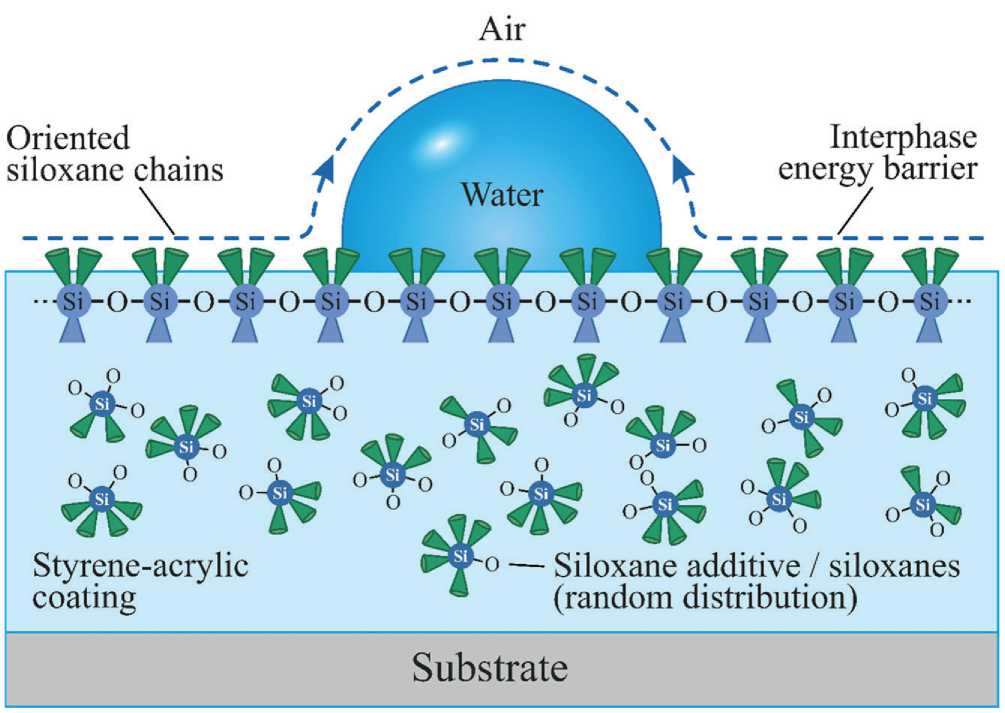
Table 1. Compositions of mono- and polymodified dispersions (wt.%)
|
Component |
Sample |
|||||||||||
|
No. 1 |
B-1 |
B-2 |
B-3 |
A-1 |
A-2 |
A-3 |
C-1 |
C-2 |
C-3 |
No. 2 |
No. 3 |
|
|
Distilled water |
71.7 |
71.6 |
71.4 |
71.2 |
70.2 |
68.7 |
66.7 |
70.7 |
69.7 |
68.7 |
67.4 |
64.2 |
|
Defoamer |
0.1 |
0.1 |
0.1 |
0.1 |
0.1 |
0.1 |
0.1 |
0.1 |
0.1 |
0.1 |
0.1 |
0.1 |
|
Water-repellent |
– |
– |
– |
– |
1.5 |
3.0 |
5.0 |
– |
– |
– |
3.0 |
5.0 |
|
Wetting agent |
– |
0.1 |
0.3 |
0.5 |
– |
– |
– |
– |
– |
– |
0.3 |
0.5 |
|
Wax silicone emulsion |
– |
– |
– |
– |
– |
– |
– |
1.0 |
2.0 |
3.0 |
1.0 |
2.0 |
|
Styrene-acrylic dispersion |
25.0 |
25.0 |
25.0 |
25.0 |
25.0 |
25.0 |
25.0 |
25.0 |
25.0 |
25.0 |
25.0 |
25.0 |
|
Technological additives* |
3.2 |
3.2 |
3.2 |
3.2 |
3.2 |
3.2 |
3.2 |
3.2 |
3.2 |
3.2 |
3.2 |
3.2 |
|
Total amount |
100 |
100 |
100 |
100 |
100 |
100 |
100 |
100 |
100 |
100 |
100 |
100 |
Table 2. Properties of styrene-acrylic dispersions nanomodified by the wetting agent
|
Parameter |
Sample |
|||
|
No. 1 |
B-1 (0.1%) |
B-2 (0.3%) |
B-3 (0.5%) |
|
|
Brookfield viscosity, cP |
3860 |
2700 |
3180 |
3040 |
|
Gloss at 60°, GU |
14.9 |
19.0 |
21.8 |
35.3 |
|
Adhesion to glass, points |
0 |
0 |
0 |
0 |
Fig. 1. Scheme of migration and orientation of hydrophobic siloxane fragments at the “coating-air” interface
Nanotechnologies in construction
Нанотехнологии в строительстве
2026; 18 (4): 545–554
THE RESULTS OF THE SPECIALISTS’ AND SCIENTISTS’ RESEARCHES
Nanob
up to 1.9 times. This is apparently due to the interaction of siloxane chains with the polymer matrix and the formation of a surface monomolecular layer. This phenomenon is caused by the migration and orientation of hydrophobic siloxane fragments at the “coatingair” interface, which leads to formation an energetically unfavorable barrier to water wetting. The key result is a significant reduction in the coating surface energy
from 45.9 to 9.6 mN/m and an increase in the contact angle from 54° to 106°.
At the same time, a plasticizing effect was observed. This was reflected in a consistent decrease in coating hardness (as measured by a pendulum tester) from 0.28 to 0.12 relative units and an increase in gloss to 39,0 GU.
The wax-based silicone additive increased viscosity by 1.4 times. As a water-repellent agent, it also contributed
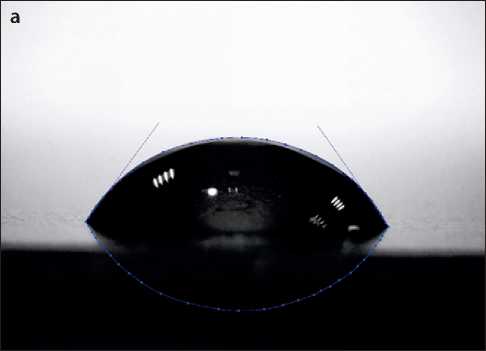
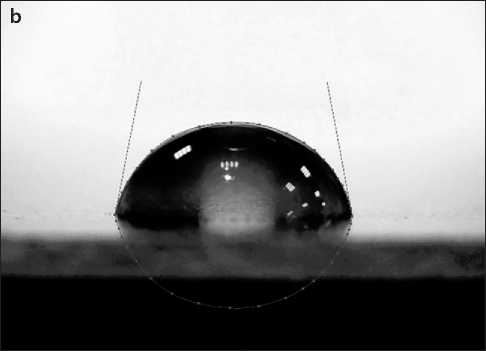
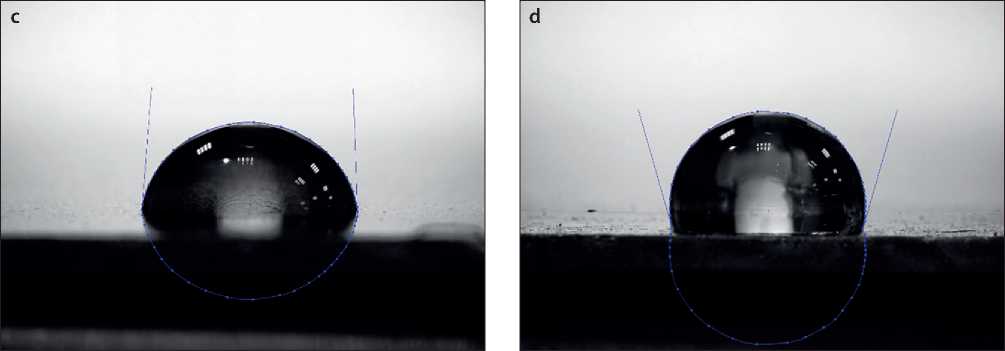
Fig. 2. Sessile drop method images of distilled water on the surface of samples modified by the water-repellent: a – №1; b – A-1 (1.5%); c – A-2 (3.0%); d – A-3 (5.0%)
Table 3. Properties of styrene-acrylic dispersions nanomodified by the water-repellent
|
Parameter |
Sample |
|||
|
No. 1 |
A-1 (1.5%) |
A-2 (3.0%) |
A-3 (5.0%) |
|
|
Brookfield viscosity, cP |
3860 |
4100 |
5840 |
7780 |
|
Gloss at 60°, GU |
14.9 |
15.1 |
18.9 |
39.0 |
|
Adhesion to glass, points |
0 |
0 |
0 |
1 |
|
Contact angle, ° |
54 |
79 |
86 |
106 |
|
Surface energy, mN/m |
45.9 |
25.8 |
20.2 |
9.6 |
|
Coating hardness, rel. units |
0.28 |
0.21 |
0.15 |
0.12 |
|
Resistance to static water |
turbidity, bulgy |
turbidity |
slight turbidity |
no changes |
Nanotechnologies in construction 2026; 18 (4):
Нанотехнологии в строительстве 545–554
Nanob
THE RESULTS OF THE SPECIALISTS’ AND SCIENTISTS’ RESEARCHES
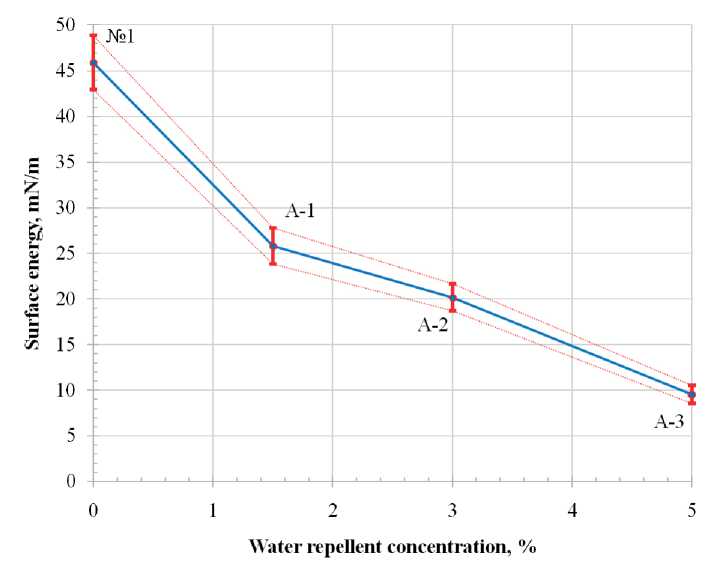
Fig. 3. The influence of water repellent concentration on the coating surface energy
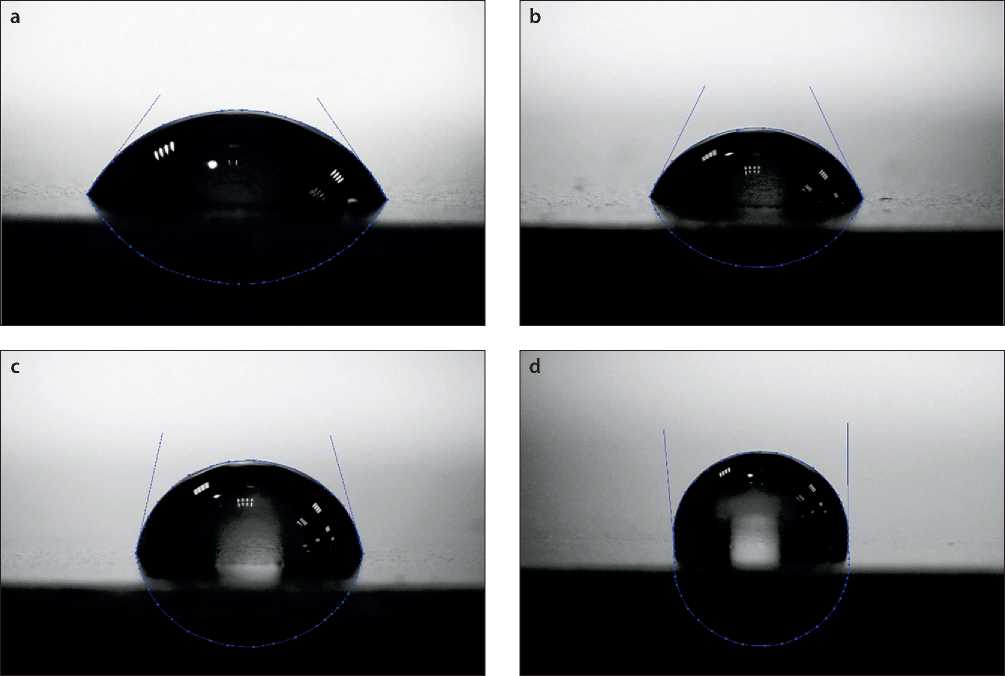
Fig. 4. Sessile drop method images of distilled water on the surface of samples modified by the wax additive: a – No. 1; b –C-1 (1.0%); c – C-2 (2.0%); d – C-3 (3.0%)
Nanotechnologies in construction 2026; 18 (4):
Нанотехнологии в строительстве 545–554
THE RESULTS OF THE SPECIALISTS’ AND SCIENTISTS’ RESEARCHES
Nanob
to the coating’s hydrophobicity. The contact angle increased significantly from 54° to 92° at a 3.0% content (see Table 4). The addition of wax increased gloss to 39.3 GU. In polymodified compositions, this additive was used to enhance the water-repellent effect and improve the tactile properties of the coating.
Polymodified compositions were developed based on the data presented in the study. Sample No. 2 is balanced in adhesion and hydrophobicity. Sample No. 3 has maximum hydrophobicity. Their properties were compared with unmodified composition No. 1 (Table 5).
Based on the data obtained, it can be concluded that nanomodified aqueous styrene-acrylic compositions form coatings that are superior in properties to the base composition:
-
1. Hydrophobicity and water resistance. Surface energy decreases from 45.9 mN/m to 21.2 mN/m (sample No. 2) and 16.3 mN/m (sample No. 3). Unlike the base coating, which bulges and becomes turbidity after static
-
2. Physical and mechanical properties. Coating hardness decreases from 0.28 relative units to 0.16 (sample No. 2) and 0.10 (sample No. 3), which is due to plasticization of the polymer matrix by the water-repellent agent and wax emulsion adsorbed on the polymer matrix surface. However, adhesion to glass remains virtually unchanged, ranging from 0 to 1 point.
-
3. Decorative properties. The gloss of the coatings increases by 3–4 times (up to 52–56 GU), which is associated with improved spreading of the composition and the formation of a smoother polymer surface.
exposure to water due to partial diffusion into the coating, the modified coatings do not exhibit such changes, confirming the enhanced protective properties due to the hydrophobic barrier.
Based on the research results, recommendations were given for modifying water-based paint and varnish compositions, on the selection of additives and their content, depending on the required characteristics of “hydropho-
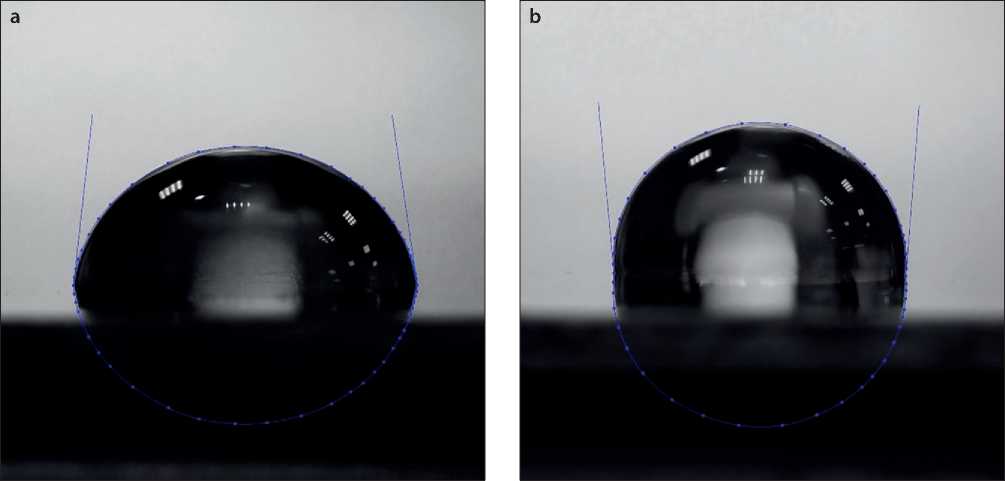
Fig. 5. Sessile drop method images of distilled water on the surface of samples of polymodified compositions: a – Sample No. 2; b –Sample No. 3
Table 4. Properties of styrene-acrylic dispersions nanomodified by the wax silicone emulsion
|
Parameter |
Sample |
|||
|
No. 1 |
C-1 (1.0%) |
C-2 (2.0%) |
C-3 (3.0%) |
|
|
Brookfield viscosity, cP |
3860 |
3620 |
4440 |
5420 |
|
Gloss at 60°, GU |
14.9 |
14.6 |
25.2 |
39.3 |
|
Adhesion to glass, points |
0 |
0 |
0 |
0 |
|
Contact angle, ° |
54 |
64 |
75 |
92 |
|
Surface energy, mN/m |
45.9 |
31.2 |
24.5 |
16.8 |
Nanotechnologies in construction 2026; 18 (4):
Нанотехнологии в строительстве 545–554
THE RESULTS OF THE SPECIALISTS’ AND SCIENTISTS’ RESEARCHES
Nanob
bicity – adhesive strength – hardness”. It was determined that composition No. 3 is preferable for exterior coatings, while composition No. 2 is preferred for interior use.
The study results are consistent with data presented in [11, 12], which also noted the positive effect of silicone additives on the hydrophobicity of coatings. However, the distinctive feature of this study lies in its integrated approach to nanomodification, which ensures a synergistic effect from the balanced introduction of several additives.
CONCLUSION
The conducted studies have shown that the use of organosilicon additives for targeted regulation of waterbased styrene-acrylic paint and coating compositions properties is highly effective. The developed polymodified compositions are of practical interest for the production of polymer coatings. It will provide improved technical and decorative properties and will also extend their service life in adverse weather conditions.
Table 5. Comparison of the properties of unmodified and polymodified styrene-acrylic dispersions based compositions
|
Parameter |
Sample |
||
|
No. 1 |
No. 2 |
No. 3 |
|
|
Brookfield viscosity, cP |
3860 |
4280 |
4740 |
|
Gloss at 60°, GU |
14.9 |
52.0 |
56.0 |
|
Adhesion to glass, points |
0 |
0 |
1 |
|
Contact angle, ° |
54 |
82 |
92 |
|
Surface energy, mN/m |
45.9 |
21.2 |
16.3 |
|
Coating hardness, rel. units |
0.28 |
0.16 |
0.10 |
|
Resistance to static water |
turbidity, bulgy |
no changes |
no changes |
