
New Distribution Area of Astragalus hamosus L. (Fabaceae Lindl.) in the Lesser Caucasus (Azerbaijan)
Journal: Bulletin of Science and Practice @bulletennauki
Section: Естественные науки
Article in issue: 4 т.12, 2026.
Free access
Species Astragalus L. Family Fabaceae Lindl. Widely represented in the flora of Azerbaijan. Descriptions of the species composition of Astragalus L. were previously made by the authors. In 2025, new locations of some species were discovered during field research. For the first time, new locations of Astragalus hamosus L. were discovered during research conducted near the village of Sus in the Lachin district (June 17, 2025), on the left bank of the Khakari River, and in the center of the village of Agaly in the Zangilan district (May 8, 2025). The morphological description and exact coordinates of the detection locations are provided.
Similar articles in the section Geographic botany. Plant geography (phytogeography). Floras. Geographic distribution of plants
Short address: https://sciup.org/14135135
IDS: 14135135 | UDC: 581.9; 635.711 | DOI: 10.33619/2414-2948/125/04
Новый ареал распространения Astragalus hamosus L. (Fabaceae Lindl.) на Малом Кавказе (Азербайджан)
Виды Astragalus L. семейства Fabaceae Lindl. Широко представлены во флоре Азербайджана. Описания видового состава Astragalus L. было ранее выполнено авторами. В 2025 г. В ходе полевых исследований были выявлены новые местонахождения некоторых видов. Впервые новые местонахождения Astragalus hamosus L. было обнаружено в ходе исследований, проведенных вблизи села Сус Лачинского района (17.06.2025), вдоль левого берега реки Хакари, и в центре села Агалы Зангиланского района (08.05.2025). Приведено морфологическое описание и точные координаты места обнаружения.
Text of the scientific article New Distribution Area of Astragalus hamosus L. (Fabaceae Lindl.) in the Lesser Caucasus (Azerbaijan)
Бюллетень науки и практики / Bulletin of Science and Practice
UDC 581.9; 635.711
The richness of the flora and the diversity of vegetation cover in the territory of Azerbaijan are related to the variety of its physical-geographical and natural-historical conditions, as well as its complex history formed under the influence of extensive floristic regions. This rich vegetation has always attracted the attention of researchers worldwide. Plant communities occur across all relief forms, water bodies, river valley slopes, and gorges, ravines, and semi-desert vegetation zones. Often, they form completely independent phytocenoses and various types of plant assemblages. This is evidently associated with optimal soil-climatic conditions and the strong dissection of the relief, which creates numerous diverse ecotopes. In the formation of regional vegetation, the emergence of diverse plant communities, and the enrichment of species composition, species belonging to the genus Astragalus L. of the family Fabaceae Lindl. occupy a special place.
Our studies have made it possible to identify important characteristics typical for species of the genus Astragalus of the family Fabaceae Lindl. distributed in the study area. Investigating species of the genus Astragalus occurring in the region, determining the plant communities they form, and identifying their new distribution areas are considered relevant.
Materıals and Methods
During the research, generally accepted floristic, geobotanical, and bioecological methods, as well as phenological observations and route surveys, were applied. Literary sources and factual data obtained during field studies served as the main research material. Taxonomically rich genera of the family Fabaceae Lindl. were analyzed separately. Among these genera, species of the genus *Astragalus* L., distinguished by high species diversity, are of particular scientific interest.
Species identification was carried out using “Flora of Azerbaijan” and the works of other researchers [1, 4, 8–15].
According to literature data, the genus comprises 2400 species worldwide, 988 species in the former USSR, 235 species in the Caucasus, 142 species in the flora of Azerbaijan, and 84 species in the flora of the Nakhchivan Autonomous Republic [1–3, 5–8].
One of these species is Astragalus hamosus L.
Dıscussıon and Results
Among the plants widely distributed in the flora of Azerbaijan, species of the genus Astragalus belonging to the family Fabaceae deserve special mention. As noted above, the genus includes 2400 species worldwide, 988 species in the former USSR, 235 species in the Caucasus, 142 species in Azerbaijan, and 84 species in Nakhchivan AR. One of these species is Astragalus hamosus L. [1–3, 5–7].
Based on literature data and personal field research materials, two subgenera of the genus Astragalus were identified in the study area, and the floristic analysis of Astragalus hamosus L. by section is presented below [16].
Section Astragalus
Sect. Buceras Bunge: A. hamosus L.
Species name: Astragalus hamosus L.
Synonym: Astragalus buceras Willd.
Life form (Raunkiaer): Therophyte (annual herb)
Flowering period: March–April
Flower color: White, yellowish
Fruiting period: May–June
Etymology: Astragalus derives from the Greek name of the ankle bone, referring to plants with knotted, spine-like roots; hamosus refers to the strongly curved pods resembling a hook.
Botanical description: Stem up to 60 cm; leaves 5–10 cm long; leaflets 9–11 pairs, oblong, obtuse or truncate; lower surface pubescent, upper surface glabrous. Inflorescence with 5–14 flowers. Calyx 5–6 mm. Corolla white or pale yellow; standard 7–8 mm; stamens 10. Pods 20–50 mm long and 2–3 mm wide, linear, apex acute, nearly semicircularly curved, laterally compressed.
The study of the distribution of Astragalus species across botanical-geographical regions of Azerbaijan is of great importance. Therefore, five distinct botanical-geographical regions were selected to determine the distribution of the studied species within the national flora, and comparative analyses were conducted. According to literature data, Astragalus hamosus L. is distributed in the Greater Caucasus and Nakhchivan Autonomous Republic botanical-geographical regions. This species has not been reported in the literature for the flora of the Little Caucasus. During floristic, geobotanical, and ethnobotanical studies conducted in 2024–2025, a new locality of Astragalus hamosus L. was identified by us for the first time. The newly discovered habitats are presented below.
-
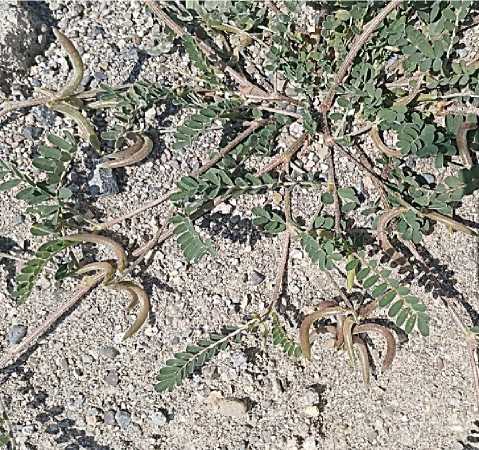
1. Agali village area, Zangilan district. The species was recorded in dry roadside habitats in the territory of Agali village, Zangilan district of the Republic of Azerbaijan. The average altitude of the site is 360 m.
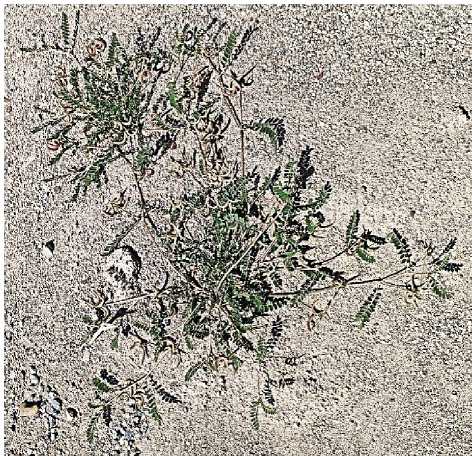
Figure 1. Astragalus hamosus L. (39°11′03″ N, 46°45′15″ E), 08.05.2025
-
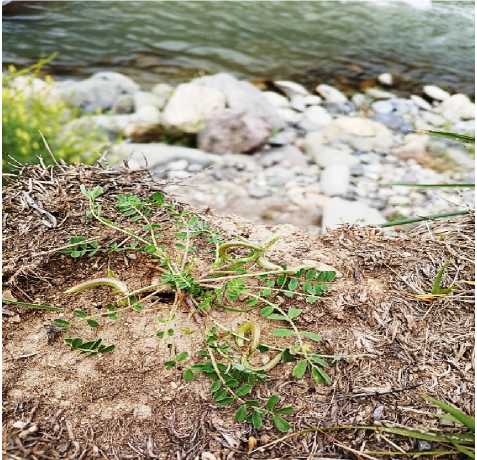
2. Near Sus village, Lachin district, along the left bank of the Hakari River. The Hakari River is a left tributary of the Araz River and is the second largest river in the Azerbaijani part of the Little Caucasus after the Tartar River. It flows through the territories of Lachin, Gubadli, and Zangilan districts and joins the Araz River in Zangilan distri
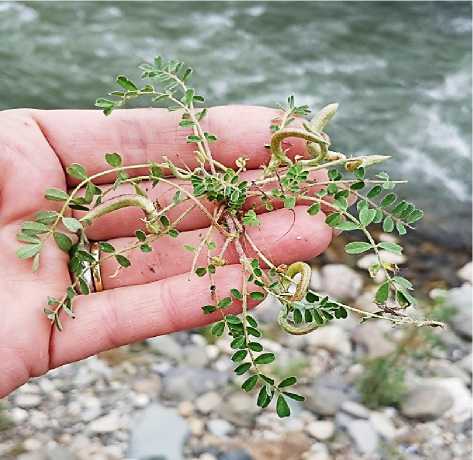
Figure 2. Bank of the Hakari River 39.628398, 46.533507 (39°37′35.9″ N, 46°31′59.5″ E), 17.06.2025
Thus, as a result of the conducted research, the taxonomic composition of the genus Astragalus L. in the flora of Azerbaijan was determined, and new distribution areas of certain species were investigated. The research results constitute an important scientific basis for studying the vegetation of the region.
Conclusıons
Based on the conducted research, the sectional taxonomic composition of Astragalus species belonging to the family Fabaceae was determined, and new distribution areas of Astragalus hamosus L. were identified by us for the Little Caucasus botanical-geographical region.
