
New forms of employment in Russia: From legal uncertainty to systemic regulation
Journal: Economic and Social Changes: Facts, Trends, Forecast @volnc-esc-en
Section: Social and economic development
Article in issue: 2 т.19, 2026.
Free access
The relevance of the study stems from the rapid proliferation of new forms of employment in the context of economic digitalization, a process that is outpacing the development of adequate institutional frameworks and thereby generating systemic socio-economic risks. The aim of the paper is to conduct a comparative analysis of expert assessments regarding the current level, barriers, and prospects for the institutionalization of new employment forms in Russia, drawing on a regional case study. The scientific novelty lies in the application of a structured research-expert seminar (focus group) methodology to purposefully juxtapose the perspectives of two key stakeholder groups: labor market professionals (n = 23) and young people directly engaged in new forms of employment (n = 25). The main findings confirm a consensus on the relatively low level of institutionalization. The study reveals a fundamental duality in the perception of the phenomenon under analysis: professional experts predominantly view institutionalization as a "project", focusing on macro-level regulation and investment, whereas young people tend to see it as an "outcome", emphasizing practical guarantees, rights protection, and technological infrastructure. Both expert groups identify legal uncertainty and a crisis of trust in the state – an entity simultaneously regarded as the principal agent of change and a source of systemic obstacles – as the key barriers. The groups' recommendations diverge: professionals primarily propose systemic modernization of regulatory and analytical institutions, while young people express a demand for specific digital services and protective tools. A limitation of the study is its regional focus. A promising avenue for future research is the quantitative verification of the identified criteria and hypotheses using broader datasets.
Similar articles in the section Theory and organization of work. Relations between business firms and employees

Short address: https://sciup.org/147253869
IDS: 147253869 | UDC: 331.1 | DOI: 10.15838/esc.2026.2.104.10
Text of the scientific article New forms of employment in Russia: From legal uncertainty to systemic regulation
The rapid digitalization of the economy, the transformation of the demographic structure and the revision of traditional models of social and labor relations have led to profound changes in the modern labor market (Toshchenko, 2020). In these conditions, new forms of employment (hereinafter referred to as NFE) are becoming widespread: platform work, remote and hybrid work, project and freelance employment (Ilyin et al., 2024). Their spontaneous development outstrips the formation of adequate institutional frameworks, which creates systemic risks (Nekhoda et al., 2025). The legal vacuum, unadapted social security and taxation systems, as well as mechanisms for protecting workers’ rights lead to increased socio-economic instability, rising inequality, and the formation of a “wild digital capitalism” where technological dynamics dominate social guarantees (Sinyavskaya et al., 2022).
International experience shows that targeted institutionalization of NFE (the process of turning new practices into sustainable, regulated structures) is the key to minimizing socio-economic risks and an important condition for realizing the potential of the digital economy (Radaev, 2022). Developed countries apply a set of measures to integrate flexible work formats into the legal field (Lopez et al., 2024). The Netherlands has legislation guaranteeing the right to request a flexible schedule1. Germany has introduced a special social and legal status of an “employee–like employee”, which expands social protection measures for certain categories of the self-employed and freelancers (Strebkov, Shevchuk, 2022). The UK is known for court decisions recognizing platform employees as employees with full employment rights (Peters, 2020). A significant example is Spain, where a special tax and legal regime has been introduced for remote workers, and labor legislation is being reformed to limit the abuse of temporary contracts (De Stefano, Aloisi, 2018). In France, a social insurance system has been established for the self-employed, and platforms have been judicially held liable for accidents involving couriers2. Scandinavian countries enter into collective agreements with platforms in the gig economy sectors, setting minimum wage rates and working conditions (Valente, Graham, 2025). At the level of the European Union, a directive has been adopted aimed at improving the working conditions of platform employees3. These examples illustrate a general trend: states are gradually moving from reactive judicial conflict resolution to the proactive creation of adaptive legal statuses, hybrid social protection systems and social dialogue mechanisms, which allows legitimizing new employment forms without suppressing their flexibility (Zhao, Voronov, 2023).
Despite the existence of separate initiatives (special regimes for the self-employed, digitalization of employment services), the level of institutionalization in Russia remains insufficient (Tomashevskii, Chichina, 2024). At the same time, there remains a shortage of research focusing on a comparative analysis of the perception of this problem by key stakeholders whose interests and experience directly determine the success of any reforms: the professional community (HR specialists, regulators) and the direct “users” of new labor formats – the youth (Biryukova, Sinyavskaya, 2025).
The aim of our study is to conduct a comparative analysis of expert assessments of the level, barriers and prospects for the institutionalization of new employment forms in Russia in the context of digitalization, obtained from two groups: labor market professionals and young workers. We solved the following tasks within the framework of achieving the goal: 1) identification of intuitive and criteria-based assessments of the level of institutionalization of the NFE; 2) identification of key systemic obstacles to this process; 3) formulation of recommendations on the development of the institutional environment from each expert group, as well as a comparison of the assessments of the analyzed phenomenon by each group. The article is based on the materials of a series of scientific and expert seminars held at the Institute of Economics and Management of Tomsk State University in May 2025 as part of the Russian Science Foundation project.
The scientific novelty of the work lies in the application of a qualitative methodology of structured expert workshops (focus groups) for a comparative analysis of the positions of two critically important but rarely compared groups of stakeholders. This allows not only identifying problems, but also revealing dualism in the perception of institutionalization as a “project” (the view of regulators and professionals) and as a “result” (the view of direct participants). This perspective provides a comprehensive, multidimensional understanding of institutional gaps.
The work contributes to the development of the theory of institutional changes in the labor market by proposing the operationalization of the concept of “institutionalization of NFE” through a set of criteria generated by the stakeholders themselves. The results obtained can become the basis for the development of a balanced public policy synthesizing macro-regulation with micro-level guarantees. It is expected that the findings of the study will be useful for legislative and executive authorities, representatives of business associations and educational institutions that form the agenda in the field of future work.
The hypothesis of the study is that the level of institutionalization of new forms of employment in Russia is assessed by key stakeholders as low, while labor market professionals and young people perceive this process in fundamentally different ways: the former as a macro-regulatory project, the latter as a practical result, which creates institutional gaps that can only be overcome by taking into account the positions of both groups in a comprehensive manner.
Research methodology
In our study, we understand new forms of employment as ways of organizing work that arise under the influence of the digitalization and go beyond the standard model of an indefinite fulltime employment contract. These include platform employment, remote and hybrid work, project employment, freelancing and other flexible formats characterized by the decentralization of the labor process, the use of digital management tools, as well as institutional uncertainty, expressed in the absence of a clear legal status and full-fledged social and labor guarantees.
The research was based on a qualitative methodology implemented in the format of structured scientific and expert seminars (Zaitseva et al., 2014; Casati et al., 2020). This choice is due to the complexity and relative novelty of the phenomenon of institutionalization of new forms of employment, for which ready-made theoretical models have not yet been formed and there is insufficient systematic statistical data (Geliskhanov, 2024, Nosulenko, 2021). In these circumstances, an indepth seminar based on a group discussion is an adequate tool for identifying hidden meanings, subjective assessments, and cause-and-effect relationships underlying the perception of the problem by key stakeholders (Guseltseva, 2017). The study is structured as an in-depth case study, focusing on analyzing the situation in a particular Russian region. The authors are fully aware of the limitations associated with the uniqueness of the local context, however, in the context of insufficient knowledge and fragmentary data on NFE, this approach seems quite justified and correct. It allows generating a detailed, content-rich understanding of processes, formulate working hypotheses and conceptual frameworks that can later be verified in quantitative studies on broader data sets4. The presented work, therefore, follows an established scientific approach, according to which qualitative methods are aimed at achieving a deeper level of interpretation of social phenomena, going beyond their superficial description (Tambovtsev, 2024).
There were 48 participants in the seminars, 23 of whom worked in the first group and 25 in the second group. The groups worked on different days. The working definition of the key concept was used as the conceptual foundation of the seminars. The moderators suggested that the experts proceed from an understanding of the institutionalization of NFE as a process of transformation of new, episodic social practices into stable, long-term norms, taking shape in the form of formal and informal institutions5. The preliminary discussion and coordination of this definition with the participants of the seminars provided the necessary conceptual unity and created a common semantic field for subsequent productive discussion.
The work of the groups was based on a specially developed algorithm that provides a logical transition from general diagnostics to specific solutions. The work within the framework of the seminars was organized as a sequential analytical process consisting of three key stages:
-
1) intuitive integral assessment: based on personal experience, participants gave an overall assessment of the degree of institutionalization of NFE in Russia on a scale from “critically low” to “high (excellent)”;
-
2) operationalization of the concept and development of criteria: we determined quantitative features (criteria) reflecting the level of institutionalization of the NFE during the group discussion, as well as we formed verification matrices that characterize it in the range from the maximum to the minimum level;
-
3) diagnosis of systemic barriers and generation of practical recommendations: at this stage, the experts’ focus shifted to identifying obstacles
hindering the institutionalization process and developing specific measures and proposals aimed at overcoming systemic barriers; the results obtained were ranked by experts according to the degree of importance.
To increase the reliability and depth of conclusions, the study applied a data triangulation strategy based on the inclusion of two contrasting but relevant groups of stakeholders (Kosharnaya, Kosharnyy, 2016). The first group consisted of professional experts: managers and specialists of recruitment agencies, practicing HR managers, representatives of HR services of large companies, specialists in the field of labor law and employment regulation. All of them have a systematic, macroeconomic view of the labor market and have direct experience of interacting with new forms of employment in their professional activities. The second group of experts consisted of students and recent graduates of Tomsk universities with personal experience in platform employment (courier services, taxi, freelance exchanges), remote project work, hybrid employment with flexible schedules, and occasional self-employment. The subsequent comparison and convergence of the assessments, criteria, and proposals of these two groups made it possible to build a multidimensional, threedimensional picture of the phenomenon under consideration, to identify both consensus areas and fundamental differences. This approach significantly enhances the validity of the study and corresponds to the complex nature of the analyzed socio-economic phenomenon (Mel’nikova, Khoroshilov, 2015). The chosen methodological framework ensured the collection of relevant and meaningful empirical material.
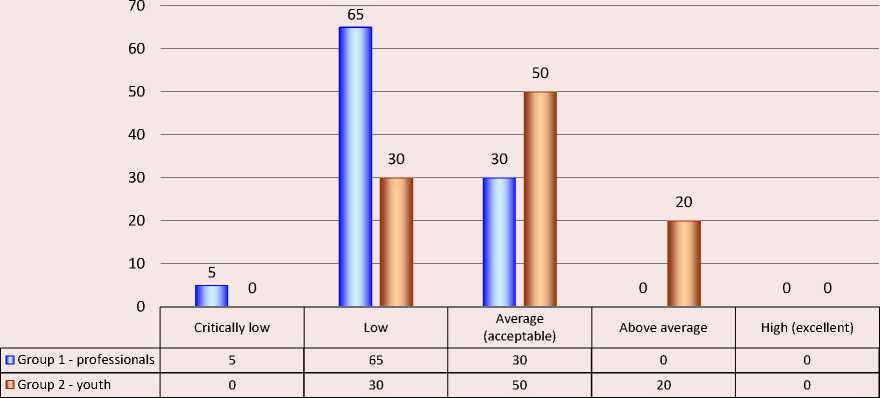
Figure 1. Expert (intuitive) assessment of the level of institutionalization of new forms of employment, %
Source: own compilation.
Results of the research and their discussion
At the first stage of the work, experts intuitively assessed the overall level of institutionalization of the NFE. According to Figure 1 , participants in both groups defined it mainly as low or medium (acceptable). Moreover, professional experts gave more conservative estimates (65% of them rated this level as low and 30% as average). Young people expressed more optimism: 30% – low, 50% – acceptable, and 20% – above average.
The intuitive assessment of the level of institutionalization of NFE by the seminar participants demonstrates, on the one hand, their consensus, and, on the other, the nuances of perception. First, the thesis about the underdevelopment of the institutional environment has been confirmed. The vast majority of experts in both groups do not assess the situation as favorable (the “high” level was not chosen by any participant), which empirically confirmed the presence of a systemic problem. Second, a significant gap was found in the participants’ perception of the depth of the problem. Professional experts with a systematic view of regulation and macroeconomic processes gave significantly more conservative and critical assessments – two thirds (65%) define the level as “low”. This may indicate that they are aware of the scale of legal gaps, administrative obstacles, and strategic challenges that are not always obvious to direct participants in the new labor market. Although young workers state the problem, they assess its severity more moderately: half choose the “average” option, and one in five choose the “above average” option. Such optimism may be due to several factors: greater adaptability and tolerance to uncertainty, characteristic of the “digital generation”; their assessment of the situation is mainly through the prism of personal experience, which may not have encountered serious conflicts yet; a focus on the operational capabilities of technology, which partially compensate for institutional gaps in their perception.
Thus, the discrepancy in integral intuitive assessments is not a contradiction, but, on the contrary, enriches the understanding of the problem, reflects the difference between the view from the outside – from those who see systemic failures and regulatory imbalances, and the view from the inside – from those who, adapting, find opportunities for work and income even in conditions of imperfect institutions.
At the second stage of the seminars, the participants initially worked in small groups. In the format of a free discussion, the experts discussed, justified, and came to a common decision on the five main features (quantitative criteria) for assessing the current level of institutionalization of the NFE and proposed approaches to quantifying their severity. Next, small groups joined together, compared the suggestions of colleagues, selected the most frequent and similar in meaning from the proposed quantitative characteristics of the phenomenon under consideration, and combined them into final formulations. Then the participants of the seminars formed verification matrices to quantify the level of institutionalization of the NFE. For this purpose, they determined thresholds for each of the five levels of institutionalization (from “critically low” to “high”) according to each criterion. At the same time, experts were asked to express quantitative estimates in fractions (from 0 to 1) or as a percentage, depending on the convenience of interpreting a particular indicator. The choice of percentage (or share) indicators as quantitative criteria is determined by the very nature of institutionalization as a process of spreading and rooting new practices. The dynamics of the share or percentage of certain objects of analysis (for example, employment contracts, employees, laws, etc.) is a clear indicator of how well a new practice has become officially recognized and ingrained.
After filling in the matrices, the participants also assessed the actual state of the NFE institutionalization at the moment according to the same criteria ( Tables 1, 2 give these values). This stage of the seminars was held in the format of individual work and ended with the averaging of expert proposals.
A comparison of the criteria proposed by professional experts and young people to quantify the institutionalization of the NFE allows identifying both common features and differences in their professional and life experience, to capture the views of experts on the essence and mechanisms of the analyzed phenomenon. It is worth noting that both groups of experts demonstrated a common understanding of the core of institutionalization as a process requiring formalization and quantifiability of new practices. This is reflected in two overlapping criteria: (1) Professionals proposed the criterion of “percentage of the NFE employment contracts”, and young people proposed the criterion of “percentage of the NFE employees in the total number of employees”. Both of these indicators are aimed at measuring the prevalence and rootedness of new forms of employment in the structure of the labor market, which is a basic indicator of any emerging institution; (2) the criterion of professionals “percentage of coverage of the NFE by legislation and regulatory legal acts” and the criterion of youth “percentage of regulatory legal acts on new forms of employment in labor legislation” are practically synonymous. This indicates a consensus in recognizing the state as the main legitimizing actor, whose function is to set the “rules of the game”. Both groups agreed that a full-fledged institutionalization of the NFE is impossible without formal legal consolidation.
Table 1. Quantitative criteria for assessing the level of institutionalization of the NFE (group of professional experts)
|
Criteria (in fractions from 0 to 1 ) |
Assessment of the level of institutionalization of new forms of employment |
||||
|
critically low |
low |
average |
above average |
high |
|
|
1. Percentage of employment contracts with new forms of employment |
0.09 |
0.24 (0.22) |
0.48 |
0.70 |
1.00 |
|
2. Percentage of the NFE coverage by legislation and regulations |
0.11 |
0.31 (0.26) |
0.55 |
0.72 |
1.00 |
|
3. Percentage of labor income from digital employment in the structure of GDP or GRP |
0.07 |
0.21 (0.34) |
0.42 |
0.67 |
1.00 |
|
4. Percentage of public investment in the development of new forms of employment |
0.12 |
0.27 (0.22) |
0.48 |
0.71 |
1.00 |
|
5. Degree of satisfaction of employees with working conditions within the framework of new forms of employment: from 0 (complete dissatisfaction) to 1 (complete satisfaction) |
0.13 |
0.31 (0.44) |
0.55 |
0.76 |
1.00 |
Note: the average expert estimates of the actual level of institutionalization of the NFE for each criterion at the time of the survey are given in parentheses. “High” rating corresponds to complete institutionalization (1), and “critically low” rating corresponds to a complete lack of institutionalization (0). The criteria and thresholds were formed by the seminar participants themselves during a group discussion.
Table 2. Quantitative criteria for assessing the level of institutionalization of NFE (youth expert group)
|
Criteria (in percent) |
Assessment of the level of institutionalization of new forms of employment |
||||
|
critically low |
low |
average |
above average |
high |
|
|
1. Percentage of the NFE employees in the total number of employees |
4.29 |
12.00 |
25.71 (23.00) |
39.47 |
53.24 |
|
2. Percentage of benefits applied in the NFE |
2.41 |
19.71 (23.40) |
44.88 |
66.18 |
89.71 |
|
3. Percentage of trials won in protecting the rights of employees involved in the NFE |
2.12 |
17.76 (17.50) |
40.29 |
57.35 |
81.76 |
|
4. Percentage of regulatory legal acts on new forms of employment in labor legislation |
2.37 |
7.76 (9.70) |
16.12 |
24.09 |
34.41 |
|
5. The percentage of technologies available to firms that provide the NFE |
9.76 |
20.35 (34.30) |
40.00 |
56.18 |
75.29 |
Note: the average expert estimates of the actual level of institutionalization of the NFE for each criterion at the time of the survey are given in parentheses. “High” rating corresponds to complete institutionalization (100%), and “critically low” level corresponds to a complete lack of institutionalization (0%). The criteria and thresholds were formed by the seminar participants themselves during a group discussion.
Thus, the general opinion of experts is the recognition of the need for the legalization and statistical accounting of the NFE as the first step toward their institutionalization.
Turning to the differences in the opinions of experts, we note that they, as expected, reflect the focus of their attention. The logic of expert professionals turned out to be primarily macroeconomic and resource-based. This is evidenced by their criteria “percentage of public investment in the development of new forms of employment” and “percentage of labor income from digital employment in the structure of GDP/GRP”. The first indicator evaluates the will and financial efforts of the state as a driver of change, the second – the macro-economic significance and effectiveness of the NFE for the economy as a whole. We also note the uniqueness of the criterion “the degree of employee satisfaction with working conditions within the framework of new forms of employment” proposed by professional experts. Despite its evaluative nature, it introduces a socio-psychological dimension into the discussion of the level of institutionalization of the NFE, showing that the stability of institutions depends not only on external rules, but also on internal acceptance by subjects. Thus, the institutionalization of the NFE is perceived by professional experts primarily as a vertical process “from top to bottom”, the success of which is determined by the amount of resources allocated to it, the degree of formal coverage and economic impact.
The logic of young experts in choosing criteria for quantifying the institutionalization of the NFE is rather micro-level. It is also results-oriented, but the main focus is on specific guarantees and protection mechanisms. Criteria such as “percentage of benefits applied in the NFE” and “the percentage of processes won in protecting the rights of employees involved in the NFE” shift the focus from creating rules to their practical implementation and usefulness to the employee. Thus, the institutionalization of the NFE for young people is valuable not just for the fact of its existence, but for real, tangible benefits, as well as a mechanism for restoring justice. The decision of the young experts to include infrastructural security in the list of criteria for quantifying the level of institutionalization of the NFE is of interest. The criterion “percentage of technologies available to firms that provide NFE” reflects the understanding that the digital employment is driven by the technological base, and from this point of view, institutionalization is not only legal norms, but also the infrastructural readiness of the economy to support new practices. Thus, the institutionalization of the NFE is perceived by young participants in the modern labor market rather as a horizontal process of providing specific conditions where accessibility of social benefits, effective law enforcement and the availability of modern technologies as the material foundation of the NFE are important.
The differences identified in the experts’ definition of the criteria for the institutionalization of the NFE are not accidental. They can be explained, for example, by the difference in their positions: professionals perceive themselves primarily as “architects” and/or “evaluators” of the system, while young people analyze the situation more from the perspective of “users”, which determined their focus on practical results and tools. Another explanation for the differences in expert positions can be given in the logic of the theories of human capital and transaction costs: the youth approach emphasizes the importance of reducing personal transaction costs (spending time and effort on benefits, protection of rights), which directly increases the value of their human capital in the context of the NFE, and the approach of professionals characterizes
Table 3. Main factors hindering the institutionalization of the NFE and necessary changes
|
Factors hindering the institutionalization of the NFE |
Activities contributing to the institutionalization of the NFE |
|
Group 1 (professional experts) |
|
|
|
|
Group 2 (youth experts) |
|
|
|
|
Source: own compilation. |
|
transaction costs for the economy as a whole. Also, differences in expert assessments can be explained in terms of institutional economics. Young people (perhaps intuitively) identified criteria related to institutions for coordinating workers’ rights in modern conditions (courts) and infrastructural institutions (technology), while professionals focused primarily on distributive (investments) and regulatory (laws) institutions. This shows the difference in experts’ perception of which institutions are the most deficient and critically important.
We should note that both groups of experts, in fact, described two contours of the same process. Professionals formulated criteria for “institutionalization as a project” (decision-making, resource allocation, regulatory design), and young people proposed criteria for “institutionalization as a result” (working protection mechanisms, accessible infrastructure, tangible benefits). Their combination gives a comprehensive idea that a sustainable institution is born not when a law is written about it, but when it is backed by resources, technologically implemented, provides specific benefits and provides reliable protection. Thus, the differences in emphasis are not a disadvantage of the study, but its important result, indicating the need for a comprehensive policy that would synthesize the macro-regulation of the NFE with micro-level guarantees for participants in this process.
The quantitative estimates in tables 1 and 2, shown in parentheses, are of interest. They reflect the expert opinion of each focus group on the actual level of institutionalization of the NFE based on the quantitative criteria they proposed for the verification matrices. In group 1 (professional experts), all five grades belong to the “low” level. In group 2 (youth experts), four values of the proposed criteria correspond to the “low” level of the NFE institutionalization, and only one (percentage of the NFE employees in the total number of employees) corresponds to the “average” level. These values correlate well with the initial expert estimates and confirm the initial judgment of experts about the insufficient degree of institutionalization of the NFE.
At the third stage, participants in scientific and expert seminars were asked to identify the main factors hindering the institutionalization of the NFE and to propose recommendations for the implementation of improving changes. Table 3 presents the opinions of each expert group. The sequence of obstacles and improving changes corresponds to expert assessments of their significance (ranking corresponds to the priorities of the seminar participants).
An analysis of the factors hindering the institutionalization of the NFE and the proposed measures to overcome them revealed an expert consensus on the systemic nature of the problem ( Tab. 4 ). First, both groups are united in recognizing the crisis of institutional trust, considering the low level of trust in the state (or between it and the labor market) as a key symptom of the weakness of emerging institutions, whose formal rules are not supported by social capital. Second, experts demonstrate an ambivalent perception of the role of the state: it is seen as the main agent of necessary changes, but at the same time as a source of fundamental barriers (bureaucracy, legal slowness, inconsistency). Third, the inadequacy of the legislative framework is unanimously recognized as a critical obstacle. Finally, fourth, the recommendations of both groups agree on the need to introduce digital platforms to solve operational tasks (formalizing relationships, obtaining benefits, organizing employment).
Table 4. Summary of the opinions of the seminar participants (both groups) on the obstacles to the institutionalization of the NFE and measures to overcome them
|
Cluster of obstacles |
Main barriers |
Recommendations |
|
1. Legal and regulatory institutions |
|
|
|
2. Socio-economic and political conditions |
|
|
|
3. Technological and infrastructural base |
|
|
|
4. Institutional trust and human capital |
institutionalization on the part of employees;
|
|
|
5. Information and analytical support |
|
|
|
Source: own compilation. |
||
Equally significant are differences in expert opinions on the obstacles to the institutionalization of the NFE and measures to overcome them
( Tab. 5 ).
Summarizing the results of the final stage of the seminars, we can note that both expert groups agree that the institutionalization of the NFE is hampered by a set of interrelated barriers, at the center of which are legal uncertainty and the crisis of institutional trust. However, experts see ways to solve this problem in different ways: the professional community is calling for a deep systemic restructuring of regulatory and analytical mechanisms, while young labor market participants are waiting for specific, technological and understandable protection and support tools, as well as active communications to form a positive attitude toward the NFE.
Table 5. Differences in expert opinions on obstacles to the institutionalization of new forms of employment and measures to overcome them
|
Aspect |
Professional experts |
Youth experts |
Possible explanations |
|
Nature of barriers |
High rate of change, corruption, political situation, lack of common vision. Focus on macro issues of governance and regulation |
Lack of demand from employees, fear of change, unwillingness of employers to take risks, low digital literacy. Focus on the motivations and competencies of the direct participants |
Professionals see the institutional failures of the system, while young people see the practical difficulties and risks of individuals within it |
|
Depth of obstacle analysis |
Detailed list, including economic (taxes, investments), political and social aspects |
List focused on the state–employee– employer relationship and technological constraints |
Professionals have a broader overview of system relationships |
|
Nature of recommendations |
Emphasis on the creation of new systems (monitoring, accounting), institutions (foresight), stable rules of the game (taxes), protection of rights |
Emphasis on specific tools (platforms, benefits, advertising), adaptation of communication formats (reels, podcasts), education |
Professionals strive to rebuild the “architecture” of the labor market, while young people strive to get working services and clear rules based on the “here and now” principle |
|
Perception of the subject of change |
Government + business (more complex model of interaction) |
State as the main contractor (National Project, committee in Rostrud) More direct appeal to the authorities |
Professionals are more likely to act as partners of the state, while young people are consumers of its services. |
|
Source: own compilation. |
|||
Analysis of the results, limitations, and prospects for further research
The conducted research, based on the triangulation of the positions of key stakeholders, confirms the hypothesis about the insufficient level of institutionalization of the NFE in Russia. The consensus of experts captures the lack of stable “rules of the game” capable of reconciling technological dynamics with social guarantees.
The key result was the identification of a fundamental dualism in the perception of the problem. The professional community, working in the “institutionalization as a project” paradigm, emphasizes the need for macroregulation, systemic investments and the creation of a comprehensive analytical framework. Young people, as a “user”, evaluate the process in the “institutionalization as a result” paradigm, focusing on the practical accessibility of protection tools, technological equipment, and a subjective sense of justice.
This discrepancy is not a contradiction, but reflects the gap between institutional design and everyday practices. It justifies the need for a two-tier strategy that requires synchronous actions at the strategic (formation of a stable legal framework, monitoring systems) and operational (implementation of digital services, law enforcement and education) levels. Both groups unanimously see the state as the central and ambivalent actor in this process: it is expected to take initiatives to establish rules, but it also identifies a key source of barriers (legal uncertainty, bureaucracy, lack of trust).
Thus, the main conclusion is the need for an integrated approach combining the modernization of formal institutions with measures to reduce transaction costs and increase the adaptability of labor market participants. Promising areas for further research include the development of specific mechanisms for such adaptation, a comparative analysis of international practices, and modeling the effects of proposed institutional changes.
Conclusions
The study has shown the importance of a qualitative methodology of structured expert seminars for the analysis of emerging and poorly formalized socio-economic phenomena. The applied algorithm (from intuitive assessment of the phenomenon through its operationalization to identification of barriers and formulation of recommendations) is a reproducible model for studying institutional changes in the digital economy. The empirically revealed dualism of the perception of institutionalization as a “project” (strategic, resource view) and as a “result” (pragmatic, user view) enriches the theory of institutional change and allows conceptualizing the process of institutionalization of the NFE not as linear, but as a two-circuit, requiring synchronous work both to create formal rules and to ensure their legitimacy in everyday life practices.
The study contributes to the discussion about the “failures of institutions” by shifting the focus from the analysis of norms to the analysis of their perception and implementation by various actors. The sets of quantitative criteria formed during the dialogue with experts to assess the level of institutionalization of the NFE form the basis for the development of specialized indexes and metrics. These criteria, which integrate macro-economic, legal, social and technological parameters, overcome the narrowness of traditional statistical indicators of the labor market and set the basis for new standards for its integrated monitoring in the digital age.
The practical significance of the work consists in presenting a reasoned map of contradictions between the expectations of different actors. A clear distinction between the barriers identified by professionals (system-strategic) and youth (practical-psychological) indicates the need to launch two types of measures in parallel: the first are large-scale reforms of the regulatory and analytical infrastructure; the second are “targeted” tools for digital support and legal assistance, communication campaigns that directly increase the adaptability and security of “digital workers”.
The revealed demand for specific protection tools and new formats of social dialogue forms new accents for corporate HR strategies and social partnership initiatives. Recommendations on the creation of specialized trade union departments or associations of the NFE employees set the vector for the development of institutions of collective representation in the new digital reality. The research results also actualize new topics in educational programs on human resource management, labor law and labor economics.
Thus, the study goes beyond stating the problems of the transition period for the new labor market. It offers an analytical framework and practical logic for managing the institutionalization process based on the principle of complementarity of strategic design and operational support. Further ignoring the revealed dualism in the perception of the institutionalization of the NFE and the needs of key stakeholders will exacerbate institutional traps, while its consideration can become the basis for the formation of a stable and fair outline of social and labor relations in the digital economy of Russia.
