
Participation of Species of the Family Brassicaceae Burnett in Spring Phytocenosis of the Lowland Zone of the Nakhchivan Autonomous Republic
Journal: Bulletin of Science and Practice @bulletennauki
Section: Естественные науки
Article in issue: 5 т.12, 2026.
Free access
The spring flora of the lowland part of the Nakhchivan Autonomous Republic was studied. The role of representatives of the family Brassicaceae Burnett in the spring flora was determined. The phytocenosis, including representatives of the family Brassicaceae Burnett, consists of 15 perennial species (41.66%), 13 annual species (36.11%), 3 biennial species (8.33%), one species that is either annual or biennial (2.77%), and among the woody representatives, one species (2.77%) is a tree and 3 species (8.33%) are shrubs. By ecological group, 17 species (47.22%) are mesophytes, 12 species (33.33%) are xerophytes, 3 species (8.33%) are xeromesophytes, 2 species (5.55%) are mesoxerophytes, 1 species (2.77%) is a hydromesophyte, and 1 species (2.77%) is a hydrophyte. Perennials predominate by life form, and mesophytes predominate by ecological group. The plants that form the phytocenosis mainly belong to the family Asteraceae Bercht. & J.Presl (12 species - 33%). The coordinates of the site where the phytocenosis with representatives of the family Brassicaceae Burnett is located in the lowland zone of the Autonomous Republic were identified using GPS: 39º4'49.73952'' N, 45º33'56.19276'' E, 956 m above sea level. Other significant representatives of the spring flora of the lowland part of the Autonomous Republic are also present here.
Similar articles in the section Systematic botany
Short address: https://sciup.org/14135622
IDS: 14135622 | UDC: 582.683.2 | DOI: 10.33619/2414-2948/126/07
Участие видов семейства Brassicaceae Burnett в весенних фитоценозах низменной зоны Нахчыванской автономной Республики
Рассматривается весенняя флора низменной части Нахчыванской автономной Республики. Определена роль представителей семейства Brassicaceae Burnett. в весенней флоре. Фитоценоз, включающий представителей семейства Brassicaceae Burnett., состоит из 15 многолетних видов (41,66%), 13 однолетних видов (36,11%), 3 двулетних видов (8,33%), одного вида, являющегося либо однолетним, либо двулетним (2,77%), а среди древесных представителей один вид (2,77%) — дерево, и 3 вида (8,33%) — кустарники. По экологическим группам 17 видов (47,22%) — мезофиты, 12 видов (33,33%) — ксерофиты, 3 вида (8,33%) — ксеромезофиты, 2 вида (5,55%) — мезоксерофиты, 1 вид (2,77%) — гидромезофит, и 1 вид (2,77%) — гидрофит. По жизненным формам преобладают многолетние растения, а по экологическим группам — мезофиты. Растения, образующие фитоценоз, в основном принадлежат к семейству Asteraceae Bercht. & J.Presl (12 видов — 33%). Координаты участка, где расположен фитоценоз с представителями семейства Brassicaceae Burnett. в низменной зоне Автономной Республики, также определены с помощью GPS: 39º4'49.73952'' с.ш., 45º33'56.19276'' в.д., 956 м над уровнем моря. Здесь также представлены значимые представители растений весенней флоры низменной части Автономной Республики.
Text of the scientific article Participation of Species of the Family Brassicaceae Burnett in Spring Phytocenosis of the Lowland Zone of the Nakhchivan Autonomous Republic
Бюллетень науки и практики / Bulletin of Science and Practice
UDC 582.683.2
Spring is the season in which nature awakens, vegetation develops most actively, and biodiversity increases. Each region has its own unique climatic conditions, soil types, and ecosystem characteristics. Consequently, spring flora differs from region to region. Spring flora is ecologically and biologically significant. Plants that undergo their phenophases in spring serve as a primary food source for insects, help prevent soil erosion, improve air quality, and play an important role in maintaining ecological balance.
Materials and methods
The subject of this research is the representatives of the Brassicaceae Burnett family. The study area encompasses the spring flora of the lowland zone of the Nakhchivan Autonomous Republic. The species names within the phytocoenoses featuring members of the Brassicaceae family in the spring flora of this area were clarified using identification keys and online sources [1-4, 7, 9-11].
Life forms were determined through long-term observations, while ecological groups were identified based on the environments in which they are distributed.
Results and discussion
Among the plants belonging to the spring flora, representatives of the Brassicaceae Burnett. family also actively participate. Considering that the species representing this family are mainly annuals in terms of life form, they hold a significant position in the spring flora [8, 10, 11]. In the spring flora of the lowland zone of the region, representatives of the Brassicaceae Burnett. family are mostly from the genera Alyssum L., Capsella Medik., Chorispora R. Br. ex DC., Erysimum L., Sinapis L., and Lepidium L. These include species such as Alyssum turkestanicum Regel & Schmalh. (syn. A. desertorum Stapf), Capsella bursa-pastoris (L.) Medik., Chorispora tenella (Pall.) DC., Erysimum repandum L., Sinapis arvensis L., and Lepidium campestre (L.) R.Br. (Figure 1-3)
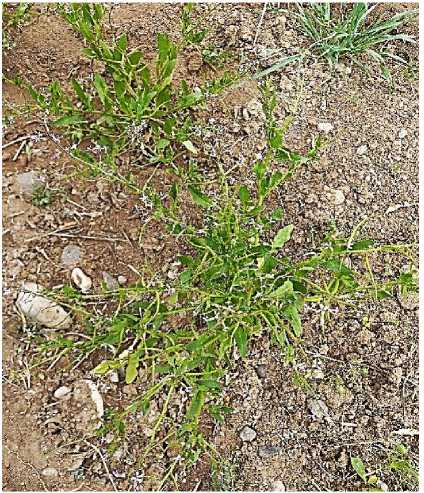
Figure 1. Chorispora tenella (Pall.) DC.
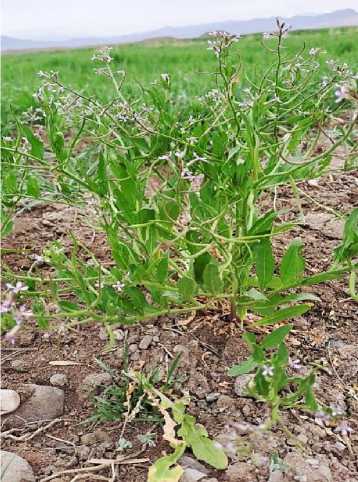
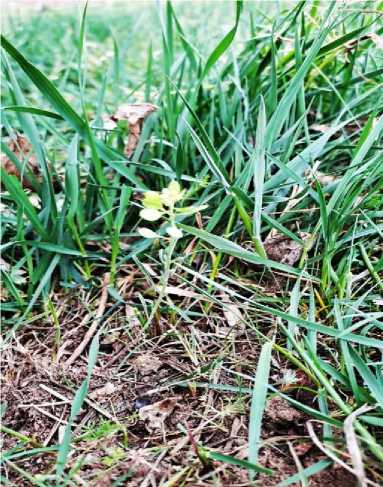
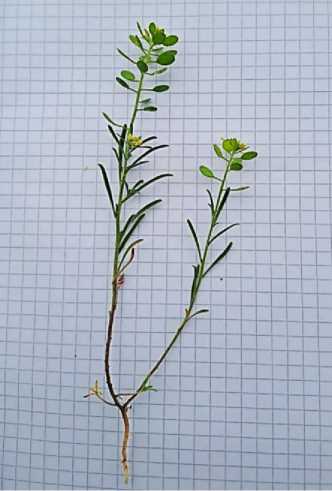
Figure 2. Alyssum turkestanicum Regel & Schmalh. ( A. desertorum Stapf)
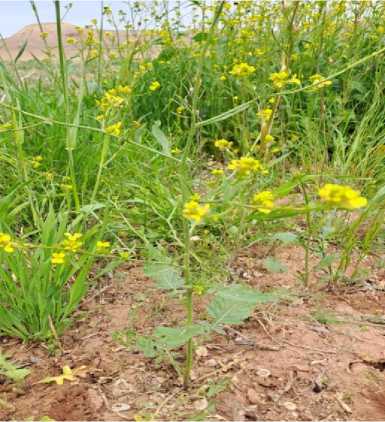
Figure 3. Sinapis arvensis L.
Table
SPECIES COMPOSITION OF THE LOWLAND ZONE
|
Familia |
Genus |
Species |
Life form |
Ecogroup |
|
Aceraceae Juss. |
Acer L. |
Acer negundo L. |
Tree |
Mesophyte |
|
Sambucaceae Batsch ex Borkh. |
Sambucus L . |
Sambucus ebulus L. |
Shrub |
Mesophyte |
|
Tamaricaceae Link. |
Tamarix L . |
Tamarix ramosissima Ledeb. |
Shrub |
Xerophyte |
|
Tamaricaceae Link. |
Tamarix L . |
Tamarix Meyeri Boiss. |
Shrub |
Xerophyte |
|
Hyacinthaceae Batsch |
Muscari Mill . |
Muscari caucasicum (Criseb.) Baker. |
Perennial |
Mesophyte |
|
Poaceae Barnhart |
Avena L. |
Avena fatua L. |
Annual |
Mesophyte |
|
Aegilops L. |
Aegilops tauschii Coss. |
Annual or biennial |
Mesophyte |
|
Familia |
Genus |
Species |
Life form |
Ecogroup |
|
Lythraceae J.St.-Hil. |
Lythrum L. |
Lythrum hyssopifolia L. |
Annual |
Hydromesophyte |
|
Boraginaceae Juss. |
Echium L. |
Echium vulgare L. |
Biennial |
Mesophyte |
|
Boraginaceae Juss. |
Nonea Medik |
Nonea pulla (L.) DC. |
Perennial |
Mesophyte |
|
Buglossoides Moench |
Buglossoides arvensis (L.) Johnst. |
Annual |
Mesophyte |
|
|
Caryophyllaceae Juss. |
Arenaria L. |
Arenaria serpyllifolia L. |
Annual |
Xerophyte |
|
Euphorbiaceae Juss. |
Euphorbia L. |
Euphorbia helioscopia L. |
Annual |
Mesophyte. |
|
Asteraceae Bercht. |
Cirsium Hill |
Cirsium vulgare (Savi) Ten. |
Biennial |
Xerophyte |
|
& J.Presl |
Bellis L. |
Bellis perennis L. |
Perennial |
Mesophyte |
|
Artemisia L. |
Artemisia absinthium L. |
Perennial |
Mesoxerophyte |
|
|
Senecio L. |
Senecio vernalis Waldst. & Kit. |
Annual |
Xeromesophyte |
|
|
Senecio racemosus (Bieb.) DC. |
Perennial |
Mesophyte |
||
|
Senecio Lipskyi Lomak. |
Perennial |
Xerophyte |
||
|
Bidens L. |
Bidens, tripartita L. |
Annual |
Hydrophyte |
|
|
Matricaria L. |
Matricaria recutita L. |
Annual |
Mesophyte |
|
|
Anthemis L. |
Anthemis cretica L. |
Perennial |
Mesoxerophyte |
|
|
Cirsium Hill |
Cisrium arvense (L.) Scop. |
Perennial |
Mesophyte |
|
|
Ambrosia L. |
Ambrosia confertiflora DC. |
Perennial |
Xerophyte |
|
|
Taraxacum Wigg. |
Taraxacum officinale Wigg. |
Perennial |
Mesophyte |
|
|
Apiaceae Lindl. |
Daucus L. |
Daucus carota L. |
Biennial |
Mesophyte |
|
Pseudorlaya Maire |
Pseudorlaya pumila (L.) Grande (syn. Daucus pumilus (L.) Hoffm. & Link) |
Annual |
Xerophyte |
|
|
Geraniaceae Juss. |
Erodium L’Her. |
Erodium cicutarium (L.) L’Her. |
Annual |
Xeromesophyte |
|
Convolvulaceae Juss. |
Convolvulus L. |
Convolvulus arvensis L. |
Perennial |
Xerophyte |
|
Amaryllidaceae J.St.-Hil. |
Allium L. |
Allium schoenoprasum L. |
Perennial |
Xerophyte |
|
Fabaceae Lindl. |
Medicago L. |
Medicago littoralis Lois. |
Annual |
Xerophyte |
|
Tylosema (Schweinf.) Torre & Hillc. |
Tylosema esculentum (Burch.) A.Schreib. |
Perennial |
Xerophyte |
|
|
Hedysarum L. |
Hedysarum caucasicum Bieb. |
Perennial |
Mesophyte |
|
|
Papaveraceae Juss. |
Papaver L. |
Papaver rhoeas L . |
Annual |
Xeromesophyte |
|
Polygonaceae Juss. |
Rumex L. |
Rumex crispus L. |
Perennial |
Mesophyte |
|
Zygophyllaceae R.Br. |
Tribulus L. |
Tribulus terrestris L. |
Annual |
Xerophyte |
Other plant species are also present in the phytocoenosis in which these species occur. Information about this phytocoenosis and its species composition is provided in the Table below [3, 5, 6].
Conclusion
In the spring flora of the lowland zone of the region, the phytocoenosis involving representatives of the Brassicaceae Burnett. family consists of 15 perennial species (41.66%), 13
annual species (36.11%), 3 biennial species (8.33%), one species that is either annual or biennial (2.77%), and among the woody representatives, one species (2.77%) is a tree, and 3 species (8.33%) are shrubs. According to ecological groups, 17 species (47.22%) are mesophytes, 12 species (33.33%) are xerophytes, 3 species (8.33%) are xeromesophytes, 2 species (5.55%) are mesoxerophytes, 1 species (2.77%) is a hydromesophyte, and 1 species (2.77%) is a hydrophyte. In terms of life forms, perennials dominate, while in terms of ecological groups, mesophytes are predominant. The plants forming the phytocoenosis are mostly from the Asteraceae Bercht. & J.Presl family (12 species – 33%). The coordinates of the area where the phytocoenosis involving representatives of the Brassicaceae Burnett. family is located in the lowland zone of the Autonomous Republic have also been determined using GPS: 39º4'49.73952'' N, 45º33'56.19276'' E, 956 m a.s.l. Here are also significant representatives among the plants forming the phytocoenosis in the spring flora of the lowland zone of the Autonomous Republic.
