
Wormwood in the Picture of the World Modern Kalmyk Poets
Journal: Новый филологический вестник @slovorggu
Section: Проблемы калмыцкой филологии
Article in issue: 1 (76), 2026.
Free access
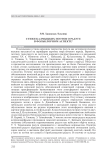
The article examines the thematic range of modern Kalmyk lyrics with the image of wormwood, concentrated in one direction – the theme of the native land, nature, people, national language with motives of patriotism, autobiography, historical and personal memory, creativity. The authors use two main plant designations: “buurlda” and “charlon” in different texts or in one. “Buurlda” prevails in the titles of the poems. The olfactory (smell) and taste vectors in the characteristics of the plant became the external dominant features, less often its color (gray, green, blue). Semantically and symbolically, wormwood is a metaphor for the motherland, a talisman, a sign of resilience in heat and cold, inflexibility and perseverance. Its properties are not indicated in the folklore texts known to us for the purposes of protective, traditional medicine, and spiritual practices that existed among the Kalmyks. The absence of recorded proverbs, sayings, riddles, myths, legends and legends about wormwood is observed in Kalmyk oral folk art, rarely the plot-forming presence of the plant, for example, in household tales “Hurwn mu”, “Mu” (“Three bad”, “Bad”). Probably, the author’s plot about wormwood as a marker of memory of his native land, close to A. Maikov’s “emshan”, is developed in B. Sangadzhieva’s poem. The herbal portraits of wormwood in poems by D. Kugultinov, M. Khoninov, V. Nurov, E. Eldyshev demonstrate the author’s intentions about life and death, war and peace, nature and man, about history and creativity. The locus and topos of wormwood in all authors usually correlate with their native land – Kalmykia, with their native place, with the seasons of the year, sometimes in opposition to homeland and foreign land, more often in comparison of the past and present, with memories of childhood, family, parents. Wormwood is usually preferred among other steppe grasses. The Kalmyk poets do not associate love lyrics, motifs of widowhood, witchcraft, illness, death, old age with the image of a plant, as in Russian lyrics. Not all poems about this plant have been translated into Russian, and the translation does not always correspond to the form and content of the original, violating the author’s intentions. The younger generation of Kalmyk poets does not show interest in the image of wormwood.
Similar articles in the section Literature of Ural-Altaic, Japanese, Korean, Ainu, Palaeo-Siberian, Eskimo-Aleut, Dravidian languages, Sino-Tibetan languages
Short address: https://sciup.org/149150711
IDS: 149150711 | DOI: 10.54770/20729316-2026-1-386
