
Relationship of Test-Based Amoebas and Cilia with Environmental Factors in Water Bodies of the Nakhchivan Autonomous Republic
Journal: Bulletin of Science and Practice @bulletennauki
Section: Естественные науки
Article in issue: 4 т.12, 2026.
Free access
Testate amoebae (Testacea) and ciliates (Ciliophora) are widespread in the freshwater ecosystems of the Nakhchivan Autonomous Republic. The distribution, abundance, and species diversity of these protozoans are influenced by various environmental factors. Temperature, water depth, gas conditions, and trophic interactions play a particularly important role. The optimal temperature range for both groups is from 15°C to 28°C. Testate amoebae are typically highly active at temperatures of 20–25°C. In bodies of water, when water temperatures exceed 30°C, the reproductive rate of testate amoebae decreases. Ciliates exhibit maximum reproductive capacity at temperatures of 18°C to 26°C. At temperatures approaching 35°C, protein denaturation occurs, leading to a rapid population decline. At lower temperatures (0–4°C), vital processes cease, but some species can survive for extended periods as cysts.
Similar articles in the section General ecology and biodiversity
Short address: https://sciup.org/14135138
IDS: 14135138 | UDC: 574.52: 593.17 | DOI: 10.33619/2414-2948/125/07
Связь раковинных амеб и инфузорий с факторами окружающей среды в водоёмах Нахчыванской Автономной Республики
Раковинные амебы (Testacea) и инфузории (Ciliophora) широко распространены в биотопах пресноводных экосистем Нахчыванской Автономной Республики. На распространение, численность и видовое разнообразие простейших влияют различные экологические факторы. Особенно важную роль играют температура, глубина воды, газовый режим и трофические взаимодействия. Оптимальный температурный диапазон для обеих групп составляет от 15°C до 28°C. Раковиновидные амебы обычно проявляют высокую активность при температуре 20–25°C. В водоемах, когда температура воды превышает 30°C, скорость размножения раковинных амеб снижается. Инфузории обладают максимальной репродуктивной способностью при температуре от 18°C до 26°C. При приближении к 35°C происходит денатурация белков, что приводит к быстрому сокращению популяции. При более низких температурах (0-4°C) жизненные процессы прекращаются, но некоторые виды могут выживать в течение длительного времени в форме цист.
Text of the scientific article Relationship of Test-Based Amoebas and Cilia with Environmental Factors in Water Bodies of the Nakhchivan Autonomous Republic
Бюллетень науки и практики / Bulletin of Science and Practice
UDC 574.52: 593.17
Free-living protozoa-testate amoebae (Testacea) and ciliates (Ciliophora) are microscopic organisms in the hydrosphere that show high sensitivity to the physical and chemical characteristics of water, with their biological rhythms closely linked to temperature. Temperature is one of the key ecological factors influencing metabolism rate, reproduction frequency, and species diversity [4, 5].
Observations show that the optimal temperature range for both groups is between 15–28°C. Testate amoebae ( Arcella, Centropyxis, Difflugia ) generally exhibit high activity at temperatures of 20–25°C. Ciliates, especially species such as Paramecium and Colpoda, have maximal reproductive capacity at temperatures between 18–26°C [1-3].
When the temperature exceeds 30°C, population density decreases, and at 35°C, mortality rates rise. Lower temperatures (5°C and below) weaken metabolic processes and stimulate cyst formation. The seasonal variations in temperature affect the abundance and species diversity of protozoa:
Spring-Summer: With increasing temperature and sunlight intensity, photosynthesis is enhanced, bacterial biomass increases, and consequently, the numbers of ciliates and testate amoebae sharply rise.
Autumn: As temperatures decrease, there is a decline in ciliate populations, and some species enter the cyst stage.
Winter: When temperatures fall below 5–10°C, the activity of protozoa diminishes, with many testate amoebae entering diapause or cyst forms.
Temperature and Metabolic Indicators. As temperature increases, the rate of respiration, intracellular enzyme activity, and osmotic regulation processes in protozoa accelerate. Short-term heat stress (e.g., 30–32°C) can lead to intracellular vacuolization and lysis in some species (Fenchel & Finlay, 2004). The Q₁₀ effect (where the metabolic rate doubles for every 10°C rise in temperature) is also observed in ciliates.
Impact of Excessive Temperature. Temperature is one of the most important abiotic factors in aquatic ecosystems. Even small fluctuations in temperature can significantly affect the development and distribution of many organisms. Temperature directly influences the rate of metabolic processes in testate amoebae. While some species are capable of tolerating significant temperature changes, most species have adapted to the warmer seasons. Each species has an optimal temperature range. When the temperature exceeds this optimal range, newly formed individuals during division tend to have smaller shells and fewer projections. In water bodies, when water temperature exceeds 30°C, the reproductive rate of testate amoebae declines. Approaching 35°C, protein denaturation occurs, leading to a rapid decrease in population. At lower temperatures (0–4°C), life processes stop, but some species (e.g., Arcella) can survive for long periods in cyst form [10, 11].
Discussion of Results
The testate amoebae fauna in the natural region of the Autonomous Republic can be classified into three ecological complexes based on temperature dependence (Table 1).
-
1. Group of Eurythermal Species Found Mainly Throughout the Year. The group of eurythermal species includes Arcella vulgaris, Arcella discoides, Arcella artocrea, Centropyxis aculeata, Difflugia acuminata, Difflugia corona.These species are found across a wide temperature range throughout the year.
-
2. Group of Thermophilic Species Found Only in High-Temperature Intervals. Thermophilic species are found only during the warmer months, from the beginning of summer to the middle of autumn. This group includes Pontigulasia compressa and others. These species thrive in higher temperature ranges.
-
3. Group of Stenothermal Cryophilic Species Found in Relatively Low Temperatures (4–9°C). Stenothermal cryophilic species, such as Difflugia lobostama and Difflugia globularis, are found to have maximum development in relatively low temperatures ranging from 4–9°C. The overall number of testate amoebae species and their maximum species richness were observed from May to October.
This indicates that the majority of the testate amoebae species prevalent in the area’s water bodies are thermophilic. As shown in Table 1, the temperature range for eurythermal species is broad, varying from 5°C to 32°C. The temperature range for stenothermic thermophilic species is between 1029.5°C, while for stenothermic cryophilic species, the temperature range is between 5-9°C. Among the recorded species of testate amoebae, 6 species were categorized as eurythermal, 1 species as thermophilic, and 2 species as cryophilic [6-9].
Table 1
FAUNA OF PROTOZOA
|
Ecological group |
Species |
Temperature range, °C |
Optimum temperature, °C |
Season of occurrence |
Ecological notes |
|
Eurythermic |
Arcella vulgaris |
8–31 |
18–22 |
All year round |
High adaptability to temperature fluctuations |
|
Eurythermic |
Arcella discoides |
7,5-32 |
22–30 |
Summer |
High activity in surface layers |
|
Eurythermic |
Arcella artocrea |
5,1-28 |
15-23 |
Spring and summer |
Benthic and periphytic communities |
|
Eurythermic |
Centropyxis aculeata |
5–32 |
16–21 |
Spring– Autumn |
Wide ecological amplitude |
|
Eurythermic |
Difflugia acuminata |
6-31,5 |
24-31 |
Highest abundance in spring and summer |
Benthic sediments, periphyton, and among aquatic vegetation |
|
Eurythermic |
Difflugia corona |
6–31 |
15–20 |
All year round |
Common benthic form |
|
Thermophilic |
Pontigulasia compressa |
22,1–29,5 |
25–30 |
Summer |
Prefers warm stagnant waters |
|
Stenothermic cryophilic |
Difflugia globularis |
5,4-9,3 |
5–11 |
Winter– Early spring |
Sensitive to temperature increase |
|
Stenothermic cryophilic |
Difflugia lobostoma |
5–9,5 |
5–12 |
Winter |
Occurs in cold and deeper layers |
Significance in the Context of Climate Change
Climate change and the warming of water bodies affect the phenology and biogeography of protozoa. Contemporary research shows that a 2–3°C increase in water temperature in Arctic and temperate zones accelerates the phenotypic adaptation of infusorians [18-20].
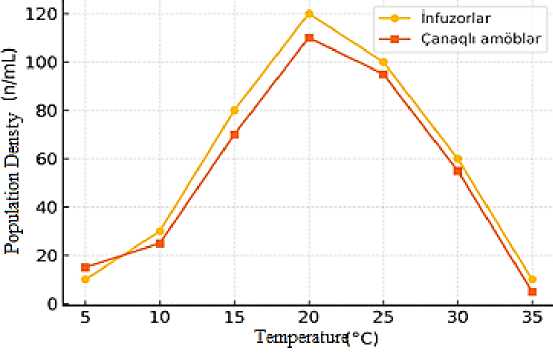
Figure 1. The Effect of Temperature on the Population Density of Infusorians and Testate Amoebae (Graph: Y-axis – Population density (n/mL), X-axis – Temperature (°C). The optimal zone shows maximum growth between 18–25°C)
Studies have demonstrated that for Paramecium caudatum, the reproduction cycle lasts 12 hours at 25°C, but at 15°C, it extends to 48 hours [12, 13].
Testate amoebae dominate in microzones within sediment where the temperature remains more stable (Figure 1).
Relation to Water Depth
The depth gradient of water boies creates sharp variations in light, temperature, and gas regimes, which directly impact the distribution of protozoans. In the epilimnion zone (0–2 m), the abundance of light and oxygen facilitates the proliferation of infusorians. Species such as Paramecium caudatum, Stentor coeruleus and Spirostomum minus dominate this zone [14, 15].
Testate amoebae, on the other hand, primarily exhibit benthic lifestyles. They are more commonly found in substrates rich in silt and detritus, at depths ranging from 0.5–2 meters (e.g., Difflugia oblonga, Centropyxis aculeata). In the hypolimnion, oxygen depletion results in reduced species diversity, with only anaerobic infusorian species (such as Metopus contortus) being found [16, 17].
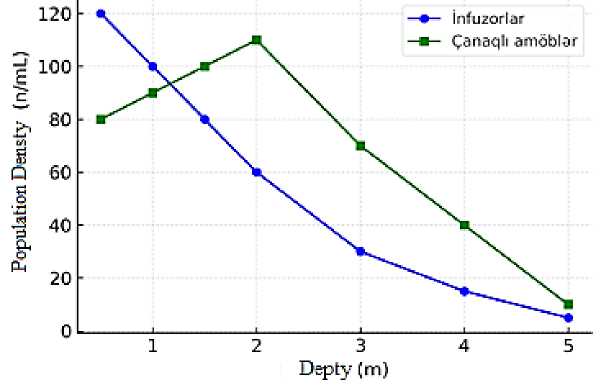
Figure 2. Diagram of Protozoan Distribution by Depth (Epilimnion – high species diversity, Hypolimnion – fewer species, only anaerobic forms)
Relation to Gas Regime in Water
Dissolved oxygen (O₂) and carbon dioxide (CO₂) play crucial roles in the life activities of protozoans. Most infusorians are aerobic, and they develop optimally at O₂ concentrations of 5–8 mg/L [15].
Table 2
WATER GAS REGIME AND ADAPTATION OF PROTOZOA
|
Parametr |
Optimal səviyyə |
Adapted species |
|
O₂ |
5–8 mg/L |
Paramecium, Euplotes |
|
CO₂ |
0,2–0,5 mg/L |
Suitable for many species |
|
H₂S |
0 mg/L |
Only anaerobs |
A reduction in oxygen levels promotes the dominance of anaerobic species (e.g., Metopus, Spathidium). The CO₂ concentration influences the pH level of the water. Neutral (pH 7) and slightly alkaline (pH 7.5–8.5) environments are ideal for infusorians. However, the presence of H₂S and ammonia can be toxic to protozoans, with only some anaerobic species capable of surviving under such conditions (Table 2).
Food Relationships with Other Aquatic Organisms. Protozoa Form the Key Link in the
Microbial Food Chain of Hydroecosystems (Figure 3).
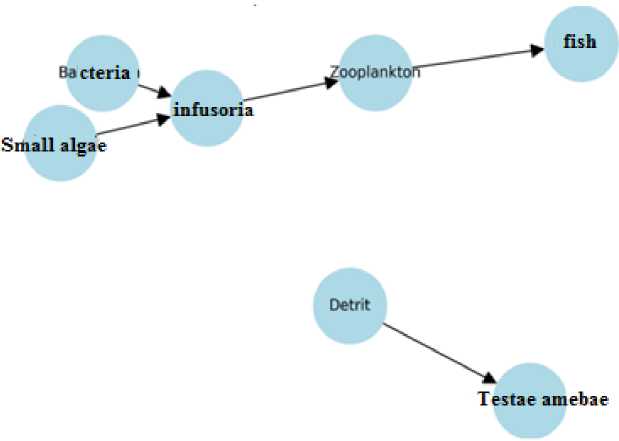
Figure 3. Trophic Relationships in the Hydroecosystem
Their food spectrum is wide:
Bacteriovores: Paramecium, Colpidium feed on bacteria.
Algivores: Euplotes, Frontonia consume small green algae.
Predators: Didinium, Lacrymaria feed on other infusorians. These trophic relationships are crucial for the cycling of organic matter and energy flow in the ecosystem [18].
Food Relationships with Other Aquatic Organisms. Testate amoebae (Testacea) and ciliates (Ciliophora) are considered the main components of the microbial trophic network in hydroecosystems. They play an essential role in the cycling of organic matter by acting as both consumers and, in some cases, predators. In terms of food relationships, protozoa can be classified into several functional groups: bacteriovores, algivores, detritivores, and predator forms [7-10].
Bacterivory. A large proportion of testate amoebae and ciliates feed on bacteria. This characteristic makes them an important link in the microbial food chain. Paramecium, Colpidium are examples of bacteriovorous infusorians.
Testate amoebae ( Difflugia oblonga, Arcella vulgaris ) feed on bacterial biofilms in sediment. Bacterivory accelerates the mineralization of organic matter and the nitrogen-phosphorus cycle in aquatic ecosystems.
Algivory. Some infusorians and occasionally amoebae consume microscopic algae and phytoplankton. Euplotes, Frontonia, and Stentor species feed on chlorophyllous algae. This interaction is important for regulating phytoplankton populations and maintaining the balance of the trophic structure in the water.
Predation (Protozoa – Protozoa). Some large infusorians feed on other protozoans, leading to intra-guild predation. Didinium nasutum is a classic predator and often feeds on Paramecium. Lacrymaria olor uses a phagocytosis method to ingest other protozoans. These relationships directly influence the dynamics and species diversity of protozoan populations (Figure 4).
Detritivory and Use of Organic Particles. Testate amoebae feed on organic remains and detritus accumulated in sediments and mud. Centropyxis aculeata and Difflugia corona consume saprophytic material from sediment layers to obtain energy and nutrients. This process plays a key role in the cycling of organic matter in benthic biotopes.
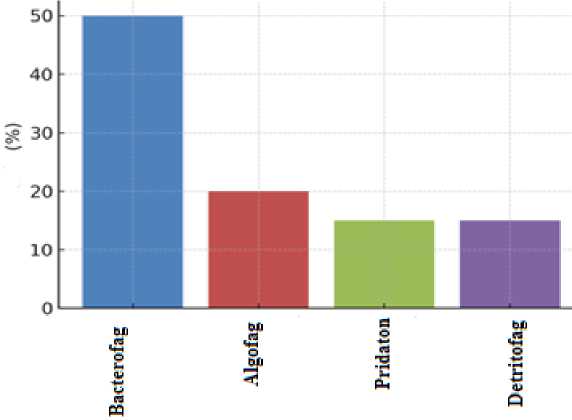
Figure 4. Distribution of Food Strategies in Protozoans
Role in the Food Web of the Ecosystem. Testate amoebae and ciliates act as consumers in the microbial food loop and are the main link in transferring bacterial biomass to higher trophic levels. They serve as a food source for zooplankton (rotifers, copepods), which ensures the flow of energy and cycling of matter [15-20].
These interactions help maintain the stability and functionality of aquatic ecosystems and the cycling of biogenic elements.
Trophic Relationships Diagram:
Bacteria → Ciliates → Zooplankton → Fish
Detritus → Testate Amoebae → Higher Organisms
Importance as Bioindicators. The food spectrum and species composition of protozoans are used as bioindicator indicators to assess the trophic state and degree of pollution in water bodies [19, 20].
