
Research Into Effective Treatment Methods for Nosematosis (Pebrin) Disease
Journal: Bulletin of Science and Practice @bulletennauki
Section: Сельскохозяйственные науки
Article in issue: 2 т.12, 2026.
Free access
For the first time in the conditions of the Republic of Azerbaijan, research was conducted to develop medicinal preventive and therapeutic methods against pebrin (nosematosis) disease of mulberry silkworms, which causes serious damage to silkworm farms. The study used both naturally pebrin-infected and healthy cocoons of the Namazli-2 mulberry silkworm breed and the larvae emerging from them. During the experiments, 2.0% solutions of fumagillin DCH (1.0%), amprolium, coccidiovit and baycox preparations were applied. As a result of the effect of these preparations on cocoons naturally infected with pebrin, the mortality rate in the worm stage decreased by 17.36–16.31%, and the total mortality decreased by 22.22–19.99% compared to the diseased control groups. At the same time, the survival rates of silkworms increased by 19.99–22.22% against the background of the disease. The cocoon yield obtained from one standard box (20,000 cocoons) was also comparatively higher by 9.2–10.6 kg. These results indicate that the use of the mentioned preparations has an effective treatment and preventive effect against pebrin (nosematosis) disease of mulberry silkworms and significantly contributes to increasing productivity in sericulture farms.
Similar articles in the section Special auxiliary subdivision for animal husbandry
Short address: https://sciup.org/14134463
IDS: 14134463 | UDC: 636.082.638.24 | DOI: 10.33619/2414-2948/123/51
Исследование эффективных методов лечения нозематоза (пебрина)
Впервые в условиях Азербайджанской Республики были проведены исследования по разработке медикаментозно-профилактических и терапевтических методов борьбы с пебрином (носематозом) тутового шелкопряда, наносящим серьезный ущерб шелководческим хозяйствам. В исследовании использовались как естественно зараженные пебрином, так и здоровые коконы тутового шелкопряда породы Намазли-2, а также вылупившиеся из них личинки. В ходе экспериментов применялись 2,0% растворы фумагиллина ДХГ (1,0%), ампролиума, кокцидиовита и байкокса. В результате воздействия этих препаратов на естественно зараженные пебрином коконы смертность на стадии развития червей снизилась на 17,36–16,31%, а общая смертность — на 22,22–19,99% по сравнению с контрольными группами больных. При этом выживаемость шелкопрядов увеличилась на 19,99–22,22% на фоне заболевания. Выход коконов из одного стандартного ящика (20 000 коконов) также был сравнительно выше на 9,2–10,6 кг. Эти результаты показывают, что использование указанных препаратов оказывает эффективное лечебное и профилактическое действие против пебрина (носематоза) тутового шелкопряда и значительно способствует повышению продуктивности шелководческих хозяйств.
Text of the scientific article Research Into Effective Treatment Methods for Nosematosis (Pebrin) Disease
Бюллетень науки и практики / Bulletin of Science and Practice
UDC 636.082.638.24
Natural silk has been valued by man for millennia as a high-quality textile material. Since ancient times, silk has been widely used in the manufacture of carpets, clothing, bedding and various household items [12].
In modern times, the hygienic, elastic, heat-insulating, strong, fire-resistant and other valuable properties of silk have significantly expanded its scope of application. Silk is now used not only in the textile industry, but also as an important technological material in the fields of radio engineering, electronics, precision instrument making, musical instrument manufacturing, aviation and astronautics, cinematography, as well as medical surgery, including ophthalmology. These factors make it necessary to increase productivity in the field of sericulture and intensify cocoon production.
One of the main conditions for increasing silk production is the protection of the health of the mulberry silkworm and the development of effective measures to combat its infectious diseases. Like other living creatures, the mulberry silkworm is prone to various diseases under the influence of various factors of the external environment (food quality, climate, solar radiation, microorganisms, etc.). Its main infectious diseases include flasheria, scurvy, septicemia, muscardina, jaundice and pebrin (nosematosis). When these diseases occur in silkworm feeding, they can cause a decrease in cocoon productivity by 10–100%, that is, massive losses in farms.
Various physical, chemical, biological and enzymatic drugs have been used to combat infectious diseases of the silkworm. At the same time, the lack of complete study of the epizootological and biological characteristics of the diseases has had a negative impact on the effectiveness of the methods used [2, 3, 9–16].
Pebrin disease (nosematosis) of mulberry silkworms is of particular importance among these infectious diseases. The causative agent of the disease – Nosema bombycis – is mainly transmitted from generation to generation through the cocoons. Larvae emerging from infected cocoons infect healthy individuals during feeding, resulting in large-scale mortality in the cocoons. This situation causes serious economic damage to sericulture farms.
Although a number of therapeutic and preventive measures have been proposed to prevent Pebrin disease, most of them are not sufficiently effective in terms of practical application [17].
Modern research is mainly focused on the processing of mulberry silkworm cocoons and pupae at sublethal temperature regimes and the inactivation of the pathogen [4, 6, 10].
Although the pebrin disease of mulberry silkworms is historically ancient, its widespread distribution was first recorded in France in 1845. Pebrin is derived from the French word pebrino (pepper). In 1857, the German scientist K.V. Naegeli discovered the true causative agent of pebrin and named it Nosema bombycis Naegeli. The name Nosema bombycis comes from the Greek word (nosos - disease; literally - "the cause of the disease of the silkworm") [9].
The world-famous microbiologist Louis Pasteur (1865-1870s) worked hard to identify the causative agent of the disease, the main routes of infection and methods of combating it. Pasteur determined that the causative agent of pebrin disease (nosema spores) is transmitted to offspring by silkworm seeds and that the disease is mainly spread in this way. The disease is observed in all developmental stages of the silkworm after it is transmitted to the offspring through the gnat [18].
Following Louis Pasteur, in 1909, V. Shtempel, based on his observations and previous information, comprehensively interpreted the development cycle of nosema spores and attributed the causative agent of pebrin to the primitives (Protozoa) type, sporous (Sporozoa) class, cnidosporidia (Cnidosporidia) class, microsporidia (Microsporidia) order, nosema (Nosema) genus and nosema bombycis Negeli (Nosema bombycis Naegeli) species [11].
According to literature sources, the causative agent of pebrin (nosematosis) disease of mulberry silkworms — Nosema bombycis — is a spore form that can remain stable in the external environment for a long time, living in a state of anabiosis (hidden life). Spores enter the body of the silkworm mainly through nutrition and begin their development cycle approximately 6 hours after entering the midgut of the organism. The biological development process of the causative agent is completed in three stages — the planont, meront and spore phases [11].
The virulence of spores varies depending on environmental factors (temperature, humidity, light, etc.) and can remain active for 1 to 8 years. In the bodies of worms that died of pebrin disease (pathological materials), nosema spores retain a high infectious capacity for a year, gradually weaken in subsequent years and become completely inactive after about six years.
The main source of spread of the disease is sick silkworms. Because through the secretions, altered shells, dead bodies, grana shells and other biological residues of these individuals, nosema spores spread to the environment and are transmitted to healthy individuals. Secondary sources of infection are feed materials, bedding, bedding, as well as tools and equipment used during care contaminated with pebrin spores. These factors ensure a long-term circulation of infection in sericulture farms, creating conditions for the widespread spread of the disease. In order to obtain healthy grenae, Louis Pasteur proposed the cellular method in 1868. The essence of this method is that after mating, all female butterflies are placed in special nests (parchment bags with soap) to lay eggs. After the butterflies die and dry a little, they are all individually examined under a microscope, and the eggs laid by the butterfly in which Pebrin spores are detected are burned and destroyed. Thus, healthy grenae free from Pebrin spores is obtained [11].
Despite the reliability of the cellular method in the fight against pebrin, prof. E. Poyarkov made several proposals to replace the cellular method in the production of grenae with a more profitable method. The author proposed a biological method for the fight against pebrin disease in the production of grenae. According to this method, the mulberry silkworm is kept in a thermal chamber for 16 hours a day during the entire nymphal (pup) period, that is, from the 6th day of cocooning until the butterfly emerges, at a temperature of 33-340 and a humidity of 55-65%, and for 8 hours a day at a temperature of 23-250 and a relative humidity of 60-70%. Thus, according to the biological method proposed by Poyarkov, the phagocytosis process in the body of the pupa and the grena itself is activated, nosema spores are destroyed, and as a result, the butterflies form almost healthy grenae. Thus, the summerautumn feeding of the worms emerging from that grana increases their tolerance to high temperatures, increases the survival of the worms and the quality of the cocoons obtained from them, as well as the cocoon productivity [16].
In their experimental work, I. Garayev, M. Musayeva and R. Suleymanova studied the neutralization of nosema spores in the external environment by applying various disinfectants to develop a current and preventive disinfection method against pebrin (nosematosis) disease of mulberry silkworms. For this, the authors tested 1.0; 5.0; 10.0% formalin solution, 1.0; 5.0; 10.0% chlorinated lime water and 0.3; 0.6; 1.5% javel solution against pebrin spores by spraying them on spore-infected cardboard, wood and soil test objects for 30; 60; 90 and 120 minutes. As a result, it was determined that 0.3% bleach, 5.0% chlorinated lime for 90 minutes, and 5.0% formalin for 120 minutes neutralized pebrin spores in test objects [8-13].
Extensive research was conducted under the leadership of Academician B. Astaurov and it was determined that the grana can be neutralized from pebrin spores by the thermal method, that is, by heating it in hot water for a short time. Thus, the authors have developed a regime for neutralizing the granae prepared for both spring and repeated (summer, autumn) feeding. In order to free the grana prepared for spring feeding from pebrin spores, 36-48 hours after the butterflies shed the grenae, that is, when most of the grenae turns light pink, it is heated in water with a temperature of 460 for 30 minutes, then cooled in water with a temperature of 16-200 for 3-5 minutes, after which it is dried and stored in the usual way. As a result, the authors determined that it is possible to free the grenae from pebrin spores [3].
In the experimental work conducted by I. Garayev, M. Musayeva, R. Suleymanova, T. Rzayeva and E. Ahmadov [13], 26 mulberry silkworm breeds of different origins were artificially infected with pebrin spores and spring feeding was carried out to determine the degree of tolerance of these breeds to pebrin (nosematosis) disease. In the experiment, 16 of the 26 breeds tested were intolerant to pebrin disease, and 10 were tolerant. The authors note that in the coming years, by conducting more extensive experiments in this direction, that is, by searching for answers to a number of questions, it is possible to begin work on creating pebrin-tolerant breeds. Under the leadership of I. Garayev [13], we investigated the therapeutic effects of several chemical preparations (norsulfazole, amprolium, coccidiovit) against pebrin disease of mulberry silkworms in our experiments.
-
I. Garayev and M. Musayeva investigated the therapeutic effects of several herbal preparations against pebrin disease of mulberry silkworms in their experimental studies. In the experiment, the authors studied the effects of various concentrations of solutions of wormwood, mint, citric acid and garlic on naturally diseased grenae with pebrin. Analysis of the preliminary results of the experiments shows that when the grenae were not affected by various solutions of the tested herbal preparations, the survival rate of the worms was 76.00% in the diseased control variant, which is 20.87% lower than the healthy control variant (96.87%) [8].
For the first time in the USSR, methods for artificial infection of mulberry silkworms with pebrin spores were developed by employees of the Azerbaijan Scientific Research Institute of Sericulture. Analysis of the 3-year average figures obtained from the experiments conducted by the researchers shows that it is possible to get the disease by infecting mulberry silkworms with a suspension of various numbers of pebrin spores per 1 mm3.
Considering the biological similarity of the causative agents of eimeria, coccidiosis and nosematosis of bees caused by protozoa in veterinary medicine with the causative agent of pebrin or nosematosis of mulberry silkworm, it should be considered appropriate to conduct testing of various therapeutic preparations used against these diseases against pebrin disease of mulberry silkworm.
It is known from the literature that there are widespread protozoan diseases caused by protozoa in birds, rabbits, large and small horned animals. The causative agents of the disease are sporeforming protozoa belonging to the genera Eimeria and Isospora from the Eimeriidae family. The diseases they cause are called coccidioses (eimeriosis and isosporiosis). Coccidia belong to the Sporozoa class of the Protozoa type, Cocciida order, Eimeriidae family. Based on these, the authors tested a number of coccidiostatic drugs in the treatment and prevention of eymeriosis in rabbits, cattle, sheep, chickens, and broilers in their research studies [1, 5-9].
Honored Scientist of the Russian Federation, Professor B. Bessarabov and several researchers tested a number of coccidiostatic drugs for the treatment and prevention of eimeria disease caused by Eimeria species in all types of birds: chickens and broilers - acervulina, brunetti, hagani, maxima, mitis, mivati, necatrix, praecox, tenella; turkeys - adenoeides, dispersa, gallapavonis, innocua, meleagridis, meleagrimitis, subro-tunda; geese - anseris, nocens, parvula, stigmosa, truncata; ducks -anatis, danailovi, perniciosa; and pigeons - columbae, columbarum, labbeana [18].
-
O. Shakirov in his research has determined the effective effect of 5% Baycox preparation against coccidiosis in lambs [18].
-
S. Poloz and M. Yakubovsky used levamisole and panacure preparations against parasitic diseases (eymeriosis and isosporiosis) of domestic animals in the conditions of the Republic of Belarus. As a result of their research, the authors proposed to carry out veterinary sanitary measures in order to prevent eymeriosis and isosporiosis of domestic animals twice a year by giving 7.5% levamisole solution 1 ml/10 kg of live weight orally for 2 days or 2 ml/10 kg of live weight once in mass treatment. They proposed to give 22.2% solution of Panacur preparations 0.05 g/kg once with feed [14].
Polish researchers tested Baycox and chitosan preparations against coccidiosis in broiler chickens, both together and separately. Baycox was administered at a dose of 25 w/mln in drinking water for 2 days and chitosan at a dose of 0.6 g/head (daily dose) for 6 days. The authors confirmed the therapeutic efficacy of the preparations against coccidiosis in broiler chickens when administered in combination [14].
French researchers have studied the effect of toltrazuril in the treatment of coccidiosis in ducks. As a result of the research, they found that when ducks were given toltrazuril at a dose of 7 mg/kg body weight on days 2 and 5, the development of coccidiosis was reduced [6].
Thus, the development of drug-based treatment and prevention methods for pebrin or nosematosis of mulberry silkworms is an important scientific, practical and economic issue.
Material and method of the study. The effect of the preparations on the development of pebrin disease of mulberry silkworms was carried out in the following directions:
-
- By affecting naturally sick grenae with solutions of the tested preparations;
-
- By feeding the worms with solutions of these preparations of different concentrations against the background of natural and artificial infection.
-
- By feeding the worms with preparations as a prophylactic measure.
In the study, naturally sick and healthy grenae with pebrin of the Namazli-2 mulberry silkworm breed and worms hatched from them were used. Some indicators of the Namazli 2 breed, created by breeders of the Azerbaijan Scientific Research Institute of Sericulture: 1. Germination rate – 86.90%; 2. Worm viability – 93.30%; 3. Feeding period – 28.7 days; 4. Mass of live cocoon – 1.73 g; 5. Silkiness of live cocoon – 23.31%; 6. Cocoon yield from one box (20,000 pieces) of grenae – 28.1 kg; The grenae of the Namazli 2 breed is ash-colored, sticky, the worms are spotted, and the cocoons are white and oval [4].
Characteristics of the tested chemical preparations.
-
1. Fumagillin DCH – (fumagillinum). Description: A yellowish, weakly odorous, water-soluble, microgranulated powder. It is a dicyclohexylammonium salt product formed as a result of the metabolism of the fungus Aspergillus funigatus. Composition: Fumagillin-dicyclohexylamine – 34 g, fillers – 1000 g. It is a specific substance for the treatment and prevention of nosematosis disease of honey bees caused by protozoa (Nosema apis Cander). Structural formula: C 16-17 H 25-27 O 3 O-CO-(CH=CH) 4 x COOH. Manufacturer: Budapest. Hungary.
-
2. Amprolium – (amprolium). Description: White, faintly odorous, crystalline powder, easily soluble in water, methanol and 95% ethanol. Composition: Amprolium hydrochloride – 20-25%.
-
3. Koksidiovit – (coccidiovitum). Description: White, odorless, sweet-tasting, water-soluble, microgranulated powder. Composition: 1 g of the drug contains 120 mg of amprolium hydrochloride, 2 mg (Vikasol) vitamin K, 10,000 IU of vitamin A and 1 filler. Application: It is used for the treatment and prevention of coccidiosis in poultry. The drug is mainly effective against protozoan diseases caused by E. tenella, E. acervulina, E. necatrix, E. maxima, E. mivati, E. brunetty in chickens. Manufacturer: Poland.
-
4. Baycox – (baycox). Description: Colorless, odorless liquid solution. Composition: 1 liter of the drug contains 25 g of toltrazuril. Application: The most modern and effective substance for the treatment and prevention of coccidiosis in agricultural poultry. Toltrazuril in the composition of Baycox preparation contains eimeria ( E. acervulina, E. brunetti, E. necatrix, E. mitis, E. adenoides, E. meleagrimitis, E. anceris, E. truncate, E. hagani, E. maxima, E. mivati, E. praecox, E. tenella, E. dispersa, E. gallapavonis, E. innocua, E. meleagridis, E. subrotunda, E. anseris, E. nocens, E. parvula, E. stigmosa, E. anatis, E. danailovi, E. Perniciosa, E. columbae, E. columbarum, E. labbeana ) coccidiocytes affect all stages of cell internal development. Manufacturer: Germany.
Application: Used against coccidiosis of all types of birds. Effective against individual coccidia: In chickens – Eimeria tenalla, E. necatrix, E. acervulina, E. and E. praecox; In turkeys – E. adenoeides, E. gallapavonis and E. meleagrimitis; In pheasants – E. phasiani, E. colchici and E. duodenalis. Structural formula: C 14 H 20 N 4 CL 2 . Manufacturer: Poland.
Methodology for studying the effect of preparations on pebrin disease of mulberry silkworm.
Experiments were conducted in the following 2 directions to study the effect of the selected preparations on pebrin disease of mulberry silkworm: Study of the therapeutic effect of preparations against pebrin disease; Study of the prophylactic effect of preparations against pebrin disease. Study of the therapeutic effect of preparations against pebrin disease was conducted in 2 directions: By affecting naturally diseased grenae and worms emerging from this grenae with solutions of the tested preparations (by feeding them); By feeding worms artificially infected with pebrin spores with solutions of various concentrations of these preparations.
In order to study the therapeutic effect of the solutions of the tested preparations on natural diseased grenae and worms emerging from these grenae, experiments were conducted in the following order: in order to study the effect of ready-made solutions of 1.0% fumagillin DCH and 2.0% amprolium, coccidiovit and the same percentage of baycox preparations on natural diseased grenae with pebrin, an appropriate amount of natural diseased grenae was taken for each variant (preparation) and placed in pre-prepared sterile bags, taken out of wintering 30 days before spring incubation and kept in the above-mentioned concentrated solutions of the tested preparations at a temperature of 15180 for 2 hours (i.e., exposed). After the diseased grenae were treated in the solution of the corresponding preparations, samples were taken from each variant in 3 repetitions, 100 grenae in each repetition, to study the viability of the grenae. At the same time, in the experiment, natural healthy grana were treated with ordinary water (distilled) and 3 samples of 100 grenae were taken in each replicate to study their resuscitation ability. After that, the grenae treated in the drug solution were put back in the refrigerator and after 30 days were taken out and the grenae treated with each drug were divided into 10 variants, incubated and revived. The worms that emerged from the diseased grenae were fed with mulberry leaves soaked in different concentrations of each drug solution according to their ages, 1, 2 and 3 times a day (morning, afternoon, evening). When the ready-made solution of the drugs was mixed with feed and fed to the worms, 2 ml of the corresponding drug solution was used for every 100 worms per 10 g of freshly chopped mulberry leaves. Mulberry silkworms were fed with preparations starting from the first feeding. The worms were given intermediate feeds in the usual way. Feeding the worms with the solution of the appropriate preparations was continued together until the 2nd day of the III age, and from the 2nd day, in 3
repetitions according to the variants, with 150 worms in each repetition, until the end of the IV age (until the 4th sleep). In the experiment, mulberry silkworms were fed with ordinary feed (without preparations) from the 1st day of the V age to the end.
To study the therapeutic effect of the solutions of the tested preparations on worms artificially infected with pebrin spores, healthy silkworms of the Namazli-2 mulberry silkworm breed, i.e. free from nosema spores, were fed with age-appropriate (untreated) feed according to agrozootechnical rules until the 2nd day of the III age, and on the 2nd day of the III age, worms were counted and 3 replicates were drawn up, with 100 worms in each replicate. Then, the worms were artificially infected after 8 hours of starvation on the same day (2nd day of the III age) according to the appropriate methodology. To artificially infect mulberry silkworms with pebrin, the diseased worms were crushed in a mortar and mixed with water, filtered through 2-3 layers of gauze, centrifuged 4-5 times and cleaned of foreign impurities. The sediment was dissolved in boiled cold water to prepare a suspension containing 1000 Nosema spores per mm3. Spore counting was carried out in a Goryayev chamber. After the suspension was prepared, after an 8-hour starvation diet, the worms were fed by adding 2 ml of the suspension to 10 g of freshly chopped leaves, i.e., they were artificially infected. 24 hours after infection, the worms were fed with the tested preparations. In the experiment, the preparations were given to the worms until the 5th day of the V age of life.
The preparations were given to the worms twice a day in general (without repetition) starting from the first feeding until the 2nd day of the III age. From the indicated day, the worms were counted and each variant was divided into 3 repetitions with 100 worms in each repetition and fed with the preparations until the end of the IV age. From the 1st day of the V age to the end, feeding was continued in the usual way (without preparation).
In order to determine the effect of the preparations used in all three directions on the development of pebrin disease in mulberry silkworms, regular observation was carried out on the worms every day until the cocooning period. Underdeveloped and dead worms by age were collected for each variant repetition, examined individually under a microscope, and worms sick with pebrin were recorded. The therapeutic and prophylactic effectiveness of the tested preparations was determined according to the number of sick worms (compared to the sick control).
After the mulberry silkworm feeding period was completed, that is, after the worms had coiled into cocoons, on the 7th day of cocooning, the cocoons were collected from the branches, cleaned of roughness, and the dead and undead cocoons were selected. On the 8th day of cocooning, 15 female and 15 male cocoons and their cocoon veils were weighed and the biological indicators of the mulberry silkworm were determined according to the repeats of the variants. The following biological indicators were determined in all three directions in the experiments: 1. Germination rate, %; 2. Feeding period, days; 3. Worm viability (against infection), %; 4. Mass of live cocoon, g; 5. Mass of cocoon veils, mg; 6. Silkiness of live cocoon, %; 7. Live cocoon yield from one standard box (20 thousand pieces) of grenae, kg.
The cocoon yield from one standard box (20 thousand pieces) of grenae was determined by the following formula based on the relevant methodology [2]:
CP =
20000×GR×WV×MLC
2×GR× WV×MLC
100×100×1000
where 20000 – standard number of grenae in 1 quantity box, pcs.; GR – average percentage of cocoon survival; WV – worm survival rate in repetition, %; MLC – average mass of normal live cocoon in repetition, g; 100 – coefficient for converting percentage into grams; 1000 – coefficient for converting grams into kilograms.
Biometric processing of numerical materials obtained from studies was carried out according to N.A. Plokhinsky [17].
Experimental part. For the experimental experiments, 3 g of each variant of the selected natural diseased grenae were treated with 1.0% fumagillin DCH, 2.0% ampolium, coccidiovit and baycox solutions for 2 hours 30 days before incubation. The worms that emerged from the treated grenae were fed with regular feed (i.e. without preparations) according to the accepted agrozootechnical rules until the end of feeding [18].
The average results of the studies are given in Table 1 and Figure.
Table 1
THE RATE OF DEVELOPMENT OF PEBRİN DİSEASE
WHEN EXPOSED TO GRENAE WİTH THERAPEUTİC DRUGS
|
Drug Name |
is 6 |
Number of worms in a row, units |
Death in the age of the worm, % |
Total death, % |
The survival of the worm, % |
|
M±m |
|||||
|
Fumagillin DCH |
1,0 |
150 |
1,93 |
5,03 |
94,97±0,267 |
|
Amprolium |
2,0 |
150 |
2,67 |
4,07 |
95,93±0,332 |
|
Coccidiovit |
2,0 |
150 |
2,16 |
5,56 |
94,44±0,279 |
|
Baykox |
2,0 |
150 |
1,62 |
3,33 |
96,67±0,210 |
|
Healthy Control |
water |
150 |
- |
2,44 |
97,56±0,067 |
|
Disease Control |
water |
150 |
18,98 |
25,55 |
74,45±0,850 |
From the comparative analysis of the average results with the control, it is seen that the therapeutic effect is clearly noticeable when the grenae is exposed to the therapeutic preparation. Thus, when the grenae is exposed to 1.0% fumagillin DCH solution for 2 hours, the mortality from pebrin disease in the worm stage was 1.93%, the total death was 5.03%, with 2.0% amprolium, respectively, 2.67% and 4.07%, with 2.0% coccidiostat, 2.16% and 5.56%, with the same concentration of baycox, the death in the worm stage was 1.62% and the total death was 3.33%.
From Table 1 and Figure 1 it is clear that the number of individuals that died during the feeding period in the caterpillar and pupal stages of worms for one reason or another is generally reflected in their viability. Thus, if the viability of worms in the diseased control was 74.45%, this indicator was 94.97% in the worms that emerged from the grenae exposed to the effects of the therapeutic preparations, i.e. 95.93% in 1.0% fumagillin, 94.44% in 2.0% amprolium, and 96.67% in 2.0% coccidiovit, and 92.1% in the same concentration of baycox. From this it is clear that the viability of worms in the experimental variants was 22.22% higher than in the diseased control. Here, when looking at the healthy control, it can be said that no death was observed during the worm stage in the feeding, the total death of worms was 2.44% and the survival rate was 97.56%. Compared to the healthy control, the survival rate in the experimental variants was 3.12%. This is explained by the fact that after the treatment of worms, their physiological recovery is not complete compared to healthy feeding.
In medical and veterinary practice, medicinal preparations are applied in various ways to treat diseases, including parenterally, by rubbing on the surface, intramuscularly and intravenously, etc.
Since the therapeutic effectiveness of the applied medicinal products depends on the routes of their entry into the body, their amount, and the intensity of their intake, they require special attention in research.
Depending on the amount of administration, medicines have a stimulating pharmacological effect at low doses, a therapeutic effect at medium doses, and a toxic (poisonous) effect at high doses. In order to determine the amount of drugs entering the body, the required amount of the drug to be administered, the contentment of the solution, and the intensity of intake should be determined in research studies. In the test experiments, 1.0% and 0.25% solutions of fumagillin DCH, 2.0% and 1.5% solutions of amprolium, coccidiovit, and baycox were used.
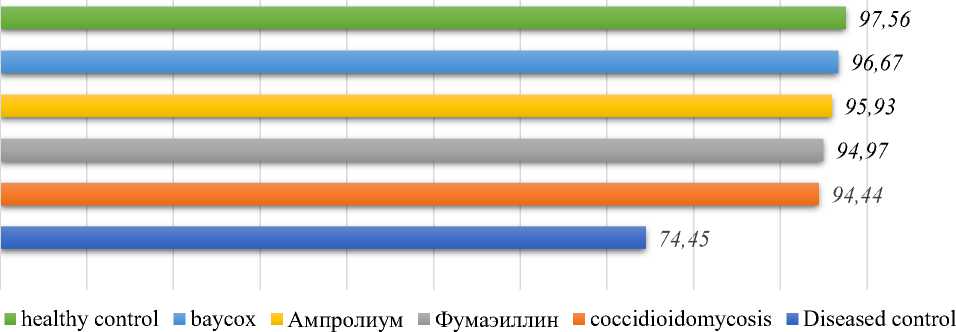
Figure 1. The effect of treatment of naturally diseased grenae with therapeutic agents on the viability of mulberry silkworms
As experimental material, the grenae structures obtained from the previous year's feeding with pebrin were examined under a microscope, and pebrin-infected grenae structures were collected and used in the experiment. Literature data confirm that grenae infection in such grenae structures is 036%. Experiments show that when such grenae mixture is used in feeding, 100% of worms die at the end of feeding. Therefore, the use of such diseased grenae is prohibited in places.
In the experimental experiment, mulberry silkworms that emerged from hereditary diseased granas (treated with tested preparations according to the methodology) were fed leaves soaked with 0.25% fumagillin DCH, 1.5% amprolium, coccidiovit and baycox solutions 1, 2, 3 times a day, and the development of pebrin disease was repeatedly investigated. Each of the experimental variants consisted of 3 repetitions, and 150 worms were included in each repetition. The worms were given the indicated preparations mixed with feed from the first feeding until the last feeding of the fourth instar. To ensure the accuracy of the results obtained from the experiment, as stated in the methodology, the underdeveloped and dead worms by age were collected by repetitions of each variant until the end of the feeding and the number of worms sick with pebrin was determined by examining them individually under a microscope. The therapeutic effectiveness of the preparations was determined based on the number of registered sick worms.
Comparative analysis of the average indicators obtained from the experiment once again confirms that, like the number of dead and underdeveloped worms, the number of sick worms at the end also depends on the intensity of feeding with the preparation (Table 2).
Thus, the mortality rate from pebrin disease during the worm period when 0.25% solution of fumagillin DCH was given 1, 2, 3 times a day was 2.31; 2.07; 3.27%, respectively. This indicator was 2.42; 2.00; 4.36% when 1.5% amprolium solution was given to worms 1, 2, 3 times a day. When the same concentrated solutions of Coccidiovit and Baycox preparations were given to naturally sick worms 1, 2, and 3 times a day, the mortality rate from pebrin disease during the worm period was
2.22; 1.84; 2.82% and 2.13; 2.06; 2.80%, respectively. As can be seen, as a result of the therapeutic effect of the tested preparations, the mortality during the larval stage in the experimental variants decreased by 14.62-16.98 absolute % or 4.3-9.5 times compared to the control variant (18.98%) (Table 2).
Table 2
THE EFFECT OF DRUGS ON THE DEVELOPMENT
OF PEBRİN DİSEASE İN A NATURALLY OCCURRİNG DİSEASE BACKGROUND
|
Name of the drug and the affect of contentment, % |
si o\ о St 8 |
к be _ |
co ? s w |
g ^ iS |
Й |
The survival of the worm, M±m |
|
Fumagillin DCH-1,0 |
0,25 |
1 |
150 |
2.31 |
5.04 |
94.96±0,513 |
|
2 |
150 |
2.07 |
4.37 |
95.63±0,387 |
||
|
3 |
150 |
3.27 |
5.85 |
94.15±0,480 |
||
|
Amprolium-2,0 |
1,5 |
1 |
150 |
2.42 |
3.41 |
96.59±0,254 |
|
2 |
150 |
2.00 |
3.04 |
96.96±0,307 |
||
|
3 |
150 |
4.36 |
6.06 |
93.94±0,279 |
||
|
Coccidiovit-2,0 |
1,5 |
1 |
150 |
2.22 |
4.22 |
95.78±0,209 |
|
2 |
150 |
1.84 |
3.63 |
96.37±0,346 |
||
|
3 |
150 |
2.82 |
4.81 |
95.19±0,394 |
||
|
Baykox-2,0 |
1,5 |
1 |
150 |
2.13 |
4.07 |
95.93±0,314 |
|
2 |
150 |
2.06 |
3.70 |
96.30±0,439 |
||
|
3 |
150 |
2.80 |
4.15 |
95.85±0,182 |
||
|
Healthy control |
water |
2 (water) |
150 |
- |
2.44 |
97,56±0,067 |
|
Disease control |
water |
2 (water) |
150 |
18.98 |
25.55 |
74,45±0,850 |
The analysis of the results obtained from the experiment shows that as the concentration of the solution increases, the effectiveness of the treatment is accompanied by a decrease in the intensity of feeding with the preparations. This allows for successful selection.
In sericulture, the final cocoon yield is taken as the basis. Here, the cocoon yield obtained from a single size, i.e. 1 standard box (20,000 pieces) of grenae is considered. The volume of cocoon yield obtained from one standard box can be more or less depending on its feeding conditions, leaf quality, microclimate, etc. environmental factors. The low cocoon yield is mainly affected by the occurrence of infectious diseases during feeding, especially pebrin disease of mulberry silkworms, resulting in an increase in the mortality rate of worms and a decrease in their viability.
Results. Based on the first-ever medical therapeutic and prophylactic studies conducted in the Republic of Azerbaijan against pebrin disease of mulberry silkworms and the analysis of the obtained biometric indicators, the following results were determined:
During the spring feeding of the Namazli-2 mulberry silkworms, each of the Fumagillin DCH, Amprolium, Koksidiovit and Baykoks preparations used against pebrin disease (nosematosis) — an infection caused by Nosema bombycis - had a varying degree of therapeutic effect on pebrin disease, depending on the amount used and the intensity of daily administration. The applied 1.0% and 0.25% fumagillin DCH, 2.0% and 1.5% amprolium, coccidiovit and baycox preparations were effective in the treatment of pebrin disease, both against natural and artificial infection, as well as from a prophylactic point of view, and also had a stimulating effect on the productive indicators of silkworms.
It was determined that when the natural diseased grenae of mulberry silkworms were exposed to 1.0% fumagillin DCH and 2.0% amprolium, coccidiovit, and baycox solutions for 30 days before incubation at a temperature of 15-18oC for 2 hours, the viability of the grana increased by 7.8012.23% compared to the diseased control.
When the naturally infected grenae with pebrin were treated with ready-made solutions of 1.0% Fumagillin DCH and 2.0% Amprolium, Koksidiovit, Baykoks, and also when the worms were fed with ordinary (untreated) feed from the first feeding, compared to the diseased control group, the mortality during the worm stage from pebrin disease decreased to 17.36–16.31%, and the total mortality decreased to 22.22–19.99%. At the same time, the survival of the worms against the background of the disease increased by 19.99–22.22%. The infection rate in butterflies decreased to 59.52–48.93%, and the cocoon yield obtained from one standard box (20,000 pieces) of grenae increased to 9.2–10.6 kg.
