
Self-Actualization of Children with Disabilities as an Indicator of Inclusive Effects in Modern Society (On the Example of Russian Arctic Regions)
Journal: Arctic and North @arctic-and-north
Section: Northern and arctic societies
Article in issue: 63, 2026.
Free access
In the context of increasing inclusive processes in modern Russian society, it has become essential to analyze the effects and outcomes achieved from the perspective of self-actualization among people with disabilities, as this allows understanding the structure of their lives and assessing the extent of their inclusion in social processes and relationships. The aim of this article is to study self-actualization of chil-dren with disabilities in the Euro-Arctic territories of Russia at the theoretical and empirical levels and to identify its features in comparison with children with normal health. The article analyzes the results of an empirical sociological study conducted in 2023 using the semi-formalized interview method (n = 476, aged 614 years old, 238 children with disabilities and the same number of “normotypical” children in terms of health). The authors found that children with persistent health disorders lag behind typically developing children in most parameters, including the range of everyday activities, participation in social practices, relationships with peers, personal aspirations, and subjective assessments of their own success and abilities. All this indicates the insufficiency of inclusive effects and the illusory nature of inclusion in relation to some children with disabilities, which should be taken into account in the further implementation of measures to integrate this group into society on the basis of equal opportunities.
Short address: https://sciup.org/148334006
IDS: 148334006 | UDC: 316.37(0985)(045) | DOI: 10.37482/issn2221-2698.2026.63.262
Text of the scientific article Self-Actualization of Children with Disabilities as an Indicator of Inclusive Effects in Modern Society (On the Example of Russian Arctic Regions)
DOI:
Inclusion is currently regarded as a fundamental principle of the social state, ensuring justice for vulnerable groups in society (Ternovaya, 2023) and serving as a measure of a state’s civility. However, the potential of inclusion is associated not only with the transformation of people with persistent disabilities into independent individuals, but also with understanding its role in the socio-cultural and socio-economic development of the country (Blagireva, 2019).
Inclusive processes, spreading to all spheres of society today, are changing the social structure, creating new ways of connecting elements of the social system. In modern society, not only the positive consequences of measures taken towards inclusion are becoming increasingly visible, but also numerous risks: both those arising against the backdrop of inclusion and those resulting from the chaotic development of the inclusive processes themselves. The latter includes a decline
∗ © Afonkina Yu.A., Zhigunova G.V., 2026
This work is licensed under a CC BY-SA License in motivation for inclusion among people with disabilities themselves and their families due to unsuccessful experiences with inclusion and distancing themselves from communities, and, on the other hand, the existing mistrust and underestimation of people with disabilities in society (Afonkina, Zhigunova, 2022), and, accordingly, a lack of social interactions with them in various spheres of life (Afonkina, Zhigunova, 2022).
There is also a trend towards the formalization of inclusion through initiatives that are called inclusive, but in fact are not so, since they violate the basic principle enshrined in the UN Convention, which prohibits decisions being made for people with disabilities without their involvement and which recognizes the responsibility of people with disabilities for their own and society’s development (Sudakova, 2023). At the same time, these activities are characterized by a considerable degree of fragmentation, localization and, to some extent, ostentation. The goal of inclusion is the effective use of the creative and active potential of each individual (Sudakova, 2023). However, the inclusive agenda often not only fails to take this into account but also becomes a means of addressing issues that have little to do with inclusion, namely, image-building and commercial concerns. There is a perception that adding the word “inclusion” to any topic automatically makes it socially significant.
For a theoretical understanding of the essential characteristics of inclusive processes, an assessment of their status and practical management, it seems important not only to acknowledge their existence, but also to identify and evaluate the inclusive effects achieved within society.
Inclusive effects, as the outcomes of the development of inclusive processes in this area, are the result of actions of specific individuals, groups and communities, social institutions, and society as a whole. Their achievement depends on the transformation of established patterns of social activity, as well as the established mechanisms governing interactions and relationships between people. Such transformations can only be achieved only through coordinated changes in public consciousness and public behavior.
Defining the parameters for achieving inclusive effects requires correlating them with the essential characteristics of the idea of social inclusion. Based on an understanding of inclusion as perceiving people with disabilities as equal citizens, whose needs are recognized by society as no less significant and demanding than those of other categories of the population, inclusive effects should be considered in terms of achieving social equilibrium disrupted by segregated living conditions.
In this regard, such measurable indicators as the accessibility of facilities and services, satisfaction of people with disabilities with the quality of services and special assistance provided, infrastructure development, modernization of social services, education, medical care, employment, provision of special equipment, increased material well-being, and inclusive living are extremely important, but insufficient to assess the full depth of inclusive effects in modern society (Arkhipova, Zelezinsky, Porodin, 2021; Korotkova, 2020). Therefore, modern research, along with improving the infrastructure of territories and institutions, substantiates the problem of increasing the level of personal happiness and safety of people with disabilities (Vdovina, Semochkina, 2021; Peshkova, Siminyakina, 2021; Grogoleva, Prirezova, 2021); the need to analyze the subjective activity of people with disabilities themselves and their immediate social environment is highlighted in order to understand the nature of inclusive processes (Vdovina, Semochkina, 2021; Peshkova, Siminyakina, 2021; Grogoleva, Prirezova, 2021).
When identifying indicators of inclusive effects, we believe it is essential to proceed from the fact that the development of inclusion practices should change the life trajectory of a person with disabilities from exclusive to inclusive; as such, this indicator objectively reflects their capacity for self-actualization as a means of achieving a normal quality of life. In this case, a person with a disability acts as the subject of their own life and activity, which ensures their personal growth and promotes their full participation in social processes. At the same time, their human potential is objectified and enriched. In general, self-actualization gives a person’s activities a new meaning, linked both to inner autonomy and to the conscious presentation of oneself to society. At the same time, various forms and types of activity serve as a means of an individual’s self-actualization.
Thus, during the process of inclusion, it is necessary to achieve a balance between the individual and the social. It is important for individuals with disabilities to accept themselves and be accepted by society as equals.
Materials and methods
In the course of researching the specifics of self-actualization among children with disabilities in comparison with their normotypical peers, the following methods were used: analysis of theoretical sources and secondary data, as well as the results of a semi-structured author-conducted interview carried out in 2023 in the Russian European Arctic: Karelia, Komi, Murmansk and Arkhangelsk Oblasts. The sample included children aged 6–14 with disabilities (n=238, of which 108 were aged 6–7 and 130 were aged 8–14) and children without disability status who had a level of physical and mental development appropriate for their age (hereinafter referred to as “normal children” or “normotypical children”) (n=238, of which 111 were aged 6–7 and 127 were aged 8–14), of which 52.5% were male and 47.5% were female. All typically developing children were studying in regular schools (100.0%); children with disabilities were studying in educational institutions of regular (10.1%) or special (61.5%) types, or received individual education (28.4%). Children with disabilities had mental (76.1%), speech (13.5%), motor (4.1%), and hearing or vision impairments (6.3%). The empirical study method was a semi-structured interview.
Discussion
Self-actualization, traditionally considered in the context of philosophical and psycho-pedagogical knowledge, is interpreted in one way or another from the perspective of the selfrealization of a person’s inner potential (Maslow, 1999; Allport, 2002; Abulkhanova-Slavskaya, 1999; Gorodilova, 2002, etc.). It is also well represented in pedagogical research from the perspective of professional self-development of individua(Garanina, Lashina, 2021; Zaitseva, 2022, etc.).
The results of psychological and pedagogical research suggest that the sphere of human selfactualization encompasses needs, preferences, motives, interests, meanings, and emotions, becoming the driving force behind self-development. These disciplines have formed the idea that self-actualization takes place at every moment of a person’s life through constantly realized subjective activity, potential, abilities, values and meanings, revealing their individuality within society (Rastorgueva, 2013).
In sociology, the concept of self-actualization is extremely under-represented. The conceptual understanding of personal self-actualization is based on the premise that every individual is unique and is always in the process of development. The very essence of a person constantly drives them towards personal growth, creativity and self-realization. The basis for studying and understanding a person in this context is their subjective experience, acquired through interaction with others and determining their self-perception and self-attitude.
According to I. Kon, an individual possesses a creative identity, which implies active selfdisclosure and self-realization and is determined by their ability to integrate a multitude of socially significant values that determine certain social practices and the methods for implementing them (Kon, 1967).. In the opinion of S. Moskovichi, these practices and modes of action are realized on the basis of the individual’s social perceptions of social reality and of themselves (Moscovici, 1992). In other words, self-realization and self-actualization are determined by the reflection of social reality in the subject’s consciousness and, accordingly, by the value-normative system and attitudes toward action formed on its basis.
It should be noted that in the sociological literature, the focus of research has shifted towards the subject’s self-realization rather than self-actualization. In studying the relationship between these two concepts, we note their interconnectedness, but not their interchangeability. If the essence of self-actualization lies in the individual’s internal activity aimed at identifying and self-discovering their own resource potential, then the essence of self-realization lies in the individual’s ability to make optimal use of their potential, taking into account external socio-cultural criteria, in the course of engaging in social practices and interacting with others (Grigoryeva, Pov-arenkov, 2015; Korostyleva, 2005; Plotnikova, Maslova, 2018; Sukhov, Geraskina, 2024).
Self-actualization is an important prerequisite for self-realization, just as self-realization is a consequence of the process of self-actualization, without which it is practically impossible (Abulkhanova-Slavskaya, 1999; Frankl, 2000).
Taking into account the importance of external conditions for self-actualization, sociology is focused on the characteristics of relationships and interactions with other individuals, the level and nature of social activity, the potential of the environment, the state of socio-cultural institutions that allow an active subject to reveal their creative potential in the process of self-realization (Welzel, Inglehart, 2010). Among the significant socio-cultural conditions, scientists note imposed ideals (Marcuse, 1994), instability of social reality, which hinders self-realization (Bauman, 2008), increasing opportunities for a variety of choices (Toffler, 2002; Willig, 2009), within which processes of personal growth and the shaping of one’s unique life path take place.
In sociology, the internal factors of self-actualization include an individual’s social identity, values, motives, attitudes, mechanisms and levels of process, its results, which determine the actions and behavior of the active subject. Thus, it should be emphasized that self-actualization is a complex category that should be considered dynamically as an internal mechanism of personality development, determining movement from the level of possibility (potential state) to the level of reality (actual state) through social activity (Afonkina, Zhigunova, 2024) in specific socio-cultural conditions (see Fig. 1).
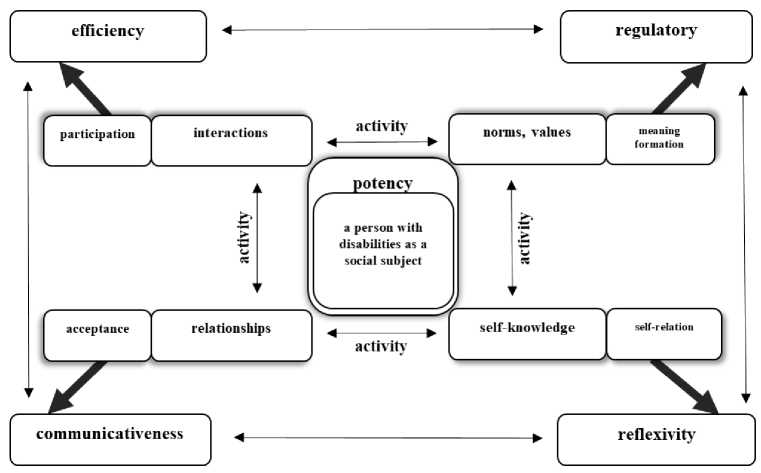
Fig. 1. Structural and functional diagram of self-actualization among people with disabilities as an indicator of inclusive effects.
Consequently, an approach to inclusion from the perspective of self-actualization among people with disabilities will reveal its dynamic inclusive effects, personally and socially significant for overcoming social inequality, highlighting new research contexts for the sociological understanding of both self-actualization and social inclusion. Thus, understanding self-actualization as an indicator of inclusive effects allows assessing their informal influence on the lives of people with disabilities and revealing priority perspectives for the development of inclusive processes in society.
For an empirical assessment of the effects of self-actualization, we propose the following criteria: both internal (motivational, identification, cognitive, and normative-value) components of an individual’s activity, and external ones (relational, communicative, inclusive, behavioral, practical) aimed at effective self-realization.
Results
The self-actualization of children with disabilities is of significant scientific and practical interest due to the existing contradictions. On the one hand, childhood is the period of most inten- sive development of a person as an individual and a subject of activity. On the other hand, a child with disabilities is significantly dependent on their immediate environment for the fulfilment of both their general human needs and their specific needs. The inconsistency that often arises in the practical implementation of inclusion — the special conditions created, the forms and types of activities offered, and the ways of interacting with the surrounding world — and the child’s internal motivators for activity (preferences, interests, etc.) hinders their self-actualization, thereby reducing the inclusive effects. The “visible” inclusion that occurs in such cases does not correspond to the actual inclusion of children with disabilities in activities typical of their peers, further deepening the already significant social distance between them.
It is also important to note the following: what constitutes inclusion for an adult representing the child’s immediate environment (parents, specialists), may not be so for the child if their favorable status and social success within the children’s community are not ensured through interactions and relationships that allow them to positively actualize their individuality.
One of the prerequisites for the success of a child’s self-actualization process is therefore a supportive, inclusive social environment that provides opportunities to explore all available and appropriate forms of social activity in accordance with their self-perception and self-awareness.
Table 1
Children’s daily activities, %
|
Options |
Children with disabilities |
Children with typical development |
|
Games |
52.1 |
88.2 |
|
Activities with gadgets, online |
23.2 |
79.0 |
|
Productive activities (drawing, modelling, paper crafting, construction, etc.) |
23.1 |
84.3 |
|
Communication |
20.4 |
84.3 |
|
Homework |
16.6 |
79.8 |
|
Watching TV |
11.6 |
71.8 |
|
Sports |
5.7 |
42.4 |
|
Reading books |
5.7 |
15.5 |
|
Walking outside |
5.3 |
82.3 |
|
Household chores |
5.2 |
13.0 |
|
Dance classes |
4.3 |
47.1 |
|
Spending time with animals |
2.6 |
36.5 |
|
Creative writing, creative work |
2.0 |
4.6 |
|
Satisfying vital needs |
36.3 |
not stated |
The survey revealed that all respondents engage in play activities. However, for children with disabilities, this primarily involves educational, remedial and developmental board games (lotto, checkers, etc.), building sets, and spending time with gadgets and online. Approximately a third of respondents reported active play. Play with toys (dolls, robots, soldiers, cars, trains, rockets, planes, cartoon and movie characters) is predominantly object-based. During play, the majority of children with disabilities (78.7%) interact with other children. A quarter of respondents (21.3%) play alone.
The play of typically developing children includes the same types of play activities (with the exception of remedial and developmental games), which, however, are widely supplemented by intellectual games and games related to the subject matter of learning, as well as theatrical and musical themes. Play with toys is more extensive and role-playing. No significant differences were found in the toys used compared to children with disabilities. Furthermore, in the majority of cases (79.8%), play takes place together with peers.
The interests of children with disabilities are closely linked to their daily activities: games (15.8%), gadgets (12.6%), drawing (9.3%), literature (8.5%), music (5.9%), handicrafts (4.6%), electronics (4.6%), sports (4.3%), animals (2.8%), dancing (2.2%), and collecting (0.7%). It should be noted that some children have educational (15.8%) and professionally oriented (4.3%) interests, such as mathematics (4.3%), linguistics (5.9%), medicine (2.0%), and nature (0.9%).
Regarding children with typical development, it is important to emphasize that the list of interests does not differ significantly; however, the interests listed cover a significantly larger number of children compared to children with disabilities. We would particularly highlight games, educational and career-oriented activities, as well as sports, creative activities (art, music, etc.), and electronics (PCs, gadgets, etc.) (Table 2).
It is important to note that in both samples of respondents, the scores for types of everyday activities are higher than those for interests, which indicates that the latter are not sufficiently taken into account when organizing children’s lives and activities.
Table 2
Children’s interests, %
|
Options |
Children with disabilities |
Children with typical development |
|
Games (excluding gadgets and PCs) |
15.8 |
84.3 |
|
Studying |
15.8 |
58.4 |
|
PCs, gadgets |
12.6 |
79.0 |
|
Drawing |
9.3 |
46.6 |
|
Music |
5.9 |
55.0 |
|
Handicrafts |
4.6 |
29.4 |
|
Professional interests (medicine, psychology, linguistics, computer science) |
4.3 |
48.7 |
|
Sports |
4.3 |
28.1 |
|
Spending time with animals and caring for them |
2.6 |
24.8 |
|
Dancing |
2.2 |
36.9 |
|
Collecting |
0.7 |
20.6 |
Responding to the question about activities they are good at, children with disabilities noted that they are best at playing various games (35.2%), engaging in artistic and creative activities (26.9%), constructing things (23.3%), playing sports (11.2%), music (1.9%) and communicating (1.9%).
Children with typical development were more likely to highlight their studying (61.3%), creative (69.7%), and communication achievements and skills (66.4%), while a third of them emphasized sports (34.4%). In their responses, 76.5% of respondents broadly described a variety of skills they had successfully mastered in everyday life, education, leisure, communication, and other areas. In addition, 84.3% of survey participants expressed social assessments of their achievements, based on the opinions of their parents and teachers, as well as their victories in competitions, contests and other events.
Outside the family and school, children with disabilities show a low level of involvement in public life, alongside a fairly narrow range of participation in it. About a quarter of children participate in sports competitions, and a similar proportion — in various festive events (19.4% and 17.6%, respectively). Only 5.6% visit public places (theaters, zoos, water parks, cinemas, cafes, games centers, etc.), and the same proportion take part in creative competitions.
Children with typical development, on the other hand, are highly involved in social life. Among the forms of such activity, participation in festivals and other events (100%), visits to public places (100%) and participation in competitions (96.6%) stand out (Table 3).
Table 3
Children’s social life, %
|
Options |
Children with disabilities |
Children with typical development |
|
Participation in sports competitions |
19.4 |
55.0 |
|
Participation in festivals and other similar events |
17.6 |
100 |
|
Visiting public places |
5.6 |
100 |
|
Participation in competitions |
5.6 |
96.6 |
Difficult to answer 51.9 0
About 75.7% of children with disabilities shared their dreams and desires. Notably, 16.4% of respondents dream of material goods (new toys, gifts, skates, a telephone and other purchases); 14.9% dream of vacations, travel, trips to other cities and countries; 12.5% of respondents dream of improving their health; 10.2% dream of future work, getting a profession, building a career; 4.6% dream of becoming an adult; 4.6% dream of changing people’s attitudes towards themselves; 4.1% dream of becoming successful; 4.4% of children dream of various family values (playing games with parents, open communication, avoiding quarrels, having a new family member, etc.); 2.0% of children dream of acquiring practical skills (playing musical instruments, singing, music), and 2.0% dream of mastering social skills. A quarter of the children (24.3%) do not have any dreams. Although the value of health ranks among the top priorities for children with disabilities, in percentage terms it is only slightly higher than for typically developing children (12.5% and 9.2% respectively).
The aspirations of typically developing children do not differ significantly in content from those reported by children with disabilities. However, differences are evident in their priorities and the scope of their dreams. Material wealth (78.6%), good education (65.1%), and travel (60.9%) are of primary importance. Compared to children with disabilities, the dreams of these children are more focused on acquiring a profession and building a career, good academic performance, growing up, success, and mastering practical and social skills (which are ranked lower among children with disabilities). In the sample of typically developing children, only 7.6% have no dreams, which is three times lower than among children with disabilities (Table 4).
Table 4
Children’s dreams, desires, and aspirations, %
At the same time, only just over half of children with disabilities consider themselves successful (55.7%); 19.4% do not consider themselves successful, and 24.9% found it difficult to answer. A significantly higher proportion of children consider themselves talented (81.0%); 5.1% consider themselves not talented, and 13.9% found it difficult to answer. Children without disabili-
NORTHERN AND ARCTIC SOCIETIES
Yulia A. Afonkina,Galina V. Zhigunova. Self-Actualization of Children with Disabilities … ties are more likely to consider themselves both successful (92.4%) and talented (98.2%).
The overwhelming majority of children surveyed have friends. Among children with disabilities, 96.1% of those surveyed answered in this way (3.9% have no friends, respectively), while 100% of children with typical development stated that they have friends.
Children with disabilities form friendships mainly at school (54.4%) and in various types of centers (36.4%). Only 15.8% of respondents make friends in clubs, groups or when attending extra-curricular activities. Most typically developing children make friends at school, and extracurricular activities such as clubs, sections, and so on (76.1%). It should be noted that, from this perspective, neighborhood groups are not relevant in either sample, nor is the family environment, whose members are not viewed by the majority of respondents in terms of friendships (Table 5).
Table 5
Distribution of responses to the question “Who are your friends?” (%)
|
Options |
Children with disabilities |
Children with typical development |
|
School friends |
54.4 |
89.5 |
|
Children attending a social assistance center/rehabilitation center, etc. |
36.5 |
0 |
|
Children attending the same clubs, sections, extracurricular activities, etc. |
15.8 |
76.1 |
|
Family members |
0.9 |
11.8 |
|
Children from the same neighborhood |
4.3 |
13.0 |
|
Other |
2.0 |
4.6 |
|
No friends |
3.9 |
0 |
Almost all children with disabilities surveyed, except for 2.8%, consider themselves to be good friends (97.2%). In case of disagreements or conflicts, they are willing to compromise (70.2%), forgive (10.6%), help (6.6%), intercede (3.9%), and discuss problems (2.1%). However, 4.2% will stand their ground and 6.3% will become upset. No significant differences were found in the group of children with typical development.
The majority of surveyed children with disabilities (90.9%) believe they are respected by adults (9.1% found it difficult to answer), while 61.3% are respected by their peers, 14.8% are not respected, and 23.9% found it difficult to answer. Children with disabilities noted that others take their opinions into account and consult with them on various issues, while 11.2% indicated that their views are not taken into account; 9.1% found it difficult to answer. Children with typical development believe that they are respected by both adults (98.2%) and peers (96.4%) (Afonkina, Zhigunova, 2024).
Among children with disabilities, 54.1% do not experience any particular life problems. However, a relatively high proportion reports some difficulties and problems (45.9%). These include health problems, physical limitations (31.9%), difficulties communicating with adults (16.2%), studying difficulties (16.2%), problems in relationships with other children, conflicts, communication difficulties (15.1%), difficulties with sports (11.2%), difficulties with finances (5.0%), difficulties with daily routine (3.3%), difficulties with discipline (1.1%), and others.
Difficulties were reported by 23.5% of children with typical development, while 76.5% of survey participants reported no difficulties. The most common difficulties were related to studying (92.4%), followed by social difficulties in interacting with other children (reaching agreements, being understood, resolving or avoiding conflicts, communicating effectively, etc.). The third most common difficulty (73.5%) concerned relationships with adults (65.5%). A further 38.3% reported an inability or lack of time to pursue their favorite activities, 33.6% cited disciplinary and organizational difficulties, and 31.5% noted an inability to fulfil certain desires or to possess any material goods. Other options were mentioned by fewer than 5% of children.
In overcoming difficulties, children with disabilities are primarily helped by their parents or other family members, with the mother playing the leading role (42.2%), followed by the father (37.4%), siblings (5.7%), and grandparents (3.7%). Friends (15.9%) and teachers or caregivers (7.4%) also provide various forms of assistance. This assistance includes emotional, practical, educational, and other support. 2.0% of respondents noted that no one helps them and that they cope with all difficulties themselves. Among children with disabilities, 69.9% of those surveyed help other people themselves. This mainly involves helping the family with household chores and providing emotional support to close friends and family.
Children with typical development also provide help and support to others: 89.7% of respondents help with household chores, look after pets and plants, go shopping, and offer emotional support to relatives and friends. In turn, they receive help primarily from their parents or other family members. Most often, it is the mother (71.0%), and in a third of cases, the father (36.9%). Friends help these children in 40.7% of cases, and teachers — in 66.3%. Most often, the help relates to education (82.8%) and social interactions (59.2%); it takes the form of emotional support, creating organizational conditions, teaching, discussing personal experiences, and setting an example.
More than half of the surveyed children with disabilities are quite optimistic about the future, believing they will succeed (60.2%). Pessimistic attitudes account for 12.0% of children, and 27.8% found it difficult to answer. Among children with typical development, 85.3% were confident about their future, 6.3% were pessimistic, and 8.4% found it difficult to answer.
Children with disabilities experience emotional joy through many events, people, objects, and situations. Children primarily cite communication and time spent with parents and family members as a source of joy (51.3%), followed by holidays and gifts (19.3%), a favorable psychological environment (“peace and quiet”, “when no one argues”) (11.7%), visits to public places and walks (8.8%), games, including gadgets (5.5%), creative and sports activities (5.3%), socializing with friends (4.6%), sweets (3.5%), good grades (2.0%), and other activities (4.3%).
NORTHERN AND ARCTIC SOCIETIES
Yulia A. Afonkina,Galina V. Zhigunova. Self-Actualization of Children with Disabilities … (1.3%), etc.
Among the most important values, children with disabilities ranked health first, life second, and loved ones third, followed by having a purpose, intellectual abilities, work, happiness, order, beauty, respect, a peaceful life and free time.
For typically developing children, the most important factors are success and achievement, intellect and abilities, followed by health, life, happiness, respect, the well-being of loved ones, friendship and mutual support, a peaceful life, beauty and free time (Afonkina, Zhigunova, 2024).
Children with disabilities wouldn’t want to change anything in their lives, except for their parents’ lifestyle (so that they work less, spend more time with them, and do not argue), their own state of health, personal qualities (to become smarter, kinder) and their personal attitude towards others (to become a good friend, to help everyone), etc.
In this regard, typically developing children are more ambitious: they would improve their academic performance, work harder in clubs and societies, seek to build better relationships with loved ones, and desire positive changes in their emotional and personal lives, abilities, communication skills and physical qualities.
Conclusion
An empirical study revealed that the structure of daily activities among children with disabilities is less varied compared to that of typically developing children. Productive activities, communicative practices, walks, and sport and educational activities outside educational institutions are represented to a lesser extent. The structure of play activities is characterized by the presence of corrective and developmental games for children with disabilities and a wide range of intellectual games for children with typical development. No significant differences were found in the structure of interests between the two categories of respondents, although typically developing children demonstrate a broader range of interests and hobbies. Similar trends were identified regarding the achievement of success: children without disabilities have a greater variety of areas of success and a significantly wider range of achievements.
Differences were identified in the level of involvement in social life and the scope of pa r-ticipation therein. While all children without disabilities surveyed are involved in various events and social practices, only one-sixth of children with disabilities engage in inclusive participation in society.
There are also some differences in the dreams, desires, and aspirations of the two samples of children, with both prioritizing material wealth. It is also worth noting the significant proportion of children with disabilities who lack aspirations, which is a marker of a passive lifestyle.
All children seek to socialize and make friends with their peers; they have friendships and are satisfied with their interactions with other children. All children rated their authority among peers and adults quite highly; however, a significantly greater proportion of high ratings are observed among children without disabilities, particularly regarding respect from peers, which stood at 96.4% for children without disabilities and 61.3% for children with disabilities.
A difference was also found in the self-assessments of respondents regarding abilities and personal success. Children without disabilities rate themselves higher on these parameters; the overwhelming majority consider themselves both talented and successful (98.2% and 92.4%). Children with disabilities generally consider themselves more talented (81.0%) than successful (55.7%).
As for attitudes towards their future, children without disabilities demonstrate a higher level of optimism (85.3%) compared to children with disabilities (60.2%), with the former accounting for more than half of the respondents. There are twice as many pessimistic children among those with disabilities as among those without disabilities (12.0% and 6.3% respectively).
Only a quarter of children without disabilities and half of children with disabilities mentioned the life difficulties and problems they face. While health-related issues are the most common among children with disabilities, educational issues are the most common among children with disabilities. All children receive the necessary external support to overcome difficulties and, in turn, act as sources of support for others.
Children with disabilities rated health, life, and family as their most important values, while for typically developing children they are personal achievements, abilities and health.
Typically developing children are more demanding and ambitious, whereas children with disabilities are less inclined to make any changes in their lives.
Thus, the study revealed that children with persistent disabilities lag behind typically developing children in most areas, including the range of daily activities, participation in social life, personal aspirations and ambitions, relationships with peers, and subjective assessments of success and abilities. Differences are also observed in primary goals, values, attitudes, the nature of life’s difficulties, and life positions. The data obtained demonstrate the inadequacy of inclusive effects for some children with disabilities, which should be taken into account when further implementing measures to integrate this group into society on the basis of equal opportunities.
In order to overcome the barriers to the inclusion of children with disabilities, parents and teachers need to encourage their independence and initiative in daily, educational and extracurricular activities, motivate them to participate in social life, provide comprehensive support in all their endeavors, and respond promptly to their requests and needs, taking into account their capabilities.
