
Some regulations of the law on freedom of religion and non-religion: issues of improving the legal environment
Journal: Eastern Vector: History, Society, State @eurasia-world
Section: Политология
Article in issue: 2, 2025.
Free access
The 1992 Constitution of Mongolia guarantees freedom of belief, freedom of religion or non-religion, which has become a prerequisite for the peaceful coexistence of people of various religions and beliefs. Our country is facing many legal problems, including the difficulty of registering and licensing religious organizations, the lack of transparency, restrictions on the dissemination of religious books, insufficient law enforcement, and the lack of legal regulation. These lead to unauthorized conduct of religious activities, covert conduct of religious activities by NGOs and other legal entities without supervision, the exploitation of religious beliefs to harm citizens emotionally and financially, and the mass involvement of minors in religious activities. Since the enactment of the Law on State-Church Relations in 1993, the religious situation in our country has become increasingly blurred between traditional and non-traditional religions, various new religious sects have entered, and the number of religious organizations has increased, leading to many changes. When the Mongolian government approaches religious issues, it is necessary to implement legal reforms at the intersection of international human rights principles, global socio-economic development trends, and the activities of cross-border religious organizations, including the right to practice or not to practice religion, the protection of national security and independence, the inheritance and development of national traditional intellectual culture, and the preservation of national identity. When amending and supplementing the Law on State-Church Relations, it is essential to regulate in detail key issues such as the issue of religious terminology, the establishment of a structure for regulating religious education and interfaith issues in the state system, and the transparency of the finances of religious organizations.
Similar articles in the section Constitutions. Legislative assemblies. National assemblies
Short address: https://sciup.org/148333352
IDS: 148333352 | UDC: 342.415 | DOI: 10.18101/2949-1657-2025-2-45-58
Некоторые положения закона о свободе религии или убеждений: вопросы совершенствования правового поля
Конституция Монголии 1992 г. гарантирует свободу вероисповедания, что является необходимым условием мирного сосуществования людей, исповедующих различные религии. В нашей стране существует множество правовых проблем, включая сложности с регистрацией и лицензированием религиозных организаций, отсутствие прозрачности, ограничения на распространение религиозной литературы, недостаточное соблюдение законов и отсутствие правового регулирования. Результатом этого становятся несанкционированное осуществление религиозной деятельности, осуществление религиозной деятельности неправительственными организациями и другими юридическими лицами без надзора, эксплуатация религиозных убеждений с целью причинения морального и материального вреда гражданам, а также массовое вовлечение несовершеннолетних в религиозную деятельность. После принятия в 1993 г. Закона о государственно-церковных отношениях религиозная ситуация в нашей стране становится все более неопределенной: наряду с традиционными и нетрадиционными религиями появляются различные религиозные секты, увеличивается число религиозных организаций, что приводит к многочисленным изменениям. При рассмотрении религиозных вопросов правительство Монголии должно проводить правовые реформы на стыке международных принципов прав человека, тенденций мирового социально-экономического развития и деятельности трансграничных религиозных организаций, включая право на свободу религии или убеждений, защиту национальной безопасности и независимости, сохранение традиционной национальной духовной культуры, а также национальной идентичности. При внесении изменений и дополнений в Закон о государственно-церковных отношениях необходимо урегулировать такие ключевые вопросы, как определение религиозной терминологии, создание государственной структуры регулирования религиозного образования и межконфессиональных отношений, а также прозрачность доходов религиозных организаций.
Text of the scientific article Some regulations of the law on freedom of religion and non-religion: issues of improving the legal environment
Mendbayar D. Some Regulations of the Law on Freedom of Religion and Non-Religion: Issues of Improving the Legal Environment. Oriental Vector: History, Society, State. 2025; 2: 45–58 (In Russ.)
Religious Legal Regulation in Mongolia
Since the enactment of the Law on State-Church Relations in 1993, many changes have occurred in the religious situation in our country. However, today's society demands that religious legal regulations be revised. In the future, our country faces issues such as revising the law regulating religious and monastery issues and creating a structure for regulating interfaith issues in the state system. Our country has legally stipulated that temples and monasteries can freely serve the faithful by making offerings to the Buddha, making scriptures, performing religious rituals, holding meetings, and collecting books. This has contributed to the fact that the activities of Buddhist temples are not charitable in nature, but support vulnerable groups in society and carry out a wide range of activities that meet the material and spiritual needs of citizens 1 . When amending the Law on State-Church Relations, it is essential to regulate in detail the main issues such as the issue of religious terminology, the establishment of a structure for regulating religious education and interfaith issues in the state system, and the transparency of the finances of religious organizations.
Most Mongolian citizens accept religious diversity, and believers of different religions live in harmony. The state should establish its religious policy at the intersection of many aspects, such as joining the global socio-economic development trend, protecting the right of people to practice or not to practice religion within the framework of the activities of cross-border religious organizations, protecting the national security and independence of the state, inheriting and developing the national traditional intellectual culture, and preserving its national identity.
-
Article 3 of the Law on State-Church Relations enshrines the norms for the exercise of civil freedom of religion or non-religion as follows.
-
1. To practice or not to practice any religion is a matter of personal belief.
-
2. It is prohibited to force a citizen to practice or not to practice a religion or to restrict his/her freedom.
-
3. It is prohibited to discriminate, insult, divide, or carry out activities against citizens based on their religious beliefs or their religious beliefs or non-religion.
-
4. Civil freedom of religion or non-religion shall be exercised only in accordance with the laws of Mongolia that regulate the same freedoms of other citizens, health, morality, national security, and social order, and the obligations of Mongolia under international treaties.
-
5. It is prohibited to reflect the religious beliefs of a citizen in official documents unless the person himself/herself so desires.
In addition, Article 7, Section 5 states that “A church shall strictly adhere to internal regulations reflecting the traditional customs of the religion and shall not engage in inhumane activities that are contrary to the traditions and customs of the Mongolian people.” Section 7 states that “Any religious organization or clergy shall not force, coerce, or deceive those who do not practice their religion, harm their health or morals, or disturb their thoughts and feelings.” It also states that people must not restrict or influence their freedom to practice or not to practice their religion in any way.
In addition, Article 7, Section 5 states that “A church shall strictly adhere to internal regulations reflecting the traditional customs of the religion and shall not engage in inhumane activities that are contrary to the traditions and customs of the Mongolian people.” Section 7 states that “Any religious organization or clergy shall not force, coerce, bribe, deceive, harm their health and morals, or disturb the minds of those who do not practice their religion.” It also states that the conditions for exercising the freedom of religion or not to practice religion shall not be restricted or affected in any way.
Article 4.1.12 of the Law on the Protection of Personal Information defines “sensitive personal information” as information about a person’s origin, ethnicity, religion, beliefs, health, correspondence, genetic and biometric information, private keys for digital signatures, whether or not they are serving a sentence, sexual orientation, gender expression, and sexual relations.
The Law on Education prohibits all educational institutions from organizing religious education, religious rituals, and other activities with state funding. In case of violation of the above prohibition, the district and local IHC have the right to reject the application for renewal of the registration of a religious organization.
Article 6.1 of the Labor Law prohibits direct or indirect discrimination, restriction of rights, or preferential treatment in employment and labor relations based on a person’s nationality, ethnicity, language, race, age, gender, social origin, social and marital status, wealth, religion, views, political opinions, trade union membership, health status, pregnancy or childbirth, sexual or gender orientation, expression, disability, or appearance. According to the Labor Law, all legal entities (including religious organizations) must employ a certain number of Mongolian citizens for each foreign employee. The government annually sets and issues a decree setting a quota for this ratio, which changes annually for each sector of the labor market. Groups not listed in the annual quota list must have 95 percent of their employees be Mongolian citizens, and additional foreign workers may be hired only if the 95 percent quota is met and maintained. However, this annual resolution allows religious organizations to employ at least five Mongolians for every foreign citizen, and this 5:1 ratio must not be reduced. The Law on the Legal Status of Foreign Citizens prohibits activities aimed at undermining the national unity of Mongolia, the propagation of cruel and inhuman religious teachings and sermons, and the conduct of religious activities in violation of human rights or other ways that are not in accordance with the law. Foreign citizens who intend to conduct religious activities must apply for a religious visa, and the propagation and promotion of inhuman religious movements that may harm the national customs of the country are prohibited. Only registered religious organizations are entitled to invite foreigners on religious visas. Foreign citizens arriving on other types of visas are prohibited from carrying out activities to promote or disseminate religion. Individual religious practices are permitted. According to the law, “conducting activities other than the purpose for which one arrived” is grounds for deportation. Mongolia is a party to the International Covenant on Civil and Political Rights 1 .
Article 7 of the Law on Preventing and Combating the Coronavirus (Covid-19) Pandemic and Reducing its Negative Impact on Society and Economy states that the Government will take measures to suspend, for a certain period of time, religious meetings and gatherings of religious organizations with the participation of the public in person, starting from 7.1.10. Article 11 of the law requires that decisions and actions of authorized bodies and officials shall not violate the provisions of the Constitution of Mongolia, which prohibits torture, inhuman and cruel treatment, and the right to selfdefense and legal assistance, as well as Article 11.1.5, that they shall not discriminate against or humiliate a person on the basis of their nationality, ethnicity, language, race, age, gender, social origin, status, wealth, occupation, position, religion, opinion, education or other characteristics.
Article 29.2 of the Law on Military Service stipulates that a citizen of Mongolia may be physically excluded for religious, ethical or other reasons specified by law. Also, Article 30.1 of the Law states that Mongolian citizens aged 18-25 who are second-degree military conscripts may be exempted from military service for religious or ethical reasons. This includes assisting in disaster relief, border protection, participating in humanitarian activities, or in the form of a monetary payment equivalent to the annual cost of one soldier.
The Law on Offenses and the Criminal Code stipulate legal sanctions for any violation of the prohibited norms or for any obstruction of a person’s right to practice or not to practice religion. Chapter Fourteen of the Criminal Code defines and legalizes “Crimes against personal and political rights and freedoms of a person”.
According to the Criminal Code, if an individual obstructs the exercise of freedom of religion or belief, uses force or threatens to use force, or obstructs the activities of a religious organization or religious rituals, he or she shall be punished with a fine of 450,000–2,700,000 tugriks, or with community service for a period of 240–720 hours, or with restriction of the right to travel for a period of 1–6 months. If a religious organization, preacher, lama, imam, or shaman imposes his or her religious beliefs on others by force, pressure, or deception, or promotes a cruel religious belief, he or she shall be punished with a fine of 450,000–5,400,000 tugriks, or with restriction of the right to travel for a period of six months to one year, or with imprisonment for a period of six months to one year.
According to the Law on Violations, the liability for violating the Law on StateChurch Relations is specified, and if a child is involved in religious activities against his or her will in connection with the right to worship or not to worship, an individual shall be fined 100,000 tugriks, and a legal entity shall be fined 1,000,000 tugriks. If the religious status of a citizen is not stated in an official document, or if the law does not specify the right of the person to worship, an individual shall be fined 100,000 tugriks, and a legal entity shall be fined 1,000,000 tugriks. If a religious organization performs the functions of a state organization, conducts, participates in, or finances political activities, an individual shall be fined 150,000 tugriks, and a legal entity shall be fined 1,500,000 tugriks. It is stated that if a state-affiliated school or organization organizes religious training or gatherings, an individual will be fined 300,000 tugriks, and a legal entity will be fined 3,000,000 tugriks.
When asked what the most appropriate state-religious relationship is, most foreign and domestic researchers believe that “state-religious relations are proceeding correctly when the state protects and supports the right and freedom to practice religion or not, while religion strives to protect the independence of its state and the peace of its citizens.” In order for the state to resolve religious issues in the most appropriate way and to establish the most appropriate approach to interacting with religious organizations and believers, there is an increasing need to support and develop religious studies as a scientific field and involve religious scholars in state affairs dealing with religious issues1.
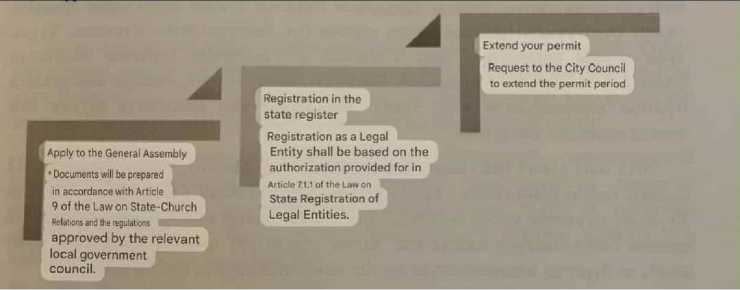
Figure 1. Process of registering, obtaining and renewing permits for religious organizations 2
The process of registering and issuing permits for religious organizations is regulated by the Law on State-Church Relations, the Law on State Registration of Legal Entities, and the relevant regulations of the capital and aimag IHCs developed in accordance with these laws. The issue of issuing, renewing or canceling permits for religious activities in Mongolia is finally decided by the capital, aimag and soum Citizens' Representatives' Meetings, and based on this, the state administrative body in charge of state registration issues registers the religious organizations.
Table 1
Registration and statistical data of religious organizations
|
National Statistics Committee /2016/ |
State Registration Office of legal Entities /2016/ |
Ministry of Justice and internal Affairs /2016/ |
|
350 religious organizations: |
433 religious institutions |
848 religious organizations: |
|
Buddhist 38.9% |
Buddhist 34.6% |
|
|
Christian 52.3% |
Christian 54.2% |
|
|
Islam 6.3% |
Islam 5.1% |
|
|
Other 2.6% |
Other 6% |
National Statistics Committee /2016/ State Registration Office of Legal Entities /2016/ Ministry of Justice and Internal Affairs /2016/
350 religious organizations: 433 religious organizations 848 religious organizations: Buddhist 38.9% Buddhist 34.6%
Christian 52.3% Christian 54.2%
Islamic 6.3% Islamic 5.1%
Other 2.6% Other 6%
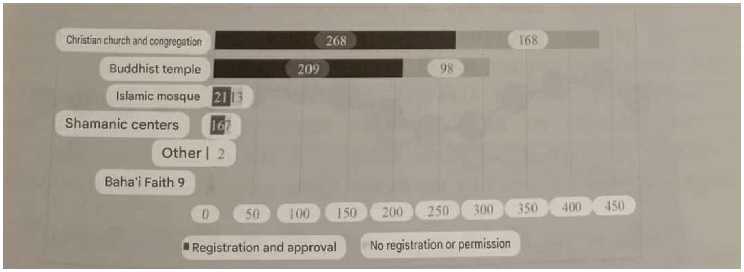
Figure 2. Registered and unregistered religious organizations
There are examples of organizations that have just been established or are seeking registration or permission, that operate under the pretext of having a legal entity certificate even though the permission period has expired, that operate under the pretext of being a branch of a religious organization, that operate under the pretext of having a permit or certificate from the central organization, and that operate without any registration or permission1.
According to a study conducted by the “Tungaamal” NGO, as of 2016, there were 170 unlicensed temples and congregations operating in Mongolia, of which 81 were in rural areas and 89 in the capital 2 . In addition, there is no information about selfemployed people such as shamans, udgans, seers, and astrologers who are working without a permit. It is mentioned that it is impossible to monitor whether these people meet the educational requirements for conducting religious activities, how they ensure the right of citizens to practice their religion, and what amount of offerings and contributions they receive from citizens 3 .
In addition, the Ministry of Justice and Internal Affairs concluded in an assessment of the consequences of the implementation of the Law on State-Church Relations that “... there are many violations of the law, including insufficient implementation of the law and the lack of legal regulation, the conduct of religious activities without a license, the conduct of religious activities under the cover of non-governmental organizations and other legal entities without supervision, the exploitation of religious beliefs to harm citizens emotionally and financially, and the mass involvement of minors in religious activities. 4 ”
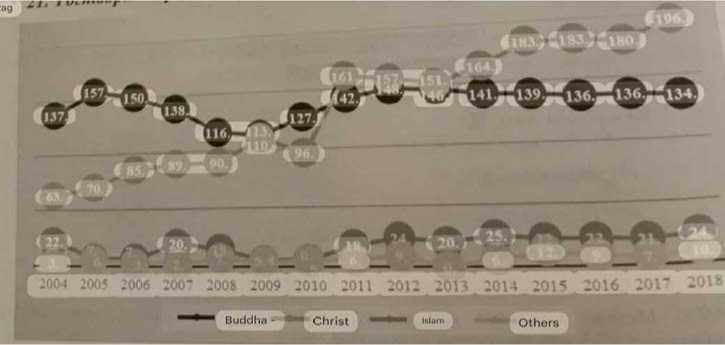
Figure 3. Stable Religious Organizations
The number of stable Christian religious organizations has been steadily increasing over the past year, while the number of Buddhist religious organizations has been gradually decreasing or fluctuating. This is influenced by many factors, including financial resources, organizational management and human resource development, cooperation between religious organizations, and support and participation of believers 1 . The state will cooperate with religious organizations in accordance with the requirements of respecting the Constitution, creating opportunities for the enjoyment of freedom of religion, and protecting the freedom to practice religion or not2.
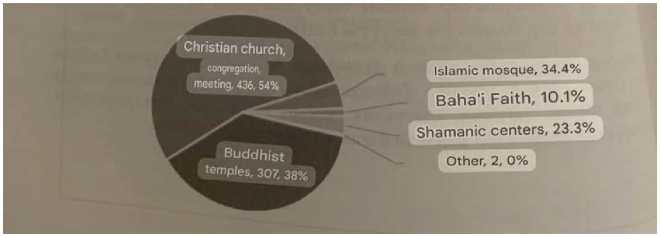
Figure 4. Religious organizations, by type
More than half of the religious organizations operating in Mongolia are Christian churches, congregations, and congregations, which are divided into various directions in terms of denominations 3 .
American sociologist of religion R. Bella believes that during the evolution of religion, worship has become a personal matter of believers and a matter of freedom to worship or not to worship, which is the main reason for secularization 4 . In our country, secularization has been implemented in a short period of history, and society, citizens' lives, consciousness, behavior, and all kinds of activities have been freed from the strong influence of religion, and the consciousness, culture, education level, and social activity of citizens have increased, becoming an important factor in the development of Mongolia.
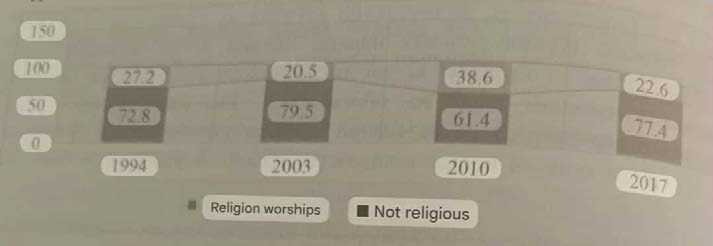
Figure 5. Changes in the ratio of religious believers to non-believers 5
The survey results show that 77.4% of the respondents are religious, and 22.6% are non-religious. The survey results are compared with the results of the 1994 and 2003 surveys, and the 2010 population and housing census.
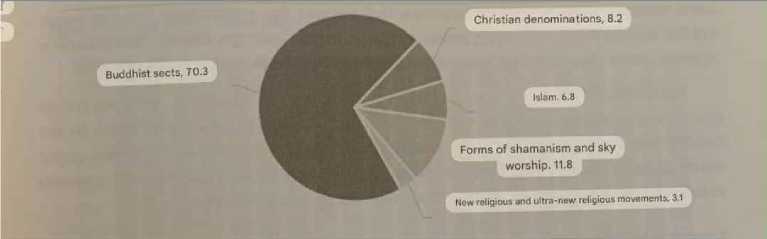
Figure 6. Religious denominations in Mongolia
Religious denominations and denominations in Mongolia can be classified into 5 main groups. According to the survey results, 56.6% of the total population, including 70.3% of the religious, practice traditional Buddhism. Christianity is practiced by 6.6% of the total population, while 8.2% of the religious practice. For Islam, these figures are 5.5% and 6.8%, for shamanism, 9.5% and 11.8%, while for new religious movements, the figure is 2.4% of the total population and 3.1% of believers 1 . The state interacts with religions in 22 different ways. The capital city and 21 aimags issue permits and monitor them in different ways 2 . As of 2022, the capital city, 7 aimags have regulations, and 14 aimags do not. There are many problems with issuing permits for new churches and extensions of registered churches. There is a need for legal regulation to move to a form where registration occurs upon notification and the right to worship is revoked if violations of the law are found. The right to worship a person’s religion will be ensured by establishing a religious organization and developing the institution of religious organizations. Legal provisions and legal regulations that allow one religion to be given a name and enjoy dominant rights should be avoided.
Although international law recognizes that restrictions on the freedom to practice or not to practice a religion may be possible in the course of performing a ritual, restrictions on the freedom of parents to practice or not to practice a religion or to provide religious education should not be imposed 3 . The restrictions imposed can only be considered legitimate if they are necessary for one of the purposes of public health, morality, national security, social order, or the rights and freedoms of others, as enshrined in the law of the country 4 . Currently, there is no other specific state policy document on the right of Kazakh citizens to practice or not to practice a religion.
Kazakh citizens of Bayan-Ulgii aimag practice Islam and perform their religious rituals in accordance with the rituals of this religion 1 .
It is necessary to preserve the dominant position and influence of the traditional Buddhist religion of the Mongolians and regulate the activities of new religions through policies and laws developed in accordance with the common fundamental interests and development of the country and people.
Conclusion
The Mongolian Constitution protects the freedom of religion or non-religion from the perspective of positive rights when regulating the relationship between the state and the church. In the present era, when the scope and activities of religious organizations that existed at the time of the adoption of the Law on State-Church Relations have expanded, and new religious movements are spreading, there is an urgent need to revise and improve the policies and legal regulations on religion, religious organizations, the right to practice religion, and the state's implementation of religion. The fact that the activities and organization of religious organizations are no longer limited to traditional forms is a feature of the current state of religion in Mongolia, and it shows the urgent need to revise and improve the legal regulations governing the activities of religious organizations.
It is necessary to amend and amend the Law on State-Church Relations and carry out legal reforms to bring the natural right of a person to practice religion or nonreligion into line with the content of the Constitution of Mongolia and the international treaties and conventions to which it has acceded.
The concept of freedom of religion or belief can be considered to be clearly regulated in accordance with international standards by organic laws and other laws 2 . Although many religious denominations have entered Mongolia and operate with the status of non-governmental organizations, there has been no mechanism to monitor their activities or detailed legal regulations. The development and implementation of different regulations in each locality regarding the approval of religious organizations has created a lack of control. Therefore, it is necessary to create a unified system for establishing and registering religious organizations nationwide and regulate them with unified legal regulations. In other words, it is advisable to re-establish the conditions and requirements for establishing a new religious organization, obtaining a permit, and registering it in the state register.
Proposal
– The state should make effective policies and legal regulations to resolve religious issues
– Adopt a specialized law on freedom of religion
– Establish clear criteria for granting, extending, and terminating licenses for religious activities
– Streamline and standardize the terminology of religion
– Make the finances of religious organizations open, transparent, and transparent
– Ensure the right and freedom of citizens to practice their religion and not to practice their religion, and monitor the implementation of the law
– Establish and operate a council for religious affairs under the provincial and capital city councils
– Improve control over granting, extending, and terminating licenses for religious activities
– Create a system in which religious organizations are on an equal footing with other social organizations in political and economic relations
– Clarify the validity period of registration for religious activities
– Make registration a requirement for religious organizations to register upon notification
– Establish legal regulations for terminating the right if it is determined that the law has been violated
– Ensure that human rights and freedoms, especially religious Join international agreements on freedom of worship
– Revise legal documents related to religious legal regulation
– Revise and approve the procedure for discussing and resolving issues related to establishing new temples in the capital, issuing new permits to operate, and extending the permit period
– Create a structure for regulating interfaith issues in the state system
– Clarify the procedure and requirements for registering religious organizations, and legislate them in detail
– Implement common procedures regulating relations between the state and temples, establish a state organization responsible for religious affairs, and clarify its functions
– Organize religious organizations operating without a registration permit, and create a system for preventing money laundering through religious organizations
– Organize the period for issuing permits to religious organizations
– The state will thoroughly regulate relations with religious organizations,
Re-establish the conditions and requirements, and define in detail the grounds for refusal of registration of a religious organization by the registration authority in law.
▪ Expand the details of the relations to be reflected in the charter of monasteries.
▪ Clearly legislate the establishment of branches and representative offices of foreign religious organizations in Mongolia, their activities, and related relations.
– Improve the general procedures for granting licenses to religious organizations.
– Create a system for holding religious organizations accountable for operating without a license.
– Clarify the law on religious propaganda and create standards.
