
The Bird-of-Prey Motif at Tell Kurdu, Türkiye
Journal: Brief Communications of the Institute of Archaeology @ksia-iaran
Article in issue: 283, 2026.
Free access
Painted pottery, which is typically geometric in its designs and execution, is the best-known feature of the Halaf Culture of northern Mesopotamia. Pottery with figurative or representational images tends to be extremely rare at most Halaf Period sites. Their rarity has often been interpreted to signify that vessels with such figurative motifs carry potent symbolism. This study examines Tell Kurdu in southern Türkiye’s Amuq Valley, which lies beyond the typical cultural zones that are under Halaf influence. Here the overwhelming majority of the pottery tends to be plain wares or local Dark Faced Burnished Wares, with painted Halaf-like pottery comprising only a small portion. Even though this percentage is low, excavations at Tell Kurdu have to date yielded thousands of Halaf-like geometric painted sherds. However, representational imagery remains absent from painted pottery except for one instance. So far, the only figurative design found at Tell Kurdu is a raptor image. This motif is seen on a painted pottery fragment from the 2025 excavation as well as a stamp seal. Its repetition across two different forms of media suggests purposeful use of representational imagery. It is possible that the figurative motif refers to the Amuq Valley’s ecological significance, visually symbolizing the close relationship between birds of prey and the Amuq wetlands, where such birds were a key part of the environment.
Short address: https://sciup.org/143186101
IDS: 143186101 | DOI: 10.25681/IARAS.0130-2620.283.155-164
Мотив хищной птицы в Телль-Курду в Турции
Характерным признаком халафской культуры Северной Месопотамии является расписная керамика, которая, как правило, украшена геометрическими узорами. На большинстве памятников этой культуры керамические изделия с условными или стилизованными изображениями животных или птиц встречаются нечасто. Редкость данного вида находок зачастую объяснялась тем, что сосуды с такими изображениями имеют важное символическое значение. В статье рассматривается археологический памятник Телль-Курду в долине Амука в Южной Турции, который расположен за пределами культурных зон, находившихся под влиянием халафской культуры. Большая часть находок представлена неорнаментированной или местной темнолощеной керамикой; доля керамики с росписью халафского типа незначительна. В ходе раскопок на поселении Телль-Курду обнаружены тысячи черепков, орнаментированных по типу халафской. Однако изображения животных или птиц отсутствуют, за одним исключением. На сегодняшний момент единственным фигуративным мотивом является изображение пернатого хищника. Данный мотив присутствует на расписном фрагменте керамики, обнаруженном во время раскопок в 2025 г., а также на печати. Присутствие одного мотива на двух разных предметах указывает на намеренное использование этого стилизованного изображения. Возможно, образ птицы свидетельствует об экологическом облике долины Амука и визуально символизирует тесную связь между заболоченными участками равнины и хищными птицами как важного компонента экосистемы.
Text of the scientific article The Bird-of-Prey Motif at Tell Kurdu, Türkiye
Painted pottery is widely regarded as the main hallmark of the Halaf cultural horizon (Nieuwenhuyse, 2007). Beginning in the sixth millennium BCE, the proliferation of' finely decorated ceramic vessels must have created a powerful visual medium through which motifs and decorative conventions became widely distributed (Campbell, 1992; Cruells, Nieuwenhuyse, 2004; Hole, 2013). Extending across a vast geographic area including northern Mesopotamia from the foothills of the Zagros in the east to Mersin in the West, this practice marks the first unified visual tradition
of the prehistoric Near East ( Davidson , 1977; Watkins, Campbell , 1987; Watson , 1983). This painted pottery “revolution” transformed everyday containers into vehicles of visual communication, allowing distinctive Halaf motifs to circulate widely and become one of the most recognizable artistic expressions of the prehistoric Near East ( Akkermans, Schwartz , 2003; Nieuwenhuyse , 2009).
The decorative repertoire of Halaf painted pottery, which tends to be predominantly geometric, is dominated by carefully structured patterns such as bands, triangles, cross-hatching, chevrons, lozenge and crow’s feet motifs, as well as concentric circles, often arranged in highly symmetrical compositions that emphasize repetition ( LeBlanc , Watson , 1973; Mallowan, Rose , 1935). These motifs are usually placed into horizontal bands on the vessel. This is an approach that ultimately results in visually compelling designs, and that effectively converts ceramic vessels into intricately patterned surfaces. Although occasional figurative representations, of birds, quadrupeds, humans, trees and buildings are known, they are comparatively rare ( İpek , 2019; Majar , 2021; Robert, Daverat , 2017). Such motifs most commonly depict animals, particularly birds with outstretched wings, fish rendered with elongated bodies and fins, and occasionally quadrupeds ( Erdalkiran , 2009; 2017; Grimbergen , 2016; ipek , 2019; ipek et al ., 2024. Fig. 6). Human figures showing full bodies or only faces are also known from a range of Halaf Period sites ( Ippolitoni-Strika , 1996; Majar , 2021). Architectural motifs interpreted as houses, likewise, occasionally appear on Halaf painted pottery, suggesting that domestic architecture and settlement space formed part of the symbolic imagery circulating within Halaf visual culture ( Campbell , 2010; Tekin , 2020). Even though these decorations can sometimes be quite realistic, in many cases they remain highly schematic in form. Regardless of how they are represented though, they tend to remain clearly distinguishable from the geometric repertoire that dominates Halaf decoration.
More common, though somewhat less geometric, are stylized rows of bucra-nia and mouflon shapes or “dancing ladies” motifs, which occupy an intermediate position between geometric patterning and fully representational imagery ( Garfinkel , 2010; İpek , 2019). Even with these schematic motifs included it would be safe to say that the overwhelming majority of Halaf painted decoration relies on geometric abstraction. The consistency and widespread distribution of these geometric designs across the Halaf interaction sphere further contributed to the shared visual language that characterizes Halaf material culture ( Nieuwenhuyse , 2009). Building on this predominance of geometric decoration, several researchers have noted that explicitly representational imagery, which appears only rarely in the Halaf ceramic repertoire, is unlikely to be accidental ( Campbell , 2010; Nieuwenhuyse , 2007). While geometric patterns typically circulate quite widely, representational images of humans, animals, or other identifiable beings are often believed to carry a different symbolic charge and may not be allowed the same patterns of distribution across and within settlements. Because examples of such imagery may evoke myths, narratives, or cosmological associations, they can often be perceived as more socially potent and therefore potentially dangerous ( Campbell , 2010; Nieuwenhuyse , 2007). Here, abstract motifs may reflect an aesthetic choice and a social strategy to promote visual expression while limiting the spread of powerful or sensitive images.
The Site of Tell Kurdu (Hatay, Türkiye)
The site of Tell Kurdu, located in Hatay in the Amuq Plain of southern Tür-kiye, provides an informative case study in this regard (Fig. 1). Tell Kurdu lies in the western margins of the Halaf cultural sphere and does not represent a typical Halafian settlement ( Ozbal , 2006; 2024; Ozbal et al ., 2004; Ozbal, Gerritsen , 2013). Although Halaf painted pottery is found at the site, it represents only a minor component of the total ceramic assemblage. Instead, the majority of the pottery tends to be composed of unpainted wares and particularly Dark Faced Burnished Ware (DFBW), which remains a dominant component of the local ceramic tradition ( Braidwood, Braidwood , 1960). In this respect, Tell Kurdu reflects a cultural setting in which Halaf elements were adopted within an existing regional ceramic repertoire rather than replacing it ( Hahn , 2004; 2012). The assemblage therefore suggests a peripheral context where Halaf stylistic traditions circulated and were selectively incorporated into local practices rather than forming the primary ceramic tradition.
The site has been investigated during three main phases of excavation. The initial campaign was led by Robert and Linda Braidwood in 1938 ( Braidwood, Braidwood , 1960), but renewed excavations directed by K. Aslıhan Yener between 1995 and 2002 ( Yener et al ., 2001a; 2001b; Özbal et al ., 2004), and the current project directed
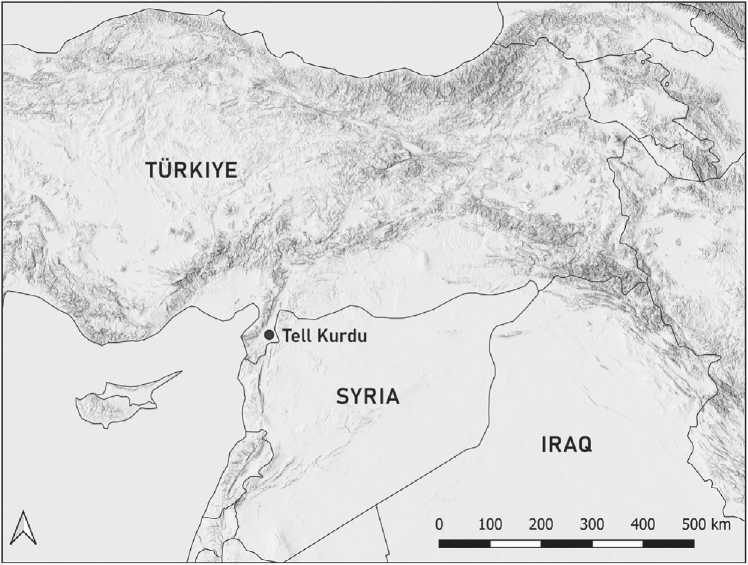
Fig. 1. Map showing the location of Tell Kurdu by Rana Özbal and Fokke Gerritsen beginning in 2022 (Özbal, Gerritsen, 2024) have exposed Halaf-related deposits across an area of approximately 1200 sq. m and have formed a notable component of the excavations in at least six seasons to date. Thousands of painted Halaf sherds have been found during these investigations. In the 2001 excavation season alone, more than 1,250 painted fragments were documented. Yet despite the large size of this assemblage, excavations have not been forthcoming about the recovery of painted sherds displaying figurative imagery (Ozbal, 2017a; 2017b; 2024).
In other words, Tell Kurdu lacks such motifs even though figurative designs are regularly found at other sites in small numbers. At other Halaf sites, representational imagery includes a range of identifiable representational motifs, which are typically integrated into the painted surface alongside geometric elements or placed within framed compositions, suggesting deliberate visual narratives or symbolic scenes ( Breniquet , 1992; İpek , 2019; Majar , 2021; Tekin , 2011). Although numerically rare, representational motifs widely appear even at small sites suggesting that the act of painting was a broadly shared cultural practice rather than one restricted to major centers ( Bernbeck, Pollock , 2003; Erdalkıran , 2021).
The Bird Motif from Tell Kurdu
Despite the lack of representational imagery at Tell Kurdu, a single motif occurs twice across different media: a bird of prey, presumably an eagle or large raptor. The motif appears once on a stamp seal from the 2001 season (Fig. 2) ( Özbal et al ., 2004. P. 60. Fig.13:11) and once on a painted ceramic fragment found in the 2025 season (Fig. 3). The seal, which is made from a fine-grained brown stone, comes from a room deposit floor context from the North Mound Operations (Room: R06, 12:77). Radiocarbon date from a carbonized seed coming from this floor dates to 7032 ± 71 which at 94 % probability falls between 6025–5744 cal. BCE. The sherd comes from a fill level overlying an architectural layer which has been radiocarbon dated also using a carbonized seed to 6783 ± 39 which at 94 % probability corresponds to 5731– 5626 cal. BCE. These two contexts come from different parts of the site but both date to the Amuq C period.
As this is the only representational theme currently documented at the site, its repetition suggests intentional selection rather than coincidence. Not only is this the only seal depicting a narrative scene, but this sherd represents the only figurative painted pottery fragment from Kurdu. While the seal depicts the bird with outstretched claws actively seizing a fish or snake, the sherd shows only the descending claw, with no prey depicted.
The bird-of-prey motif must be considered a unique element of Tell Kurdu’s visual culture. Its presence indicates that representational imagery on painted pottery wasn’t entirely missing, but rather selectively chosen. Rather than avoiding figurative images, the evidence shows a deliberate use of imagery. The real question isn’t just why most motifs are absent, but why this particular one was allowed.
Birds of prey tend to be considered animals with significant symbolic properties in many Near Eastern traditions (Fig. 4) ( Wittkower , 1939). The act of hunting also has connotations that can evoke danger and predation ( Valk , 2020). Therefore, it can
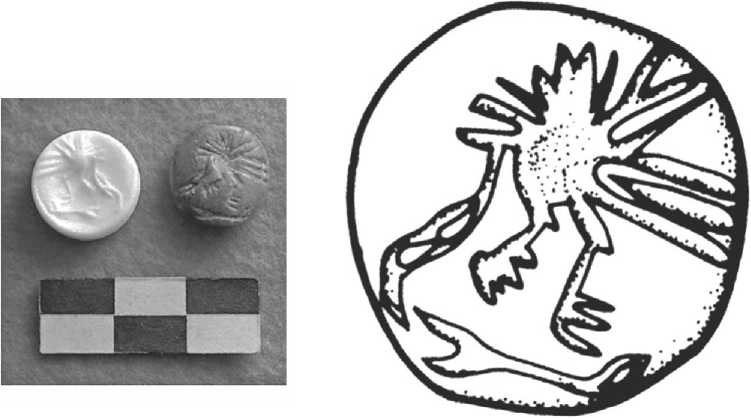
Fig. 2. Photo (left) and drawing (right) showing the stamp seal with the bird-of-prey
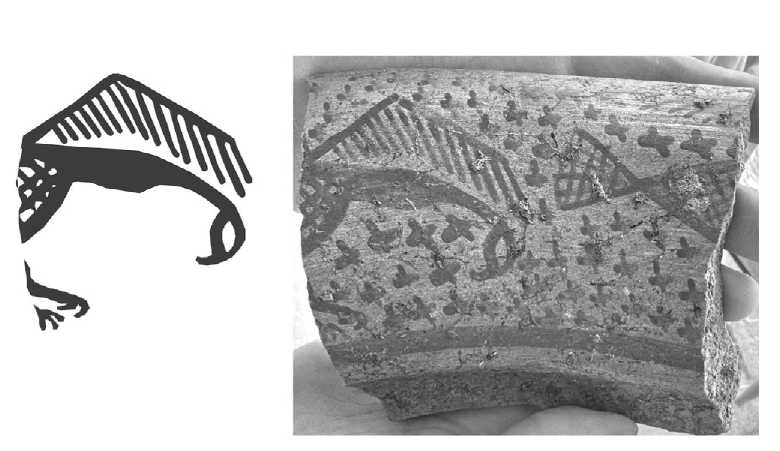
Fig. 3. Drawing (left) and photo (right) showing the pottery fragment with the bird-of-prey
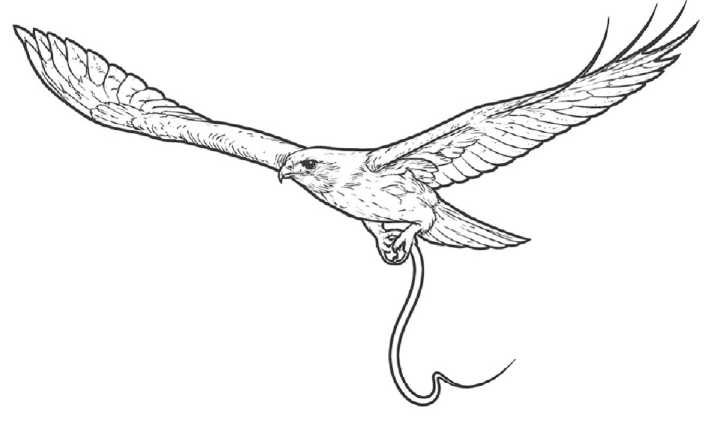
Fig. 4. Drawing of bird-of-prey with a snake caught between its claws be argued that such motifs symbolize power (Filipek, 2023). The scarcity of figurative images at Tell Kurdu may thus reflect an intentional visual policy where only select motifs, perhaps those with widely recognized symbolic or protective value, were permitted.
Tell Kurdu’s environment enhances the importance of the bird-of-prey motif ( Stampfl et al ., 2001). In the sixth millennium BCE, the Amuq Plain was shaped by the Amuq Lake and associated marshlands ( Batiuk , 2024; Korkmaz, Gürbüz , 2008). These areas supported plentiful fish, attracted waterfowl and birds, including raptors ( van Tuinen et al ., 2025). Moreover, excavations at Tell Kurdu uncovered many fish bones, such as catfish indicative of a wetland environment.
Birds, and particularly predatory species, would therefore have been a highly visible and familiar component of the local landscape in Hatay ( Efe , 2016; Turan, Arı-kan , 2011). Indeed, historical accounts from the late nineteenth and early twentieth centuries, prior to the drainage of the lake in the 1940s, describe the Amuq as hosting immense numbers of birds and serving as a major stopover point for migratory species moving between Africa, Anatolia, and Eurasia ( Ozelkan et al ., 2011). Wetlands may have covered a larger area in past periods ( Braidwood , 1937; Wilkinson , 2000; Yener , 2005). This suggests that avian predators must have been a key part of daily life for Tell Kurdu’s inhabitants. Therefore, the environmental context of the Amuq contributes to making such a motif meaningful.
Conclusion
In this context, the bird-of-prey motif may represent a deliberate selection of a visually powerful and meaningful image in a local context, translating a familiar ecological interaction from the Amuq wetlands into a symbolic form within the otherwise overwhelmingly geometric Halaf decorative tradition.
We can thus say that the inhabitants of Tell Kurdu did not simply adopt or reject Halaf visual traditions but that they engaged with them strategically. Geometric motifs were likely commonly used in ceramics reserved for daily settings however, figurative imagery was most probably reserved for special occasions. Such preferential engagement suggests that motifs circulated across different visual media and were mobilized in contexts of heightened social interaction, where imagery may have carried particular symbolic or communicative power.
