
The cult of Aphrodite in the Black Sea Region: the Case of Aphrodite Figurines from the Samsun Archaeology and Ethnography Museum
Журнал: Материалы по археологии и истории античного и средневекового Причерноморья @maiask
Рубрика: Археология
Статья в выпуске: 22, 2026 года.
Бесплатный доступ
Amisos, situated in the Pontic region of northern Anatolia, was one of the most significant ancient urban centers of the Black Sea basin. Owing to its strategic position on the southern coast of the Black Sea, the city maintained continuous commercial, cultural, and religious interactions with both Anatolian inland communities and the wider Pontic world throughout antiquity. Archaeological evidence demonstrates that the territory corresponding to modern Samsun witnessed uninterrupted settlement from prehistoric periods onward, gradually developing into an important harbor city and regional center of exchange. Within this historical and cultural framework, the cult of Aphrodite occupied a noteworthy position in the religious life of the region. Aphrodite, identified with Venus in the Roman period as the goddess of love, beauty, fertility, and desire, was represented through numerous coroplastic productions distributed across the Mediterranean and Black Sea regions. Among these productions, terracotta figurines constitute one of the most significant categories of archaeological material reflecting both domestic religious practices and broader cultic traditions. The Samsun Archaeology and Ethnography Museum preserves a considerable group of Aphrodite figurines acquired through purchases from various locations within the provincial boundaries of Samsun. These artifacts provide important evidence for understanding the diffusion, reception, and local adaptation of Aphrodite imagery within the Black Sea cultural sphere. This study presents a comprehensive examination of the Aphrodite figurines housed in the Samsun Archaeology and Ethnography Museum. The figurines are analyzed typologically, stylistically, and iconographically, while comparable examples from different Black Sea centers are evaluated in order to contextualize their cultural and religious significance. Particular attention is given to the role of these terracotta representations within the religious networks of the Pontic world and to their contribution to the understanding of regional cult practices and artistic interaction in antiquity.
Короткий адрес: https://sciup.org/14139194
IDS: 14139194 | DOI: 10.53737/2713-2021.2026.27.40.011
Культ Афродиты в Черноморском регионе: на примере терракотовых фигурок Афродиты из Археологического и Этнографического музея Самсуна
Амис, расположенный в понтийском регионе северной Анатолии, являлся одним из важнейших античных городских центров Причерноморья. Благодаря своему стратегическому положению на южном побережье Чёрного моря город на протяжении всей античности поддерживал непрерывные торговые, культурные и религиозные связи как с внутренними областями Анатолии, так и с более широким понтийским миром. Археологические данные свидетельствуют о том, что территория современного Самсуна была заселена начиная с доисторических эпох и со временем превратилась в значительный портовый город и региональный центр обмена. В рамках данной исторической и культурной среды культ Афродиты занимал заметное место в религиозной жизни региона. Афродита, отождествляемая в римский период с Венерой как богиня любви, красоты, плодородия и желания, была представлена многочисленными коропластическими изделиями, распространёнными по всему Средиземноморью и Причерноморью. Среди этих произведений терракотовые фигурки составляют одну из наиболее значимых категорий археологического материала, отражающего как домашние религиозные практики, так и более широкие культовые традиции. В Археологическом и этнографическом музее Самсуна хранится значительная группа фигурок Афродиты, поступивших в музейную коллекцию посредством закупок из различных районов провинции Самсун. Эти артефакты представляют важные данные для изучения распространения, восприятия и локальной адаптации образа Афродиты в культурной среде Причерноморья. Настоящее исследование представляет комплексный анализ фигурок Афродиты, хранящихся в Археологическом и этнографическом музее Самсуна. Фигурки рассматриваются с типологической, стилистической и иконографической точек зрения, а сопоставимые находки из различных центров Причерноморья привлекаются для интерпретации их культурного и религиозного значения. Особое внимание уделяется роли этих терракотовых изображений в религиозных связях Понтийского мира, а также их вкладу в понимание региональных культовых практик и художественного взаимодействия в античную эпоху.
Текст научной статьи The cult of Aphrodite in the Black Sea Region: the Case of Aphrodite Figurines from the Samsun Archaeology and Ethnography Museum
МАИАСП № 22. 2026
The cult of Aphroditein theBlackSea Region theCaseofAphrodite Figurines ...
Knidian Aphrodite (?), Crouching Aphrodite, and Nude Aphrodite were examined in detail, comparatively analyzed through analogies, and chronologically evaluated. Furthermore, comparable examples recovered from ancient settlements along the Black Sea coastal region, particularly finds thought to be associated with cultic contexts such as sanctuaries, were incorporated into the discussion in order to present arguments concerning the existence and regional distribution of the cult of Aphrodite throughout the Black Sea region.
Materials and Methods
This study investigates the distribution areas of the cult of Aphrodite on the basis of archaeological material recovered from settlements along the Black Sea coast, with particular reference to various types of terracotta Aphrodite figurines unearthed at Amisos. In addition, the material has been evaluated in light of ancient literary sources as well as a wide range of modern scholarly studies published in different languages. Through translations of Russian and Ukrainian publications, further evidence indicating the worship of the goddess in various settlements has also been identified.
The foundation of this research is based upon archaeological and literary evidence concerning the identity of Aphrodite, her attributes, and the dissemination of her cult within ancient societies. The sample group consists of selected Aphrodite figurines representing various iconographic types relevant to the subject. These materials were selected by taking into consideration the functions of the figurines and the typological characteristics they represent, with the aim of identifying cult areas throughout the Black Sea region.
The principal dataset of the study comprises terracotta figurines and sacred areas that contribute to revealing the nature of Aphrodite worship in the ancient world. The selection of these data was necessitated by the extensive scope of the subject, which required the delimitation of the research area. Consequently, in order to preserve the central focus of the study, the selection of archaeological material was narrowed according to specific criteria, and the number of terracotta figurines included in the analysis was intentionally limited. The aforementioned figurines were preferred because they constitute some of the most representative archaeological indicators reflecting the cult and iconography of Aphrodite.
The data employed in this research were obtained through the examination of figurines reflecting the divine characteristics of Aphrodite in ancient societies, together with sanctuaries and temples dedicated to the goddess. The terracotta figurines included within the scope of the study were evaluated through visual analysis methods. Their postures, the emphasis placed upon clothing or nudity, and their attributes were comparatively examined alongside parallel examples in order to determine both their identities and chronological frameworks. In this process, iconographic features were treated as primary indicators reflecting the representation of the goddess.
Description and Analysis of the Material
Aphrodite Figurines in the Samsun Archaeology and Ethnography Museum
Knidian Aphrodite (?) (Cat. No. 1)
One of the most significant representations emphasizing the attractiveness of the goddess under the epithet Aphrodite Pandemos is the statue known as the Knidian Aphrodite. The original sculpture was created by Praxiteles (370—330 BCE) for the circular-plan Temple of Aphrodite Euploia (“of Fair Voyages”) at Knidos (Özer 2002: 381). The statue, dated to ca. 350 BCE, constitutes the earliest known example of the Knidian Aphrodite type (Çekilmez 2014: 54). Although the original sculpture has not survived, its composition is known through marble copies, numismatic evidence, and terracotta figurines produced during the Late Hellenistic and Roman Imperial periods. The marble statue currently preserved in the Vatican Museums is regarded as the closest surviving replica to the
МАИАСП № 22. 2026
original Knidian Aphrodite. In this version, the goddess is depicted either immediately before or after bathing, with her body slightly inclined forward, her weight resting upon the right leg, and her left foot modestly advanced, accompanied by a reserved facial expression. The long hair forming a triangular arrangement on the forehead, concealing the ears and gathered into a bun at the nape o the neck, together with the nearly circular shape of the head, constitute the defining characteristics of this type (Smith 2002: 81).
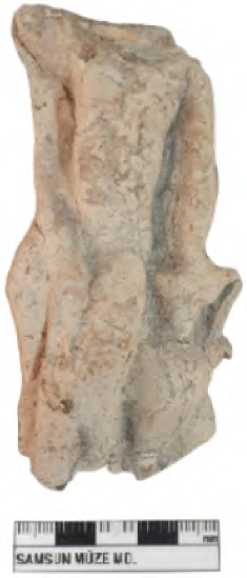
Among the terracotta figurines preserved in the Samsun Archaeology and Ethnography Museum, the type considered here to derive from the Knidian Aphrodite is represented by a single example (Fig. 1).
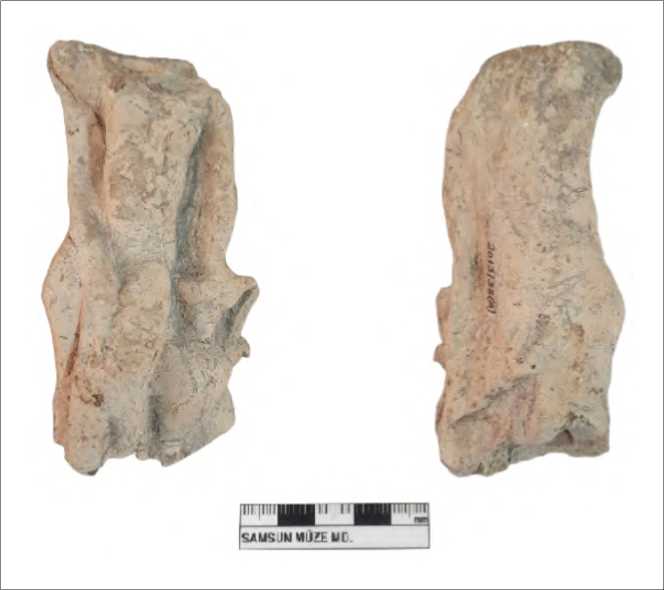
Fig. 1. Knidian Aphrodite (?) (after Samsun Archaeology and Ethnography Museum, Retain: inv.2013/38 (A)).
Cat. No. 1 depicts a nude female figure seated beside a hydria positioned on her left side; the head is missing. The right arm is broken below the shoulder, although its upward movement remains clearly discernible despite the damage. The breasts are rendered as separated, rounded, outward-projecting forms. Beginning beneath the breasts, the abdomen slightly protrudes outward, emphasizing the elegance of the female body. The left arm extends downward and rests upon the hydria. The weight of the body is supported by the left arm, and the overall posture suggests a semiseated position. Due to the body weight being transferred onto the right leg, the right leg is rendered straight, whereas the left leg bends at the knee, with the lower section curving backward. The base of the hydria and the portions of the legs below the knees are missing.
A cloak-like drapery begins immediately behind the neck, covering the rear of the figure, passing beneath the right arm, extending over the right leg, and descending between the legs in accordance with the movement of the body. The missing right arm, whose gesture can nevertheless be reconstructed as raised upward, probably held this drapery. The fabric descending over the hips covers the genital area and continues vertically between the knees. The handle and body of the hydria are preserved, while the vessel itself is decorated with incised S-shaped motifs. The rear side of the figurine was left plain and unworked. The figurine is hollow and was produced using a double-mould technique.
МАИАСП № 22. 2026
The cult of Aphroditein theBlackSea Region theCaseofAphrodite Figurines ...
Besques (Besques 1963: Pl. 15) published Knidian Aphrodite figurines from Myrina, signed by the workshop of Diphilos and dated to the late 1st century BCE. In their general composition, these figurines are nude, accompanied by a hydria, with one hand covering the genital area while the other grasps a cloth-like drapery hanging over an amphora. The earliest examples of this type appear during the Augustan Period, while the latest examples date to the Flavian Period. Four distinct versions of the type have been identified. In the first version, the amphora is placed on the right side and the goddess inclines her head toward the right, a posture symbolizing modesty. In the second version, the amphora again appears on the right side, but the body weight is shifted to the left while the head turns leftward. In the third version, the amphora is positioned on the left side, the legs are rendered straight, and the arms bend backward at the wrists. In the final version, the amphora is placed beneath the left hand, the body is rendered in a freer posture, and the drapery falls over the vessel (Besques 1963: Pl. 16).
Cat. No. 1 appears closer to the latter two variants identified by Besques, particularly due to the placement of the hydria on the left side and the relatively relaxed posture of the body (Şahin and Güçlü 2006—2007: Fig. 1). The pose in which the goddess conceals her genital area corresponds to the iconographic type known as pudica , a term meaning modesty or chastity (Çekilmez 2014: 54). In Cat. No. 1, however, the genital region is not concealed by the hand but rather by a piece of drapery extending from the back of the figure toward the front. Although this feature diverges iconographically from the canonical Knidian Aphrodite type, the combination of the nude body with the hydria suggests that the work represents a variant of the Knidian Aphrodite tradition.
Comparable examples displaying similar iconography, characterized by the complete nudity of the body and the presence of an amphora placed to the right or left of the goddess, are also known from Smyrna (Plaisier and Paula 1979: Pl. 213). Examples in which the hydria is positioned on the left side of the goddess, allowing the figurine to be identified as a Knidian Aphrodite type, are also attested in the Vatican Museum (Smith 2002: 81), Apri (Şahin and Güçlü 2006—2007: Fig. 1), Kilia (Kaplan 2009: Pl. 10), and Samos (Besques 1963: Pl. 75). The hydria placed to the left of Aphrodite in Cat. No. 1 appears chronologically and formally comparable to the example from Apri (Şahin and Güçlü 2006—2007: Fig. 1). In the Roman Imperial marble copy of Praxiteles’ Knidian Aphrodite now displayed in the Vatican Museums, dated to the second half of the 4th century BCE, the hydria is likewise situated on the left side of Aphrodite (Smith 2002: 81). By contrast, in Hellenistic terracotta figurines the hydria is generally placed on the right side of the goddess (Tavukçu 1999: 91). In this respect, Cat. No. 1 may indicate a Roman Imperial date.
An Early Roman Period example from Tralleis (Winter 1903: 209), typologically and iconographically comparable to Cat. No. 1 due to the amphora or hydria placed beneath the left arm, the raised right arm probably intended to hold a veil as in Anadyomene representations, and the emphasis upon the movement of the right leg, nevertheless differs in that the hand conceals the genital area while the drapery accumulates upon the amphora or hydria. Another comparable example displaying similar iconography through the close positioning of the legs, despite the loss of the upper body, was discovered at the ancient city of Tios within the Black Sea region and dated to the 3rd century CE (Sönmez and Öztürk 2008: 137—138). However, the thick folds of drapery in front of the legs and the more static composition of the Tios example suggest a significantly later date than Cat. No. 1. Indeed, the thinner drapery folds and more dynamic rendering of the legs in Cat. No. 1 indicate a considerably earlier production date.
The gesture of the raised right arm holding the drapery is likewise attested in an example from Pantikapaion in the northern Black Sea region, dated to the late 1st century BCE (Kobylina 1974: Taf. 61). Similarly, a fragmentary Aphrodite figurine from the ancient city of Myrmekion, located on the western shore of the Cimmerian Bosporus, has been dated to the 1st century CE (Denisova 1981: Taf. 16). The Myrmekion figurine was identified only as Aphrodite without further typological classification. In this example, Aphrodite covers her genital area with her left hand, while the front of the body remains entirely nude and a drapery covers the hips from behind. The transfer of body weight onto the left leg and the forward emphasis of the right side correspond
МАИАСП № 22. 2026
closely to the posture observed in Cat. No. 1. The fact that such representations of the Knidian Aphrodite are attested only in these two settlements, and that the figurines are identified simply as Aphrodite without a specific epithet, may suggest that this particular variant was characteristic of cities maintaining connections with the Black Sea region.
Representations of nude Aphrodite seated upon a rock are also encountered in northern Black Sea settlements and display similarities to Cat. No. 1 in terms of seated posture. One such example from Phanagoria (Kobylina 1974: Taf. 26) is dated to the 2nd century BCE. Comparable Aphrodite types seated upon rocks in a semi-seated posture similar to that of Cat. No. 1 were also discovered at Kepoi near Phanagoria and dated to the same period (Kobylina 1974: Taf. 26).
Parallels to Cat. No. 1 have furthermore been identified at Stratonikeia (Tozkoparan 1998: 20), Ionia (Plaisier and Paula 1979: Pl. 149), Tarsus (Winter 1903: 216), Patara (Işın 2007: 140), Pergamon (Winter 1903: 216), and Capua (Winter 1903: 216). In light of these comparative examples, Cat. No. 1 should be evaluated within the transitional phase between the Late Hellenistic and Roman Imperial periods. The proportional rendering of the body, the attempt to convey bodily movement, together with the decorative details and handle of the hydria positioned on the left side, point toward Hellenistic artistic traditions. Conversely, the rather coarse and simplified rendering of the left arm in relation to the body, as well as the plain and unfinished treatment of the rear side, indicate Roman Imperial workmanship. Consequently, Cat. No. 1 may most plausibly be dated between the late 1st century BCE and the 1st century CE.
Crouching Aphrodite (Cat. No. 2)
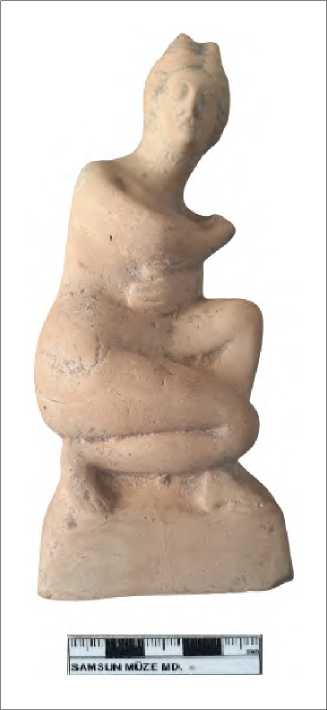
Cat. No. 2 (Fig. 2), acquired through purchase by the Samsun Archaeology and Ethnography Museum, is completely preserved. This designation refers to the representation of a nude goddess seated in a crouching position with bent knees while attempting to cover her body with her arms. The Amisos example examined in this study is entirely nude and depicted crouching with the arms intertwined. The hair is rendered in relief as linear strands extending from the sides tow ard the back and gathered at the top center of the head in the form of a bow. This bow-shaped hairstyle is highly prominent and rendered in elevated form. The hair covering the sides of the head completely conceals the ears. The forehead is narrow and slightly protruding. The eyes are disproportionately large in relation to the face and are rendered in rounded form with clearly indicated eyelids. The nose begins at the level of the eyelids and broadens tow ard the cheeks. The nostrils are distinctly visible. The lips are rendered prominently full, with a pronounced M-shaped contour on the upper lip. The chin is comparatively small in proportion to the overall face and projects outw ard.
The head is rendered frontally, whereas the body is shown in profile. The arms intertwine so as to conceal the breasts. The right arm grasps the left shoulder, while the left arm extends beneath the right arm and supports the torso. The fingers of the left hand are clearly visible. The crouching figure transfers the body weight onto the right leg, which is bent from the knee and folded beneath the hip. The right foot bends from the ankle, with the heel and hip joined together. The right foot, bearing the weight of the body, rests upon the toes, which are individually rendered. The left leg bends at the knee in order to convey the crouching movement, while the left foot remains fixed to the ground. The figurine was produced hollow using a double-mould technique. The hair, divided centrally in a manner reminiscent of the Knidian hairstyle, is gathered above the head in a bowshaped arrangement derived from an eastern braided style.
МАИАСП № 22. 2026
The cult of Aphroditein theBlackSea Region theCaseofAphrodite Figurines ...
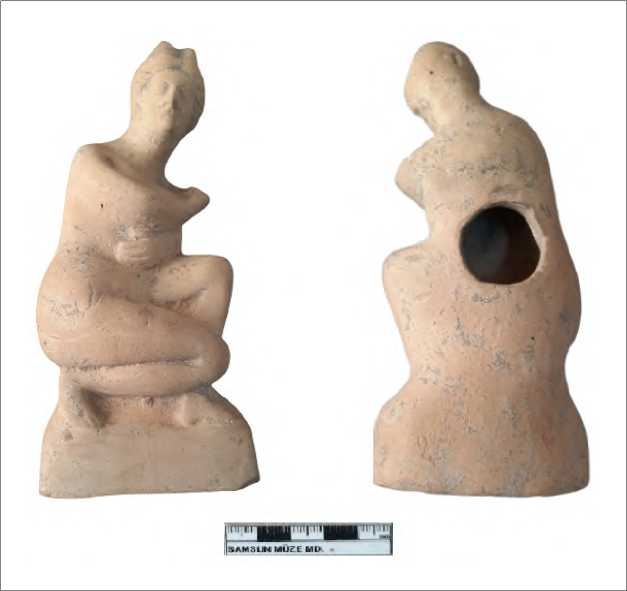
Fig. 2. Crouching Aphrodite (after Samsun Archaeology and Ethnography Museum, Retain:inv. 18-1/1979).
Although the figurine does not display explicit gender-defining anatomical features such as breasts, the general bodily proportions, together with the dimensions and forms of the arms, hips, and back, indicate that the figure represents a female. The posture of the figurine corresponds to the “Crouching Aphrodite” type. Nevertheless, the absence of definitive iconographic attributes such as Eros or a dolphin prevents the terracotta from being conclusively identified as Aphrodite. Examples belonging to the crouching type are represented in major museum collections in Rome, Paris, St. Petersburg, and Los Angeles (Keleş et al. 2024: 89).
Stylistically, a very close parallel to Cat. No. 2 was recovered from Seleucia (Ingen 1939: Pl. VII). Although the upper portion of the figure above the abdomen is missing, the manner in which the legs are bent, the positioning of the feet, and the form of the base upon which the figurine is seated are identical to Cat. No. 2. The work was examined under the designation “Crouching Aphrodite.” Another comparable Aphrodite figurine from Kharayeb, preserved in the Nationa Museum of Beirut and lacking a precise date (Chéhab 1951: Pl. XIX), resembles Cat. No. 2 in the height and triangular form of the base as well as in the nude rendering of the figure. The treatment of the back, waist, and hips also displays close similarities with Cat. No. 2. However, since the head is missing in the Kharayeb example, the hairstyle cannot be reconstructed. The figure is entirely nude, as in Cat. No. 2. Although the exact seated posture does not entirely correspond, parallels may nevertheless be established through the crouching nude pose, the bent left leg fixed to the ground, the right leg folded so that the figure rests upon the toes of the right foot, and the positioning of the buttocks upon the right heel.
In a Myrina example examined under the title “Crouching Aphrodite” and dated to the second half of the 2nd century CE (Besques 1963: Pl. 19), the arms are not intertwined as in Cat. No. 2, but instead raised upward from knee level. Another comparable example from Myrina, now in the Louvre Museum, has generally been dated to the Hellenistic Period (Bieber 1967: Fig. 63). Whereas the arms in Cat. No. 2 are intertwined in order to conceal the breasts, in the Myrina example the arms are open and raised upward in a manner reminiscent of the Anadyomene type. This likely represents a bathing woman, perhaps associated with Aphrodite wringing her hair while
МАИАСП № 22. 2026
emerging from the sea at the moment of her birth. More than seventy works representing this theme are known. Numerous variations exist emphasizing the goddess’s hair, jewelry, and posture in order to indicate her maritime bath. Nevertheless, the goddess is consistently represented standing upon her right leg, lifting her left foot, and lowering her hand toward either the sole of the left foot or a sandal. The upper body bends slightly forward, while the left arm extends outward in order to maintain balance. It remains uncertain whether Aphrodite is removing her sandal before bathing or putting it on afterward (Bieber 1967: 144).
Another highly comparable example, particularly in terms of the intertwined arms and seated posture, was also discovered at Myrina. In contrast to Cat. No. 2, however, the face in the Myrina example is directed downward (Biondi 2013: 1—8). Overall, Cat. No. 2 appears to aim at conveying a dynamic composition. However, the careless workmanship observable in the eyes, neck, fingers, and toes, together with the necessity of supporting the figure upon a base in order to maintain balance in such a difficult posture, indicates a Roman Imperial date.
The hairstyle divided into two sections and gathered in a bow-shaped arrangement above the head recalls the Knidian hairstyle. Thompson notes that the Knidian hairstyle appears in terracotta figurines from the mid-3rd century BCE onw ard (Thompson 1963: 37). In a Knidos example dated to the 2nd century BCE, strands of hair divided centrally and gathered at the back of the head (Dereboylu 2012: Pl. 39, Cat. 144; Pl. 40, Cat. 145), as well as a female figurine head from Klazomenai bearing the Knidian hairstyle and dated to the second half of the 3rd century BCE — 2nd century BCE (Özbay 2016: Cat. Nos. 82—83), demonstrate that the hairstyle of Cat. No. 2 cannot predate the 3rd century BCE. Female heads displaying the Knidian hairstyle from the northern Black Sea cities of Chersonesos (Kobylina 1970: Taf. 13, No. 7) and Myrmekion (Denisova 1981: Taf. 9, M 87—M 88), both dated to the 3rd century BCE, further support this interpretation.
A female or goddess head preserved in the Sadberk Hanım Museum collection and dated to the Roman Imperial Period (Kepçe and Gerçeker 2011: 160), with centrally divided hair gathered into a knot at the crown and forming voluminous bow-like waves, likewise suggests that Cat. No. 2 may belong to the Roman Imperial period. Although the bow-shaped hairstyle originated during the Hellenistic Period, with few exceptions it was predominantly employed for representations of Aphrodite, Nike, and other goddesses (Burn and Higgins 2001: 131). An Aphrodite head transferred from the Istanbul Archaeological Museums (Thompson 1963: 41—42) likewise displays a hairstyle tied at the crown with a large bow, known from the Medici/Capitoline Aphrodite and the Belvedere Apollo types.
On the basis of its iconographic and stylistic characteristics, a date between the late 1st century BCE and the 1st century CE appears appropriate for Cat. No. 2.
Nude Aphrodite (Cat. No. 3)
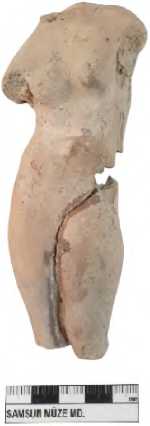
Cat. No. 3 (Fig. 3), acquired through purchase by the Samsun Archaeology and Ethnography Museum, is missing the head, arms, and lower legs below the knees. The broken left leg was subsequently reattached in order to restore the integrity of the object. The head and neck are entirely absent. The breasts are rendered as large, rounded, and distinctly separated forms. Small punctate marks indicate the nipples at the tips of the prominently modeled breasts. The waist is slender, while the abdomen is full and slightly protruding outward. The hips and thighs are rendered broad and voluminous. The genital area is represented in triangular form. The legs are joined together and broken below the knees. The upper torso inclines toward the left, whereas the hips project toward the right, with the left leg advanced forward. As a result of this posture, the body displays a pronounced S-shaped movement. The rear side of the figurine is entirely missing. The figurine was produced hollow using a double-mould technique.
МАИАСП № 22. 2026
The cult of Aphroditein theBlackSea Region theCaseofAphrodite Figurines ...
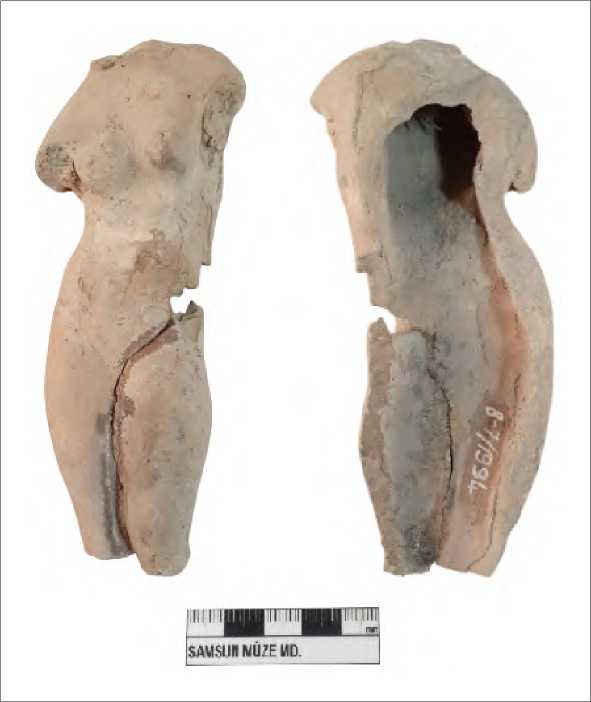
Fig. 3. Nude Aphrodite (after Samsun Archaeology and Ethnography Museum, Retain: inv. 8-7/1994).
Regarding Aphrodite figurines, which constitute a significant portion of ancient terracotta production, Işın (Işın 2007: 39—40), based on examples recovered from Patara, notes that nude Aphrodite figurines became widespread during the Roman Imperial Period as a result of the increasing interest among wealthy and educated Roman elites in nudity and eroticism. Similarly, Çekilmez (Çekilmez 2014: 61), in her study of the terracotta figurines from Tralleis, suggests that Aphrodite figurines may have been dedicated by women devoted to the goddess or serving as her priestesses, who wished to remain youthful and beautiful like Aphrodite in the afterlife, and were therefore deposited in graves.
With the gradual liberalization of religious thought among the peoples of Greece and Anatolia during the 4th century BCE, the conservative and rigid artistic conventions of the 5th century BCE began to soften toward the end of the century and throughout the 4th century BCE. During this period, humans increasingly came to be deified, while the gods themselves acquired more human characteristics. Consequently, the draped Aphrodite statues of the 5th century BCE were gradually replaced by representations such as Praxiteles’ Knidian Aphrodite, in which the goddess was depicted nude and bathing. As this ideological transformation became progressively more widespread, Roman emperors and empresses were likewise deified after death and worshipped as divus or diva . Over time, this practice extended beyond members of the imperial family and became a privilege of wealthy and elite Romans as well. Within this context, Roman women commissioned portrait sculptures of themselves upon semi-nude or nude Aphrodite bodies derived from popular Hellenistic models (Besques 1963: Pl. 02).
One of the closest parallels for Cat. No. 3 dates to the early 3rd century BCE and w as recovered from Campana. Examined under the title “Aphrodite Leaning on a Column,” the figure closely resembles Cat. No. 3 in terms of posture. In the Campana Aphrodite, earrings and a necklace are clearly visible. As in Cat. No. 3, the left leg is advanced forw ard, while the right leg remains behind, with the feet crossing
МАИАСП № 22. 2026
one another. The bodily proportions and overall posture correspond almost exactly to Cat. No. 3. Another comparable example from Smyrna, dated to the second half of the 2nd century BCE (Plaisier 1979: Pl. 47), has been identified as “Standing Nude Aphrodite.” Although fragmented in the same areas as Cat. No. 3, the Smyrna example demonstrates an equally elegant sense of movement. This similarity suggests that Cat. No. 3 should stylistically be dated later than the 3rd century BCE.
The innovation introduced by Praxiteles through his semi-narrative and aesthetically refined Knidian Aphrodite had a profound influence upon subsequent derivative types. Although the facial features in Praxiteles’ works tend toward idealization rather than realism, the body and posture emphasize a convincing sense of femininity (Boardman 2014: 53, 61). The most striking characteristic of Cat. No. 3 is its complete nudity. The voluptuous and seductive treatment of the body strongly suggests identification with Aphrodite, the goddess of love and beauty.
Considering the fractured sections of the mould-made figurine, the body itself is hollow. However, examination of the broken right arm reveals that it was solid, indicating that the arms were likely attached separately as appliqué elements. Since the arms are missing, it is impossible to determine whether the figure originally held any object.
A comparable example from Crete examined by Besques (Besques 1963: Pl. 76) also displays similarities to Cat. No. 3, although it is rendered with more balanced proportions. Besques dated this figurine, identified simply as “Aphrodite,” to the 1st century BCE. Another parallel from Myrina, dated to the mid-2nd century BCE, shares similar anatomical structure and overall posture with Cat. No. 3 (Burr 1934: Pl. III). A somewhat heavier and less refined example w as recovered from Thysdrus (Mollard-Besques 1992: Pl. 90). In the Thysdrus figurine, the figure is rendered more statically, with the upper torso narrower and slimmer in relation to the hips and thighs. Although a slight S-shaped movement is visible, the upper torso in Cat. No. 3 inclines further forward, resulting in a considerably more pronounced S-curve. Consequently, Cat. No. 3 should predate the Thysdrus example. A comparable stance and body posture can also be observed in the Parion example, dated to the first half of the 3rd century CE (Kasapoğlu 2018: 253).
Numerous parallels for Cat. No. 3, characterized by complete nudity, have been identified throughout the Black Sea region. An example recovered from the Olbia Necropolis near Borysthenes, west of the Kerch—Cimmerian Bosporus, and broadly dated by Kobylina to the 3rd century BCE (Kobylina 1970: Taf. 20), demonstrates close similarities in posture. Although Kobylina identified the figurine as “Winged Young Eros,” the slender waist, broad hips, and feminine anatomy suggest a female representation rather than Eros. Another nude Aphrodite figurine, thought to have been imported from western Anatolia and now preserved in the Vinnytsia Regional Museum of History in Ukraine (Kobylina 1970: Taf. 2), is missing the head, arms, and forearms below the elbows. A circular medallion is positioned at the center of the chest. The figurine, produced in pinkish clay using the mould technique, possesses a notably delicate structure. D ated between the 3rd and 2nd centuries BCE, it resembles Cat. No. 3 in the slender waist, slightly protruding abdomen, and voluminous hips, although the anatomical modeling is less successfully rendered.
A nude Aphrodite recovered from Chersonesos likewise resembles Cat. No. 3 in the treatment of the genital area and the slightly protruding abdomen. However, the Chersonesos example is rendered in a heavier and fuller manner. The navel, carefully modeled in Cat. No. 3, appears exaggerated and less naturalistic in the Chersonesos example (Kobylina 1970: Taf. 10). Similarly, the skirt-like folds wrapped around the legs lack naturalism. The Aphrodite figurines from Chersonesos are generally dated to the 3rd century BCE. From an anatomical perspective, Cat. No. 3 should therefore belong to a somewhat later period than both the Vinnytsia and Chersonesos examples.
In the Aphrodite Anadyomene figurine from Gorgippia (Kobylina 1974: Taf. 57), an S-shaped movement appears in the opposite direction to that observed in Cat. No. 3. In the Gorgippia example, the pronounced S-curve is generated by the advancement of the right leg. The medallion accessory placed between the breasts, also observed in the Vinnytsia (Kobylina 1970: Taf. 2) and Tyramba (Kobylina 1961: Taf. 10) examples, is likewise present in the Gorgippia figurine. This medallion may have constituted a fashionable accessory among northern Black Sea settlements. Kobylina further
МАИАСП The cult of Aphroditein theBlackSea Region: 284 № 22. 2026 theCaseofAphrodite Figurines ...
suggests that necklaces, earrings, chest medallions, and circular ornaments worn on the right leg reflect the jewelry traditions of women inhabiting the Crimea—Kerch Bosporus region (Kobylina 1961: 78).
The Aphrodite Anadyomene figurines from Gorgippia (dated between the 1st century BCE and the 1st century CE), Myrmekion (Denisova 1981: Taf. 16), and Tyramba (Kobylina 1961: Taf. 10) likewise feature medallions positioned between the nude breasts. A completely nude Aphrodite example preserved in the Odessa Archaeological Museum differs from Cat. No. 3 in advancing the right leg forward while the left leg remains behind. Consequently, the right side of the body is elevated in relation to the left. As in Cat. No. 3, the anatomy is rendered in a highly detailed and naturalistic manner. Among the northern Black Sea parallels, the Odessa example (Kobylina 1961: Taf. 9) constitutes the closest comparison to Cat. No. 3. The figure wears a diadem upon the head, while the hair is cut in a short bob style. The face is carefully detailed and slightly turned toward the right. This elaborately rendered Aphrodite has been dated to the Hellenistic Period.
A pronounced S-shaped movement generated by the forward extension of the left leg and the upright positioning of the breasts is likewise observable in the Anadyomene-type Aphrodite from Myrmekion, dated between the 3rd and 1st centuries BCE (Denisova 1981: Taf. 16). In this example, a medallion is similarly positioned between the nude breasts.
When examining the western Black Sea region, a nude Aphrodite figurine preserved in the Varna Archaeological Museum in Bulgaria may also be cited as a parallel (Dremsizova and Tonceva 1971: 50). The goddess is represented while dressing. As in Cat. No. 3, the left leg is advanced forw ard, and the right hand grasps a cloak. The left hand appears to holdan object, possibly a mirror, although the hand itself is missing. The figure wears a wreath crown, one of the most common accessories of the Hellenistic Period. Despite significant surfacewear, the Varna example has been dated to the 3rd century BCE.
A fragmentary nude Aphrodite figurine from the Sinop Archaeological Museum, dated to the Roman Period (Fig. 4.), is missing the right breast, right arm, and head.
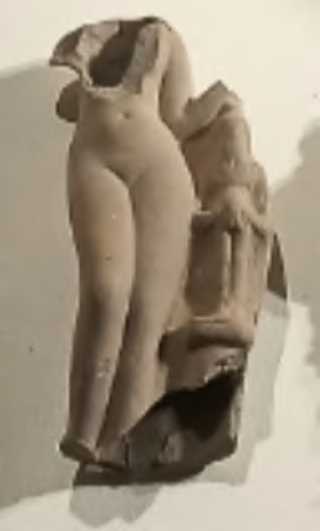
Fig. 4. Aphrodite Figurine Fragment (Sinop Museum).
While examples dated around the 3rd century BCE generally display heavier and less proportionate postures, the more naturalistic stance and balanced bodily proportions of Cat. No. 3 correspond more
МАИАСП № 22. 2026
closely to examples dated between the 2nd and 1st centuries BCE. Comparable examples have also been identified in Italy (Winter 1903: 213), Ephesos (Lang-Auinger 2003: Taf. 127), Ionia (Plaisier and Paula 1979: Pl. 148), Corinth (Davidson 1952: Pl. 34), Kyme (Winter 1903: 209), Madyos (Brinkerhoff 1978: Pl. XL), and Megara (Winter 1903: 209). Taking these comparative examples into consideration, Cat. No. 3 should be dated between the late 2nd century BCE and the 1st century BCE.
Sacred Areas
Between 650 and 550 BCE, Thrace, the M armara region, and the Black Sea constituted areas in which the Greeks carried out intensive colonization activities. The colonization movement in the Black Sea region began with the Milesian colony of Sinope (Uçar 2021: 27). Among the settlements identified as the first w ave of colonization are Kyzikos, Sinope, and Trapezous, while Abydos, Histria, Olbia, Berezan, Kepoi, and Amisos are regardedas second-wave colonial foundations (Uçar 2021: 33).
The Aphrodite figurines examined in this study support the process of colonization in the Black Sea region; however, they are insufficient on their own to demonstrate the existence of the Aphrodite cult. The presence of the cult is further supported by sanctuaries and inscriptions. Within the context of Milesian colonization, the Oikous cult of Aphrodite occupied a prominent position. The Oikous refers to a sacred domestic space containing the sacred fire and serving as the center of daily life (Baloglou 2012: 11). This cultic structure is especially evident in the northern settlements of Olbia, Berezan, and Histria in present-day Romania (Greaves 2004: 29). Ash layers and traces of altars recovered from these areas correspond closely with the sacred fire and votive objects brought from Miletos during the establishment of the colonies. The association of these elements with the cult of the goddess demonstrates the importance attributed to Aphrodite by Miletos as the mother city (Uçar 2021: 36).
During excavations conducted in the 2000s, a Late Archaic temple dedicated to Aphrodite was uncovered at Olbia (Fig. 5).
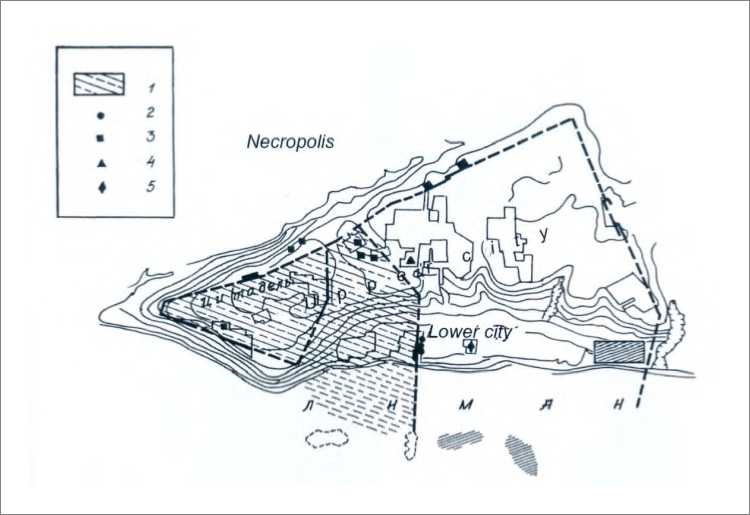
Fig. 5. Plan of Olbia (after Krapivina 2011: Fig. 1).
The location of the temple complex directly in front of the harbor emphasizes Aphrodite’s association with the sea. Among the architectural remains were graffiti inscriptions dedicated to Aphrodite, pavements brought from Miletos, and, within a bothros , various vessels and vesse fragments dedicated to the goddess (Fig. 6: a—c), together with additional dedicatory inscriptions.
МАИАСП № 22. 2026
The cult of Aphroditein theBlackSea Region theCaseofAphrodite Figurines ...
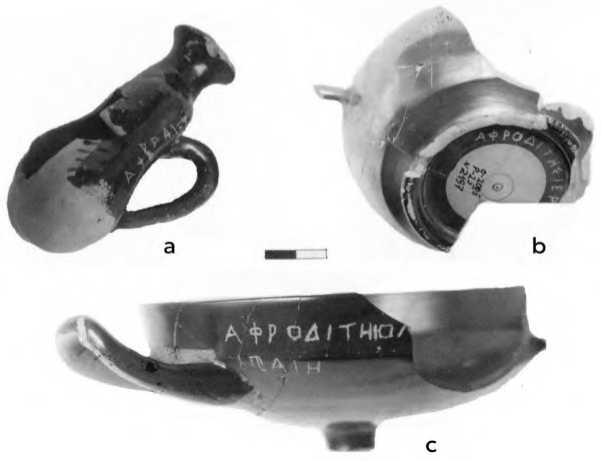
Fig. 6 a—c. Finds from the Aphrodite Sanctuary at Olbia (after Sparkes and Talcott 2010: 167).
Furthermore, an Aphrodite bust dated to the 3rd century BCE and rosettes decorated with star motifs emphasizing the celestial attributes of the goddess were recovered from a Hellenistic-period house (Roussou 2013: 34—35). In addition, depictions preserved ona thymiaterion from Olbia portray a mature woman modestly dressed in a chiton and himation, accompanied by Eros figures upon her shoulders. These representations appear to correspond to descriptions of Aphrodite Urania outlined by certain ancient authors. The epithet Urania , symbolizing the celestial and divine power of Aphrodite, w as well known around the Kerch Strait and w as at times associated with depictions of Aphrodite accompanied by Eros figures upon her shoulders (Shevchenko 2020: 1, 3—4).
At Berezan, a temple measuring 5.72 × 4.25 m and dedicated to the goddess was uncovered. Figurines believed to have been brought from Miletos were recovered from the naos section of the temple (Fig. 7).
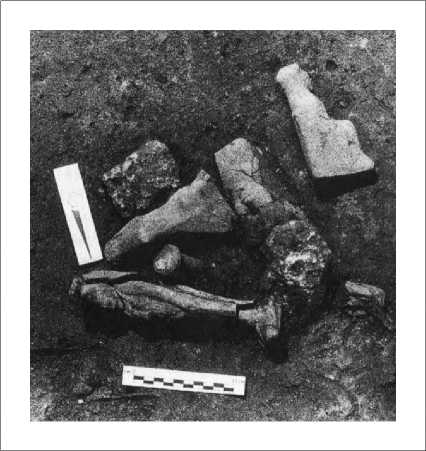
Fig. 7. Terracotta Figurines Recovered from the Aphrodite Temple at Berezan (after Roussou 2013: 48).
МАИАСП № 22. 2026
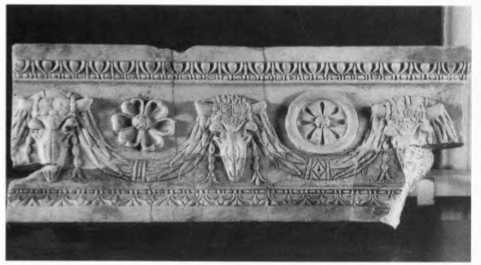
In the western settlement of Histria, excavations carried out during the 1970s revealed roof tiles belonging to a temple of Aphrodite, together with wooden architectural remains thought to belong to the sanctuary (Avram et al. 2014: 62). In addition, the base of a cult statue dedicated to Aphrodite was uncovered (Fig. 8).
W^^A^ '<^'-' ,MWL3^/(.W
?^л£2
Fig. 8. Base of the Cult Statue of Aphrodite, 3rd Century BCE (after Avram 2003).
Aphrodite, the goddess of love and beauty and simultaneously regarded as the protector o nature and all living beings, appears to have been highly popular throughout the Black Sea region (Fig. 9). She was worshipped under the epithets Apatura and Urania . In Tanagra-style figurines, fashionable during the 3rd and 2nd centuries BCE, Aphrodite is depicted standing as a young woman. Sanctuaries dedicated to the goddess have also been identified at Phanagoria, Hermonassa, and Kepoi. Moreover, a tholos-type structure located in the settlement today known as Za Rodino on the Taman Peninsula is known to have been dedicated to Aphrodite. The goddess was likewise worshipped under the epithet Navarchida as the protector of the seas alongside Poseidon.
On the coinage of Phanagoria, symbols such as the rose, pomegranate, or lotus flower—associated with love, fertility, and nature—appear to have been inspired by the typology of Pontic anonymous coinage. These symbols further indicate the influence of the cults of Demeter, Kore-Persephone, Aphrodite, and Isis, all of which were widespread throughout the Kerch Strait region (Schaub 2007: 56). In addition, a 1st century CE gold medallion depicting Aphrodite and Erotes was recovered at Gorgippia, providing further evidence for the cult ofAphrodite in the region (Rusyaeva 2005: 306).
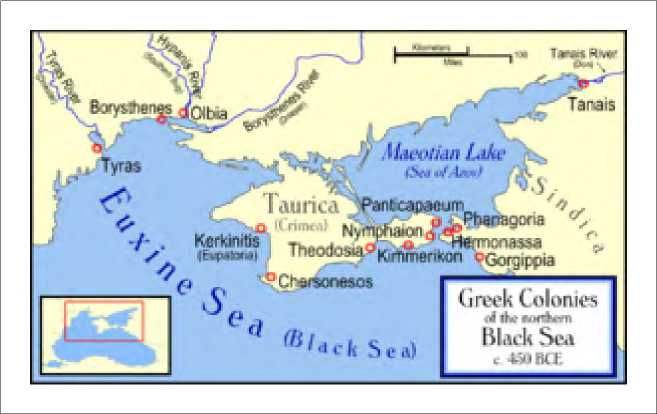
Fig. 9.Centers Containing Aphrodite Cult Areas in the Northern Black Sea Region (after Krapivina 2010:148).
МАИАСП № 22. 2026
The cult of Aphroditein theBlackSea Region theCaseofAphrodite Figurines ...
Moving southward, it becomes apparent that Aphrodite, despite her connection with the Ida myth, possessed relatively few temples and sanctuaries at Alexandria Troas (Özhan 2004: 109), Lampsakos, and Assos (Frisch 1975: No. 7). Nevertheless, numerous terracotta figurines dating to the Archaic, Classical, and Hellenistic periods have been identified in these settlements.
At Samsun, the discovery of a burnt layer associated with the Oikous cult during the rescue excavations at Çakalca-Karadoğan, together with seated female figurines of Archaic date identified as Milesian productions (Şirin 2020: 537, fig. 24) and graffiti-decorated ceramic fragments associated with Cybele, corresponds closely with the votive practices of the Oikous cult (Uçar 2021: 63). Likewise, the Aphrodite fragment preserved in the Sinop Archaeological Museum and the various Aphrodite types examined from the Samsun Archaeology and Ethnography Museum suggest the possible existence of the Aphrodite cult in the southern Black Sea region, a hypothesis that may gain greater certainty through future research.
Conclusion
Amisos, whose history extends back to prehistoric periods, constituted one of the most significant settlements of the ancient Black Sea region. Although the topographical conditions of the region and its year-round rainy climate have negatively affected archaeological investigations, the recovered finds nevertheless reflect the historical richness of both the city and the wider region. In general, archaeological studies conducted throughout the Pontic region, including the ancient city of Amisos, remain insufficient in proportion to the historical richness of the area. This situation has likewise hindered the production of comprehensive scholarly publications and has resulted in a limited body of literature concerning the region.
Although definitive conclusions cannot be reached due to the lack of archaeological context for the terracotta examples examined in this study, comparative analysis indicates that the figurines represent Aphrodite and date between the 2nd century BCE and the 1st century CE. It nevertheless remains uncertain whether these works were locally produced at Amisos. Comparisons with examples from both Anatolia and regions beyond Anatolia demonstrate the presence of Aphrodite terracotta figurines at Amisos. Furthermore, the Aphrodite types recovered from settlements located in the northern, western, and southern Black Sea regions clearly attest to the existence of the Aphrodite cult throughout the Black Sea world.
The Greek colonization movement in the Black Sea, beginning around the 7 th century BCE, is likewise supported by the material examined in this study. Consequently, it is possible to speak of the existence of the Aphrodite cult at Amisos, an important harbor and commercial center within the region. The present study may therefore serve as a reference for future research concerning Black Sea archaeology. Through subsequent investigations, the cults existing within the region will become increasingly apparent.
The incorporation of technological innovations into archaeological research will undoubtedly contribute to illuminating the past of the Black Sea region. In this context, XRF analyses to be conducted on tangible archaeological finds may clarify many of the issues discussed above. Likewise, clay analyses performed on the artifacts will shed further light upon the commercial and cultural interactions of the region.
МАИАСП № 22. 2026
CatalogueCat. No. 1
Name : Knidian Aphrodite (?).
Retain: inv.2013/38 (A).
Dimensions (H/W) : 7.2 / 3.5 cm
Clay Color / Fabric : 2.5 YR 6/8 light red; containing mica lime, and small stone inclusions; hard fabric with a rough surface; covered with white slip.
Manufacturing Technique : Double-mold technique; hollow interior.
Description : The head is missing. The right arm is broken from the shoulder onward, while the left arm is thick and rendered in a straight position resting upon a hydria. The breasts are separated and slightly emphasized. The waist is slender, the abdomen slightly swollen, and the hips project toward the right, creating an overall S-shaped movement within the body. The legs are missing below the knees. The back surface was left plain and unworked.
Comparanda : Besques 1963: Pl. 15: a. LY1546, c. LY1588, d. B127; Pls. 16—17; Plaisier 1979: Pl. 93, No. 669; Pl. 213, No. 1605; Besques 1963: Pl. 16: d-B92; Kaplan 2009: Pl. 10, Cat. No. 34; Çekilmez 2014: Pl. 21, Cat. No. 8; Kasapoğlu 2015: Pl. 33, Cat. No. 14; Winter 1903: 216, Nos. 1, 7, 10; Işın 2007: 140, Fig. 21 Cat. 16; Tozkoparan 1998: 20, Fig. 30, STR96 AM2/13; Kepçe and Gerçeker 2011: 152, Cat. No. 75; Şahin and Güçlü 2006—2007 404, Fig. 1.
Date : Late 1st century BCE — 1stcentury CE.
Cat. No. 2
Name : Crouching Aphrodite.
Retain: inv. 18-1/1979.
Dimensions (H/W) : 17.2 / 8.8 cm
Base: 6.6 × 12.3 cm
Vent Hole: 1.45 × 1.7 cm (circular)
Clay Color / Fabric : 2.5 YR 6/8 light red; containing mica and minor lime inclusions; slightly porous, soft fabric with a smooth and slightly slippery surface.
Manufacturing Technique : Double-mold technique; hollow interior.
Description : The figure possesses full facial features and a bow-shaped coiffure formed by the hair at the top of the head. The neck is thick and short. The body is entirely nude, while the arms are intertwined so as to cover the breasts. The figure is depicted in a crouching position upon a slightly elevated base, with the body weight placed upon the right leg. The rear surface was left plain. A circular vent hole is present beneath the base.
Comparanda : Sieveking 1916: 42, Taf. 103-1; Chéhab 1951— 1952: Pl. XIX, No. 1; Besques 1963: Pl. 18, MYR 18; Ingen 1939: Pl. VII: 50, No. 95; Bieber 1967: Fig. 63; Nicholson 1968: Pl. 17, No. 141; Kobylina 1970: Taf. 13, No. 6; Kepçe and Gerçeker 2011: 160 No. 84; Leyenaar-Plaisier 1986: Pl. 47, No. 285; Burn and Higgins 2001: Pl. 82, No. 2494.
Date : Late 1st century BCE — 1st century CE.
Cat. No. 3
МАИАСП № 22. 2026
The cult of Aphroditein theBlackSea Region theCaseofAphrodite Figurines ...
Name : Nude Aphrodite.
Retain: inv. 8-7/1994.
Dimensions (H/W) : 13.2 / 7.3 cm
Clay Color / Fabric : 2.5 YR 5/8 red; containing mica, sand, and lime inclusions; soft fabric with a powdery surface.
Manufacturing Technique : Double-mold technique; hollow interior.
Description : The head, neck, arms, and rear portion of the figure are missing, while the legs are broken below the knees. The entire body is nude. The breasts are full, rounded, and distinctly separated. The genital area is triangular in form and only slightly emphasized. The left leg is advanced forward, whereas the right leg remains positioned farther back.
Comparanda : Besques 1963: Pl. 14, a-LY1587-0.223; 1986: Pl. 02-D3339; Kobylina 1970: Taf. 20, No. 6; Plaisier 1979: Taf. 47, No. 283; Töpperwein 1976: Taf. 34, No. 205; Bieber 1967: Fig. 391, 605; Besques 1972: Pl. 76, a-D348; Burr 1934: Pl. III, Nos. 7—8; 1992: Pl. 90, E413; Çekilmez 2014: Pl. 23, Cat. 12; Winter 1903: 210, Nos. 1—2; Kleiner 1992 246, Fig. 211; Brinkerhoff 1978: Pl. XLVI; Lang-Auinger 2003: Taf. 127, TK. 51; Davidson 1952: Pl. 34, Nos. 378—379; Mendel 1908: Pl. IX, No. 3.
Date : Late 2nd century BCE — 1st century BCE.
