
The influence of parental behavior on early childhood development
Article in issue: 1, 2026.
Free access
The family constitutes the primary environment in which a child is nurtured and socialized. The relationships between parents or, their attitudes guardians toward various situations, and the behavioral models they demonstrate play a significant role in the development, personality formation, and behavior of preschoolaged children. Pa-rental behavioral modeling contributes to children’s acquisition of their own social experiences. A warm family atmosphere, mutual respect and satisfaction among fami-ly members, open communication, the preservation of traditions, and the establish-ment of a safe living environment form the foundation for children’s psychologically healthy growth and development. The purpose of this study is to examine how parental behavior and parenting styles influence the development of preschoolaged children. The study involved 30 parents from Kindergarten No. 113 in Songino Khairkhan District, Ulaanbaatar. A case-based questionnaire method was employed to investigate parents’ behavioral attitudes and parenting approaches. The findings indicate that the authoritative parenting style has the most positive impact on child development, whereas authoritarian and neglectful parenting styles have negative effects.
Similar articles in the section Fundamentals of education. Theory, policy, etc.
Short address: https://sciup.org/148333314
IDS: 148333314 | UDC: 37.018.1 | DOI: 10.18101/2307-3330-2026-1-41-50
Влияние поведения родителей на развитие детей дошкольного возраста
Семья является основным окружением, в котором ребенок воспитывается и социализируется. Взаимоотношения между родителями, их установки в отношении различных ситуаций и демонстрируемые ими модели поведения играют значительную роль в развитии, формировании личности и поведении детей дошкольного возраста. Моделирование поведения родителями способствует усвоению деть-ми собственного социального опыта. Теплая семейная атмосфера, взаимное уважение и удовлетворенность членов семьи, открытое общение, сохранение традиций и создание безопасной среды для жизни формируют основу психологически здорового роста и развития ребенка. Цель данного исследования – изучить, как поведение родителей и стили воспитания влияют на развитие детей дошкольного возраста. В исследовании приняли участие 30 родителей воспитанников детского сада № 113 района Сонгино-Хайрхан, Улан-Батор. Для изучения поведенческих установок родителей и подходов к воспитанию применялся метод анкетирования на основе кейсов. Результаты показывают, что авторитетный стиль воспитания оказывает наибольшее положительное влияние на развитие ребенка, тогда как авторитарный и пренебрежительный стили воспитания имеют негативные эффекты.
Text of the scientific article The influence of parental behavior on early childhood development
The relationship between parents and children is considered the most critical subsystem within the family structure and has a profound influence on a child's socialization process and psychological development. According to researchers, family parenting styles can be defined by the following indicators (Myagmar O., 2012):
-
• General emotional characteristics: The emotional connection and attachment between parents and children, which depend on how the parents perceive the child.
-
• Motivation for parenting: The parents' desire, aspiration, and involvement in raising their child.
-
• Care and concern: The act of meeting the child's needs and providing care.
-
• Communication style: The specific way parents interact with their children.
-
• Conflict resolution skills: How conflicts are managed and whether the child's independence is supported.
-
• Social control and evaluation: The system of control manifested through demands, prohibitions, and rewards.
-
• Continuity and stability of parenting: The consistency and continuation of the philosophy and methods used in parenting.
Parenting Style Classifications
Psychologist D. Baumrind (1966) classified family parenting styles as Authoritative, Authoritarian, and Permissive (Liberal). Professor O. Myagmar (2012) further added the Indulgent (or Neglectful/Uninvolved) style to this classification.
-
• Authoritative Style (Based on high regard/respect): Parents exhibit high control but show positive emotion and a caring relationship. They support the child's independence, and the communication is democratic and flexible.
-
• Authoritarian Style (Dictatorial): Parents apply high control but are emotionally cold and strict. The parenting method is one-sided, based on unchangeable rules and prohibitions.
-
• Permissive/Liberal Style (Free): Parents have a positive relationship with the child but weak control. There is little attempt to set demands or guide, and the child is often left to their own devices.
-
• Indulgent/Neglectful/Uninvolved Style (Indifferent, Bystander): Parents are barely involved in the child's upbringing. They are emotionally distant, lack care and attention, and offer no control.
-
• Imbalanced Approach (Over-indulgent or Over-distant): Both over-indulgence and excessive neglect have a negative impact on the child's psychological development. These approaches manifest depending on the child's temperament, individual characteristics, and the compatibility of family parenting (Battengel & Bandikhuu, 2016).
Explanations of Parenting Style Examples
-
• Authoritarian Parent: Focused excessively on rules and regulations, imposing their decisions without considering the child's opinion. They prefer giving commands and demanding compliance rather than having long conversations or listening to the child's views. This weakens the child's ability to make independent decisions.
-
• Permissive Parent: Places few restrictions on the child, leading them to generally do whatever they wish. The child may feel no obligation to report where they are going or when they will return. Due to weak control, the child's attitude tends to become stubborn and aggressive.
-
• Neglectful/Uninvolved Parent: Pays almost no attention to the child's upbringing. They retreat from parental duties, failing to teach, advise, or care for the child. The lack of a warm and close relationship causes the child's socialization, self-esteem, and emotional stability to be impaired.
Research methodology
In this study, we adopted a mixed-methods design, combining quantitative and qualitative approaches, and evaluated a model trained for the domain of case-based questionnaires. The goal of the research was to identify how parental behavior styles influence child development. The study included 30 parents from the preparatory group of Kindergarten No. 113 in the Songino-Khairkhan district of Ulaanbaatar city.
Case Questionnaire Method:
The research instrument was developed as a questionnaire set consisting of 15 case questions. Each of these questions represents a real-life parenting situation faced by parents and has three different answer choices. The responses were classified as follows:
-
• Compliant (Нийцэх): A response that indicates positive parenting methods and a psychologically supportive relationship.
-
• Average (Дундаж): A limited understanding in the response or a partial approach to the reaction.
-
• Non-compliant (Үл нийцэх): A response that reflects negative, authoritarian (commanding), or neglectful behavior.
Research process
The questionnaires were personally distributed and completed by members of the research team in 2024. During the study, the principle of strict confidentiality was observed: no recordings were made, no private information was disclosed, and anonymity was strictly maintained.
Table 1
Case Study Questions and Responses
|
№ |
Case Questions |
Answers |
||
|
A |
B |
C |
||
|
1. |
A few friends sat down to talk, and when my children were old enough to go to kindergarten, the beautiful friends shared their thoughts. Whose answer do you like best? |
“It’s not easy to understand them and talk things through now that they are older, but I try hard to understand them,” replied one of the friends. |
“It's getting difficult because the children won't listen, so I've given up/become frustrated,” said another one (of the friends).. |
“It's hard. Finding a way to handle today's children and knowing how to approach them is becoming an exhausting problem,” was the response. |
|
2. |
The conversation continued as they shared their experiences raising their children. Which of the following methods mentioned in their conversation is most similar to yours? |
“You should raise children with a firm hand, and occasionally hit them to discipline them. I was hit when I was little, and I turned out fine.” |
“I can't consistently find time for my child. When various problems arise, I meet and talk with the teacher.” |
“In order to understand modern child develop ment, I read and study a lot, and try my best to understand and communicate with my child.” |
|
3. |
One of the mothers, who were discussing the matter of raising her children, asked where she could find information on child rearing. She asked the others. They gave her different answers. Whose answer best matches yours? |
“I occasionally read and listen to things, but I don't use them much when dealing with my children.” |
“I haven't read anything specific; I'm just raising them according to my own views/be-liefs.” |
“I read and use various books and sources related to upbring-ing/parenting a lot, and I can share them if you are interested.” |
|
4. |
The boy sat for a long time, not looking away from his phone. His father repeatedly told him to put the phone down, but the boy continued to sit as if |
“Even though I get frustrated, I restrain myself and try to use methods to calm myself down first.” |
“I would probably feel disappointed in my child, get silently frustrated inside, and let it pass.” |
“As the saying goes, 'It's better to reveal good things than to hide bad ones,' so I express my |
|
№ |
Case Questions |
Answers |
||
|
A |
B |
C |
||
|
he hadn't heard. If you were in your father's shoes, how would you handle the emotions you were feeling? |
anger and frustration directly.” |
|||
|
5. |
The boy sat for a long time, not looking away from his phone. His father repeatedly told him to stop playing with his phone because his eyes hurt, but the boy continued to sit as if he hadn't heard. What would you do in this case? |
“I would use shock methods for a disobedient person, such as taking away their phone or hitting and scolding them.” |
“I would change the phrase 'Stop using your phone,' and instead, I would think of a more effective method and go sit next to my daughter.” |
“I would try to say it repeatedly a few times, then leave them alone and attempt not to pay attention (or ignore it).” |
|
6. |
Do you think I'm addicted to my phone? "I know I'm not addicted," your son said. What would you tell him? How many hours a day does a child spend online to be considered addicted? |
“I would say things like, ‘You are clearly addicted because you don't know much about addiction, and you are constantly on your phone.’” |
“I would say that a child who spends more than 5 hours a day in the digital environment is considered addicted to the digital environment.” |
“I would say that a child who spends more than 2 hours a day in the digital environment is considered addicted to the digital environment.” |
|
7. |
When the child was about to take you to kindergarten in the morning, he stubbornly said that he didn't want to go to kindergarten because he had a fight with a classmate. In this case, which of the following possible answers would best match your answer? |
“You shouldn't hurt yourself just because you had a fight with one child; go to your kindergarten. You must not show your worst side to the child you fought with.” |
“You can't interact with the children in your class, and you are trying to use that as an excuse to skip kindergarten; don't be stupid, go to your kindergarten.” |
“It's very difficult to fight with someone close to you, and I understand that. Let's go to kindergarten in 30 minutes, get ready.” |
|
8. |
When the child was about to take you to kindergarten in the morning, he stubbornly said that he didn't want to go to kindergarten because he had a fight with a classmate. How do you feel about this situation and how do you express your feelings to him? |
“I would probably get angry, frustrated, and scold them.” |
“Even though I'm angry, I can restrain my anger and talk to them.” |
“I wouldn't get extremely angry or frustrated; I would just leave them alone (or ignore it).” |
|
9. |
The teacher said that the process and the results of your child's progress are |
“Do your teacher's lessons/homework well, or else you |
“My son, try your best (work hard), and you will get a |
“Go to your kindergarten and do your teacher's lessons. Why are |
|
№ |
Case Questions |
Answers |
||
|
A |
B |
C |
||
|
the same if they do not participate in the learning activity. What would you say to your child in this case? |
will get a bad grade.” |
good grade/score later.” |
you making me go and meet your teacher?” |
|
|
10. |
People have different explanations for why children's progress is said to be poor. Which of the following explanations best fits your view? |
“It's caused by the fact that neither the kindergarten nor the parents are able to teach the child well.” |
“Modern children have become lazy.” |
“It's caused by the learning conditions and the teachers' methods and activities.” |
|
11. |
Your child has caused trouble by biting and hitting classmates. A notice came from the police station asking you to come with your son. What thoughts would you have at this time? |
“Maybe the police will teach that disobedient child a lesson. Serves them right (or Too bad for them), what are we going to do now?” |
“Which ancestor did this incompetent, slow child inherit from? This child is completely ruining the reputation of their parents.” |
“How can I stop this child from biting and hitting? It must be because I haven't worked enough with my child.” |
|
12. |
Your child has caused trouble by biting and hitting classmates. A notice came from the police station asking you to come with your son. How would you feel in this case? |
“I would probably be frustrated, thinking, ‘How will this child, who doesn't care about their parents' reputation, ever face people now?’” |
“I would probably wonder, ‘Which ancestor did a child like this take after?’” |
“I would probably regret and reflect, thinking, ‘What mistakes am I making in raising my child?’” |
|
13. |
The child caused trouble at kindergarten. What can you do to correct this situation? |
“Since I was hit when I was little, I will think this child is bad, and I will hit them to discipline them.” |
“I will analyze the methods I use to raise my child and update/revise my approach.” |
“I will get a commitment from my child and reward them if they fulfill that commitment.” |
|
14. |
My child was evaluated lower than his classmates. In this case, how would you express your emotions to him? |
“The thought ‘What a failure of a child' would cross my mind, and I would be disappointed, but I wouldn't express this feeling.” |
“I would probably get angry and scold them.” |
“I would calm down because I believe my child will improve.” |
|
15. |
Your child is constantly lying and playing tricks on his friends. Which of the following methods do you think would be most effective in stopping this? |
“I would stop and prohibit them from teasing.” |
“I would strictly control the child's whereabouts and instruct their every step.” |
“Pay attention to the child's characteristics and have an intimate talk.” |
Table 2
|
№ |
Case Questions |
Alignment with positive behavior approaches |
||
|
(Non-compliant) |
(Average) |
(Compliant) |
||
|
1. |
A few friends sat down to talk, my children went to kindergarten, and as they grew up, the good friends shared their thoughts. Whose answer do you like? |
20% or 7 people |
36.7% or 11 people |
43.3% or 12 people |
|
2. |
The above conversation continued and they began to share their experiences in raising their children. Which of the following methods mentioned in their conversation is most similar to yours? |
6.9% or 2 people |
37.9% or 11 people |
55.2% or 17 people |
|
3. |
Where can one of the mothers who sat down to talk about their children's outdoor activities find information related to child rearing? She asked the others. They responded to him with their own views. Whose answer would be most consistent with your opinion? |
20.7% or 7 people |
41.1% or 12 people |
37.9% or 11 people |
|
4. |
The boy sat for a long time, not looking away from his phone. His father repeatedly told him to put the phone down, but the boy continued to sit as if he hadn't heard. If you were in your father's shoes, how would you handle the emotions you were feeling? |
11.5% or 3 people |
30.8% or 10 people |
57.7% or 17 people |
|
5. |
The boy sat for a long time, not looking away from his phone. His father repeatedly told him to stop playing with his phone because his eyes hurt, but the boy continued to sit as if he hadn't heard. What would you do in this case? |
13.8% or 5 people |
37.9% or 11 people |
48.3% or 14 people |
|
6. |
Do you think I'm addicted to my phone? “I know I'm not addicted,” your son said. What would you say to him? How many hours a day does a child |
21.4% or 6 people |
28.6% or 9 people |
50% or 15 people |
|
№ |
Case Questions |
Alignment with positive behavior approaches |
||
|
(Non-compliant) |
(Average) |
(Compliant) |
||
|
spend online to be considered addicted? |
||||
|
7. |
When your child was about to drop you off at daycare this morning, he stubbornly said he didn't want to go to daycare because he had a fight with a classmate. In this case, which of the following possible answers would best match your answer? |
17.9% or 6 people |
17.8% or 5 people |
64.3% or 19 people |
|
8. |
When your child was about to drop you off at daycare this morning, he stubbornly said he didn't want to go to daycare because he had a fight with a classmate. How do you feel about this situation and how do you express your feelings to him? |
10.3% or 3 people |
34.5% or 10 people |
52.2% or 17 people |
|
9. |
The teacher said that the process and the results of your child's progress are the same if they do not participate in the learning activity. What would you say to your child in this case? |
3.6% or 1 person |
32.1% or 10 people |
64.3% or 19 people |
|
10. |
People have different explanations for why children's progress is said to be poor. Which of the following explanations best fits your view? |
37.9% or 11 people |
31.1% or 9 people |
31% or 10 people |
|
11. |
Your child has caused trouble by biting and hitting classmates. A notice came from the police station asking you to come with your son. What thoughts would you have at this time? |
25% or 7 people |
14.3% or 5 people |
60.7% or 18 people |
|
12. |
Your child has caused trouble by biting and hitting classmates. A notice came from the police station asking you to come with your son. How would you feel in this case? |
3.5% or 2 people |
17.9% or 5 people |
78.6% or 23 people |
|
13. |
The child caused trouble at kindergarten. What can you do to correct this situation? |
14.8% or 5 people |
40.8% or 12 people |
44.4% or 13 people |
|
№ |
Case Questions |
Alignment with positive behavior approaches |
||
|
(Non-compliant) |
(Average) |
(Compliant) |
||
|
14. |
My child was evaluated lower than his classmates. In this case, how would you express your emotions to him? |
16.7% or 5 people |
16.7% or 5 people |
66.6% or 20 people |
|
15. |
Your child is constantly lying and playing tricks on his friends. Which of the following methods do you think would be most effective in stopping this? |
16.7% or 5 people |
33.3% or 10 people |
50% or 15 people |
|
Percentage |
31.23% |
32.77% |
36% |
|
Case study results
37,00%
36,00%
Non- Average Compliant compliant
35,00%
34,00%
33,00%
32,00%
31,00%
30,00%
29,00%
28,00%
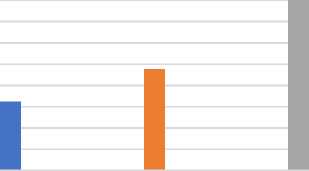
Diagram 1. Case study results
Result
The graph above shows that 36% of the total parents surveyed, or 11 parents, reported using positive communication when interacting with their children. Based on this study, these parents demonstrate the Authoritative parenting style (influencing through authority), which is characterized by a high level of parental control, a positive attitude toward emotion and communication, and the encouragement of the child's independence.
Meanwhile, 32.77%, or 10 parents, showed the Permissive (Liberal) style, characterized by a positive emotional connection and communication with the child but a low level of control, allowing the child to be self-indulgent. The remaining 31.23% or 9 parents, were classified as Inconsistent/Non-compliant (Authoritarian) (dictatorial), characterized by a low level of emotional acceptance of the child, but a high level of parental control over the child.
Conclusion
This study was conducted using a case study method, involving 30 parents from the preparatory group of Kindergarten No. 113 in Songino Khairkhan District, Ulaanbaatar, to examine their parenting styles. The research results determined that 36% of the participants exhibited the Authoritative style (balancing control and care with a positive approach), 32.77% showed the Permissive (Liberal) style, and 31.23% demonstrated the Authoritarian (dictatorial) style.
Although some parents are using positive parenting methods, the survey responses indicated a lack of ability to manage their emotions and provide sufficient attention to their children. It was confirmed that the parenting behavioral styles directly influence the child's personality development and socialization process.
-
• Children of parents with the Authoritarian style tend to be reserved, lack selfconfidence, and exhibit negative attitudes.
-
• Children from families with the Permissive style may become overly spoiled or have poor adaptability skills in life.
-
• In contrast, children of parents with the Authoritative style predominantly develop into self-confident, creative, and active participants in social life.
Therefore, this study demonstrates that improving parents' parenting attitudes and communication methods, and promoting positive methodologies, are crucial for the development and maturation of children.
