
The Mediating Role of Professional Meaning Perception in the Relationship Between Teachers’ Perceived Workload and Quiet Quitting Behaviors
Journal: International Journal of Progression and Development in Education (IJPADE) @ijpade
Article in issue: 1 vol.4, 2026.
Free access
The purpose of this study is to examine the effect of teachers’ perceived workload on quiet quitting behavior and the mediating role of professional meaning in this relationship. The sample consists of 300 teachers working in the province of Kilis. Data were collected using the Workload Perception Scale, Quiet Quitting Scale, and Teachers' Professional Meaningfulness Scale, and analyzed through statistical methods. The findings indicate that teachers’ perceived workload is at a moderate level, professional meaning is high, and quiet quitting levels are low. Significant relationships were found among the variables, including a positive relationship between workload and quiet quitting, as well as negative relationships between workload and professional meaning and between professional meaning and quiet quitting. Independent samples t-test results revealed that quiet quitting levels differ significantly by gender and are higher among male teachers. One-way analysis of variance (ANOVA) results showed that workload and quiet quitting vary significantly according to age, branch, and years of service. In particular, middle-aged teachers and preschool teachers reported higher workload perceptions, while younger teachers exhibited higher quiet quitting tendencies. Finally, professional meaning was found to play a partial mediating role in the relationship between workload and quiet quitting. The findings suggest that reducing teachers’ administrative workload and implementing branch-specific support policies, particularly for preschool teachers, may help decrease quiet quitting by strengthening professional meaning.
Short address: https://sciup.org/170213576
IDS: 170213576 | DOI: 10.5281/zenodo.21082164
Text of the scientific article The Mediating Role of Professional Meaning Perception in the Relationship Between Teachers’ Perceived Workload and Quiet Quitting Behaviors
Education is a dynamic phenomenon that has existed throughout human history and has evolved in response to social changes. As human development has led to increasingly complex individual and societal needs, education has gradually transformed into an organized structure, which in turn has contributed to the institutionalization and expansion of schools (Kaymaz, 2021; Aslan, 2021). Given the decisive role of education in societal development, the importance of teachers—one of the fundamental components of the education system—has become even more prominent.
demonstrates that teaching is not only an individual occupation but also a critical profession with social, cultural, and economic dimensions. Unlike many other professions, teaching is characterized by a multifaceted structure that involves continuous interaction with students, parents, and the wider community (Bozbayındır, 2019). In addition to planning and implementing instructional processes, teachers are also responsible for providing guidance, transmitting social values, and fulfilling multiple responsibilities simultaneously (Ünsal, 2021; Habaci et al., 2013). These diverse roles and responsibilities transform teaching from a purely instructional activity into a complex profession encompassing administrative, social, and psychological dimensions. Consequently, teachers’ workload increases, which may in turn affect their professional performance.
Quiet quitting refers to employees performing only the tasks included in their job descriptions, avoiding additional responsibilities, and exerting minimal effort toward their work (Yıldız & Özmenekşe, 2024). Factors such as high workload, low wages, lack of career advancement opportunities, perceived lack of appreciation from management, and burnout may lead to quiet quitting behaviors (Güler, 2023). It is also conceptualized as a passive and inward-oriented response in which individuals express their dissatisfaction with the work environment indirectly rather than explicitly (Karaman et al., 2024). Research indicates that various factors contribute to the emergence of this behavior, including workload-related stress, toxic management practices, questioning the meaningfulness of work, the pursuit of autonomy, and feelings of being unappreciated (De Smet et al., 2022). In educational settings, quiet quitting may lead to several negative outcomes such as decreased teacher motivation, loss of qualified staff, weakened collaboration and teamwork, deterioration of organizational culture and climate, reduced educational quality, and damage to institutional reputation (Yoğurtcu et al., 2024; Yılmaz et al., 2025). Therefore, quiet quitting can be considered a significant risk factor for the quality and reputation of educational institutions. Considering these multifaceted effects of workload, it is thought that it may not only produce direct outcomes but also play a determining role in how teachers attribute meaning to their profession.
Accordingly, it is considered important to examine the mediating role of professional meaning in the relationship between teachers’ perceived workload and quiet quitting behaviors. Identifying the relationships among these variables is expected to contribute to enhancing teachers’ professional effectiveness and improving the quality of teaching and learning processes. In line with this purpose, the following research questions were addressed.
У What are the levels of perceived workload, quiet quitting behaviours and professional meaning perceptions among teachers?
У Do teachers’ perceived workload, quiet quitting behaviors, and professional meaning perceptions differ significantly according to gender, marital status, age, educational level, branch, and years of professional experience?
У Is there a significant relationship between teachers’ perceived workload and quiet quitting behaviors?
У Is there a significant relationship between teachers’ perceived workload and professional meaning perceptions?
У Is there a significant relationship between teachers’ professional meaning perceptions and quiet quitting behaviors?
У Does professional meaning play a mediating role in the relationship between perceived workload and quiet quitting behaviors among teachers?
METHOD
Research Design
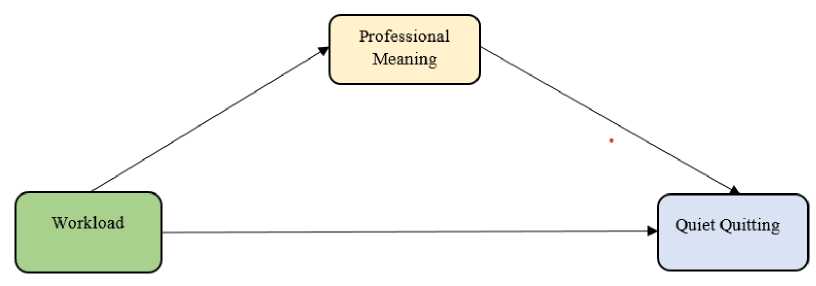
Figure 1. The mediating model of professional meaning in the relationship between workload and quiet quitting
Population and Sample
The population of the study consisted of 2,993 teachers working at preschool, primary school, middle school, and high school levels affiliated with the Kilis Provincial Directorate of National Education during the 2025–2026 academic year. A simple random sampling method was employed in the study, and data were collected from 308 teachers selected from the population. Eight datasets identified as outliers were excluded from the analysis, and the final analyses were conducted using data obtained from 300 teachers.
Descriptive information regarding the teachers who participated in the study is presented in Table 1.
Table 1. Descriptive characteristics of the participants from whom quantitative data were collected
|
Variable |
Category |
n |
% |
|
Gender |
Female |
195 |
65.0 |
|
Male |
105 |
35.0 |
|
|
Marital Status |
Single |
95 |
31.7 |
|
Married |
205 |
68.3 |
|
|
21–30 years |
76 |
25.3 |
|
|
Age |
31–40 years |
132 |
44.0 |
|
41–50 years |
67 |
22.3 |
|
|
51 years and above |
25 |
8.3 |
|
|
Educational Level |
Undergraduate |
238 |
79.3 |
|
Graduate |
62 |
20.7 |
|
|
Branch |
Preschool |
88 |
29.3 |
|
Classroom Teacher |
48 |
16.0 |
|
Variable |
Category |
n |
% |
|
Subject Teacher |
164 |
54.7 |
|
|
1–5 years |
85 |
28.3 |
|
|
6–10 years |
62 |
20.7 |
|
|
Professional Seniority |
11–15 years |
57 |
19.0 |
|
16–20 years |
32 |
10.7 |
|
|
21–25 years |
32 |
10.7 |
|
|
26 years and above |
32 |
10.7 |
|
|
Preschool |
64 |
21.3 |
|
|
School Level |
Primary School |
72 |
24.0 |
|
Middle School |
83 |
27.7 |
|
|
High School |
81 |
27.0 |
According to Table 1, 65% of the participants were female and 35% were male. Regarding marital status, 68.3% of the teachers were married, while 31.7% were single. In terms of age distribution, 25.3% of the participants were between 21 and 30 years old, 44% were between 31 and 40 years old, 22.3% were between 41 and 50 years old, and 8.3% were aged 51 years and above. Concerning educational level, 79.3% of the participants held an undergraduate degree, whereas 20.7% had a graduate degree. Based on branch distribution, 54.7% of the teachers were subject teachers, 29.3% were preschool teachers, and 16% were classroom teachers. In terms of professional seniority, 28.3% of the participants had 1–5 years of experience, 20.7% had 6–10 years, 19% had 11–15 years, 10.7% had 16–20 years, 10.7% had 21–25 years, and 10.7% had 26 years or more of professional experience. Regarding school level, 21.3% of the teachers worked in preschools, 24% in primary schools, 27.7% in middle schools, and 27% in high schools.
Data Collection Instruments
The quantitative data of the study were collected using the Personal Information Form, the Workload Perception Scale for Teachers, the Quiet Quitting Scale for Teachers, and the Professional Meaningfulness Scale for Teachers.
Workload Perception Scale: The scale developed by Keleş Ay (2010) to determine teachers’ perceptions of workload is a one-dimensional measurement tool consisting of 11 items. The items are rated on a 5-point Likert scale ranging from “1 = Strongly disagree” to “5 = Strongly agree.” In the original development study, the scale was reported to explain 54.16% of the total variance, and the Cronbach’s alpha internal consistency coefficient for the overall scale was reported as .86. In the present study, the reliability of the scale was reexamined, and the Cronbach’s alpha coefficient was found to be .834.
Teachers' Professional Meaningfulness Scale: Developed by Deviren and Akşit (2025) to determine teachers’ levels of professional meaningfulness, the scale consists of six subdimensions—professional self-understanding, professional satisfaction, professional relationships, social contribution, professional transcendence, and work–life balance—and a total of 21 items. The scale is based on a 5- point Likert format, with items rated from “1 = Strongly disagree” to “5 = Strongly agree.” It was reported that the scale explained 68.26% of the total variance, and the overall Cronbach’s alpha reliability coefficients were .91 for exploratory factor analysis (EFA) and .93 for confirmatory factor analysis (CFA). In the present study, the overall Cronbach’s alpha coefficient of the scale was calculated as .964.
Quiet Quitting Scale: The Quiet Quitting Scale for Teachers, developed by Yücedağlar, Gılıç, Uzun, and İnandı (2024), consists of three subdimensions—job-related performance, indifference toward school, and job-related desensitization—and a total of 17 items. The scale uses a 5-point Likert format ranging from “1 = Never” to “5 = Always.” In the original development study, the explained total variance was reported as 58.64%, while the Cronbach’s alpha internal consistency coefficients were .85 for the job-related performance dimension, .83 for the indifference toward school dimension, and .74 for the job-related desensitization dimension. In the present study, Cronbach’s alpha coefficients were found to be .816 for the job-related performance dimension, .703 for the indifference toward school dimension, .750 for the job-related desensitization dimension, and .787 for the overall scale.
Data Collection and Analysis
Before the data collection process began, permission to use the scales was obtained from the developers via e-mail. Ethical approval was obtained from the Ethics Committee of Kilis 7 Aralık University, and an official research permission document was secured through the Ministry of National Education (MoNE) Research Application Permission System. After obtaining verbal permission from administrators of preschool, primary school, middle school, and high school institutions affiliated with the Kilis Provincial Directorate of National Education specified in the permission document, the scales were administered online to teachers via Google Forms between 08.12.2025 and 26.12.2025. The collected data were first transferred to Microsoft Excel and subsequently analyzed using IBM SPSS Statistics 25.0 software. The significance level for all analyses was set at .05. Initially, the normality of the data distribution was examined by evaluating the skewness and kurtosis values of the scales. The analyses revealed skewness and kurtosis values of .141 and -.593 for the workload scale, 1.302 and 1.847 for the quiet quitting scale, and -1.189 and 1.266 for the professional meaning scale, respectively. Since all values were within the acceptable range of +2 and -2, the data were considered to approximate a normal distribution (Büyüköztürk, 2010); therefore, parametric tests were employed in the analyses. Descriptive statistics (frequency, percentage, mean, and standard deviation), independent samples t-tests for two-group comparisons, one-way analysis of variance (ANOVA) for multiple-group comparisons, and correlation analysis to examine relationships among variables were utilized. In cases where ANOVA indicated significant differences, the Tukey HSD test was performed to determine the source of the differences. Furthermore, regression-based mediation analysis was conducted to examine the mediating role of professional meaning in the effect of workload on quiet quitting. For this purpose, the PROCESS Macro integrated into IBM SPSS Statistics 25.0 was used, and Model 4 developed by Hayes (2018) was preferred for the mediation analyses. The significance of the mediation effect was tested using the bootstrap method with 5,000 resamples, and 95% confidence intervals were calculated. The absence of zero within the obtained bootstrap confidence interval indicated that the indirect effect was statistically significant.
FINDINGS
The mean, standard deviation, minimum, and maximum score values related to teachers’ workload, professional meaning, and quiet quitting variables and their subdimensions are presented in Table 2.
Table 2. Descriptive statistics regarding teachers’ levels of workload, professional meaning, and quiet quitting and their subdimensions
|
Scale |
Subdimension |
N |
M |
SD |
Min. |
Max. |
|
Workload |
– |
300 |
2.59 |
.80 |
1.00 |
4.64 |
|
Total |
300 |
4.22 |
.50 |
1.57 |
5.00 |
|
|
Professional Self-Understanding |
300 |
4.00 |
.93 |
1.00 |
5.00 |
|
|
Professional Satisfaction |
300 |
4.39 |
.75 |
1.25 |
5.00 |
|
|
Professional Meaning |
Professional Relationships |
300 |
4.35 |
.79 |
1.33 |
5.00 |
|
Social Contribution |
300 |
4.48 |
.74 |
1.33 |
5.00 |
|
|
Professional Transcendence |
300 |
4.35 |
.87 |
1.33 |
5.00 |
|
|
Work–Life Balance |
300 |
3.86 |
.98 |
1.00 |
5.00 |
|
|
Total |
300 |
1.64 |
.72 |
1.00 |
3.71 |
|
|
Quiet Quitting |
Job-Related Performance |
300 |
1.38 |
.54 |
1.00 |
4.00 |
|
Indifference Toward School |
300 |
1.74 |
.69 |
1.00 |
4.67 |
|
|
Job-Related Desensitization |
300 |
1.96 |
.70 |
1.00 |
4.25 |
Table 2 indicates that teachers’ mean score for workload is 2.59 (SD = 0.80), the mean score for professional meaning is 4.22 (SD = 0.50), and the mean score for quiet quitting is 1.64 (SD = 0.72). These findings suggest that teachers’ perceived workload is close to a moderate level, their perception of professional meaning is high, and their quiet quitting tendencies are low. In addition, examination of the minimum and maximum values shows that participants’ responses to the scale items are distributed across a relatively wide range.
Regarding the subdimensions of the professional meaning scale, mean scores range from 3.86 to 4.48. The highest mean score belongs to the social contribution subdimension (M = 4.48, SD = 0.74), whereas the lowest mean score is observed in the work–life balance subdimension (M = 3.86, SD = 0.98). These results indicate that teachers generally perceive their profession as highly meaningful, particularly in terms of its contribution to society, while their perceptions of work–life balance are relatively lower.
For the quiet quitting scale, subdimension mean scores range between 1.38 and 1.96. Accordingly, the mean score for job-related performance is 1.38 (SD = 0.54), for indifference toward school is 1.74 (SD = 0.69), and for job-related desensitization is 1.96 (SD = 0.70). These findings demonstrate that teachers’ quiet quitting behaviors are generally at a low level across all subdimensions.
An independent samples t-test was conducted to examine whether teachers’ workload, professional meaning, and quiet quitting levels differed significantly according to gender. The results are presented in Table 3.
Table 3. Independent samples t-test results for teachers’ workload, professional meaning, and quiet quitting levels according to gender
|
Variable |
Gender |
n |
M |
SD |
t |
p |
|
Female |
195 |
2.62 |
0.78 |
1.067 |
0.287 |
|
|
Workload |
Male |
105 |
2.52 |
0.83 |
||
|
Professional Meaning |
Female |
195 |
4.27 |
0.67 |
1.816 |
0.070 |
|
Male |
105 |
4.11 |
0.79 |
|||
|
Female |
195 |
1.58 |
0.44 |
-2.701 |
0.008* |
|
|
Quiet Quitting |
Male |
105 |
1.75 |
0.57 |
||
|
p < .05 |
||||||
Table 3 shows that teachers’ quiet quitting scores differ significantly according to gender (t = -2.701; p < .01). When mean scores are examined, male teachers have higher quiet quitting scores (M = 1.75) than female teachers (M = 1.58). In contrast, no statistically significant differences were found in terms of workload (t = 1.067; p > .05) and professional meaning (t = 1.816; p > .05) according to gender. This finding indicates that teachers’ perceptions of workload and professional meaning are similar across gender groups.
An independent samples t-test was conducted to examine whether teachers’ workload, professional meaning, and quiet quitting levels differed according to marital status. The results are presented in Table 4.
Table 4. Independent samples t-test results for teachers’ workload, professional meaning, and quiet quitting levels according to marital status
|
Variable |
Marital Status |
n |
M |
SD |
t |
p |
|
Single |
95 |
2.56 |
0.83 |
|||
|
Workload |
-0.311 |
0.756 |
||||
|
Married |
205 |
2.59 |
0.78 |
|||
|
Professional Meaning |
Single |
95 |
4.22 |
0.68 |
0.116 |
0.908 |
|
Variable |
Marital Status |
n |
M |
SD |
t |
p |
|
Married |
205 |
4.21 |
0.73 |
|||
|
Quiet Quitting |
Single |
95 |
1.72 |
0.52 |
1.824 |
0.069 |
|
Married |
205 |
1.60 |
0.48 |
Table 4 shows that teachers’ workload scores do not differ significantly according to marital status (t = -0.311; p > .05). Similarly, no statistically significant differences were found in professional meaning scores (t = 0.116; p > .05) and quiet quitting scores (t = 1.824; p > .05) across marital status groups. This finding indicates that teachers’ perceptions of workload, professional meaning, and quiet quitting are at similar levels regardless of marital status.
A one-way ANOVA was conducted to examine whether teachers’ workload, professional meaning, and quiet quitting levels differ according to age. The results are presented in Table 5.
|
Table 5. One-Way ANOVA results for teachers’ workload, professional meaning, and quiet quitting levels according to age |
||||||||
|
Variable |
Age |
n |
M |
SD |
df |
F |
p |
Difference |
|
(1) 21–30 years |
76 |
2.57 |
0.76 |
|||||
|
Workload |
|
132 67 |
2.69 2.56 |
0.85 0.72 |
3/296 |
3.310 |
0.020* |
2 > 4 |
|
(4) 51+ years |
25 |
2.15 |
0.69 |
|||||
|
(1) 21–30 years |
76 |
4.16 |
0.69 |
|||||
|
Professional Meaning |
|
132 67 |
4.21 4.24 |
0.71 0.71 |
3/296 |
0.314 |
0.815 |
- |
|
(4) 51+ years |
25 |
4.31 |
0.87 |
|||||
|
Quiet Quitting |
(1) 21–30 years |
76 |
1.80 |
0.59 |
||||
|
132 67 |
1.61 1.53 |
0.45 0.42 |
3/296 |
3.976 |
0.008* |
1 > 2 1 > 3 |
|
|
(4) 51+ years |
25 |
1.59 |
0.53 |
|||||
|
p < .05 |
||||||||
Table 5 indicates that teachers’ workload scores differ significantly according to age (F = 3.310; p < .05). The post-hoc Tukey HSD test results show that teachers aged 31–40 have significantly higher workload perceptions than those aged 51 and above. In terms of quiet quitting, a statistically significant difference was also found across age groups (F = 3.976; p < .01), with teachers aged 21–30 exhibiting higher levels of quiet quitting compared to those in the 31–40 and 41–50 age groups. In contrast, professional meaning scores do not differ significantly according to age (F = 0.314; p > .05), indicating that teachers’ perceptions of professional meaning are similar across age groups. An independent samples t-test examining differences according to educational level is presented in Table 6.
Table 6. Independent samples t-test results for teachers’ workload, professional meaning, and quiet quitting levels according to educational status
Table 6 shows that teachers’ workload scores do not differ significantly according to educational status (t = -0.360; p > .05). Similarly, no statistically significant differences were found in professional meaning scores (t = 1.516; p > .05) and quiet quitting scores (t = -1.381; p > .05) between undergraduate and graduate groups. This finding indicates that teachers’ perceptions of workload, professional meaning, and quiet quitting are at similar levels regardless of educational status.
A one-way ANOVA was conducted to examine whether teachers’ workload, professional meaning, and quiet quitting levels differ according to branch. The results are presented in Table 7.
Table 7. One-Way ANOVA results for teachers’ workload, professional meaning, and quiet quitting levels according to branch
|
Variable |
Branch |
n M |
SD |
df |
F |
p |
Difference |
|
(1) Preschool |
88 2.78 |
0.79 |
|||||
|
Workload |
(2) Classroom Teacher |
48 2.45 |
0.81 |
2/297 |
3.912 |
0.021* |
1 > 3 |
|
(3) Subject Teacher |
164 2.52 |
0.78 |
|||||
|
(1) Preschool |
88 4.20 |
0.75 |
|||||
|
Professional Meaning |
(2) Classroom Teacher |
48 4.33 |
0.62 |
2/297 |
0.819 |
0.442 |
- |
|
(3) Subject Teacher |
164 4.18 |
0.73 |
|||||
|
(1) Preschool |
88 1.58 |
0.44 |
|||||
|
Quiet Quitting |
(2) Classroom Teacher |
48 1.52 |
0.42 |
2/297 |
3.339 |
0.057 |
- |
|
(3) Subject Teacher |
164 1.70 |
0.54 |
Table 7 shows that teachers’ workload scores differ significantly according to branch (F = 3.912; p < .05). According to the Tukey HSD post-hoc test, a significant difference was found between preschool teachers and subject teachers, indicating that preschool teachers have higher perceptions of workload compared to subject teachers. In contrast, no significant differences were found in professional meaning and quiet quitting scores according to branch. This finding suggests that teachers’ perceptions of professional meaning and quiet quitting are similar across different branches.
A one-way ANOVA was conducted to examine whether teachers’ workload, professional meaning, and quiet quitting levels differ according to professional seniority. The results are presented in Table 8.
Table 8. One-Way ANOVA results for teachers’ workload, professional meaning, and quiet quitting levels according to professional seniority
|
Variable |
Professional Seniority |
n |
M |
SD |
df |
F |
p |
Difference |
|
(1) 1–5 years |
85 |
2.58 |
0.77 |
|||||
|
(2) 6–10 years |
62 |
2.74 |
0.88 |
|||||
|
Workload |
(3) 11–15 years |
57 |
2.63 |
0.81 |
5/294 |
2.836 |
0.016* |
2 > 6 |
|
(4) 16–20 years |
32 |
2.73 |
0.80 |
4 > 6 |
||||
|
(5) 21–25 years |
32 |
2.50 |
0.66 |
|||||
|
(6) 26+ years |
32 |
2.14 |
0.67 |
|||||
|
(1) 1–5 years |
85 |
4.21 |
0.62 |
|||||
|
(2) 6–10 years |
62 |
4.10 |
0.81 |
|||||
|
Professional Meaning |
(3) 11–15 years |
57 |
4.22 |
0.72 |
5/294 |
1.035 |
0.397 |
|
|
(4) 16–20 years |
32 |
4.40 |
0.51 |
|||||
|
(5) 21–25 years |
32 |
4.12 |
0.82 |
|||||
|
(6) 26+ years |
32 |
4.34 |
0.83 |
|||||
|
(1) 1–5 years |
85 |
1.77 |
0.56 |
|||||
|
(2) 6–10 years |
62 |
1.64 |
0.55 |
|||||
|
Quiet Quitting |
(3) 11–15 years |
57 |
1.64 |
0.39 |
5/294 |
2.474 |
0.032* |
1 > 5 |
|
(4) 16–20 years |
32 |
1.55 |
0.41 |
|||||
|
(5) 21–25 years |
32 |
1.47 |
0.39 |
|||||
|
(6) 26+ years |
32 |
1.53 |
0.50 |
Table 8 indicates that teachers’ workload scores differ significantly according to professional seniority (F = 2.836; p < .05). According to the Tukey HSD post-hoc test results, teachers with 6–10 years of experience reported significantly higher workload perceptions than those with 26 years and above. Similarly, teachers with 16–20 years of experience also had significantly higher workload scores compared to those with 26 years and above. In terms of quiet quitting, a significant difference was found across professional seniority groups (F = 2.474; p < .05), with teachers in the 1–5 years group exhibiting higher quiet quitting levels than those in the 21–25 years group. However, no statistically significant differences were found in professional meaning scores according to professional seniority (p > .05), indicating that teachers’ perceptions of professional meaning are similar across experience levels.
A Pearson correlation analysis was conducted to examine the relationships among workload, professional meaning, and quiet quitting. The results are presented in Table 9.
Table 9. Correlation analysis results for teachers’ workload, professional meaning, and quiet quitting variables
|
Variables |
1 2 3 |
|
1.Workload |
1 |
|
2.Professional Meaning |
-0.243** 1 |
|
3.Quiet Quitting |
0.235** -0.450** 1 |
**p < 0.01
Table 9 shows that there is a positive and statistically significant relationship between workload and quiet quitting (r = 0.235; p < 0.01), indicating that teachers’ quiet quitting tendencies may increase as their perceived workload increases. A negative and significant relationship was found between workload and professional meaning (r = -0.243; p < 0.01), suggesting that higher workload is associated with lower levels of professional meaning among teachers. In addition, a negative and significant relationship was observed between quiet quitting and professional meaning (r = -0.450; p < 0.01), indicating that increases in quiet quitting are associated with decreases in professional meaning.
The Mediating Role of Professional Meaning in the Effect of Teachers’ Perceived Workload on Quiet Quitting Behavior
The model and analysis results examining the mediating role of professional meaning in the effect of workload on quiet quitting are presented in Figure 2.
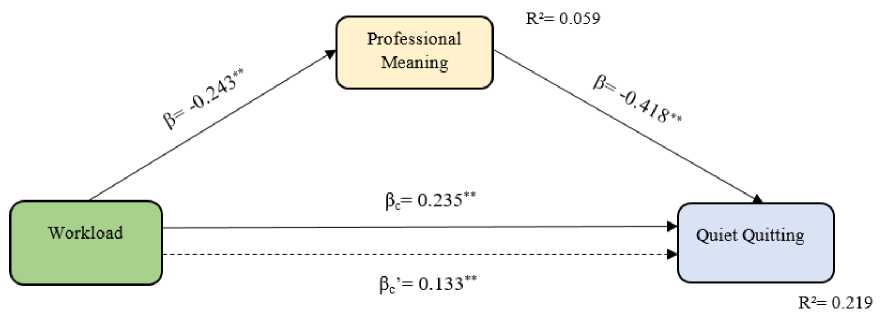
Figure 2. The mediating role of professional meaning in the effect of workload on quiet quitting behavior and standardized β coefficients
As shown in the figure, the total effect of workload on quiet quitting is statistically significant (β = 0.235; p < .001). Similarly, the effect of workload on professional meaning (β = -0.243; p < .001) and the effect of professional meaning on quiet quitting (β = -0.418; p < .001) are also significant. When professional meaning is included in the model as a mediating variable, the direct effect of workload on quiet quitting decreases but remains statistically significant (β = 0.133; p < .05). This finding indicates that professional meaning plays a partial mediating role in the relationship between workload and quiet quitting.
A mediation analysis was conducted to examine the mediating role of professional meaning in the relationship between workload and quiet quitting. The total, direct, and indirect effects obtained from the analysis are presented in Table 10.
Table 10. Total, direct, and indirect effects of workload on quiet quitting
|
Effects/Paths |
в |
B |
SE |
t |
p |
95% CI |
R2 |
|
Total Effect WL → QQ |
0.235 |
0.147 |
0.035 |
4.164 |
< .001 |
[0.078, 0.217] |
0.055 |
|
Direct Effects WL → PM |
-0.243 |
-0.220 |
0.051 |
-4.334 |
< .001 |
[-0.319, -0.120] |
0.059 |
|
WL → QQ |
0.133 |
0.083 |
0.033 |
2.513 |
.013 |
[0.018, 0.149] |
0.219 |
|
PM → QQ |
-0.418 |
-0.291 |
0.037 |
-7.898 |
< .001 |
[-0.363, -0.218] |
|
|
Indirect Effect WL → PM → QQ |
0.102 |
0.064 |
0.020 |
— |
— |
[0.030, 0.110] |
Note: WL = Workload, PM = Professional Meaning, QQ = Quiet Quitting
Table 10 indicates that the total effect of workload on quiet quitting is statistically significant (β = 0.235; B = 0.147; SE = 0.035; t = 4.164; p < .001), explaining approximately 5.5% of the variance in quiet quitting (R² = 0.055), suggesting that higher workload is associated with increased quiet quitting tendencies among teachers. Workload also significantly and negatively predicts professional meaning (β = -0.243; B = -0.220; SE = 0.051; t = -4.334; p < .001), accounting for approximately 5.9% of its variance (R² = 0.059), indicating that increased workload is associated with lower levels of professional meaning. In addition, professional meaning significantly and negatively predicts quiet quitting (β = -0.418; B = -0.291; SE = 0.037; t = -7.898; p < .001), showing that higher professional meaning reduces quiet quitting behavior. When professional meaning is included in the model, the direct effect of workload on quiet quitting decreases but remains significant (β = 0.133; B = 0.083; SE = 0.033; t = 2.513; p = .013), while professional meaning continues to negatively predict quiet quitting (β = -0.418; B = -0.291; SE = 0.037; p < .001), and together they explain 21.9% of the variance in quiet quitting (R² = 0.219). Finally, the indirect effect is significant (β = 0.102; B = 0.064; SE = 0.020; 95% CI [0.030, 0.110]), confirming that professional meaning partially mediates the relationship between workload and quiet quitting, meaning that increased workload reduces professional meaning, which in turn indirectly increases quiet quitting tendencies.
CONCLUSION AND DISCUSSION
In this study, the mediating role of professional meaning in the relationship between teachers’ perceived workload and quiet quitting behavior was examined. The findings indicate that teachers’ perceived workload is at a moderate level. This result is partly consistent with studies reporting moderate workload levels (Keleş Ay, 2010) and with studies identifying low levels of workload (Öztürk & Erdem, 2020). The results show that teachers’ quiet quitting behaviors are at a low level. This finding is consistent with studies reporting low or moderate levels of quiet quitting tendencies (Gılıç et al., 2025;
The findings also reveal that teachers’ professional meaning levels are high. This result is consistent with studies showing that teachers perceive their profession as meaningful (Balcı & Cengiz, 2019; İmalı & Kaya, 2022; Toptaş, 2018). It is widely emphasized in the literature that perceiving work as meaningful enhances individuals’ psychological well-being, motivation, job satisfaction, and organizational commitment (Steger et al., 2012; Keleş, 2017). In this context, teachers’ perception of their work as meaningful can be considered a protective factor in explaining the low level of quiet quitting behavior.
When demographic variables are examined, male teachers were found to have higher levels of quiet quitting than female teachers. This finding is consistent with Tok and Uzun (2025), who reported higher quiet quitting levels among male nursing students. Similarly, Gılıç et al. (2025) found that female teachers were less likely to disengage from work than male teachers in terms of job performance and disengagement dimensions. However, there are also studies reporting no significant effect of gender on quiet quitting (Çabuk & Çelik, 2025; Karaman et al., 2024). This suggests that quiet quitting may be more strongly associated with organizational and psychological factors. The observed difference may be explained by the possibility that male teachers express emotional exhaustion less and demonstrate psychological withdrawal from work in different forms, whereas female teachers may show lower quiet quitting tendencies due to higher levels of emotional expression and social support seeking. On the other hand, the lack of significant gender differences in workload and professional meaning indicates that the teaching profession can be performed regardless of gender and that teachers share similar experiences. The results also show that teachers’ perceived workload, quiet quitting, and professional meaning levels do not significantly differ according to marital status or educational level. Similarly, Çabuk and Çelik (2025) reported no significant differences in teachers’ quiet quitting behaviors based on marital status and education level. Likewise, a study conducted with healthcare professionals also found that quiet quitting levels did not differ according to marital status and education level (Pala, 2025). This suggests that teachers’ perceptions of workload, quiet quitting, and professional meaning are more strongly related to professional and organizational conditions rather than individual characteristics.
Findings related to the length of service indicate that teachers with lower seniority report higher levels of perceived workload and stronger quiet quitting tendencies. This situation may be explained by adaptation difficulties experienced during the early years of the profession and limited professional experience. Indeed, it has been reported that teachers’ burnout levels decrease as experience increases (Gündüz, 2005). Accordingly, it can be suggested that increasing professional experience enhances teachers’ coping skills in managing workload. In addition, it has been stated that teachers may experience quiet quitting at different stages of their professional careers (Yoğurtcu et al., 2024). On the other hand, the absence of significant differences in professional meaning across years of service suggests that this construct represents a relatively stable structure independent of professional experience.
When the relationships among variables were examined, significant positive relationships were found between workload and quiet quitting, a negative relationship between workload and professional meaning, and a negative relationship between professional meaning and quiet quitting. These findings indicate that as workload increases, teachers’ perceptions of professional meaning decrease, which in turn leads to an increase in quiet quitting tendencies. These results are consistent with studies demonstrating that workload contributes to negative outcomes such as burnout, stress, and work–family conflict (Dinç, 2021; Yalçın, 2022). Moreover, research indicating negative relationships between job satisfaction, job satisfaction-related constructs, and quiet quitting further supports these findings (Çabuk & Çelik, 2025; Singh et al., 2025).
One of the key findings of the study is that professional meaning plays a partial mediating role in the relationship between workload and quiet quitting. This result suggests that as teachers’ workload increases, they tend to perceive their profession as less meaningful, which indirectly increases quiet quitting behaviors. However, the persistence of the direct effect of workload even after the inclusion of professional meaning indicates that workload is a fundamental predictor of quiet quitting. This finding highlights that workload not only acts as a direct source of professional stress but also indirectly weakens teachers’ sense of meaning in their profession. In other words, workload does not merely create physical and cognitive strain; it also reduces the extent to which teachers perceive their work as valuable and meaningful. The reduction in professional meaning, in turn, decreases teachers’ commitment to their work and increases quiet quitting behaviors. This finding is consistent with the literature emphasizing professional meaning as a critical psychological resource that shapes employee behavior (Steger et al., 2012).
Based on the findings of this study, the following recommendations are proposed:
У Administrative and bureaucratic tasks should be reduced, and structural issues such as class size, paperwork load, and task distribution should be regulated in order to decrease teachers’ workload.
У Considering the high workload perceptions of preschool teachers, branch-specific policies should be developed for this group.
У School climate should be improved to strengthen professional meaning, teachers’ participation in decision-making processes should be increased, and practices enhancing professional motivation should be expanded.
У Mentoring and induction programs for novice teachers should be strengthened in order to reduce quiet quitting tendencies.
У Psychological counseling and psychosocial support systems that enhance teachers’ well-being should be reinforced in schools.
У Future studies should examine more comprehensive models including different samples and variables such as organizational support, burnout, and job satisfaction.
Ethics Statement
This study was conducted in accordance with scientific research and publication ethics principles. Informed consent was obtained from all participants, and the principles of confidentiality and anonymity were strictly followed throughout the research process. The data were used solely for academic purposes, and no information that could reveal participants’ identities was disclosed. Ethical principles were adhered to at all stages of the study.
Author Contributions
This study was conducted by one author under the supervision of an academic advisor. The author was responsible for the research design, data collection, data analysis, interpretation, and reporting of the study. The advisor provided guidance in methodological planning, scientific supervision of the research process, validation of data analysis, and academic refinement of the manuscript. Both the author and the advisor approved the final version of the manuscript.
Conflict of Interest Statement
The author declares that there is no financial or personal conflict of interest with any individual, institution, or organization in relation to this study.
Ethical Approval
Ethical approval for this study was obtained from the Ethics Committee of Kilis 7 Aralık University (Decision No: 08, Meeting Date: 18.11.2025; Document No: E.97792). The study was reviewed and approved as ethically appropriate by the committee. The research was conducted in accordance with the principles of research and publication ethics.