
The purple economy and its role in enhancing Iraq’s economy: opportunities and challenges
Free access
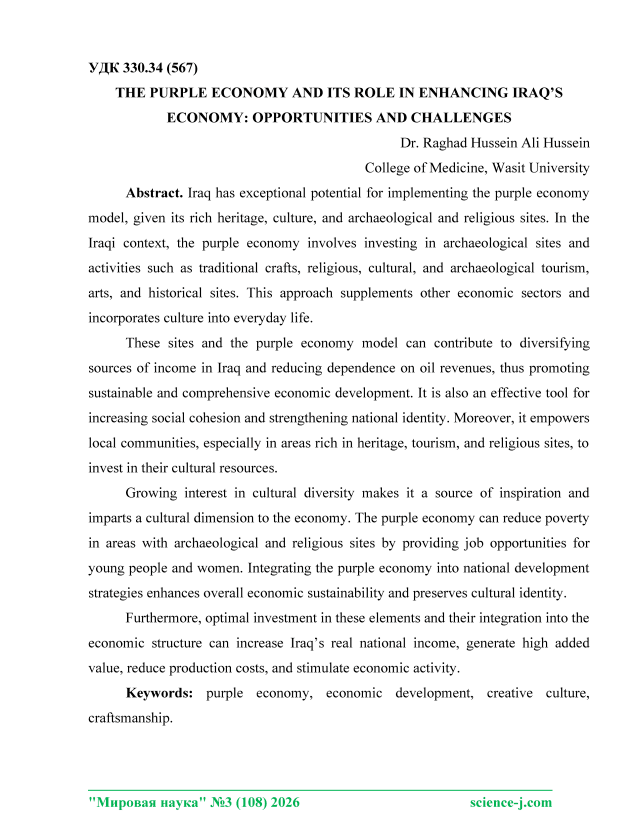
Iraq has exceptional potential for implementing the purple economy model, given its rich heritage, culture, and archaeological and religious sites. In the Iraqi context, the purple economy involves investing in archaeological sites and activities such as traditional crafts, religious, cultural, and archaeological tourism, arts, and historical sites. This approach supplements other economic sectors and incorporates culture into everyday life. These sites and the purple economy model can contribute to diversifying sources of income in Iraq and reducing dependence on oil revenues, thus promoting sustainable and comprehensive economic development. It is also an effective tool for increasing social cohesion and strengthening national identity. Moreover, it empowers local communities, especially in areas rich in heritage, tourism, and religious sites, to invest in their cultural resources. Growing interest in cultural diversity makes it a source of inspiration and imparts a cultural dimension to the economy. The purple economy can reduce poverty in areas with archaeological and religious sites by providing job opportunities for young people and women. Integrating the purple economy into national development strategies enhances overall economic sustainability and preserves cultural identity. Furthermore, optimal investment in these elements and their integration into the economic structure can increase Iraq’s real national income, generate high added value, reduce production costs, and stimulate economic activity.
Similar articles in the section Dynamics of the economy. Economic movement
Short address: https://sciup.org/140315136
IDS: 140315136 | UDC: 330.34
Text of the scientific article The purple economy and its role in enhancing Iraq’s economy: opportunities and challenges
The purple economy is an emerging economic model based on local culture that restores the place of culture and creativity in the modern economy. It draws on culture and heritage to guide the local economy and achieve the well-being of individuals in society and the economic development of the country. It combines economic development with the preservation of cultural heritage and human diversity at the heart of sustainable development, adding a cultural and human dimension to globalization, especially in developing countries where culture is a productive element and a source of job creation and social integration [1]. This new economic model establishes sustainable creative growth for members of society. This model aims to diversify sources of income and is a key driver of economic growth. It is a new and dynamic development model that values culture and considers it an integral part of the process of rationalizing consumption and reducing expenditure , which most developing countries are calling for, as well as promoting sustainable development and achieving social responsibility. This model emerged from economics through an international forum organized by UNESCO and the European Commission in 2011, which called for culture to be considered not merely a luxury but an active force contributing to economic development [2].
Research problem : What are the economic and cultural roles of the purple economy in boosting the national income of the country's economy and revitalizing tourism in Iraq?
Research significance : The research aims to highlight the importance of local religious and historical culture and heritage in contributing to increasing the gross domestic product of the Iraqi economy and designing a development strategy to promote the purple economy.
Research hypothesis : The purple economy gives cultural factors their economic place in guiding the economy and achieving economic development in Iraq.
Research methodology : To address the research problem, we relied on the descriptive approach to the purple economy, as well as the importance of craft, cultural, and creative industries, especially in rural areas of Iraq. Among the most important studies on the purple economy is:-
Ipek Ilkkaracan's 2016 study entitled "The Purple Economy Complementing the Green: Towards Sustainable and Caring Economies." The study highlighted the importance of the purple economy, and the researcher presented a framework for a purple economic vision in which women contribute through women's work in the economyand identifying the links between caring for people and caring for the environment. The purple economy can contribute to generating decent job opportunities for women and unemployed youth, contribute to poverty alleviation, address inequalities between generations, genders, and origins, and achieve a balance between nature and humans in the economy.
The purple economy as an opportunity for development and increased national income in Iraq
The purple economy represents a strategic opportunity for Iraq to diversify its sources of national income and increase revenues, as well as reduce its dependence on rentier economics and excessive reliance on oil revenues, through the adoption of clear and new developmental economic policies aimed at investing in the country's infrastructure, culture, knowledge, and well-thought-out institutional planning. Utilizing Iraq's heritage and cultural wealth within the framework of the purple economy will be an important factor in achieving economic development in the country and achieving social justice and economic well-being for individuals in society in the long term. The purple economy can be an effective tool for achieving economic diversification in the Iraqi economy, as well as developing the culture, tourism, heritage, and handicrafts sectors and creating new job opportunities for young people and women. Iraq has a young workforce and human resources, and UNESCO reports confirm that the cultural sectors of the economy provide job opportunities and absorb a number of skilled workers, thereby promoting integration into the local economy.[3]. The purple economy contributes to poverty reduction by encouraging and increasing support for small and medium-sized enterprises. It promotes balanced local development, social justice, and improved income levels, especially in rural areas with heritage or tourist sites, thereby reducing the social gap and disparities between urban and rural areas. Culture plays a pivotal role in strengthening belonging and identity, which has a positive impact on social stability and long-term development. The purple economy is considered one of the modern colors of the economy, aiming to make the cultural dimension an effective part of economic development and supporting the dimensions of sustainable development. The term "purple economy" refers to an economic model that combines and integrates creativity, knowledge, and culture into the production process and focuses on the cultural value of goods and services as a driver and tool for promoting sustainable economic growth. The purple economy gives culture an important and central role in economic and social development and expresses vitality and humanity. It is a new color that focuses on people and society.
Iraq has a rich heritage in literature, arts, culture, and history, as well as religious sites, which makes it well-suited to revitalize creative cultural industries and rare crafts to contribute to economic growth through strategies that increase the contribution of cultural industries to gross domestic product, encouraging national cultural projects and events, and strengthening international partnerships to benefit from global expertise in the purple economy.as it is a promising model for diversifying sources of income in Iraq through the adoption of benchmarking policies and support for creative sectors. Culture and creativity play a role in attracting foreign investment by promoting local talents, crafts, and artisanal industries.
The purple economy is closely linked to the values and culture of society, which regulates human response and ensures positive interaction, making culture one of the pillars of economic development. The emergence of the purple economy, which stems from the importance of heritage and cultural dimensions in societies, is linked to a set of factors that promote the growth of this type of economy or help balance the factors associated with it, including the economic and political balance of countries, focus on communities, quality enhancement, and innovation promotion, which contribute to bringing together different requirements and developing talents.
The purple economy is one of the three components of a sustainable economy, which are the social, environmental, and purple economies. The environmental (green) and social economies are evident from their names, with the former focusing on environmental issues and the latter on social issues. The purple economy, on the other hand, is an economic field that contributes to sustainable development by increasing the consideration and valuation of the cultural return ( ) of goods and services. The purple economy takes into account and focuses on the cultural dimension, which is different from the cultural economy, which isconsidered a sector in itself [6].
The foundations of the purple economy in Iraq
The purple economy plays an important role in preserving architecture, heritage, art, and skills. It also contributes to strengthening national identity in the economic sphere in terms of tourism, education, industry, and health, and implementing policies that promote cultural, economic, and social projects and crafts in order to revive the country's historical and cultural heritage. [7] Iraq is considered one of the countries rich in heritage, archaeological, historical, and religious sites, which represent a nonoil economic resource that can contribute to reducing dependence on oil export revenues and diversifying the economy, as well as supporting the balance of payments through inbound tourism, which is reflected in promoting economic development.
They provide direct and indirect employment opportunities, and archaeological sites contribute to supporting the local economy and developing rural sectors. Therefore, archaeological, religious, and heritage sites are one of the most important drivers of sustainable economic development, transforming history into economic value without distorting cultural identity, and are a pillar of cultural and religious tourism [8]. The most important of these sites are:
-
1. Archaeological sites are (Ur in Dhi Qar, the Hanging Gardens and the capital of the Babylonian Empire in Babylon, the winged bull statues, and the unique fortified city of Farthia in the province of Nineveh). They can be utilized within the purple economy through heritage products inspired by ancient Iraqi figures and the development of creative industries such as books, films, and exhibitions.
-
2. Religious sites (the shrine of Imam Ali in Najaf province, the shrines of the two Imams in Baghdad province, the shrine of Imam Hussein in Karbala province, and the shrines of Al-Mawlawi and Al-Askari in Salah al-Din province) are clear examples of the purple economy and the promotion of social solidarity based on spiritual and moral values.
-
3. Heritage sites (Al-Mustansiriya School and House of Wisdom in Baghdad Province, the marshes in the south, Erbil Castle in Erbil Governorate, Al-Mada'in (Taq Kisra) and Al-Mutanabbi Street in Baghdad) The impact of the purple economy is reflected in the integration of culture with innovation and knowledge development, as well as the protection of environmental culture and the achievement of sustainable income for local communities. These sites are an important basis for the application of the purple economy model,as a developmental framework that integrates culture and scientific economic identity. They play an important role in revitalizing cultural and religious tourism, developing heritage industries, protecting local heritage, developing the environment and tourism, attracting investment, services, and housing, and placing Iraq on the global tourism map.
The application of the purple economy in Iraq may face several challenges: such as the weakness of the legislative and institutional framework, the lack of cultural awareness of the importance of this new economic model, the limited financial allocations specified and approved for this sector, as well as the weakness of the cultural infrastructure. One of the most important challenges facing the implementation of this new economy is the lack of statistical data and limited awareness of the importance of involving cultural and historical tourism and other cultures in the country's local economy [9].
The purple economy is considered a new, modern, promising, and effective tool for achieving comprehensive economic development in Iraq, as well as integrating and incorporating it into implemented and planned development plans, developing legislative and financial frameworks, as well as supporting and encouraging creative cultural industries and craft projects by the local government, strengthening partnerships between the public and private sectors, developing measurement indicators specific to the purple economy, and encouraging applied research in this field. The purple economy is considered to be holistic in nature, valuing cultural diversity and reconciling economic development with sustainability, giving greater importance to the cultural dimension and the development of cultural, heritage, and religious tourism, and creating a different culture that becomes the focus of prosperity and progress in the country. Supporting the new approach to the purple economy as a strategic dimension and viewing culture as an important axis in economic development, which has a role in increasing competitiveness and contributes to increasing added value as well as stimulating the local economy. Working to publish numerous studies and research papers to understand the purple economy [10]. Employ modern means of communication and increase consumer awareness with the development of electronics and new technologies and the marketing of cultural products, which creates competition and contributes to enriching cultural diversity. Culture enables individuals to be inspired and innovative, making them more capable of achieving tangible change in their standard of living and contributing to the country's overall development. The purple economy works to value and protect cultural diversity, market the intellectual and cultural creativity of individuals, and preserve the country's cultural and historical identity in the face of globalization. [10]. It also plays a role in achieving social equality between generations. UNESCO has promoted the principles of optimal utilization of local and intangible heritage (2003) and protection of cultural and heritage assets by creating work environments that respect cultural diversity and making it a successful and sustainable model in line with modern and global trends. Towards more inclusive and equitable economies, and investment in creative craft industries for young people and women, which is reflected in the promotion of the local economy as well as the provision of an environment conducive to innovation, renewal, and entrepreneurship?
Conclusions
-
1. Traditional craft products represent a new path towards diversifying the Iraqi economy and a strategic option for boosting gross domestic product, as well as
-
2. This economic model contributes to promoting comprehensive development. Handicraft products are a means of highlighting the heritage of society and contribute to the development of small industries in rural areas and the stabilization of the local population by providing and creating job opportunities for them, as well as reducing migration from rural to urban areas. It also supports small and medium-sized enterprises and improves individuals' living standards by increasing their income and integrating them into economic development programs and plans, which has a positive impact on national income.
-
3. For this modern economic model to succeed, the Iraqi government must pay attention to cultural diversity and develop action plans, government policies, and legislative frameworks, as well as invest in tourism and cultural infrastructure and achieve sustainable tourism development. It should also raise awareness and hold local and national seminars focusing on the importance of cultural industries and highlighting their significance in preserving and protecting archaeological sites and promoting tourism and culture in Iraq, as culture enables individuals to contribute more to comprehensive development.
absorbing the unemployed female and youth workforce, raising national income levels in Iraq, and reducing excessive dependence on the oil sector.
Recommendations:
-
1. Culture is an important economic sector that plays a pivotal role in the economy and gives countries a competitive advantage. It is one of the factors of sustainable development.
-
2. Iraq is rich in cultural and creative diversity, which is a valuable asset. If invested seriously through a development strategy and plan, it will contribute to the gross domestic product of the economy, and the purple economy can play a role in serving sustainable development.
-
3. Establish incubators to promote cultural industries and, in cooperation with the public and private sectors, encourage creative and cultural crafts and promote heritage and artistic professions.
-
4. Develop a national guide to local tourism and heritage, religious, and historical sites in Iraq and monitor cultural and creative potential.
-
5. Promoting Iraqi cultural, historical, and heritage tourism and reviving cultural heritage as a tourist product
-
6. Harness local media and invite foreign media to promote Iraq's archaeological treasures and tourist and religious sites.
