
Trends in the Development of the Creative Economy and Creative Industries in the Arctic Zone: A Review of Foreign Research
Journal: Arctic and North @arctic-and-north
Section: Reviews and reports
Article in issue: 63, 2026.
Free access
The aim of this article is to conduct a meta-analysis of foreign scientific publications in order to identify modern trends in the development of the creative economy and creative industries in the Arctic. The main method of the scientific research was a meta-analysis of the specialized literature. The analysis was carried out on the basis of two databases of peer-reviewed scientific publications — Scopus and Web of Science. These are the largest databases, which are leaders in searching for foreign publications on the selected topic. The search for relevant publications was carried out using the keywords “trends”, “development”, “creative industries”, “Arctic”. The sample for the period from 2004 to 2023 included 45 foreign scientific articles. As a result of the analysis, firstly, the distribution of articles by year was identified; secondly, the thematic content of the articles was determined; thirdly, regions where this research topic is most relevant were identified; fourthly, the methods for conducting such research were defined; and fifthly, the results obtained from research on this topic were analyzed. Based on the results of the study, it can be stated that the problems of researching the development of the creative economy and creative industries in the Arctic region are relatively new. The number of publications is currently small, although there is a noticeable increase in interest in this subject. Based on the results obtained, a conclusion is made about the prospects of conducting research on the problem of developing the creative economy and creative industries in the Arctic zone. The findings of this study will be of use to experts and analysts, as well as to researchers working on the development of the creative economy and creative industries in the Arctic.
Short address: https://sciup.org/148334011
IDS: 148334011 | UDC: 330.33(985)(045) | DOI: 10.37482/issn2221-2698.2026.63.368
Text of the scientific article Trends in the Development of the Creative Economy and Creative Industries in the Arctic Zone: A Review of Foreign Research
DOI:
H, ORCID:
The UN Creative Economy Outlook (2022) states that “creative industries are essential for achieving the 2030 Agenda; the majority of the 33 countries that took part in the UNCTAD’s online
∗ © Marmilova E.P., 2026
This work is licensed under a CC BY-SA License survey (2021) have developed a specific strategy or national plan to support and develop creative industries at the national level” 1.
According to the Creative Economy Network model of the UN Conference on Trade and Development (UNCTAD), applied in Finland since 2012, creative industries are divided into three groups: creative content (digital distribution, platforms, business scalability, international business); creative services (cross-sectoral business, ranging from micro-enterprises to large companies); creative products and culture (local and regional companies, regional attractiveness, tourism) 2.
Article 1 of the Federal Law No. 330-FZ of August 8, 2024 “On the Development of Creative Industries in the Russian Federation” 3 establishes the legal framework for the organization and development of creative industries in the Russian Federation as a core sector of the creative economy. Article 3 of the Federal Law establishes new legal concepts for the development of the creative economy: creative industry, creative product, creative industry entity, and creative cluster. The Federal Law specified that the following are classified as types of creative industries:
-
• industries based on historical and cultural heritage;
-
• industries based on works of literature and art;
-
• industries based on information and telecommunications technologies;
-
• industries based on applied creativity.
The legislature defined a new sector of the economy, introduced definitions of the creative economy, and distributed powers between the federal government and the constituent entities of the Russian Federation.
However, we agree with the view of D. Kravchenko (First Deputy Chairman of the State Duma Committee on Economic Policy of the Federal Assembly of the Russian Federation) that the Federal Law is a framework law; that is, in this case, the Federal Assembly of the Russian Federation adopted a legislative act in a special form, which established conceptual or general principles for regulating the creative economy and creative industries. We also agree with D. Makhonin (Governor of the Perm Krai) that, due to the recent introduction of these terms, we cannot currently define the boundaries that will clearly be considered a creative industry 4. This conclusion is also supported by the fact that the models adopted at the legislative level (the UNCTAD Creative Economy Network model and the Russian model) differ significantly in their structure and content.
The study of the development of creative industries and the creative economy is a relevant scientific area. According to the Decree of the Government of the Russian Federation, the devel- opment of a “system of support for the creative sector of the economy” in Russia is one of the key areas of regional development 5.
Creative industries, as a promising economic sector, attract the attention of politicians, experts, and scientists in Russia and abroad.
The development of creative industries in Russia allows for:
-
• maintaining stable dynamics in the Arctic economy’s contribution to Russia’s overall gross regional product (GRP);
-
• ensuring a sustained excess of the labor productivity index over the Russian average, which can be assessed as potential for growth in the high-tech component of labor in the economic development of the Arctic region;
-
• strengthening national and regional policies (including investment) in the field of human capital development in the Russian Arctic.
The aim of this article is to conduct a meta-analysis of foreign scientific publications to identify current trends in the development of the creative economy and creative industries in the Arctic.
Literature review
A.S. Krasilnikov identified the main issues addressed by Russian authors in their works on the development of creative industries in the Russian Arctic (Krasilnikov, 2021). A.V. Mikhailova, A.V. Fedorova, N.N. Petrova, and N.I. Petrova conducted a “review of recent publications from foreign and domestic sources on the creative economy and creative industries” (Mikhailova, Fedorova, Petrova et al., 2024). S.N. Vdovina compiled a list of scientific papers from the elibrary.ru database on international experience in developing creative industries, including 32 sources (Vdovina, 2022).
An analysis of foreign scientific publications included in the Scopus and Web of Science peer-reviewed scientific publications databases for the purpose of identifying current trends in the development of the creative economy and creative industries in the Arctic was not conducted.
Materials and methods
After defining the research aim, a search was conducted in the Scopus and Web of Science databases using the keywords “development”, “trends”, “creative industries”, and “Arctic”. The sample for the period from 2004 to 2023 included 45 scientific articles, which were summarized and analyzed using meta-analysis. I.A. Bykov and I.A. Gladchenko emphasize that “meta-analysis is based on the analysis of existing scientific literature. It allows identifying collective knowledge, trends in the development of modern science, and drawing reliable conclusions based on numer- ous individual studies. This method is used for statistical generalization, and, in some cases, is combined with qualitative analysis” (Bykov, Gladchenko, 2024). Meta-analysis is primarily used in sociological research. This method is being applied for the first time to identify trends in the development of the creative economy and creative industries in the Arctic.
Within the framework of this study, the application of this method enabled us to analyze the distribution of scientific publications by year and their thematic content, to identify the countries and regions where this research topic is most relevant, to determine the methods used in conducting scientific research, and to systematize and summarize the results of foreign studies on this topic.
Limitations of the study include the fact that articles from two international databases, Scopus and Web of Science, were analyzed for the period from 2004 to 2023. However, the obtained results complement existing scientific literature reviews on the creative economy and creative industries.
Research resultsThematic study
In the period from 2004 to 2016, the sample included one or more articles on the research topic (Fig. 1).
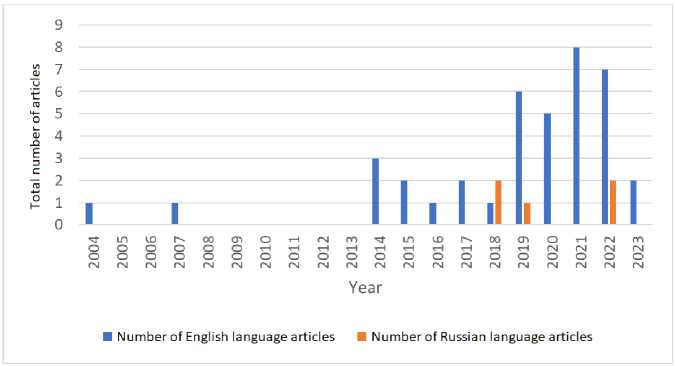
Fig. 1. Distribution of scientific articles included in the sample by year 6.
Over the period from 2017 to 2022, the number of articles on the research topic included in the sample increased; the topic was researched more extensively during this period, as evidenced by the inclusion of articles in Russian in the sample.
The title of an article provides an overview of the research and encompasses all the elements that make up the body of the paper. To identify key themes, a textual analysis of the scientific article titles was conducted using lemmatization with the tool
-
6 Source: compiled by the author based on a meta-analysis of scientific articles from the Scopus and Web of Science databases on the topic "Creative Economy and Creative Industries in the Arctic".
Let us carry out a text analysis of the article titles and identify the most frequently repeated phrases (Table 1).
Table 1
Textual analysis of article titles
|
Phrase |
Frequency |
|
development tourism |
4 |
|
Arctic tourism |
4 |
|
human capital |
2 |
|
Arctic development |
2(2) |
|
Arctic region |
3 |
|
future tourism |
2 |
|
change climate |
2 |
|
northern country |
2 |
|
Arctic Circle |
2 |
|
Arctic innovation place |
2 |
|
Arctic city |
2 |
|
attractive sustainable creative |
2 |
|
impression natural |
2 |
|
Arctic view |
2 |
|
Arctic zone of the Russian Federation |
2(2) |
Overall, the articles included in the sample expand the concept of tourism and culture by incorporating creativity, design, and cultural innovation. The Arctic is presented in them as a source of inspiration and a testing ground for innovative solutions to ensure comfortable living in the harsh conditions of polar regions. This approach allows the Arctic’s potential to be realized.
The article titles note that the Arctic is a unique territory with a specific location. Its development enables the retention and attraction of human capital, as well as the creation of an appealing and sustainable innovative living environment. The articles discuss the potential for developing this region’s potential in the future, primarily through the creative economy and creative industries.
Aims and objectives of scientific research
The analysis of the aims and objectives of research allowed determining the context of the scientific articles included in the sample:
-
• defining Russia’s objectives in the work of European cooperation bodies in the Arctic (2004) (Åtland, 2004);
-
• inclusion of Arctic territories in transnational cooperation projects, cross-border regionalization (2007) (Prokkola, 2007);
-
• historical background for the creation of the first technology park in the Nordic countries in 1982 in Oulu (2014) (Salo, 2014) and exploring the potential of cultural centers as spaces (2020) (Lindberg, Nilsson, Segerstedt et al., 2020);
-
• tourism development in the northern territories (Prokkola, 2007; Kajan, 2014; Chen, 2015; Shaparov, Kapitsyn, Panikar, 2019; Cai, Ma, Lee, 2020; Varnajot, Saarinen, 2022);
-
• interrelationship between climate change, tourism and social development in the Arctic (Lyngnes, Prebensen, 2014; Bjørst, Ren, 2015);
-
• interaction between communities, regulatory bodies and industry in the Arctic (Stammler, Ivanova, 2016; Cooper, 2020; Vasilieva, Volkov, Karginova-Gubinova et al., 2022);
-
• increasing the attractiveness of Arctic territories through innovation and new technologies (Chapman, Nilsson, Larsson et al., 2017; Belonozhko, Barbakov, Abramovsky, 2018);
-
• assessment of the quality of life for the population of northern regions (Loginov, Ignatyeva, Balashenko, 2018);
-
• attraction of investments and the possibility of accumulating best practices in the implementation of investment projects in the Arctic (Chimirri, 2021);
-
• training of highly qualified personnel for the development of Arctic territories (Zaikov, Kondratov, Kuprikov et al., 2021);
-
• development of restoration activities based on the interdependence of nature and people (Mathisen, Søreng, Lyrek, 2022);
-
• digital preservation of polar cultural heritage (Etemad, Samavati, Dawson, 2023).
Articles published in the period from 2019 to 2022 clarify the conceptual foundations of scientific research on the development of the creative economy and creative industries in the Arctic: the potential of human capital (Markin, Silin, Malinina, 2021); knowledge about the economies of Arctic countries in their institutional, social, cultural and environmental contexts (Vammen Larsen, Bors, Jóhannsdóttir et al., 2019); cultural sensitivity (Viken, Höckert, Grimwood, 2021); post-Arctic tourism (Varnajot, 2019).
Countries and regions where the creative economy and creative industries are the most relevant research topics
The Arctic regions most accessible for international research include Finland (16% of articles), Norway (13% of articles), Sweden (9% of articles), Greenland (7% of articles), as well as China, Canada, Denmark, Iceland and Scotland.
Creative industries and the creative economy affect large and economically developed cities and territories in the Arctic. The same trend is observed in the Russian Arctic (Fig. 2, Fig. 3).
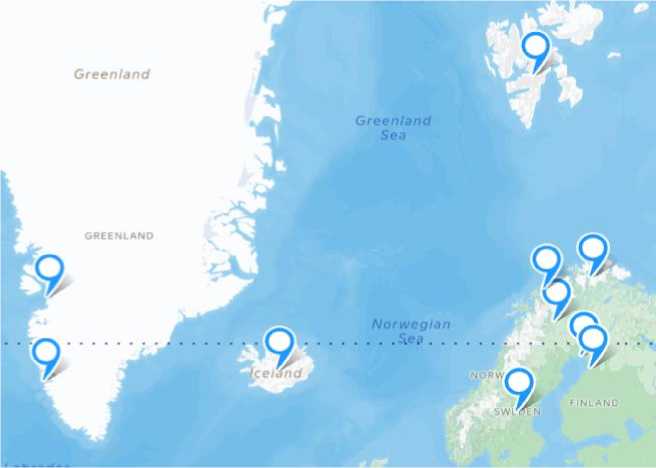
Fig. 2. Territories and locations of scientific research in northern countries 7.
Lists of locations: Lapland, Tornio; Svalbard; Oulu, Ilulissat; Kiruna; Finnmark; Nuuk; Trom-sø; Iceland, Sweden.
In 40% of the articles, the development of creative industries is examined using the Russian Arctic as a case study. In articles on Russia, the following constituent entities of the Russian Federation are most frequently mentioned: the Republic of Sakha (Yakutia), the Republic of Karelia, the Yamalo-Nenets Autonomous Okrug, the Arkhangelsk Oblast, and the Murmansk Oblast (Fig. 3).
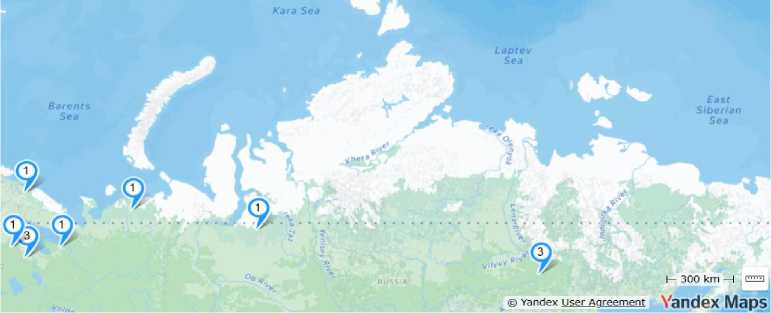
Fig. 3. Territories and locations of scientific research in the Russian Arctic 8.
Lists of locations: Murmansk Oblast (1); Republic of Karelia (3), Kostomuksha (1); Yamalo-Nenets Autonomous Okrug, Novy Urengoy (1); Nenets Autonomous Okrug, Naryan-Mar (1); Republic of Sakha (Yakutia) (3); Arkhangelsk Oblast, Severodvinsk (1).
The Arctic zone of the Russian Federation includes 10 regions; apparently, only 5 regions are currently included in the field of scientific research on creative industries and the creative economy. However, 22% of articles indicate the Russian Arctic or the Arctic zone of the Russian Federation as the research area.
-
7 Source: compiled by the author using the Yandex Map Constructor based on a meta-analysis of scientific articles from the Scopus and Web of Science databases on the topic of "Creative Economy and Creative Industries in the Arctic".
-
8 Ibid.
China, Canada, and Scotland, the northernmost country in the United Kingdom of Great Britain and Northern Ireland, have shown interest in developing creative industries and the creative economy. China is interested in realizing the potential of Arctic territories (Cai, Ma, Lee, 2020). Scotland seeks to consolidate its right to independence through the use of “soft power” in the Arctic 9. North America is represented by studies from Canada (Etemad, Samavati, Dawson, 2023).
Theories, methods and scientific approaches for researching the development of the creative economy and creative industries in the Arctic
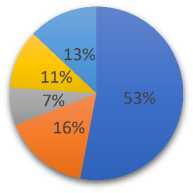
During the period from 2004 to 2019, the most popular research method was the survey (13%). The number of respondents ranged from 68 to 593. Observation and database analysis methods were second in popularity (7%), followed by case study analysis and mixed quantitative and qualitative research methods (4%). Field research was used in 7% of all studies. It should be noted that desk-based research began to be conducted in 2019, as the empirical base had already been accumulated.
In the period from 2020 to 2023, the survey method was used in 24% of all studies. The number of respondents ranged from 697 to 3,053. Field research was used in only 2% of all studies. The following methods were also used to conduct research: conceptualization (9%), analysis of statistical indicators (7%), analytical review of scientific publications (4%), as well as other research methods that were “new” to the development of the creative economy and creative industries (Fig. 4).
Methods for conducting research on the development of creative economy and creative industries in the period from 2014 to 2023
-
■ Traditional methods ■ Mathematical methods ■ IT methods ■ Scientific methods ■ Others
Fig. 4. Research methods used in studies on the development of the creative economy and creative industries in the Arctic from 2004 to 2023 10
Among the traditional research methods, the following were used: a mixed method combining quantitative and qualitative research, interviews, conceptualization, reviews of scientific literature, observation and case studies.
Statistical and mathematical methods, including time series analysis, cross-correlation analysis, and production function models, also became popular.
Theoretical conclusions were drawn based on an analysis of data from the Federal State Statistics Service (Rosstat), ratings from “Profil” and “RIA Rating” (2018), analytical notes on materials from the European Neighborhood and Partnership Instrument (ENPI) KolArctic 2007–2013 (2019), and statistics from the All-Russian Population Census (2022).
