
Accounting and analysis of inventory in a transport company
Journal: Economics and Business: Theory and Practice @economyandbusiness
Article in issue: 12 (130), 2025.
Free access
The paper examines theoretical aspects of inventory, including its nature and accounting practice. Inventory is a crucial asset in the production cycle, supporting the formation of finished goods and future sales. A practical analysis of inventory use is conducted using a structural division of Russian Railways Company as an example. The study enables to identify specific issues in terms of inventory management within a transportation company and propose measures to improve inventory turnover including reduction in inventory costs.
Similar articles in the section Business management, administration. Commercial organization

Short address: https://sciup.org/170212512
IDS: 170212512 | DOI: 10.24412/2411-0450-2025-12-323-330
Учет и анализ материально-технических запасов в транспортной компании
В данной статье рассматриваются теоретические аспекты запасов, включая их сущность и практику учета. Запасы являются важным активом в производственном цикле, обеспечивая формирование готовой продукции и последующую реализацию. Проведен практический анализ использования запасов на примере структурного подразделения ОАО «РЖД». Исследование позволило диагностировать специфические проблемы управления запасами в транспортной компании и предложить меры по повышению оборачиваемости и снижению затрат на их содержание.
Text of the scientific article Accounting and analysis of inventory in a transport company
Production inventories are a key element of the current assets of virtually any business entity, ensuring the continuity of the production process and the organization’s overall operations. To assess inventory efficiency, their consumption over a period has to be analyzed. It is also required to identify the patterns and to monitor the impact of internal and external factors.
The implementation of new federal standards in Russia necessitates the accounting and analysis of production inventories. Therefore, the study of production inventory accounting and analysis is a prerequisite for the efficient operation of any company.
To study this issue, the following aim is set: to examine the accounting system and inventory analysis methodology in a structural division of JSC Russian Railways. To achieve the research aim, the following tasks are to be solved:
-
- to reveal theoretical aspects of inventory accounting;
-
- to provide a general description of the activities of a structural division of JSC Russian Railways;
-
- to analyze the use of inventory in a structural division of JSC Russian Railways;
-
- To discuss the measures taken at JSC Russian Railways to improve the inventory management system and optimize their levels.
Thus, the object of the study is the West-Siberian Directorate for Traction Rolling Stock Repair (a subsidiary of JSC Russian Railways) and the subject of the research involves inventories in a structural division of JSC Russian Railways.
The theoretical and methodological basis relies on regulatory accounting documents related to the research topic.
In the domestic economic literature, the concept of inventories has been studied by Alekseev S.B., Bekmuratov A.T., Savitskaya G.V., Shcherbakov V.V. and other researchers. Regulatory documents on accounting practice also provide the definition of this notion (see Table 1).
In our research we adhere to the definition given by S.B. Alekseev.
Moreover, the analysis of regulatory accounting documents, in particular the Federal Accounting Standard FSBU 5/2019 N 180n, allowed us to identify the items inherent to inventories (see Fig. 1).
Table 1. Sources and definitions of the notion ‘
|
Sources |
Definitions |
|
S.B. Alekseev [1] |
Production inventories are the items of labour that are intended to ensure the continuity of the construction production process, but have not yet been included in the production process. |
|
V.V. Shcherbakov [2] |
Inventories are property assets used both in the production process and for managerial purposes. |
|
G.V. Savitskaya [3] |
Inventory is the result of labour invested in them at the earlier stages of production, e.g. in the process of mining operations. |
|
FSBU 5/2019 [4] |
Inventories are assets that are consumed or sold as part of the normal operating cycle of an entity, or that are used for a period of no more than 12 months. |
|
IFRS 2 [5] |
Inventories are assets that are held for sale in the ordinary course of business; in the process of production for such sale; or in the form of raw materials or supplies to be consumed in the production or services provision. |
|
KUP 6 [6] |
Inventories are assets intended for subsequent use as raw materials, supplies, etc. in the production of products intended for sale (performance of work, provision of services); raw materials, basic and auxiliary materials, fuel, purchased semi-finished products and components, spare parts, reusable materials, special clothing, etc.; sales (including finished products, goods); subsequent use for the management needs of JSC Russian Railways. |

Raw materials, materials, fuel, spare parts, components, purchased semi-finished products
Goods acquired from others and intended for sale in the ordinary
course of the co
’s activities
Finished goods intended for sale in the ordinary course of a company’s activities
Tools, inventory, special clothing, special equipment, containers and other similar
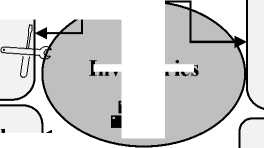
Finished goods, goods transferred to other persons due to the sale before the recognition of revenue from their sale
Inventories
Work in progress


Real estate assets acquired or created for sale in the ordinary course of an organization’s activities
Intellectual property acquired or created (in the process of creation) for sale in the ordinary cours an organization’s activities
Fig. 1. Classification of the company’s inventories
The comparison of the inventory classification according to FSBU 5/2019 with the inventories internal classification of JSC Russian Railways, approved by the company’s accounting policy and compliant with the standard’s requirements, enables to reveal the items attributed to specifics of the railway transport. The classification is presented in Fig. 2.
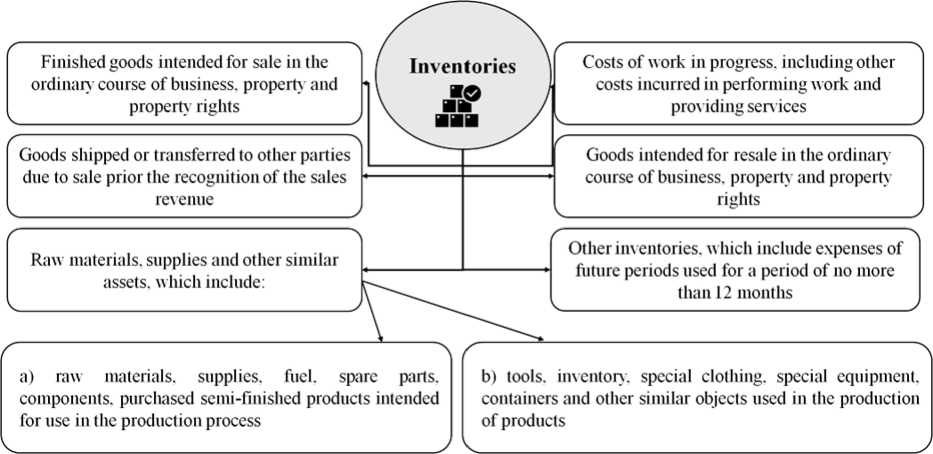
Fig. 2. Classification of inventories in JSC Russian Railways
Thus, the accounting policy of JSC Russian Railways complements the general inventory classification [7].
The legislative and regulatory framework used for maintaining accounting and tax records of inventories is governed by the documents, divided into several levels.
Level One – Legislative Acts:
-
- Federal Law N 402-FL of December 6, 2011, “On Accounting” [8];
-
- Tax Code of the Russian Federation, Part 2, dated August 5, 2000, No. 117-FZ, Article
254 [9].
Level Two – Regulatory Documents:
-
- Federal Accounting Standard FSBU 5/2019 “Inventories” [4];
-
- Federal Accounting Standard FSBU 28/2023 “Inventory” [10];
-
- Federal Accounting Standard FSBU 27/2021 “Documents and Document Flow in Accounting” [11];
-
- International Financial Reporting Standard (IAS) 2 “Inventories” [5].
Level Three – Methodological recommendations :
-
- Order of the Ministry of Industry and Trade of the Russian Federation dated March 1, 2013 N 252 “On approval of natural loss standards for food products in the sphere of trade and public catering” [12];
-
- Order of the Ministry of Finance of the Russian Federation dated October 31, 2000 N 94n (as amended on November 8, 2010) “On approval of the Chart of Accounts for accounting of the financial and economic activities of organizations and the Instructions for its application” [13];
-
- Order of the Ministry of Finance of Russia dated July 29, 1998 N 34n (amended on April 11, 2018) “On approval of the Regulation on accounting and financial reporting in the Russian Federation” [14];
-
- Order of the Ministry of Finance of the Russian Federation dated December 9, 2016, N 231n (amended on June 22, 2020) “On Approval of the Instructions on the Procedure for Accounting and Storing Precious Metals, Precious Stones, and Products Made Therefrom, and Reporting on Their Production, Use, and Circulation” [15].
Level Four – Local acts:
-
- Accounting Policy of JSC Russian Railways [7];
-
- Corporate Accounting Principle “Accounting for Inventories” (KUP 6/2016) [6];
-
- Methodological Guidelines for the Inventory of Assets, Liabilities, and Capital of JSC Russian Railways, approved by the Order of JSC Russian Railways [16].
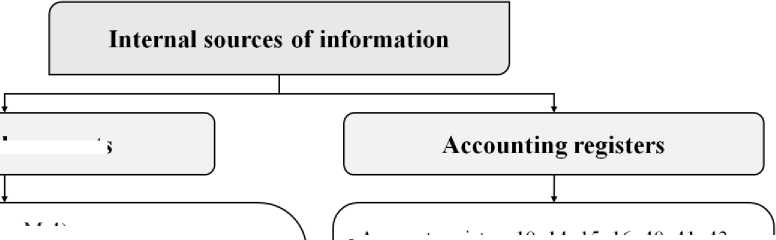
In order to account for inventories, the common internal sources of information are used (See Fig. 3)
Primary documents
-
- Receipt order (standardized form M-4);
-
- Consignment note (standardized form No. TORG-12);
-
- Materials acceptance certificate (standardized form M-7);
-
- Limit and withdrawal card (standardized form M-8);
-
- Requisition note (standardized form M-11);
-
- Material release note (standardized form M-15);
-
- Warehouse account card (standardized form M-17)
-
- Inventory list of inventory items (form No. INV-3);
-
- Reconciliation statements;
-
- Inventory results report (form 0504835).
-Account registers 10, 14, 15. 16, 40. 41. 43;
-
- Trial balance sheet;
-
- Ledger of material assets (OKUD 0504042);
-Accounting (financial) statements.
-
Fig. 3. Internal sources of information for inventory accounting
This structure guarantees the reliability of inventory accounting, ensuring accurate reflection of their presence and movement.
This study examines a specific balance unit, the West Siberian Directorate for the Repair of Traction Rolling Stock, which is a branch of Russian Railways Holding. The choice of this object is justified by the fact that the inventory accounting in this structual devision clearly determines the economic efficiency of the company, in general, and repair process and reliability of the traction rolling stock, in particular. As a result, this forms the basis for uninterrupted and safe railway traffic. Figure 4 shows the place of the West Siberian Directorate for the Repair of Traction Rolling Stock in the the Holding’s organizational structure.
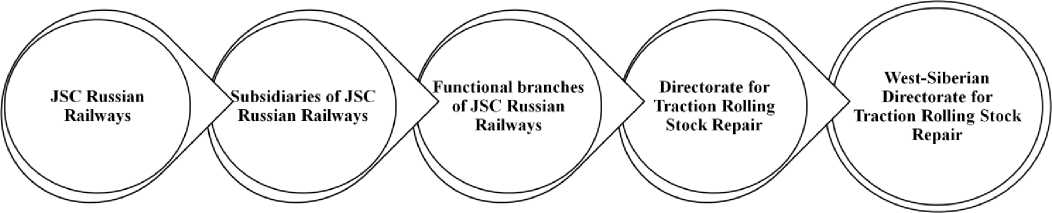
Fig. 4. Organizational structure of West Siberian Directorate for Traction Rolling Stock Repair
The Traction Rolling Stock Repair Directorate provides a comprehensive range of services including maintenance, repair, software updating, modernization of safety devices, train radio communication, audio and video recording, and testing of safety devices and resource-saving systems installed on traction, special self-propelled, and multiple unit rolling stock of JSC Russian
Railways, as well as those of third-party organizations [17].
In the analyzed period, the company held inventories that had no opening or closing balance. This may indicate that these inventories were fully depleted during each year or may indicate a shortage of these inventories. These inventories are presented in Table 2.
Table 2. Inventory turnover for 2021-2023
|
Name |
Value of the indicator, rub. |
||
|
2021 |
2022 |
2023 |
|
|
Other Fuel |
23,591.77 |
39,096.66 |
85,255.00 |
|
Containers and Packaging Materials |
- |
1,360.00 |
- |
|
Diesel Fuel (Tank) |
32,106.80 |
- |
- |
|
New Spare Parts for Passenger Car Repair |
145,940.82 |
20,231.53 |
24,724.30 |
|
Other Spare Parts Requiring Repair |
34,177,336.76 |
50,635,676.30 |
51.840,378.36 |
|
Other Spare Parts Suitable for Reuse |
37,068,620.53 |
54,015,100.55 |
56,854,293.69 |
|
New Construction Materials |
2,245.97 |
19,332.00 |
- |
|
Purchased Semi-Finished Products, Components, Structures, and Parts |
1,138,288.38 |
1,760,378.91 |
2,070,143.06 |
|
Waste, Waste Paper |
5,520.00 |
1,540.00 |
4,248.00 |
|
Ferrous Scrap Metal Emissions |
23,091.70 |
5,169.84 |
2,058.72 |
|
Non-Ferrous Scrap Metal Emissions |
19,773.94 |
5,235.45 |
7,261.83 |
|
Finished Products, Scrap Metal Standards |
39,160.59 |
10,405.29 |
10,091.32 |
|
Other Monetary Documents |
30,000.00 |
- |
- |
|
Total |
72,705,677.26 |
106,513,526.53 |
110,898,454.28 |
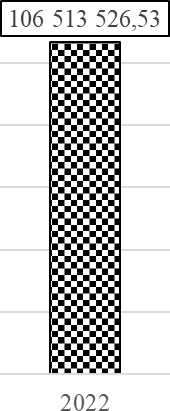
Based on the data presented in Table 2, we can trace the dynamics of inventories turnover (See
Fig. 5).
120 000 000,00
100 000 000,00
80 000 000,00
60 000 000,00
40 000 000,00
20 000 000,00
0,00
72 705 677,26
■:■:■:■:■:
И
ПО 898 454,28
Year
Fig. 5. Dynamics of inventories turnover in West Siberian Directorate for Traction Rolling Stock Repair
The figures in Table 2 and Fig. 5 enable to draw the following conclusions. Throughout the analyzed period, a trend toward increasing total inventory turnover was observed. In 2021, total inventory turnover amounted to 72,705,677 rubles; in 2022, it increased by 33,807,849 rubles to 106,513,526 rubles. In 2023, inventory turnover reached 110,898,454 rubles, an increase of 4,384,926 rubles. An increase in inventory turnover may indicate increased inventory utilization or increased production volumes.
Table 3. Inflow and outflow of inventories for 2021-2023
|
Name |
Value of the indicator, rub. |
||
|
2021 |
2022 |
2023 |
|
|
Inflow |
151,557,382.89 |
180,003,339.39 |
222,703,638.14 |
|
Outflow |
153,259,991.88 |
182,954,173.75 |
223,297,049.40 |
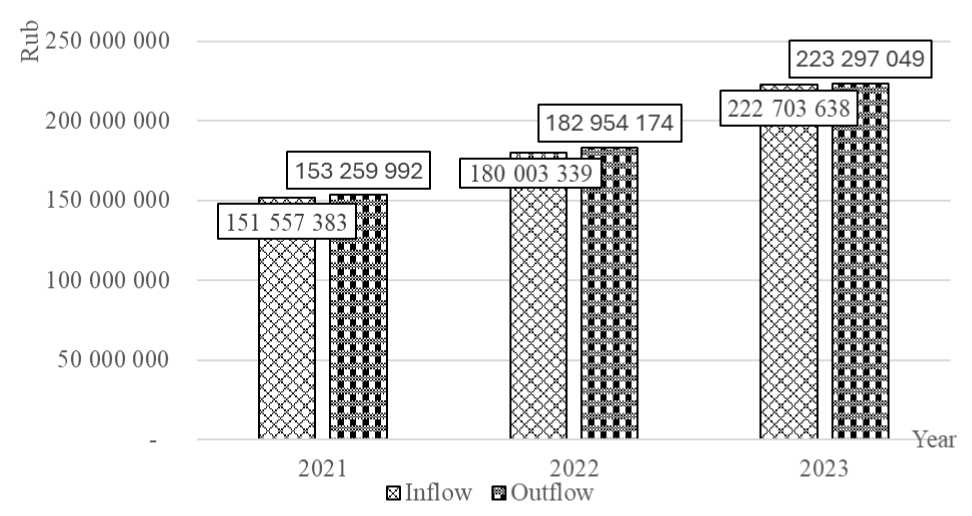
Fig. 6. Inflow and outflow of inventories in 2021–2023
The data in Table 3 and Fig. 6 prove that a trend toward the growth in inflow and outflow of material inventories is observed, which may indicate an increase in production capacity or an increase in repair work.
To improve the inventory management system and optimize its levels, JSC Russian Railways has implemented the following measures:
-
- optimization of procurement volumes as part of the budget campaign due to utilization of low-turnover inventory held in the warehouses of structural divisions;
-
- a plan for the sale of reusable materials has been developed and approved, which is particularly important for enterprises of the Central Directorate for the Repair of Traction Rolling Stock;
-
- amendments to regulatory documents governing the procedure for standardizing inventory at JSC Russian Railways have been approved;
-
- amendments to budget forms for inventory and procurement have been developed, and tasks to automate their completion have been implemented;
-
- reporting has been improved to identify low-turnover inventory.
Based on the conducted analysis in the study, a general conclusion can be made. The implementation of a set of measures at Russian Railways has led to the systematic optimization of inventory management. The dynamics of key indicators including inventory turnover indicate the optimization of inventory levels and increased utilization in the Directorate and in the holding company as a whole. This result is reflected in a reduction in costs associated with inventory storage. It is necessary to underline that the successful experience of JSC Russian Railways has a practical value and can be adapted in other companies operating in the transportation market, taking into account industry specifics.
