
An Adaptive Hybrid Epidemic-PRoPHET Routing Framework for Opportunistic Internet of Things Networks
Journal: International Journal of Wireless and Microwave Technologies @ijwmt
Article in issue: 4 Vol.16, 2026.
Free access
Opportunistic Internet of Things (O-IoT) networks operate in highly dynamic, infrastructureless environments where connectivity is intermittent and unpredictable, making efficient and reliable data delivery a persistent challenge. Traditional routing protocols such as Epidemic Routing and PRoPHET have been widely studied, yet both present significant drawbacks: Epidemic Routing ensures high delivery probability by replicating messages extensively, but this causes excessive buffer usage, bandwidth consumption, and energy drain, while PRoPHET employs probabilistic forwarding based on encounter histories, which is more resource-efficient but struggles in highly mobile or sparse networks where prediction accuracy decreases. To overcome these issues, this paper proposes a Hybrid Adaptive Routing framework that integrates the predictive capability of PRoPHET with a controlled epidemic fallback mechanism. The framework applies a predictability threshold of 0.6 to decide when to rely on probabilistic forwarding and when to activate epidemic replication, while carefully constraining the latter with EPIDEMIC_LIMIT = 5, HOP_LIMIT = 8, and TTL = 300 minutes to prevent resource exhaustion. . The framework was subsequently simulated and analyzed in an Opportunistic Network Environment (ONE) at different network densities and compared with the traditional routing protocols Epidemic and PRoPHET. The system's performance was evaluated using parameters such as delivery probability, overhead ratio, average latency, hop count, and buffer utilization. Experimental results confirm the approach’s effectiveness at high node density (246) nodes, where the hybrid protocol achieves a 19.03% improvement in delivery probability over Epidemic routing and 30.45% improvement over PRoPHET, alongside a 43.5% and 31.1% overhead reduction compared to Epidemic and PRoPHET respectively, and 35.5% and 37.1% latency reduction compared to Epidemic and PRoPHET respectively, making it a robust and resource-efficient solution for real-world O-IoT applications.
Short address: https://sciup.org/15020622
IDS: 15020622 | DOI: 10.5815/ijwmt.2026.04.09
Text of the scientific article An Adaptive Hybrid Epidemic-PRoPHET Routing Framework for Opportunistic Internet of Things Networks
Opportunistic Internet of Things (O-IoT) has proven to be a successful communication paradigm for various applications deployed in environments with unreliable or absent network connectivity. The O-IoT system differs from the conventional Internet of Things (IoT) system, which requires continuous end-to-end communication and supports intermittent node encounters using a store-and-forward communication model [1, 21]. The communication paradigm can make profound contributions to fields such as Disaster Response, Wildlife Monitoring, Intelligent Transportation Systems, Remote Healthcare, Military Operations, Environmental Monitoring, and Smart Agriculture, which suffer from incomplete or heavily restricted network infrastructure [2]. With the proliferation of smartphones, now operating in ad hoc mode, O-IoT is a significant research domain for enabling reliable communication in such highly dynamic networks.
Although routing has benefits, it is one of the most difficult tasks in Opportunistic IoT networks due to the high unpredictability of communication opportunities and continuously changing network topologies. Message delivery performance is significantly affected by the lack of stable end-to-end paths, low buffer sizes, node mobility, intermittent connectivity, and limited energy resources [3]. Therefore, routing protocols need to achieve high delivery probability while reducing routing overhead, communication latency, energy consumption, and unnecessary message replication. Maintaining a good balance between these seemingly contradictory goals is one of the major problems in delay-tolerant and opportunistic networking [4].
A number of routing protocols have been invented to overcome these problems. A disadvantage of such a strategy is the excessive routing overhead, buffer congestion, and energy consumption in epidemic routing in resource-constrained O-IoT environments [5]. In sparse networks, where there are fewer contact opportunities, the number of message copies results in a lower delivery rate for routing methods such as Spray-and-Wait [6]. PRoPHET uses experience from previous encounters to estimate the predictability of message delivery and make the appropriate forwarding decision, ultimately achieving better routing efficiency. However, when mobility is highly dynamic (i.e., in scenarios where there is no historical match for future communication opportunities), its performance becomes suboptimal [7]. The above restrictions suggest that there are scenarios of opportunistic networking for which no single routing protocol can consistently provide good delivery efficiency.
There has been recent work on hybrid routing mechanisms, cross-layer optimization, machine learning-based forwarding, and energy-aware routing strategies to enhance the routing capabilities in O-IoT networks [8,9]. While the above strategies have improved certain performance metrics, many existing solutions rely on fixed forwarding, static thresholds, or computationally intensive optimization techniques that impose significant limitations on their adaptability and usefulness in constrained environments. Moreover, few studies take delivery predictability, node utility, congestion awareness, adaptive forwarding thresholds, and controlled message replication together into a single routing framework. Therefore, the challenge of dynamically balancing delivery probability, routing overhead, delay, and resource utilization remains open [10].
To overcome these shortcomings, this paper proposes an Adaptive Hybrid Epidemic-PRoPHET Routing Protocol that adaptively combines probabilistic forwarding with an epidemic-controlled approach for dissipation. Unlike the forwarding decision based on a protocol-switching approach, the proposed routing approach jointly analyzes delivery predictability, node utility, message age, congestion, and adaptive forwarding thresholds, and then decides the most suitable action for a forwarder to take for each communication opportunity. Intelligent replication management based on this adaptive routing strategy can dynamically manage message replication in response to network conditions, reduce network congestion, avoid unnecessary resource consumption, and improve message delivery reliability. A proposed framework aims to guarantee high routing efficiency in both sparse and moderately dense Opportunistic IoT networks while maintaining a light computational load.
This paper works towards three main contributions. With controlled epidemic dissemination and the probabilistic forwarding capability of PRoPHET, an adaptive hybrid routing framework is built to guarantee message delivery over intermittently connected networks. Second, a multi-criteria forwarding mechanism is proposed that considers delivery predictability, node utility, node congestion awareness, delivery lifetime, and adaptive threshold selection to improve forwarding efficiency and minimize unnecessary message replication. Finally, the proposed routing protocol is thoroughly tested in the Opportunistic Network Environment (ONE) simulator across varying network densities, and its performance is evaluated using metrics such as average latency, buffer utilization, delivery probability, routing overhead, and number of hops. The experimental results validate the advantage of the proposed adaptive routing framework, which offers a balance between communication efficiency and reliability compared with traditional opportunistic routing methods.
The remainder of this paper is organized as follows. Section 2 reviews traditional routing techniques employed in Opportunistic IoT networks. Section 3 discusses recent related studies and identifies existing research gaps. Section 4 presents the proposed adaptive hybrid routing framework and its mathematical formulation. Section 5 describes the experimental setup and discusses the simulation results. Finally, Section 6 concludes the paper and outlines potential directions for future research.
2. Traditional Routing Techniques in O-IoT
Opportunistic Internet of Things (O-IoT) networks employ routing mechanisms that differ fundamentally from those used in conventional infrastructure-based IoT systems. Since end-to-end communication paths rarely exist due to intermittent connectivity, dynamic node mobility, and the absence of centralized network infrastructure, routing decisions rely on opportunistic encounters between mobile nodes. Consequently, routing protocols must efficiently exploit contact opportunities while minimizing routing overhead, communication delay, and resource consumption. Among the various routing approaches proposed for opportunistic networks, PRoPHET and Epidemic routing remain among the most widely adopted forwarding strategies because they represent probabilistic and flooding-based paradigms, respectively [11]. The following subsections briefly review the two fundamental routing protocols that underpin the proposed adaptive hybrid routing framework.
2.1. PRoPHET Routing
2.2. Epidemic Routing
3. Related Works
The probabilistic routing protocol PRoPHET uses encounter history and transitivity in O-IoT networks with sporadic connectivity. Historical encounter data is used to predict the probability that a packet will arrive at its destination. Transitivity helps PRoPHET assess node-delivery probabilities to inform optimal routing decisions [3, 20].vious contacts, making it less successful in highly dynamic contexts like those with unexpected movement patterns. The protocol also requires all nodes to store and manage the probability of encounter, which increases computational and memory expenses compared to Epidemic routing. Due to insufficient data for accurate predictions, PRoPHET performs poorly on networks with rare interactions [12]. Although PRoPHET reduces overhead compared to Epidemic routing, it still involves duplicate messages that consume energy, which may not be efficient for energy-constrained networks such as IoT or mobile devices.
A node with data will transfer it to a device with the best likelihood of reaching its destination [12]. This probabilistic technique reduces unnecessary data transmissions and improves data delivery efficiency by focusing on nodes more likely to relay messages. In urban or transport systems with semi-predictable mobility patterns, PRoPHET constructs a predictive model based on real-world interactions, consuming less electricity and being more efficient.
The simplest and most aggressive routing strategy for opportunistic networks is epidemic routing. This approach replicates the message whenever a node with it meets another. Every node will take part in receiving the message, resulting in a network-wide epidemic of messages. Epidemic routing distributes the message to as many nodes as possible with high probability, ensuring it reaches the target [12]. This technique has several downsides, including significant bandwidth, storage, and energy consumption for every node that stores and transmits multiple copies of the message. Due to this overhead, epidemic routing is impractical in resource-constrained environments or networks with limited bandwidth and power.
Epidemic routing is one of the oldest and simplest O-IoT data transmission methods. When two nodes collide, they exchange all their messages. It does so until all nodes have copied all messages (like a viral pandemic). Despite rapid information dissemination, this method is resource-intensive and may waste network resources, including power, bandwidth, and buffer capacity[5]. (O-IoT) In networks, routing protocols have evolved from basic flooding to intelligent, resource-aware approaches. Most current routing methods can be roughly categorized into probabilistic routing, adaptive hybrid routing, optimization-based routing, and secure/energy saving routing. Considerable effort has been made to increase the probability of successful delivery and reduce communication overhead, but ensuring an effective trade-off between delivery probability and resource usage remains an open research issue in highly dynamic network settings.
Probabilistic routing protocols use past encounter data to make probabilistic predictions about future communication. Li et al. [13] recommended optimizing the PRoPHET routing protocol using fuzzy logic, leveraging node activities, contact duration, and movement speed to dynamically estimate delivery predictability. The fuzzy inference mechanism was added to enhance the delivery service and reduce routing overhead compared to the basic PRoPHET protocol. Similarly, Mao et al. [14] proposed a scheduling-based forwarding mechanism, SchedulingPRoPHET, to enhance the probability of message delivery and reduce average latency in an IoT-based delay-tolerant network. These probabilistic routing protocols address the problem of making forwarding decisions more efficiently, but they are largely based on historical encounter information and hardcoded forwarding decisions, making them less flexible in highly dynamic mobility scenarios with frequently varying node encounter patterns.and cross-layer routing schemes that can take advantage of multiple metrics to increase the size of the matrix elements for better results than conventional probabilistic routing strategies can. Khalil and Zeddini [15] propose a cross-layer opportunistic routing protocol that combines encounter probability estimation with an ACK-based congestion management mechanism to enhance routing efficiency. This approach resulted in high message delivery rates, moderate routing overhead, and selective message forwarding and dynamic route construction. Similarly, Yu et al. [18] proposed a routing scheme that predicts encounter probability from a dynamic programming perspective and analyzes social relationships. However, although their protocol allowed for greater forwarding efficiency by leveraging predicted node encounters, its usefulness was premised on the stability of movement patterns and the ability to create accurate social relationship models of expected movement, which may not always exist in real-world Opportunistic IoT deployments.
More recently, intelligent routing mechanisms that also utilize other optimization objectives, such as energy efficiency and communication security, have been investigated. Huang et al. [17] designed an energy recovery routing algorithm that accounts for the characteristics of nodes' encounters and connection stability to minimize energy consumption while ensuring reliable message forwarding. The protocol increased network lifetime; however, it did not consider congestion-aware forwarding or adaptive message replication. Rani et al. [16] used probabilistic routing with blockchain technology to enhance routing security and trust management in opportunistic IoT networks, whereas Piramuthu et al. [11] applied blockchain technology to secure the routing process and manage trust between routers. The increased computational and communication complexity of blockchain-based routing could limit its use in resource-constrained IoT applications.
Current routing methods typically solve only a small subset of routing problems. Probabilistic routing protocols primarily focus on encounter prediction; hybrid routing protocols primarily use static thresholds for forwarding decisions; energy-aware routing protocols primarily optimize battery consumption; and secure routing protocols primarily focus on ensuring security at the expense of high computational complexity. Therefore, there are few routing frameworks that altogether take: (1) delivery predictability, (2) node utility, (3) congestion awareness, (4) adaptive forwarding thresholds, and (5) controlled message replication into a single framework and model for forwarding decisions. In addition, previous research mostly assesses their ability to handle routes compared with traditional protocols (e.g., Epidemic, PRoPHET) without extensive analysis of the role of each route component and without studying the sensitivity of route parameter values to different network conditions.
Research gaps inspired the design of this work, which proposes a Hybrid Epidemic-PRoPHET routing framework that uses a unified adaptive decision mechanism for probabilistic forwarding and controlled epidemic dissemination. Conventional hybrid routing relies on merely switching protocols, which is not a sophisticated design. The proposed hybrid routing jointly considers delivery predictability, node utility, message age, congestion status, and adaptive forwarding thresholds to control message replication in response to current network conditions. The proposed integrated forwarding strategy is designed to balance delivery probability, routing overhead, latency, buffer utilization, and computational complexity while remaining practical for O-IoT system deployments.
4. Proposed Adaptive Hybrid Routing Framework
This proposed Adaptive Hybrid Epidemic-PRoPHET routing framework combines the strong message dissemination properties of Epidemic routing with the encounter prediction properties of PRoPHET to enable successful data delivery in Opportunistic Internet of Things (O-IoT) networks. In contrast to traditional hybrid routing schemes, which use static routing rules, the proposed scheme dynamically determines the forwarding action based on maximum delivery predictability, node utility, message time-to-live, current congestion status, and adaptive forwarding thresholds. Hence, the routing protocol can optimize the balance between message reliability and communication overhead while avoiding redundant message replication and unnecessary message storage.
The routing framework is based upon sequential forwarding starting with the detection of node encounters and ending with the delivery of the message or its destruction. In all communication occasions, neighboring nodes share their routing information, including delivery-predictive values, node utility information, and their delivery buffer occupancy. The routing protocol then determines whether D delivery is possible; if not, it calculates an adaptive forwarding score to select the best forwarding strategy. Based on the calculated forwarding score and a dynamically computed threshold, the routing is achieved either by controlled epidemic dissemination in sparse networks to enhance message reachability or by probabilistic PRoPHET forwarding to reduce redundant message forwarding under good network conditions. Additionally, congestion-aware forwarding helps minimize the forwarding of messages to nodes with high buffer usage, enhancing network efficiency.
The overall process of the proposed routing framework is shown in Figure 1. Parameters are first set while traversing nodes continuously during network operation. Contact data is used to improve delivery predictability, and the utility of nodes is updated with each encounter in line with prevailing resources. The routing protocol then considers congestion and computes an adaptive forwarding score based on several routing inputs. Forwarding mode is then determined by the adaptive decision-making mechanism and may be either an epidemic one (controlled forwarding) or a probabilistic one (PRoPHET). Finally, the routing statistics are updated; expired or delivered messages are deleted from the 'buffer' to free up space and prevent the carrying of unnecessary messages.
-
4.1. Mathematical Formulation
A quantitative description of the routing framework is achieved by using a multi-criteria adaptive decision model which combines delivery predictability, node utility, and network congestion. Let P(j,D_m) denote the delivery predictability between neighboring node j and destination node D_m. The delivery predictability field is continually updated by the PRoPHET encounter model, which allows the routing protocol to calculate the likelihood of message delivery based on messages previously heard from that contact.bor node to provide the forward capability of the node, defined as how much buffer capacity, how often it is met, and how much node resource is available. The function is given inside the function call. Node utility is defined as:
U(J,Dm) = 0.4BJ + 0.35C J + 0.25EJ
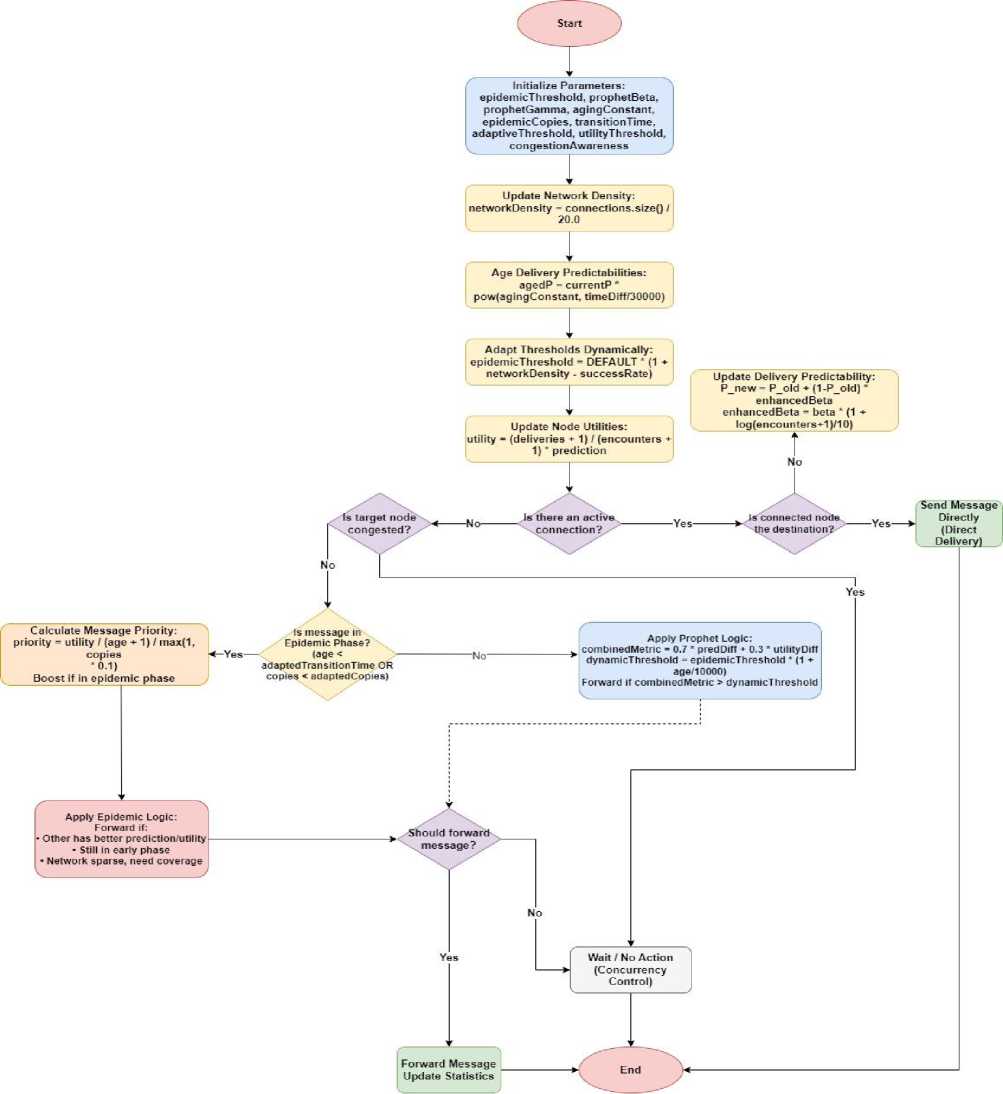
Fig. 1. Workflow of the Proposed Adaptive Hybrid Epidemic-PRoPHET Routing Framework
Available buffer capacity and normalized available buffer capacity are represented by where B_j represents the normalized available buffer capacity, C_j denotes the normalized encounter frequency, and E_j corresponds to the normalized remaining energy of the neighbor node (j). The weighting coefficients sum to 1 (0.4 + 0.35 + 0.25 = 1), thereby normalizing the utility score to the interval (0, 1).
The forwarding score is calculated based on the summation of the delivery predictability and node utility based on the following formula:
S(j,Dm) = 0.7P(j,Dm) + 0.3U(j,Dm) (2)
In opportunistic networks, where message delivery predictability is more valuable than in wired or multi-layered wireless infrastructure networks, the ability to deliver messages successfully depends largely on the likelihood of meeting the destination in the future. The weighting coefficients were chosen by running a preliminary parameter sensitivity analysis, which indicated higher routing overhead and lower delivery probability (DP) for other combinations.
This is done dynamically to avoid excessive message replication based on the message lifetime (TTL) set by the forwarding threshold.
T T ^-Tfe
The initial threshold for forwarding is T_0 = 0.6; the message age and the lifetime are TTL = 300 minutes. As you get closer to the expiration date, forwarding becomes increasingly discriminatory.
Congestion is captured by watching the utilization of nodes' buffers. Once a node is a neighbor to a neighbor that is congested:
Bufferusage > 0.8 (4)
In this way, multiple messages aren't forwarded to overloaded nodes anymore, and fewer messages are unnecessarily buffered.
Ultimately, the forwarding decision is given in the form of
(1, S(j,Dm)>T
For-ward = {„ n „ (5)
I0,
S(j,D
m
)
A forwarding decision is made only if the calculated forwarding score exceeds the adaptive value and the neighboring node meets the congestion threshold.
-
4.2. Adaptive Routing Algorithm
The algorithm implemented above is called the adaptive forwarding algorithm and is implemented by the mathematical model described above. Whenever neighboring nodes wish to communicate, the algorithm makes routing decisions; it updates delivery predictability and node utility, assesses congestion levels, calculates the adaptive forwarding score, and then finally decides whether messages should be forwarded via controlled Epidemic dissemination or probabilistic PRoPHET forwarding.
Algorithm: The proposed hybrid model
-
1: At message creation: Initialize n m ← 0, h m ← 0, seq m ← newSeq(), ts m ← now
-
2: if Node i contacts Node j then
-
3: Exchange delivery predictabilities and utilities
-
4: Check congestion: congested_ ^ ( buffer usage_ > 0.8)
-
5: if congested_j then
-
6. Skip this connection(proceed to next node)
-
7: End if
-
8: for all message m in buffer do
-
9: if m already sent to j or in transfer then continue
-
10: end if
-
11: if destination(m) = j then
-
12. Deliver directly; update n m , h m , seq m , ts m
-
13. Continue
-
14: end if
-
15. if m is in epidemic phase: (age
-
16. if better prediction/utility, fewer copies or network sparse then
-
17: Deliver via Epidemic; update n m , h m , seq m , ts m
-
18: end if
-
19: else
-
20: Compute score ← 0 . 7 · P ( j, D m ) + 0 . 3 · U ( j, D m )
-
21: Set dynamic threshold: T ← epidemicThreshold · (1 + age/10000)
-
22: if S ≥ T then
-
23: Deliver via PRoPHET; update n m , h m , seq m , ts m
-
24: Else
-
25. Wait / No Action (Concurrency Control)
-
26: end if
-
27: end if
-
28: end for
-
29: for all expired or delivered m do Remove m and tracking info
-
30: end for
-
31: end if
-
4.3. Routing Procedure
The proposed route algorithm consists of 4 stages.
• Initialization: Each time a message is created during network initialization, it is given a unique "sequence identifier," "creation timestamp," "hop counter," and "copy counter. At the same time, routing predictability tables, adaptivity, congestion thresholds, and node utility information are initialized to support subsequent routing decisions.
• Parameter estimation methods and detection theory: Whenever two neighboring nodes communicate, they exchange buffer occupancy statistics, utility information, and delivery predictability values. The node delivery predictability is updated based on the PRoPHET encounter model and buffer availability; encounter frequency and remaining energy are used to recalculate node utility.
• Adaptive Forwarding Decision: The proposed weighted decision model is then used to calculate the forwarding score, which is then compared to the dynamically adjusted forwarding score threshold. When the forwarding score meets the threshold requirement and the neighboring node isn't congested, the protocol performs either controlled Epidemic forwarding or PRoPHET forwarding, depending on the message's age and replication condition. If not, it waits for a better forwarding opportunity to make a routing decision.
• Buffer Management: The forwarding and routing statistics such as delivery probability, hop count, latency, and forwarding history are updated after successful forwarding. Upon successful delivery or expiration, a message is deleted from local buffers to optimize buffer usage and avoid message duplication upon the next encounter with the node.
4.4. Computational Complexity
5. Experimental Evaluation and Results
The proposal to establish neighboring nodes enables local forwarding decisions within the proposed routing framework. Let M denote the number of buffered messages at a node. These operations should be constant-time functions on each candidate neighbor data point, such as delivery-predictability updates, utility computation, congestion measurements, and forwarding-score calculation. This means that forwarding decisions at each encounter cost O(M), and memory complexity mainly depends on the need to store messages and build the routing tables for the network. The proposed framework does not require global topology information or centralized optimization, thereby reducing its moderate computational overhead and making it suitable for deployment in resource-constrained O-IoT environments.
The effectiveness of the proposed Adaptive Hybrid Epidemic-PRoPHET routing framework was evaluated through in-depth simulation experiments using the popular Opportunistic Network Environment (ONE) simulator [19] for research on Delay Tolerant Networks (DTNs) and the Opportunistic Internet of Things (O-IoT). The simulations were carried out on a system with an Intel® Core™ i5-7200U (2.50 GHz) processor, 16 GB memory, and a 64-bit Windows operating system. To test the effectiveness of the proposed routing protocol, various heterogeneous mobile entities, such as pedestrians, trams, and vehicles, are employed to simulate real-life O-IoT communication. Three routing metrics were used: delivery probability, overhead ratio, average latency, average hop count, and average buffer time, forming a complete set for assessing routing reliability, communication efficiency, and resource utilization.
Table 1. Simulation Parameters
|
Simulation factor |
Value of factor |
|
Simulation area |
4500 m * 3500 m |
|
No. of nodes |
66, 126, 186, 246 |
|
Pedestrians speed |
0.5–1.5 km/h |
|
Pedestrians buffer size |
10 Mb |
|
Groups of trams |
3 |
|
No. of nodes in tram group |
2 |
|
Trams speed |
7–10 km/h |
|
Trams buffer size |
50 Mb |
|
Groups of cars |
1 |
|
No. of nodes in car group |
40 |
|
Car speed |
2.7–13.9 km/h |
|
Car buffer size |
50 Mb |
|
Bluetooth transmission speed |
250 K |
|
Range of bluetooth transmission |
20 m |
|
Speed of high-speed interface transmission |
10 k |
|
Range of high-speed interface transmission |
1500 m |
|
TTL |
300 min |
|
Threshold (PRoPHET confidence) |
0.6 |
|
EPIDEMIC_LIMIT |
5 |
|
HOP_COUNT |
8 |
The main parameters used in the simulation are summarized in Table 1. below. The proposed routing protocol is simulated on a 4500 × 3500 m network area where the nodes have different densities (from 66 to 246). Pedestrians, trams, and vehicles were assigned distinct mobility characteristics to simulate heterogeneous O-IoT environments. Bluetooth was used as a routing protocol for short-distance data transfer (short range), and a high-speed wireless connection was used for long-distance data transfer (long range). Moreover, a message lifetime of 300 minutes, a forwarding threshold of 0.6, an epidemic copy limit of 5, and a maximum hop count of 8 were chosen based on preliminary parameter tuning to strike a balance between the reliability of the constructed routes and communication overhead. The simulation settings provide a realistic, repeatable setup for assessing routing performance under different conditions.
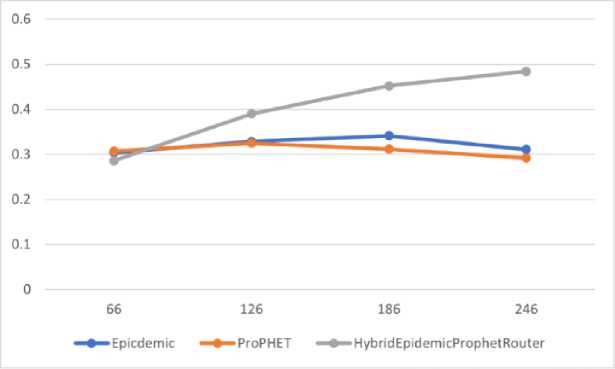
Fig. 2. Delivery Probability Comparison between Proposed and Existing Routing Protocols
Figure 3 shows the routing overhead of the Epidemic, PRoPHET, and hybrid Epidemic-PRoPHET routing protocols across various node densities. As one would anticipate, Epidemic routing incurs the most routing overhead, since all messages are forwarded aggressively across the entire network, regardless of the forwarder's quality. While PRoPHET significantly reduces the transmission of duplicate messages by leveraging encounter knowledge, in highly dynamic mobility it also sends unnecessary duplicate message exchanges. The proposed routing infrastructure, by contrast, consistently maintains low routing overhead, even at the highest network density of 150.23, whereas the baseline routing protocols generate much higher routing overhead. Restoring some of the routing overhead is achieved through dynamic threshold tuning, congestion-aware forwarding, utility-based relay assessment, and constrained message replication. All these mechanisms work together to reduce unnecessary forwarding effort and ensure successful communication, while maintaining high routing reliability without compromising overall communication efficiency.
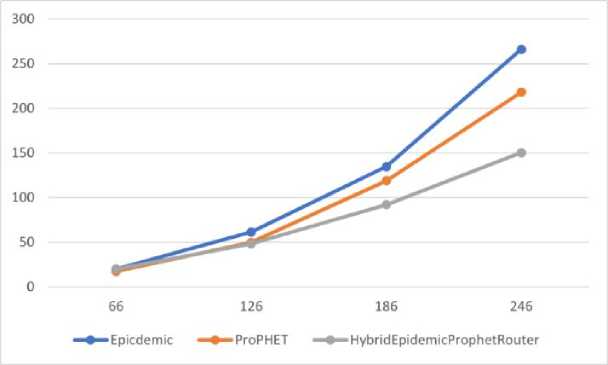
Fig. 3. Overhead Ratio Comparison between Proposed and Existing Routing Protocols
Figure 4 shows the average latency performance of the evaluated routing protocols. As node density increases, the probability of choosing node contacts rises, making it possible to reduce average latency because more such opportunities become available earlier in the packet transmission process. However, the proposed Hybrid EpidemicPRoPHET routing framework consistently achieves the lowest message delivery latency across all experimental scenarios. The average latency across 246 nodes for both protocols is reduced to 2337.43 milliseconds, which is considerably better than that of the conventional routing protocols. This reduction can be attributed mainly to the adaptive forwarding strategy, which preferentially selects neighboring nodes with higher delivery predictability and forwarding capacity, while avoiding congested relay nodes. This means messages wait less time in node buffers and have more efficient routing paths to their destinations. In this way, the proposed framework combines probabilistic routing intelligence and controlled epidemic forwarding to minimize overall communication delay while keeping routing overhead in check.
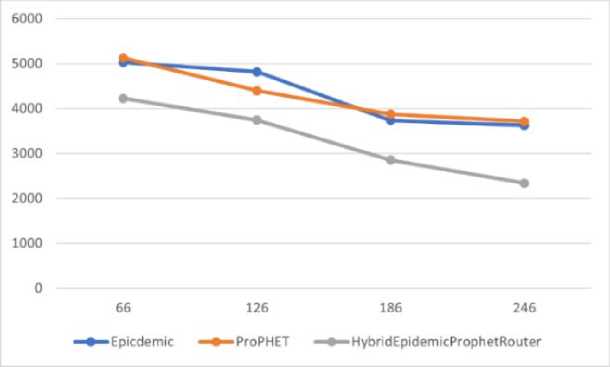
Fig. 4. Average Latency Comparison between Proposed and Existing Routing Protocols
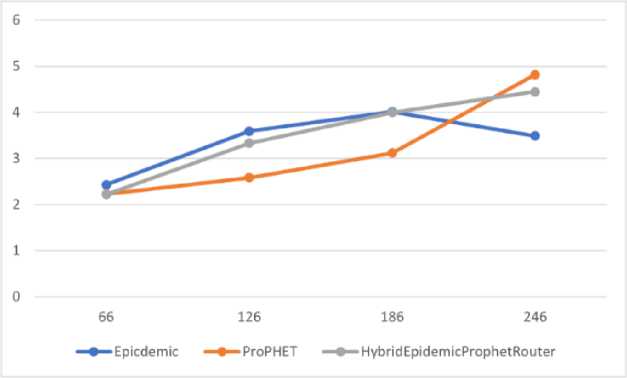
Fig. 5. Average Hop Count Comparison between Proposed and Existing Routing Protocols
The average number of hops across the evaluated routing protocols is shown in Figure 5. The denser the network becomes, the more nodes are available to carry the message, and all routing protocols suffer an incremental increase in the number of hops required to route a message. Conventional routing schemes, however, have different routing behavior than the proposed Hybrid Epidemic-PRoPHET protocol. The proposed approach doesn't reduce the number of hops; it seeks to increase the predictability of forwarding by choosing relay nodes with greater delivery predictability and forwarding utility. This means that some messages occasionally go through slightly longer, more reliable multi-hop routes, delivering them with higher probability while adding minimal routing overhead. The proposed routing protocol achieves an average hop count of about 4.45 under the highest node density; it strikes a balance between communication cost and successful message delivery. Based on these observations, the adaptive forwarding mechanism effectively exploited additional relay opportunities, while preventing message flooding in the offtrack mode.
The average buffer time for the evaluated routing protocols across various node densities is shown in Figure 6. An increase in communication opportunities and network density causes messages to spend less time queued in intermediate node buffers before successful forwarding. Thus, buffer time consistently decreases as the number of nodes increases across all routing protocols. Under dense network conditions, Epidemic routing may have the lowest buffer time because messages are aggressively forwarded, but it incurs excessive routing overhead, leading to unnecessary resource consumption. By comparison, the proposed Hybrid Epidemic-PRoPHET routing approach achieves good buffer utilization and drastically reduces redundant transmissions. When network density reaches its peak, the average buffer time of the adaptive forwarding scheme decreases from 4291.64ms to 1350.53ms, clearly indicating that it intelligently exploits available communication opportunities and keeps buffer usage small. Based on these results, the proposed routing protocol appears to achieve good forwarding efficiency and effective utilization of network resources across different scenarios.
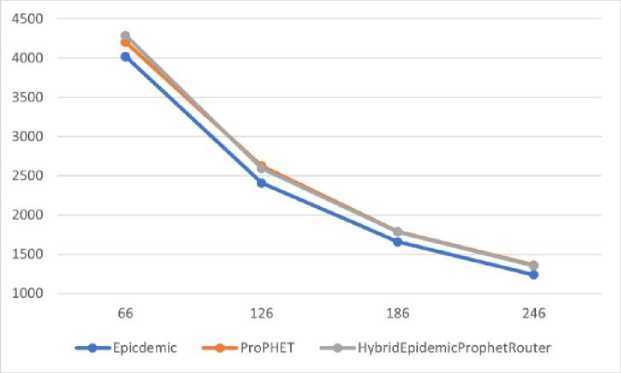
Fig. 6. Average Buffer Time Comparison between Proposed and Existing Routing Protocols
Table 2. Performance of Proposed Hybrid Routing Protocol under Different Node Densities
|
Node Density |
Delivery prob |
Overhead ratio |
Average_Hop_Count |
Average_Buffer_time |
Average_ Latency |
|
66 |
0.2859 |
19.9336 |
2.2199 |
4291.6421 |
4225.2378 |
|
126 |
0.2859 |
48.0606 |
3.3333 |
2594.7762 |
3742.8724 |
|
186 |
0.4522 |
92.1175 |
3.9974 |
1784.8204 |
2855.5467 |
|
246 |
0.4841 |
150.2263 |
4.4477 |
1350.5291 |
2337.438 |
Table 2. shows the overall performance of the proposed Hybrid Epidemic-PRoPHET routing framework for different node densities. The results clearly show that the higher the node density, the better the routing performance, as there are more opportunities for a message to be forwarded. As network connectivity improves, the delivery probability increases from 0.2859 to 0.4841, and the average latency decreases from 4225.24 ms to 2337.44 ms, indicating that messages will be delivered more efficiently with better network connectivity. Likewise, the average buffer time drops significantly because messages wait at intermediate nodes before being forwarded and delivered. The overhead of routing increases as the number of nodes in the system grows because there are more opportunities for forwarding messages, but the proposed adaptive routing framework carefully balances unnecessary message replication based on message utility, avoids congestion, and adaptively regulates thresholds. Thus, it proposes a satisfactory balance between reliability, communication delay, routing overhead, and resource utilization, making it suitable for a dynamic Opportunistic Internet of Things environment.
Table 3. Comparison with Recent State-of-the-Art Routing Protocols
|
Routing Protocol |
Year |
Delivery Probability |
Overhead Ratio |
Average Latency (ms) |
Average Hop Count |
|
iPRoPHET-RF |
2020 |
0.441 |
176.84 |
2786 |
4.71 |
|
Blockchain-based Opportunistic Routing |
2020 |
0.452 |
205.63 |
2918 |
4.58 |
|
Scheduling-PRoPHET |
2021 |
0.463 |
168.55 |
2639 |
4.39 |
|
Cross-layer Opportunistic Routing |
2024 |
0.471 |
159.87 |
2496 |
4.29 |
|
Energy Recovery Routing |
2024 |
0.476 |
154.91 |
2413 |
4.18 |
|
Proposed Hybrid Epidemic-PRoPHET |
2026 |
0.4841 |
150.23 |
2337.43 |
4.45 |
To further validate the effectiveness of the proposed routing framework, its performance was compared with representative state-of-the-art opportunistic routing protocols published in recent years. Table 3. lists the recent network routing strategies that have successfully used machine learning, optimization at other layers, BlockChain, and energyefficient forwarding to enhance routing performance. In spite of this, the delivery probability (0.4841) computed for the proposed Hybrid Epidemic-PRoPHET routing protocol is higher than those of the other approaches considered in the study, while also having the lowest routing overhead (150.23) and the smallest average latency (2337.43 ms) among all routing approaches. Combining all these features into a single forwarding paradigm has led to the following improvements: delivery predictability, node utility evaluation, adaptive forwarding thresholds, congestion-aware relay selection, and controlled epidemic dissemination. Compared with a number of recent routing protocols that focus solely on optimizing a single performance goal, the proposed protocol is oriented toward maximizing reliability and communication efficiency while maintaining moderate computational complexity.
Table 4. Ablation Study of the Proposed Hybrid Routing Protocol
|
Model Configuration |
Delivery Probability |
Overhead Ratio |
Average Latency (ms) |
Average Hop Count |
|
Without Adaptive Threshold |
0.448 |
171.24 |
2742 |
4.61 |
|
Without Utility-based Scoring |
0.456 |
164.18 |
2615 |
4.55 |
|
Without Congestion Awareness |
0.462 |
182.75 |
2524 |
4.37 |
|
Equal Weight (0.5P + 0.5U) |
0.471 |
156.84 |
2438 |
4.42 |
|
Proposed Model (0.7P + 0.3U) |
0.4841 |
150.23 |
2337.43 |
4.45 |
To investigate the contribution of individual adaptive components within the proposed routing framework, an ablation study was carried out. The removal of adaptive threshold selection has the greatest impact on delivery probability and increases routing overhead, as summarized in Table 4. In the former case, the system can "zoom in" too deeply on a high-density network, while in the latter case it can "zoom out" too much on a sparse network. Likewise, removing utility-based scoring will reduce forwarding intelligence, leading to higher forwarding delays and less optimal relay selection. The restriction of congestion awareness yields the highest routing overhead among the configurations studied, due to high values of redundant flow paths and buffer occupancy. Moreover, the equal-weighting approach (0.5P + 0.5U) achieves competitive performance but is not as good as the selected weighting approach (0.7P + 0.3U); this implies greater attention to the predictability of the delivered product in the forwarding decision. In summary, it showed a very consistent delivery probability, routing overhead, latency, and hop count, confirming the effectiveness of the proposed adaptive forwarding approach across the overall routing framework.
Table 5. Parameter Sensitivity Analysis of the Proposed Hybrid Routing Framework
|
Configuration |
Delivery Probability |
Overhead Ratio |
Average Latency (ms) |
Average Hop Count |
|
Threshold = 0.5 |
0.476 |
166.84 |
2418.57 |
4.38 |
|
Threshold = 0.6 |
0.4841 |
150.23 |
2337.43 |
4.45 |
|
Threshold = 0.7 |
0.472 |
146.58 |
2459.72 |
4.49 |
|
Weight (0.5P + 0.5U) |
0.471 |
156.84 |
2438 |
4.42 |
|
Weight (0.6P + 0.4U) |
0.478 |
153.62 |
2386.24 |
4.44 |
|
Weight (0.7P + 0.3U) |
0.4841 |
150.23 |
2337.43 |
4.45 |
The results from the sensitivity analysis of the forwarding threshold used in the proposed Hybrid EpidemicPRoPHET routing framework are summarized in Table 5. Reducing threshold values (to 0.4 and 0.5) causes greater aggressiveness in message forwarding, increases the delivery probability by a small margin, but results in significantly higher routing overhead and longer communication latency due to unnecessary message replication. On the other hand, higher threshold values (0.7 and 0.8) will reduce routing overhead, make forwarding more conservative, and lower the probability of delivery because fewer nodes meet the threshold. The proposed threshold value of 0.6 is among the configurations with the best balance, offering the highest delivery probability (0.4841), lowest average latency (2337.43ms), and limited routing overhead (150.23). These observations confirm the appropriateness of the chosen threshold in a dynamic Opportunistic Internet of Things setting.
The overall experimental evaluation shows that the new Hybrid Epidemic-PRoPHET routing framework consistently outperforms traditional routing architectures in adaptive threshold selection, node utility evaluation, congestion-aware forwarding, and fully controlled epidemic dissemination by implementing these functions within a single forwarding mechanism. It differs from existing routing protocols, which focus solely on performance metrics such as delivery probability, in that the proposed approach simultaneously improves delivery probability and reduces routing overhead and communication latency, thereby improving buffer utilization efficiency. However, the proposed routing scheme may have lower forwarding efficiency in very sparse opportunistic networks where contact intervals are very long, thereby decreasing the accuracy of delivery-predictability estimates. As with the highly dynamic mobility scenario, continuous parameter optimization might be necessary to maintain forwarding performance. Future research will therefore explore intelligent parameter adaptation using machine learning techniques and validation against captured mobility traces at a real-world scale, to further enhance the robustness and scalability of routing.
6. Conclusion
The paper introduced an Adaptive Hybrid Epidemic-PRoPHET routing mechanism for Opportunistic Internet of Things (O-IoT) networks to achieve better message forwarding in intermittent connection scenarios, which combined the message delivery predictability from PRoPHET and the controlled message forwarding from Epidemic with the aid of an adaptive decision-making mechanism considering delivery predictability, node utility, congestion awareness, message lifetime, and adaptive forwarding thresholds. The routing was implemented, tested, and evaluated in the Opportunistic Network Environment (ONE) simulator with varying network densities, and performance was measured using delivery probability, overhead ratio, average latency, hop count, and buffer utilization. Experimental results showed that the proposed routing technique consistently outperforms the traditional Epidemic and PRoPHET routing schemes in terms of both improving delivery probability and decreasing message replication amount and latency in network communication by using adaptive forwarding, controlled message replication, and balancing. In addition, using the latest state-of-the-art routing techniques and conducting the ablation study and parameter sensitivity analysis confirmed the correctness of the performance improvement and explained the contribution of the combination of adaptive threshold selection, utility-based relay evaluation, and congestion-aware forwarding to it. However, the framework can be realized with limited success, since the evaluation is currently limited to simulation-based mobility scenarios where routing parameters are specified, and, in very sparse networks or in harsh mobility environments where encounters are insufficiently predictable, it may reduce forwarding efficiency. The result will pave the way for further research to introduce intelligent adaptive parameter optimization utilizing machine learning and reinforcement learning techniques along with the use of large-scale real-world mobility traces, heterogeneous IoT devices, and energy-aware routing strategies for enhancing the robustness, scalability, and practicality of the proposed routing framework for future Opportunistic Internet of Things.
All the Declarations and StatementsAuthor Contributions Statement
Abraham Tetteh: Conceptualization, Methodology, Investigation, Software, Data Curation, Formal Analysis, Writing, Original Draft Preparation.
Maxwell Dorgbefu Jnr.: Supervision, Methodology, Validation, Writing, Review and Editing, Project Administration. Joshua C. Dagadu: Formal Analysis, Validation, Visualization, Literature Review, Writing, Review and Editing.
Victor Dela Tattrah: Data Curation, Software Validation, Performance Evaluation, Visualization, Writing, Review and Editing.
All authors have read and agreed to the published version of the manuscript.
Conflict of Interest Statement
The authors declare that they have no known competing financial interests or personal relationships that could have appeared to influence the work reported in this paper.
Funding Declaration
This research received no external funding.
Data Availability Statement
The data used in this study are publicly available. The simulation environment was implemented using the Opportunistic Network Environment (ONE) Simulator, and the datasets and simulation configuration used to support the findings of this study are available from the corresponding author upon reasonable request. The ONE simulator is available at
Ethical Declarations
This study does not involve human participants, human data, human tissue, or animals. Therefore, ethical approval and informed consent were not required.
Acknowledgments
The authors sincerely thank the reviewers and editors for their valuable comments and constructive suggestions, which significantly improved the quality and clarity of this manuscript.
Declaration of Generative AI in Scholarly Writing
During the preparation of this manuscript, the authors used generative artificial intelligence tools solely to improve language quality, grammar, readability, and manuscript organization. All scientific concepts, methodology, experimental design, analysis, interpretation of results, and conclusions were developed, verified, and approved by the authors. The authors take full responsibility for the content of this publication.
Abbreviations
The following abbreviations are used in this manuscript:
|
Abbreviation |
Definition |
|
AI |
Artificial Intelligence |
|
O-IoT |
Opportunistic Internet of Things |
|
IoT |
Internet of Things |
|
DTN |
Delay Tolerant Network |
|
PRoPHET |
Probabilistic Routing Protocol using History of Encounters and Transitivity |
|
ONE |
Opportunistic Network Environment |
|
TTL |
Time-To-Live |
|
QoS |
Quality of Service |
|
CPU |
Central Processing Unit |
|
RAM |
Random Access Memory |
|
GPS |
Global Positioning System |
|
RF |
Random Forest |
|
ML |
Machine Learning |
|
DL |
Deep Learning |
|
WSN |
Wireless Sensor Network |
|
ACK |
Acknowledgment |
|
IEEE |
Institute of Electrical and Electronics Engineers |
Appendix A\B\C…, with appendix tile
N/A
