
Analysis of hydration processes in concrete mixtures modified by the introduction of a nanomodifier by electromagnetic activation
Journal: Nanotechnologies in Construction: A Scientific Internet-Journal @nanobuild-en
Section: The results of the specialists’ and scientists’ researches
Article in issue: 4 Vol.18, 2026.
Free access
Introduction. Traditional Portland cement-based concretes are characterized by low flexural tensile strength and a tendency to crack formation. One of the promising ways to solve this problem is the use of carbon nanotubes, which act as crystallization centers and provide discrete reinforcement of the material at the nanoscale. The aim of the work is to experimentally confirm the effectiveness of using a nanomodifier based on CNT “Taunit-m” in the composition of fine-grained concrete. Materials and methods. M500D0 Portland cement was used as a binder, sand from the Pescovatsky quarry was used as a fine filler, and crushed stone of 5–20 mm fraction was used as a coarse filler. The complex additive included the superplasticizer “SP-3” and CNT “Taunit-M.” Nanotubes were introduced into a dry cement-sand mixture using a linear induction rotator liv-100, which provides homogenization and mechanochemical activation. The phase composition was studied using a Bruker d8 Advance diffractometer. Results and discussion. It was found that the maximum increase in strength was achieved with a CNT content of 0.005% of the cement weight: compressive strength increased by 29%, bending strength increased by 23% compared with the control composition. X-ray phase analysis data showed a 25% increase in the degree of hydration of the lithic phase, as well as accelerated formation of portlandite and ettringite. Non-destructive testing confirmed that by the 7th day of hardening, the increase in compressive strength was 25%, which indicates an intensification of structure formation. The effect is explained by the uniform distribution of CNTs and the mechanochemical activation of the surface of cement grains in LIV-100. Conclusion. The introduction of carbon nanotubes “Taunit-m” in combination with superplasticizer “sp-3” and the use of linear induction rotator liv-100 can significantly improve the strength characteristics of fine-grained concrete. The increase in strength correlates with an acceleration of hydration and a change in the phase composition of the cement stone. The optimal concentration of CNT is 0.005% by weight of cement.
Short address: https://sciup.org/142248519
IDS: 142248519 | DOI: 10.15828/2075-8545-2026-18-4-555-564
Text of the scientific article Analysis of hydration processes in concrete mixtures modified by the introduction of a nanomodifier by electromagnetic activation
Original article
Перфилов В.А., Ляшенко Д.А., Богданов А.И. Анализ гидратационных процессов бетонной смеси при введении наномодификатора методом электромагнитной активации. Нанотехнологии в строительстве. 2026;18(4):555–564. https://doi. org/10.15828/2075-8545-2026-18-4-555-564. – EDN: RJNEZX.
The main direction of research on the modification of concrete materials is to improve its physical and mechanical properties, in particular by purposefully modifying the structure of concrete. A relevant area is the development of concretes with increased strength characteristics by optimizing the composition through the use of various additives with a modifier, as well as reducing the amount of cement binder. At the same time, there are known studies of modifying the structure of concrete at both the micro and macro levels. The latter include the use of nano-additives such as nanosilicon, carbon materials of various modifications (astralenes, fullerenes, various modifications of carbon nanotubes), slag, etc. [1–4].
The researchers note that the introduction of nanomodifying additives makes it possible to influence the hydration processes of the binder through physical or chemical effects on a nanoscale scale [5–8].
Carbon nanomodifiers have differences in size and allotropic shape of nanoparticles with unique structures and properties.
Fullerenes are molecular compounds in the form of convex closed polyhedra (spheres or ellipsoids) consisting
Nanotechnologies in construction
Нанотехнологии в строительстве
2026; 18 (4): 555–564
Nanob
THE RESULTS OF THE SPECIALISTS’ AND SCIENTISTS’ RESEARCHES
of an even number of three-coordinated carbon atoms. The diameter of the molecule of such additives is about 0.7 nm, and the diameter of the inner cavity is about 0.5 nm [9].
Astralenes are multilayer polyhedral structures made of carbon atoms measuring 80–150 nm. They consist of large flat graphite faces connected by predominantly pentagonal edges. The faces contain 20–50 flat graphene sheets, the distance between which is about 0.34 nm. The average size of the flat faces is about 15 nm [10].
Carbon nanotubes are hollow nanoscopic cylinders produced by folding a flat hexagonal graphite grid. They can be single-walled or multi-walled (concentric tubes). The diameter of single—walled nanotubes is 1.1–1.4 nm, and that of multi-walled nanotubes is 2–20 nm. The length is from 2 to 4 microns. The ends of the tubes can be closed or open [11].
Many authors have studied the effect of various types of carbon nano-additives [12–15]. Based on the structure of such modifiers in relation to the modification of the hydration processes of cement stone, it can be concluded that hollow carbon nanotubes are the most optimal form. This is due to the fact that the additive acts as additional crystallization centers. Consequently, it is the hollow and elongated shape that provides a large area for neoplasms. This also provides a denser crystallization framework during the hardening of the binder, with the formation of basic cement stone minerals on both the outer and inner surfaces of the nanotubes.
In addition to the described structural features, carbon-containing additives exhibit exceptional physical and mechanical parameters, in particular, the tensile strength, which exceeds 60 gpa.
The known disadvantages of traditional Portland cement-based concretes are low flexural tensile strength and low deformation resistance, which provokes cracking. The onset of destruction in the concrete matrix usually occurs at the nanoscale. It is in the structure that microscopic defects begin to appear, which are able to expand and combine into larger ones under the influence of mechanical stress. Consequently, the effect on cracking processes in the nanoscale order is a promising method for increasing the strength of concrete materials.
According to [16], the introduction of carbon nanotubes into cement binders promotes the formation of crystallohydrate phases with increased density and strength by increasing the hydration capacity of the main minerals of cement stone. The introduction of carbon nanotubes as a discretely reinforcing component of concrete makes it possible to increase the strength characteristics of the material by up to 50% in comparison with traditional compositions.
According to data from [17–19], the optimal CNT CONTENT in the composition of concrete is in the range of 0.001–0.01% by weight of cement, depending on the type of nano-additive. With such a low content, nanotubes serve as crystallization centers. The nuclei of elongated crystals form on their surface. As they grow, the crystals intertwine and form a spatial framework that ensures the integrity of the cement matrix.
Despite the positive effect of such additives on the properties of concrete compositions, there are still no specific technological compositions. The lack of standardized formulations and developed technological solutions hinders the possibility of industrial application of nanomodifiers as additives for concrete.
Thus, for the practical application of nanomodifiers in concrete, it is necessary to develop and study experimental formulations, as well as optimize the preparation technology.
MATERIALS AND METHODS
Portland cement M500D0 “Eurocement” (LLC “Eurocement Group”) was used as a binder. The sand of the «Pescovatsky» quarry (Partner Group LLC) was used as a fine aggregate. Crushed stone of a fraction of 5–20 mm, supplied by “Kalininsky” Crushed Stone Plant LLC, was used in the work.
The modification of the cement system was carried out by the joint introduction of additives: superplasticizer “SP-3” (produced by «Polyplast Novomoskovsk» LLC) and carbon nanotubes of the brand «Taunit-m» (produced by «NanoTechCenter» LLC, Tambov). Morphologically, these nanotubes are hollow cylinders formed by one or more concentric layers of carbon atoms.
Experimental data were obtained using modern methods and devices related to both destructive and non-de-structive testing. The strength properties of concrete were evaluated in accordance with GOST 10180. The strength gain intensity was assessed using a non-destructive testing method using an ultrasonic device Pulsar 1.2 (Interpribor, Russia), in accordance with GOST 17624.
To identify the structural changes caused by the introduction of additives, X-ray diffraction analysis on a Bruker d8 Advance diffractometer was used. The phase composition of the cement stone was determined by decoding the obtained diffractograms using the diffrac. EVA software package (version 4.2.1) with the licensed database Powder diffraction file-2 (The International Center for diffraction data). The survey was conducted in CuKa radiation (wavelength λ = 1.54060 Å) with the following parameters: tube voltage 40 kV, anode current 25 ma, exposure 0.7 s per point, scanning step 0.02°.
An ABC-100 linear induction rotator was used to achieve uniform distribution of the low concentration of the nanoscale component in the volume of the dry cement-sand mixture. The principle of operation of the equipment is to convert electromagnetic action into mechanical energy aimed at the movement of grinding me-
Nanotechnologies in construction
Нанотехнологии в строительстве
2026; 18 (4): 555–564
Nanob
THE RESULTS OF THE SPECIALISTS’ AND SCIENTISTS’ RESEARCHES
dia. The cavity of the working chamber is located in the center of the electromagnetic field. Ferromagnetic bodies with a diameter of 0.5–1 mm and a length of 5–10 mm were used as grinding media. The optimal amount of grinding media, which is 10% of the mass of the treated mixture, has been estimated [20, 21].
RESULTS AND DISCUSSIONS
The effect of a complex additive (SP-3 + nanotubes “Taunit-m”) on the strength of fine-grained concrete has been evaluated. The nanomodifier was introduced using a linear induction rotator LIR-100. Beam samples with dimensions of 40×40×160 mm was used for research. Control samples were made, as well as 10 formulations, where the concentration of CNTs varied from 0.001% to 0.01% by weight of cement.
Cement, sand, superplasticizer in loose form, nanoadditive in the amount of 0.01–0.001% by weight of cement, and ferromagnetic grinding media were loaded into the LIR chamber. The mixture is processed in a rotating layer for two minutes. This ensured activation and mixing. The ratio of cement and sand in the mixture was 1:3, v/c = 0.38, the concentration of plasticizer was 0.5% by weight of cement.
The change in compressive strength was tracked over a time interval from 1 to 28 days, inclusive, using a nondestructive ultrasound diagnostic technique on the Pulsar 1.2 device. The maximum values of compressive strength and bending strength after reaching the age of 28 days were fixed using hydraulic presses. The results of the data obtained are presented in Table 1.
A comparative analysis of the strength characteristics of concrete samples modified with nanotubes using a lin- ear induction rotator liv-100 revealed the positive effect of the introduction of such additives on the strength of the material. Thus, for composition No. 2, an increase in the resistance to compression and stretching during bending was recorded by 24% and 12%, respectively, relative to the controlled compositions. For composition No. 11, these indicators reached 29% (compression) and 23% (bending), which is the maximum increase among all the options considered.
The non-destructive testing data obtained using the Pulsar 1.2 ultrasonic device indicates an uneven intensity of strength gain over time. In the first 24 hours of hardening, the difference between the modified and reference samples did not exceed an average of 7%. However, by the seventh day, a significant discrepancy was observed: the increase in compressive strength reached 25%, which confirms the acceleration of structure formation under the action of the introduced additives.
Thus, the use of the investigated nanomodifying additive provides not only an increase in the maximum mechanical parameters of the hardened concrete, but also reduces the duration of the initial stage of solidification.
The revealed improvement in performance can be explained by two factors due to the use of LIR-100. On the one hand, using the vortex rotating layer mode makes it possible to achieve homogenization of the mixture at a level unattainable with other mixing methods, which is critically important when working with low concentrations of carbon nanotubes. On the other hand, a mechanochemical effect occurs during processing: repeated collisions of cement grains with ferromagnetic grinding media lead to activation of the binder surface, which additionally improves hydration processes.
Table 1. Strength indicators of fine-grained nanomodified concrete
|
No. |
Quantity CNT,% by weight of cement |
Ultimate strength, MPa |
|||||
|
1 day |
3 day |
7 day |
14 day |
28 day |
|||
|
R com |
R com |
R com |
R com |
R com |
R fold |
||
|
1 |
– |
14.6 |
24.8 |
41.2 |
42.8 |
45.3 |
6.1 |
|
2 |
0.001 |
17.6 |
31.8 |
51.9 |
55.3 |
59.2 |
6.5 |
|
3 |
0.002 |
16.1 |
30.1 |
51.2 |
56.9 |
59.7 |
7.0 |
|
4 |
0.003 |
15.8 |
33.9 |
55.7 |
60.3 |
61.3 |
7.0 |
|
5 |
0.004 |
20.0 |
34.2 |
56.3 |
60.6 |
62.8 |
6.5 |
|
6 |
0.005 |
19.7 |
35.8 |
56.4 |
59.4 |
62.3 |
7.0 |
|
7 |
0.006 |
19.4 |
35.8 |
55.4 |
58.6 |
61.5 |
7.3 |
|
8 |
0.007 |
18.4 |
31.2 |
54.2 |
58.8 |
62.1 |
7.1 |
|
9 |
0.008 |
20.6 |
37.3 |
57.8 |
61.2 |
62.6 |
7.5 |
|
10 |
0.009 |
21.0 |
34.3 |
56.8 |
61.1 |
63.3 |
7.5 |
|
11 |
0.01 |
19.0 |
34.8 |
55.3 |
60.2 |
63.9 |
7.5 |
Nanotechnologies in construction
Нанотехнологии в строительстве
2026; 18 (4): 555–564
Nanob
THE RESULTS OF THE SPECIALISTS’ AND SCIENTISTS’ RESEARCHES
The phase composition of the reference and nanomodified cement stone was analyzed by X-ray diffraction method. The cement hydration process was studied on samples aged 1, 3, 7, 14, and 28 days.
The degree of hydration is calculated according to the formula [22]:
Сг(Сз5) = (1-М-Ю0,%, where Iмод is the intensity of the diffraction maximum at d = 2.75 Å of the 3СаО·SiO2 (C3S) phase of the samples modified with additives at different curing times; I0 – is the intensity of the diffraction maximum at d = 2.75 Å of the 3СаО·SiO2 (C3S) phase of the initial cement.
According to previous studies, to assess changes in the intensity of cement hydration, samples with a CNT content of 0.001, 0.005, 0.01% by weight of cement and a control composition without the use of a nanomodifier were prepared. The data obtained are shown in Table 2 and Figure 1.
During the first seven days of hardening of the samples under normal conditions, the differences between the controlled composition without nanomodifier in terms of the rate of hydration processes turned out to be insignificant. The introduction of carbon nanotubes in an amount of 0.005% (sample No. 3) made it possible to achieve an increase in the degree of hydration of cement already at the initial stage of hardening by 7%. After 28 days of hardening, the degree of hydration of the lithic phase increased by more than 20% for all samples.
When identifying the phase composition of cement clinker, radiographs of minerals commonly present in its composition were taken as the standard. The most intense diffraction lines served as a guideline, while the permissible discrepancy between the experimental and reference values of the interplane distance d did not exceed ± 1%. The list of analyzed mineral phases included tricalcium silicate (3CaO·SiO2, marking C3S), dicalcium silicate (2CaO·SiO2, C2S), tricalcium aluminate (3CaO·Al2O3, C3A), chetyrehkantnyj alumothermic (4CaO·Al2O3·Fe2O3, C4AF) and portlandite Ca(OH)2.
In the experimentally obtained diffractogram, the maximum intensity is characterized by a reflex with a diffraction angle of 2θ = 32.54°, which corresponds
Table 2. Degree of cement hydration
|
No. |
CNT additive, % by weight of cement |
Degree of hydration |
||||
|
1 day |
3 day |
7 day |
14 day |
28 day |
||
|
1 |
– |
36.1 |
43.2 |
57.0 |
60.0 |
60.7 |
|
2 |
0.001 |
37.1 |
45.1 |
59.2 |
66.4 |
67.7 |
|
3 |
0.005 |
38.6 |
51.1 |
61.6 |
67.1 |
66.7 |
|
4 |
0.01 |
41.0 |
48.3 |
58.0 |
66.1 |
66.1 |
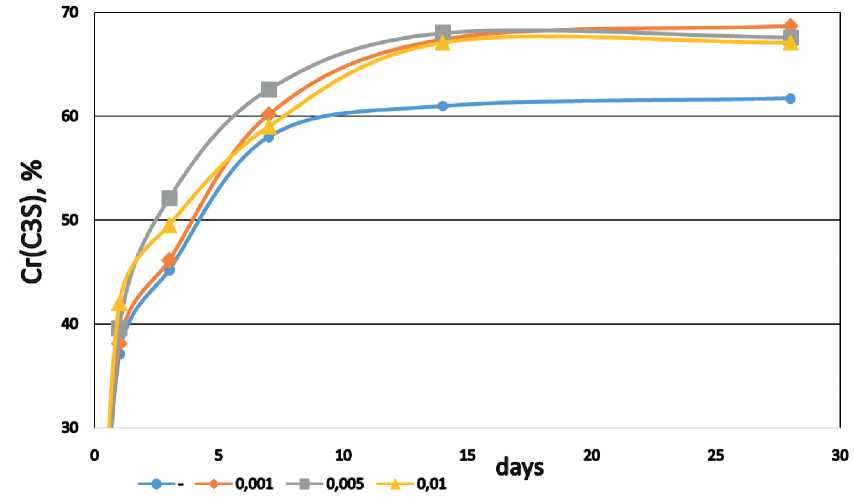
Fig. 1. Degree of cement hydration
Nanotechnologies in construction
Нанотехнологии в строительстве
2026; 18 (4): 555–564
Nanob
THE RESULTS OF THE SPECIALISTS’ AND SCIENTISTS’ RESEARCHES
to an interplane distance of d = 2.73 Å. This reflection belongs to the C₃S. phase. Comparison of all other tricalcium silicate lines with the reference radiograph revealed their complete identity, which provides convincing evidence of the presence of alite (c.s) as one of the dominant phases of cement clinker. The second most intense reflex was recorded at 2θ = 32.71° (d = 2.77 Å) and assigned to the C2S phase, since the alignment of the remaining lines of this connection also demonstrates good agreement with the reference data. The combination of reflexes with a lower intensity was identified as belonging to ettringite (C2A), tetracalcium alumino-ferrite (C4AF) and portlandite Ca(OH)2. Summarizing the above, the analyzed sample includes the following phases: 3CaO·SiO2, 2CaO·SiO23CaO·Al2O3, Ca(OH)2 and 4CaO·Al2O3·Fe2O3.
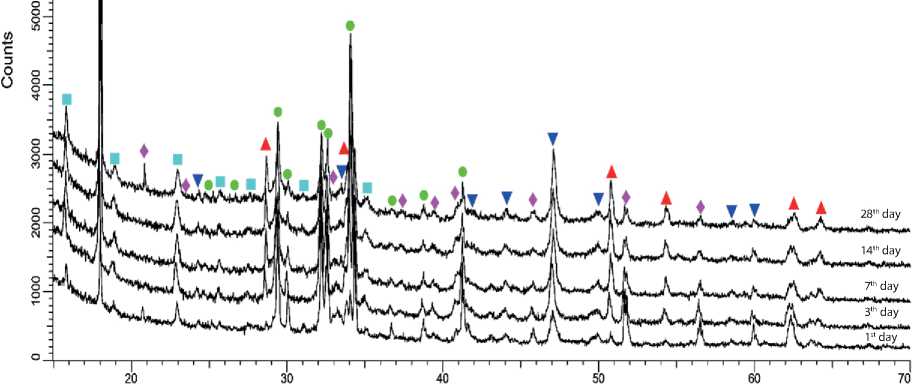
To assess the phase composition, diffractograms were obtained for cement binder (Fig. 2), for cement stone without nanomodifier (Fig. 3), as well as for cement stone with different concentrations of CNTs (Fig. 4, 5, 6). The data were obtained for different hardening periods.
The interpretation of the diffractogram shown in Figure 2 allowed us to establish that the dominant phases of the cement binder are two crystalline modifications of calcium silicates: tricalcium silicate (alite) Ca2(SiO74)O – Hatrurite (monoclinic syngony, PDF card 01-070-8632) and bicalcium silicate (belite) Ca2SiO4 – larnite (also monoclinic syngony, pdf card 01-070-0388). In addition to the compounds in the sample detected alumothermic calcium CaAl0,5Fe0,5O2,5 – Brownmillerite, crystallizing in the orthorhombic crystal system (card PDF 01`-072`8039) and hemihydrate gypsum CaSO4·0,5H2O – Bassanite (monoclinic crystal system, card PDF 01`-074`-2787). The quantitative assessment performed by the corundum number method showed that the total content of alite and belite in the investigated binder exceeds 80%, while the proportion of aluminoferrite is 7%, and semi—aqueous gypsum is about 10%.
Figures 3–6 show diffractograms of cement stone at different hardening times. Already on the first day, the composition of the sample changes noticeably, which confirms the onset of hydration. On diffractogram peaks appear corresponding to the portlandite Ca(OH)2 and ettringite Ca6Al2(SO4)3(OH)12·(H2O)26 (both compounds have a hexagonal structure, PDF cards 00 `-0444`-1481 and 01`-075`-7554). At the same time, the peaks of semi-aqueous gypsum CaSO4·0,5H2O. As the curing time increases, the quantitative ratio between the phase’s changes, while their qualitative composition remains constant: the content of the alito-belite component decreases, while the proportion of portlandite, ettringite and calcium alu-minoferrite increases. In absolute terms, the maximum increase is demonstrated by the portlandite phase. The introduction of nanomodifying additives further intensifies these quantitative shifts, which confirms the acceleration of cement hydration.
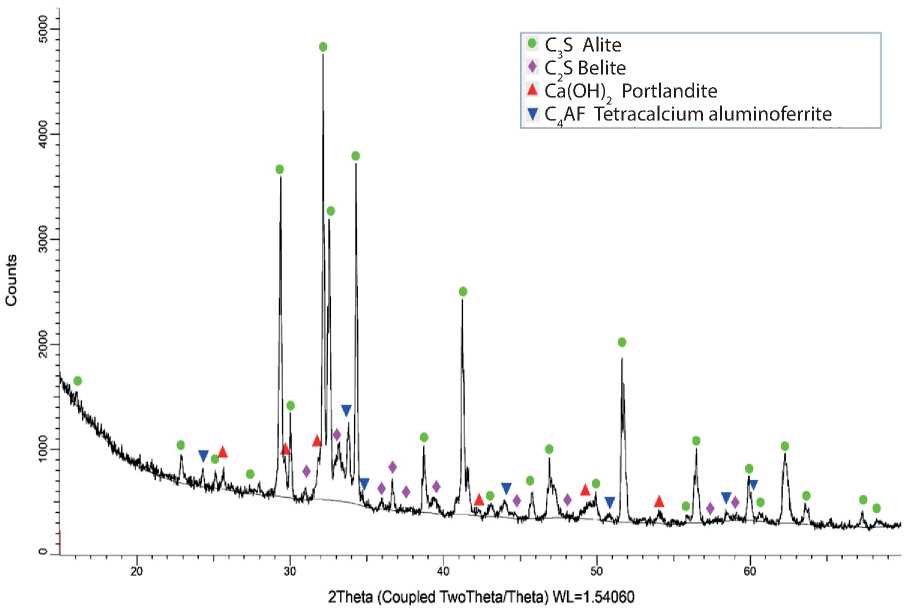
Fig. 2. Diffractogram of the initial cement binder
Nanotechnologies in construction
Нанотехнологии в строительстве
2026; 18 (4): 555–564
Nanob
THE RESULTS OF THE SPECIALISTS’ AND SCIENTISTS’ RESEARCHES
Thus, convincing evidence of the effect of carbon nanotubes on the degree of cement hydration has been obtained. The presence of nano-additives in the binder contributes to an increase in the strength characteristics of concrete. It has been experimentally established that in samples modified with CNT, starting from the first day of hardening, a higher degree of hydration is recorded compared with unmodified cement stone. The increase
28th day
C3S Alite
C2S Belite
Ca(OH)2 Portlandite
C 3 A Ettringite
C AF Tetracalcium aluminoferrite
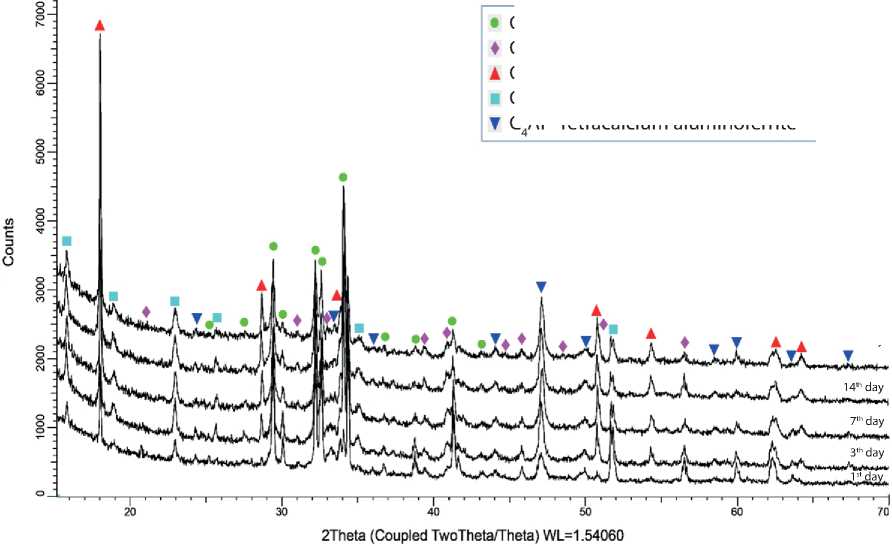
Fig. 3. Diffractograms of cement stone without nanomodifier at various hardening periods
C3S Alite
C2S Belite
Ca(OH)2 Portlandite
C 3 A Ettringite
C AF Tetracalcium aluminoferrite
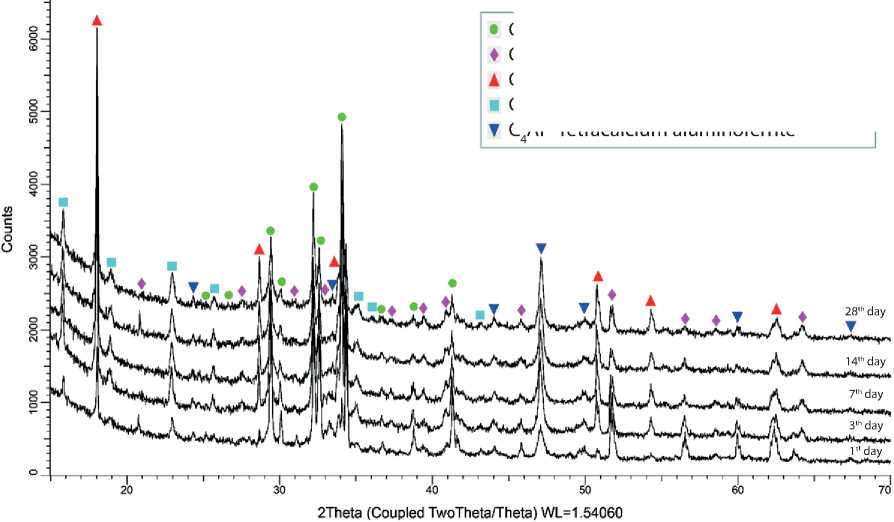
Fig. 4. Diffractograms of cement stone with a CNT of 0.001% at various hardening periods
Nanotechnologies in construction
Нанотехнологии в строительстве
2026; 18 (4): 555–564
Nanob
THE RESULTS OF THE SPECIALISTS’ AND SCIENTISTS’ RESEARCHES
C 3 S A l ite
C2S Belite
Ca(OH)2 Portlandite
C3A Ettringite
C AF Tetracalcium aluminoferrite
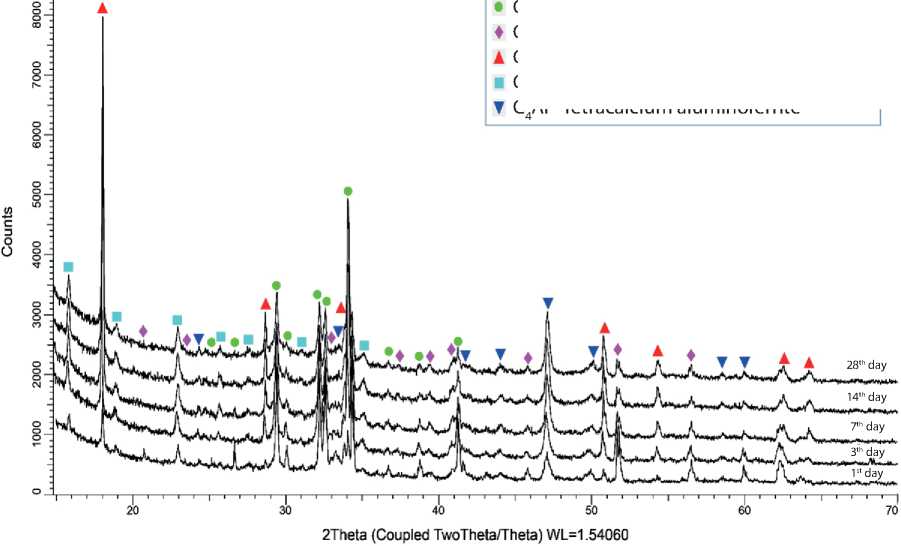
Fig. 5. Diffractograms of cement stone with a CNT of 0.005% at various hardening periods
-
• C3S Alite
-
♦ C32S Belite
A Ca(OH)2 Portlandite
-
■ C3A Ett2ringite
V C4AF Tetracalcium aluminoferrite
2Theta (Coupled TwoTheta/Theta) WL=1.54060
Fig. 6. Diffractograms of cement stone with a CNT of 0.01% at various hardening periods
Nanotechnologies in construction
Нанотехнологии в строительстве
2026; 18 (4): 555–564
Nanob
THE RESULTS OF THE SPECIALISTS’ AND SCIENTISTS’ RESEARCHES
in the degree of hydration of the lithic phase for all the studied compositions exceeded 20%, and the maximum value of this indicator (25%) was achieved with a carbon nanotube content of 0.005% by weight of cement. In addition, the phase analysis revealed a steady trend towards an increase in the content of portlandite in the modified samples relative to the controlled (unmodified) composition. The combination of the described quantitative changes in the phase composition of concrete leads to a compaction of particle packing in local areas that have undergone nanomodification. These structural changes, in turn, lead to an increase in the strength characteristics of the material with the introduction of CNTs (Table 1). The recorded increase in strength at the early stages of hardening of nanomodified concretes can also be explained by an increase in the degree of hydration and more intensive formation of mineral phases of cement clinker in the initial period.
CONCLUSION
The conducted experimental studies allow us to formulate the following main conclusions, combining the results of physico-mechanical tests and X-ray diffraction analysis data.
It has been established that the introduction of carbon nanotubes of the “Taunit-m” brand in combination with the SP-3 superplasticizer provides a significant increase in the strength characteristics of fine-grained concrete. When using a linear induction converter LIV-100 for the introduction of a nanomodifier, the minimum increase in compressive and flexural strength was 24% and 12%, respectively, while the maximum reached 29% and 23% relative to the reference composition.
X-ray diffractometry data showed that an increase in strength parameters directly correlates with an accelera- tion of hydration processes. Starting from the first day of hardening, a higher degree of hydration was recorded in the CNT-modified samples compared to unmodified cement stone. The increase in the degree of hydration of the lithic phase (C3S) for all the studied compositions exceeded 20%, reaching a maximum value of 25% with a CNT content of 0.005% by weight of cement.
A joint analysis of strength and structural data revealed a consistent pattern: an increase in the degree of hydration is accompanied by a proportional increase in concrete strength. In particular, for samples with a CNT content of 0.005%, both the maximum acceleration of hydration (an increase in the degree of hydration by 7% by the first day and more than 20% by the 28th day) and the most pronounced increase in strength characteristics (up to 29% for compressive strength and 23% for bending strength) were recorded.
X-ray phase analysis has confirmed that the introduction of carbon nanotubes intensifies the quantitative change in the phase composition of cement stone: a decrease in the content of the alito-belite component is accompanied by an accelerated increase in the proportion of portlandite, ettringite. It is these structural changes that underlie the compaction of particle packing in the nanomodification zones, which, in turn, provides an achievable increase in strength.
It has been established that the use of a linear induction rotator liv-100 allows not only to evenly distribute a small amount of CNTs over the volume of the mixture, but also creates a mechanochemical effect of activating the surface of cement grains. The consequence of this is an acceleration of hydration in the early stages of hardening, which is confirmed by non-destructive testing data (an increase in compressive strength by 7 days reached 25%) and diffractometric measurements (an increase in the degree of hydration of the lithic phase).
