
Analysis of the impact of the foundation reinforcement technology using vertical crushed stone columns on the freeze-thaw processes of permafrost soils in railway subgrade foundation
Journal: Nanotechnologies in Construction: A Scientific Internet-Journal @nanobuild-en
Section: System solutions for technological problems
Article in issue: 3 Vol.18, 2026.
Free access
Introduction. In regions characterized by permafrost soils, the construction of transport infrastructure facilities presents a complex yet critically important challenge: ensuring the stability and operational reliability of foundations for transport structures. The complexity of construction in cryolithozone regions is attributable to the difficulty in predicting the behavior of permafrost soils and assessing the impact of various natural factors and the constructed facility itself on their condition. Methods and Materials. In the development of transport infrastructure in regions characterized by the distribution of permafrost soils, a systematic approach to selecting constructive and technological solutions aimed at ensuring the operational reliability of foundations for transport structures is of critical importance. Key factors in the selection of such solutions include the forecasting of deformation processes in foundations and the development of measures for stabilization and thermal stabilization of soil conditions. The proposed constructive and technological solutions should not only exert a favorable influence on the physical and mechanical characteristics of the soil mass but also demonstrate economic feasibility. Results and Discussion. The article addresses the issues of ensuring the stability and operational reliability of the railway subgrade on a section of the Trans-Baikal Railway located within the permafrost soils distribution zone. The authors propose a constructive and technological solution (hereinafter referred to as CTS) involving the installation of vertical crushed stone columns for reinforcing foundation soils. This technology can be classified under nanotechnologies in construction, as its application contributes to the enhancement of the engineering properties of permafrost soils. A distinctive feature of the considered section is the presence of permafrost soils in the foundation of the railway embankment. Therefore, this study presents modeling of thermophysical processes in soils and evaluates the impact of the transport infrastructure facility-represented by the railway embankment-both with the application of the foundation reinforcement technology using vertical crushed stone columns in the cryolithozone and without this CTS, on a natural foundation. An analysis of the obtained results is provided. Conclusion. The results of the work demonstrate the feasibility of applying foundation soil reinforcement technology using vertical crushed stone columns in regions characterized by the distribution of permafrost soils.
Similar articles in the section Civil engineering of land transport. Railway engineering. Highway engineering



Short address: https://sciup.org/142248074
IDS: 142248074 | DOI: 10.15828/2075-8545-2026-18-3-417-432
Text of the scientific article Analysis of the impact of the foundation reinforcement technology using vertical crushed stone columns on the freeze-thaw processes of permafrost soils in railway subgrade foundation
Original article
Шепитько Т.В., Артюшенко И.А., Полянский А.В., Ноздрачев А.С. Анализ влияния технологии усиления основания вертикальными столбами из щебня на процессы промерзания – оттаивания многолетнемерзлых грунтов основания земляного полотна. Нанотехнологии в строительстве. 2026;18(3):417–432. – EDN: TOTDYD.
The reliability of data obtained from engineering-geological surveys represents a critical aspect in the development of design documentation for transport infrastructure facilities constructed in the cryolithozone. Such investigations are fundamentally based on a series of laboratory soil tests designed to determine their key thermophysical and
Nanotechnologies in construction
Нанотехнологии в строительстве
2026; 18 (3): 417–432
Nanob
SYSTEM SOLUTIONS FOR TECHNOLOGICAL PROBLEMS
physico-mechanical properties. The resulting empirical data serve as the foundation for conducting thermophysical calculations, which enable the simulation of variations in the temperature-dependent strength properties of foundation soils over the entire service life of a structure. The execution of such calculations is not only mandated by current regulatory standards (SP 25.13330.2020 [1], SP 11-105-97 Part 4 [2], RSN 67-87 [3]) but is also driven by practical necessity, particularly in regions characterized by adverse cryogenic processes (e.g., the presence of taliks, interbedded frozen layers, saline or high-ice-content frozen soils, as well as non-bonded frozen soils).
As previously noted, a primary challenge of construction in northern regions lies in the presence of permafrost soils in the foundations of infrastructure facilities. Inadequate thermal insulation of the railway subgrade promotes the development of adverse geocryological processes-thermokarst, thermoerosion, and frost heave—which ultimately compromise structural stability and induce deformations in the subgrade [4, 5]. To prevent or mitigate these phenomena, a well-substantiated selection of constructive and technological solutions is required at the design stage [6, 7]. Frozen soils are characterized by a pronounced dependence on thermal fluctuations and mechanical loading. According to the principles of frozen ground mechanics, a decrease in ambient air temperature propagates into the soil mass as cooling, which inevitably alters its strength properties [8]. Cryogenic processes occurring in the embankment foundation critically impact the operational reliability of the facility: they induce deformations in both the railway subgrade and the track superstructure/pavement, thereby reducing the service life of transport infrastructure [9–11].
This study presents numerical thermophysical modeling to evaluate the effectiveness of foundation reinforcement using vertical crushed stone columns (crushed stone piles) under cryolithozone conditions. Although the effectiveness of this CTS for frozen soils has been previously demonstrated [12, 13], the present research focuses on a site characterized by distinct cryolithological conditions and employs a different software package, Frost 3D, for thermophysical modeling.
METHODS AND MATERIALS
The forecasting of the temperature regime of foundation soils on a section of the Trans-Baikal Railway was performed using the software package Frost 3D (Frost. Thermo module) [14]. This software product implements a numerical solution of the three-dimensional heat transfer problem in frozen soils, accounting for phase transitions and seepage. The calculation considers soil type, ice content, and salt concentration in pore moisture, which determines the initial freezing temperature.
The capabilities of the module include accounting for the influence of engineering structures, thermal stabilizers, snow cover, and embankments through boundary conditions. A distinctive feature of the algorithm is the simulation of seepage, which is a determining factor for water-saturated media. The geometric component of the model is formed based on multilayered engineering-geological strata and digital terrain models imported from point clouds. The mathematical formulation of the problem represents a coupled system of heat conduction and filtration equations.
The climatic conditions for the modeled section are presented in Table 1 [15].
For the ground surface, the effect of solar radiation is accounted for in accordance with Set of Rules SP 447.1325800.2024 “Railways in Permafrost Regions” [16] by applying a total air temperature correction: ∆ T = 3 °С is added to the monthly average air temperature values from April through September.
The spatial model represents a 3D fragment of the geological medium. The upper boundary is defined by the ground surface, while the lower boundary is constrained by a plane positioned at a sufficient distance to eliminate edge effects within the zone of interest. The lateral boundaries are characterized by the absence of
Table 1. Climatic characteristics for the section of the Trans-Baikal Railway [15]
|
Month |
I |
II |
III |
IV |
V |
VI |
VII |
VIII |
IX |
X |
XI |
XII |
|
T , оС air , |
–24.0 |
–18.0 |
–8.0 |
3.0 |
11.0 |
17.0 |
19.0 |
17.5 |
9.5 |
0.0 |
–12.0 |
–21.0 |
|
V , m/s wind |
4.25 |
4.41 |
4.63 |
5.08 |
4.83 |
3.81 |
3.36 |
3.41 |
3.97 |
4.25 |
4.30 |
4.19 |
|
δ , m snow |
0.05 |
0.08 |
0.18 |
0.24 |
0.22 |
0.29 |
0.12 |
|||||
|
ρsnow, kg/m3 |
0.12 |
0.14 |
0.15 |
0.18 |
0.11 |
0.12 |
0.14 |
|||||
|
λsnow, Vt/m ∙ оС |
0.14 |
0.16 |
0.17 |
0.20 |
0.13 |
0.14 |
0.16 |
|||||
|
Rsnow, m2 ∙ оС/ Vt |
0.33 |
0.32 |
0.31 |
0.26 |
0.16 |
0.37 |
0.33 |
|||||
|
α , Vt/m2 · оС surf , |
1.84 |
2.12 |
2.50 |
3.05 |
8.30 |
7.58 |
7.10 |
6.62 |
6.86 |
3.33 |
1.99 |
1.89 |
Note: Тair – air temperature, оС; Vwind – wind speed, м/c; δsnow – snow cover height, m; ρsnow – snow density, kg/m3; λsnow – thermal conductivity of snow, Vt/m ∙ оС; Rsnow – thermal resistance of snow cover, m2 ∙ оС/ Vt; αsurf – heat transfer coefficient at the ground surface, Vt/m2 · оС
Nanotechnologies in construction
Нанотехнологии в строительстве
2026; 18 (3): 417–432
Nanob
SYSTEM SOLUTIONS FOR TECHNOLOGICAL PROBLEMS
heat exchange (zero heat flux), which is justified by the symmetric formulation of the problem.
According to [1, 15], the physical, thermophysical properties and engineering-geocryological conditions for the Trans-Baikal Railway section subjected to predictive thermal calculations are presented in Tables 2 and 3.
In order to identify the degree of influence of the proposed constructive and technological solution (hereinafter referred to as CTS) on the temperature regime of the “embankment–foundation composed of permafrost soils (PS)” system, the study assumes that the placement of the railway subgrade (RS) is carried out in mid-September. In this case, the modeling is performed under baseline conditions, excluding the use of thermal insulation, nanomaterials, and other special temperature-regulating technologies.
The design period was set at 50 years: from 01.10.2025 to 01.10.2075.
Figure 1 presents the embankment model without the application of the proposed CTS for the considered section.
In the considered section, the foundation soils are represented by peat, loams, and gravel-pebble soil. From a geocryological perspective, the peat and loam were in a thawed state at the time of the surveys. The gravel-pebble soils are represented by cooled high-temperature frozen soils; however, they do not contain ice inclusions and/or cementing ice, which form cryogenic structural bonds-such soils do not exhibit settlement upon thawing.
Technological aspects of installing vertical crushed stone columns for foundation soil reinforcement
The vibration replacement technology, implemented through the installation of crushed stone piles (vertical crushed stone columns), involves the formation of verti-
Table 2. Soil properties for the section of the Trans-Baikal Railway [15]
|
Parameter |
Designation |
Unit of measurement |
Peat |
Frozen loam, soft-plastic upon thawing |
Gravel-pebble soil |
Mediumgrained sand |
|
Total gravimetric moisture content of frozen soil |
W tot |
% |
5.11 |
0.37 |
0.2 |
0.27 |
|
Moisture content of frozen soil located between ice inclusions |
W i |
% |
– |
0.02 |
– |
– |
|
Unfrozen water content in frozen soil |
W w |
% |
– |
0.050 |
– |
0.007 |
|
Soil density |
P f |
g/сm3 |
0.4 |
1.68 |
1.67 |
1.89 |
|
Soil skeleton density |
|
g/сm3 |
– |
1.21 |
– |
1.48 |
|
Total ice content of frozen soil |
itot |
f.u. |
– |
0.43 |
– |
0.44 |
|
Ice content due to visible ice inclusions |
i i |
f.u. |
– |
0.12 |
– |
– |
|
Degree of soil salinization |
Dsal |
% |
– |
0.816 |
– |
0.034 |
|
Initial freezing temperature of soil |
Tbf |
°C |
–0.13 |
–0.23 |
–0.31 |
–0.10 |
|
Thermal conductivity of soil in thawed state |
λth |
Vt/(m•°C) |
0.4 |
1.57 |
2.13 |
1.90 |
|
Thermal conductivity of soil in frozen state |
λ f |
Vt/(m•°C) |
0.7 |
2.17 |
2.72 |
2.10 |
|
Volumetric heat capacity of soil in thawed state |
Cth |
J/(m3•K) |
3440 |
3080 |
2330 |
785 |
|
volumetric heat capacity of soil in frozen state |
Cf |
J/(м3•K) |
2180 |
2030 |
2150 |
525 |
|
Degree of peat content |
J om |
f.u. |
– |
0.06 |
– |
0.01 |
|
Plasticity index |
I p |
f.u. |
– |
0.06 |
– |
– |
Table 3. Soil temperature for the section of the Trans-Baikal Railway [15]
|
Temperature measurement depth, m |
1 |
2 |
3 |
4 |
5 |
6 |
7 |
8 |
9 |
10 |
|
Soil temperature as of 11.08.2020, °C |
5.75 |
1.91 |
0 |
–0.19 |
–0.28 |
–0.21 |
–0.31 |
–0.36 |
–0.42 |
–0.4 |
Nanotechnologies in construction
Нанотехнологии в строительстве
2026; 18 (3): 417–432
Nanob
SYSTEM SOLUTIONS FOR TECHNOLOGICAL PROBLEMS
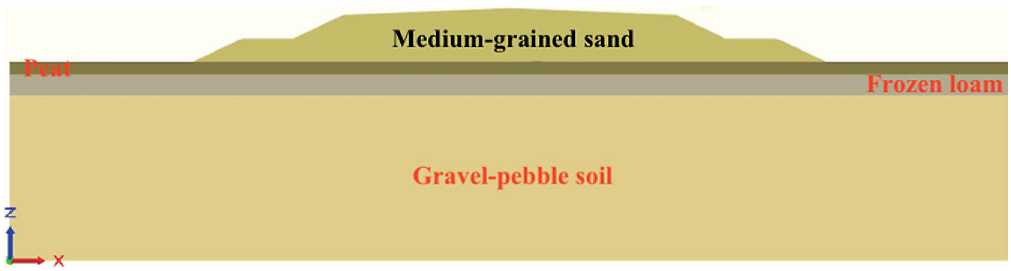
Fig . 1. Embankment structure without reinforcement for the section of the Trans-Baikal Railway
cally compacted crushed stone columns within the soil foundation using specialized vibratory equipment [17]. This technology is aimed at enhancing the bearing capacity of the foundation, whereby the crushed stone elements function as vertical drains, contributing to the reduction and optimization of moisture content in foundation soils. In this regard, this technology can be classified under nanotechnologies in construction.
The design of the reinforcement system is based on the principle of a rational distribution of supporting elements across the entire area of the soil mass. The arrangement of columns may vary: both a staggered pattern and a grid layout (triangular or rectangular) are permissible. The embedment depth of the columns is correlated with the thickness of weak soil layers (in the considered context— the active and thawed layers) [18].
Installation is performed using a vibratory probe suspended from crane equipment. Penetration to the design elevation is achieved under the combined action of the tool’s self-weight and vibratory oscillations. In cases of high soil density, pre-drilling may be applied [19].
The essence of this reinforcement method is based on the fact that the vibrating probe disrupts the pore structure of the surrounding soil, inducing its additional compaction. The crushed stone replaces the weak soil, bearing the pressure exerted by the tool [20]. The grainsize distribution of the crushed stone, as well as the spacing and diameter of the columns, are regulated by the requirements of the design documentation.
The transport embankment with a foundation reinforced by vertical crushed stone columns, designed for permafrost soils, is presented in Figure 2.
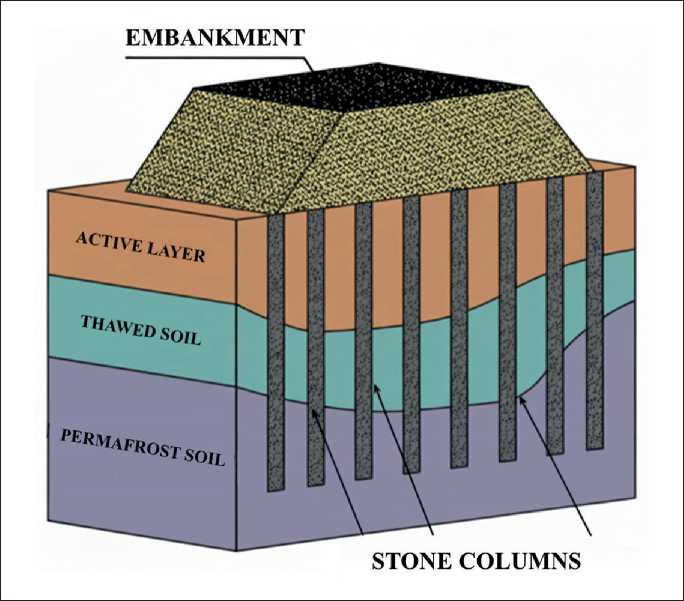
Fig. 2. Transport embankment with foundation reinforced by vertical crushed stone columns (crushed stone piles) on permafrost soils (PS)
Nanotechnologies in construction
Нанотехнологии в строительстве
2026; 18 (3): 417–432
Nanob
SYSTEM SOLUTIONS FOR TECHNOLOGICAL PROBLEMS
To perform the thermophysical calculation, when forming the calculation model, a layout scheme for vertical crushed stone columns with a spacing of 1.9×2.2 m and a diameter of 700 mm is used, as presented in Figure 3.
The physical and thermophysical characteristics of crushed stone are presented in Table 4.
RESULTS AND DISCUSSION
To analyze the impact of installing vertical crushed stone columns for reinforcing the railway subgrade foundation on permafrost soils under the conditions of the
Trans-Baikal Railway, numerical thermophysical modeling was performed using the Frost 3D software package. For the predictive calculation, a computational domain with dimensions of 150.0×15.0×30.0 m (along the x, y, and z axes, respectively) was selected. The computational domain of the embankment without and with the application of the proposed CTS, along with their boundary conditions, are indicated in Figures 4–5.
Modeling of the upper boundary was based on third-type boundary conditions (Robin conditions), which account for heat exchange with the external environment, considering climatic features and snow cover. At the same time, the lower and lateral boundaries were thermally
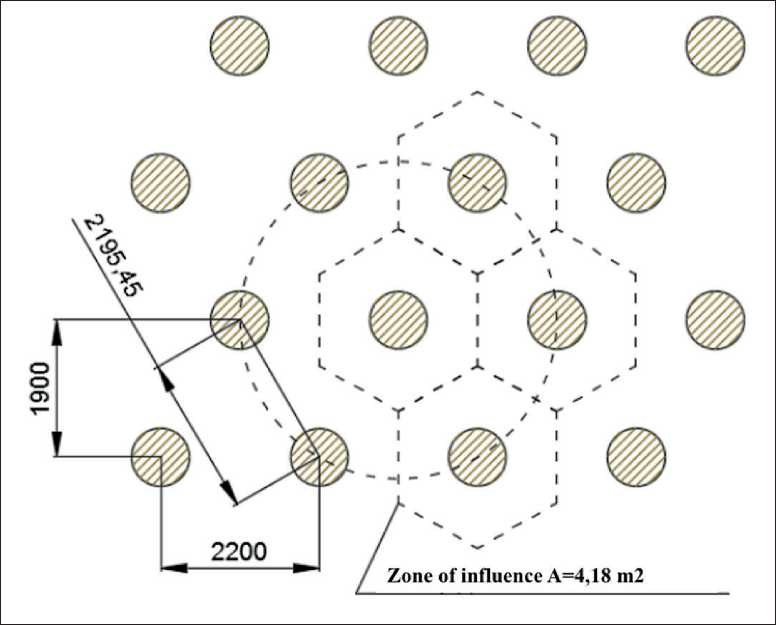
Fig. 3. Layout scheme for vertical crushed stone columns [19]
Table 4. Physical and thermophysical characteristics of crushed stone [13]
|
Parameter |
Designation |
Unit of measurement |
Crushed stone, fraction 20–40 mm |
|
Total moisture content |
Wtot |
% |
0.14 |
|
Density |
P f |
kg/m3 |
1475.8 |
|
Initial freezing temperature |
T bf |
°C |
–0.05 |
|
Thermal conductivity in thawed state |
λ th |
Vt/(m•°C) |
2.64 |
|
Thermal conductivity in frozen state |
λ f |
Vt/(m•°C) |
2.73 |
|
Volumetric heat capacity in thawed state |
Cth |
J/(m3•K) |
2300 |
|
Volumetric heat capacity in frozen state |
C f |
J/(m3•K) |
2109.6 |
Nanotechnologies in construction
Нанотехнологии в строительстве
2026; 18 (3): 417–432
Nanob
SYSTEM SOLUTIONS FOR TECHNOLOGICAL PROBLEMS
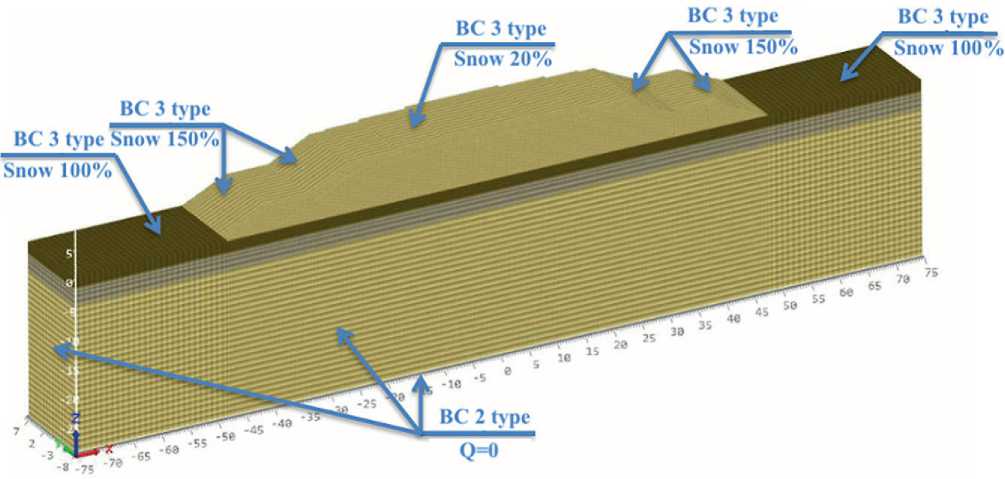
Fig. 4. Computational domain for the section of the Trans-Baikal Railway on natural foundation
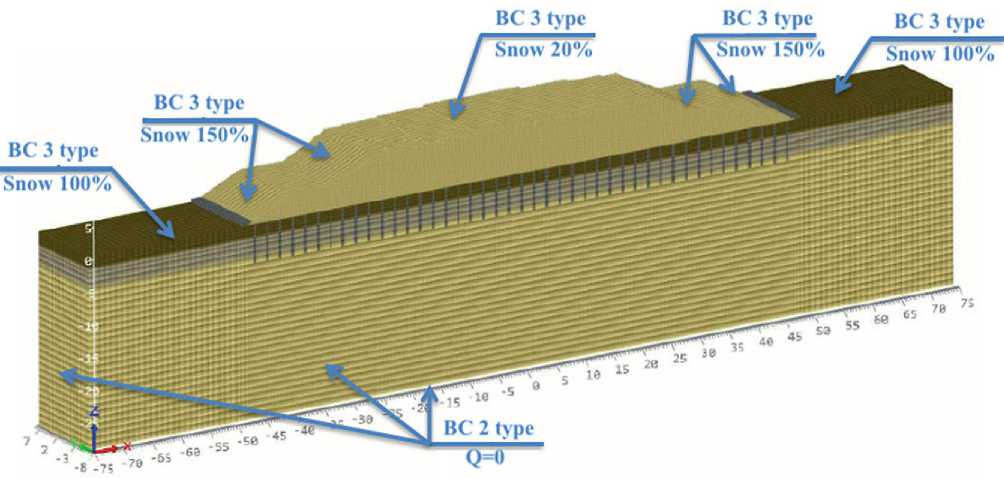
Fig. 5. Computational domain for the section of the Trans-Baikal Railway with foundation reinforced by vertical crushed stone columns
insulated, which is described by second-type boundary conditions with zero heat flux.
The design period was set at 50 years: from 06.08.2025 to 30.09.2075.
The calculation results demonstrated that the foundation reinforcement technology using vertical crushed stone columns has a positive effect on the temperature regime of foundation soils, producing a cooling effect.
This effect will be considered across various time intervals.
Figures 6 and 7 show the temperature isopleths for the 5th year of the winter period.
According to the thermophysical model presented in Figure 7 as of 30.04 of the 5th year of modeling, the formation of taliks (highlighted in yellow) was recorded in the zone where the embankment slopes adjoin the natural
Nanotechnologies in construction
Нанотехнологии в строительстве
2026; 18 (3): 417–432
Nanob
SYSTEM SOLUTIONS FOR TECHNOLOGICAL PROBLEMS
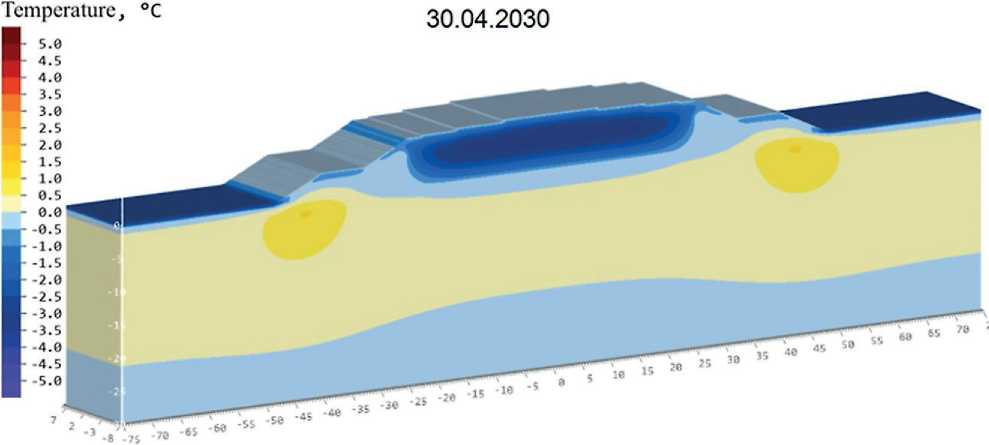
Fig. 6. Thermophysical model of the embankment on natural foundation as of 30.04 of the 5th year of the design period
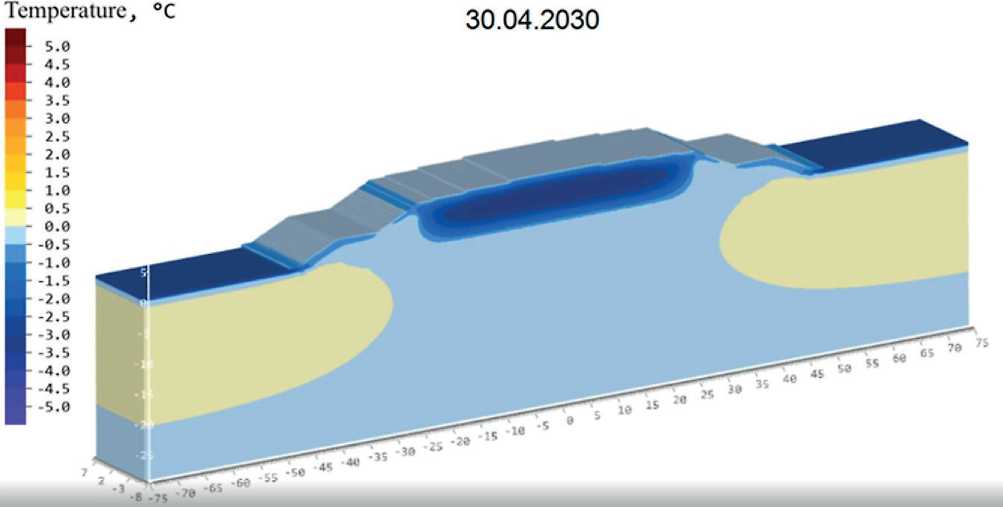
Fig. 7. Thermophysical model of the embankment with foundation reinforced by vertical crushed stone columns as of 30.04 of the 5th year of the design period
foundation. These geocryological processes may lead to deformation processes that create adverse consequences for the operational reliability of the engineering structure.
In Figure 7, as of 30.04 of the 5th year, it can be observed that at the toe of the embankment slopes-com-pared to Figure 6 (without reinforcement)-the taliks that had formed are absent. These taliks could have led to stability impairment of the structure; thus, the technology begins to demonstrate its effectiveness after five years of operational service. For a more illustrative representation, Figures 8 and 9 present the temperature field plots for the same years.
Nanotechnologies in construction
Нанотехнологии в строительстве
2026; 18 (3): 417–432
Nanob
SYSTEM SOLUTIONS FOR TECHNOLOGICAL PROBLEMS
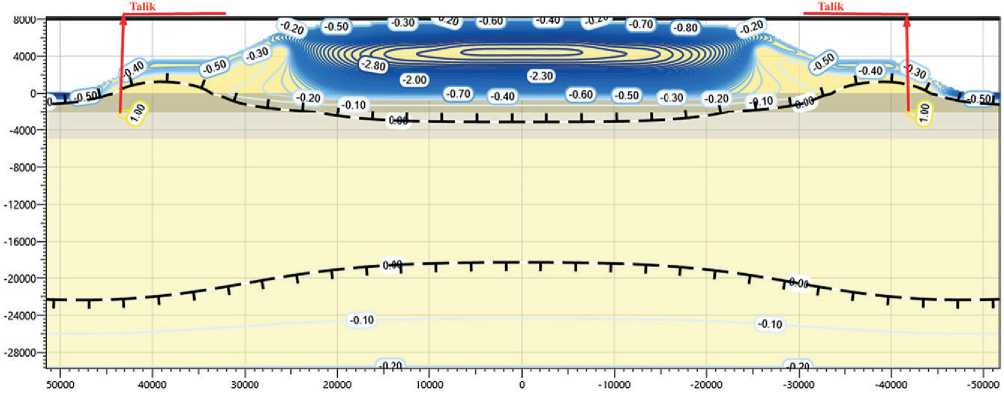
Fig. 8. Thermophysical modeling with temperature field plots as of 30.04 of the 5th year of the design period for the embankment on natural foundation (taliks shown in red)
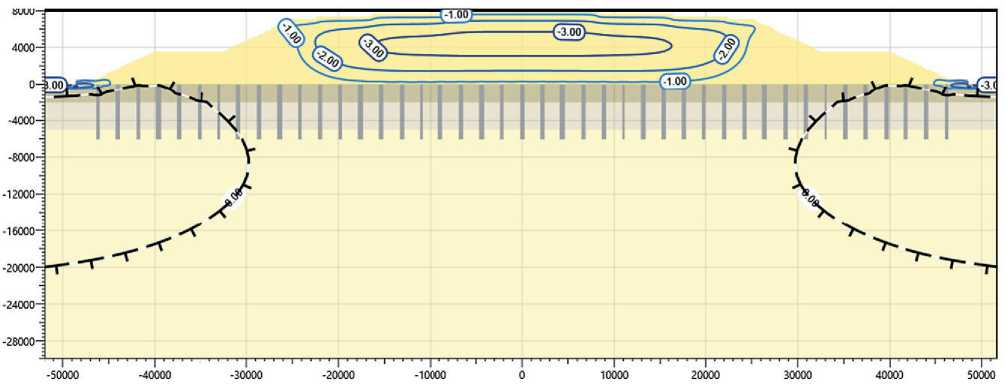
Fig. 9. Thermophysical modeling with temperature field plots as of 30.04 of the 5th year of the design period for the embankment with foundation reinforced by vertical crushed stone columns
In addition to the absence of taliks, Figure 9 also shows active freezing of soils occurring within the embankment body.
Let us consider the temperature isopleths and temperature field plots as of 30.09 of the 15th year. Figures 10 and 12 show the temperature isopleths as of 30.09 of the 15th year of operational service, while Figures 11 and 13 present the temperature field plots for the embankment on natural foundation and on foundation reinforced by vertical crushed stone columns, respectively.
As can be observed from Figure 10, soil thawing is progressing, and the thawed zone, initially at a depth of 2.0 meters, has descended to 6 meters during the summer period.
This process is more clearly illustrated in Figure 11. It can be seen from the figure that the embankment body is also subject to thawing.
Figure 12 shows that the crushed stone columns impede the degradation of permafrost soils, although complete prevention of thawing is not achieved. In comparison with the model without reinforcement, the thawed zone progressed to 3 meters (from the initial 2 meters), whereas in the model without reinforcement it reached 6 meters-demonstrating a significant effect.
This process is more clearly illustrated in Figure 13. It is noticeable that the embankment body is also subject to thawing.
Nanotechnologies in construction
Нанотехнологии в строительстве
2026; 18 (3): 417–432
Nanob
SYSTEM SOLUTIONS FOR TECHNOLOGICAL PROBLEMS
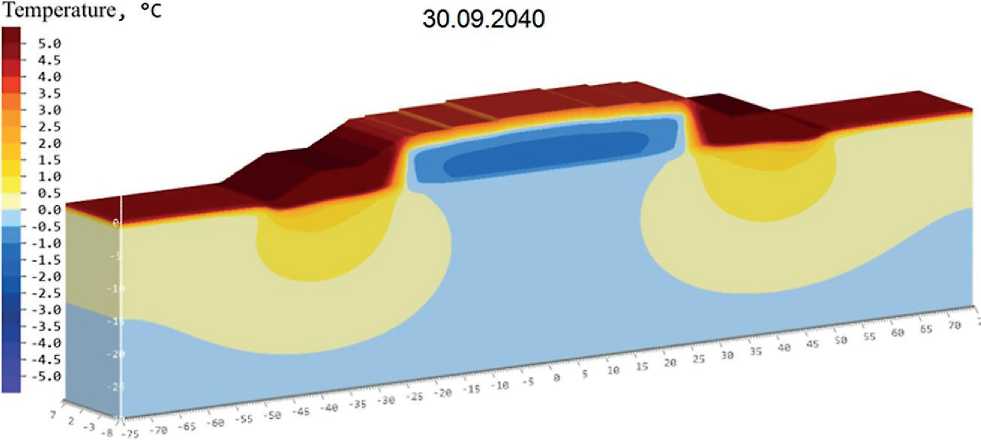
Fig. 10. Thermophysical model of the embankment on natural foundation as of 30.09 of the 15th year of the design period
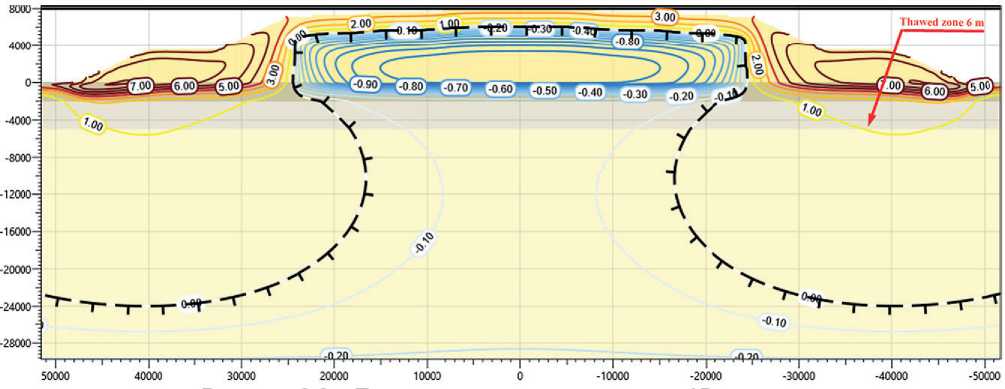
Fig. 11. Thermophysical modeling with temperature field plots as of 30.09 of the 15th year of the design period for the embankment on natural foundation
Figure 13 clearly shows the stabilization of negative temperatures within the embankment body. This contrasts with the data presented in Figure 11, where, in the absence of foundation reinforcement with vertical crushed stone columns, the temperature regime remains near-zero.
Observing the dynamics of freezing-thawing processes, let us consider the final models and temperature field plots after the winter period of the 20th year for the embankment on natural foundation (Figures 14–15) and for the embankment with foundation reinforced by vertical crushed stone columns (Figures 16–17).
In comparison with the 5th-year model (Figure 6), the size of the taliks has increased several-fold, which is more clearly illustrated by the temperature distribution plots (Figure 15).
The thawed zone is also present in the model with reinforcement, but it is significantly smaller in both scale and temperature magnitude.
It can be concluded that the installation of vertical crushed stone columns for foundation reinforcement is justified and has a positive effect on the cooling of permafrost soils. Thus, this technology incorporates not only
Nanotechnologies in construction
Нанотехнологии в строительстве
2026; 18 (3): 417–432
Nanob
SYSTEM SOLUTIONS FOR TECHNOLOGICAL PROBLEMS
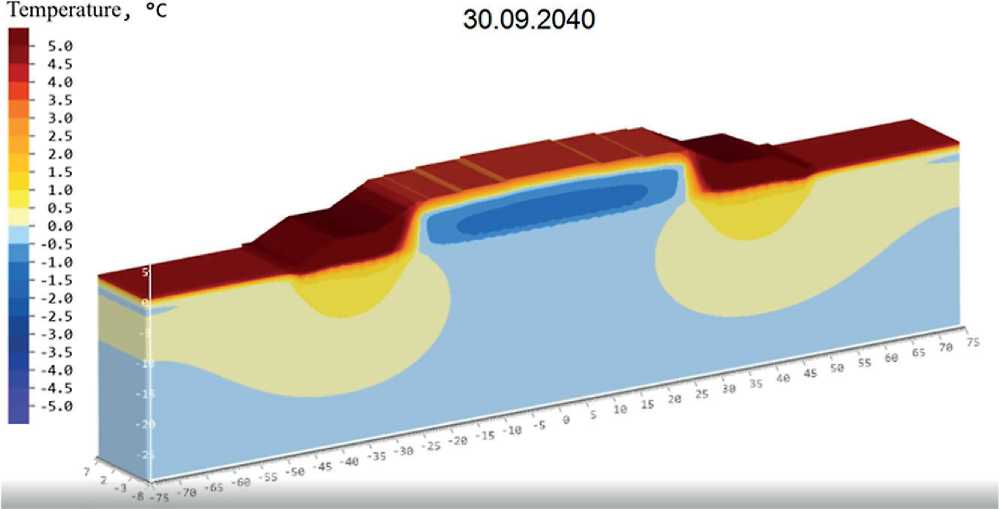
Fig. 12. Thermophysical model of the embankment with foundation reinforced by vertical crushed stone columns as of 30.09 of the 15th year of the design period
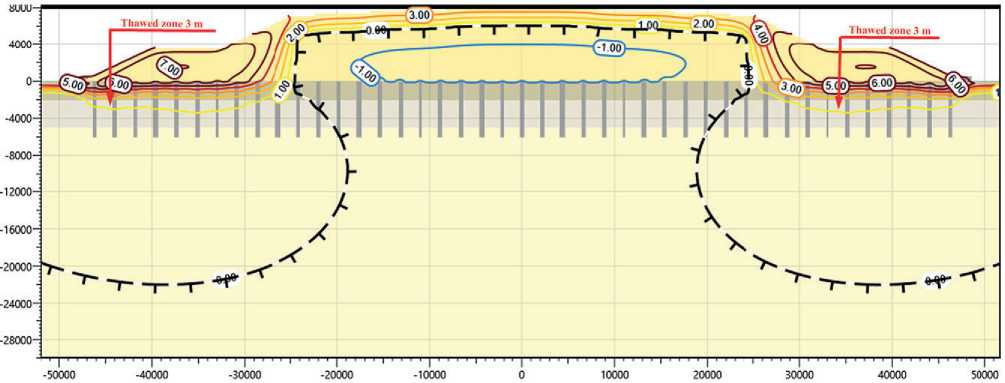
Fig. 13. Thermophysical modeling with temperature field plots as of 30.09 of the 15th year of the design period for the embankment with foundation reinforced by vertical crushed stone columns
Nanotechnologies in construction
Нанотехнологии в строительстве
2026; 18 (3): 417–432
Nanob
SYSTEM SOLUTIONS FOR TECHNOLOGICAL PROBLEMS
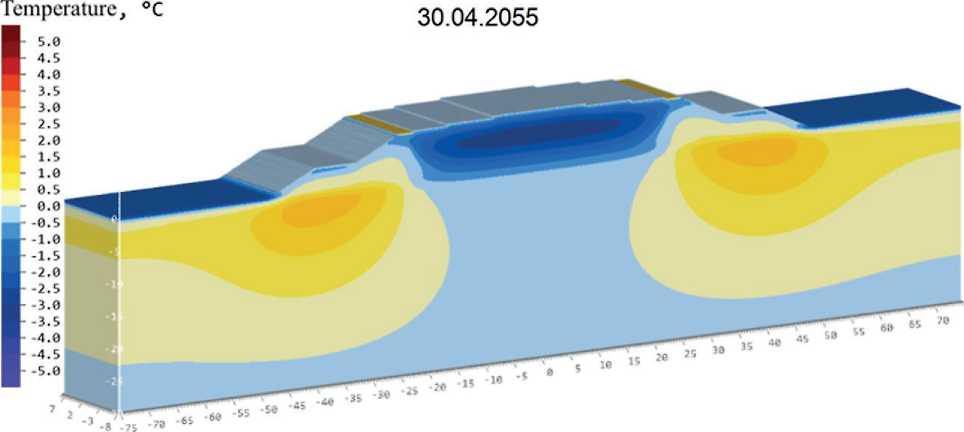
Fig. 14. Thermophysical model of the embankment on natural foundation as of 30.04 of the 30th year of the design period
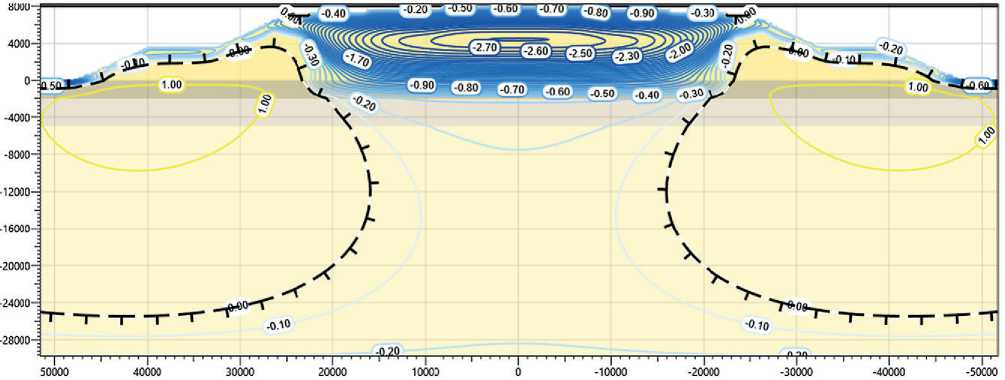
Fig. 15. Thermophysical modeling with temperature field plots as of 30.04 of the 30th year of the design period for the embankment on natural foundation
Nanotechnologies in construction
Нанотехнологии в строительстве
2026; 18 (3): 417–432
Nanob
SYSTEM SOLUTIONS FOR TECHNOLOGICAL PROBLEMS
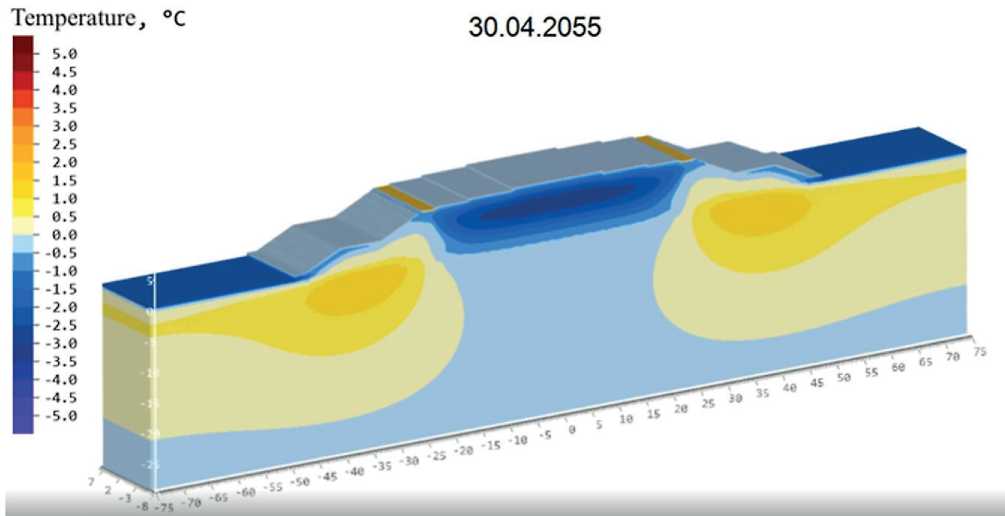
Fig. 16. Thermophysical model of the embankment on natural foundation as of 30.04 of the 30th year of the design period
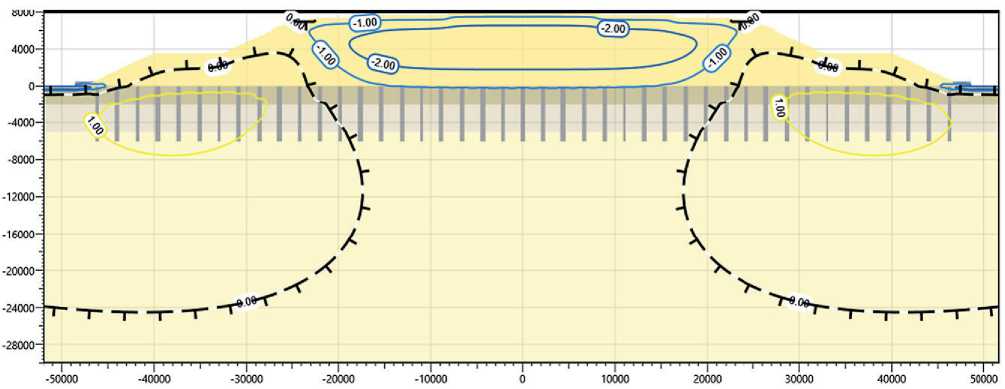
Fig. 17. Thermophysical modeling with temperature field plots as of 30.04 of the 30th year of the design period for the embankment with foundation reinforced by vertical crushed stone columns
Nanotechnologies in construction
Нанотехнологии в строительстве
2026; 18 (3): 417–432
Nanob
SYSTEM SOLUTIONS FOR TECHNOLOGICAL PROBLEMS
stabilizing elements (enhancing the strength characteristics of thawed soils) but also thermal stabilizing elements, which impede the rapid degradation of PS.
As a perspective for further thermotechnical modeling, it is recommended to include thermal insulation materials on the upper part of the vertical columns.
CONCLUSION
The modeling and analysis of thermophysical processes in the foundations of transport structures constructed in the cryolithozone, performed during the study, demonstrated the high significance of accounting for thermodynamic interaction within the “embankment–frozen soil–external environment” system.
Numerical modeling performed using the Frost 3D software package made it possible to assess the dynamics of temperature changes in foundation soils when applying various constructive and technological solutions-both without special thermal stabilization measures and with foundation reinforcement using vertical crushed stone columns.
The modeling results for the section of the TransBaikal Railway demonstrated that, under conditions of climate change and operational impacts, the absence of special thermal stabilization measures for permafrost soils in the foundations of transport structures leads to their intensive degradation, formation of taliks beneath embankment slopes, and significant foundation settlements.
The emerging adverse geocryological processes are particularly pronounced in ice-rich and moisture-saturated clayey soils, where even a slight temperature increase can cause the breakdown of cryogenic structural bonds and loss of bearing capacity.
At the same time, the application of vertical crushed stone column technology for foundation soil reinforce-ment-despite the thermal conductivity of crushed stonedemonstrated a pronounced cooling effect under the considered conditions. Due to cold convection during the winter period and improved drainage properties of the soil mass, vertical crushed stone columns contribute to reducing the depth and area of thawed zones, preserving negative temperatures within the embankment body and adjacent foundation, and slowing down the thawing of permafrost soils in the foundation of the transport structure throughout the entire design period (up to 50 years).
Thus, vertical crushed stone columns perform a dual function: stabilizing (foundation reinforcement through improvement of physico-mechanical characteristics of weak soils and creation of an artificial geomassif) and thermal stabilizing (seasonal cooling and thermal stabilization of the temperature regime of permafrost soils in foundations). In this regard, this technology can be classified under nanotechnologies in construction. This makes the technology promising for addressing challenges related to the construction and operation of transport infrastructure facilities in regions underlain by permafrost soils.
