
Comparative efficiency analysis of biocides and conserving agents for cement-based systems
Journal: Nanotechnologies in Construction: A Scientific Internet-Journal @nanobuild-en
Section: The results of the specialists’ and scientists’ researches
Article in issue: 4 Vol.18, 2026.
Free access
Introduction. The use of biocides in primary and secondary protection ensures prolonged biological resistance of building materials. However, assessing their potential in cement systems requires a comprehensive analysis, taking into account the alkalinity of the environment, chemical compatibility with binder components, and the selection of an effective concentration. This article presents a comparative analysis of the resistance of biocides, conserving agents, and auxiliary components to Aspergillus niger micromycete to justify their applicability for protecting cement composites from biocorrosion. Materials and methods of research. The efficiency of biocides (alaminol, polyhexamethylene guanidine hydrochloride (PHMG), food conserving agents (sodium propionate, nisin), and additional components (butylene glycol, hydroxypropyl methylcellulose (HPMC)) against the micromycete Aspergillus niger, which is highly resistant to adverse conditions, was analyzed. A series of aqueous solutions of the additives studied were used at the dosages recommended by the manufacturers. Fungicidal and fungistatic activity were assessed based on the mycelial growth inhibition zone and fungal growth rate. Results and discussion. PHMG demonstrated the highest biocidal effictiveness against Aspergillus niger, providing complete suppression of test culture growth across the entire concentration range. The growth of the inhibition zone from 4 to 7 mm correlated with an increase in the biocide dosage from 1% to 5%. Modification of the samples with alaminol at concentrations of 5% and 8% resulted in the formation of an inhibition zone of 3–4 mm and the absence of visible mycelial growth. The remaining additives studied (sodium propionate, nisin, HPMC, and butylene glycol) did not exhibit any independent fungicidal activity under these conditions. Conclusion. The study conducted gives grounds for the perspective of using polyhexamethylene guanidine hydrochloride as an effective bioprotective agent for cement composites.
Short address: https://sciup.org/142248516
IDS: 142248516 | DOI: 10.15828/2075-8545-2026-18-4-529-536
Text of the scientific article Comparative efficiency analysis of biocides and conserving agents for cement-based systems
Original article
Духанина У.Н., Строкова В.В., Степина И.В., Баженова С.И. Сравнительный анализ эффективности биоцидов и консервантов для использования в цементной системе. Нанотехнологии в строительстве. 2026;18(4):529–536. – EDN: OVHHXJ.
To implement a technological solution for inhibiting destructive microorganisms at the primary and secondary protection stages, biocidal additives are incorporated into building materials or applied to the surface of finished products. They ensure sanitary and hygienic safety, which has a positive impact on the safety and durability of construction projects. However, to assess the potential of using biocides as fungicidal additives in cement systems, the following should be taken into consideration [1]:
– high alkalinity of the environment, which can affect the stability of active components sensitive to it;
– chemical composition of the cement system, the components of which can react with biocides, forming substances that are inactive in suppressing micromy-cetes;
– the optimal concentration at which the effectiveness of suppressing the growth of microorganisms is achieved
Nanotechnologies in construction
Нанотехнологии в строительстве
2026; 18 (4): 529–536
Nanob
THE RESULTS OF THE SPECIALISTS’ AND SCIENTISTS’ RESEARCHES
without negatively affecting the hydration and physicochemical properties of the cement stone;
– the structure of a modified building material which can limit the migration of active substances to the biodeterioration zone.
Despite the primary importance of ensuring the destruction of microorganisms that degrade building materials, it is important to consider the negative impact of biocides on the cement system: active components can negatively impact the hydration process by accelerating moisture loss, reduce strength, and alter the rheological properties of binders. For example, glutaric aldehyde and copper or zinc salts [2–7] are adsorbed on the surface of the cement grain and slow hydration, resulting in an increased time to achieve the designed strength. Therefore, a key objective is to maintain a balance of mutual compatibility: inhibiting the growth and reproduction of fungi and bacteria without degrading physical and mechanical properties of concrete.
Since traditional approaches to ensuring the biostability of concrete, based on the use of biocides containing heavy metals and strong oxidizing agents, have limitations in use due to their toxicity, possible antimicrobial resistance, and a negative impact on physical and chemical properties of cement stone, the scientific and practical importance of searching for alternative solutions which possess environmental safety and chemical compatibility with the mineral matrix is increasing [8]. In this research, conserving agents such as nisin, sodium propionate, and butylene glycol, widely used in the food and pharmaceutical industries as well as in dentistry, are considered as promising inhibitors of decomposing microorganisms, which determines their biopositive character and nontoxicity [9–17].
To mitigate the negative impact of the active ingredients of disinfectants on the binder, auxiliary components are introduced into composite formulations that act as stabilizers and modifiers of the physicochemical properties of cement stone. Based on an analysis of the scientific literature, the most preferred auxiliary components compatible with biocides in cement systems are hydroxypropyl methylcellulose (HPMC) and butylene glycol. HPMC is primarily used to compensate for the slower rate in the hydration kinetics of the cement matrix due to its water-retaining properties and rheology regulation, reducing the risk of deterioration in grade strength. Moreover, HPMC exhibits a synergistic effect with respect to biocides: by forming a polymer film on the surface of the material, it hinders the adhesion of microorganisms and prolongs the action of the active components of disinfectants [18–19].
In addition to its own preserving activity against a range of microorganisms, butylene glycol is used in biocidal formulations as a multifunctional auxiliary component. In cement systems, butylene glycol acts as a biocide stabilizer, preventing their precipitation during temperature fluctuations and deactivation in the alkaline environment of concrete [20]. The addition of butylene glycol ensures uniform distribution of disinfectants throughout the mortar mixture, and during impregnation, by reducing the surface tension of the liquid phase, it improves the penetrating ability of the formulations into the porous structure of the concrete, which, consequently, increases the depth of the protective layer.
Thus, assessing the potential of biocides, conserving agents, and auxiliary components as effective modifiers of protective compounds against micromycetes, while maintaining the physical and mechanical properties of building materials, seems essential.
The selection of Aspergillus niger micromycete as a test culture was based on the following criteria: inclusion of mold fungi in the list of strains regulated by GOST 9.048– 89 «Unified System of Protection against Corrosion and Ageing. Technical Products. Laboratory Test Methods for Resistance to Mold Fungi» for determining fungal resistance; the morphological and cultural characteristics of which ensure high experimental repeatability and ease of morphometric analysis, allowing for precise recording of the dynamics of changes under the influence of fungicidal agents [21].
METHODS AND MATERIALS
To evaluate the efficiency and potential synergistic interaction of biocides and preservatives used to inhibit the growth of pathogenic microorganisms, as well as to develop multifunctional systems, the following agents were used: alaminol (JSC NIOPIK, Moscow), polyhexamethylene guanidine hydrochloride (PHMG) (LLC NPO Termodinamika 3000, Dzerzhinsk) as biocides; sodium propionate (ETON FOOD CO LTD, China), nisin (Foodchem International Corporation, China) as conserving agents; butylene glycol (China), hydroxypropyl methylcellulose (HPMC) (LLC Formako, Omsk) as auxiliary substances.
To determine the fungicidal and fungistatic properties of the studied biocides, conserving agents, and auxiliary components, a series of dilutions with a concentration gradient for the active substance was prepared. The choice of biocide concentrations is determined by the mechanism of action and the working dosages specified by the manufacturers in the instructions for use. Since polyhexamethylene guanidine hydrochloride (PHMG) [22] and alaminol are strong synthetic biocides, the concentration range recommended by the manufacturer for the suppression of pathogenic microorganisms was selected to evaluate their effectiveness: for PHMG – 1%, 3%, 5%; for alaminol – 3%, 5%, 8%. For food conserving agents (nisin and sodium propionate), the effectiveness of which may decrease under conditions of high alkalinity of the
Nanotechnologies in construction
Нанотехнологии в строительстве
2026; 18 (4): 529–536
Nanob
THE RESULTS OF THE SPECIALISTS’ AND SCIENTISTS’ RESEARCHES
cement system, a range of 1%, 3%, 5% was adopted. This range, by ensuring comparability of results with synthetic biocides, will allow us to evaluate their fungicidal potential under identical experimental conditions. Since butylene glycol is used as a plasticizer in cement systems and exhibits weak activity against micromycetes, high concentrations are required to demonstrate its protective properties. Therefore, butylene glycol concentrations were 5%, 10%, and 15%. Although the recommended HPMC dosage in cement systems is 0.1–0.4%, and the range chosen in this study (1%, 3%, and 5%) significantly exceeds these limits, which may affect the hardening kinetics and rheological properties of the mixture, this approach is justified by the need to evaluate the potential biocidal activity of the component, which will allow for a fair comparison of the component effectiveness with biocides under equal conditions and determine the suitability of its use as an independent biological protective agent. For the convenience of identification, the compositions are assigned conventional numbers (Table 1).
To assess the sensitivity of Aspergillus niger micromy-cete to biocides, preservatives, and excipients, method 3 (GOST 9.049–91 «Unified System of Protection against Corrosion and Ageing. Polymer Materials and Their Components. Laboratory Test Methods for Resistance to Mold fungi») was used. Sterile 8-mm diameter filter paper disks, pre-impregnated with active substances, were placed in Petri dishes containing solidified Czapek-Dox medium pre-inoculated with an Aspergillus niger spore suspension using the spray method. The spore suspension was prepared by washing out micromycele colonies with sterile water from the surface of a selective agar nutrient medium. Antifungal activity was assessed based on the degree of micromycete inhibition by measuring the zone of growth inhibition or reduction in the colonization capacity of fungi. The inhibition zone was calculated as the arithmetic mean of the results of evaluating a series of samples.
The degree of mold growth on the modified samples, recorded 28 days after the start of the experiment, was used as a criterion for the microbiological resistance of the studied products. According to paragraph 1.6.7 of GOST 9.048–89 «Unified System of Corrosion and Ageing Protection. Technical Products. Laboratory Test Methods for Resistance to Mold fungi» fungal resistance was characterized using a scale which quantifies the level of micromycete attack on the samples.
RESULTS AND DISCUSSION
To evaluate the fungicidal and fungistatic activity of biocides, preservatives, and auxiliary components, a study was conducted to determine the fungicidal zone of each component. The results of this study are presented in Figure 1.
On the fifth day after Aspergillus niger inoculation, the maximum inhibition zone, reaching 8 and 10 mm, was recorded for samples treated with PHMG solutions at concentrations of 3% and 5%, respectively. Less visible inhibition of micromycete growth was observed for samples impregnated with alaminol solutions at concentrations of 5% and 8%, as evidenced by the presence of inhibition zones of 4 and 5 mm.
Sample 13 (1% PHMG solution) showed weak activity, with an inhibition zone of no more than 4 mm. Despite the presence of a growth inhibition zone in other samples, evenly distributed microbiological inclusions were detected within it, indicating possible development of persistent or resistant forms of Aspergillus niger to the biocides and preservatives tested.
After 7 days of exposure, the growth inhibition zone for samples treated with 1% and 5% PHMG solutions, as well as an 8% alaminol solution, remained stable. Meanwhile, in samples modified with 3% PHMG and 5% alaminol solutions, a decrease in the growth inhibition zone by 1–2 mm was observed, indicating a decrease in antifungal activity.
In all other samples, complete colonization of Petri dishes by micromycetes was observed, indicating the ineffectiveness of the studied biocides and conserving agents against Aspergillus niger under these conditions.
On the 14th day of the experiment, a decrease in the diameter of the fungal growth inhibition zone was observed in samples impregnated with 3% and 5% PHMG solutions, indicating a reduced suppressive effect on mi-cromycete growth. This decrease in fungicidal activity is likely due to biochemical degradation of the active components or physiological adaptation of microorganisms to the antifungal compounds.
Upon completion of the study, PHMG solutions at concentrations of 3% and 5% demonstrated the highest fungicidal efficiency. Samples impregnated with alaminol (8%) and PHMG (1%) solutions demonstrated a decrease in biocidal activity, assessed by a 1 mm decrease in the diameter of the micromycete growth inhibition zone. Meanwhile, the sample impregnated with alaminol and PHMG solutions at a concentration of 3% remained unchanged. Total contamination with Aspergillus niger mycelium was recorded in samples treated with butylene glycol, HPMC, nisin, and sodium propionate solutions, indicating a lack of fungicidal and fungistatic effect even with increased concentrations of the active ingredient.
Regarding the morphology of the inhibition zones, those of samples treated with 3% and 5% PHMG solutions are symmetrical, rounded, and have clearly defined edges, indicating uniform diffusion of the biocide from the carrier into the agarized medium. In contrast, the inhibition zone of the sample impregnated with 1% PHMG solution is irregularly shaped with shaped edges and point focuses of microbial growth, reflecting the heterogeneity
Nanotechnologies in construction 2026; 18 (4):
Нанотехнологии в строительстве 529–536
Nanob
THE RESULTS OF THE SPECIALISTS’ AND SCIENTISTS’ RESEARCHES
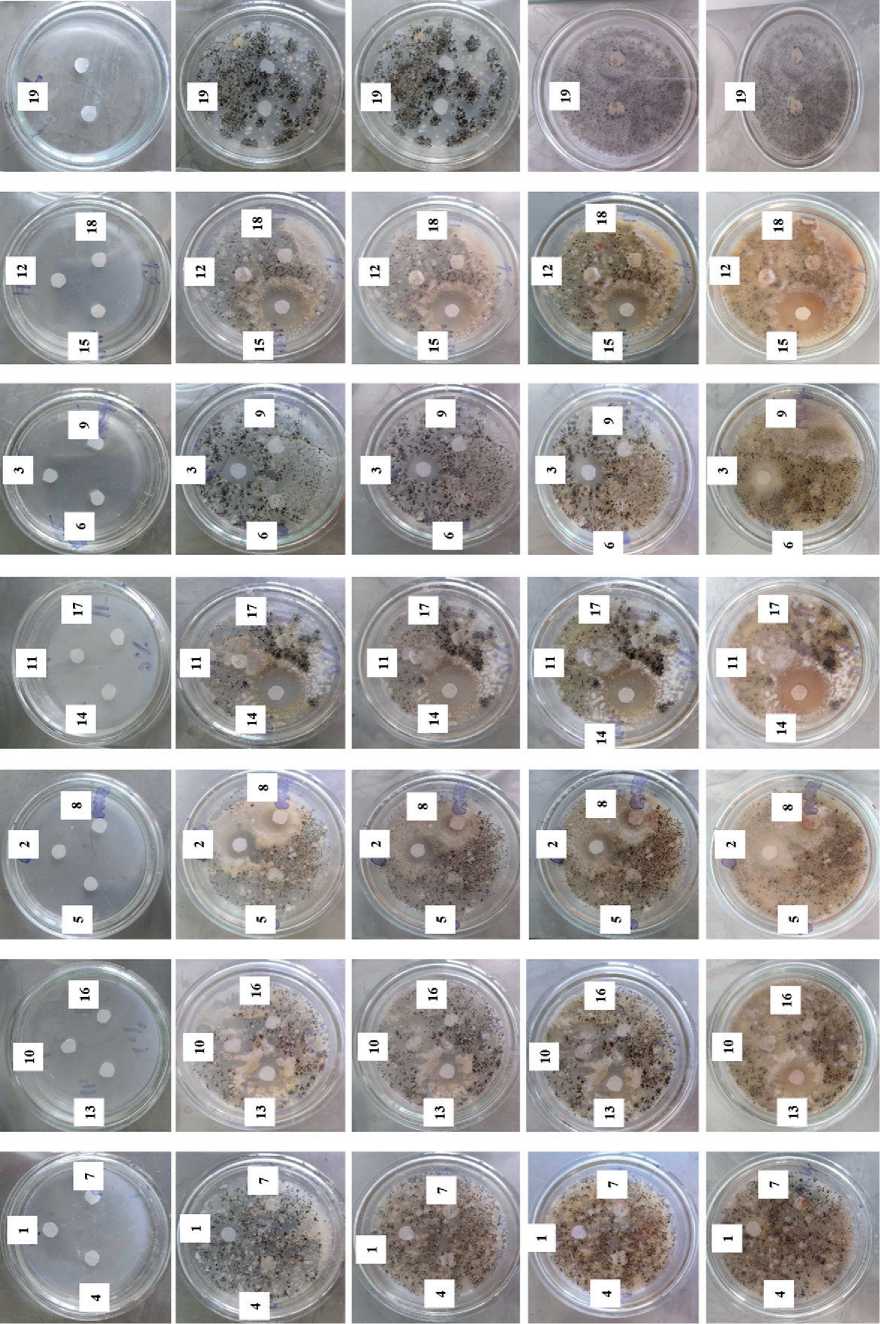
Fig. 1 . Effect of biocides, conserving agents, and auxiliary components on the intensity of development of Aspergillus niger micromycete (numbering according to Table 1)
^PH toPmS ^PmZ, АфшН ЛфчЖ
Nanotechnologies in construction 2026; 18 (4):
Нанотехнологии в строительстве 529–536
THE RESULTS OF THE SPECIALISTS’ AND SCIENTISTS’ RESEARCHES
Nanob
of Aspergillus niger susceptibility to the biocide. According to the results of the fungal resistance assessment of biocides and preservatives presented in Table 1, samples impregnated with PHMG solutions exhibit high and stable fungicidal activity. They demonstrated not only a clear inhibition zone but also the absence of fungal growth on the carrying agents themselves.
Alaminol-based solutions at concentrations of 5% and 8% demonstrated moderate effectiveness. The remaining samples, as well as the control one, showed no protective effect for these compounds at the concentrations tested.
Thus, based on fungicidal effectiveness and resistance to Aspergillus niger , the products under study are ranked in the order of increasing effectiveness as follows: control / sodium propionate / nisin / HPMC / butylene glycol → Alaminol → PHMG.
СONCLUSION
It was established that PHMG and Alaminol demonstrated their ability to inhibit the growth of micromycetes
under model conditions. Polyhexamethylene guanidine hydrochloride exhibited higher activity in fungal resistance, with its effectiveness increasing with the increase of concentration, indicating a dose-dependent effect. This makes PHMG the preferred biocide for minimizing impact on concrete properties.
Alaminol exhibits moderate fungistatic activity against micromycetes, as evidenced by an inhibition zone of 3–4 mm over a concentration range of 5–8%.
The conserving agents nisin, sodium propionate, and butylene glycol did not demonstrate activity against Aspergillus niger test culture, indicating the need for combinations with other biocides.
Due to the demonstrated inability of HPMC to inhibit the growth of Aspergillus niger even at high concentrations, therefore limits its use like a modifier for adjusting the rheological properties of cement systems.
These results will form the basis for further research examining the synergistic effect of combinations of biocides, conserving agents, and auxiliary components with the purpose to assess their impact on physical and mechanical properties of cement stone.
Table 1. Rresistance of biocides, preservatives and auxiliary components against Aspergillus niger
|
Conventional composition number |
Biocide / Conservative agent / of the auxiliary component |
Concentration, % |
Inhibition zone, mm |
Fungal growth rate in points (according to GOST 9.049–91) |
|
1 |
Alaminol |
3 |
not available |
3 |
|
2 |
5 |
3 |
0 |
|
|
3 |
8 |
4 |
0 |
|
|
4 |
Butylene glycol |
5 |
not available |
5 |
|
5 |
10 |
not available |
5 |
|
|
6 |
15 |
not available |
5 |
|
|
7 |
HPMC |
1 |
not available |
5 |
|
8 |
3 |
not available |
5 |
|
|
9 |
5 |
not available |
5 |
|
|
10 |
Nisin |
1 |
not available |
5 |
|
11 |
3 |
not available |
5 |
|
|
12 |
5 |
not available |
5 |
|
|
13 |
PHMG |
1 |
4 |
0 |
|
14 |
3 |
6 |
0 |
|
|
15 |
5 |
7 |
0 |
|
|
16 |
Sodium propionate |
1 |
not available |
5 |
|
17 |
3 |
not available |
5 |
|
|
18 |
5 |
not available |
5 |
|
|
19 |
Conrol |
– |
not available |
5 |
Nanotechnologies in construction Нанотехнологии в строительстве
2026; 18 (4): 529–536
THE RESULTS OF THE SPECIALISTS’ AND SCIENTISTS’ RESEARCHES
