
Criminal Treatment of The Misuse of Artificial Intelligence in The Creation of Pornographic Content and the Psychological Consequences on the Victim
Journal: International Journal of Cognitive Research in Science, Engineering and Education @ijcrsee
Article in issue: 2 vol.14, 2026.
Free access
The abuse of artificial intelligence in the creation of pornographic content represents a modern form of socially dangerous behavior that requires an adequate criminal law response and an interdisciplinary approach. The development of generative technologies has enabled the creation of highly realistically manipulated or completely synthetic content, which opens up new types of violation of the right to privacy, dignity and personal safety. These forms of abuse include the use of “deepfake” technology, the digital manipulation of existing visual materials, as well as the generation of content that imitates real people without their knowledge or consent, thereby further complicating the determination of responsibility and the protection of victims. The current criminal legal framework is based on the protection of sexual freedom, honor and reputation, as well as the protection of minors, whereby the question of its normative completeness and effectiveness in the context of accelerated technological development and new forms of digital violence is raised. In addition to the legal aspect, this phenomenon is also characterized by pronounced psychological and victimological effects, which are reflected in the impairment of mental health, the feeling of stigmatization, the loss of a sense of security and the long-term consequences for the social functioning of the victims. The work is methodologically based on a theoretical analysis of relevant positions in domestic and foreign literature, a normative analysis of valid legal regulations, as well as on empirical research conducted among students using the survey method. Descriptive analysis was used in the processing and interpretation of collected data, with the application of inductive and deductive methods in order to draw conclusions. Special attention was paid to examining respondents’ views on the social danger of this phenomenon, their level of information, as well as the perception of the need to improve criminal law regulations. The aim of the work is to point out the shortcomings of the existing criminal legal framework, as well as the need for its normative improvement and the development of more effective preventive and protective mechanisms.
Short address: https://sciup.org/170213613
IDS: 170213613 | UDC: 343.542.1:004.8 | DOI: 10.23947/2334-8496-2026-14-2-385-397
Text of the scientific article Criminal Treatment of The Misuse of Artificial Intelligence in The Creation of Pornographic Content and the Psychological Consequences on the Victim
The development of artificial intelligence in the last decade has brought significant innovations and improvements in numerous areas of social life, from medicine and education to security and industry. However, in parallel with the positive effects, this technology also opened up space for new, sophisticated forms of abuse that represent a serious challenge for modern legal systems and “at the same time opens up new questions and dilemmas for the scientific and professional public” ( Čučilović, 2024, p. 325 ). One of the particularly worrying phenomena is the use of artificial intelligence in the creation of pornographic content, especially in situations where such content is produced and distributed without the knowledge or consent of the persons depicted in it. It should be said that pornographic content has been present and available to users since the very beginnings of expansive technological development ( Stardust et al., 2023 ; Mink, Qin and Redmiles, 2026 ). What has drawn additional attention to this problem is the use, that is, the abuse of the capacity of artificial intelligence in this area. This phenomenon imposes the need for
-
*Corresponding author: jelena@pravni-fakultet.info

© 2026 by the authors. This article is an open access article distributed under the terms and conditions of the Creative Commons Attribution (CC BY) license ( https://creativecommons.org/licenses/by/4.0/ ).
an interdisciplinary approach that includes criminal law analysis, as well as victimological and psychological aspects of victim protection.
Abuse of artificial intelligence in this context can be defined as the use of algorithms and machine learning models to generate, manipulate or distribute pornographic material in a way that violates basic human rights, dignity and privacy of individuals. The most prevalent forms of this abuse include the so-called „deep-fake” technology, with the help of artificial intelligence, the face of one person realistically fits into the body of another in explicit video or photo content, then the creation of completely synthetic characters that can be based on real people or their characteristics, as well as the modification of existing photos and recordings in order to sexualize them. In addition, a special problem is the cases of the so-called revenge pornography, where content generated in this way is used as a means of blackmail, intimidation or public humiliation of the victim, as well as situations involving minors, which further increases the social danger of these actions.
The specificity of the mentioned forms of abuse is reflected in their easy availability, relatively low technical barriers to execution, as well as the speed and scope of their spread through digital platforms. At the same time, the anonymity of the perpetrators and the transnational nature of the Internet make it difficult to identify and prosecute the perpetrators, which represents an additional challenge for the criminal justice system. More precisely, the very possibility that any form of computer crime is committed in one country, and that the consequences arise in another country or in several other countries, along with the mentioned anonymity of the perpetrator, clearly indicates significant difficulties in discovering, proving and prosecuting the perpetrators ( Pisarić, 2013, p. 292 ; Baron Quintero, 2023, p. 176 ; Čučilović, 2026, p. 64 ; Matijašević, 2013, pp. 18-19 ). In fact, cyberspace as well as virtual reality enables completely new patterns of action, the basic characteristic of which is global and transnational in scope, which exceeds the territorial control of national states ( Matijašević Obradović and Zarubica, 2019 ; Hajela, Chawla and Rasool, 2021 ; Subotin and Matijašević Obradović, 2019 ). The consequences for victims often go beyond the legal sphere, including serious psychological trauma, feelings of shame, anxiety, depression, as well as disruption of social and professional relationships ( Veljković, Ćurčić and Gavrilović, 2024, p. 1451 ).
This phenomenon, however, goes beyond the scope of individual injuries and points to wider social implications of the abuse of modern technologies. Its reliance on manipulation and the generation of believable but inauthentic representations raises the question of the boundaries between real and artificially constructed content in the digital space. In this sense, the mass availability and use of such technologies contribute to the destruction of trust in the credibility of digital media, deepening the problem of disinformation and making it difficult to reliably distinguish authentic from generated content ( Ranjan, 2023, p. 116 ).
In modern literature and practice the term “deep nude” is increasingly used to denote a special form of digitally generated pornographic content created by the application of artificial intelligence. This term includes exactly visual representations in which, with the help of appropriate algorithms, clothes are removed from existing photos or videos, the generation of a naked human body, as well as the creation of a believable illusion of nudity. In addition, it is possible to construct completely new digital representations of naked figures that are visually difficult to distinguish from real persons ( Kopecký and Voráč, 2026, p. 545 ).
Bearing in mind the growing prevalence and complexity of abuse of artificial intelligence in the creation of pornographic content, as well as its pronounced social and psychological consequences, there is a need for a deeper understanding of the perception of this phenomenon in modern society. In this context, conducting empirical research among the student population is of particular importance, since it is a group that is highly exposed to the digital environment and modern technologies. Examining their views on the social danger of this phenomenon, the level of information, as well as the need to improve the criminal law regulation, enables an overview of real social needs and contributes to the formation of a more adequate normative and institutional response to this modern challenge.
The criminal legal framework and the challenges of the legal qualification of the abuse of artificial intelligence in the creation of digitally generated pornographic content
The development of artificial intelligence opens numerous issues related to the protection of human rights and points to the importance of improving criminal law protection in order to adequately respond to new forms of abuse in the digital environment ( Matijašević, Bećirović, Nikšić and Mašović Muratović, 2026, p. 38 ).
The Criminal Code of the Republic of Serbia prescribes the criminal offenses of unauthorized pho- tography (Article 144) and unauthorized publication and display of other people’s writings, portraits and videos (Article 145), which, to a certain extent, can be linked to the creation and distribution of fake digital pornographic content.
The crime of unauthorized photography from Article 144 of the Criminal Code protects an individual’s right to privacy, criminalizing the act of unauthorized photography, film, video or other recording of a specific person, provided that it significantly intrudes into his personal life. An essential element of the existence of the act is precisely the existence of a qualified encroachment into the sphere of privacy, which implies a violation of intimacy that exceeds the usual threshold of tolerance in social relations. In addition to making the recording itself, the act includes its further disposal, i.e. handing over, showing or otherwise enabling third parties to become familiar with the recording. A more serious form of this offense exists when it is committed by an official in the performance of their duties, which further undermines trust in the legal and responsible exercise of public authority.
On the other hand, the criminal act of unauthorized publication and display of someone else’s file, portrait and video from Article 145 of the Criminal Code represents a further stage of the violation of the right to privacy, aimed at unauthorized public disclosure or making available of personal content. The act of execution consists in publishing or displaying documents, portraits, photographs, films or phonograms without the consent of the authorized person, where, as with the previous act, it is necessary that such action leads to a noticeable encroachment on the personal life of the injured party. The protective object of this criminal offense includes not only privacy in the narrower sense, but also the right to control one’s own personal data and content related to one’s personality. The qualified form of the act is provided in the case when it is committed by an official in the performance of his duties, which indicates the increased social danger of such behavior and the need for its stricter criminal sanction.
Namely, the common constitutive element of these criminal acts is taking actions without the consent of the passive subject, which could be the basis for their limited application in the context of „de-epfake” content. However, as the literature points out, this construction is only conditional, since the consequences produced by the creation and dissemination of „deepfake” pornographic material, as a rule, exceed the intensity of the injury associated with „classic” forms of unauthorized photography or publication of authentic recordings. It is especially emphasized that the contents are both inauthentic and highly believable, and that their pornographic nature inevitably leads to serious damage to the reputation and personal integrity of the persons shown ( Mrvić Petrović, 2024, p. 17 ).
Bearing in mind the legal definition of sexual harassment from Article 182a of the Criminal Code, it can be concluded that the abuse of artificial intelligence for the purpose of creating and distributing „de-epfake” pornographic content would be most appropriate to be legally qualified as this criminal offense, since such behavior, although technologically mediated, undoubtedly represents a form of unwanted, humiliating and offensive behavior that encroaches on the dignity of the person in the sphere of sexual life and creates a hostile environment for damaged person.
The criminal act of sexual harassment from Article 182a of the Criminal Code represents a special form of protection of personal dignity in the sphere of sexual life, criminalizing various forms of unwanted sexual behavior. The act of execution includes any verbal, non-verbal or physical action that aims at or represents a violation of the dignity of another person in this intimate sphere, where it is important for the existence of the act that such behavior causes fear or creates a hostile, humiliating or offensive environment. This normatively covers a wide range of behavior, from inappropriate comments and gestures to physical contact, if the specified qualifying conditions are met. A more serious form of crime exists when the act is committed against a minor, which reflects the need for enhanced criminal protection of this particularly sensitive category. The specificity of this criminal offense is also reflected in the procedural legal regime of prosecution, since for the basic form of the offense, the proceedings are initiated at the proposal of the injured party, which indicates respect for his will and autonomy regarding the protection of the personal sphere. However, this procedural regime of criminal prosecution represents an additional obstacle in qualifying the abuse of artificial intelligence for the purpose of creating and distributing „deepfake” pornographic content as a criminal offense of sexual harassment, since it significantly complicates the realization of effective criminal legal protection. Namely, in practice it is almost impossible for the injured party to independently identify the perpetrator and provide relevant evidence, especially bearing in mind the complexity of the digital environment and the need for the application of specialized methods of digital forensics, which as a rule are available only to competent state authorities ( Mrvić Petrović, 2024, p. 17 ).
In the context of modern technological challenges, the abuse of artificial intelligence for the purpose of creating and distributing „deepfake” pornographic content, when minors are involved in such actions, can be legally qualified as a criminal offense under Article 185 of the Criminal Code - displaying, obtaining and possessing pornographic material and exploiting a minor for pornography. This criminal offense encompasses a wider range of actions aimed at protecting minors from sexual exploitation, including both making pornographic content available to a minor, as well as using it for the production of such material, as well as obtaining, possessing and distributing content resulting from the exploitation of a minor. The legal definition of pornographic material created by the exploitation of a minor also includes visual representations of simulated sexually explicit behavior, which makes it possible to include in the framework of this criminal offense „deepfake” content that faithfully portrays a minor in such situations, regardless of the fact that they are not the result of the actual participation of that person in such behavior. It is particularly important that the law recognizes and sanctions not only the production and distribution, but also the conscious access to such content through information technologies, which seeks to ensure comprehensive criminal protection of minors against various forms of digitally mediated sexual exploitation.
Current solutions in the Criminal Code do not provide an adequate level of protection, since legal protection is achieved indirectly, through an extensive interpretation of existing provisions, which results in its partiality and insufficient comprehensiveness ( Dimovski, 2023, p. 172 ).
Based on the observed normative deficiencies and limitations in the application of existing incriminations, there is a need for explicit criminal law regulation of the abuse of artificial intelligence for the purpose of creating and distributing „deepfake” pornographic content through the introduction of a special criminal offense. Such incrimination should be conceived in a way that respects the specifics of the digital environment, including the technical characteristics of generative technologies, the transnational character of the execution, as well as the complexity of evidence in cyberspace. At the same time, it is necessary to foresee an adequate procedural legal framework that would enable effective detection and prosecution of perpetrators, without excessive reliance on the initiative of the injured party, especially bearing in mind his factual inability to provide key digital evidence on his own ( Matijašević, Bingulac and Marinković, 2024, p.18 ). The normative solution should provide comprehensive protection of both minors and adults, with a clear definition of prohibited actions, including the creation, distribution and acquisition of such content, which would contribute to the improvement of the effectiveness of criminal law protection in conditions of accelerated technological development.
Bearing in mind the technological nature of digitally generated pornographic content, in addition to the challenges regarding its criminal qualification and the protection of injured persons, there are also other challenges related to the identification of victims, bearing in mind that such content often involves combining the identities of several persons, i.e. the use of the image of one person with the body of another, without their consent. This raises the issue of multiple violations of personal rights, given that each of the persons involved may be affected by the unauthorized use of their identity or physical appearance. Additionally, in situations where the original material is protected by copyright, legal claims by copyright holders may arise, which further complicates the legal analysis and deviation in such cases ( Meskys, Kalpokiene, Jurcys and Liaudanskas, 2020, p. 28 )
Victimology and Psychological Aspects of Abuse
Consideration of the abuse of artificial intelligence in the creation of pornographic content cannot be limited exclusively to the normative framework, but also requires an analysis of its victimological and psychological implications. This phenomenon produces specific forms of victimization, given that victims are often exposed to unauthorized display in a particularly intimate and stigmatizing context, without the possibility of control over their own identity and its digital representation. The consequences of such actions go beyond the legal sphere, including serious psychological reactions, but also long-term negative effects on social and professional relationships. In this sense, understanding the position of the victims and the nature of the damage suffered is an important basis for designing adequate mechanisms for their protection and support.
Modern applications based on artificial intelligence significantly lower the technical barriers for creating manipulative explicit photos and videos, which makes these forms of abuse available to practically every user of digital technologies. As a consequence, the risk increases that any person, not only public figures, will be depicted in pornographic content without their knowledge and consent, solely on the basis of previously available digital photographs. Such unauthorized digital exploitation represents a serious violation of the right to privacy, dignity and personal autonomy, with victims often suffering intense psychological consequences, including feelings of humiliation, shame and loss of control over their own identity. An additional problem is the fact that existing legal frameworks in many legal systems still do not provide sufficiently clear and effective protection mechanisms, which can deepen the feeling of legal insecurity and secondary victimization among victims (Delfino, 2019, p. 890).
An additional dimension of the social danger of the abuse of artificial intelligence in the creation of pornographic content is represented by its rapid and difficult to control spread through social networks and digital platforms. Once posted, content can be duplicated, shared and redistributed multiple times, thus deepening and prolonging the victimization of the victim. Bearing in mind that the algorithmic logic of social networks favors the rapid circulation of visual content, the harmfulness of this phenomenon is not exhausted by the mere creation of content without consent, but is additionally intensified by its dissemination in the digital space ( Tobing and Yuli, 2026, p. 1302 ).
An increasing number of empirical studies confirm the extremely unfavorable impact of the abuse of artificial intelligence on the mental health of victims. The consequences are particularly pronounced in cases where artificial intelligence is misused to create pornographic content, since such forms of victimization lead to an increased level of anxiety and depression, the development of various forms of addiction, as well as to the impairment of the victims’ self-esteem. At the same time, research indicates the existence of gender differences, whereby women in such situations show a higher level of emotional and psychological distress compared to men. These findings further emphasize the need for the development of gender-sensitive measures in the field of mental health, in order to ensure more effective protection of particularly vulnerable social groups ( Sharma and Malik, 2026, p. 4 ).
Minors are a particularly vulnerable social group, since the consequences of the misuse of artificial intelligence in the creation of pornographic content are often particularly pronounced for them and can permanently affect psychological development and quality of life in adulthood. Prolonged and multiple victimization can lead to intense feelings of guilt, shame and humiliation, as well as to anxiety, depression, sleep disorders, a damaged image of one’s own body and identity, difficulties in establishing healthy emotional and partner relationships, and even to self-harm and suicidal thoughts. At the same time, exposure to such content increases the risk of further manipulation, harassment and sexual exploitation, with serious consequences for social adjustment, psychosexual development and understanding of the limits of acceptable sexual behavior ( Krishna Borah, Ramaswamy and Seshadri, 2025, p. 110 ). An additional form of secondary victimization is reflected in the exposure of minor victims to offensive, humiliating and sexually explicit comments on such content in the digital space, which intensifies the psychological consequences and deepens the feeling of stigmatization and social isolation ( Petrović, 2023, p. 96 ).
Bearing in mind the seriousness of the psychological consequences that such forms of digital victimization can cause, it is necessary to provide victims with timely, continuous and multidisciplinary psychological support aimed at overcoming trauma, strengthening the sense of security, preserving self-esteem and preventing long-term consequences for mental health.
The wide availability of sexually explicit content generated by artificial intelligence raises numerous psychological, ethical and social issues. Continuous exposure to such content can lead to a reduced sensitivity to intimacy, the formation of unrealistic expectations in partner relationships and a weakening of the emotional response to real interpersonal relationships. At the same time, excessive use of such materials can encourage the development of behavioral patterns similar to pornography addiction. In addition to individual consequences, the normalization of synthetic explicit content can contribute to the relativization of the importance of privacy, consent and sexual autonomy, which opens up broader questions about the transformation of social values and standards in the digital age ( Deckker and Sumanasekara, 2025, p. 627 ). Therefore, in addition to the consequences suffered by the immediate victims, this type of content also produces broader social implications that go beyond the individual level of victimization.
In order to prevent the misuse of modern digital technologies, there is a need to improve educational approaches through the introduction of education about sexuality and the development of healthy interpersonal relationships, while at the same time strengthening digital literacy. Such an approach contributes to the understanding of the limits of privacy, the importance of consent and the recognition of potential risks, which would reduce the space for misuse of these technologies in the long term (Di Silvestro and Iurissevich, 2024, p. 189).
Raising awareness about the possibilities of misuse of artificial intelligence for these purposes can have a significant preventive effect. However, the findings indicate that such activities do not necessarily lead to the improvement of the ability to recognize „deepfake” content, but in certain cases can produce a counter-effect, manifested through an increase in general uncertainty, anxiety and mistrust in digital information. In this context, the simultaneous development and strengthening of trust in authentic and verified content is of particular importance ( Birrer and Just, 2025, p. 6829 ).
Students’ Perception of The Abuse of Artificial Intelligence for Pornographic Purposes
In order to assess the attitudes, level of information and perception of abuse of artificial intelligence for the purpose of creating pornographic content, especially in the context of victimization and potential psychological consequences for the victims, an empirical study was conducted among the student population. The importance of such research is reflected in gaining insight into the way students recognize and understand this form of digital abuse, as well as in the possibility of a better understanding of the social perception of the phenomenon, which can contribute to the improvement of preventive, educational and criminal protection mechanisms. At the same time, the results of the research can serve as a basis for a critical review of the existing criminal legal framework and consideration of the need for its adaptation to the challenges brought by the abuse of artificial intelligence in the field of sexually explicit digital content.
Research Sample
The research sample consists of 109 undergraduate students of the Faculty of Law for Commerce and Judiciary in Novi Sad, University Business Academy in Novi Sad. Participation was voluntary and anonymous. 47 male students (43%), 60 female students (55%), and 2 students who did not make a statement have participated in the research. The biggest deviation was observed among second-year undergraduate students, where close to 68% were female students.
In the next chart is shown the distribution of students - respondents by gender and year of study ( Chart 1).
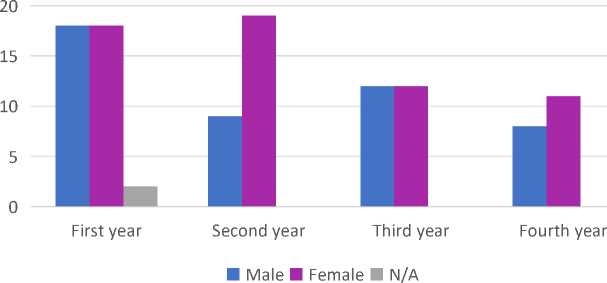
Chart 1. Surveyed students by gender and year of study. Source: Authors’ search
Research Instrument
Pre-prepared and printed survey - questionnaire was used to collect data. Data were collected in the period March-April 2026. The survey contains questions related to students’ familiarity with the concept of deepfake technology and the possibility of abusing artificial intelligence to create pornographic content featuring a real person without consent; familiarity with cases where artificial intelligence was used to create pornographic content utilizing the image of a real person without consent; students’ opin- ions about the social dangerousness of the creation of pornographic content using artificial intelligence without a person’s consent; students’ opinion to what extent this kind of abuse can cause serious negative psychological consequences for the victim; should the creation of pornographic content using artificial intelligence without a person’s consent be specifically regulated by criminal legislation and finally, students’ opinions regarding measures that would contribute the most to preventing the misuse of artificial intelligence for these purposes.
Research Results
Firstly, students’ familiarity with the concept of deepfake technology and the possibility of abusing artificial intelligence to create pornographic content featuring a real person without their consent was examined. 57 respondents answered that they were fully familiar, 31 were partially familiar, and 21 were not familiar (Chart 2 and Chart 3).
NO
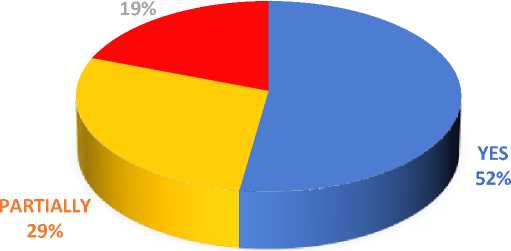
Chart 2. Students’ familiarity with the concept of deepfake technology and the possibility of abusing artificial intelligence to create pornographic content of a real person without consent Source: Authors’ search
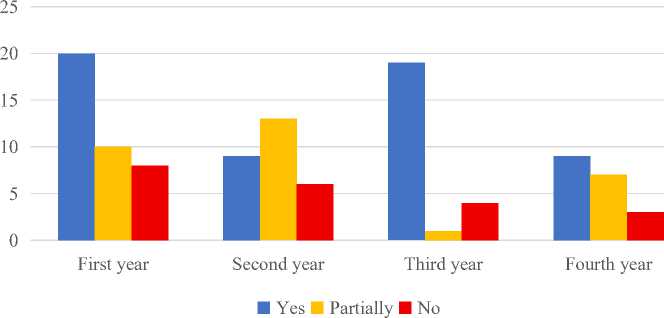
Chart 3. Students’ familiarity (by the year of study) with the concept of deepfake technology and the possibility of abusing artificial intelligence to create pornographic content of a real person without consent. Source: Authors’ search
Then, 56% of surveyed students have heard or come across cases where artificial intelligence was used to create pornographic content utilizing the image of a real person without consent (Chart 4 and Chart 5).
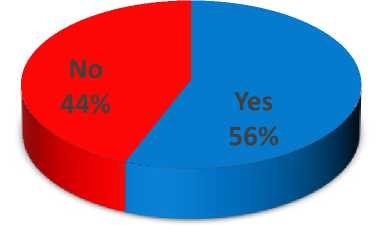
Chart 4. Students that have heard or come across cases in which artificial intelligence was used to create pornographic content utilizing the image of a real person without consent. Source: Authors’ search
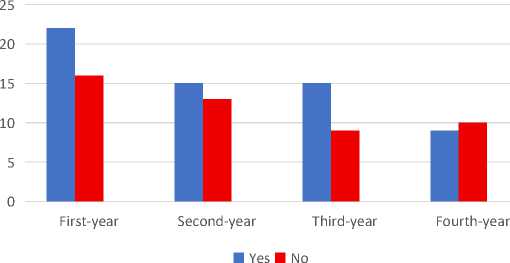
Chart 5. Students (by the year of study) that have heard or come across cases in which artificial intelligence was used to create pornographic content utilizing the image of a real person without consent. Source: Authors’ search
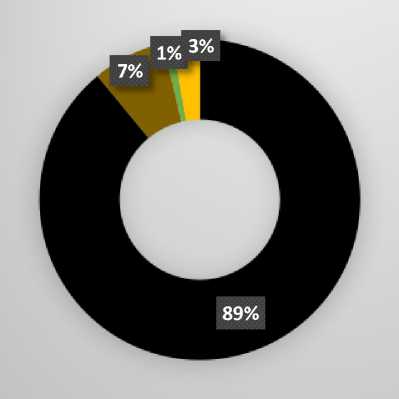
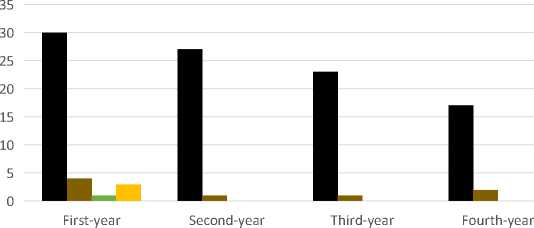
For surveying students’ opinions about the social dangerousness of the creation pornographic content using artificial intelligence without a person’s consent, scale of risks, ranging from very dangerous to not dangerous was used (Chart 6 and Chart 7).
-
■ Very dangerous
-
■ Moderately dangerous
-
■ A little dangerous
Not dangerous
Chart 6. Students’ opinions about the social dangerousness of the creation pornographic content using artificial intelligence without a person’s consent. Source: Authors’ search
Very dangerous Moderately dangerous A little dangerous Not dangerous
Chart 7. Students’ opinions ( by the year of study) about the social dangerousness of the creation pornographic content using artificial intelligence without a person’s consent. Source: Authors’ search
The next question in the survey dealt with the students’ opinion to what extent this kind of abuse can cause serious negative psychological consequences for the victim (eg stress, anxiety, reputational damage). A range scale from severe to no serious negative psychological consequences for the victim was given here (Chart 8).
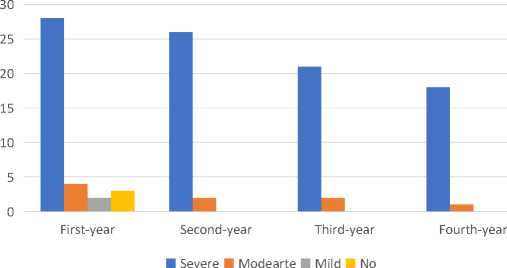
Chart 8. Students’ opinion about the extent of serious negative psychological consequences for the victim this kind of abuse can cause. Source: Authors’ search
Should the creation of pornographic content using artificial intelligence without a person’s consent be specifically regulated by criminal legislation was the following question in the survey . Yes/no/not sure answers were given to students to express their opinions (Chart 9).
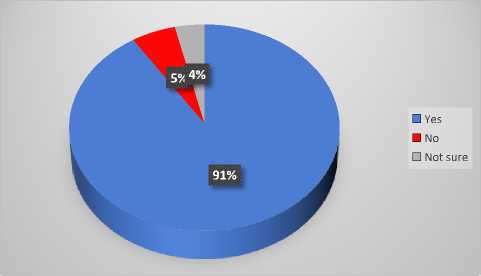
Chart 9. Students’ opinion regarding the question whether creation of pornographic content using artificial intelligence without a person’s consent should be specifically regulated by criminal legislation. Source: Authors’ search
Finally, the last question asked in the survey was: What measures, in your opinion, would contribute the most in preventing the misuse of artificial intelligence for these purposes? The given answers were the following: stricter criminal sanctions law, greater digital platforms governance, education of internet users and development of technologies for detecting manipulated content (Chart 10).
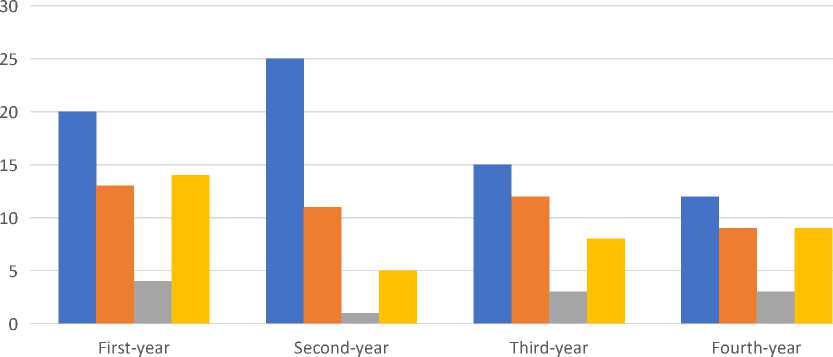
■ Stricter criminal sanctions law
■ Greater digital platforms governance
■ Education of Internet users
■ Development of technologies for detecting manipulated content
Chart 10. Students’ opinion regarding the contribution in preventing the misuse of artificial intelligence
Source: Authors’ search
From all of the above mentioned, we can conclude that the surveyed students are aware of the dangers, but are not sufficiently familiar with the concept of deepfake technology and the possibility of artificial intelligence to create pornographic content by using an image of a real person without consent.
Regarding students’ familiarity with the concept of deepfake technology and possibility of AI to create pornographic content featuring a real person without consent, the majority of respondents are familiar (52%), 29% are partially familiar (in the case of the second-year students, partial familiarity is the majority). It is important to emphasize here that a large percentage of respondents - 19%, answered that they were not familiar.
Also, a large percentage - 44% of surveyed students have not heard or come across cases where artificial intelligence was used to create pornographic content utilizing the image of a real person without consent.
Students’ opinions about the social dangerousness of this creation are that it is very dangerous (89%) and students of all study years found severe negative psychological consequences for the victims.
A large percentage of surveyed students (91%) believe that this matter should be regulated by criminal legislation and in accordance with that, they believe that stricter criminal sanctions law would contribute the most in preventing the misuse of artificial intelligence for these purposes.
Conclusion
The misuse of artificial intelligence in the creation of pornographic content is emerging as a complex social and legal phenomenon which, due to its technological sophistication, transnational character and pronounced victimological implications, exceeds the limits of traditional criminal law responses and requires interdisciplinary consideration. The rapid development of generative technologies points to the limitations of the existing normative framework, since the protection against digitally generated sexually explicit content created without consent is achieved to a significant extent indirectly and through extensive interpretation of existing incriminations, which calls into question its completeness and effectiveness in the modern digital environment. At the same time, the pronounced recognition of the social danger of this phenomenon and its potentially serious psychological consequences indicates a growing need for a sys- temic approach to the protection of victims, especially bearing in mind that the possibility of rapid, massive and difficult-to-control dissemination of content through digital platforms further deepens and prolongs victimization. In this sense, an adequate response to the subject phenomenon presupposes not only the normative improvement of criminal law protection, but also the development of coordinated preventive, educational and psychological-supporting mechanisms aimed at protecting the privacy, dignity and mental integrity of persons exposed to these forms of digital abuse.
The results of the conducted empirical research indicate the existence of a pronounced awareness of the student population about the social danger of the abuse of artificial intelligence for the purpose of creating pornographic content without consent, as well as the seriousness of the potential psychological consequences that such forms of digital victimization can produce for victims. However, despite the dominant recognition of the harmfulness of this phenomenon, the research findings indicate a certain degree of insufficient information among respondents regarding the concept of deepfake technology and the possibility of artificial intelligence to generate sexually explicit content using the identity of a real person without their consent, which confirms the fact that a significant percentage of students express partial or complete ignorance of the issue in question. Additionally, the fact that a significant number of respondents did not encounter concrete cases of such abuse may indicate insufficient visibility and social recognition of this form of digital violence, despite its growing technological availability and potentially serious consequences for victims. At the same time, the high level of agreement of respondents regarding the need for criminal law regulation of this matter, as well as the perception of the importance of stricter criminal sanctions in the function of prevention, indicate the social justification of further normative consideration of the criminal law treatment of the abuse of artificial intelligence in the creation of pornographic content, with the parallel development of preventive and educational mechanisms aimed at improving digital literacy and protecting potential victims.
Acknowledgements
The authors are grateful to the academic community within the Faculty of Law for Commerce and Judiciary in Novi Sad for their support in publishing this manuscript.
Funding
The paper is the result of a long-term scientific research project “Legal Challenges of the Inclusion of Artificial Intelligence in Contemporary Society and State”, which is financed by the Provincial Secretariat for Higher Education and Scientific Research Activity, Decision on granting funding/co-funding for projects of significance for the development of scientific research activities in the Autonomous Province of Vojvodina for the 2025-2028 project cycle, No. 003664560 2025 09418 003 000 000 001 04 016 of November 28, 2025.
Conflict of interests
The authors declare no conflict of interest.
Data availability statement
The original contributions presented in the study are included in the article/supplementary material, further inquiries can be directed to the corresponding author/s.
Institutional Review Board Statement
Not applicable.
Author Contributions
Conceptualization, J.M., M.P. and M.G.; methodology, J.M. and M.P.; software, M.G.; formal analysis, J.M., M.P. and M.G.; writing-original draft preparation, M.P. and M.G.; writing-review and editing, J.M. and M.P. All authors have read and agreed to the published version of the manuscript.
