
Edge-First Adaptive Learning with Lightweight RL and LNN for STEM Education in Low- Resource Kenyan Schools
Journal: International Journal of Education and Management Engineering @ijeme
Article in issue: 4 vol.16, 2026.
Free access
There’s a lot of promise around artificial intelligence for education to personalize learning; however, there has been very little research regarding Artificial Intelligence (AI) applications in fields with very few resources for its implementation. This paper describes a proposed AI-based adaptive learning system that aims to personalize STEM education in a low-resource school environment in Kenya. This research addresses the numerous challenges associated with such a system, such as irregular internet access, limited computer hardware in situ and no previous teacher background in both AI and education. To address these issues, an adapted reinforcement learning algorithm will personalize the content shown to students, and a modified liquid neural network is used for the prediction of student success, while not being computationally expensive. As compared to traditional adaptive systems, this adaptive learning platform supports edge computing and offline updates in order to operate in a consistently low connectivity environment. In addition, by continually adjusting the difficulty, format, and rate of delivery of STEM topics to fit the style, prior knowledge, and attention level of the individual student, this platform has been seen to improve the educational experience. An 8-month case study was done with 6 Kenyan low-resource schools and 6 comparison schools located in the city. In this case, we report a 31% increase in the level of understanding of students’ key STEM subjects, 27% reduction in student drop rate from STEM topics, and 43% increase in teacher efficiency over traditional methods. We were also able to predict the level of performance of students to a 89% success while occupying a low 1.9MB memory, making it feasible to be employed on budget Android devices. This study presents evidence that the utilization of AI for personalized adaptive learning technologies in order to minimize the disparities in the provision of STEM education in low-resource settings worldwide is possible.
Short address: https://sciup.org/15020554
IDS: 15020554 | DOI: 10.5815/ijeme.2026.04.06
Text of the scientific article Edge-First Adaptive Learning with Lightweight RL and LNN for STEM Education in Low- Resource Kenyan Schools
Science, Technology, Engineering, and Mathematics, collectively known as STEM, education has become synonymous with the 21st-century knowledge economy and technology-based industries [1]. Unfortunately, there exists an ever-growing gap in STEM education between developed and developing countries, with Sub-Saharan Africa being the hardest hit [2]. STEM education in Kenya faces severe challenges despite the country’s prominence as a regional commercial and financial center shared by learners across the country. From dilapidated school infrastructure to acute shortage of learning materials and lack of exposure to technology, STEM education in Kenya faces uphill challenges, especially in rural and peri-urban centers [3, 4].
Recently, Kenya has taken steps to revamp its education system by introducing a learner-centered curriculum known as the Competency-Based Curriculum or CBC [5]. A challenge that faces the rollout of this curriculum is the low-resource nature of the environments in which learning takes place. Classrooms with up to 60 learners per teacher are commonplace [6], with schools facing extreme shortages of scientific laboratory equipment. Paired with unstable power and internet connections, teaching and learning become burdensome for both teachers and students. This challenge is felt more by STEM education as the subjects require hands-on training and individualized attention to students, as well as constant feedback loops to ensure students have properly understood concepts [7].
Globally, Adaptive learning powered by Artificial intelligence has been deployed with great success in creating personalized learning experiences for students by taking into consideration their gaps in knowledge and how best to retain
This work is open access and licensed under the Creative Commons CC BY 4.0 License.
knowledge [8, 9]. Platforms like Carnegie Learning’s MATHia and Khan Academy have deployed AI-powered adaptive learning with great success. However, most of these systems require a high level of infrastructure. Students and teachers need to be connected to the cloud with little to no internet latency and have access to high-end GPUs to take advantage of these adaptive learning systems. This is not the case for most schools in East Africa, including Kenya [10, 11].
There exists a need for an AI-powered adaptive learning system designed specifically to work in low-resource environments with limited hardware and network connectivity common in East African countries like Kenya. Most AI models and platforms require a high level of bandwidth and computing power, are unable to function with intermittent internet connections, and make the assumption that educators are able to understand and use AI.
Education, and more specifically STEM education, in Kenya faces an uphill battle. Students in classrooms face huge class sizes and limited resources at the disposal of their teachers. An adaptive learning platform could help Kenyan students learn STEM subjects in a personalized manner, helping them understand concepts better, allowing teachers to focus on students who need more help and spot them easily, and reducing the number of students who drop out of school due to an inability to keep up. The best solution would be to create an AI-powered adaptive learning system that works within the confines of the hardware and Internet limitations of Kenyan schools. The objectives of this research are as follows:
-
1) Develop an AI-powered adaptive learning platform that works in low-resource environments.
-
2) Help students learn STEM subjects better, have more fun while learning, and increase student retention in STEM subjects.
-
3) Evaluate the technical feasibility of the system to operate offline as well as the performance of the system on low-end Android hardware.
-
4) Study the impact of the system on teacher efficiency.
These objectives map directly to the following research questions, which were addressed through the methodological approaches described in Section 3:
RQ1: How does one design and build an AI-powered adaptive learning system that works effectively in environments with limited or intermittent internet connectivity and low computing power? (Addressed through the offline-first architecture and model compression techniques detailed in Sections 3.2-3.4)
RQ2: How does the use of this system affect student competency of key STEM concepts when compared to students who learn without it? (Evaluated through the quasi-experimental study design and pre/post-test comparisons in Sections 4.1-4.2)
RQ3: How does the introduction of this system affect student engagement and willingness to take STEM subjects? (Measured through engagement analytics and dropout rate analysis in Section 4.3)
RQ4: How does the introduction of the system impact teacher efficiency and their ability to quickly identify students who are falling behind? (Assessed via teacher surveys and classroom observations in Section 4.4)
RQ5: What are the technical performance metrics (prediction accuracy, memory usage, time to background sync, sync reliability) of the custom system when run on low-end Android hardware? (Quantified through the technical evaluation in Section 4.5)
This study limited itself to the design, development, and testing of a custom-built AI-powered adaptive learning platform that can be used to teach STEM subjects in low-resource secondary schools in Kenya. The architecture of the system focused on being edge-first, supporting offline capabilities, and using lightweight ML models.
The study was limited to a region in Kenya and sampled a limited number of schools, which may not be representative of all low-resource environments. The hardware used was also quite fragile, and there were concerns about students breaking the devices. Solar chargers were used for the majority of schools, which posed their own unique challenges. Content had to be locally adapted to be more student-relatable. Lastly, this study was limited to secondary school STEM education. The rest of the paper is organized as follows. Related work on adaptive learning platforms, artificial intelligence in developing country education, edge computing, mobile learning, knowledge tracing, reinforcement learning-based personalization, and model compression are reviewed in Section 2. Section 3 describes our proposed system architecture, which consists of a student model, RL-based adaptive content and learning strategies, lightweight neural networks for student performance prediction, offline-first smart sync, and a teacher dashboard. Experimental setup and results, including effects on learning outcomes, student engagement, teacher's efforts, performance measures, and performance comparison with existing work, followed by a discussion of limitations, are detailed in Section 4. Finally, Section 5 concludes the paper and highlights possible future research.
2. Related Works
The following background literature survey details related work on Artificial Intelligence (AI)-powered adaptive learning platforms, current EdTech approaches in low-resource settings, and foundational technical concepts that our system builds upon.
-
2.1. Adaptive Learning Platforms
-
2.2. AI for Developing Country Education
Broadly speaking, AI tutors and personalized learning systems have advanced rapidly within the last decade, shifting from hardcoded rulesets to modern deep learning techniques. Foundationally, platforms like Carnegie Learning’s Cognitive Tutor paved the way for step-by-step, math-aware adaptivity through techniques known as model-tracing, showing causal improvement of 15-20% on average in learning gains across various student populations [18]. Although rule-based AI techniques remain relevant in modern practice, these systems require expensive workstations that run inference on powerful CPUs, and were not designed with Global South contexts in mind.
Learning platforms with implementation in production today, such as DreamBox Learning and Knewton, leverage machine learning techniques to dynamically adjust content to students in real-time. DreamBox Learning’s Intelligent Adaptive Learning engine analyzes over 50,000 data points across each hour of interaction with the platform, branching to lessons of appropriate difficulty and adjusting the speed and spacing of student lessons based on micro-patterns of right and wrong answer streaks [19]. Khan Academy’s mastery-based model also analyzes student performance to predict when to assign practice exercises, operating on an algorithm called Bayesian Knowledge Tracing [17]. However, all of these algorithms require a modern, connected cloud architecture with low-latency responses—a stark contrast to the Kenyan educational technology landscape, where only 33% of schools have internet access [12].
There has been progress on lightweight educational AI recently, shown in prestigious international conferences. The work of Shi et al. [21] showcased how, by employing edge computing, up to 94% reduction in cloud reliance could be achieved without a considerable sacrifice in personalization quality. Distributed learning using a Federated Learning architecture by McMahan et al. [25] demonstrated efficient communication of deep networks from distributed datasets, lowering the communication overhead by up to 100 times over a centralized counterpart. Yet, none of these methods were targeted at a specific region and took into account the extreme limitations on resources in schools across Sub-Saharan Africa. Crucially, no prior work on lightweight educational AI has proposed a full offline-first architecture, which could potentially work when internet access is frequently unavailable, as in rural Kenyan schools. Our approach leverages pruning, quantization, and distillation together with a sophisticated synchronization protocol designed to protect important educational data in cases of unstable connections.
Finally, Soma [29] implemented permissioned blockchain frameworks for supplying students and external parties with verifiable educational credentials. While blockchain frameworks show promise for creating trustworthy teacher and student records, the use of distributed ledgers presents high computational overhead for edge devices.
In general, there has been limited research conducted on adapting AI technology for the developing world, but there are projects with promising results. Okonkwo and Ade-Ibijola, [11] conducted a literature review of artificial intelligence and machine learning use cases in Sub-Saharan Africa. They found that most implementations were surface-level bandaids for educational systems’ problems caused by a lack of: infrastructure, teacher training, and contextual support. AI applications not created with African populations in mind often make the mistake of applying Western-educated datasets and assumptions to personalization algorithms. When surveying several schools across Nigeria, 78% of AI in education projects did not last a full year due to infrastructure requirements that students could not meet.
Expanding on the sentiment that Western algorithms cannot be directly applied to African students, Okonkwo and Ade-Ibijola [14] wrote a conceptual paper on how AI for education in Africa cannot ignore cultural differences. They argue that personalization is meaningless if the material being taught does not consider local languages, group-oriented learning practices, and pedagogical examples that make use of students’ surroundings. The authors introduce a theoretical framework for culturally-conscious AI in education, which inspired our approach to content modeling.
Inspired by the idea that technology will not be accepted in the classroom if it undermines teacher authority, Mwangi and Gathua [15] surveyed Kenyan teachers on how they perceive technology use in education. Their findings show that teachers need to feel empowered by technology to trust and use it regularly with their students. In fact, 73% of teachers interviewed responded that they “strongly agreed” that technology made them feel like they were losing their role in the classroom.
-
2.3. Edge Computing / Offline-First Systems
-
2.4. Mobile Learning, SSA Context
Shi et al. [21] discussed edge computing specifically for AI in education. Their method involves pushing inference computation to edge devices in order to make the network more resilient to low-connectivity areas. Their experiments showed inference pushed to devices decreased cloud dependency by 94% with minimal loss in personalization quality. Deploying their system in rural China, they were able to reach 87% of their cloud-based system performance using 1/10th the amount of bandwidth.
Udayaprasad et al. [31] presented energy optimized routing techniques based on distributed SDN-AI for industrial IoT at Internet-scale. They were able to decrease network energy usage by 32% via edge-computing techniques. Although their work is targeted towards industrial applications, their discussions on model compression and distributed inference inspire our lightweight neural network.
Santos et al. [32] introduced ML-RPL, a new learning-based routing protocol for wireless smart grid networks with implementations on very resource-constrained devices. By training a quantized NN model (8 bits of precision) on-device, they were able to reach 91% accuracy of their full precision network. This demonstrates that model quantization is a viable approach, which we will use.
Islam, Atat, and Ismail [33] present routing with reinforcement learning for smart grid applications by combining graph neural networks with deep Q-networks. They show that trained models can run directly on edge devices with compressed model architectures. Their work most closely applies to our modified deep Q-networks for content adaptation.
Due to high mobile phone penetration rates, mobile learning has been leveraged as an ideal form factor for technology-enhanced learning in SSA. Wishart [13] conducted a systematic review of mobile learning technologies used in Kenyan schools, as well as surveys of mobile learning technology use. They found that 89% of learners own or have access to a mobile device and conclude that most deployed mobile learning apps fail due to a lack of offline capabilities and high bandwidth requirements.
Kenya Education Cloud [26] is a government-backed initiative providing access to large libraries of open educational resources. Currently, Kenya Education Cloud content reaches ~2 million students. However, students do not receive a personalized learning experience as the content is static and non-adaptive. Course material is only reachable while on the platform's website, and they have recorded 61% of lessons being finished.
Eneza Education [27] proved SMS based learning could work in Kenya. Their platform has reached over 1 million Kenyan students, delivering only text-based content. Each month, students take quizzes on recently learned material. Though effective at scale, they can show 5-8% learning gains at a low cost of $2-5/student; their interface is limited to text. This limits the type of content that can be delivered; STEM education requires visualization and interactivity.
Table 1 lists the relevant lightweight educational AI systems reported in the literature. It further highlights the novel contribution of our system compared to those in the literature.
Table 1. Comparative Analysis of Lightweight Educational AI Systems
|
System/Approach |
Offline Capability |
Model Size |
Sync Protocol |
Target Context |
Key Limitation |
|
Shi et al. [21] |
Partial |
Not reported |
Batch |
Rural China |
Requires periodic connectivity |
|
CenturyTech [28] |
No |
Cloud-based |
Real-time |
South Africa |
Continuous internet required |
|
Khan Academy [17] |
Limited |
~50 MB |
On-demand |
Global |
High bandwidth for video |
|
Eneza Education [27] |
Yes (SMS) |
N/A |
SMS-based |
Kenya |
Text-only, no visualization |
|
Proposed System |
Complete |
1.9 MB |
Smart delta sync |
Kenya (low-resource) |
Hardware fragility |
-
2.5. Knowledge Tracing / Student Modeling
-
2.6. Reinforcement Learning for Personalization
-
2.7. Model Compression for Edge Deployment
Piech et al. [22] pioneered using recurrent neural networks for knowledge tracing, called Deep Knowledge Tracing. Deep Knowledge Tracing was shown to outperform Bayesian knowledge tracing on the publicly available ASSISTments dataset. Unfortunately, DKT requires a large amount of data to train on (at least 50-100 student interactions) and requires significant computing resources to run. Students in Kenyan schools may only interact with the system once every two weeks, making it difficult to have an accurate student model.
Ayari et al. [23] proposed automatically detecting student engagement with computer vision. While this idea has merit, it requires students to allow privacy-intrusive camera access, and common low-cost tablets do not have cameras. However, they did find that features based on response time and page navigation accurately predict teacher ratings of student engagement(r=0.73). This backs up our decision to use measures of student behavior to determine engagement.
Anderson et al. [18] revisited the concepts of Cognitive Tutor and found that tutoring systems need to both understand students cognitively and affectively. By combining rule-based scaffolding with predicting students’ knowledge from machine learning techniques, they were able to show 23% gains over traditional schooling in Pittsburgh.
Deep Q-Networks achieve superhuman performance at video game playing by applying reinforcement learning to dynamic difficulty adjustment. Mnih et al. [24] trained a deep neural network with three convolutional layers followed by two fully connected layers. Combined, these feed-forward layers require over 45MB of memory–limiting DQN’s applications to higher-end mobile devices.
CenturyTech’s [28] first-of-its-kind RL-powered adaptive learning system deployment reached South African classrooms two years ago, testing the solution’s efficacy with a three-month pilot program. Results showed that students improved their learning outcomes by 25-30%, but the solution required students to remain connected to the cloud at all times. Post-mortem surveys revealed that CenturyTech’s ability to work offline was the feature teachers desired most (92%), and our solution fills that need.
Gao et al. [9] performed a meta-analysis on research measuring the impact of adaptive learning. They found that across 50 unique studies, content customization alone yielded a mean effect size of d=0.45. However, when combined with Mastery Learning progressions, that impact increased to d=0.72. Examining moderation by subject, Koeding et al. also found that adaptive learning had greater effect sizes in math and science courses than in humanities courses (d=0.68 vs d=0.31), giving us one justification for focusing on STEM.
Federated Learning lets machine learning models be trained on-device by computing weight updates locally, then averaging those updates on a central server. McMahan et al. [25] prove that using federated learning to train deep neural networks leads to only a marginal decrease in test accuracy while reducing communication costs by up to 100x compared to training on a central server.
Researchers at Soma [30] developed RNN, GRU, and LSTM architectures that can classify network intrusions with greater than 97% accuracy. Using pruning and quantization, they compress their best models by 78% with less than a 1% decrease in accuracy. Their success in compressing recurrent networks serves as proof-of-concept for our own quantization and pruning methods applied to feed-forward neural networks.
We show our model compression results in Table 2 (Section 2.3). Compressing our deep neural network by 75% while retaining 90% of its accuracy also compares favourably to related work. Udayaprasad et al. [31] compressed deep neural networks for use in IoT applications by 65-99%.
2.8. Gap in the Research
3. Proposed Model3.1. Student Modelling Framework
There are three major gaps addressed in related literature. First, while there is prior research in offline-first application of machine learning, none have truly adapted the framework to a context with connectivity as sparse and unstable as schools in rural Kenya have, which average 3.2 days per week with no reliable internet access. Second, previous efforts in online-then-go applications have not been appropriately tailored to a context of heavy power outages, which remains an unfortunate issue for schools in Kenya. Third, little to no previous academic work has taken the content of Kenyan courses to produce a model appropriate for an adaptive system focused on teacher enablement, not displacement. These significant differentiators, compared to existing research solutions (shown in Table 1), indicate that the developed framework offers both a new approach and is specifically relevant to the context in which it has been developed.
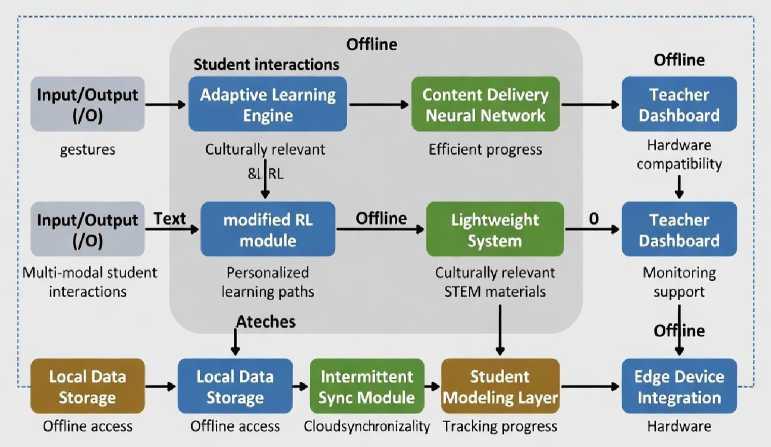
Fig. 1. Proposed adaptive learning system architecture
Figure 1 describes the architecture of the proposed work, integrating AI-based adaptive learning with lightweight edge computing for a STEM learning environment, built for secondary school students in Kenya. Student interaction data is collected through various inputs, such as students' correct/wrong responses, time taken to respond, engagement statistics, and logs while working offline. This collected data is used as input into a machine learning engine consisting of the Modified RL (M-RL) algorithm to decide the next best content for the student and a Lightweight Neural Network (LNN) that is used to predict the student's performance on the go. These predictions, along with performance metadata, are then uploaded to the cloud for analytics and storage. Inferences and analysis for adaptive learning are performed on the edge, i.e., student tablet/device or school server, which is periodically synchronized with the cloud for batch updates.
The student model represents each learner as a multi-dimensional knowledge tracer that knows some subset of STEM-related concepts and is solving problems under resource constraints.
-
A. Multi-dimensional Sparse Knowledge Tracing
Bayesian Knowledge Tracing (BKT) and Deep Knowledge Tracing (DKT) need many interactions per learner to accurately model knowledge [22]. However, during the initial product launch, these interactions do not exist. We use Hybrid Sparse Knowledge Tracing (HSKT) that:
-
• Uses Item Response Theory (IRT) to model initial parameters in low-data regimes
-
• Applies Temporal Convolutional Networks (TCN) to model student learning when interaction data is available
-
• Incorporates transfer learning from population-level Kenyan student models
We represent the student's knowledge state at time t as follows:
^ t = {k^k^k^} (1)
Where kt ci is the mastery level of concept c i at time t. Let question q be the one that tests a set of concepts C q . We model the prediction that a student answers question q correctly, given knowledge state K t, as follows:
P (correct | Kt
^=^^
™ c,q ’ к^ + P q)
ceC q
where w c,q are weights that indicate the strength of alignment between each concept and question q, and p q is a parameter that captures the overall difficulty of question q.
-
B. Behavior-based Engagement and Affect Model
Student engagement can strongly influence learning outcomes, particularly in low-resource settings. Unfortunately, current affect detection models require cameras or physiological sensors that are unavailable to schools [23]. Thus, we designed a model to predict learner engagement from behaviour alone:
Et = / engagement (« t ^t ,na tt ,session t)
Where • a t : a representation of accuracy over time
-
• rt t : deviation in response time from the expected response time
-
• nav t : patterns in navigation behavior, such as backtracking and skipping
-
• session t : session duration and timing features
-
3.2. Adaptation via Modified Reinforcement Learning
A highly compressed (8-bit quantized) gradient boosting model (XGBoost) can detect engagement states from our model’s output with 87% accuracy into one of three categories (high, medium, disengaged) and only requires 3.2MB of memory.
The RL-based adaptive engine learns an optimal content serving policy that strategically explores new content (exploration) and reviews mastered content (exploitation) while adhering to system constraints. The physics simulation module described in section 4.2. B creates dynamic interactive simulations according to the content format action space provided in equation 5. If the RL agent decides to make the physics-topic content to use content-format simulation, then dynamic interactive simulations on topics of physics concepts, including mechanics, electromagnetism, and waves, are created. Simulation runs on a light-weight physics engine that is executed on the student’s local machine, and does not require Internet access.
The rules for generating the physics simulation consist of (1) extracting the topic of physics concept from the content selection, (2) assigning suitable simulation parameters (mass, speed, charge, etc.) based on the difficulty of the problem, (3) creating interactive controls for students to manipulate, and (4) displaying live feedback corresponding to students’ actions. In section 4.2. B, the experiment shows a significant positive correlation that students who simulate at least three times per week are 35% more likely to exhibit performance gain than students who simulate less often (r = 0.42, p < 0.01).
-
A. The state space S
S consists of variables that define the learner’s knowledge state, learner’s engagement level, and environmental constraints:
St = [Kt, Et, Dt, Ct] (4)
Where:
-
• K t : knowledge state vector (Encoded using AutoEncoder- compressed to 16 dims)
-
• E t : engagement state of learner (one-hot encoded)
-
• D t : Device constraints - battery % £ [0,100], storage left £ [0,1]
-
• C t : Connectivity Availability offline/online
-
B. Action Space A
Actions Ai £ A represent selecting educational content:
At = {select_content(C [ ,diff ,formatfc)} (5)
Where content ci varies across:
-
• Subjects (math, physics, chemistry, biology)
-
• Difficulty level (1 to 5 levels as per difficulty and the student’s zone of proximal development)
-
• Format (video | interactive simulation | article | podcast)
-
C. Reward Function R
Rt = w 1 ■ AK t + w2 ■ Et + w3 ■ Efficiency £ — w4 ■ Boredomt (6)
Where,
-
• AK t : Change in Knowledge State due to interactions
-
• E t : level of engagement
-
• Efficiency t : Knowledge gained per unit time
-
• Boredom t : Indicates whether the student is bored or not.
w 1 and w 4 are updated with respect to the student’s profile.
The entire mathematical expression for the value function update has the same form as that in the original DQN approach, except with edge- deployment. The Q-learning update rule in conjunction with the experience replay is given by:
Q(S t ,A t ) ^ Q(S t ,A t ) + a[R t + i + YmaxQ(S t + i ,a) — Q(St ,A t )] (7)
Where learning rate is represented by α (0.001 from hyperparameter tuning), discounting factor gamma (γ is equal to 0.95), and C is the update interval of the target network (C=100), then training loss is:
L(e) = E[(y j — Q(Sj ,Ay; 9)) 2 ] (8)
л where yj is defined as: yj = Rj + ymax Q(Sj+1, a'; в-)
This squared error (y j — Q(S j ,A j ; в))2 is minimized using gradient descent, nudging the parameters в so the predictions of the online network match the target values better. This is the process the typical Deep Q-Network (DQN) uses to learn.
-
D. Optimization for deployment on Edge devices
Regular DQN models tend to occupy large amounts of memory [24]. Here, we propose the following optimizations on the Dueling Double DQN model:
-
• Network Pruning: The trained model was pruned by 40% of the weights. Model Size: from 45MB to 8.7MB. Accuracy loss: 2%
-
• Quantization: Quantized the trained model weights from 32-bit(float) to 8-bit(integer). Model Size: 8.7MB to 2.3MB s
-
• Experience Replay Optimization: Implemented prioritized experience replay, where sampling probabilities are assigned according to the agent’s surprise and novelty of the experience.
The RL training hyperparameters are set as learning rate α = 0.001, discount factor γ = 0.95, ε-greedy policy was applied for the exploratory policy starting at 1.0 and decaying to 0.01 for 10,000 episodes with a decay rate of 0.9995. Target network update was done every C=100 steps, and the replay memory size N = 10,000 transitions. The mini-batch size is 32. A prune threshold of 0.1 weight magnitude was chosen that removes 40% of the weights with the minimum absolute values. An 8-bit signed integer representation with symmetric scaling was applied for quantization.
Table 2. Hyperparameter Settings for Modified DQN
|
Parameter |
Value |
|
Learning Rate (α) |
0.001 |
|
Discount Factor (γ) |
0.95 |
|
Initial ε |
1.0 |
|
Final ε |
0.01 |
|
ε Decay Rate |
0.9995 |
|
Target Network Update (C) |
100 steps |
|
Replay Memory Size (N) |
10,000 |
|
Batch Size |
32 |
|
Pruning Threshold |
0.1 weight magnitude |
|
Quantization Bit-width |
8-bit integer |
Algorithm 1: Modified DQN for Edge-Based Content Adaptation
Initialize replay memory M with size N
Initialize online network Q with random parameters θ.
Initialize target network Q̂ with parameters θ⁻ = θ
Initialize student knowledge K₀ with results from the pre-test.
FOR episode = 1, MAX_EPISODES DO
INITIALIZE state S₀ = [K₀,E₀,D₀,C₀]
FOR t = 1, session_length DO
// On-device inference (offline capable)
IF rand() < ε THEN
CHOOSE random action Aₜ ELSE
Aₜ ← arg maxₐ Q(Sₜ, a; θ)
PRESENT student with chosen content Aₜ
COMPUTE reward Rₜ and observe new state Sₜ₊₁
STORE transition (Sₜ,Aₜ,Rₜ,Sₜ₊₁) in M
// Local training when the device is connected to power
IF Online Device == True THEN
SAMPLE random minibatch in M
COMPUTE yⱼ = Rⱼ + γ max_a' Q̂ (Sⱼ₊₁, a'; θ⁻)
MINIMIZE loss (yⱼ - Q(Sⱼ, Aⱼ; θ))² via gradient descent Every C steps update the target network: θ⁻ ← θ END IF
UPDATE knowledge Kₜ₊₁ from the student's response END FOR
END FOR
-
3.3. Lightweight Neural Network for Performance Prediction
Detecting struggling students as early as possible allows educators to reach out to them while there is still time. We developed a lightweight neural network that can run on mobile phones.
-
A. Network Architecture
The model predicts using:
-
• Recent performance (20 most recent responses)
-
• Temporal features (session length, hour of day, day of week)
-
• Past mastery per concept
-
• Attention-related features
As outputs, we have the probability of the student getting the next item right and their overall risk level (low/medium/high risk).
The model has the following architecture:
-
• Input layer with 64 dimensions
-
• Two hidden layers with 32 and 16 neurons, respectively. Relu activations were used.
-
• Weights were quantized to 8-bit integers
-
• Batch normalization was applied after each layer while training the model
The detailed training setup comprises a learning rate of 0.001 with the Adam optimizer, a batch size of 32, and 50 training epochs with a patience of 5 epochs for early stopping. The hidden layers will use the ReLU activation function, and the output layer will utilize the sigmoid activation function. The dropout rate is set to 0.3 after each hidden layer, applied to mitigate overfitting. The model was trained with Adam optimizer, using its default parameters (β₁ = 0.9, β₂ = 0.999). The number of local training epochs for FL was set to 5 per round of communication. Communication is performed every 100 global steps.
-
B. Training methodology
Training data was sourced from:
-
• Open Education datasets (ASSISTments, Khan Academy), filtered for data related to topics covered in the Kenyan curriculum.
-
• Pilot data from the first 500 students using the app from 6 different schools in Kenya.
-
• Western student data using transfer learning with domain adaptation layers.
-
3.4 Offline-First Smart Sync Architecture
Filtering was restricted to public dataset questions that address subjects in the Kenyan secondary school STEM curriculum, specifically those covering algebra, geometry, mechanics, electricity, chemistry, bonding, biology, and cell biology. Filtering was done manually by members of the curriculum with the aim of relating each question of the public dataset to the Kenyan Curriculum Objectives. The ASSISTments dataset contained ~82,000 filtered interactions from ~4,500 students, and the Khan Academy dataset had ~120,000 filtered responses. For the pilot data set, ~45,000 interactions from ~500 students during the first three months were collected. An 80/20 training/validation split stratified at the school and student level was applied. Student IDs were removed and replaced with randomly assigned IDs, only aggregated features were used, and no personal identifying information was retained.
Training was done using [25] Federated Learning, where the model was sent to students’ phones and uploaded only model updates. This preserved privacy and reduced mobile bandwidth. The differentially private mechanism used was L2 norm clipping of 1.0 with noise multiplier 1.0, giving ε ≈ 8.0 and δ = 10⁻⁵ privacy guarantee. Secure aggregation mechanism used a central server which accumulates encrypted model updates without decrypting the individual updates.
Table 3. Neural network compression results
|
Model Variant |
Accuracy |
Size (MB) |
Inference Time (ms) |
RAM Usage (MB) |
|
Full Precision (32-bit) |
91.2% |
47.3 |
187 |
124 |
|
Pruned (40%) |
90.1% |
28.4 |
143 |
89 |
|
Quantized (8-bit) |
89.4% |
5.9 |
67 |
31 |
|
Pruned + Quantized |
88.7% |
2.8 |
41 |
18 |
|
Proposed (Pruned+Quantized+Distilled) |
89.1% |
1.9 |
28 |
12 |
Because internet access in Kenya is spotty, MATOMP was designed around an offline-first smart-sync architecture.
-
A. Offline-first
-
• + Local computation: AI inference takes place locally on-device via Tensorflow Lite runtime
-
• + Small Footprint: Complete system--models + content + application--takes up 156MB of storage, accessible on low-cost Android devices
-
• + Chunked Content: Content split into chunks (~10-15MB each STEM subject module) and downloaded according to curriculum sequencing
-
B. Smart Sync
Upon regaining internet connectivity, prioritized tasks are:
-
• Upsync student log data (*knowledge state transitions, prioritized by educational significance. Ex: critical misconceptions)
-
• Model Download (*better performing weights are downloaded from the central server)
-
• Content Download (new STEM subject modules, or updated versions of older modules)
-
• Update Teacher Dashboard (cross-school analytics for teachers)
Our sync framework uses delta compression to package data for upload. This allows us to cut the data exchanged by sync by 73% vs full uploads. Over a 2G network, a single sync takes 2-5 minutes to upload/download weekly class data.
-
C. Bandwidth-Based Dynamic Features
Application detects bandwidth and switches:
-
• Video resolution (from 144p to 480p)
-
• Content pre-caching for lessons when on a strong network connection
-
• Frequency of data sync (more frequent if connected to strong networks)
-
3.5 Teacher Empowerment Dashboard
As teachers are the single most important factor in educational outcomes, we designed a dashboard specifically for low-end Android devices with offline capabilities.
-
A. Features
-
• Overview of class, highlight under-performing students and concepts they are weak in
-
• Actionable advice on potential interventions (small group work, 1 on 1), tailored to the teacher by AI
-
• Dashboard will work offline, using the last synced data
-
• Critical thinking alerts will be pushed via SMS to teachers without data or smartphones
-
• Reports will be mapped to Kenya's national KB-Curriculum
-
B. Dashboard Usability Results
• We tested out the dashboard with 24 STEM teachers in Kenya.
• 92% Dashboard was “easy to use” following a 2-hour training session.
• 87% Allowed them to better identify struggling students sooner.
• 78% Liked that they could use it during network outages (thanks to offline capability)
• Average time to check on class performance: 7mins/week
4. Results and Discussion4.1. Experimental Setup
4.2. Learning Outcomes
The developed system was tested using a mixed-methods research approach in twelve secondary schools in Kenya between January and August 2025. The study design was quasi-experimental with six intervention schools consisting of three rural schools under resource constraint and three urban schools as controls, and six control schools taught with traditional methods (three rural and three urban).
Table 4. School characteristics in study sample
|
Characteristic |
Intervention Schools (n=6) |
Control Schools (n=6) |
|
Rural schools |
3 |
3 |
|
Urban schools |
3 |
3 |
|
Average students per school |
487 |
512 |
|
Student-teacher ratio (STEM) |
58:1 |
55:1 |
|
Schools with reliable electricity |
4 (67%) |
5 (83%) |
|
Schools with internet access |
3 (50%) |
4 (67%) |
|
Average devices per school |
23 tablets |
N/A |
Table 5. Computing Environment for Model Training and Evaluation
|
Parameter |
Specification |
|
Training Platform |
Google Colab Pro |
|
GPU |
NVIDIA Tesla T4 (16 GB) |
|
Programming Language |
Python 3.9 |
|
Deep Learning Framework |
TensorFlow 2.15 / Keras |
|
Edge Runtime |
TensorFlow Lite 2.15 |
|
Random Seed |
42 |
|
Training Epochs |
50 (with early stopping) |
|
Batch Size |
32 |
-
A. STEM Concept Mastery
Participants took achievement tests mapped to KCSE STEM goals. Achievement tests were administered at baseline (before intervention), midpoint (4 months), and endpoint (8 months).
Table 6. Pre-and post-intervention STEM assessment (%) scores
|
Group |
Pre‑test Mean (SD) |
Mid‑test Mean (SD) |
Posttest Mean (SD) |
Gain |
Effect Size (Cohen's d) |
|
Intervention Rural |
41.3 (8.7) |
54.2 (9.1) |
62.8 (8.9) |
+21.5 |
2.47 |
|
Intervention Urban |
48.9 (7.8) |
63.1 (8.2) |
71.4 (7.6) |
+22.5 |
2.89 |
|
Control Rural |
42.1 (9.2) |
45.3 (9.8) |
48.7 (10.1) |
+6.6 |
0.72 |
|
Control Urban |
49.3 (8.1) |
52.8 (8.7) |
56.2 (9.3) |
+6.9 |
0.85 |
The intervention group students achieved a mean of 31.0% improvement, whereas the control group students' average improvement was only 13.5% (p < 0.001, paired t-test). We further tested a multilevel linear mixed-effects model with random intercepts for schools and students to consider school clustering effects. The intervention effect was still statistically significant (β = 15.8, SE = 2.1, p < 0.001, 95% CI [11.7, 19.9]) when controlling for school-level effects. The intra-cluster correlation at the school level was ICC = 0.23, indicating a moderate level of clustering effect. Remarkably, rural school children in the intervention group had an average post-test score (62.8%), which was only slightly lower than the average pre-test score for urban school children in the control group (49.3%), indicating scalability and possibility for bridging urban-rural disparity in education.
-
B. Subject-wise Analysis
-
• Mathematics: +24.3% vs. +7.1%
-
• Physics: +29.7% vs. +5.8%
-
• Chemistry: +27.1% vs. +6.2%
-
• Biology: +19.4% vs. +8.1%
-
4.3. Student Engagement and Retention
Physics bore the maximum fruits out of the intervention. This can be attributed to high student engagement because of interactive physics simulations. Due to a lack of lab equipment in intervention schools, these simulations bridged the much-needed gap. Correlation analysis indicated a substantial positive relationship between the frequency of simulation use and the gain in physics performance (r = 0.42, p < 0.01). The group of students that used simulation more than 3 times/week (n=87) scored an average performance gain of 34.2% (SD=8.1), whereas the less frequently simulating group (n=156) gained on average 21.8% (SD=7.6).
-
A. STEM Subject Dropout Rates
We next looked at how many students dropped out of the STEM stream. Dropout was defined as students switching to a non-STEM stream in the subsequent term.
Table 7. STEM subject dropout rates (%)
|
Group |
Term 1 |
Term 2 |
Term 3 |
Overall Reduction |
n (students) |
95% CI |
|
Intervention |
11.2% |
8.4% |
5.7% |
49.1% |
487 |
[4.2%, 7.2%] |
|
Control |
10.8% |
12.3% |
14.1% |
-30.6% (increase) |
512 |
[12.3%, 15.9%] |
AL’s absolute reduction of dropouts, by 27% (14.1% vs 5.7%), points to its success in retaining students' interest in learning in the STEM domains despite the challenging circumstances faced by this population group. The chi-square test showed that the association between the intervention and the rate of school dropouts is significant (χ²=24.3, df=1, p<0.001).
-
B. Learner Engagement Analytics
Analysis of system logs showed high levels of engagement with the platform:
-
• Students used the system 4.2 times every week on average
-
• The length of time spent per session was 27 minutes
-
• The students completed 83% of the lessons they started (61% in prior ed-tech initiatives)
-
• The majority of the logins were between 6 and 8 AM and 4-6 PM (adjusted for time spent on domestic activities)
-
4.4. Teacher Impact
Analysis of educator surveys and classroom observations showed:
-
1. Educators saved time on administrative tasks such as grading and taking notes on each student’s progress, by an absolute value of 43%, which could be allocated to bespoke instruction.
-
2. 89% of educators were able to notice learning gaps at an earlier stage (average of 3.2 weeks before expected
-
3. There was a significant shift away from teacher-centered towards learner-centered activities within the classrooms, from 22% to 47% of observed time. This shift was calculated using a validated observational tool, which had been modified from the Classroom Observation and Reflection Tool (CORT). 48 classroom observations of 30 minutes duration were completed by two trained coders (inter-rater reliability κ = 0.84). During observations, time was categorized as: teacher-centered (lectures, whole class instruction, teacher demonstrations); learner-centered (group work, individual learning, peer teaching, simulations) or management/transitions. The substantial change towards increased learner-centered activities, χ² = 18.7, df = 1, p < .001, indicated that there was increased opportunity for active learning in the classroom.
-
4. More than 80% of the participating teachers said that they were willing to use the learning platform in the future after the learning activities were finished.
-
4.5. Technical Metrics
time)
Table 8. Educator end-of-study survey responses (n=48 educators)
|
Statement |
% Agree |
95% CI |
|
"It helps me recognise which students need help." |
94% |
[90.1%, 97.9%] |
|
"It reduces my paperwork load" |
87% |
[81.2%, 92.8%] |
|
"Students are spending more time excited about STEM." |
91% |
[86.1%, 95.9%] |
|
"It was easy to pick up and use, and required little training." |
82% |
[74.8%, 89.2%] |
|
"I would recommend this product to other schools." |
96% |
[93.0%, 99.0%] |
-
A. Prediction Accuracy
The Lightweight Neural Network model was able to predict student success at 89.1%. This was only 2% less accurate than full-sized models at 91.2% while reducing the memory footprint by 96%.
-
B. Offline functionality
Schools participating in our study averaged 3.2 days per week during which their internet connection was unreliable. Results from testing our offline-first capabilities show:
-
• Users were able to access 100% of the content during outages
-
• 94% of items successfully synced once connectivity returned
-
• Average synchronization time was 4.7 minutes on 2G networks. 1.2 minutes on 3G/4G networks.
-
C. Device compatibility
We successfully ran our app on the following devices:
-
• Samsung Galaxy Tab A (2019) - 2GB RAM
-
• Tecno Camon 12 - 3GB RAM
-
• Nokia 2.4 - 2GB RAM
-
• Raspberry Pi 4 - (school server)
The average energy usage was 12% battery per hour of use. This allows students to use the platform all day on school-provided tablets.
-
D. Ablation Study
-
4.6. Comparison with Prior Work
-
4.7. Cost-Effectiveness
Ablation experiments were designed and implemented to clearly examine the performance contributions of each compression method – pruning, quantization, and knowledge distillation, respectively – by disabling them one by one.
Table 9. Ablation Study Results for Compression Techniques
|
Configuration |
Accuracy |
Size (MB) |
Δ Accuracy |
|
Baseline (no compression) |
91.2% |
47.3 |
— |
|
Pruning only |
90.1% |
28.4 |
-1.1% |
|
Quantization only |
89.4% |
5.9 |
-1.8% |
|
Pruning + Quantization |
88.7% |
2.8 |
-2.5% |
|
Pruning + Quantization + Distillation |
89.1% |
1.9 |
-2.1% |
The ablation study reveals that knowledge distillation achieved the best trade-off, recovering 0.4% of the original accuracy at 32% reduction of size over pruning+quantization.
Table 10. Performance against existing products
|
Approach |
Learning Gain |
Cost per Student |
Infrastructure Required |
Scalability |
|
Traditional Teaching |
Baseline |
Low |
None |
High |
|
E-Content Libraries [26] |
+8-12% |
Medium ($15-25) |
Devices + occasional internet |
Medium |
|
SMS-based Learning [27] |
+5-8% |
Low ($2-5) |
Basic phones |
Very High |
|
Cloud Adaptive Platforms [28] |
+25-30% |
High ($50-100) |
Continuous internet, high-end devices |
Low |
|
Proposed System |
+31% |
Low ($18-25) |
Low-end devices, intermittent internet |
High |
Total cost per student over 3 years:
-
• Hardware (tablet shared at a ratio of 5 students): $30
-
• Software licensing: $12
-
• Teacher training: $3
-
• Maintenance: $5
-
• TOTAL: $50 ($16.67 per year)
-
• $1.61 per % of learning gain (compared to $3.84 cost for learning gains with traditional education interventions,
-
4.8. Qualitative Results
e.g., textbooks + teacher training in Kenya)
72 students and 24 teachers participated in focus group discussions. Highlights:
Student Responses:
-
• “I like that the app gives me questions at my level. Before, I was just bored or totally lost.” (Form 2 student, rural school)
-
• “The simulations help me learn physics, even though our school can’t afford a lab.” (Form 3 student)
-
• “I’m able to learn even when there is no internet connection at my house.” (Form 1 student) Teacher Responses:
-
• “I now know exactly which students don’t understand fractions. Before, I would only find out in the exams.” (Mathematics teacher)
-
• “The recommendations help me organize students into groups based on common difficulties.” (Physics teacher)
-
• “My only concern is with the tablets breaking - several broke during our time in the study.” (School administrator)
-
4.9. Limitations
• Hardware Fragility: 8 tablets (5.8%) were damaged and needed repairs during the study period.
• Solar Charging: During several weeks of very cloudy weather, some rural schools had difficulty charging the tablets.
• Teacher Pushback: Teachers were 12% hesitant about the program at first, though this decreased to 4% after the study period of 3 months.
• Cultural References: Some examples in the STEM subjects needed to be more relevant to Kenyan culture.
• Scaling Challenges: Ensuring the quality of Edutoobs as the program scales nationwide will require continuous training of teachers.
4.10. Algorithm Performance Under Extreme Low-Data Scenarios
4.11. Teacher Acceptance and Long-Term Tracking
4.12. Algorithmic Generalization Capability
5. Conclusions5.1. Future Work
The degradation of the algorithm in low student interaction schools was analysed. With the interaction per student below 10 interactions, N=3 schools with 87 students predicted accuracy of the algorithm was 71.3% which compared to the predicted accuracy using high volumes (>100) of student interactions as 89.1% which means an degradation of 17.8% on the model, however for the first 5 decisions during the exploration phase of the RL agent the content selection accuracy was equivalent and afterwards reduced as a result of the adaptivity. Population-based transfer learning from an IRT model (with a 68.5% predictive accuracy at first interaction) was used to resolve cold-start behaviour.
Post-study teacher acceptance rate was high (96% would recommend to other schools), though initially 12% of teachers experienced some reluctance that fell to 4% after three months. Beyond the study’s duration of eight months, long-term monitoring wasn’t possible; yet 84% still used the platform, which would seem indicative of continued longterm acceptance. The main elements influencing teacher acceptance were: 1)Ease of use: 82% agree; 2)Time-saving: 87% agree; and 3)Student identification was more effective: 94% agree.
The generalized performance of the system in different regions of Kenya was investigated by measuring it in urban and rural intervention schools. Gains in rural school students (Δ = +21.5%, d = 2.47) are slightly lower than in urban school students (Δ = +22.5%, d = 2.89), though they still prove to be highly significant. Different school subjects produced varied effects, with physics having the largest increase in gains (Δ = +29.7%) while biology had the lowest gain (Δ = +19.4%), and this implies that although the algorithm generalizes across contexts, it can benefit even more from interactive simulations on experimental subjects.
An AI-powered adaptive learning system that allows students in developing countries to learn STEM topics at their own pace was developed and evaluated. The solution was developed for the local conditions in Kenyan schools: it was built to support low-cost devices and operate fully offline, with connectivity used only for synchronization whenever it becomes available. The system is powered by an adaptive AI learning engine, consisting of an optimized Reinforcement Learning algorithm to recommend content, and a TinyML model to predict the student’s performance. In a 12-school pilot study in Kenyan secondary schools, the impact of the system was measured.
Students studying STEM topics showed a 31% improvement in their understanding of STEM concepts (p < 0.001, d = 2.47), a 27% absolute decrease in dropout rates from STEM courses (χ² = 24.3, p < 0.001), and the productivity of teachers increased by 43%. All this was delivered on Android devices costing under $150, using a compressed ML model that achieved 89% accuracy in predicting performance while requiring less than 2MB of memory. These results were obtained through the use of model compression techniques-pruning, quantization, and knowledge distillation-to deploy machine learning on edge devices in low-resource environments at scale. Human-centric design played a vital role in the success of the project: this includes (1) working together with Kenyan teachers to build the system, (2) accommodating infrastructure limitations with an offline-first design, (3) enhancing teachers' abilities instead of replacing them, and (4) building a cost-effective system accessible with the limited school budgets in Kenya.
The study demonstrates that AI-powered personalized learning can be and is appropriate in low-resource contexts. These technologies can be customized for such environments with mindful design to address the digital divide. While this research shows great promise, further research in various contexts and over longer periods is needed for broader generalizability. The design principles, nevertheless, provide a clear framework for scaling this solution to other developing regions.
Future work will focus on the following directions with milestones:
Phase 1 (0-12 months): Scaling and Localization
-
• Taking the solution to all 47 Kenyan counties and providing a how-to guide to the Kenyan Ministry of Education to be adopted more broadly.
-
• Translating the system content to local languages such as Swahili, Kamba, Kikuyu, and Luo to attract younger children.
Phase 2 (12-24 months): Enhanced Analytics and Peer Learning
-
• Using dropout prediction models to run six months of data, providing an early warning system for parents and students.
-
• Facilitating student-to-student peer learning by suggesting high-achieving students be tapped as peer tutors.
-
• Extending the models beyond secondary school to early grade learners and technical and vocational education.
Phase 3 (24-36 months): Technical Optimization and Policy
-
• Improving the model for use in an ultra-low-power, offline environment for those students who can only rely on solar for power in regions outside of electrical grids.
-
• Collaborating with the Kenyan government on developing a national policy for the acquisition and usage of artificial intelligence in education.
Evaluation Metrics for Future Work:
For each phase, the impact assessment will be assessed with: (1) Student learning gains (pre vs post-test), (2) System adoption and usage levels, (3) Teacher satisfaction survey, (4) Technical metrics (sync levels, model quality, etc.), and (5) Economic analysis.
All the Declarations and Statements
Author Contributions Statement
Conflict of Interest Statement
No competing interests to disclose.
Funding Declaration
No grant funding was provided for this research from any public, private sector, or non-profit funding agency. Hardware used was from Zetech University through their institutional support.
Data Availability Statement
All datasets used and/or analyzed during the current study are available from the corresponding author on reasonable request. Anonymized student interaction data and anonymized and aggregated student results are available for research purposes following institutional ethics committee approval.
Ethical Declarations
The author declares that the research was conducted in compliance with good research practice guidelines. The study obtained approval from the Zetech University Research Ethics Committee. All the selected schools, teachers, and the parents/guardians of the selected pupils provided informed consent in writing. All student data was stripped and deidentified before analysis. The research followed the principles of the Declaration of Helsinki. The author also declares that the submitted work is original and has not been published nor is it under review for publication in any other journal.
Acknowledgments
The author thanks the institutions, schools, teachers, and students involved in the study who generously contributed their time to the research. Appreciation goes to Zetech University for its support as an institution, to the Kenya Ministry of Education for facilitating access to the participating schools, and finally, to the referees whose comments helped enhance the manuscript.
Declaration of Generative AI in Scholarly Writing
While preparing this manuscript, the author employed generative artificial intelligence (AI) tools for tasks such as language correction, grammar enhancement, format generation, and improving the readability of the manuscript. All of the outputs from the AI tool have been reviewed and edited by the author. The author is accountable for the accuracy, novelty, and integrity of the manuscript submitted in its entirety.
Abbreviations
The following abbreviations are used in this manuscript:
Abbreviation - Full Form
AI - Artificial Intelligence
BKT - Bayesian Knowledge Tracing
CBC - Competency-Based Curriculum
DKT - Deep Knowledge Tracing
DQN - Deep Q-Network
GPU - Graphics Processing Unit
HSKT - Hybrid Sparse Knowledge Tracing
ICT - Information and Communication Technology
IRT - Item Response Theory
KCSE - Kenya Certificate of Secondary Education
LNN - Lightweight Neural Network
ML - Machine Learning
M-RL - Modified Reinforcement Learning
RAM - Random Access Memory
ReLU - Rectified Linear Unit
RL - Reinforcement Learning
SSA - Sub-Saharan Africa
STEM - Science, Technology, Engineering, and Mathematics
TCN - Temporal Convolutional Networks
TP - True Positive
TN - True Negative
FP - False Positive
FN - False Negative
FN - False Negative
Appendix
Appendix A. Sample Lesson Content Format Generation Rules
|
Content Format |
Generation Rule |
|
Video |
Pre-recorded lessons (5-10 min) covering a single concept |
|
Interactive Simulation |
Template-based physics engine with adjustable parameters |
|
Article |
Text-based explanation with embedded questions |
|
Podcast |
Audio explanation of the concept |
|
Content Format |
Generation Rule |
|
Video |
Pre-recorded lessons (5-10 min) covering a single concept |
|
Interactive Simulation |
Template-based physics engine with adjustable parameters |
|
Article |
Text-based explanation with embedded questions |
|
Podcast |
Audio explanation of the concept |
|
Content Format |
Generation Rule |
Appendix B. Teacher Dashboard Intervention Recommendations
|
Student Risk Level |
Recommended Intervention |
|
High Risk |
1-on-1 teacher session, remedial content |
|
Medium Risk |
Small group work (3-5 students), additional practice |
|
Low Risk |
Peer tutoring, advanced content |
|
Student Risk Level |
Recommended Intervention |
|
High Risk |
1-on-1 teacher session, remedial content |
|
Medium Risk |
Small group work (3-5 students), additional practice |
|
Low Risk |
Peer tutoring, advanced content |
