
Ethical, Legal and Security Aspects of the Use of Artificial Intelligence in Education
Journal: International Journal of Cognitive Research in Science, Engineering and Education @ijcrsee
Section: Articles
Article in issue: 1 vol.14, 2026.
Free access
The application of artificial intelligence in education and scientific research offers significant opportunities for enhancing learning personalization, analytics, and the efficiency of research processes, while simultaneously raising complex ethical and legal issues. This paper examines the ethical and legal aspects of the use of artificial intelligence in teaching, assessment, and scientific research, with particular attention to the fairness of algorithmic decision-making, system transparency and explainability, data protection and privacy, academic integrity, and the preservation of human responsibility. The paper highlights the risks associated with automated assessment and the potential erosion of teachers’ professional autonomy, as well as methodological challenges related to the use of artificial intelligence in research, including bias, verifiability of results, authorship, and mandatory disclosure of AI use. It concludes that sustainable and ethically justified implementation of artificial intelligence requires a human-in-the-loop approach, clear institutional policies, transparent documentation, and continuous oversight, in order to align technological innovation with the fundamental values of education and science.
Similar articles in the section Fundamentals of education. Theory, policy, etc.
Short address: https://sciup.org/170212432
IDS: 170212432 | UDC: 37.015.3:159.953; 172:004.8; 37.025/.026:004.8 | DOI: 10.23947/2334-8496-2026-14-1-087-095
Text of the scientific article Ethical, Legal and Security Aspects of the Use of Artificial Intelligence in Education
Artificial intelligence (AI)-based technologies are a major force behind pedagogical innovation in the modern educational setting. These technologies range from adaptive systems and personalized learning to automated assessment and data analytics that allow for in-depth tracking of student performance and learning. But this transformational potential comes with complicated legal and ethical issues that call for a methodical, interdisciplinary approach ( Dašić et al., 2024b ). The ethical aspects of algorithmic fairness, transparency, system explainability, teacher and student autonomy, and academic integrity are therefore given special attention in this paper, along with the legal framework, which includes data protection and privacy, liability, copyright, and the special protection of children and vulnerable groups ( Holmes et al., 2021 ; Nguyen et al., 2023 ; Colonna, 2023 ).
There are many prospects for artificial intelligence in education: automated systems can free up teachers’ time for pedagogical creativity, while intelligent tutoring and adaptive learning systems can better meet the unique needs of students ( Chan, 2023 ). But, as Nguyen et al. (2023) point out, the drive for creative AI applications also necessitates that, in the lack of sufficient protections and regulations, fundamental rights, moral values, and educational autonomy not be jeopardized. In actuality, this means that it is necessary to proactively assess how AI systems used in educational institutions affect instructors, students, parents, and other stakeholders ( Rousi, Alanen, Wilson, 2022 ).

© 2026 by the authors. This article is an open access article distributed under the terms and conditions of the Creative Commons Attribution (CC BY) license .
concepts such algorithmic fairness and non-discrimination, privacy and data security, explainability and accountability in AI-driven decision-making, and the maintenance of autonomy in teaching and learning processes are highlighted in the literature ( Holmes et al., 2021 ; Taddeo et al., 2024). For instance, Colonna (2023) contends that potential and hazards must be carefully balanced and highlights the necessity of a global consensus on ethical norms for AI in education. In addition, automated assessment systems raise questions about whether teachers remain “in the loop” and whether legal requirements—such as those set out in Article 22 of the General Data Protection Regulation (GDPR)—are adequately met.
Legally speaking, the use of AI in education necessitates regulation in a number of areas, such as the processing of student and teacher data, protections against discrimination or unjustified profiling, the distribution of liability for mistakes or harm caused by AI use, and issues of authorship and rights pertaining to AI-generated content (Ismail, Aloshi, 2023). While Colonna (2023) emphasizes Article 22 of the GDPR as a basis for the legal and ethical oversight of automated decision-making systems, Holmes et al. (2021) state that educational uses of AI systems must be in line with the ethical ideals of “respect, fairness, and transparency.Furthermore, some authors point out that the introduction of generative AI into educational processes is particularly sensitive from the perspective of privacy rights, content ownership, and responsibility for outcomes ( García-López, Trujillo-Liñán, 2025 ).
Secondary and higher education institutions must approach the use of AI in the educational setting through institutional governance mechanisms that guarantee the protection of students’ and teachers’ fundamental rights, particularly with regard to privacy and data processing, and establish clear accountability for the use of AI systems in learning support and decision-making. This includes the creation of oversight procedures and ongoing monitoring of system performance (accuracy, bias, unintended consequences), the obligations of transparency (e.g., what data are collected, for what purposes, who has access, and how results are interpreted), and the participation of pertinent stakeholders (students, teachers, administrators) in the creation and execution of usage policies. Such an approach aligns with the literature on ethical and privacy principles in learning analytics and digital educational systems, which emphasizes that legitimate and sustainable deployment of analytics and AI solutions requires transparent practices, institutional responsibility, and clear data protection frameworks ( Pardo, Siemens, 2014 ; Slade, Prinsloo, 2013 ; Ifenthaler, Schumacher, 2016 ).
Therefore, a “human-in-the-loop” strategy is advised since it guarantees that AI systems do not function as opaque “black boxes” and promotes teacher autonomy in monitoring and interfering in them ( Colonna, 2023 ). This is especially crucial when it comes to academic integrity, since AI technologies have the potential to be both helpful and harmful ( Rousi et al., 2024 ; Huang, 2023 ).
This analysis focuses on the ethical and legal aspects of AI usage in secondary and higher education while taking into account the larger social and institutional environment, given the complexity and quick speed of AI adoption in educational systems ( Vuković et al., 2025 ; Lunić, Òesarević, 2025 ). Within this framework, the article looks at potential value conflicts, the consequences for current legal and regulatory frameworks, and the main opportunities and problems that AI presents to educational practice. As an example of the multidisciplinary character of these challenges, special attention is given to the application of AI in scientific research, legal elements of data protection, copyright, and liability, and ethical issues in teaching and evaluation. In line with contemporary approaches to responsible AI development and deployment, the paper emphasizes the need for governance models that incorporate the human-in-the-loop principle, fundamental rights impact assessments, regular oversight and algorithmic audits, transparent documentation of data sources and processing methods, and the active involvement of relevant stakeholders, including teachers, students, parents, and technical services ( Floridi et al., 2018 ). This paper adopts a structured narrative review approach, primarily drawing on peer-reviewed literature indexed in Web of Science and Scopus, complemented by relevant policy documents, editorial guidelines, and selected authoritative sources outside these databases. The aim is to synthesize ethical, legal, and methodological challenges associated with the use of artificial intelligence in secondary and higher education, as well as in scientific research. The analysis focuses on normative issues rather than technical system performance, with particular attention to accountability, transparency, and human responsibility.
Ethical Issues in the Application of AI in Teaching and Assessment
The biggest IT businesses in the world have started an unprecedented investment wave to maintain competitive advantage and construct the infrastructure required for the AI revolution as the global AI boom continues. It is anticipated that Meta, Alphabet, Amazon, and Microsoft will invest between USD 350 and 400 billion in capital projects this year alone, with the majority going toward building AI data cent-ers—the foundation of all AI applications. This amount of investment is more than twice as much as it was just two years ago, and experts say the “AI arms race,” which is becoming more and more popular, is far from over ( Richter, 2025 ).
The two biggest segments of the AI market are machine learning and natural language processing (the interaction of computers and human language), as seen in Figure 1. When taken as a whole, they make up over half of the market value and are predicted to continue to be significant until 2030. Furthermore, computer vision, AI robots, and natural language processing are thought to be the most dynamic fields; during the next five years, all three are expected to develop more quickly than the industry average. These industries are anticipated to grow significantly due to the growing use of AI solutions in consumer, healthcare, and corporate markets.
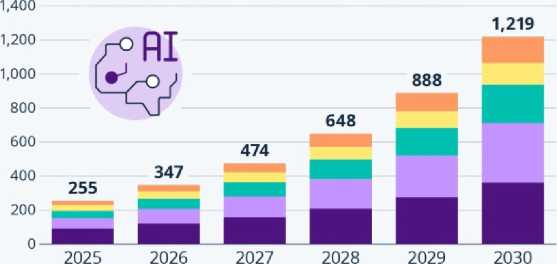
Figure 1. AI Market Projected to More Than Qaudruple by 2030
Source: Gaudiaut, T. (2025)
Artificial intelligence’s implementation in educational institutions has been further expedited by global investments made by governments and tech businesses, especially in the fields of learning analytics, instructional customisation, and automated assessment. However, ethical considerations become crucial in the areas of teaching and evaluation, when choices are made that have long-term effects on students’ academic and career paths ( Dašić, 2024a ). According to academic research, the use of AI in education is a complicated normative and pedagogical challenge rather than just a technological or organizational issue. ( Zawacki-Richter, et al., 2019 ).
The fairness of algorithmic systems used to support instructional and evaluative choices is one of the main ethical concerns. According to empirical studies, machine-learning-based systems that are trained on biased data or whose results are used carelessly in practice have the potential to replicate or even exacerbate current social and educational disparities ( Baker, Hawn, 2022 ). Such prejudice may lead to the systematic adverse treatment of specific student groups in the context of assessment, undermining the idea of equal educational opportunity. From a technical and ethical standpoint, fairness in educational AI systems should therefore be assessed through a combination of pre-deployment bias audits, subgroup performance analysis, and post-deployment monitoring, as recommended in recent AI governance literature.
The use of automated assessment of written work is particularly problematic, as algorithms are tasked with evaluating the quality of argumentation, structure, or the use of evidence. Studies indicate that different models may produce divergent evaluations depending on linguistic style or the socio-cultural characteristics of authors, raising serious concerns regarding the validity and ethical justification of such systems (Litman, et al., 2021). For this reason, fairness must be an explicit dimension of AI system evaluation prior to their institutional deployment.
Another important ethical issue relates to the transparency and explainability of algorithmic decisions. In many educational contexts, teachers and students lack clear insight into the criteria on which systems base their recommendations or evaluations, which hinders critical assessment and the ability to challenge outcomes. A lack of transparency can erode trust in assessment systems and weaken the legitimacy of educational institutions.
The concept of explainable artificial intelligence (XAI) in education has emerged precisely in response to these challenges. Khosravi, et al. (2022) emphasize that explanations of algorithmic decisions must be tailored to different educational stakeholders—teachers, students, and administrators—in order to possess genuine pedagogical and ethical value. In this sense, explainability is not merely a technical feature of a system, but a normative requirement linked to accountability and fairness.
Concerns about accountability and the professional autonomy of educators constitute a third ethical facet. Teachers’ roles as important pedagogical actors may be diminished by an over-reliance on algorithmic recommendations in instruction and evaluation, which could depersonalize the learning process. According to research, there is a chance that technical system outputs will take the place of expert judgment, hiding accountability for educational results ( Zawacki-Richter, et al., 2019 ). In order for the use of artificial intelligence to be ethically justified, final assessment choices must stay within the purview of human accountability and have well-defined opportunities for intervention, correction, and justification. Instead of taking the place of teachers’ pedagogical judgment, AI systems should be used as support tools.
The veracity of what AI systems measure and assess is another important ethical issue. Complex learning processes, such critical thinking, creativity, and reflection, run the risk of being reduced to readily quantifiable metrics that fall short of fully capturing the range of educational goals. Williamson and Eynon (2020) caution that technology advancements in artificial intelligence for education frequently come before explicit pedagogical goals are articulated. This can cause a normative shift from what is beneficial to education to what is technically possible.
Beyond technical challenges related to algorithmic bias and limited transparency, contemporary literature clearly indicates that the application of artificial intelligence in teaching and assessment raises broader ethical issues that transcend individual system deployments. Because automated systems can not only influence assessment results but also redefine power dynamics in classrooms and between teachers and students, ethics in AI for education necessitates careful consideration of how technology affects the rights and autonomy of all participants in the educational process. How to guarantee that AI-assisted decisions stay in line with the values of justice, accountability, and pedagogical validity is a crucial ethical question in this context, especially since automated systems may unintentionally marginalize particular student groups or jeopardize teachers’ professional autonomy if technology is seen as a neutral or superior arbiter. Additionally, the literature highlights that institutional AI implementation must be accompanied by suitable mechanisms for oversight, evaluation, and value-based deliberation because algorithmic advancements alone are insufficient to address the ethical and social conflicts that emerge in educational settings. This suggests that in order to safeguard educational objectives and fundamental values, systemic concerns—such as open communication among all stakeholders, participatory decisionmaking, and ongoing monitoring of AI impacts—must be incorporated into the design and assessment of AI solutions ( Fu, Weng, 2024 ; Gouseti, et al., 2025 ).
For these reasons, rather than relying only on statistical measures of correctness or efficiency, artificial intelligence systems employed in teaching and evaluation must be regularly reviewed in connection to pedagogical aims and values. The aforementioned research leads to the conclusion that ethical concerns with the use of AI in instruction and evaluation are structural rather than incidental. The development, application, and assessment of AI systems in education must incorporate fairness, transparency, human responsibility, and pedagogical validity. Without such a strategy, there is a genuine risk that, in spite of large investments and great expectations, technological advancements could exacerbate already-existing disparities and threaten the core principles of education ( Baker, Hawn, 2022 ; Williamson, Eynon, 2020 ).
The Use of Artificial Intelligence in Scientific Research
The impact of artificial intelligence has become more apparent in scientific research practice under conditions of significant worldwide investment, from problem formulation and literature search to data processing and model development to manuscript writing, authorship management, and editorial decisionmaking. However, discussions of AI’s use must concurrently address ethics, methodology, technology, and the governance of research practices, with clearly defined human responsibility and verifiability of scientific claims, because AI is becoming more and more integrated into important phases of the research process ( Resnik, Hosseini, 2025 ).
In reality, AI multiplies productivity at several stages of the research cycle: it speeds up the mapping of concepts and important publications, helps organize research questions and hypotheses, automates certain steps in the analytical workflow (like scripting and data cleaning), aids in the interpretation of results, and harmonizes the language and style of manuscripts. Although these applications can boost output, they also raise the possibility of “illusory accuracy,” in which AI systems provide credible but false or unsubstantiated claims. Strict verification and documentation of research procedures are therefore required, especially when AI is utilized to create or modify manuscript material ( Rentier, 2024 ).
When AI is used for modeling and inference, particularly when predictive models are used (e.g., in medical, social sciences, economics, and sports sciences), the most significant methodological problem emerges. In order to guarantee verifiability and reproducibility of findings, current standards for transparent reporting emphasize that studies creating or validating models must explicitly describe data sources, predictors, outcomes, processing procedures, validation methods, performance metrics, and limitations ( Collins, et al., 2024 ). The PROBAST+AI framework offers an updated tool for assessing risk of bias and applicability in prediction models using regression and/or AI methods, strengthening methodological control over AI-driven conclusions. However, assessments of quality and risk of bias must not be improvised ( Moons et al., 2025 ).
The implication for scientific research practice is clear: when AI participates in the analytical core of a study, reporting standards and bias-assessment tools should constitute mandatory components of the methodological framework ( Collins, et al., 2024 ; Moons et al., 2025 ).
The use of AI in research raises ethical concerns that are especially delicate when it comes to authorship, accountability, and contribution attribution. The traditional authorship model is frequently insufficient in modern collaborative research to appropriately reflect responsibility for particular study components; as a result, contributorship-based approaches are becoming more and more important, particularly when portions of the work are produced with the aid of AI tools ( Vasilevsky, et al., 2021 ).
In practice, this means that research teams should define in advance: (a) where AI is used (e.g., search, coding, analysis, writing), (b) who is responsible for verifying AI outputs, and (c) how these contributions are documented in the manuscript and internal project records. Normatively, AI cannot assume responsibility for the truthfulness or integrity of scientific work; responsibility remains with human authors and institutions ( Vasilevsky, et al., 2021 ).
AI-related editorial and publishing practices have changed quickly in recent years, yet there are still significant variations within disciplines. Guidelines for imaging and medical journals underline the need for humans to maintain complete control over content and the secrecy of the peer-review process, forbid listing AI as an author, and require editors to be transparent ( Moy, 2023 ). According to norms in biomedical publication, authors must proofread and verify information, maintain accountability for correctness, and fully declare the use of generative AI, even when it may be employed to increase readability ( Lubowitz, 2024 ).
At the level of broader ethical frameworks, Resnik and Hosseini (2025) propose a differentiated approach to disclosure: when AI use may affect interpretation or reliability, or when it constitutes a deliberate and substantive component of the work, disclosure should be mandatory; in other cases, it may be optional or unnecessary, provided that criteria are clearly articulated and justified. Disclosure of AI use should be considered mandatory whenever AI systems contribute to data analysis, model development, or interpretation of results, whereas optional disclosure may be acceptable when AI is used solely for language editing without influencing scientific claims.
Based on recent research (Vasilevsky, et al., 2021; Rentier, 2024; Resnik, Hosseini, 2025), a cogent framework that prioritizes a clear comprehension and documentation of AI’s role within the research process can operationalize the responsible use of AI in scientific research. In order to enable transparency of research processes and facilitate later evaluation, this involves methodically mapping the ways, stages, and goals for which AI is employed throughout a research project. The identification and mitigation of bias hazards presented by automated systems, as well as the transparent reporting of AI use in data analysis, modeling, and inference, require specific attention. In this context, the significance of verification and auditability is highlighted, including the need for human review of important research decisions and outcomes as well as the preservation of pertinent research traces, such as information on tools used, their versions, input and output data, and applied parameters and procedures. However, in order to maintain both individual and group accountability for scientific findings, ethical AI use necessitates a well defined distribution of duties and responsibilities within research teams, especially for components developed with automated aid. Lastly, the literature emphasizes the necessity of proportionate and consistent disclosure of AI use, to the extent that it is pertinent for evaluating research integrity, reproducibility, and dependability using criteria that are verifiable, justified, and properly described.
When used as a tool to supplement human competence rather than take the place of methodological responsibility, artificial intelligence can provide real advantages for scientific research. Four fundamental requirements have been identified by recent literature: appropriate, consistent disclosure, unambiguous distribution of contributions and responsibilities, assessment of bias risk, and transparent reporting. If this isn’t done, there is a risk of systemic degradation of verifiability and trust in the scientific method rather than just isolated errors ( Collins, et al., 2024 ; Moons et al., 2025 ; Resnik, Hosseini, 2025 ).
It is also crucial to stress that integrating AI into more general open and reproducible science procedures is essential to the long-term viability of its usage in scientific research. As automation of analysis, code generation, and text production may impede subsequent verification unless clear standards for sharing data, models, and procedures are established, modern scholars observe that AI-assisted research workflows can worsen already-existing reproducibility issues. In this way, it is both an ethical and an epistemological need of contemporary science to insist on the transparency of methodological procedures, the availability of analytical products, and the explicit documenting of judgments supported by AI. However, the literature warns that generative and predictive systems can only greatly speed up scientific discovery if they foster critical thinking rather than acting as stand-ins for human judgment or masking ambiguity in data and models. In order to maintain confidence in scientific knowledge in a setting where artificial intelligence has become an essential component of research infrastructure, more focus is being placed on creating research cultures that integrate technological innovation with standards of transparency, accountability, and group quality control ( Haibe-Kains, et al., 2020 ; van Dis, et al., 2023 ).
Conclusion
The examination of ethical concerns in the use of AI in scientific research and in teaching and assessment shows that modern educational and research systems are going through a phase of significant technological change that goes beyond the simple addition of new tools. Artificial intelligence is progressively becoming a structural element of decision-making processes, ranging from designing research investigations, analyzing data, and producing scientific information to evaluating students’ knowledge and progress. Because of this, the issue of AI deployment necessitates normative, methodological, and institutional consideration rather than merely focusing on technical efficiency.
The investigation has revealed that the fairness of algorithmic decisions, system transparency and explainability, the protection of instructors’ professional autonomy, and the validity of pedagogical assessments are important ethical issues in the field of teaching and assessment. Although automated and semi-automated systems can increase efficiency and consistency, they also run the risk of perpetuating current disparities, simplifying difficult educational objectives into readily quantifiable metrics, and eroding confidence in knowledge assessment procedures. As a result, rather than taking the place of human pedagogical judgment, artificial intelligence in education must continue to be a supporting tool.
Artificial intelligence, on the other hand, has become a potent productivity and analytical capacity accelerator in scientific research, allowing for quicker processing of massive datasets, more complex models, and more effective administration of research workflows. These advantages come with higher expectations for methodological rigor, open reporting, and responsibility allocation, though. Particular emphasis is placed on the necessity of precisely defining the role of AI in research, applying standards for evaluating the risk of bias, and establishing clear guidelines regarding authorship, contribution, and required disclosure of AI use—where such use may affect interpretation and trust in findings.
A broad conclusion can be reached by combining the two areas of analysis: ethical concerns about the use of AI in science and education cannot be resolved piecemeal; rather, they must be viewed as a component of a cohesive framework of responsible knowledge governance. Regardless of the level of automation, human actors—teachers, researchers, editors, and institutions—must retain ultimate accountability for educational and scientific judgments. This is what unites all situations. In this way, rather than taking normative control over decision-making, artificial intelligence should be incorporated as an operational and epistemological tool that improves its quality.
Ultimately, it may be said that stable ethical and methodological frameworks that are transdisci-plinary, verifiable, and cross-disciplinary are necessary for the continued development and use of AI in teaching, assessment, and scientific research. The only way to guarantee that technology progress is in line with the core principles of science and education—fairness, transparency, knowledge verifiability, and social responsibility—is through such an approach. By synthesizing recent ethical, legal, and methodological literature, this paper demonstrates that responsible AI integration in education and scientific research requires governance models that explicitly preserve human accountability, ensure transparency, and support verifiability of knowledge production. At the same time, the scientific literature also highlights certain risks associated with the use of artificial intelligence, including algorithmic bias, the generation of inaccurate or misleading information, challenges related to data privacy and security, and the potential weakening of critical thinking due to excessive reliance on AI systems. Therefore, the responsible and ethically grounded use of AI remains essential in order to mitigate these risks and ensure that technological development supports the fundamental values of science and education
Conflict of interests
The authors declare no conflict of interest.
Author Contributions
Conceptualization, M.N.; methodology,M.N. and A.P.; software, V.L. ; formal analy-sis, V.L. and M.D; writing-original draft preparation, M.N.; writing-review and editing, A.P. and M.N. All authors have read and agreed to the published version of the manuscript.
Funding
This research recived no external funding.
Data Availability Statement
The data supporting the findings of this study are available from the corresponding author upon reasonable request.
