
Население Черемошни по ревизским сказкам 1830–1850-х гг.
Журнал: Неизвестный Достоевский @unknown-dostoevsky
Статья в выпуске: 1 т.13, 2026 года.
Бесплатный доступ
В феврале 1833 г. супруги М. А. и М. Ф. Достоевские приобрели расположенное по соседству с сельцом Даровым сельцо Черемошню. Проводя в детстве летние месяцы в Даровом, Ф. М. Достоевский неоднократно бывал в Черемошне и общался с ее жителями. С Черемошней связана и трагическая смерть отца писателя летом 1839 г. После смерти отца имение перешло в общее владение детей-Достоевских — к этому периоду относится ревизская сказка 1850 г. В 1852 г. Черемошня, как и все имение Достоевских, перешла во владение к младшей сестре писателя В. М. Ивановой. В июле 1877 г. писатель приезжал к сестре в деревню, в это время он в последний раз посетил и Черемошню. Впечатления детства, связанные с Черемошней, нашли отражение во многих произведениях Ф. М. Достоевского. Общение с крестьянами, жившими в то время в деревне, оказало влияние на мировоззрение будущего писателя, а сами они стали прототипами его героев. За годы, когда деревня находилась в собственности семей Достоевских-Ивановых, было проведено три ревизии: восьмая (1834), девятая (1850) и десятая (1858). В настоящей статье впервые проанализированы данные сказок 8–10-й ревизий по Черемошне. Сведения 8-й ревизии сопоставлены с опубликованным В. С. Нечаевой хронологически близким источником — «Списком крестьян с. Дарового и д. Черемошны по церковной ведомости 1835 года», и записями метрических книг по этому региону. Они дают возможность уточнить состав населения крепостных крестьян на момент покупки деревни Достоевскими и позволяют проследить, как менялась в ней демографическая ситуации на протяжении 24 лет. В Приложении опубликована полная расшифровка 8-й ревизии, проведенной на следующий год после приобретения Черемошни.
Похожие статьи в разделе Русская литература
Короткий адрес: https://sciup.org/147253963
IDS: 147253963 | DOI: 10.15393/j10.art.2026.8441
The Population of Cheremoshnya Village According to Revision Lists (1830s — 1850s)
In February 1833, Mikhail Andreevich and Maria Fedorovna Dostoevsky acquired the village of Cheremoshnya, located adjacent to Darovoe. Spending his childhood summers in Darovoe, Fyodor Mikhailovich Dostoevsky frequently visited Cheremoshnya and interacted with its inhabitants. Cheremoshnya is also connected with the tragic death of the writer’s father in the summer of 1839. After his father’s death, the estate passed into the joint ownership of the Dostoevsky children; the revision list (revizskaya skazka) of 1850 dates from this period. In 1852, Cheremoshnya, like the entire Dostoevsky estate, passed to the possession of the writer’s younger sister, V. M. Ivanova. In July 1877, Dostoevsky visited his sister in the countryside, during which he made his final visit to Cheremoshnya. Childhood impressions associated with Cheremoshnya are reflected in many of his works. His interactions with the peasants who lived in the village at that time shaped the worldview of the future writer, and the peasants themselves served as prototypes for his literary characters. During the years when the village was owned by the Dostoevsky and Ivanov families, three revisions (censuses) were conducted: the Eighth (1834), the Ninth (1850), and the Tenth (1858). This article presents the first analysis of the revision lists from the Eighth to Tenth Revisions for Cheremoshnya. The data from the Eighth Revision are compared with a chronologically close source published by V. S. Nechaeva — the “List of Peasants of Darovoe and Cheremoshnya from the Church Register of 1835” — as well as with entries from parish registers for the region. These materials make it possible to clarify the composition of the serf population at the time the Dostoevskys acquired the estate and to trace the demographic changes that occurred there over a period of twenty-four years. The appendix contains a complete transcription of the Eighth Revision, conducted the year after the purchase of Cheremoshnya.
Текст научной статьи Население Черемошни по ревизским сказкам 1830–1850-х гг.
«В эту деревню мы очень часто хаживали по вечерам с маменькой всем семейством. Сверх того, в Че-ремошне была небольшая баня, каковой в Даровой не было, и вот в эту-то баню мы почти каждую субботу хаживали всем семейством уже по утрам» [Достоевский А. М.: 63]
С ельцо (позже: деревня) Черемошня Каширского уезда Тульской губернии было приобретено отцом Ф. М. Достоевского, Михаилом Андреевичем 16 февраля 1833 г. у надворного советника и кавалера Александра Ивановича Хотяинцева (см.: [Дементьева, Воронкина, Боголюбская: 391], [Дементьева, Воронкина, 2020: 112]). И если сельцо Даровое было куплено двумя годами ранее Михаилом Андреевичем на имя его жены — Марии Федоровны, то при покупке Черемошни сделка была оформлена на него самого.
Если судить по воспоминаниям младшего брата писателя, А. М. Достоевского, приобретая в августе 1831 г. Даровое, их родители не только не предполагали покупать Черемошню, но даже не подозревали о такой возможности:
«…в 1½ верстах в другую сторону от с. Дарового находилась деревня Чере-мошня, принадлежавшая NN Хотяинцеву. Эта последняя деревня Черемош-ня продавалась, о чем не знали наши родители, покупая сельцо Даровое» [Достоевский А. М.: 58].
Более того, по словам мемуариста покупка еще одной деревни стала для семьи Достоевских мерой вынужденной, после ссоры с П. П. Хотяинцевым:
«…он начал похваляться, что купит имение двоюродного брата, деревню Черемошню, и тогда будет держать в тисках Достоевских. Эти похвальбы, конечно, дошли до сведения моих родителей и очень встревожили их, потому что действительно угроза Хотяинцева могла осуществиться, так как все земли соседних имений не были размежеваны, а все были так называемые чересполосные. Покамест Хотяинцев собирался, папенька успел достать нужную сумму денег, заложив Даровое и прихватив у частных лиц, и ему удалось купить деревню Черемошню не далее как в этом же 1832 году 1 » [Достоевский А. М.: 58].
Этого же мнения придерживалась и В. С. Нечаева: «Покупка была вызвана не столько желанием расширить владения, сколько особыми условиями, в которых оказались Достоевские, приобретя Даровое» [Нечаева: 41].
Однако на сегодняшний день документально установлено, что покупка Черемошни рассматривалась родителями писателя уже зимой 1831–1832 г., а летом 1832 г. Мария Федоровна вела переговоры о ее стоимости и даже переписывала привезенную ей подворную опись [Дементьева, Воронкина, Боголюбская: 390].
О стоимости Черемошни Андрей Михайлович сообщал так:
«Не знаю, сколько заплачено было за деревню Черемошню, но знаю по документам, что обе деревни, т. е. сельцо Даровое и деревня Черемошня, стоили родителям сорок две тысячи рублей ассигнациями или 12 тысяч серебром» [Достоевский А. М.: 58].
Согласно купчей на приобретение Черемошни ушло 18 тысяч рублей государственными ассигнациями (т. е. около 5000 р. серебром) [Дементьева, Воронкина, 2021: 35].
После этой сделки землевладение Достоевских стало насчитывать более 600 десятин, а сами они перешли в разряд помещиков средней руки. Нужно учитывать, что в то время стоимость имения оценивалась не только количеством земли, но и количеством душ — неслучайно А. М. Достоевский упоминает оба этих показателя:
«…в обоих имениях числилось сто душ крестьян (по 8-й ревизии, бывшей в 1833 году) и свыше пятисот десятин земли» [Достоевский А. М.: 58].
В данной статье нас интересует население именно Черемошни.
Называя общее количество их крепостных (100 душ), Андрей Михайлович отсылает к данным 8-й ревизии (несколько неточно указывая ее дату: сказка была подана 14 февраля 1834 г.). Однако, как установлено, его сведения относятся к более позднему периоду, 1852 г., когда был составлен раздельный акт сестер и братьев с В. М. Ивановой [Дементьева, 2023: 109]. В своих воспоминаниях А. М. Достоевский приводит полученное 11 июня 1852 г., незадолго до раздела и совершеннолетия самой младшей сестры Александры, письмо от зятя А. П. Иванова, являвшегося одним из опекунов имения, где среди прочего сообщает следующее:
« …отецъ заплатилъ за оба имѣнiя 12 тысячъ рублей серебромъ и <…> при жизни его оно было заложено въ 5½ тысячахъ серебромъ въ Опекунскомъ Совѣтѣ. <…>
…продать имѣнiе можно и теперь за 50.000 рублей ассигнац<іями> т. е. по 500 рублей за ревизскую душу, такъ какъ всѣхъ душъ считалось 100 » 2 .
Анализируя найденные ею исповедные ведомости, В. С. Нечаева писала, что в начале 20-х гг. XIX в. «деревня <…> Черемошна (7 дворов) являлась "вотчиной титулярного советника Александра Ивановича Хотяинцова"» [Нечаева: 34]. Те же семь дворов оставались в ней и «к моменту переезда <…> новых помещиков Достоевских» [Нечаева: 38]. Относительно же Черемошни уже как части имения Достоевских (по ситуации на 1835 г., согласно исповедной ведомости) исследовательница сообщает, что она «состояла из 8 дворов, в которых числилось всего 67 душ крестьян обоего пола» [Нечаева: 42].
При этом возникает необъяснимое, на первый взгляд, разночтение с числом крестьян, указанных в феврале 1833 г. в купчей на Черемошню: 18 душ мужского пола, 27 — женского (т. е. всего — 45) [Дементьева, Воронкина, 2021: 35]. Те же 18 душ мужского пола названы и в закладной на Черемошню от 12 октября 1833 г. [Дементьева, Воронкина, 2020: 127–128]. Объясняется эта разница тем, что данные в купчей, закладной и других официальных документах основывались на сведениях предыдущей 7-й ревизии, которая проводилась в 1816 г. и после которой прошло уже 18 лет, соответственно, демографическая ситуация в деревне должна была измениться за счет естественного прироста и убыли населения — на первый указывали и слова в купчей и закладной: « съ <…> рожденными отъ нихъ послѣ [7-й] ревизiи обоего пола дѣтьми »3.
В опубликованном В. С. Нечаевой «Послужном списке коллежского ассесо-ра штаб-лекаря, ординатора московской Мариинской больницы Михайла Достоевского» 1832 г. говорится, что в его имении «Тульской губернии Каширского уезда в сельце Черемошне 40 душ» [Нечаева: 126]. Отметим, однако, что в 1832 г. Черемошня еще не была имением М. А. Достоевского (видимо, это позднейшее добавление в формуляр).
Согласно исповедной ведомости, опубликованной В. С. Нечаевой, в Чере-мошне в 1835 г. было уже 9 дворов, включая один дом дворовых [Нечаева: 130–131].
Количество крестьян, числящихся в Черемошне, упоминается и в других документах: рекрутских списках, планах и книгах межевания, но эти данные могут быть либо неполными, либо не совсем точными. Ранее мы уже отмечали, что из различных демографических источников, позволяющих выяснить состав населения, к наиболее точным можно отнести ревизские сказки [Дементьева, 2023: 110], которые позволяют выяснить не только количество проживавших в Черемошне крестьян, но и их имена и родственные связи.
Представленная работа является продолжением ранее начатого исследования, направленного на изучение демографической ситуации в имении Достоевских-Ивановых, и основана на анализе данных ревизских сказок 1834, 1850 и 1858 гг. по Черемошне, копии которых хранятся в Центральном государственном архиве города Москвы в фонде Каширской уездной временной ревизской комиссии4.
Данные из РС1834 будут соотнесены с близким к ней как по хронологии, так и по форме источником — исповедной ведомостью 1835 г. по сельцу Черемошне (далее — ИВ1835 ). В. С. Нечаева в 1939 г. не только опубликовала исповедные ведомости 1835 г. по Даровому и Черемошне, но и, сопоставив их с документами других лет, прокомментировала имена всех крестьян, связанных с семьей Достоевских [Нечаева]. В своей работе мы будем ссылаться на эти достаточно точные данные. Кроме того, большую работу по изучению демографии Дарового и Черемошни провели А. С. Бессонова и А. Ю. Козлова на основе документов из церковного архива с. Моногарово [Бессонова, Козлова]. Нельзя не упомянуть и статью Е. М. Варенцовой «Достоевские в Даровом», где автор на основе обыскных книг церкви Сошествия Святого Духа с. Моногарова опубликовала новые материалы, позволяющие проследить связи между крестьянами с. Дарового и д. Черемошни [Варенцова]. При необходимости фактические сведения ревизских сказок будут сопоставляться также с данными из метрических книг церкви Сошествия Св. Духа села Моногарово Каширского уезда Тульской губернии, которые хранятся в трех архивах: Государственном архиве Тульской области (ГАТО), Центральном государственном архиве города Москвы (ЦГА Москвы) и Центральном государственном архиве Московской области (ЦГАМО)5.
8-я ревизия
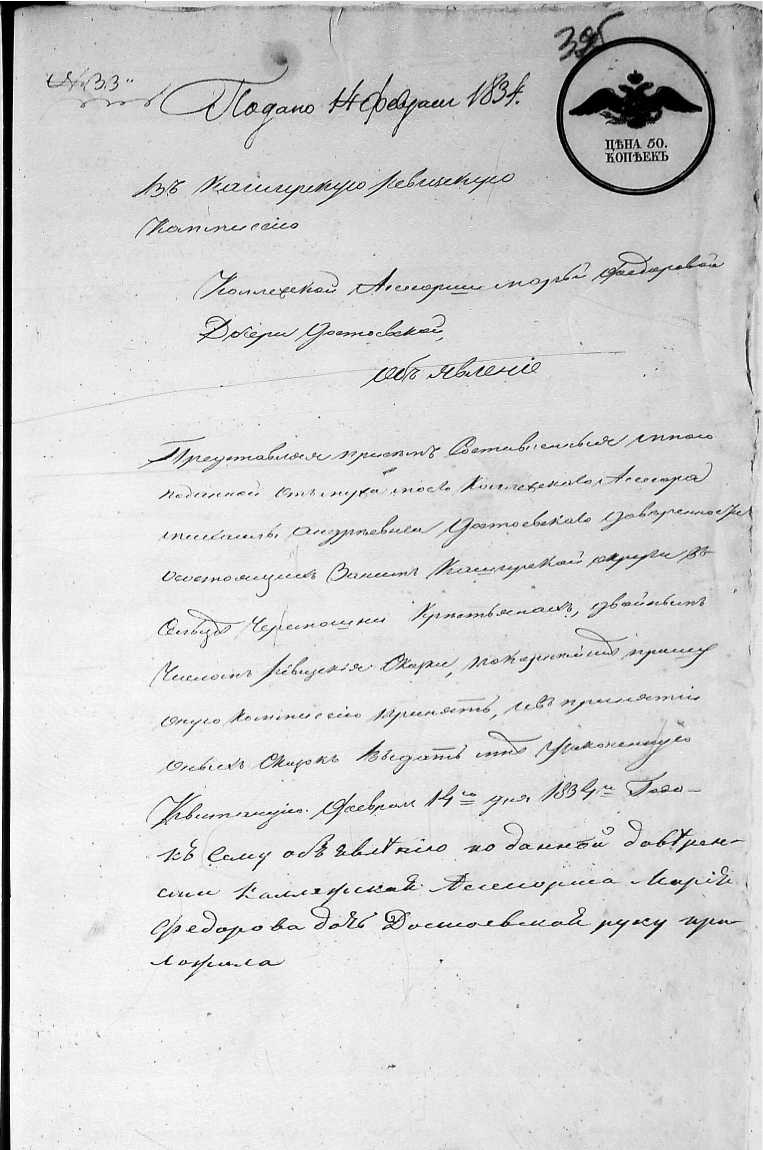
В письме от 9 июля 1833 г. Михаил Андреевич сообщал Марии Федоровне о предстоящей ревизии6. 14 февраля 1834 г. Мария Федоровна подала ревизские сказки в Каширскую ревизскую комиссию (см. Илл. 1 ).
« Представляя присѣмъ Составленныя мною по данной отъ мужа моего Коллежскаго Ассесора Михаилы Андрѣевича Достоевскаго довѣренности о со-стоящихъ за нимъ Каширской округи въ Сельцѣ Черемошни Крѣстьянахъ, двойнымъ Числомъ ревизскiя Сказки, покорнѣйшѣ прошу оную коммиссiю принять, и въ принятіи оныхъ Сказокъ выдать мнѣ узаконенную Квитанцiю. Февраля 14 го дня 1834 го Года.
Къ сему объявлѣнiю по данной довѣренности Каллежская Ассессорша Марiя Федорова дочь Достоевская руку приложила » ( РС1834 : 395).
Этот факт вызывает некоторое недоумение: дело в том, что в феврале оба супруга находились в Москве, и Михаил Андреевич как владелец Черемош-ни мог подать ревизские сказки сам. Объяснить его можно только тем, что подавать сказки нужно было непосредственно в Каширу, куда, видимо, и ездила Мария Федоровна без супруга. 7 февраля 1834 г. в Московской палате гражданского суда им была оформлена доверенность на имя жены (см. Илл. 2 ).
« Милостивая Государыня
Марья Федоровна
Покорнѣише Васъ прошу на основанiи Состоявшагося Высочайшаго Манифеста о 8 й народной переписи Составить по именiю моему Состоящему Тульской Губернiи Каширскаго уѣзда въ Сельце Черемошна о находящихся въ немъ дворовыхъ людяхъ и крестьянахъ ревизскiя двойнымъ числомъ Вернѣйшiя Скаски и подать оныя за вашимъ въ мѣсто меня подписанiемъ въ учрежденную для Сего Коммисiю и получить въ принятiи оныхъ надлежащѣе свидетельство. Я вамъ въ ономъ Верю и что вы по сему учинитѣ спорить и прекословить небуду.
Затемъ Остаюсь Вашъ Доброжелательный
Коллежскій Ассессоръ Михайла Андреевъ сынъ Достоевскій » ( РС1834 : 396).
Wf
-?
Илл. 1 . Объявление М. Ф. Достоевской о подаче списков 8-й ревизии (1834) Fig. 1 . The announcement by M. F. Dostoevskaya of the submission of lists of the 8th revision (1834)
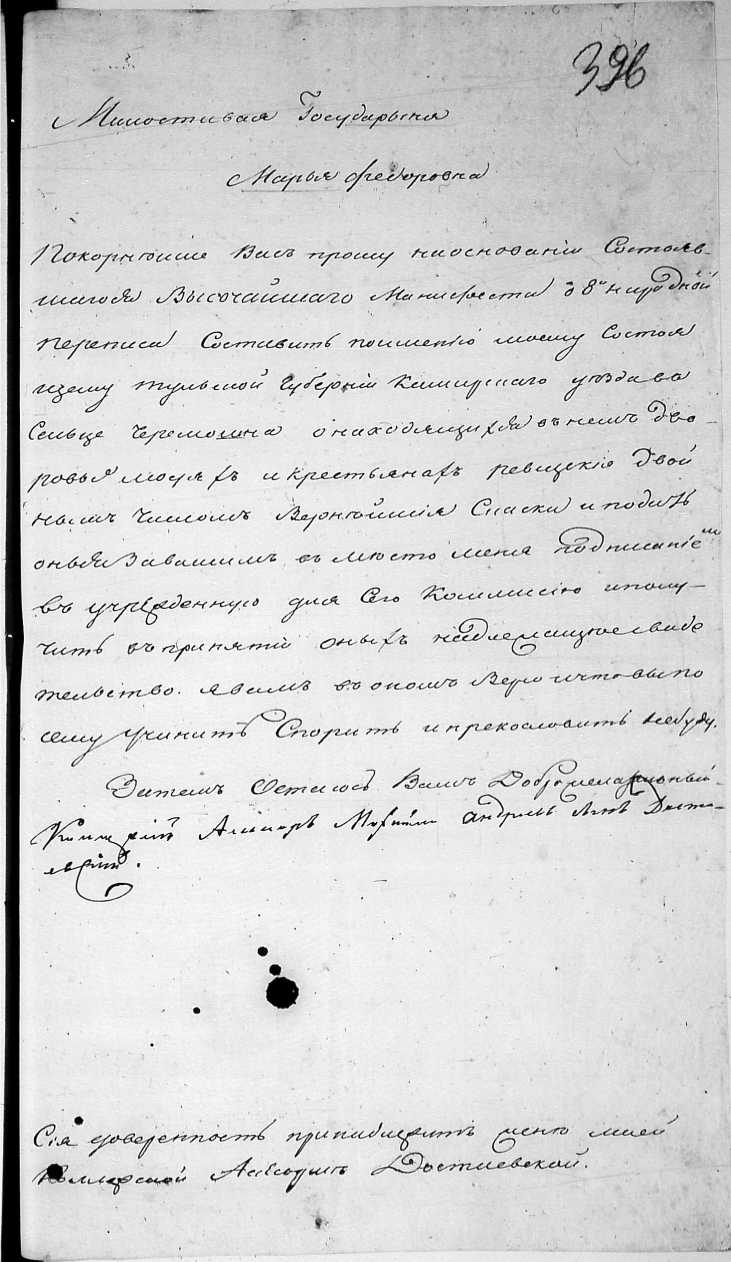
Илл. 2 . Доверенность, выданная М. А. Достоевским на имя М. Ф. Достоевской (1834)
Fig. 2 . Power of attorney issued by M. A. Dostoevsky addressed to M. F. Dostoevskaya (1834)
В цитируемом документе Черемошня названа «сельцом» (как и соседнее Даровое). Так же она определяется в 7–9-й ревизиях (1816, 1834, 1850). Наименование же «деревня» появляется только в ревизской сказке 1858 г., поданной уже новой владелицей имения, Верой Михайловной Ивановой. Отметим, что во всех остальных официальных документах начиная с XVIII в. Черемошня называется «деревней». Впервые наименование «сельцо» появляется в ревизских сказках 1816 г., когда Черемошня находилась во владении «помещика титулярного советника и ковалера Александр Иванова сына Хотяинцова», что может свидетельствовать о том, что он построил в Черемошне господский дом7 [Дементьева, Воронкина, Боголюбская: 389–390]. В метрических книгах до 1846 г. Черемошня также называется «сельцом», в документах за 1847–1848 гг. — и «сельцом», и «деревней», а начиная с 1849 г. за Черемошней закрепляется наименование «деревня».
В. С. Нечаева писала, что с Черемошней А. И. Хотяинцев продал Достоевским и некоторых из своих дворовых: «"женку Дарью Леонтьеву 37 лет" с двумя "незаконнорожденными" сыновьями и "девку Катерину 12 лет"» [Нечаева: 42]. Уже через год, судя по РС1834 , в Черемошне числилось только восемь крестьянских семей, дворовых же не было.
Первой в списке значилась семья Александра Ильина , «умершего в 1826 г.» (по данным ревизии, см. ниже). Среди живых в документе прописана лишь его дочь Екатерина (12 лет) — это и есть «девка Катерина 12 лет», проданная А. И. Хотяинцевым М. А. Достоевскому вместе с Черемошней [Нечаева: 42] и упоминаемая А. М. Достоевским [Достоевский А. М.: 38].
«Печальная судьба» Екатерины достаточно подробно описана В. С. Нечаевой, проанализировавшей исповедные ведомости с 1821 по 1845 г. [Нечаева: 55]. Согласно ее данным, Александр Ильин умер не в 1826, а в 1824 г. от чахотки, когда Кате было 3 года. «Мать ее, Матрена Максимова, овдовев в 22 года, прожила с дочкой еще год в многочисленной семье мужа, а в 1826 году ушла в дом к своим родным братьям, Ефиму и Василию Максимовым. Старший брат, Ефим, был женат и имел троих детей. С ними росла шестилетняя Катя» [Нечаева: 56]. В 1832 г. А. И. Хотяинцев перевел Матрену Максимову с дочерью Катериной 11 лет в дворовые, а впоследствии продал их вместе с деревней М. А. Достоевскому. «В первый же год соединения Дарового и Черемошны в руках Достоевских вдова Матрена вышла замуж за даровского крестьянина Егора Макарова» [Нечаева: 57], младшего брата Савина Макарова. Эти данные уточняет Е. М. Варенцова: Егор Макаров женился на вдове Матрене Максимовой (32 года) 2 июля 1833 г.8 [Варенцова: 10–11] — и подтверждает РС1834 с. Дарового, где Матрена приписана к семье Макара Иванова (№ 8) в качестве его невестки [Дементьева, 2023: 119].
А. М. Достоевский вспоминал, что М. Ф. Достоевская «взяла из деревни трех сирот девочек, которые исполняли все обязанности горничных», называя среди них и Катю, которая, по его мнению, «была огонь-девчонка» [Достоевский А. М.: 38]. Кате в это время было 12–13 лет. После смерти в 1837 г. Марии Федоровны овдовевший М. А. Достоевский, с осени перебравшись в имение [Бессонова, 2021: 66–67], «приблизил к себе бывшую <…> в услужении еще в Москве девушку Катерину» [Достоевский А. М.: 103] — по всей видимости, это было в конце 1837 — начале 1838 г., когда Катерине было около 17 лет. 25 апреля 1838 г. у Катерины родился сын Симеон, умерший 29 мая 1839 г., за неделю до смерти М. А. Достоевского9. «Через пять месяцев после смерти Михаила Андреевича», 6 ноября 1839 г.10, Катерина «вышла замуж в свою родную деревню, в многолюдное "Федорово семейство", за тридцатипятилетнего вдовца, Алексея Федорова, имевшего двух сыновей 8 и 6 лет» [Нечаева: 58]. В этом браке у Екатерины родилось два сына Василий11 и Григорий12. Данные из метрических книг дополняют эту информацию — у Екатерины была еще и дочь Параскева13. Кроме того, источники уточняют дату и причину смерти Екатерины Александровой: она скончалась от чахот-ки14 в 25 лет, 27 апреля 1846 г. и была погребена 29 апреля15.
Второй была семья Андрея Миронова (41 год) с женой Матреной (38 лет) и детьми: Емельяном (21 год16), Матреной (14 лет), Кондратием (10 лет17), Данилой (6 лет), Афимьей (3 года) и Григорием (2 года)18.
Андрей Миронов упоминается в письме М. Ф. Достоевской к мужу от 3 мая 1835 г.:
«Чермошенским беднягам я поделила овса, остального после посева в Чермошне: Исаю дала 3 четверти, Андрею — 3, Михайле — на новое тягло 2½, Матвею — одну четверть, всего 9 четвертей с половиною; что делать, не оставить же…» 19 .
Судя по ИВ1835 , старший сын Андрея Емельян в течение года женился на Авдотье Дементьевой 18 лет [Нечаева: 130]. Действительно, в метрической книге на 1834 г. находим запись о венчании 30 июля 1834 г. « сельца Чере-мошны Надворнаго Совѣтника Михаило Андрѣева Достаевскаго, крѣпост-наго крестьянина Андрея Миронова » сына Емельяна с « Михайловской округи, Деревни Серковой Ротмистрши Натальи Васильевой Кон < ь > ковой , крѣпостнаго крестьянина Дементія Емельянова, съ дочерью дѣвицею Евдокіею Дементьевою, по данному ей отъ означенной помѣщицы писмен-ному позволенію 16 ти лѣтъ »20.
Третья семья — Исая Миронова (36 лет) с женой Федосьей (36 лет) и семерыми детьми: Прасковьей (16 лет21), Марком (15 лет22), Степаном (12 лет), Акулиной (8 лет), Марфой (6 лет), Софьей (2 года) и Григорием (4 мес.)23.
В. С. Нечаева предполагала, что Исай Миронов был, «вероятно, наиболее бедным из перечисленных крестьян», так как «в церковных списках он всегда стоит последним, в конце»; весной 1835 г. Исай среди прочих «просил овса на посев у М. Ф. Достоевской»24 [Нечаева: 55]. Сопоставив документы, исследовательница выяснила, что весна 1835 г. стала трудной для семьи Исая: «28 мая умерла "от горячки" его жена, оставив ему семь человек детей, из которых младшему был 1 год», а в 1836 г. Исай повторно женился «на только что овдовевшей двадцатишестилетней даровской крестьянке, у которой было своих двое детей» [Нечаева: 55]. Эти данные уточняются РС1850 с. Дарового, где говорится о том, что Анна овдовела в 1837 г.: « Шестая семья — Никиты Иванова (ум. 1837). Его сын Михаил был переведен в сельцо Черемошню», значит, Исай мог жениться повторно не ранее 1837 г. [Дементьева, 2023: 126].
По предположению В. С. Нечаевой, дочь Исая Акулина и была той третьей, не названной по имени в мемуарах А. М. Достоевского девочкой-сиротой, которую, вместе с двумя другими, Мария Федоровна взяла в барский дом [Нечаева: 55–56]. Исследовательница ссылается на воспоминания одной из последних хозяек имения, О. А. Ивановой: «Лет 14–15 она лишилась обоих родителей. Оставшись сиротой, без всякой поддержки, она одно время вынуждена была вынести много тяжелого от поползновений со стороны некоторых односельчан. Ей даже приходилось прятаться от мужиков. В конце концов она обратилась за помощью к нашему деду, М. А. Достоевскому. Тот оставил ее у себя и даже сделал ее своей помощницей по медицинской части» [Нечаева: 56 (сноска)]. Однако, как выясняется из документов, Акулина не была полной сиротой — ее отец со своей новой семьей упоминается как в ИВ1835 , так и в двух последних ревизиях ( РС1850 , РС1858 ). В РС1850 Акулина в качестве жительницы Черемошни уже не фигурирует, так как 2 октября 1842 г. она была выдана замуж за жителя Дарового 20-летнего Ивана Сидорова [Варенцова: 14]25.
Четвёртой была семья Федора Андреева (60 лет) с женой Матреной (58 лет) и тремя сыновьями: Елистратом (36 лет), Тимофеем (30 лет) и Федором (18 лет26). Елистрат (вар.: Евстрат) был женат на Мавре (35 лет27), у них были сын Николай (5 лет28) и дочь Дарья (2 лет). У Тимофея с женой Домной (Домникой)29 (31 год) было три дочери: Федосья (9 лет30), Екатерина (6 лет31), Пелагея (2 года32) и сын Григорий (2 мес.33)34.
Елистрат Федоров упоминается в обыскной книге в записи под № 4 от 2 июля 1833 г. в качестве одного из трех поручителей при бракосочетании Егора Макарова и вдовы Матрены Максимовой [Варенцова: 11].
При сопоставлении с ИВ1835 выяснилось, что у Федора было еще два сына — Алексей и Марко, с семьями, не названные в РС1834 .
Пятой была семья умершего в 1819 г.35 Леонтия Федорова , которая состояла из его второй жены Анисьи36 (78 лет), сына от первой жены Никиты
(58 лет) и его сына Василия (29 лет), женатого на Авдотье37 (26 лет). У Василия и Авдотьи было трое детей: Ларион (10 лет38), Пелагея (5 лет39) и Домна (3 года40)41. В ИВ1835 эта семья числится за Никитой Леонтьевым, а его мачеха, Анисья, записана там уже с семьей ее родного сына, Михаила.
Шестая семья — Михайлы Леонтьева (41 год) с женой Устиньей (36 лет)42. После смерти в 1826 г. их старшего сына Ивана (ок. 11 лет) с родителями проживали дети: Алексей (17 лет43), Ульяна (13 лет44), Василий (8 лет). Здесь же числилась сестра Михайлы — Прасковья (35 лет)45.
Михайло несколько раз упоминался в письмах М. Ф. Достоевской. Так, в апреле 1835 г. он назван среди прочих просителей зерна на посев:
«Да етого еще мало семян нет ни зерна что мне с ними будет делать; у Исая нет у Матвея тоже, Михайле на новое тягло так же должно дать, по суди сколько надобно авса, а у меня от посева в Чермошне не более останется как четвертей с 8» 46 .
В письме от 3 мая 1835 г. говорилось, что Михаил получил овса на «на новое тягло»47. Тут же Мария Федоровна сообщала мужу о сватовстве к Ульяне, дочери Михайлы:
«…Левон и староста просят у тебя невесту, хорошенькую Ульяну. Я Михайлу спрашивала одного и не добилась толку: "за которого угодно вашей милости", да и только; клянется, что для него оба жениха хороши, а сам он никак не может решительно сказать, за кого мы благословим» 48 .
Михаил Андреевич настаивал на том, что решение принять должен отец невесты:
«На щет моей невесты отвечаю тебе, что как ты заблагоразсудишь, я спорить не стану; только нехудо бы было отобрать настоятельно согласие от отца невесты» 49 .
В итоге Ульяна вышла замуж за сына старосты Савина Макарова — в РС1850 с. Дарового сказано, что Ульяна Михайлова (29 лет) была женой Егора Савинова (34 лет) [Дементьева, 2023: 126].
В седьмой семье числились Матвей Сергеев (36 лет), его жена Евпраксия (38 лет50), их дети Арина (6 лет51) и Егор (3 года52). Кроме того, супруги воспитывали приемыша Марью Григорьеву (10 лет53). К этой же семье были приписаны брат Матвея — Егор Сергеев (28 лет) с женой Анной (29 лет) и сыновьями Борисом (4 года) и Михайлой (новорожденный)54.
Матвей упоминается среди крестьян, о которых Мария Федоровна писала мужу 3 мая 1835 г. — он получил от помещицы одну четверть зерна55.
Восьмой 56 была семья Максима Лаврентьева , умершего в 1823 г.57 Здесь жили его сыновья Ефим (37 лет) и Василий (28 лет) с семьями.
Старший, Ефим, был женат вторым браком на Авдотье (21 год), и у него были дети: дочь от 1-го брака Марина58 (10 лет) и сын от 2-го брака Дмитрий (3 года). Марина Ефимова в 16 лет, 2 апреля 1839 г., была выдана замуж в соседнее Даровое, за 23-летнего Петра Сидорова Чухонцева (чухнина), старшего племянника умершего Никиты Иванова59. Там она, в возрасте 26 лет, упоминается в 9-й ревизии 1850 г. (см.: [Варенцова: 13], [Дементьева, 2023: 126]). Младший, Василий, был женат на Настасье (22 года). Судя по ИВ1835 , вскоре после ревизии (февраль 1834) у Василия Максимова появился ребенок — дочь Агафья.
В этом же дворе числилась невестка Максима Лаврентьева — Дарья Леонтьева (36 лет), с незаконнорожденными детьми Иваном (11 лет) и Михайлой (9 лет)60.
В письме М. А. Достоевского от 19 августа 1835 г. упоминается некий Ефим:
«Ефим будучи в Москве взял для своих лошадей два четверика овса, то получи с него» 61 .
Так как в РС1834 с. Дарового крестьян по имени Ефим нет, то, скорее всего, речь тут идет о Ефиме Максимове.
Как выяснила В. С. Нечаева, Ефим и Василий Максимовы были родными братьями вдовы Матрены Максимовой, и соответственно, — дядьями Екатерины Александровой (см. выше). Исследовательница считала, что Ефим был одним из убийц М. А. Достоевского, и, опираясь на точку зрения Д. Стонова о главной роли Ефима в убийстве, писала о том, что произошло оно во дворе его дома [Нечаева: 59].
Упоминается Ефим и в отчете старосты Савина Макарова за 1850 г., где говорится о постройке новых домов в Черемошне:
« …крестьяне Ефимъ Максимовъ, Исай Мироновъ построились а продтчiя крестьяне готовили лесъ и постройку оставили до будущаго года» [Дементьева, 2021: 92].
О невестке братьев Максимовых, Дарье Леонтьевой, В. С. Нечаева писала: «В 1832 г. она числилась в Черемошне, была продана А. И. Хотяинцевым Достоевским вместе со своими "незаконнорожденными" сыновьями, как дворовая Черемошни» [Нечаева: 140]. Отметим, что, судя по ИВ1835 , Дарья с сыновьями была прописана уже среди дворовых сельца Дарового:
«Дом или двор 1. Григорий Васильев 48 л., жена ево Феодосья Яковлева 37 л., дети их: Александра 14 л., Павел 12 л., Володимер 7 л., Симеон 2 л., женка Дарья Леонтьева 39 л., дети ее Иван 12 л., Михаил 9 л.» [Нечаева: 128].
Дарья, как и ее сыновья упоминаются в переписке Достоевских. Так 1 мая 1835 г. Мария Федоровна писала мужу:
«…на такой случай занепременное положила на будущей недели когда крестьяне совсем обсеются то выслать к тебе кухарку и с кухмистером на подмогу Василисе, а имянно Дарью с Мишкой ; надеюсь что она тебя успокоит, а Катерину, на лето зделаю главною скотницею давши ей в подмогу нашего Люцыферя Анку, а к зиме по приезде моем в Москву можно опять Дарью отправить сюда на прежнею должность, а наместа ее бог даст наймем; Мишка же приней у тебя лучше попривыкнет и тебе годится хоть на посылки; здесь же ей нечего более делать как доить коров; телята все в Чермошне и надзор ее над ними не нужен; пожалуста друг мой позволь мне так учредить я думаю что ето будет хорошо» 62 .
Из письма становится ясно, что Дарья была главной скотницей у Достоевских в Даровом, но на лето 1835 г. ее отправили в Москву в качестве кухарки. Упоминается Дарья и в письме от 9–11 мая, где Мария Федоровна извещала о том, что Дарья должна привезти тетрадь:
«Еще ты получишь от Дарье тетрадь она принадлежит Ольге Дмитриевне…» 63 .
Уже 16 мая Дарья была в Москве, о чем свидетельствует письмо Михаила Андреевича:
«Молоко нейдет с рук, что делать велю Дарье делать масло простое» 64 .
В семье Достоевских в это время сложилась сложная ситуация с прачкой Василисой, которую подозревали в воровстве. В. С. Нечаева считала, что «кроме обязанностей прачки, Василиса должна была ведать всем хозяйством, управлять "людьми", а также и обшивать господ» [Нечаева: 139]. В ответ на жалобы Михаила Андреевича Мария Федоровна посоветовала ему передать хозяйство Дарье, что может свидетельствовать о полном к ней доверии:
«Ключи ото всего возми у нее [Василисы] и поручи Дарье. Прощай Ангел терпения друг мой Твоя навеки и душой и сердцем» 65 .
В этом же письме Мария Федоровна передавала Дарье поклон:
«Дарье скажи мой поклон <…> Ванюшка и скот ее здоровы и ленку для нее посеяли только чтоб служила тебе верою и правдою» 66 .
В ИВ1835 названы еще два двора, отсутствующие в РС1834 , — это семья дворовых («Михайло Яковлев67 32 л., жена ево Пелагея Михеева 27 л., дети их: Елена 4 л.68, Павел 1 г., девка Екатерина Александрова 14 л.») и одна крестьянская семья («Григорий Алексеев вдов 52 л., сын ево Митрофан Григорьев 27 л., жена ево Аксинья Никифорова 26 л., дети их: Наталья 6 л., Михаил 3 л.69, Алексей 2 л., солдатка Василиса Алексеева 33 л.») [Нечаева: 130].
Кроме того, как уже было сказано выше, в РС1834 не указаны семьи Алексея и Марка Федоровых. В РС1834 с. Дарового эти семьи также не значатся. Однако имена некоторых из этих крестьян названы в купчей на Че-ремошню 1833 г.:
« …значущихся въ техъ ревизскихъ скаскахъ переведенныхъ изъ онаго сельца Черемошны въ число дворовыхъ людей Владимирской губерніи Вязниковскаго уѣзда въ деревню Сукову мужеска пола 5 душъ, а имянно: Митрофана Григорьева, Михайлу Яковлева, Алексѣя и Макара 70 Федоровыхъ, и Василья Максимова, съ ихъ Семействами и рожденными отъ нихъ послѣ ревизіи обоего пола дѣтьми, съ ихъ крестьянскимъ всякимъ строеніемъ и имуществомъ, съ пашенною и непашенною землею, съ лѣсы < , > сѣнными покосы, и всякими принадлежащими къ оному имѣнію угодьи, со всякимъ мелкимъ и рогатымъ скотомъ < , > съ лошадьми и птицами, съ хлебомъ стоячимъ, молоченнымъ и въ землѣ посѣяннымъ, и од-нимъ словомъ все то что въ томъ сельцѣ Черемошнѣ досталось мнѣ во владеніе послѣ родителя моего въ 1812 году и нынѣ находиться налицо < , > неоставляя за собою изъ онаго имѣнія въ своемъ владеніи ничего кромѣ двороваго человека
Михея Иванова съ женою Анною Іоановою, дочерьми: Маврою, Пелагеею 71 , Катериною и послѣ ревизіи рожденнымъ сыномъ Иваномъ, которые остаются въ моемъ владеніи и въ число сей продажи невходятъ… » 72 .
Таким образом, выясняется, что Михайло Яковлев, Митрофан Григорьев, Алексей и Марк Федоровы, а также Василий Максимов были исконными жителями Черемошни, в которой по факту проживали и вели хозяйство (их имена постоянно встречаются на страницах метрических книг и исповедных ведомостей) и были проданы в 1833 г. М. А. Достоевскому. В РС1834 из них предположительно указан только Василий Максимов (28 лет).
Купчая частично объясняет, почему семьи Алексея и Марка Федоровых не были названы в РС1834 при описании семьи их отца Федора Андреева: на момент продажи имения А. И. Хотяинцев не только перевел их в число дворовых, но и вообще записал на другое имение. Остается неясным, почему члены четырех семей не были вписаны М. Ф. Достоевской в ревизскую сказку, хотя, судя по ИВ1835 , продолжали числиться в Черемошне.
Итак, на момент ревизии 1834 г. в Черемошне было восемь дворов, а учитывая, что Александр Ильин умер, а его дочь жила у родственников — по факту оставалось не 8, а 7 семей. Всего в Черемошне проживало душ: 31 мужского пола и столько же женского, то есть всего 62 человека. Эти данные (с учетом четырех не упомянутых в РС1834 семей) согласуются с ИВ1835 , где говорится о 67 душах. Сравнительно с Даровым, крестьянских семей (или дворов) в Черемошне было всего на две меньше, но по количеству душ Черемошня значительно уступала Даровому, где числилось 44 души мужского пола и 45 — женского, всего — 89 душ [Дементьева, 2023: 141].
Если согласно официальным документам, в том числе купчей, в Чере-мошне по 7-й ревизии числилось « крестьянъ мужеска пола 18 и женска 27 » [Дементьева, Воронкина, 2021: 35], то можно сказать, что к 1834 г. (за 18 лет) население заметно увеличилось: с 45 до 62 человек, при этом мужчин стало больше на 13 человек, а женщин всего на 4.
Таким образом, покупка Достоевских оказалась значительно более выгодной, чем, вероятно, они могли ожидать: Мария Федоровна не только видела накануне покупки Черемошни подворную опись, но и переписала ее. Остается лишь догадываться, была ли эта опись составлена на основании ревизских сказок 1816 г. или фактическая — на 1832 г.
В ревизских сказках при перечислении жителей указаны и крестьяне, умершие между ревизиями, при этом в документе даны годы их смерти.
Однако для ранних ревизий это касалось только мужского населения, что, видимо, было связано с тем, что именно мужские души облагались подушным налогом и они же учитывались при описании имения. За 18 лет в Черемошне, согласно документу, умерло всего четверо мужчин:
Таблица 1 / Table 1
|
Год смерти по РС1834 |
Имя умершего |
Возраст на год смерти (по сопоставлению с ревизией 1816 г.) |
|
1819 |
Леонтий Федоров |
71 |
|
1823 |
Максим Лаврентьев |
48 |
|
1826 |
Александр Ильин |
24 |
|
1826 |
Иван Михайлов |
11 |
К долгожителям можно отнести Леонтия Федорова (71 год) и его вторую жену Аксинью (78 лет); к старшему поколению — Федора Андреева (60 лет), его жену Матрену (58 лет) и Никиту Леонтьева (58 лет).
На основе сопоставления двух источников можно сделать следующие наблюдения:
-
1) Несмотря на разницу в терминологии («семья» — в РС1834 , «двор» — в ИВ1835 ), оба документа описывают одно и то же: в ревизии семьей считались лица, проживающие в одном дворе. Однако нумерация дворов и семейств при этом может не совпадать, и это стоит учитывать при анализе документов. Приходский священник, более близко знавший свою паству, наблюдавший прихожан длительное время в постоянном режиме и подававший списки ежегодно (в отличие от данных редко проводившихся ревизий) действительно мог располагать семьи крестьян по уровню их экономического благосостояния (см.: [Нечаева: 55]).
-
2) Данные ревизии при указании возраста, как показано на нескольких примерах выше, чаще оказываются более точными, чем весьма приблизительные сведения исповедной ведомости. Видимо, это связано с тем, что в последнем случае возраст записывался священником по памяти либо со слов прихожан. А данные подушной переписи, как документа более строгой отчетности, связанного с налогообложением, всегда сверялись с теми, что были указаны в предыдущую ревизию. Однако оба эти документа в части дат и указания на возраст являются вторичными. Единственным твердым свидетельством в таких случаях могут быть только записи из метрических книг о рождении, венчании и смерти, которые также необходимо привлекать для сопоставления и анализа.
-
3) В ИВ1835 , в отличие от РС1834 , указаны отчества замужних женщин, что позволяет проследить их родословную.
-
4) Если исповедная ведомость фиксирует состав крестьянского сообщества только на время ее составления, давая одномоментный срез всего населения деревни, то в РС1834 упоминаются также главы семей и некоторые
члены их рода, умершие в промежуток между двумя ревизиями, более того — указаны годы их смерти (пусть не всегда точные), что делает этот источник более информативным в хронологическом плане.
-
5) В целом, данные этих двух разных, но почти одновременно созданных источников являются взаимодополняющими: так, из РС1834 становится известно, что Матвей Сергеев с женой Евпраксией воспитывали приемную дочь Марью Григорьеву, а ИС1835 указывает подразумеваемые, но не прописанные в ревизии нюансы: «вдов» (Никита Леонтьев). Ошибочно «разобранное» в РС1834 как «Аксинья» имя вдовы Леонтия Федорова, Анисьи Степановны, восстанавливается по ИВ1835 . В то же время явно ошибочный ее возраст в исповедной росписи (87 лет) исправляется после сопоставления с данными ревизии (78 лет). Год смерти Александра Ильина, ошибочно указанный в ревизии как 1826-й, уточняется по помете в записи о втором браке его вдовы.
Объясняются подобные разночтения в документах как человеческим фактором (многое зависело от конкретного человека, записывающего данные), так и разницей в полтора года между составлением документов (ревизия была подана 14 февраля 1834 г., исповедные росписи составлялись в конце лета — начале осени, а в середине сентября отправлялись в Консисторию).
Деревня Черемошня и ее жители неоднократно упоминаются в переписке супругов Достоевских, но не всегда при этом называются конкретные имена крестьян. Так, в одном из писем Мария Федоровна рассказывает о своем визите в Черемошню и посещении птичника73, в котором, вероятно, работала часть женщин сельца. Другая часть, по всей видимости, находилась при телятнике — Мария Федоровна сообщает мужу, что «телята все в Чермошне»74. Михаил Андреевич, подозревая черемошнинскую скотницу в плохом уходе за коровами, в то же время пишет:
-
«Я отчасти покоен нащет Чермошенского скотника…» 75 .
Такие «глухие» (без имен) упоминания крестьян в переписке родителей-Достоевских не всегда позволяют получить полное представление о людях, с которыми они общались. Однако до нас дошли имена тех, кого народная молва даже спустя сто лет считала причастными к одному из самых загадочных и трагических событий, произошедших в Черемошне, — смерти в июне 1839 г. М. А. Достоевского. По версии информаторов В. С. Нечаевой, даже не очевидцев события, а их потомков, это были Ефимов, Михайлов, Исаев и Василий Никитин. Проанализировав исповедные ведомости и метрические книги, исследовательница выяснила, что трое из этих людей были соединены «тесными родственными связями» [Нечаева: 55]. На сегодняшний день версия об убийстве М. А. Достоевского оспаривается исследователями (см.: [Федоров], [Прохоров, 2015, 2017, 2021], [Бессонова, 2021]), для нас же важен тот факт, что спустя почти сто лет в памяти народа сохранились имена людей, живших в 1839 г.
Живя в сельце Даровом, старшие дети Достоевских более всего должны были общаться с детьми из Дарового. Но не исключено, что среди их товарищей по играм были и дети из близлежащей Черемошни. Если называть ровесников старших детей-Достоевских, то это сын Андрея Миронова Кондратий (10 лет), сын Василия Никитина Ларион (10 лет), дочь Михайлы Леонтьева Ульяна (13 лет), приемыш Марья Григорьева (10 лет), сыновья Максима Лаврентьева Иван (11 лет) и Михайла (9 лет), дочь Ефима Максимова Марина (10 лет), дочь Тимофея Федорова Федосья (9 лет).
Две девочки из Черемошни Екатерина Александрова и Акулина Исаева жили в семье Достоевских в качестве прислуги и в каких-то случаях могли быть товарищами по играм:
«Когда же, изредка, случалось, что и родители выедут из дому вечером в гости, то наши детские игры делались более шумными и разнообразными. Это случалось вовсе не оттого, что мы, дети, стеснялись в своих играх присутствием родителей, но оттого, что прислуга наша, конечно, стеснялась ими. С отъездом же родителей начиналось пение песен, затем начинались хороводы, игры в жмурки, в горелки и тому подобные увеселения, каковым способствовала наша большая зала и каковых при родителях не бывало» [Достоевский А. М.: 53].
9-я ревизия
После смерти М. А. Достоевского летом 1839 г. деревня Черемошня, как и все владение Достоевских, перешла во владение к его детям. До достижения ими совершеннолетия (в т. ч. самой младшей, Александрой, в 1852 г.), имение находилось в опеке. При подаче ревизской сказки 2 августа 1850 г. были перечислены имена всех шести владельцев, за исключением лишенного в конце 1849 г. прав состояния Федора Михайловича (см. Илл. 3 ).
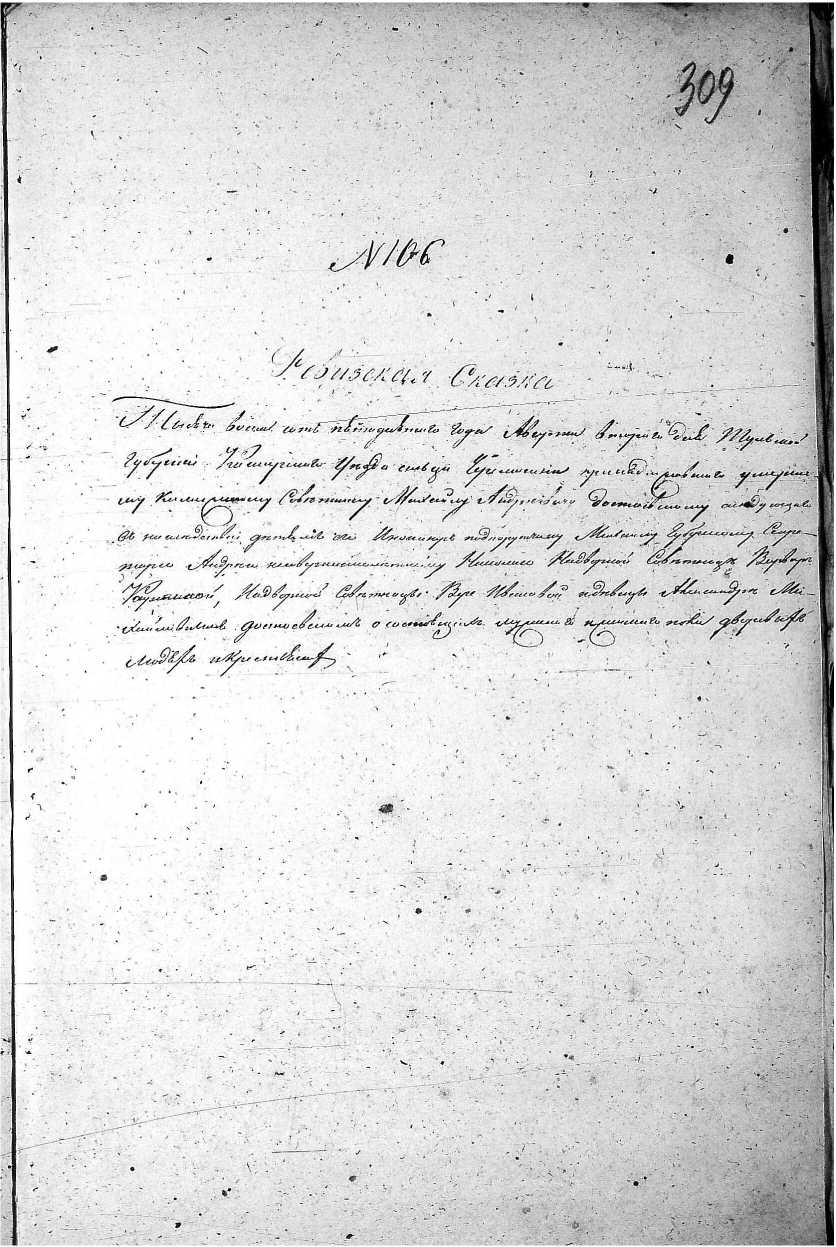
Илл. 3 . Ревизская сказка сельца Черемошни (1850). Титульный лист (ЦГА Москвы. Ф. 1249. Оп. 1. Д. 7. Л. 309)
Fig. 3 . The Revisionist tale of the village of Cheremoshnya (1850).
The title page (Central State Archive of Moscow.
Fund 1249. Inventory 1. Case 7. Sheet 309)
В отличие от предыдущей ревизии, в 1850 г. в Черемошне перечисляются уже четыре семьи дворовых .
В первой семье назван Давыд Савельев (50 лет), а также его умерший в 1844 г. брат Федосей Савельев76. Оба были бессемейные.
В письме к Марии Федоровне, сообщая о предстоящей ревизии, Михаил Андреевич напоминал, чтобы она не забыла назвать среди дворовых и их «московских, как-то: Давида, Федосия (Федора), Семена и Анну»77. Однако в РС1834 ни по Даровому, ни по Черемошне Давид и Феодосий не упоминаются. Не названы их имена и в ИВ1835 .
И. Л. Волгин установил, что «Давыд (Давид) Савельев 27 лет и его брат Феодосий четырьмя годами моложе» появились у Достоевских в 1829 г. [Волгин: 712]. А. М. Достоевский писал о Давиде, который исполнял в семье обязанности кучера:
«…он был, собственно, прислугою отца. Кроме своей четверки лошадей Давид ничего не знал и не имел более никаких занятий; да, впрочем, выездов было много, а потому и работы ему было достаточно; он был крепостным еще до женитьбы отца и жил у нас бессменно по день смерти папеньки, а потом числился дворовым при нашей деревне, к которой впрочем не принадлежал родом. Личность эту папенька особенно любил и уважал против прочей кухонной прислуги…» [Достоевский А. М.: 38].
Подобная характеристика заставляет усомниться в том, что Давид мог бы быть причастен к смерти своего помещика, как утверждало позднейшее местное предание: «Потом вывезли, свалив в поле, на дороге из Черемошни в Даровое. А кучер Давид был подговорен. Оставил барина да в Моногаро-во за попом, а в Даровое не заезжал. Поп приехал, барин дышал, но уже не в памяти» [Нечаева: 54].
Судя по воспоминаниям А. М. Достоевского, Давид продолжал служить кучером и у Ивановых, где и видел его в последний раз Андрей Михайлович по приезде своем в Москву 12 октября 1856 г.:
«…я подъехал к дому, где по адресу должен проживать Александр Павлович Иванов, — вижу у подъезда стоит старик с седой окладистой бородой, в кучерском наряде, всматриваюсь и узнаю старого кучера отца, крепостного, который ездил с отцом лет 20.
— Здравствуй, Давыд!
— Здравствуйте, сударь… да я что-то не признаю вас.
— А Андрея Михайловича Достоевского позабыл?..
— Батюшка, Андрей Михайлович… — и чубурах мне тут же на улице в ноги!..» [Достоевский А. М.: 220–221].
Вторым числился Семен Варламов (39 лет), также не упоминаемый ни в РС1834 , ни в ИВ1835 . В. С. Нечаева считала, что Семен Варламов был одним из дворовых Достоевских, живших в Москве. Ссылаясь на исповедные ведомости 1838 г., она писала, что «Симеон Варламов 22 лет» был дворовым в Даровом [Нечаева: 136]. В то же время ни в одной ревизской сказке по с. Даровому Семен не указан [Дементьева, 2023: 115], а вот имя Варлама упоминается в одном из писем Михаила Андреевича:
«…за скотом прикажи иметь наиприлежнейшее смотрение, и ежели Варлам не надежен, то не нанять ли нам на зиму старика Михея…» 78 .
Можно предположить, что М. А. Достоевский имел в виду отца Семена Варламова, а значит, Семен должен был быть коренным жителем Дарового или Черемошни.
Третьей была семья Михайлы Яковлева (41 год) с женой Пелагеей Ива-новой79 (40 лет) и их дочерями Анной (13 лет) и Прасковьей (8 лет80).
Как уже было написано выше, семья Михайлы Яковлева не была записана в РС1834 , но, судя по ИВ1835 , это была единственная семья дворовых в Черемошне.
-
А. М. Достоевский писал о нем в дневнике в июле 1887 г.:
«В сумерки мы собрались в Черемошню. Пришедши туда я разыскал Михайлу Яковлева (бывшего у меня в Елисаветграде почти год, и бывшего на моей свадьбе, след<овательно>, он знал и маму 81 ! С ним я очень рад был встретиться и велел на завтра приходить в Даровое. <…> [На следующий день] во время чая пришёл из Черемошни Михайло, и принёс мне на поклон курицу и 15 яиц; я отдарил его деньгами (1 руб.)» [Поездка в Даровое: 188].
Действительно, Михайла несколько раз упоминается в воспоминаниях Андрея Михайловича. Отправляясь осенью 1849 г. к месту службы в Ели-заветград, он на две недели заезжал к родным в Москву.
«Мнѣ дали для сопровожденiя меня въ дорогѣ и для услугъ въ первое пребыванiе мое въ Елисаветградѣ нашего крестьянина Михайла Васильева (сапожника) который прожилъ у меня почти цѣлый годъ въ Елисаветградѣ», — сообщает, уезжая 13 октября из Москвы, А. М. Достоевский. В Елизавет-граде он прожил до июля 1858 г.:
« Въ первое время готовилъ у меня Михайло, а въ послѣдствiи я нанялъ и кухарку ».
Далее Андрей Михайлович описывает день своей свадьбы, 16 июля 1850 г., и время после нее:
« Въ 1 часъ ночи ужинъ кончился, гости разъѣхались, а я съ женою поѣхалъ въ свою квартиру, гдѣ мой добрый Михайло, встрѣтилъ меня съ хлѣбомъ и солью, что онъ сдѣлалъ на свои деньги и сюрпризомъ мнѣ!» ; «Около этаго же времени т. е. въ концѣ Августа или началѣ Сентября я по усиленнымъ просьбамъ Михайлы долженъ былъ отпустить его въ Москву, потомучто онъ бѣдный соскучился за своею молодою женою. Онъ долженъ былъ сперва явиться въ Москву къ Алекс < андру > Павлов < ичу > Иванову < , > т. е. нашему опекуну …» 82 .
Четвертой была семья вдовы Дарьи Леонтьевой (52 лет) с сыновьями. Иван, по крестному отцу Матвеев83, в 1844 г. был отдан в рекруты, а Михайло, по крестному отцу Васильев (25 лет), был женат на Наталье Митрофановой (20 лет), их сыну Прокофию было полтора года.
Однако тут документ (« отданъ въ рекруты въ 1844 году ») вступает в некоторое противоречие с сохранившимся мемуарным свидетельством. Сообщая о поездке по служебной необходимости в октябре 1856 г. в Петербург, А. М. Достоевский рассказывает, как на возвратном пути в Елизаветград опять заезжал в Москву к родным:
«Еще до поѣздки въ Петербургъ, я въ разговорахъ съ Алекс<андромъ> Павлови-чемъ Ивановымъ просилъ его ежели можно дать мнѣ въ услуженiе въ Елисавет-градъ однаго изъ дворовыхъ мальчиковъ, которые конечно у него имѣются, и съ которымъ я бы могъ спокойнѣе совершить свой обратный вояжъ. Александръ Павловичъ съ удовольствiемъ согласился исполнить мою просьбу и предназначилъ мнѣ двороваго малаго лѣтъ 29ти, мнѣ извѣстнаго еще съ дѣтства, а именно сына скотницы Черемошенской Дарьи — Ивана, но котораго я звалъ по обычаю того времени просто Ванькой. — Этотъ Ванька, сослужилъ мнѣ хорошую службу, онъ пробылъ у меня до 1861 года<,> то есть около пяти лѣтъ, но былъ все таки не то, что Михайло бывшiй у меня въ Елисаветградѣ въ 1849–1850 годы»84.
И далее описывает подробности обратного пути домой со своим «личардой Ванькой». По законам же о рекрутской повинности, действовавшим на момент 1844 г., Иван должен был пройти 20 лет непрерывной службы и еще пять лет потом пробыть запасным (если по каким-либо причинам не увольнялся в запас ранее срока).
Крестьянских семей стало уже 11.
Первой была семья покойного Григория Алексеева 85, состоящая на момент ревизии из его сына Митрофана (37 лет) с женой Аксиньей (вар.: Ксенией) Никифоровой (37 лет) и их детей: Михайлы (18 лет), Алексея (16 лет86), Ла-риона (14 лет), Елены (12 лет87), Марьи (6 лет88) и Варвары (2 года89). Михайло в начале этого года, 22 января 1850 г., обвенчался с черемошинской крестьянкой Аксиньей (Ксенией) Никитиной (17 лет)90.
Второй была семья Андрея Миронова (57 лет)91. К этому времени он уже овдовел92 и потерял трех сыновей: в 1839 г. не стало младшего Григория93, в 1845 г. умер старший Емельян94, оставив сына Лариона (14 лет), а в 1849 г. умер Данила95, после которого остался годовалый сын Лазарь96.
Таким образом, с Андреем, кроме внуков, проживали только его второй сын Кондратий (26 лет) с женой Варварой Феодуловой (26 лет97)98 и дочерью Софьей (2 лет99).
Данила Андреев 12 мая 1847 г. стал зятем Савина Макарова, старосты имения Достоевских, женившись на его дочери Прасковье100 [Бессонова, Козлова: 223]. В документе не сказано о судьбе Прасковьи, но, вероятнее всего, она также умерла, а так как ее сыну Лазарю в 1850 г. исполнился всего год, можно предположить, что в 1849 г. она была еще жива.
Третьей была семья Тимофея Федорова (46 лет)101с женой Домной Григорьевой (47 лет) и детьми: Пелагеей (17 лет), Григорием (16 лет 2 мес.), Ильей (4 года102), Андреем (2 года103). Пелагея через месяц после ревизии станет второй женой черемошинского крестьянина Кондратия Андреева (см. выше семью № 2). С ними жил его брат Марк Федоров (40 лет) с женой Агафьей Матвеевой (36 лет) и сыном Алексеем (6 мес.104).
Четвертая семья Федора Андреева , умершего в 1847 г.105, состояла из его вдовы Матрены Афанасьевой (74 года) и их сына Федора (34 года), женатого на Анисье Автомоновой (31 год), с детьми: Акимом (8 лет106), Акулиной (5 лет107) и Дмитрием (1 год108).
19-летний Федор Федоров 21 мая 1834 г. венчался с девицей Анисьей Автомоновой из « Веневскаго уѣзда Села Косяева », крепостной « Госпожи Екатерины Ларивоновой Философовой », а среди поручителей при их бракосочетании были и крестьяне из Черемошни: брат Федора Алексей Федоров и Михайла Леонтьев [Варенцова: 11]109.
Пятой была семья Михайлы Леонтьева (57 лет)110, женатого на Устинье Лаврентьевой (52 года). У их старшего сына Алексея (33 года) с женой Настасьей Марковой (29 лет) был сын Василий (12 лет111), а у младшего — Василия (24 года), женатого на Наталье Семеновой (24 года), были дети: Варвара (3 года112) и годовалый Николай113.
Один из сыновей Михайлы, как писала В. С. Нечаева, был женат «на дочери "мужика Марея"» [Нечаева: 55]. Из РС1834 Черемошни известно, что у Михайлы было два сына Алексей и Василий, а в РВ1834 Дарового сказано, что у Марка Ефремова (Марея) было две дочери: Настасья (13 лет) и Аксинья (10 лет) [Дементьева, 2023: 117]. Рассматриваемый документ позволяет уточнить эти данные: на дочери Марка Ефремова Настасье был женат Алексей, а женой Василия стала 16-летняя Наталья Симеонова, дочь даровского крестьянина Семена Иванова, выданная замуж в Черемошню 26 апреля 1842 г. [Варенцова: 14]114. Эти данные подтверждает «исповедная ведомость Свято-Духовской церкви» 1836 г., где Настасья Маркова названа женой Алексея Михайлова [Бессонова, Козлова: 218]. Насчет Семена Иванова В. С. Нечаева предполагала, что он и был Семеном Широким, перевозившим семью Достоевских из Дарового в Москву и обратно [Нечаева: 41].
Шестой числилась семья Никиты Леонтьева 115, умершего в 1841 г.116 Его сын Василий (45 лет) был женат вторым браком на Аксинье Марковой (26 лет). От первого брака у него было три сына: Ларион (26 лет), Егор (14 лет) и Павел (11 лет117).
Ларион Васильев со 2 ноября 1841 г. был женат на Елизавете Савиновой [Варенцова: 14]118. Елизавета была старшей дочерью Савина Макарова — старосты Дарового [Дементьева, 2023: 118–119]. У Лариона и Елизаветы (25 лет) было двое детей: дочь Василиса (6 лет) и годовалый сын Константин119.
Сам же Василий Никитин женился через три года, 21 мая 1844 г., на второй дочери Марка Ефремова («мужика Марея») — Аксинье (Ксении) [Бессонова, Козлова: 218]120.
В седьмой семье Матвея Сергеева 121 тоже произошли изменения — сам он и его старший сын Егор умерли в 1847 г.122 Вдова Матвея, Евпраксия Максимова (54 года) жила с дочерью Прасковьей (8 лет123), деверем Егором Сергеевым (44 года), женатым на Анне Григорьевой (45 лет) и их детьми: Борисом (20 лет), Михайлой (17 лет), Тихоном (6 лет124), Екатериной (4 года125) и Яковом (6 мес.126). Борис к этому времени уже был женат на Афимье Андреевой (19 лет)127, и они растили дочь Аксинью (6 мес.128).
Судя по записям в метрических книгах, Матфей Сергеев скончался 11 (13) июля 1848 г. (а не в 1847, как указано в ревизии), «отъ Лихорадки»129. Однако, учитывая то, что с конца весны и до начала осени 1848 г. Российскую империю охватила масштабная эпидемия холеры, которая распространилась на 50 губерний, и то, что в Черемошне и в соседнем Даровом в июле — первой половине августа зарегистрировано десять подряд смертей, для восьми из которых в качестве причины смерти названы холера или понос/рвотный понос, можно предположить, что и Матфей Сергеев мог стать жертвой той же эпидемии.
Восьмой была семья Ефима Максимова 130 (53 года) с женой Авдотьей Родионовой (37 лет). У их сына Дмитрия (19 лет) с женой Домной Васильевой (19 лет)131 была дочь Прасковья (9 мес.132). В этой же семье числился брат Ефима — Василий Максимов (44 года) с женой Настасьей Ивановой133 (38 лет) и детьми: Денисом (13 лет), Иваном (9 лет134), Федосьей (6 лет135) и Анной (5 лет136).
Девятой была семья Елистрата Федорова (52 года)137. Сам он овдовел, его старший сын Николай138 в 1849 г. был отдан в рекруты, а с Елистратом жили его младшие дети: Дарья (17 лет), Устин (12 лет), Данила (8 лет139) и Афимья (5 лет).
В десятой семье числились Алексей Федоров (44 года)140 с третьей женой141 Хавроньей Ивановой (25 лет). В семье было четверо сыновей: Егор (19 лет),
Иван (17 лет) — от первого брака Алексея; Тимофей Емельянов (7 лет) — от первого брака Хавроньи; общий ребенок Ефрем (2 года142). Первым мужем Хавроньи был сын Андрея Миронова (см. семью № 2) Емельян Андреев, умерший в 1845 г.
Егор Алексеев женился на даровской крестьянке Матрене Ивановой (18 лет). Венчание состоялось за три дня до ревизии, 30 июля 1850 г.143 Е. М. Варенцова, анализировавшая книги брачных обысков, указала для этого предстоящего венчания также имена поручителей. Так, со стороны жениха выступали жители Черемошни Алексей Михайлов и Василий Максимов [Варенцова: 15] (на самом венчании его поручителями были братья Алексей и Василий Михайловы). Сохранилось разрешение на брак Егора с указанием даты венчания, выданное М. М. Достоевским, бывшим на тот момент опекуном имения:
« Егоръ Алексѣевъ женится на Матренѣ Ивановой съ моего согласiя и потому покорнѣйше прошу Павла Васильевича повѣнчать ихъ сего 30 Iюля 1850 года » [Бессонова, Козлова: 222].
Последней, одиннадцатой , была семья Исая Миронова 144 (52 года) и его второй жены Анны Терентьевой (39 лет), родом из Дарового. Три сына Исая от первого брака умерли один за другим: в 1835 г. — средний Степан, в 1838 г. — старший Марк, а в 1842 г. — младший Григорий145.
У Исая остались дочери от первого брака: Марфа (22 лет) и Софья (20 лет) — и дети от второго брака: Аксинья (7 лет146) и Егор (6 лет). Пасынок Исая, сын Анны Терентьевны от первого брака Михайло Никитин (19 лет) был женат на Арине Федотовой (18 лет)147.
Таким образом, мы видим, что к ревизии 1850 г. в Черемошне появились дворовые, а число крестьянских семей увеличилось до 11. Что касается количества душ, то мужских стало 53, а женских — 46, всего 99 душ — за 16 лет число мужского населения деревни выросло на 22 человека, а женского — на 15.
Нельзя не отметить высокую смертность в Черемошне в период, прошедший между двумя ревизиями:
Таблица 2 / Table 2
|
Год смерти (по РС1850 [по метрическим книгам]) |
Имя умершего |
Возраст на момент смерти (по сопоставлению с РС1834 [по метрическим книгам]) |
|
1835 |
Степан Исаев |
13 |
|
1838 [1840] |
Марк Исаев |
19 [21] |
|
1839 [1841] |
Григорий Андреев |
6 [9] |
|
1841 |
Никита Леонтьев |
65 |
|
1842 [1840] |
Григорий Исаев |
9 [6] |
|
1844 |
Федосей Савельев |
37 |
|
1845 [1846] |
Емельян Андреев |
32 [33] |
|
1847 |
Федор Андреев |
73 |
|
1847 [1840] |
Егор Матвеев |
16 [9] |
|
1847 [1848] |
Матвей Сергеев |
49 [50] |
|
1848 [1849] |
Григорий Алексеев |
65 [66] |
|
1849 |
Данила Андреев |
21 |
Только на основании данных ревизских сказок со времени 8-й ревизии в деревне умерло 12 мужчин (умершие женщины в РС1850 не отмечались), из них Федор Андреев скончался в возрасте 73 лет, Никита Леонтьев и Григорий Алексеев умерли в 65 лет, т. е. трое были в преклонном возрасте, а остальные 9 человек умерли молодыми (от 8 до 49 лет)148.
Кроме того, по документам два человека были отданы в рекруты: в 1844 г. — сын Дарьи Леонтьевой Иван Матвеев (однако по поводу него имеется опровергающее данный факт свидетельство Андрея Михайловича Достоевского, у которого он служил в 1856–1861 гг.), а в 1849 г. — Николай Елистратов.
10-я ревизия
На момент проведения 10-й ревизии (1858) владелицей деревни Чере-мошня уже была младшая сестра писателя В. М. Иванова, которая выкупила имение у своих братьев и сестер в 1852 г., после совершеннолетия младшей сестры Александры (см. Илл. 4 ).
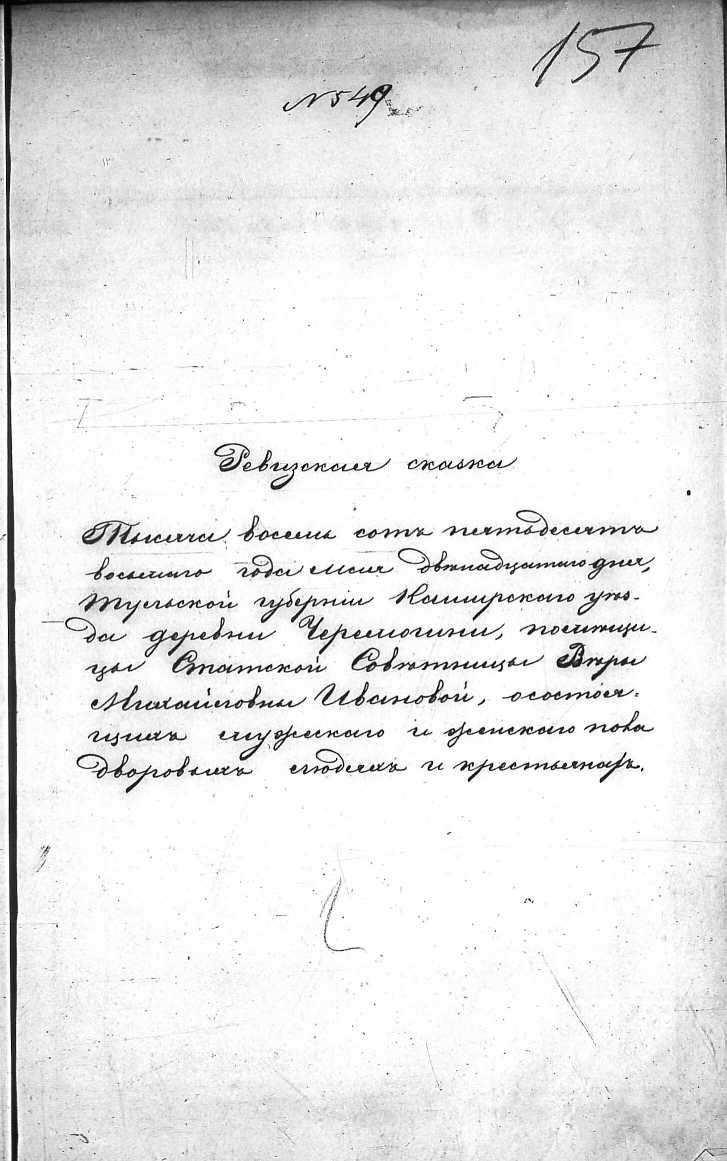
Илл. 4 . Ревизская сказка деревни Черемошни (1858). Титульный лист (ЦГА Москвы. Ф. 1250. Оп. 1. Д. 12. Л. 157)
Fig. 4 . The Revisionist tale of the village of Cheremoshnya (1858).
The title page (Central State Archive of Moscow.
Fund 1250. Inventory 1. Case 12. Sheet 157)
По последней 10-й ревизии в Черемошне было пять семей дворовых:
В первой и второй семьях числились Давыд Савельев (57 лет) и Семен Варламов (46 лет).
Третьей была семья Михаилы Яковлева (48 лет) с женой Пелагеей Михеевой (47 лет) и дочерями Прасковьей (15 лет) и Марфой (5 лет).
Четвертой числилась Дарья Леонтьева (59 лет).
Пятой стала семья Михаилы Васильева (32 года) с женой Натальей Митрофановой (27 лет) и детьми: Прокопием (8 лет), Марьей (5 лет) и Иваном (1 год). Михайло был сыном Дарьи Леонтьевой и по прошлой ревизии числился в одной семье с матерью.
Крестьянских семей по-прежнему было 11, и нумерация их не изменилась.
В первой семье числились Митрофан Григорьев (44 года), его жена Аксинья Никифорова (44 года) и их дети: Михайло (25 лет), Алексей (24 года), Ларион (21 год), Марья (13 лет), Варвара (9 лет) и Сергей (4 года149).
Михайло был женат на Аксинье Никитиной (24 года), у них были дети: Марья (3 года150) и Владимир (1 год151). Алексей в 1854 г. был отдан в солдаты. У Лариона с женой Матреной Егоровой (18 лет)152 родился сын Михайла (1 год153).
Во второй семье остался только второй сын Андрея Миронова — Кон-дратий Андреев (33 года) со второй женой Пелагеей Тимофеевой (23 года), дочерями от второй жены: Ульяной (4 года154), Екатериной (2 года155) и родившимся незадолго до ревизии Антоном (1 год156). С ними же жили племянник Кондратия, сын покойного старшего брата Емельяна, — Ларион Емельянов (21 год), его жена Елена Митрофанова (19 лет), старшая дочь черемошинского крестьянина Митрофана Григорьева (см. семью № 1)157, и их годовалый сын Матвей158.
Первая жена Кондратия Варвара Феодулова умерла вскоре после ревизии, в конце августа 1850 г. — через две недели после ее смерти он вступил в новый брак (см. подробнее в пред. ревизии). Нет в списках и дочери Кондратия от первой жены Софьи, умершей в 6 лет в 1854 г.159
Третьей была семья Тимофея Федорова (53 года) с женой Домной Григорьевой (54 года) и тремя сыновьями: Григорием (23 года), Ильей (11 лет) и Андреем (9 лет). Григорий с 18 января 1853 г. был женат на Авдотье Спиридоновой из Дарового (21 год160), у них росла годовалая дочь Ольга161. С ними по-прежнему жил брат Тимофея Марк(а) Федоров (47 лет) с женой Агафьей Матвеевой (43 года) и детьми: Алексеем (8 лет) и Елизаветой (4 года162).
Четвертой была семья Федора Федорова (41 год) с женой Анисьей Ав-томоновой163 (38 лет) и детьми: Екимом (15 лет), Дмитрием (8 лет), Петром (4 года164), Мариной (1 год165). Старшая дочь Акулина умерла в 1853 г.166 С ними же до смерти в январе 1858 г. жила мать Федора, Матрена Афанасьева167.
В пятой семье по-прежнему числились Михаил Леонтьев (64 года) с женой Устиньей Лаврентьевой (59 лет) и сыновьями Алексеем (40 лет) и Василием (31 год). Сын Алексея и Настасьи Марковой (36 лет) Василий (19 лет) к этому времени женился на Ирине Васильевой (17 лет) — в метрической книге уточняется, что Ирина была родом из сельца Бровкина, крепостная помещика Иовлева168.
У Василия Михайлова с женой Натальей Семеновой (31 год) было трое детей: Варвара (10 лет), Агафья (3 года169) и сын Иван (1 год170).
В шестой семье Василия Никитина (52 года) со второй женой Аксиньей Марковой (33 года) по-прежнему числились его сыновья от первого брака: Ларион (33 года), Егор (21 год), Павел (18 лет) и сын от второго брака Семен (1 год171).
У Лариона Васильева с женой Елизаветой Савиновой (32 года) после смерти в 1854 г. старшего сына Константина172 остались младшие дети: Василиса (13 лет), Алексей (6 лет173), Григорий (5 лет174) и Анна (4 года175). Его младший брат Егор Васильев к этому времени был женат на Анне Михайловой (19 лет) из Дарового176.
Седьмая семья числилась за братом покойного Матвея Сергеева — Егором Сергеевым (51 год) с женой Анной Григорьевой (48 лет177) и детьми: Борисом (27 лет), Михайлой (24 года), Тихоном (13 лет), Екатериной (11 лет), Яковом (8 лет) и Анной (5 лет178).
У Бориса, женатого на Афимье Андреевой (26 лет), после смерти в 1854 г. их дочери Аксиньи179 остались сын Федор (4 года180) и годовалая дочь Пра-сковья181.
Второй сын Егора Михайло, согласно документу, был женат на Дарье Елистратовой (24 года) — старшей дочери черемошинского крестьянина Елистрата Федорова (см. семью № 9), и имел сына Николая (1 год). Судя по метрическим книгам, они венчались 16 августа 1853 г.182
Относительно Михайлы в документе сказано: «отданъ въ ратники въ 1855 г .< , > не возвратился »183. 29 января 1855 г. Николай I подписал Манифест о создании всеобщего Государственного подвижного ополчения: «В ходе Крымской войны 1853–1856 гг. в России было созвано ополчение численностью свыше 350 тысяч человек. <…> Ополчение было названо Государственным и Подвижным. <…> В ратники набирали представителей податных сословий, по 23 человека с тысячи ревизских душ» [Смолин, 2023: 174].
Черемошня, как и Даровое, относилась к Каширскому уезду, значит, Михайло был зачислен либо в каширскую Дружину № 83 (прикомандирована к Крымской армии, к 38-му Тобольскому пехотному полку, несшему службу в Симферополе и Бахчисарае, начальник — подполковник Муромцев), либо в каширскую Дружину № 84 (прикомандирована к Крымской армии, к 26-му Могилевскому резервному пехотному полку, несшему службу в Геническе, начальник — генерал-майор Любенков, позже — майор Ладыженский) [Смолин, 2009: 342]. 23 марта 1856 г. Александр II подписал Положение о роспуске ополчения [Морозан: 31]. Таким образом, Михайло Егоров был участником Крымской войны, с которой и не вернулся.
Судя по тому, что Михайло погиб в Крымской войне 1855–1856 гг., у него не могло быть в 1858 г. годовалого сына. Значит, Николай либо родился раньше, либо был незаконнорожденным, но записанным как « Михаилы сынъ Николай »184. По данным метрической книги, Николай родился 2 мая 1856 г., т. е. он вполне мог быть сыном Михайлы, но в таком случае на момент ревизии ему было 2 года185.
К этой же семье была приписана вдова Матвея Сергеева — Евпраксия Максимова с дочерью Прасковьей Матвеевой, переведенные в 1857 г. в с. Даровое на место умершей дворовой Анны Петровой [Дементьева, 2023: 129].
Восьмой была семья Ефима Максимова (60 лет) с женой Авдотьей Родионовой (44 года) и сыном Дмитрием (26 лет). У Дмитрия, женатого на Домне Васильевой (26 лет), в 1854 г. умерла дочь Прасковья186, остались дочь Евгения (4 года187) и сын Михайло (2 года188).
С ними до 1852 г. жила сноха Ефима, вдова его младшего брата Василия Максимова189 Настасья Захарова190 с детьми, племянниками Ефима: Денисом Васильевым (20 лет), Иваном Васильевым (16 лет), Федосьей Васильевой (умерла в 1857191) и Анной Васильевой (12 лет).
Девятая семья числилась за Елистратом Федоровым (59 лет), жившим с сыновьями Устином (19 лет), Данилой (15 лет) и дочерью Афимьей (12 лет). Устин к этому времени женился на Марье Егоровой (18 лет) — даровской крестьянке192.
Десятой была семья Алексея Федорова (51 год), жившего с третьей женой Хавроньей Ивановой (32 года). Он имел трех сыновей от двух браков: Его-ра193, Ивана (24 года), Ефрема (9 лет) и сына Хавроньи от первого ее брака Тимофея Емельянова (14 лет).
Егор, женатый на Матрене Ивановой194, в 1851 г. был отдан в солдаты. Иван был женат на Лукерье Федотовой (22 года), и у них росла дочь Марина (2 года195). Лукерья была родом из Дарового и выдана замуж в 17 лет в Черемошню за 19-летнего Ивана Алексеева 18 августа 1852 г.196 В обыскной книге она названа «Феодоровой» [Варенцова: 15].
Одиннадцатой была семья Исая Миронова (59 лет) со второй женой Анной Терентьевой (44 года). Старшие дочери Исая от первого брака Марфа и Софья были отпущены на волю, а трое сыновей умерли. От второго брака у Исая и Анны остались дочь Аксинья (14 лет) и сын Егор (13 лет).
В этой семье проживал пасынок Исая — Михайло Никитин (26 лет) со своей семьей: женой Ариной Федотовой (25 лет197) и детьми Пелагеей (6 лет198), Матреной (2 года199) и Федором (2 года200).
Всего по 10-й ревизии в дер. Черемошня числилось душ: мужского пола — 61 и женского — 54, в целом — 115 человек.
В РС1858 , в отличие от двух предыдущих ревизий, отмечены и умершие женщины, и умершие дети (годы смерти в таблице приводятся как по РС1858 , так и фактические, по метрическим книгам):
Таблица 3 / Table 3
|
Год смерти (по РС1858 [по метрическим книгам]) |
Имя умершего/умершей |
Возраст на год смерти (по сопоставлению с РС1850 [по метрическим книгам]) |
|
1852 |
Настасья Иванова [Захарова] |
40 |
|
1853 [1851] |
Акулина Федорова |
8 [6] |
|
1854 [1851] |
Аксинья Борисова |
4–5 [2] |
|
1854 [1856] |
Константин Ларионов |
5 [5] |
|
1854 [1855] |
Прасковья Дмитриева |
5 [5] |
|
1857 |
Федосья Васильева |
13 [14] |
|
1858 |
Матрена Афанасьева |
82 [85] |
Отметим, что в документе не указан бывший глава семьи № 2 Андрей Миронов, еще живой на момент 9-й ревизии (57 лет) и умерший, согласно данным метрических книг, от чахотки в 1853 г.201 Итого, за прошедшие с момента 9-й ревизии почти 8 лет умерло, согласно данным 10-й ревизии, семь человек (с Андреем Мироновым — восемь): из них двое по старости (Матрена Афанасьева и Андрей Миронов), пятеро были детьми разного возраста, а среди взрослого населения умерла только Настасья Иванова (Захарова). Отметим, что за это время в деревне Черемошня не умерло ни одного мужчины средних лет202.
В рекруты было отдано два человека: в 1851 г. — Егор Алексеев, в 1854 г. — Алексей Митрофанов, и один, Михайло Егоров — в ратники в 1855 г. Две женщины были отпущены на волю: старшие дочери Исая Миронова Марфа и София.
Сопоставление с данными метрических книг показало также, что указания на возраст и год события, как и в предыдущих ревизиях, в РС1858 в большинстве случаев отличаются значительными неточностями (иногда погрешность с фактическим возрастом/датой смерти составляет более 2 лет), так как, скорее всего, записывались по памяти, со слов, без должной сверки с первоисточниками.
Итак, за 24 года, прошедшие между восьмой и десятой ревизиями (1834– 1858), в дер. Черемошня произошли следующие изменения:
-
1) начиная с РС1850 помимо крестьянских семей зафиксировано также четыре семьи дворовых (судя по ИВ1835 , их появление стоит относить к 1835 г.; в 1858 г. их стало уже пять). Увеличилось и число дворовых: с 10 человек (5 мужчин и 5 женщин) в 1850 г. — до 12 человек (6 мужчин и 6 женщин) в 1858 г.;
-
2) увеличилось количество крестьянских семей: с 8 (а по факту — с 7) до 11. При этом, несмотря на высокую смертность, в т. ч. младенческую, возросло и население Черемошни: если в 1816 г. здесь числилось 45 человек, в 1834 г. — 62, в 1850 г. — 99, то в 1858 — уже 115.
Подобная динамика может говорить о том, что уровень жизни населения был достаточно стабилен, особенно в последние восемь лет. Однако продолжительность жизни при этом не была слишком высокой — редко кто был старше 60 лет. Так, в 1834 г. самой старой жительницей деревни была Аксинья, жена Леонтия Федорова — ей было 78 лет (отметим, что ее муж дожил до 71 года), а среди мужчин самым старшим был Андрей Федоров (60 лет). Возраст остальных жителей не достигал 60 лет. В 1850 г. самым старым жителем оставался Исай Миронов (59 лет). Среди умерших до 9-й ревизии можно отметить Федора Андреева, дожившего до 73 лет, Никиту Леонтьева и Григория Алексеева, умерших в 65 лет. На момент последней ревизии 1858 г. самой старой оказалась Матрена Афанасьева, умершая в 82 года, а среди мужчин старшего поколения — Михаил Леонтьев (64) и Ефим Максимов (60).
В рекруты за 24 года было отдано только пять человек (из них, с учетом свидетельства А. М. Достоевского, видимо, можно исключить Ивана Матвеева).
Что касается браков, то возраст первобрачных составлял 18–21 год — у мужчин и 16–21 — у женщин. Браки совершались, как правило, между ровесниками. Однако овдовевшие крестьяне часто всего брали за себя женщин, которые были значительно моложе их — разница могла доходить до 20 лет. Часто мужчины «за 50» становились отцами, в то время как продолжительность жизни составляла не более 65 лет. За 25 лет в деревне зафиксирован 31 брак. Традиционно невестами становились девушки из соседнего Дарового (15 венчаний); в свою очередь, черемошинские крестьянки становились женами даровских крестьян (6 браков). С конца 1840-х, когда население Черемошни немного увеличилось, в невесты стали брать также девушек и женщин из собственной деревни (7 браков). И только в трех случаях женами становились жительницы более отдаленных поселений (с. Косяево Веневского уезда, дер. Серкова Михайловской округи, сельцо Бровкино госпожи Иовлевой).
Для более полного представления демографической ситуации в имении Достоевских необходимо обобщить данные, полученные из ревизских сказок по Даровому и Черемошне:
Таблица 4 / Table 4
|
Год |
Даровое |
Черемошня |
всего |
||||
|
душ мужского пола |
душ женского пола |
всего |
душ мужского пола |
душ женского пола |
всего |
||
|
1834 |
44 |
45 |
89 |
31 |
31 |
62 |
151 (75 муж.) |
|
1850 |
49 |
62 |
111 |
53 |
46 |
99 |
210 (102 муж.) |
|
1858 |
48 |
58 |
106 |
61 |
54 |
115 |
221 (109 муж.) |
Как видно из таблицы, в 1834 г. население Дарового преобладало над населением Черемошни, при этом в обоих поселениях было равное количество мужчин и женщин, а в целом оно составляло 151 душу. Но нужно учитывать, что на стоимость имения влияло количество именно мужских душ, оно же указывалась и во всех документах. В имении Достоевских изначально мужских душ было 75. К 1850 г. население выросло на 59 человек (210 душ), при этом мужчин стало больше на 27 человек (102 души). Далее рост населения продолжился, и к 1858 г. в имении В. М. Ивановой насчитывалось душ — 221, из них мужских — 109. Отметим, что если в сельце Даровом в 1850 и 1858 гг. преобладало женское население, то в деревне Черемошне — мужское. Возможно, именно это и стало причиной того, что даровские невесты так часто выходили замуж в Черемошню.
Таким образом, анализ ревизских сказок деревни Черемошни 1830– 1850-х гг., дополненный сведениями из метрических книг за указанный период, позволил не только уточнить имена, возраст и родственные связи крестьян, живших в этой деревне, но и выяснить общий состав населения в имении Достоевских, начиная с момента его приобретения. Рассмотренные документы дали возможность проследить изменения, происходившие в крестьянских семьях на протяжении 24 лет. Сегодня нет сомнений в том, что в имении Достоевских сложилось достаточно закрытое сообщество, связанное крепкими семейными узами, что стало естественным последствием практически полного отсутствия притока населения из других местностей — ведь как правило браки заключались либо между односельчанами, либо с жителями соседнего Дарового. Подобная ситуация позволила сохранить в этих деревнях целостность населения и традиционные устои — вплоть до отмены крепостного права, благодаря чему и сегодня между жителями Черемошни и Дарового можно встретить потомков крестьян, живших еще при Достоевских.
Ревизия 1858 г. стала последней подушной переписью населения. Пришедшие им на смену всеобщие переписи населения проводились еще более редко: первая и единственная в Российской империи перепись была проведена только через 29 лет — в 1897 г.; первичные переписные листы от нее (именно в них содержится нужная для анализа конкретная информация о людях: имена, даты, факты о семейном положении, количестве и составе семей) в большинстве регионов страны были уничтожены (остались только вторичные, статистически обработанные, сведения); следующая перепись состоялась уже в советское время в 1920-е гг. Поэтому для изучения демографической ситуации в Даровом и Черемошне второй половины ХIХ — начала XX в., времени хозяйствования там двух поколений семьи Ивановых, необходимо использовать иные источники: метрические книги, исповедные ведомости, рекрутские списки и т. д.
ПРИЛОЖЕНИЕ
Ревизская сказка деревни Черемошни Тульской губернии Каширского уезда за 1834 г. 203
Л. 395
ЦѢНА 50 .
КОПѢЕКЪ 204
№ 33 й
Подано 14 Февраля 1834.
Въ Каширскую ревизскую Коммиссiю
Коллежской Ассесорши Марьи Федоровой дочери Достоевской. Объявленiе
Представляя присѣмъ Составленныя мною по данной отъ мужа моего Коллежскаго Ассесора 205 Михаилы Андрѣевича Достоевскаго довѣренности о состоящихъ за нимъ Каширской округи въ Сельцѣ Черемошни Крѣстьянахъ, двойнымъ Числомъ ревизскiя Сказки, покорнѣйшѣ прошу оную коммиссiю принять, и въ принятіи оныхъ Сказокъ выдать мнѣ узаконенную Квитанцiю. Февраля 14 го дня 1834 го Года.
Къ сему объявлѣнiю по данной довѣренности Каллежская Ассессорша Марiя Федорова дочь Достоевская руку приложила 206 .
Л. 396
Милостивая Государыня
Марья Федоровна
П окорнѣише Васъ прошу на основанiи Состоявшагося Высочайшаго Манифеста о 8 й народной переписи Составить по именiю моему Состоящему Тульской Губернiи Каширска-го уѣзда въ Сельце Черемошна о находящихся въ немъ дворовыхъ людяхъ и крестьянахъ ревизскiя двойнымъ числомъ Вернѣйшiя Скаски и подать оныя за вашимъ въ мѣсто меня подписанiемъ въ учрежденную для Сего Коммисiю и получить въ принятiи оныхъ надлежащѣе свидетельство. Я вамъ въ ономъ Верю и что вы по сему учинитѣ спорить и прекословить небуду.
Затемъ Остаюсь Вашъ Доброжелательный Коллежскій Ассессоръ Михайла Андреевъ сынъ Достоевскій 207 .
Сiя доверенность принадлежитъ женѣ моей Коллежской Ассесоршѣ Достаев-ской.
Л. 396 об.
По записной 1 й книге № 86 й 208
1834 го Года февраля 7. дня Московской Палаты Гражданскаго Суда 2 го дѣпортамента въ Крѣпостной Экспедицiи сiе вѣрющiе писмо Коллежскiй Ассесоръ Михайла Андрѣевъ сынъ Достаевскiй явя сказскою показалъ что оное писмо отъ него женѣ его Марье Федоровой дочери Достаевской, и въ окончанiи онаго подписано подлинно рукою его довѣрителя.
Засѣдатель В. Евреиновъ
Секретарь Набоковъ У сей надписи Московской
Палаты Гражданскаго Суда
2 го дѣпортамента печать 209 .
Надсмотрщикъ Скрябинъ
Л. 397
№ 60 й
Ревизская Сказка
Тысяща Восемь Сотъ Тридцать Четвертаго Года Февраля Четырнадцатаго дня Тульской Губернiи Каширскаго Уѣзда Сельца Чермошны Коллежскаго Ассесора Михаилы Андрѣева сына Достаевскаго доставшіяся по купчей отъ надворнаго Совѣтника Александръ Ивановича Хотяинцова о состоящихъ мужеска и женска пола крѣстьянахъ .
Л. 397
|
РЕВИЗСКАЯ СКАЗКА 183 4 . года февраля 14 дня, Тульской Губернiи Каширскаго уѣзда Сельца Черемошны |
||||
|
s д S |
МУЖЕСКIЙ ПОЛЪ |
По послѣдней ревизiи состояло и послѣ оной прибыло |
Изъ того числа выбыло |
Нынѣ на лицо |
|
№ |
Крестьянѣ |
Лѣта |
Когда именно |
Лѣта |
|
1 |
Александръ Ильинъ |
14 |
умрѣ въ 1826 году |
— |
|
2 |
Андрѣй Мироновъ Андрѣя Миронова Сыновья Емельянъ Кондратій Данила Григорій |
23 3 новорож- { денныя |
41 21 10 6 2 |
|
|
3 |
Исай Мироновъ Исая Миронова Сыновья Марка Степанъ Григорій |
18 J ново рож-денныя |
36 15 12 4. месецовъ |
|
|
4 |
Федоръ Андрѣевъ Федора Андрѣева Сынъ Елистратъ Елистрата Федорова Сынъ Николай Федора Андрѣева въторый Сынъ Тимофей Тимофея Федорова Сынъ Григорій Федора Андрѣева третій Сынъ Федоръ |
42 18 новорожденной 12 новорожденный 6 месецовъ |
60 36 5 30 2 месецовъ 18 |
|
|
Итого мужеска пола на лицо |
15 |
|||
Л. 399
|
РЕВИЗСКАЯ СКАЗКА 183 4 года февраля 14 дня, Тульской Губернiи Каширскаго уѣзда Сельца Черемошны |
|||
|
s
|
ЖЕНСКІЙ ПОЛЪ |
Во временной отлучкѣ |
Нынѣ на лицо |
|
№ |
Крестьянки |
Съ котораго времени |
Лѣта |
|
1 |
Александры Ильина Дочь Екатерина |
12 |
|
|
2 |
Андрѣя Миронова жена Матрена Андрѣя Миронова Дочери Матрена Афимья |
38 14 3 |
|
|
3 |
Исая Миронова жена Федосья Исая Миронова Дочери Прасковья Акулина Марфа Софья |
36 16 8 6 2 |
|
|
4 |
Федора Андрѣева жена Матрена Елистрата Федорова жена Мавра Елистрата Федорова Дочь Дарья Тимофея Федорова жена Домна Тимофея Федорова Дочери Федосья Екатерина Пелагея |
58 35 2 31 9 6 2 |
|
|
Итого женска пола на лицо |
16 |
||
Л. 399 об.
|
РЕВИЗСКАЯ СКАЗКА 183 4 года февраля 14 дня, Тульской Губернiи Каширскаго уѣзда Сельца Черемошны |
||||
|
s д S |
МУЖЕСКIЙ ПОЛЪ |
По послѣдней ревизiи состояло и послѣ оной прибыло |
Изъ того числа выбыло |
Нынѣ на лицо |
|
№ |
Крестьянѣ |
Лѣта |
Когда именно |
Лѣта |
|
5 |
Леонтій Федоровъ Леонтія Федорова Сынъ отъ первой жены Никита Никиты Леонтія Сынъ Василій Василья Никитина Сынъ Ларіонъ |
68 40 11 новорожденный |
умрѣ въ 1819 Году |
— 58 29 10 |
|
6 |
Михайла Леонтьевъ Михайлы Леонтьева Сыновья Иванъ Алексей Василій |
23 1 новорож- { денныя |
умрѣ въ 1826 году |
41 — 17 8 |
|
7 |
Матвѣй Сергѣевъ Матвѣя Сергѣева Сынъ Егоръ Матвѣя Сергѣева братъ Егоръ Сергѣевъ Егора Сергѣева Сыновья Борисъ Михайла |
18 новорожденный 10 новорож- { денныя |
36 3 28 4 — |
|
|
Итого мужеска пола на лицо |
11 |
|||
Л. 400
|
РЕВИЗСКАЯ СКАЗКА 183 4 . года февраля 14 дня, Тульской губернiи Каширскаго уѣзда Сельца Черемошны |
|||
|
s д S |
ЖЕНСКІЙ ПОЛЪ |
Во временной отлучкѣ |
Нынѣ на лицо |
|
№ |
Крестьянки |
Съ котораго времени |
Лѣта |
|
5 |
Леонтія Федорова вторая жена Аксинья |
78 |
|
|
Василья Никитина жена Авдотья |
26 |
||
|
Василья Никитина дочери Пелагея Домна |
5 3 |
||
|
6 |
Михаилы Леонтьева жена Устинья |
36 |
|
|
Михаилы Леонтьева Дочь Ульяна |
13 |
||
|
Михайлы Леонтьева Сестра Прасковья |
35 |
||
|
7 |
Матвѣя Сергѣева жена Евпраксія |
38 |
|
|
Матвѣя Сергѣева Дочь Арина |
6 |
||
|
Матвѣя Сергѣева приемышъ Марья Григорьева Егора Сергѣева жена Анна |
10 29 |
||
|
Итого женска пола на лицо |
11 |
||
Л. 400 об.
|
РЕВИЗСКАЯ СКАЗКА 183 4 года февраля < 14 > дня, Тульской губернiи Каширскаго уѣзда Сельца Черемошны |
||||
|
s д S |
МУЖЕСКIЙ ПОЛЪ |
По послѣдней ревизiи состояло и послѣ оной прибыло |
Изъ того числа выбыло |
Нынѣ на лицо |
|
№ |
Крестьянѣ |
Лѣта |
Когда именно |
Лѣта |
|
8 |
Максимъ Лаврентьевъ Максима Лаврентьева Сынъ Ефимъ Ефима Максимова отъ 2 й жены Сынъ Дмитрій Максима Лаврентьева Другой Сынъ Василій Максима Лаврентьева невесткѣ незаконнорожденныя Сыновья Иванъ Михаила |
41 19 новорожденный 10 { новорожденныя |
умрѣ въ 1823 году |
^^^~ ^^^™ 37 3 28 11 9 |
|
Итого мужеска пола на лицо |
5 |
|||
|
Всѣгожѣ наличныхъ мужеска пола |
31 душа |
|||
Л. 401
|
РЕВИЗСКАЯ СКАЗКА |
|||
|
183 4 года февраля 14 дня, Тульской губернiи Каширскаго уѣзда Сельца Черемошны |
|||
|
s
|
ЖЕНСКІЙ ПОЛЪ |
Во временной отлучкѣ |
Нынѣ на лицо |
|
№ |
Крестьянки |
Съ котораго времени |
Лѣта |
|
8 |
Ефима Максимова вторая жена Авдотья |
21 |
|
|
Егоже дочь Марина |
10 |
||
|
Василья Максимова жена Настасья |
22 |
||
|
Максима Лаврентьева невестка Дарья Леонтьева |
36 |
||
|
Итого женска пола на лицо |
4 |
||
|
Всѣгожѣ наличныхъ женска пола |
31 душа |
||
Всѣго въ сей ревизской Сказкѣ заключается наличныхъ душъ мужеска пола тридцать одна и женска тридцать одна.
Что въ сей ревизской сказкѣ всѣ души къ четырнатцатому Числу Февраля мѣсяца тысяща восемь сотъ придцать четвертаго Года въ наличности бывшiя показаны и прописныхъ нѣтъ въ томъ Коллежскій Ассессоръ и Кавалѣръ Михайла Андрѣевъ сынъ Достоевскiй а вмѣсто его по данной довѣренности жена его Марія Федорова дочь Достоевская руку приложила 210 .
