
On the Tracks of Creativity: The Tourist Train, the Formation of Clusters and the Dynamics of Local Socioeconomic Development [Туристический поезд как креативный маршрут: формирование кластеров и динамика местного социально-экономического развития]
![On the Tracks of Creativity: The Tourist Train, the Formation of Clusters and the Dynamics of Local Socioeconomic Development [Туристический поезд как креативный маршрут: формирование кластеров и динамика местного социально-экономического развития]](/file/picture/14138854/on-the-tracks-of-creativitythe-tourist-train-the-formation-of-clusters-and-the.png "On the Tracks of Creativity: The Tourist Train, the Formation of Clusters and the Dynamics of Local Socioeconomic Development [Туристический поезд как креативный маршрут: формирование кластеров и динамика местного социально-экономического развития]")
Journal: Creative Industries R&D @creativejour
Section: КРЕАТИВНЫЕ КЛАСТЕРЫ, ХАБЫ И УРБАНИСТИКА | CREATIVE CLUSTERS, HUBS AND URBANISM
Article in issue: 2 (2), 2026.
Free access
This paper analyzes the potential of the tourist train as an instrument of local development by articulating the concepts of tourism clusters and the creative economy. The doctoral thesis “The Tourist Train and the Role of Public, Business and Community Actors in the Context of a Tourism Cluster”, produced by the author and supervised by the co-author, constitutes the theoretical and methodological framework of this paper. Based on qualitative research and an exploratory approach, three Brazilian experiences are examined: the Trem das Águas (MG), the Guararema Train (SP) and the project currently being implemented in São Roque (SP). Data collection involved interviews, questionnaires, direct observation and action research. The results reveal that the tourist train, by integrating railway heritage, cultural practices and cooperation networks, can stimulate the local economy, strengthen territorial identities and contribute to local development. The creative economy, understood as a transversal strategy grounded in culture, memory and innovation, emerges as a structuring element in the consolidation of unique tourism products and in the symbolic valorization of territories. When supported by integrated public policies and community participation, tourist train projects can foster creative clusters, generating synergies among segments such as handicrafts, gastronomy, music, heritage and hospitality. Governance by public, private and social actors is an essential factor for the success of these initiatives. Based on the three experiences analyzed, the paper proposes an analytical model of a railway-based creative tourism cluster, highlighting creativity as a central axis of territorial development. In summary, railway tourism articulated with the creative economy presents itself as a viable and innovative strategy for local socioeconomic development, provided that it is supported by favorable legal frameworks and by the mobilization of tourism actors. В статье анализируется потенциал туристического поезда как инструмента местного развития через соотнесение концепций туристических кластеров и креативной экономики. Докторская диссертация «Туристические поезда и роль публичных, бизнес- и общественных акторов в контексте туристического кластера», выполненная первым автором под руководством соавтора, служит теоретико-методологической основой данной статьи. На основе качественного исследования и исследовательского, эксплоративного подхода рассматриваются три бразильских опыта: Trem das Águas (штат Минас-Жерайс), Guararema Train (штат Сан-Паулу) и проект, реализуемый в настоящее время в Сан-Роке (штат Сан-Паулу). Сбор данных включал интервью, анкеты, метод непосредственного наблюдения и исследовательский анализ. Результаты показывают, что туристический поезд, объединяя железнодорожное наследие, культурные практики и сети сотрудничества, может стимулировать местную экономику, укреплять территориальную идентичность и способствовать локальному развитию. Креативная экономика, понимаемая как сквозная стратегия, основанная на культуре, памяти и инновациях, выступает структурирующим элементом при консолидации уникальных туристических продуктов и в образно-знаковом продвижении территорий. При поддержке государственных программ и участии местных сообществ проекты туристических поездов способны функционировать как креативные кластеры, порождающие синергии между такими сегментами, как ремёсла, гастрономия, музыка, наследие и гостеприимство. Управление проектами со стороны государственных, частных и социальных акторов является ключевым фактором их успеха. Исходя из проанализированных трёх практик в статье предложена аналитическая модель креативного туристического кластера на железнодорожной основе, где креативность выделена как центральная ось территориального развития. Таким образом, железнодорожный туризм, связанный с креативной экономикой, представляет собой жизнеспособную и инновационную стратегию местного социально-экономического развития при условии наличия благоприятных правовых рамок и мобилизации туристических акторов.
Short address: https://sciup.org/14138854
IDS: 14138854 | UDC: 338.486:332.1(81) | DOI: 10.7868/S3033670826020036
Text of the scientific article On the Tracks of Creativity: The Tourist Train, the Formation of Clusters and the Dynamics of Local Socioeconomic Development [Туристический поезд как креативный маршрут: формирование кластеров и динамика местного социально-экономического развития]
The thesis “The Tourist Train and the Role of Public, Business and Community Actors in the Context of a Tourism Cluster”, produced by the author and supervised by the co-author, constitutes the theoretical and methodological framework of this chapter. Although the thesis does not directly address the creative economy, the elements discussed – such as the valorization of cultural heritage, community engagement, the recovery of railway memory and the creation of new tourist attractions – provide important contributions for contextualizing the research within this field. This perspective expands the understanding of the relationship between local dynamics and the tourist train, enabling the association between railway reactivation, territorial development, cluster formation, symbolic value generation, innovation and economic sustainability through culture and creativity.
The deactivation of passenger railway lines in Brazil, which occurred mainly between the nineteen-nineties and the early two-thousands, resulted in idle infrastructure and underused urban and rural spaces. However, it also created opportunities for reuse through tourism. In this context, the tourist train emerges as an alternative for the reuse of this heritage, promoting activities that involve the circulation of people, economic dynamism and cultural valorization in municipalities with tourism potential. This approach is contextualized within the creative economy, understood as a development model based on culture, creativity and intellectual capital.
The tourist train can contribute to the dynamization of economic practices related to handicraft production, local gastronomy, cultural manifestations, experiential tourism and hospitality services. By integrating these dimensions, the value of tourism activity is expanded and the economies of the involved localities are diversified, favoring the formation and consolidation of tourism clusters.
The concept of a tourism cluster contributes to organizing these initiatives in a planned and integrated manner. A cluster represents territorial articulations among different economic and institutional agents, such as entrepreneurs, public managers, associations and residents, gathered around a common objective: the consolidation of tourism as a strategy for development. The structuring of a cluster strengthens cooperation among stakeholders, promotes efficiency and encourages innovation, elements that are also fundamental to the creative economy.
As the tourist train travels through places with historical, architectural or landscape heritage, it can stimulate the creation of economic activities focused on visitor reception, service provision and the production of cultural goods. This dynamic stimulates income generation, strengthens local identities and values traditional knowledge.
Based on these approaches, the research question of this chapter is: in what way can the tourist train foster local development considering the structuring of tourism clusters articulated with the creative economy? The objective is to analyze the potential of the tourist train as an instrument of local development through the articulation between tourism clusters and the creative economy, based on Brazilian experiences of railway heritage valorization.
The success of projects related to tourist trains depends on coordinated action among different social actors, the engagement of the local population and specific public policies. The creative economy offers an important theoretical framework because it considers the transversal nature of innovation, sustaina- bility and development actions. Participatory planning is therefore fundamental, since the reactivation of railway lines represents an integrated planning process focused on the social, economic and cultural development of the communities involved.
The cases analyzed in the thesis involve three tourist train experiences in different stages of development in Brazil. The Trem das Águas, between São Lourenço and Soledade de Minas (MG), travels a short distance while highlighting both railway heritage and the natural and cultural attractions of the southern region of Minas Gerais. The Guararema Train, between Guararema and Luís Carlos (SP), demonstrates how the revitalization of stations and the historic village of Luís Carlos stimulated tourism activity. The tourist train project in São Roque (SP), unlike the first two, is still in the implementation phase and already presents initiatives related to the creative economy through the creation of a railway museum and the revitalization of the old station.
These three cases were selected because they present different realities in terms of consolidation, operation and implementation, allowing the observation of different stages in the development of railway tourism and enabling the evaluation of conditions that favor or hinder the formation of tourism clusters in communities located along railway lines. In summary, the chapter presents the conceptual foundations for understanding the tourist train as an instrument capable of structuring clusters in the field of tourism, articulated with the creative economy.
Tourism Cluster
The concept of cluster, originally developed in industrial economics by Michael Porter (1998), refers to the geographic concentration of interconnected companies that share resources, knowledge and infrastructure, creating a favorable environment for competitiveness and innovation. This model was later adapted to the tourism sector in response to the demands of globalized markets, the integration among different segments and the need to strengthen regional economies.
In tourism, clusters involve accommodation facilities, food services, transportation, events, cultural production and supporting institutions, forming a network of interdependence and complementarity. The joint action of these agents facilitates the creation of integrated tourism products, valuing local characteristics and strengthening regional identity (Cunha & Cunha, 2005;
Clusters enhance productivity, innovation and competitiveness by generating synergies among participants. The concept has broadened to include several forms such as regional clusters, industrial clusters, innovation clusters and knowledge clusters (Kostadinović, 2019). Among the main criteria used to characterize clusters are relational proximity, as well as the institutional, social and cultural dimensions of a territory (Nagy, Kaposzta & Donnik, 2017;
The literature also discusses the life cycle of clusters, which includes stages ranging from initial formation to maturity and eventual decline. Nazarenko (2011) emphasizes the importance of monitoring, adaptation and quality strategies for the consolidation of clusters. Borkowska-Niszczota (2015) expands the analytical criteria by considering factors such as the collective awareness of participants, funding mechanisms, the number of interconnected sectors and employment generation. Sohn et al. (2017) and Boiko et al. (2017) adapt these phases to tourism, highlighting governance strategies and self-regulation mechanisms as key elements in cluster development.
Other studies deepen the technical, political and scientific elements necessary for the formation and monitoring of tourism clusters. Sohn and Beni (2023) synthesize the theory of tourism clusters by emphasizing cooperation among companies and institutions located in the same region, the generation of positive externalities, the exchange of knowledge, the presence of leadership and network governance as essential pillars of success.
Even in their early stages, tourism clusters can generate new business models and tourism products. Evidence from regions such as eastern Poland shows that clusters may emerge under the leadership of companies with the participation of non-governmental organizations and other institutions (Borkowska-Niszczota, 2015). Different models have been proposed to describe the cluster life cycle. One example is the model proposed by Sohn et al. (2017), which identifies four stages: informal, intermediate, organized and innovative. Each stage reflects an increasing degree of cooperation, technological use and modern management, while the innovative phase is characterized by high synergy, decentralization and intense knowledge spillovers.
Complementarily, Sohn and Beni (2023) identify the stages of pre-cluster, birth, development and structuring, in which the grouping of companies progressively generates collective gains and promotes regional development through networks of cooperation. The analysis also distinguishes three cluster dimensions: the horizontal dimension, composed of similar companies; the vertical dimension, composed of complementary companies within the production chain; and the expanded dimension, representing networks of relationships that go beyond firms located directly in the tourism destination (Beni, 2020).
The relationship between tourism clusters and the creative economy strengthens regional development by valuing culture and innovation. Both stimulate collaborative networks based on intangible assets and local identity. Creative tourism expands the attractiveness of destinations by integrating traditional knowledge and authentic experiences. This convergence contributes to strengthening social capital, generating income and disseminating knowledge.
Methodological Procedures
This section presents a synthesis of the research procedures adopted in Barbosa’s (2024) doctoral thesis. The study has an exploratory and qualitative nature and is grounded in action research, with the objective of investigating the contribution of the tourist train to the local development of communities located along railway lines, considering the formation of tourism clusters integrated with the logic of the creative economy.
The exploratory character allowed a closer approximation to the phenomenon under study, seeking to describe and interpret its structural elements (Gil, 2019). The qualitative approach enabled the analysis of perceptions, discourses and interactions among the various social actors involved, respecting the complexity and subjectivity of local contexts (Minayo, 2001).
As a research strategy, action research was adopted. This methodological approach implies the active participation of the researcher in the processes under investigation, aiming not only to understand the context but also to intervene collaboratively in the studied reality (Thiollent, 2008). This perspective was particularly relevant in the case of São Roque (SP), where the researcher participated directly in articulating local actors, contributing to the planning and implementation of the tourist train as a territorial development strategy based on culture, creativity and social entrepreneurship.
Three experiences were selected to compose a multiple case study (Yin, 2001): Guararema – Luís Carlos (SP), São Lourenço – Soledade de Minas (MG) and São Roque (SP). The first two represent consolidated experiences of railway tourism operation, whereas the third corresponds to a project under implementation, where local culture and creative products are considered strategic elements for the construction of a sustainable tourism cluster.
Data collection was carried out between 2023 and 2024 using multiple qualitative and participatory techniques. These included semi-structured interviews with tourist train operators, representatives of municipal and state governments, local residents, artisans, artists and community leaders. The aim was to understand the role of cultural expressions, territorial identity and creative activities in the development of tourist experiences. The interview scripts followed the principles of qualitative in-depth interviewing (Flick, 2009), allowing flexibility to capture information related to cultural manifestations, symbolic economy and initiatives based on local creativity.
Survey research was also conducted through structured questionnaires applied to tourists and local residents. The questionnaires addressed tourist motivations, experiences and perceptions regarding cultural and creative aspects of the visited communities, as well as the perceptions of residents regarding the valorization of cultural heritage, opportunities generated by the creative economy and income generation.
In total, 197 questionnaires were applied to residents of communities located along railway lines: sixty-three in São Lourenço, eighty-four in Guararema and fifty in São Roque. Among tourists, 185 questionnaires were applied, of which 115 were conducted in Guararema and seventy in São Lourenço. In São Roque, questionnaires were not applied to tourists because the tourist train was not yet in operation during the period of data collection.
Direct observation and active participation were also employed, particularly in São Roque. Cultural events, spontaneous artistic performances at railway stations, creative markets, gastronomic fairs and craft circuits were observed. These elements correspond to what Howkins (2001) defines as creative economy activities, namely the production of value based on ideas, cultural expressions, local narratives and human talent.
Documentary analysis was conducted based on legislation, municipal master plans, railway concession projects, cultural programs and public policies related to tourism and the creative economy. This stage followed the methodological guidelines proposed by Cellard (2008), considering the function, authenticity and sociopolitical context of the analyzed documents.
As a theoretical and practical contribution of the research, an analytical framework of variables, actors, functions and responsibilities involved in the development of railway tourism clusters is proposed. This model considers cooperation and governance relationships necessary for the consolidation of a creative tourism cluster in which culture, railway memory, handicrafts, music and gastronomy constitute identity-based tourism products with added value.
The methodological procedures are articulated with the theoretical perspective that understands the tourism territory as a social construction (Raffestin, 1993), shaped by the activation of cultural resources, local knowledge and affective ties (Santos, 1996). When integrated with the principles of the creative economy, railway tourism is understood not only as a transport or mobility product but also as a vector of symbolic valorization, artistic expression and opportunity generation based on creativity (UNCTAD, 2010).
Tourist Trains of Guararema, Soledade de Minas and São Roque in the Context of the Creative Economy
This section presents a comparative study of three tourist train experiences in Brazil: the Trem das Águas (São Lourenço – Soledade de Minas, MG), the Guararema Train (Guararema – Luís Carlos, SP), and the Tourist Train project in São Roque (SP). The analysis seeks to understand how these initiatives contribute to local development, the formation of tourism clusters, and the strengthening of economies based on creativity, heritage and cultural identity.
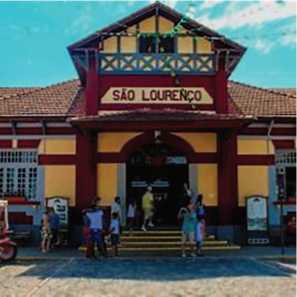
The experience of the Trem das Águas, operated by the Brazilian Association for Railway Preservation (ABPF), represents a consolidated example of integration between railway tourism and the creative economy. The stations in São Lourenço and Soledade de Minas receive tourists and function as cultural hubs, offering local gastronomy, handicrafts, musical performances and fairs. The steam locomotive, in addition to being a nostalgic attraction, enhances the value of railway heritage. The local community participates in the value chain through entrepreneurial initiatives that reinforce local symbolic capital. This articulation between tourism, culture and identity favors the formation of a creative tourism cluster.
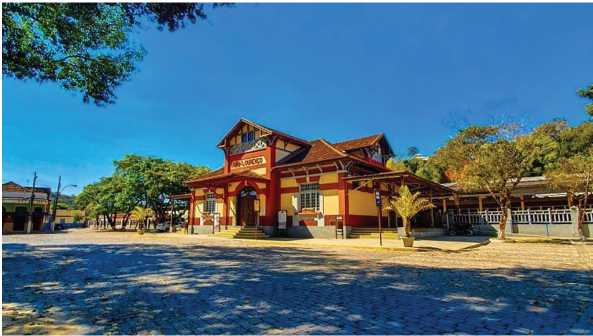
Fig. 1 – Railway Station of São Lourenço (MG)1
Fig. 2 – Railway Station of São Lourenço (MG)2
In Guararema – Luís Carlos (SP), the tourist train project is also operated by the ABPF, using a steam locomotive along a route of approximately seven kilometers. The village of Luís Carlos was restored with the support of the public sector and reactivated as a tourist attraction. However, although the train ride has strong visual and symbolic appeal, tourist consumption remains concentrated in the municipality of Guararema, with more limited economic impact in the village itself. There are creative activities such as street musicians, themed cafés and handicraft production, but the lack of governance and of a clear strategy for integration among cultural and economic actors restricts the potential for cluster formation. Even so, the project demonstrates how railway tourism can stimulate the symbolic economy, even in small-scale contexts, provided that it is supported by investments and partnerships.
1 Source: ABPF (2025)
2 Source: Blog-MG (2024)
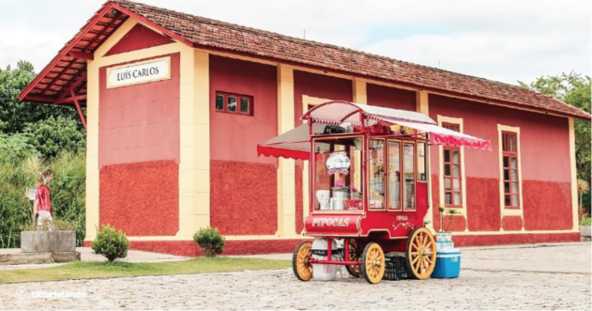
Fig. 3 – Railway Station of Guararema (SP) and Popcorn Cart3
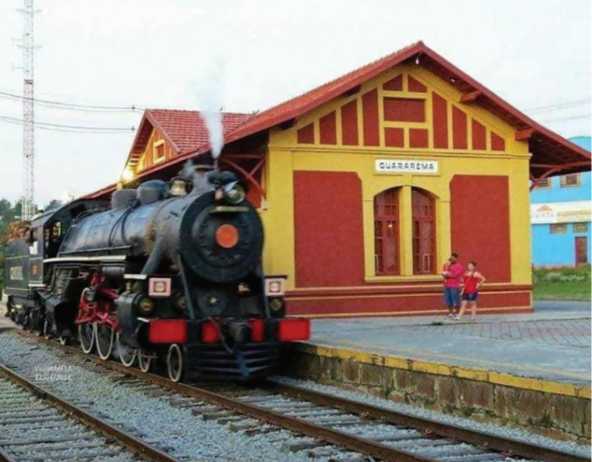
Fig. 4 – The Train and the Railway Station of Guararema (SP)4
The experience of São Roque (SP), still in the implementation phase, proposes an innovative model of integration between tourism, railway heritage and the creative economy. The municipality is already known for its Wine Route, wineries, cultural festivals and for an identity associated with leisure and the tradition of Italian immigration culture. The tourist train project aims to reactivate a deactivated railway segment connected to a former quarry, transforming the area into a tourist attraction with potential for adventure tourism, wine tourism and creative experiences. The proposal includes integrated routes with local products such as wine, cheeses, gastronomy, art and culture, configuring a model of experiential tourism in which visitors consume symbols, stories and local narratives.
4 Source: São Paulo Turismo (2024)
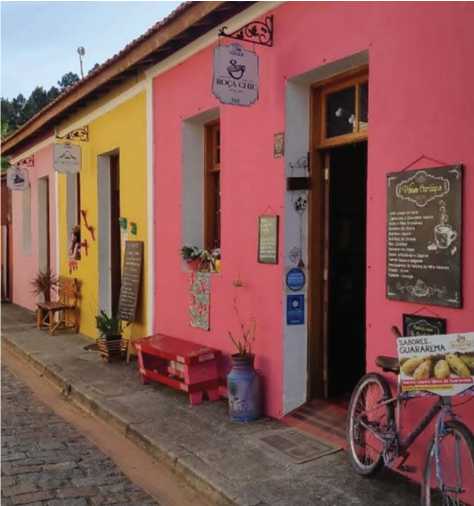
Fig. 5 – Creative Commercial Facades in the District of Luís Carlos, Guararema (SP)4
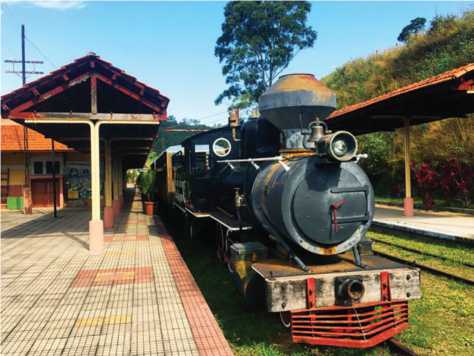
Fig. 6 – Tourist Train in São Roque (SP)5
In addition, São Roque still preserves rolling stock, including locomotives and passenger cars, and maintains partnerships with CPTM and the private sector. The main challenges involve state bureaucracy, legal obstacles and the discontinuity of public policies, which make it difficult to consolidate the project. Nevertheless, the municipality demonstrates strong potential to become a tourism-based creative economy cluster, bringing together local knowledge, railway memory, tangible and intangible heritage and cultural enterprises.
The tourist train is more than a means of transport; it is a cultural and creative heritage capable of mobilizing communities, revitalizing territories and promoting sustainable local development. Across the three experiences analyzed, it is possible to observe that the greater the articulation among actors – public authorities, the private sector and the community – the greater the capacity to generate symbolic value, activate the creative economy and form a cluster with its own identity. This confirms the premise that tourism, when combined with culture and creativity, can promote sustainable social, economic and cultural transformations.
Destinations of Tourist Trains from the Perspective of Tourism Cluster Actors
This section presents the results of empirical research conducted with four groups of actors that are fundamental to the tourism system: residents, tourists, entrepreneurs and public managers. The objective is to understand how the Tourist Train is perceived in relation to local development within the context of the creative economy in Guararema, São Lourenço and São Roque.
Residents’ perceptions reveal a strong appreciation of the Tourist Train as a driver of socioeconomic development. In São Roque, ninety-six percent of respondents believe that the project will bring local benefits, a rate similar to those found in Guararema (ninety-five percent) and São Lourenço (ninety-three percent). The research also shows that many residents begin to act as creative entrepreneurs, commercializing handicraft products – an essential characteristic of the creative economy as defined by Howkins (2001) and UNCTAD (2010), understood as a sector based on individual talent, creativity and cultural valorization.
These results indicate a favorable environment for the formation of microclusters of creative tourism, in which residents become protagonists of social and economic transformation. In Guararema, fifty-one percent of respondents identified the train ride as a unique activity, while in São Lourenço thirty-six percent emphasized its cultural and nostalgic character. The steam locomotive, landscapes and historic stations enhance the intangible heritage of the territory, as conceptualized by Pires (2001) and Beni (2012).
Representatives of the public sector recognized the potential of the tourist train to revitalize urban spaces, attract investment and strengthen cultural and tourism policies. In São Roque, the project is seen as a strategy for valuing peripheral neighborhoods and activating economic development through tourism and culture. However, public managers also highlighted obstacles such as bureaucracy in the use of the railway network, delays in concession processes and the absence of a national policy for railway tourism.
The absence of integrated policies limits the full use of the creative economy as a strategy for regional development. When public authorities act proactively, a favorable environment emerges for territorial network governance, the formation of creative clusters and the productive inclusion of different segments of society.
Entrepreneurs, especially those associated with the Brazilian Association for Railway Preservation (ABPF) and other local initiatives, emphasized the positive effects of the tourist train, including urban revitalization, job creation and the emergence of new businesses. The operation of the train stimulates the immediate surroundings of railway stations, encouraging the creation of cafés, markets, cultural events and locally based enterprises.
However, entrepreneurs also pointed out structural challenges such as dependence on the public sector, difficulties in obtaining private investment and the seasonality of demand. Even so, many demonstrated awareness of the role of tourism as a catalyst for new business models based on creativity, local identity and experiential culture, reinforcing their alignment with the creative economy model (Howkins, 2001; Richards, 2011).
The chapter demonstrates that the Tourist Train functions as a point of convergence between tourism, culture and territorial development, and that its success depends on cooperation among the four groups of social actors. The proposed development model is based on the construction of symbolic value, collective creativity and collaborative networks – central characteristics of the creative economy. The formation of creative tourism clusters therefore represents a viable alternative for stimulating development in communities located along railway lines.
The Tourist Train and the Development of Creative Economy Clusters
The tourist train is not merely a leisure activity but a territorial heritage capable of activating creative economy networks and promoting local and regional development. Based on the analysis of three experiences – Trem das Águas, Guararema and São Roque – the study proposes a conceptual and practical framework for the formation of creative tourism clusters, in which historic railway transport is articulated with the valorization of heritage, culture and local entrepreneurship.
Within this perspective, the creative economy is understood as a development model grounded in symbolic values, memory, cultural identity, heritage and social innovation. By mobilizing railway history, local crafts, gastronomy, handicrafts and cultural expressions, the tourist train becomes a connecting axis among different creative and productive sectors. The research indicates that local populations recognize the train as a driver of development. High approval rates – ninety-five percent in Guararema, ninety-seven percent in São Lourenço and eighty-four percent in São Roque – demonstrate that the train is perceived not only as a means of transportation but also as a symbol of territorial identity and a catalyst for the revalorization of local spaces.
This perception translates into concrete actions. Residents begin to undertake entrepreneurial initiatives inspired by railway traditions, experiential tourism and local cultural practices. The emergence of creative microenterprises – such as themed shops, cafés, ateliers, fairs and cultural performances near railway stations – reveals the formation of a creative ecosystem closely connected to railway memory and local identity.
The structuring of creative tourism clusters requires articulating public leadership capable of integrating tourism policies with cultural initiatives, urban planning and solidarity economy programs. In this context, the research highlights the importance of the State in enabling railway infrastructure, operational concessions and cultural and fiscal incentives that stimulate tourism development.
The case of São Roque illustrates this articulation. With the support of the State Tourism Secretariat and the CPTM railway company, the municipality proposes the reactivation of a railway segment as part of a tourism and cultural park connected to the Wine Route and local creative production. This initiative represents a concrete step toward the consolidation of a cluster based on creativity, authenticity and territorial cooperation. One important initial action for the project was the implementation of a railway museum, aimed at preserving the historical memory and significance of the territory.
The creative economy also presupposes the active participation of local communities. Rather than acting solely as hosts for visitors, residents become cultural agents and creative entrepreneurs. The research identified significant levels of entrepreneurship among residents in cities with operating tourist trains: forty-nine percent in São Lourenço, thirty-three percent in Guararema and twenty-four percent in São Roque.
These communities become curators of the territory, reinterpreting railway heritage through narratives, products and experiences. Local culture is not only consumed but also recreated and transformed into symbolic and economic value, which constitutes a central axis of the creative economy.
The results highlight the importance of integrated public policies oriented toward railway tourism and the creative economy. The inclusion of tourist trains in public funding programs – such as those directed to Municipalities of Tourism Interest and tourist resorts – can catalyze processes of territorial regeneration and economic diversification.
The literature indicates that the consolidation of creative clusters requires intersectoral strategic planning, public financing and public-private partnerships. In this sense, the tourist train operates as an articulating infrastructure of symbolic production chains, connecting heritage, culture, tourism and social innovation.
Therefore, the tourist train can be understood as a symbolic and cultural infrastructure capable of articulating local development, identity and creativity. When inserted within a collaborative territorial project supported by public policies and community participation, it has the potential to consolidate sustainable creative tourism clusters rooted in local territories. The model proposed in this study contributes to rethinking railway tourism as a strategy for applying the creative economy to regional development.
Final Considerations
The tourist train represents opportunities for the economic and cultural requalification of urban and rural spaces, particularly in small and medium-sized cities that possess railway memory, material heritage and preserved cultural identities. The analyses of the experiences of São Lourenço (MG), Guararema (SP) and São Roque (SP) demonstrate that the success of these projects is associated with the existence of railway infrastructure, the nostalgic operation of a historical transport mode and the capacity to integrate local actors who cultivate collective memory and implement innovative practices, as evidenced by creative economy initiatives in reactivated railway stations.
Empirical data reveal that the tourist train, when inserted into creative tourism clusters, generates multiple transformations: it stimulates the local economy, encourages entrepreneurship based on culture – observed in the entrepreneurship rates of forty-nine percent in São Lourenço, thirty-three percent in Guararema and twenty-four percent in São Roque – expands cultural offerings and strengthens territorial identity. The experiences demonstrate that residents, in addition to welcoming tourists, assume the role of protagonists within the territory by offering products and experiences that reinterpret the railway past and reinforce symbolic capital.
Tourists’ perceptions confirm this dynamic. In Guararema, fifty-one percent consider the train ride a unique experience, while in São Lourenço thirty-six percent emphasized its cultural and nostalgic value. These results reinforce the interpretation of the tourist train as a product of the symbolic and experiential economy, in which travel is enriched by cultural practices, local stories and creative expressions.
Nevertheless, structural challenges persist. The absence of integrated public policies, bureaucratic barriers related to the use of railway lines and administrative discontinuity limit the potential of these initiatives. In São Roque, for example, despite partnerships with CPTM and support from the State Secretariat of Tourism, legal and operational obstacles still compromise the consolidation of the project. These limitations highlight the relevance of intersectoral governance capable of integrating tourism, culture and the creative economy within a systemic approach to urban planning.
As a practical contribution, the research proposes an analytical model of a railway-based creative tourism cluster that articulates railway infrastructure, local culture, symbolic economy and integrated public policies. The recognition that productive networks based on local knowledge and territorial cooperation can be strengthened through railway tourism associated with the creative economy supports this model, as demonstrated by the proposal for the railway museum in São Roque and by the activities of the Brazilian Association for Railway Preservation (ABPF) in the studied municipalities.
Beyond its function as a tourist transport mode, the train constitutes a symbolic and cultural heritage embedded in the temporal and spatial dimensions of collective memory that shape transformative experiences. This structure not only transports people but also awakens senses and emotions that strengthen the sense of belonging, reaffirm identities and stimulate innovation processes within territories.
When reinterpreted through the perspective of the creative economy, railway heritage transcends its material dimension and becomes a space for cultural production and the generation of symbolic value. This perspective expands the scope of tourism and cultural public policies, moving beyond sectoral approaches and reinforcing the importance of interdisciplinary strategies for territorial development.
The creative economy therefore operates as a transversal driver of development, stimulating experiential tourism, generating income, strengthening local self-esteem and contributing to the repositioning and innovation of cultural legacies. In summary, railway tourism, when planned in an integrated manner and supported by creativity, represents a viable strategy for local development through the reactivation of former railway lines and stations.
