
Perceived Pedagogical Value of Digital Technologies Among Engineering Students
Journal: International Journal of Cognitive Research in Science, Engineering and Education @ijcrsee
Article in issue: 2 vol.14, 2026.
Free access
The increasing integration of digital technologies in higher education raises important questions about their real pedagogical value in teaching practice. The aim of this research was to examine students’ attitudes about the use of digital technologies, their representation in teaching, and their influence on the perceived pedagogical value of teaching at the technical faculty, examined through correlational and regression analyses. The research also included an analysis of the relationships among digital technologies, student engagement, and students’ assessments of teachers’ digital competence, particularly under conditions of limited technical resources. The research was conducted on a sample of 375 students in engineering study programs. Data were collected using a structured questionnaire and analysed using exploratory factor analysis, reliability analysis of the measurement scales (Cronbach’s alpha and, for the two-item scale, the Spearman-Brown coefficient), correlation analysis and regression models. The results show that, although students generally have a positive perception of digital technologies and teachers’ digital competence, exposure to advanced digital tools in teaching remains limited. Student engagement showed as the most significant predictor of the perceived pedagogical value of digital technologies, along with the institutional support and students’ digital competencies, which also made significant contributions. In contrast, teachers’ digital competence and level of exposure to digital technologies were not significant predictors when considered alongside other variables. These results demonstrate that the perceived pedagogical value of digital technologies primarily depends on the ability to encourage students’ interaction and active participation in the teaching process. The research also provides empirical evidence from the technical faculty context and contributes to understanding the conditions under which digital technologies enhance teaching quality.
Short address: https://sciup.org/170213598
IDS: 170213598 | UDC: 378.147:004.9]:316.644-057.875 | DOI: 10.23947/2334-8496-2026-14-2-159-175
Text of the scientific article Perceived Pedagogical Value of Digital Technologies Among Engineering Students
Digital technologies are recognized for their potential to improve learning and encourage new teaching methods. Research shows that using technology in education can lead to better academic performance, increase student motivation, and provide more flexible access to educational resources ( Chiu, 2021 ).
At the same time, while some research points to the benefits that the application of digital technologies in teaching brings, there are also those that point to challenges in their use. Challenges include primarily the insufficient institutional readiness of educational institutions for the use of digital technologies, their inconsistent use by teachers, as well as the problem of students’ interest in their application ( Alenezi, 2021 ; Fuentes and LaBad, 2025 ; Kalyani, 2024 ).
The relevance of these issues is particularly pronounced in engineering education, where contemporary curricula increasingly rely on simulation software, computer-aided design (CAD), virtual laboratories, and data-driven tools that reflect the digitalized environments in which future engineers will work ( Alreiahi et al., 2024 ; Hsu et al., 2025 ). As engineering practice advances toward Industry 4.0 and 5.0 paradigms, digital competencies acquired through technology-rich learning environments have become an integral part of the professiona l profile expected of graduates ( Broo et al., 2022 ). Therefore, limited

integration of digital technologies into teaching may have long-term consequences, potentially restricting students’ opportunities to develop discipline-relevant digital skills, widening the gap between educational practice and industry expectations, and reducing the perceived relevance of instruction for a generation of students accustomed to digitally mediated environments ( Sjöberg et al., 2024 ).
Therefore, existing research indicates that in order to assess the effectiveness of the application of digital technologies in the teaching process, in addition to their availability and/or regular use, it is necessary to examine the context of students’ readiness to use them. It is shown that adequate technical infrastructure of institutions, availability of digital tools for learning, as well as institutional support are most often key factors for effective implementation of digital technologies in the teaching process ( Redecker, 2017 ; Alenezi, 2021 ). At the same time, due to the discrepancies between the attitude of a certain institution on the use of digital technologies and their actual application in teaching ( Røe et al., 2022 ), it is necessary to conduct research that examines the experiences of students in relation to digital technologies within the framework of different higher education institutions and different study programs. In this sense, student engagement, which combines behavioral, emotional and social engagement, as well as cognitive investment ( Bond et al., 2020 ; Bowden et al., 2021 ), in learning experiences becomes a subject of interest for future research. At the same time, students’ digital literacy and their previous use of digital technologies can influence how they assess the quality of teaching, the effectiveness of communication, and the perceived value of using digital technologies ( Sillat et al., 2021 ).
These elements are especially significant within higher education institutions emphasizing Science, Technology, Engineering, and Mathematics (STEM) fields, given that problem-solving in these domains necessitates the utilization of intricate and interdisciplinary approaches. The Faculty of Technical Sciences of the University of Novi Sad offers a wide range of study programs in the STEM field, at all levels of academic studies; basic, master and doctoral. Teaching at the faculty includes the constant development of students’ skills, which gradually develop from fundamental to highly specialized research and innovation. The focus is on practical work, project-based learning and cooperation with industry, which are among the basic characteristics of STEM teaching methods.
In this study, the pedagogical value of digital technologies is understood as students’ evaluation of the extent to which these technologies genuinely improve the quality of teaching and learning, rather than their mere availability or frequency of use. This understanding builds on critical accounts of technology-enhanced learning, which caution that enhancement cannot be assumed from access alone but must be judged against qualitative changes in teaching and learning processes ( Kirkwood and Price, 2014 ). It is also consistent with evidence that students appraise digital technologies primarily in terms of their perceived usefulness for learning – supporting understanding, organisation of study, and engagement – rather than their technical novelty ( Henderson et al., 2017 ). Perceived pedagogical value is therefore conceptually related to, but broader than, the notion of perceived usefulness in technology acceptance models, as it refers to the contribution of technologies to teaching quality and student engagement within a specific institutional context.
The aim of this study, conducted at the Faculty of Technical Sciences of the University of Novi Sad, is to examine the perception of first-year students about digital technologies. Investigating first-year students’ attitudes toward digital technologies in educational contexts is particularly important, given that their initial academic encounters predominantly consist of core courses in various STEM fields. Courses such as mathematics, physics, and introductory engineering are critical in shaping students’ overall learning experiences and their initial attitudes toward technology-enabled instruction. Also, because first-year students are not yet narrowly specialized, their attitudes are less affected by discipline-specific practices and more indicative of general pedagogical approaches. Consequently, exploring their perspectives offers valuable insights into the underlying acceptance, expectations, and perceived effectiveness of digital technologies in teaching, which can subsequently inform broader curricular and instructional strategies in STEM fields.
The key objective of the research was to analyze students’ perceptions regarding the utilization of digital technologies in education, their integration into pedagogical practices, and their influence on the perceived quality of instruction and student involvement. The analysis focused on whether the utilization of digital resources influences students’ evaluations of teachers’ digital competencies and the overall quality of the educational process. The utilization of digital technologies under situations of objectively constrained resources was also examined, encompassing technological limits, software accessibility, and availability of specialist digital tools.
Theoretical Framework
The integration of digital technologies within higher education has been extensively investigated via diverse theoretical frameworks, each seeking to elucidate the determinants of technology adoption, its utilization patterns, and its impact on pedagogical practices. Prominent among these models are the Technology Acceptance Model (TAM), the Unified Theory of Acceptance and Use of Technology (UTAUT), and competence-based structures such as DigCompEdu.
Davis in 1989 introduced the Technology Acceptance Model (TAM) putting in focus as a key factors to someone’s attitude towards use of technology following two things: how useful they think it is, and how easy it is to use. These beliefs then affect their intentions and, eventually, their actual use of the technology.
In higher education, TAM is often used to study how students accept digital learning systems. According to this model, tools that appear useful and simple to use tend to be evaluated more positively. However, TAM has been criticized because it focuses mainly on personal perceptions and does not fully take into account wider teaching practices, social dynamics, or institutional support, all of which also influence how technology is experienced in learning.
To address these limitations, the Unified Theory of Acceptance and Use of Technology (UTAUT), developed by Venkatesh et al. in 2003 , expands the Technology Acceptance Model (TAM) by adding factors like social influence and facilitating conditions. In educational settings, facilitating conditions include things like the school’s infrastructure, access to digital tools, and how ready the organization is. Teachers’ pedagogical approaches and their subject matter knowledge constitute significant social and instructional determinants. The findings of this study provide some support for the Unified Theory of Acceptance and Use of Technology (UTAUT), specifically by illustrating the importance of institutional support and students’ digital literacy in shaping their evaluation of the educational benefits associated with digital technologies. Simultaneously, the observation that mere exposure to digital tools does not correlate with perceived value implies that frequent usage, in isolation, is insufficient; instead, more robust, pedagogically oriented justifications are warranted.
In this regard, the DigCompEdu framework ( Redecker, 2017 ) offers a more comprehensive perspective by emphasising educators’ digital competence as a key factor in designing meaningful technology-enhanced learning experiences. DigCompEdu conceptualises teachers’ digital competence as an integration of technical, pedagogical, and organisational skills that enable the effective use of digital technologies for teaching and learning. Although the present study confirms that teachers’ digital competence is positively associated with student engagement, its direct effect on perceived pedagogical value was not statistically significant when engagement was included in the model. This suggests that teachers’ observable use of digital tools has an indirect effect, mainly by their ability to create engaging learning environments.
This study’s main contribution is its emphasis on the mediating role of student engagement. Although the Technology Acceptance Model (TAM) and the Unified Theory of Acceptance and Use of Technology (UTAUT) don’t explicitly include engagement, current educational research increasingly views it as a key link between technology use and learning outcomes. Evidence suggests that students judge the value of digital tools mainly based on how well those tools support active participation, motivation, and cognitive involvement, rather than on the tools themselves or the teacher’s technical skill ( Bond and Bedenlier, 2019 ).
Overall, the findings show that although TAM and UTAUT are helpful for understanding factors that shape technology acceptance, they do not fully capture the educational benefits of digital technologies in higher education. Conversely, the findings align most closely with a more expansive, engagement-centric viewpoint. This perspective integrates the UTAUT model’s focus on institutional backing with DigCompEdu’s emphasis on teacher proficiency, while prioritizing student engagement. This more holistic framework offers a more nu-anced comprehension of digital technologies’ role in fostering meaningful learning; their efficacy is contingent not solely on their accessibility, but also on the effectiveness of their integration within pedagogical practices.
Materials and methods
Sample and measure
The sample included 375 first-year students from the 10 study programs at the Faculty of Technical Science, University of Novi Sad. A non-probability convenience sampling approach was adopted, with students drawn from across the ten study programs in order to capture disciplinary diversity within the first-year cohort. First-year students were selected because, having recently transitioned from secondary to higher education, they were able to compare traditional, lecture-based teaching with technology-supported teaching. The study was approved by the Ethical Commission of the Faculty of Technical Sciences. Participants completed a paper-based survey administered in person during regularly scheduled practical (tutorial/laboratory) classes from October 21 to December 4, 2024, during the first semester of the 2024/25 academic year. The students were verbally informed about the voluntary research study and confirmed their written consent in the questionnaire.
Data were collected using a structured questionnaire comprising three conceptually distinct segments. The first segment included the respondents’ basic sociodemographic characteristics (gender, study program) and self-assessment of IT skills (low, medium, high). This part also included questions related to experience and exposure to digital technologies in the teaching process, such as: the types of digital tools teachers use (multiple-choice question), dominant form of teaching (traditional, digital, combined), use of quizzes to assess knowledge, and attitude towards the use of knowledge testing applications. These variables are of categorical type and were used in descriptive and comparative analyses (Table 1).
Table 1. Characteristics of the sample (N = 375)
|
Variable |
Categories |
n |
% |
|
|
Gender |
Female |
110 |
29.3 |
|
|
Male |
265 |
70.7 |
||
|
High |
65 |
17.3 |
||
|
Perceived IT skills |
Medium |
252 |
67.2 |
|
|
Low |
58 |
15.5 |
||
|
Geodetic and Geomatic Engineering |
33 |
8.8 |
||
|
Energy and Process Engineering |
34 |
9.1 |
||
|
Biomedical Engineering |
12 |
3.2 |
||
|
Mechanical Design Engineering |
44 |
11.7 |
||
|
Study program |
Mechanical Engineering |
72 |
19.2 |
|
|
Mechatronic Engineering |
69 |
18.4 |
||
|
Traffic Engineering |
48 |
12.8 |
||
|
Environmental Engineering |
21 |
5.6 |
||
|
Safety Engineering |
23 |
6.1 |
||
|
Disaster Risk Management |
19 |
5.1 |
||
|
Presentation |
yes |
363 |
96.8 |
|
|
no |
12 |
3.2 |
||
|
Videos |
yes |
87 |
23.2 |
|
|
DT in the teaching process |
no |
288 |
76.8 |
|
|
Animation |
yes |
62 |
16.5 |
|
|
no |
313 |
83.5 |
||
|
Internet platforms |
yes no |
71 304 |
18.9 81.1 |
|
|
AI |
yes |
14 |
3.7 |
|
|
no |
361 |
96.3 |
||
|
Other |
yes |
2 |
5 |
|
|
no |
373 |
99.5 |
||
|
Blackboard and chalk |
109 |
29.1 |
||
|
Lectures are conducted |
DT |
15 |
4.0 |
|
|
Combination |
251 |
66.9 |
||
|
Quizz |
yes |
44 |
11.7 |
|
|
no |
331 |
88.3 |
||
|
Yes |
130 |
34.7 |
||
|
Would you like to have quizzes |
No |
123 |
32.8 |
|
|
Not sure |
122 |
32.5 |
||
The second segment consisted of a 10-question assessment on a five-point Likert scale (1 - strongly disagree to 5 - strongly agree). This part examined students’ views on: the pedagogical value of digital technologies, the motivational effect of their application, the impact on the interaction between teachers and students, the effectiveness in explaining the material, and communication through digital platforms. The third segment included 8 Likert items that assessed the technical and organisational conditions for the application of digital technologies in the teaching process, including: adequacy of technical equipment, stability of the internet network, clarity and preparedness of instructions, availability of teaching materials, and the possibility of online consultation.
The instrument was developed by adapting items from four previously published survey studies and tailoring them to the STEM context. Items measuring the perceived pedagogical value and the motivational and communicational aspects of digital technologies were adapted from Abdurashidova et al. (2023) and from the perceived-usefulness and experience scales of Almaiah et al. (2022) ; items measuring teachers’ digital competence were adapted from the tutor-quality scale of Almaiah et al. (2022) ; items on the types of digital technologies used in teaching and on institutional and infrastructural support were adapted from the ASTI Research and Surveys (2024) teacher survey and from Tešanović et al. (2019) , which also informed the two-part categorical and attitudinal architecture of the questionnaire and the self-assessment of IT skills. A small number of subject-specific items were generated by the authors on the basis of preliminary interviews with students. Table 2 summarises the constructs, their indicators, and their sources.
Table 2. Constructs, indicators, and sources of the questionnaire items
|
Construct / questionnaire segment |
Example indicators (items) |
Source(s) |
|
Sociodemographic characteristics and self-assessed IT skills |
Gender; study program; self-assessed IT skills (low, medium, high) |
Tešanović et al. (2019) |
|
Types of and exposure to digital technologies (DT) in teaching |
Presentations, videos, animations, internet platforms, AI; dominant form of teaching; use of quizzes |
ASTI Research & Surveys (2024); Tešanović et al. (2019) |
|
Perceived pedagogical value |
“I prefer to attend classes that use digital technologies rather than traditional lectures.”; “Digital technologies make the process of teaching and monitoring more interesting.” |
Abdurashidova et al. (2023); Almaiah et al. (2022) |
|
Communication/relational value and student engagement |
“Using digital technologies in teaching motivates me to be more actively involved in the learning process.”; “The use of digital technologies encourages better interaction between professors and students.” |
Abdurashidova et al. (2023); Almaiah et al. (2022) |
|
Teachers’ digital competence |
“Professors use internet platforms to communicate with students.”; “Professors use digital tools effectively to explain material and communicate.” |
Almaiah et al. (2022), tutorquality scale |
|
Institutional support (Support Index) |
Adequacy of technical equipment; organisation of technical support; stability of the internet network; availability of teaching materials; possibility of online consultation |
ASTI Research & Surveys (2024); Tešanović et al. (2019) |
|
Subject-specific items |
Items developed on the basis of preliminary interviews with students |
Authors |
The psychometric quality of the instrument was established in three ways. Content validity was supported by grounding each construct in previously validated instruments (Table 2) and by review of the adapted items within the research team. Construct validity was examined through exploratory factor analysis using principal axis factoring with Varimax rotation, with sampling adequacy confirmed by the Kaiser–Meyer–Olkin measure (KMO = .82 and .76 for the two parts of the instrument) and Bartlett’s test of sphericity (p < .001 in both cases). Items were retained on the basis of factor loadings ≥ 0.30 and theoretical coherence, as detailed in the Results section. Internal consistency was acceptable for the Perceived Pedagogical Value (α = .74), Support Index (α = .74) and Communication/Relational Value (α = .70) scales. Teachers’ digital competence was measured with two items adapted from the tutor-quality scale of Almaiah et al. (2022), in which tutor quality refers to teachers’ supportive and facilitating role in technology-mediated teaching, including the use of online platforms for communication with students. The original instrument comprised 34 items across nine constructs, rated on the same five-point Likert format used here, with internal consistency across constructs ranging from α = .76 to α = .90. As operationalised in the present study, the dimension is represented by only two items and therefore captures students’ perceptions of teachers’ use of digital tools and platforms — a narrow, behaviourally oriented indicator rather than the full construct as conceptualised in the DigCompEdu framework (Redecker, 2017), which additionally encompasses pedagogical and organisational dimensions not assessed here.
The two items measuring teachers’ digital competence were adapted from a different source instrument ( Almaiah et al., 2022 ) and refer to teachers’ observable behaviour rather than to students’ own experience of digital technologies in learning. Their initial communalities with the remaining items of the first segment were low (.16 and .14), indicating limited shared variance with the rest of the item pool. An exploratory solution including these items produced an improper solution, with a communality exceeding 1.0 during extraction — an outcome typical of factors defined by few indicators with little common variance ( Fabrigar et al., 1999 ). These two items were therefore treated as an a priori two-item scale and were not included in the exploratory factor analysis.
Data analysis
In a preliminary step, all 18 Likert items were analysed jointly (KMO = .790; Bartlett’s test of sphericity χ²(153) = 1598.913, p < .001). This joint solution yielded five factors, with items from both conceptual segments distributed across factors and no factor corresponding to either of the two intended content domains. The solution was therefore not interpretable in terms of the instrument’s design. Because the instrument had been constructed a priori as two conceptually distinct segments — (1) students’ perceptions of the use of digital technologies in teaching, and (2) the technical and institutional conditions supporting that use — which were intended to function as separate scales, the main analyses were conducted separately for each segment. The joint analysis is reported for transparency; it is not treated as a test of the instrument’s overall dimensionality, since the two segments were not intended to form a single measurement space. The main exploratory factor analyses were conducted using principal axis factoring (PAF) with Vari-max rotation and Kaiser normalization. The PAF method was selected over PCA because the goal was to identify latent constructs underlying the observed items, rather than to reduce data dimensionality ( Fabri- gar et al., 1999 ). The maximum number of iterations for convergence was set to 250; all reported solutions converged and all communalities remained within admissible bounds. Sampling adequacy was assessed using the Kaiser–Meyer–Olkin (KMO) measure, while Bartlett’s test of sphericity was used to evaluate the suitability of the correlation matrix for factor analysis. The number of factors was determined on the basis of the scree plot, with the Kaiser criterion (initial eigenvalues > 1) considered as supporting evidence and interpreted together with the theoretical structure of the instrument. Items were retained on the basis of factor loadings ≥ .30, a threshold appropriate for samples exceeding 350 respondents ( Hair et al., 2018 ); where an item loaded above this threshold on more than one factor, it was assigned to the factor with the higher loading, and all cross-loadings are reported. Internal consistency was assessed using Cronbach’s α for scales comprising three or more items. For the two-item measure, the Spearman-Brown coefficient and the inter-item correlation are reported instead, as α is systematically attenuated by scale length and is not the appropriate reliability index for two-item scales ( Eisinga, Grotenhuis and Pelzer, 2013 ).
In the second instrument segment, internal consistency was additionally used as a secondary criterion for item selection; this is an exploratory, data-driven procedure and is acknowledged among the study’s limitations.
Group differences were examined using independent-samples t-tests and one-way analysis of variance, with Levene’s test used to assess homogeneity of variances. Associations between categorical variables were analysed using Pearson’s chi-square test, with Cramér’s V reported as the effect size. Pearson correlation analysis was used to assess relationships between continuous variables, and multiple linear regression was used to examine predictors of perceived pedagogical value; standardised beta coefficients, R² and adjusted R² are reported. Statistical significance was set at p < .05. All analyses were conducted in IBM SPSS Statistics v26 [34].
Results
Factor Structure of the Questionnaire
The first segment of the instrument originally comprised 10 items. Three items were not included in the exploratory factor analysis. The item “I don’t have to go to class to understand the course material”
was excluded because its factor loading fell below the .30 threshold. The two items measuring teachers’ digital competence were treated as an a priori two-item scale, for the reasons set out in Section “Sample and measure”, and were analysed separately (see below). Exploratory factor analysis was therefore conducted on the remaining seven items.
Table 3. Rotated factor matrix of the first part of the Instrument
|
Items |
Factors’ 1 |
loadings 2 |
|
I prefer to attend classes that use digital technologies rather than traditional lectures. |
.731 |
.239 |
|
Digital technologies make the process of teaching and monitoring more interesting. |
.770 |
.205 |
|
Multimedia content helps me understand the material better. |
.374 |
.335 |
|
The use of digital technologies enables more efficient acquisition of new knowledge. |
. 449 |
.347 |
|
Using digital technologies in teaching motivates me to be more actively involved in the learning process. |
.429 |
.611 |
|
The use of digital technologies encourages better interaction between professors and students. |
.264 |
.628 |
|
I have the impression that professors devote more time to lectures when they use digital technologies in their teaching. |
.122 |
.561 |
Note: Extraction method: principal axis factoring. Rotation method: Varimax with Kaiser normalisation. Loadings in bold indicate the factor to which the item was assigned.
The Kaiser-Meyer-Olkin measure of sampling adequacy was good (KMO = .816), and Bartlett’s test of sphericity was statistically significant (χ²(21) = 729.08, p < .001), indicating that the data were suitable for factor analysis. Principal axis factoring converged in 13 iterations, and Varimax rotation converged in 3 iterations; all extracted communalities were within admissible bounds. A two-factor solution was retained on the basis of the Kaiser criterion (initial eigenvalues of 3.21 and 1.00), the theoretical structure of the instrument, which distinguishes pedagogical from communication/relational value, and the interpretability of the resulting factors. The scree plot (Figure 1) indicates a pronounced break after the first factor; the second factor is therefore modest in magnitude, and this is noted among the study’s limitations. The two factors accounted for 24.80% and 20.20% of the variance respectively (rotation sums of squared loadings), or 45.00% cumulatively — a moderate but reasonable value for instruments of this type ( Hair, Black, Babin and Anderson, 2018 ). The item structure and factor loadings are presented in Table 3.
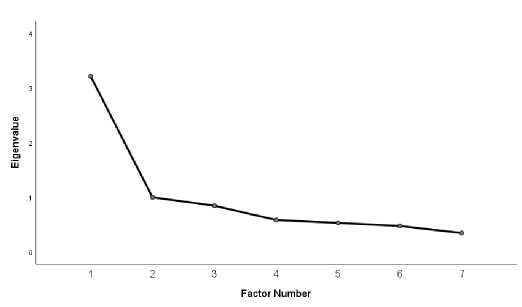
Figure 1. Scree plot for the first part of the Instrument
The first factor, labelled Perceived Pedagogical Value, comprises four items concerning the contribution of digital technologies to the quality and attractiveness of teaching. The second factor, labelled Communication/Relational Value, comprises three items concerning the effects of digital technologies on motivation and on communication between teachers and students. Three items loaded above .30 on both factors and were assigned to the factor with the higher loading; all loadings are reported in full in Table 3. For one item (“Multimedia content helps me understand the material better”) the two loadings were of comparable magnitude (.374 and .335), and its assignment should therefore be regarded as provisional. Communalities for three items were below .35; with communalities in this range, larger samples are required for stable factor recovery, a condition met by the present sample of 375 respondents (MacCallum, Widaman, Zhang and Hong, 1999). Teachers’ digital competence was represented by the two items adapted from Almaiah et al. (2022) and was not derived from the exploratory factor analysis. Reliability for this two-item measure is expressed as the inter-item correlation (r = .353) and the Spearman-Brown coefficient (SB = .52); Cronbach’s α is not an appropriate index for two-item scales (Eisinga, Grotenhuis and Pelzer, 2013). The limitations of this measure are addressed in the Limitations section.
The second part of the instrument includes 8 items related to institutional support and the utilisation of digital technology. The PAF analysis was conducted (KMO = .763), and Bartlett’s test of sphericity was statistically significant (χ² (21) = 532.79, p < .001). Although the Kaiser criterion yields 2 factors (>1), the other is borderline, and the scree plot clearly supports a single factor (Figure 2), named Support Index, consisting of 7 items and explaining 40.1% of the variance; item “Professors give advantages to digital technologies” was removed because its exclusion improved the internal consistency of the scale. The Support Index item structure and factor loadings are represented in Table 4.
Table 4 . Factor matrix of the second part of the Instrument
|
Items |
Factors’ loadings |
|
The faculty where I study has adequate technical equipment that is needed for the unhindered use of digital technologies in the teaching process. |
.634 |
|
Technical support for digital technologies at the faculty is well organised. |
.719 |
|
Classrooms are connected to a fast, stable internet network. |
.512 |
|
The instructions I receive for the use of digital technologies in teaching are adequately prepared. |
.615 |
|
I have adequate equipment for accessing digital materials from home. |
.404 |
|
The material used in the lectures is easily available. |
.546 |
|
Consultations with professors and assistants are available via online platforms. |
.465 |
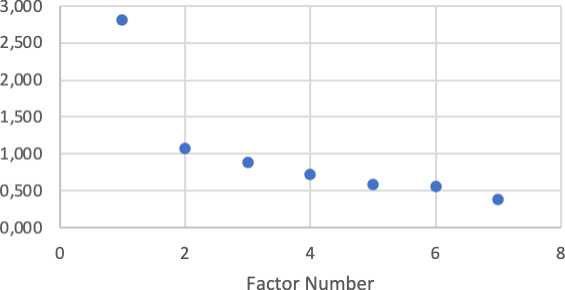
Figure 2. Scree plot for the second part of the Instrument
The skewness and kurtosis for all scales do not exceed ±2, indicating that the normality assumption is not violated ( West et al., 1995 ). Internal consistency was acceptable for the three multi-item scales; for the two-item Teachers’ Digital Competence measure, the inter-item correlation (r) and the SpearmanBrown coefficient (SB) are reported instead, as Cronbach’s alpha is not an appropriate reliability index for two-item scales. Reliability estimates and descriptive statistics for all scales are presented in Table 5. There is a positive correlation between perceived pedagogical value and communication/relational value (r = .55, p < .001), between perceived pedagogical value and teachers’ digital competence (r = .128, p = .013), and between perceived pedagogical value and support index (r = .192, p < .001). The remaining correlations between factors were also statistically significant.
Table 5. Descriptive statistics and internal consistency of instrument scales
|
Instrument scales |
M |
SD |
Sk |
Ku |
α / r; SB |
|
Perceived pedagogical value |
3.64 |
0.75 |
-0.40 |
0.23 |
0.74 |
|
Communication/relational value |
3.02 |
0.92 |
-0.03 |
-0.36 |
0.70 |
|
Teachers’ digital competence |
3.76 |
0.89 |
-0.39 |
-0.31 |
0.35; 0.52 |
|
Support Index |
3.67 |
0.73 |
-0.24 |
-0.36 |
0.74 |
Note: M = mean; SD = standard deviation; Sk = skewness; Ku = kurtosis; α = Cronbach’s alpha; inter-item correlation (r) and the Spearman-Brown coefficient (SB)
Descriptive statistics indicate a moderately positive perception of the pedagogical value of digital technologies (M = 3.64; SD = 0.75) and the digital competence of teachers (M = 3.76; SD = 0.89), while communication/relational value is closer to the neutral value (M = 3.02, SD = 0.92).
DT exposure
Descriptive analysis shows that the average value of the index of exposure to digital technologies in teaching was M = 0.62 (SD = 0.81), with values ranging from 0 to 4. These results indicate that, on average, students are exposed to fewer than one additional advanced digital tool in the teaching process. Although there is some variability in responses, the overall level of exposure remains relatively low. The exposure to DT, depending on the type of study program, is shown in Figure 3.
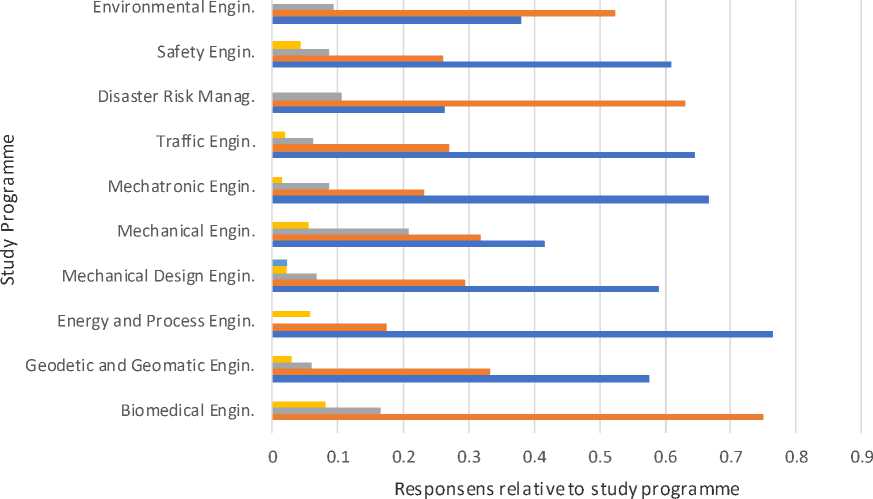
■ AI ■ Internet platforms ■ Animation ■ Video ■ No use of DT
Figure 3. Students’ attitude towards DT exposure regarding study programme
Group deference
To examine whether there are gender differences in perceptions of digital technologies in the teaching process, an analysis of group differences was conducted. The analysis did not show statistically significant differences between male and female subjects for the variables examined (t (373) = -0.51, p = 0.613).
To investigate whether there are differences in perceptions of the pedagogical value of digital technologies across students’ self-assessed IT skill levels, a one-factor analysis of variance (ANOVA) was conducted. The assumption of homogeneity of variances was satisfied (Levene’s test, p = .431). The results of the ANOVA showed a statistically significant difference among the groups, F (2, 372) = 5.41, p = .005.
Post hoc Tukey test showed that students with high IT skills had significantly higher scores on the perceived pedagogical value of digital technologies scale (M = 3.90) compared to students with medium (M = 3.62, p = .019) and low (M = 3.47, p = .005) IT skills. The difference between students with medium and low IT skills was not statistically significant (p = .397).
A crosstab analysis was conducted to examine whether students’ exposure to advanced digital technologies in the classroom differed between study programs. The results showed a statistically significant association between the study program and the DT exposure index (χ²(36) = 65.88, p = .002, Cramer’s V = 0.21), indicating a small-to-moderate effect size. In total, more than half of students (54.7%) reported no exposure to advanced digital tools in class, while 32.0% reported exposure to one tool, and only a minority reported exposure to two or more tools. The distribution of the DT exposure index differed across study programs, indicating that students in different fields have varying levels of integration of digital technologies in the teaching process.
Regression analysis
To identify the significant predictors of perceived pedagogical value, a series of regression analyses was done. The initial focus was on examining the relationship between teachers’ digital competence, student engagement, digital exposure, IT students’ competence, and institutional support with the initial variable. The findings reveal the following results.
Teachers’ digital competence is a statistically significant but weak predictor of student engagement (β = 0.110, p = .033), accounting for only 1.2% of the variance in this construct (R² = 0.012). Student engagement then proved to be a strong predictor of the perceived pedagogical value of digital technologies (β = 0.551, p < .001), explaining 30.4% of the variance of the dependent variable (R² = 0.304). When teachers’ digital competence and student engagement were simultaneously included in the model for predicting the perceived pedagogical value of digital technologies, student engagement remained a statistically significant predictor (β = 0.544, p < .001), while the direct effect of teacher digital competence was no longer statistically significant (β = 0.069, ns). These results indicate that student engagement mediates the relationship between teachers’ perceived digital competence and the perceived pedagogical value of digital technologies. In order to get a more complete understanding of the factors influencing the perceived pedagogical value of digital technologies, the model was extended to include additional variables related to institutional support, students’ IT skills, and classroom exposure to digital technologies. A multiple regression analysis was conducted that included, in addition to the above variables, the index of institutional support, students’ IT competence (a dichotomous variable indicating higher or lower levels of students’ self-assessed IT skills), and the index of exposure to digital technologies (DT exposure). The overall model was statistically significant (F(5, 369) = 37.560, p < .001) and explained 33.7% of the variance in the perceived pedagogical value of digital technologies (R² = 0.337).
In this expanded model, student engagement again emerged as the strongest predictor (β = 0.524, p < 0.001). In addition, the index of institutional support (β = 0.126, p = .010) and students’ IT competencies (β = 0.135, p = .002) made statistically significant contributions to the model. In contrast, teachers’ digital competence (β = 0.011, p = .815) and exposure to digital technologies in teaching (β = 0.024, p = .582) were not significant predictors when other variables were included.
These findings indicate that the perceived pedagogical value of digital technologies in teaching largely depends on student engagement, the level of institutional support, and students’ digital competencies.
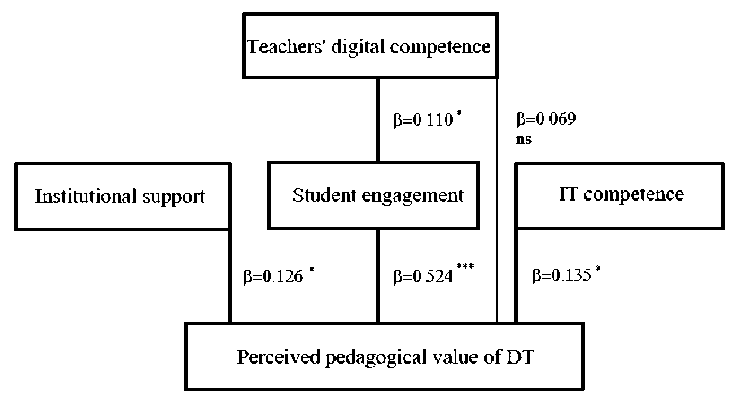
Figure 4 . Regression model of the relationships among teachers’ digital competence, student engagement, and the perceived pedagogical value of DT (*p<.05, ***p < .001, ns=not significant)
Overall, the results indicate that although students express a positive perception of digital technologies and of teachers’ digital competence, the integration of advanced digital tools into the teaching process remains relatively limited. In addition, student engagement has been shown to be a key factor associated with the perceived pedagogical value of digital technologies.
Discussions
This study examined first-year engineering students’ perceptions of digital technologies (DT), their representation in teaching, and the factors that predict the perceived pedagogical value of DT at the Faculty of Technical Sciences (FTN), University of Novi Sad. In relation to these objectives, three main findings emerged. First, although students held moderately positive views of DT and of teachers’ digital competence, their exposure to advanced digital tools was limited and fragmented. Second, regression analyses identified student engagement as by far the strongest predictor of perceived pedagogical value (β = 0.524, p < .001), followed by smaller but significant contributions of students’ IT competencies (β = 0.135, p = .002) and institutional support (β = 0.126, p = .010), with the full model explaining 33.7% of the variance. Third, teachers’ digital competence and exposure to DT were not significant predictors once engagement was taken into account. Taken together, these findings indicate that students judge the value of DT primarily by its capacity to foster active participation, which is consistent with engagement-centred accounts of technology-enhanced learning ( Bond et al., 2020 ; Henderson et al., 2017 ) rather than with acceptance models that foreground technology attributes alone. This is in agreement with previous findings showing that the effectiveness of digital tools in higher education depends more on how they are pedagogically embedded than on their technical sophistication ( Henderson et al., 2017 ; Kirkwood and Price, 2014 ).
The participant group included 375 first-year students from ten different academic programs. The distribution of responses across these programs was as follows: Biomedical Engineering (12 participants), Geodesy and Geoinformatics (33 participants), Energy and Process Engineering (34 participants), Mechanical Design Engineering (44 participants), Mechanical Engineering (72 participants), Mechatronics Engineering (69 participants), Traffic Engineering (48 participants), Disaster Risk Management (19 participants), Safety Engineering (23 participants), and Life Safety Engineering Environment (21 participants). Among the responders, 70.7% are male and 29.3% are female.
Results show students’ low exposure to advanced digital technologies. This finding must be interpreted in relation to the actual types of DT used at the Faculty of Technical Sciences. Although digital tools are employed in presentations with near universal prevalence (96.8%), the integration of more interactive or conceptually advanced formats, such as videos (23.2%), animations (16.5%), and internet platforms (18.9%), is significantly less common. The use of AI tools is minimal, at 3.7%. Conversely, while the integration of these resources improves the core organization and structure of course content, it does not provide the heightened interactivity, feedback, and collaborative opportunities that often foster greater student engagement with the learning process. As a result, exposure to digital technologies did not significantly correlate with perceived pedagogical value. Students generally viewed digital technologies as beneficial for learning. The evaluations showed mostly positive results, with an average score of 3.64. In contrast, students’ understanding is mainly based on basic technologies and teaching methods, rather than on complex, interactive resources. This observation is consistent with studies indicating that digital technologies (DT) characterized by low complexity and a focus on presentation fail to fully exploit technology’s pedagogical capabilities (Baddar and Khan, 2023; Zou et al., 2025; Bond et al., 2020).
Furthermore, in many programs, a significant number of students reported not having much experience with advanced digital technologies. This was especially pronounced in Energy and Process Engineering, Mechatronic Engineering, Traffic Engineering, Geodetic and Geomatic Engineering, and Safety Engineering, where over half of the participants indicated that such tools were not utilized in their instruction. This suggests that traditional or basic forms of digital support continue to dominate instructional approaches in these fields, which is consistent with previous research showing that higher education teaching often relies on low-complexity digital tools rather than more advanced or interactive technologies ( Henderson et al., 2017 ; Kirkwood and Price, 2014 ).
Where exposure is present, it is most commonly limited to a single digital tool, as observed in programmes such as Biomedical Engineering, Disaster Risk Management, and Environmental Engineering, indicating a partial but still relatively narrow integration of digital technologies. In contrast, programmes like Mechanical Engineering and Mechanical Design Engineering show a more balanced distribution, although even in these cases, the use of multiple advanced tools remains limited. Across all programmes, exposure to two or more advanced digital technologies is consistently low, and the use of a broader range of tools is almost absent. These patterns suggest that digital technologies are not systematically embedded into teaching processes but are instead applied in a fragmented and surface-level manner. Furthermore, the observed differences between study programs suggest that the use of digital tools varies by discipline. This likely reflects differences in how curricula are structured, how teaching is done, and the resources available at each institution ( Bond et al., 2020 ). The data suggests that students’ chances to engage with diverse and interactive digital learning environments are limited. This could hinder the potential of digital technologies to create more meaningful and transformative learning experiences.
Although only 11.7% of the people surveyed said they used quizzes to assess knowledge during lectures, 34.7% of the students wanted to use more tools for evaluating knowledge in class. The limited use of quizzes in education is mainly due to the need for licenses for many users on most platforms, such as Kahoot, Mentimeter, and Quizizz, which the faculty currently doesn’t have. Interestingly, 32.5% of students are unsure about quizzes, while 32.8% prefer not to use them to assess their understanding. This outcome is likely attributable to the ambiguous phrasing of the question, which fails to underscore the anonymity of student participants. These quizzes can enhance the educational process by providing not only a knowledge assessment at the conclusion of lectures but also by awarding participants with the top scores a specific amount of credit towards pre-examination requirements.
Findings related to individual characteristics suggest that gender does not appear to be a strong differentiating factor in students’ perceptions of digital technologies or institutional support within this context. This aligns with meta-analytic evidence indicating that gender differences in DT use and skills are generally small and statistically insignificant in many modern student populations, particularly where digital experience is widespread ( Qazi et al., 2022 ). However, it is important to acknowledge that some studies continue to report context specific gender variations in digital skills and attitudes, demonstrating that such differences, while reduced, have not been entirely eliminated ( Campos and Scherer, 2024 ).
The notable disparities observed among IT skill groups align with existing research ( Le et al., 2022 ). Students’ self-evaluated digital literacy influences their ability to navigate digital resources and their overall disposition toward technology-integrated learning. While a higher self-reported digital literacy doesn’t always correlate with academic success, it consistently influences how students engage and how they perceive digital learning environments. Students with higher digital literacy rated the pedagogical value more positively. This finding supports the idea that a student’s readiness influences how they use digital tools and how they assess their usefulness.
At the study program level, the findings suggest a variance in students’ engagement with sophisticated digital technologies, contingent upon their specific study programs. This observation implies that the integration of digital resources is not uniform across academic fields, echoing previous research that highlights dis- ciplinary differences in the adoption and pedagogical utilization of digital technologies (Bond et al., 2020).
The considerable proportion of students indicating minimal interaction with advanced digital tools may be explained by instructional approaches that emphasize fundamental technologies, including presentation software and learning management systems, with more interactive and complex applications being utilized less often ( Henderson et al., 2017 ; Kirkwood and Price, 2014 ). These observations support the view that digital transformation in higher education is a fragmented and context-dependent process, shaped by differences in pedagogical design, instructor proficiency, and institutional resources ( Tondeur et al., 2017 ; Bond et al., 2018 ).
Relatively neutral perception of the communication/relational value of DT that students have is consistent with the infrequent use of tools that support two way communication, such as learning platforms, online communication channels, and formative quizzes. With limited opportunities for structured teacher to student or peer to peer interaction students perceive fewer interpersonal or motivational benefits from DT, which caps perceived value. Similar research demonstrates that in order to improve the relational and motivating aspects of learning, communication-oriented technology must be regularly and meaningfully integrated ( Baddar and Khan, 2023 ). Classroom formats at FTN reinforce this pattern. Most students experience a hybrid but predominantly traditional teaching model a combination of blackboard and digital tools (66.9%), while 29.1% attend fully traditional classes and only 4% experience DT only instruction. In such environments, DT is often used as an add on to a lecture centered approach rather than as a vehicle for active learning. Consequently, student engagement (the strongest predictor of perceived value) depends more on teachers’ pedagogical orchestration than on the presence of DT itself. When digital technology (DT) isn’t integrated into practical, or collaborative learning, its perceived teaching benefits are limited. This aligns with previous research, which shows that teachers need both structural and teaching support to move beyond basic technology use ( Le et al., 2022 ). Students generally viewed digital technologies as pedagogically valuable and rated teachers’ digital skills positively. This is consistent with earlier studies that found a link between teachers’ skills and their intention to use digital resources ( Baddar and Khan, 2023 ; Wadmany and Kliachko, 2014 ). However, in this study, the measured aspect of teachers’ digital competence had only a small direct effect on perceived pedagogical value. Once student engagement was added to the model, its effect disappeared. This implies that students only find teacher competence valuable when it leads to engaging and interactive learning. In settings where presentations and a mix of traditional and modern teaching methods are common, competence is evident, but its impact may be limited ( Wadmany and Kliachko, 2014 ). This finding contrasts with studies that treat teachers’ digital competence as an independent driver of perceived instructional quality ( Baddar and Khan, 2023 ; Wadmany and Kliachko, 2014 ); the present results suggest that its influence is conditional and largely mediated by student engagement, extending prior work by clarifying the mechanism through which competence translates into perceived value.
Student engagement was the most important factor in determining perceived pedagogical value, accounting for over 30% of the observed differences. Notably, the standardized coefficient for student engagement (β = .524) was considerably larger than those for institutional support (β = .126) and students’ IT competence (β = .135), indicating that its contribution to perceived pedagogical value was approximately four times stronger than that of the other two significant predictors. This disproportionate weight can be explained through the lens of active learning and interaction-based theories of learning (e.g., Bond et al., 2020 ), which posit that behavioral and cognitive investment in the learning process is a more proximal determinant of perceived instructional value than the availability of resources or infrastructure per se; institutional support and digital competence appear to function as enabling conditions, whereas engagement operates as the mechanism through which these conditions translate into perceived value. This is consistent with research in STEM education showing that engagement is strengthened when digital tools are interactive, accessible, and support communication and independent learning ( Le et al., 2022 ; Zakrze- wski and Newton, 2022 ). The pattern of results further suggests that student engagement may operate as a mediating mechanism between technological resources and students’ evaluations of teaching; however, as a formal mediation analysis (e.g., structural equation modelling) was beyond the scope of this study, this interpretation should be treated as tentative and represents a valuable direction for future research.
Furthermore, institutional support exhibited a significant positive correlation with perceived pedagogical value. This aligns with previous research highlighting the importance of infrastructure, reliable internet access, easily available materials, and clear guidance (Huong et al., 2025). When these conditions are met, even basic digital tools can be used effectively, reducing obstacles for students and encouraging positive attitudes. Furthermore, systematic reviews of STEM education show that institutional challenges, such as insufficient curriculum support, limited opportunities for peer collaboration, and inadequate professional development, significantly hinder the use of digital technologies in education (Margot and Kettler, 2019). These broader findings are reflected in the relatively infrequent use of advanced digital tools seen in the current sample.
The consolidated research findings address the research objective by indicating that the perceived pedagogical value of digital technologies in engineering higher education is determined less by their mere availability and use, and more by the extent to which their application fosters student engagement, supported by institutional backing and students’ competencies. Therefore, these findings extend technology-based engagement learning models by demonstrating that teachers’ digital competence and institutional support function as enabling conditions rather than direct determinants of perceived pedagogical value. From a practical perspective, the findings suggest that institutional investments focused solely on improving teachers’ digital skills or technological infrastructure are unlikely to enhance perceived pedagogical value unless they are accompanied by pedagogical strategies that actively promote student interaction and participation.
This study, while contributing to the field, has some limitations that should be considered in relation to the results. As the study employed a cross-sectional design, the regression models identify predictive contributions rather than causal effects; therefore, the term ‘influence’ should be understood in a predictive, not causal, sense. The study’s conclusions are based on self-reported assessments of digital skills and participation. These assessments are subject to personal biases and individual differences in how people respond. Future studies could improve survey methods by including objective measures of digital learning behaviors. These could involve learning analytics, performance data, or direct observations of classroom interactions. This methodological triangulation would contribute to a more comprehensive understanding of the fundamental processes that shape technology-enhanced learning environments.
The present study was undertaken within a single institution, concentrating on first-year students enrolled in STEM programs within a single faculty in Serbia. This specific focus provides valuable perspectives on initial academic interactions with digital technology; however, it may limit the generalizability of the results to other academic fields, educational structures, or higher levels of study. Comparative studies across multiple institutions could clarify the influence of organizational culture, curriculum design, and national digitization initiatives on students’ perceptions of digital pedagogical approaches.
Several further limitations concern the instrument. First, teachers’ digital competence was assessed with only two items capturing observable use of digital tools and platforms; factors defined by fewer than three indicators are weakly determined ( Fabrigar et al., 1999 ; Velicer and Fava, 1998 ), and the measure covers only part of the DigCompEdu construct. Its non-significant direct contribution in the regression model should therefore not be read as evidence that teachers’ digital competence is unimportant, as the estimate is likely attenuated by measurement error and by the limited content coverage of the measure. Confirmatory factor analysis on an independent sample, with an expanded item pool for the teachers’ digital competence dimension, is a necessary next step. The second factor identified in the first instrument segment was also modest in magnitude (initial eigenvalue = 1.00, accounting for 20.20% of the variance after rotation), and the scree plot indicates a pronounced break after the first factor. Its stability should therefore be confirmed on an independent sample. Third, in the second instrument segment one item was removed on the basis of internal-consistency criteria, an exploratory procedure that may capitalise on sample-specific variation.
Future research should explore the qualitative aspects of student engagement in digitally enhanced STEM learning environments. A thorough examination of how digital resources support complex thinking and collaborative knowledge creation could help us better understand the conditions that allow digital technologies to create impactful and transformative learning experiences.
Conclusion
This study set out to examine first-year engineering students’ perceptions of digital technologies (DT) and to identify the factors that shape the perceived pedagogical value of DT in teaching at a technical faculty. In direct response to this objective, the study yields a clear main finding: student engagement is the decisive determinant of perceived pedagogical value, accounting for the largest share of explained variance (β = 0.524; model R² = 0.337), whereas teachers’ digital competence and the level of exposure to digital tools are not significant predictors once engagement is taken into account. Students’ self-assessed digital competencies and institutional support make smaller but significant additional contributions. Thus, the perceived value of digital technologies at the technical faculty depends primarily on the degree to which technology-supported teaching actively involves students, rather than on the availability of tools or teachers’ technical proficiency as such. At the same time, although students generally held positive views of DT and of their teachers’ digital skills, their actual use of advanced digital tools remained limited, revealing a gap between the pedagogical potential of technology and its realised use in practice.
The significance of student engagement underscores the imperative for instructional strategies that foster active involvement, interactive experiences, and the purposeful utilization of digital tools. Moreover, the substantial impact of institutional support underscores the requirement for a strong technical infrastructure, readily available digital resources, and structured guidance elements proven essential for effective technology enhanced instruction.
At the same time, the limited use of digital technologies and the differences seen across various study programs align with known institutional and structural challenges. These challenges hinder educators’ ability to consistently integrate advanced technologies. These findings highlight the importance of collaborative efforts within institutions that should integrate curriculum development, and strategic investments in digital infrastructure. This is crucial to ensure that technology integration is both pedagogically sound and consistently applied.
This study essentially adds to the existing knowledge by showing that the perceived value of digital technologies in education goes beyond just the teacher’s skills or how easy the tools are to use. Instead, it’s a complex idea influenced by factors related to students, teachers, and the institution. Subsequent investigations should build upon these findings by exploring how specific pedagogical designs affect engagement, how digital competence develops over time, and how discipline specific digital practices may explain the observed disparities among study programs. Consequently, by addressing these dimensions, institutions can more effectively utilize digital technologies to foster high quality learning experiences within STEM education.
Acknowledgements
This research has been supported by the Ministry of Science, Technological Development and Innovation (Contract No. 451-03-34/2026-03/200156) and the Faculty of Technical Sciences, University of Novi Sad through project “Scientific and Artistic Research Work of Researchers in Teaching and Associate Positions at the Faculty of Technical Sciences, University of Novi Sad 2026” (No. 01-3609/1).
Funding
This research did not receive any specific grant from funding agencies in the public, commercial, or not-for-profit sectors.
Conflict of interests
The authors declare no conflict of interest.
Data availability statement
The original contributions presented in the study are included in the article/supplementary material; further inquiries can be directed to the corresponding author/s.
Institutional Review Board Statement
This study was conducted in accordance with the ethical standards of the University of Novi Sad, Faculty of Technical Sciences (01-1254).
Author Contributions
Conceptualisation, I.L., S.S.C. and R.L; Methodology, S.S.C, I.L. and R.L.; Formal analysis, S.S.C; Writing—original draft preparation, I.L and S.S.C.; Writing—review and editing, I.L. and S.S.C.; Data curation, S.S.C and R.L.; Investigation, R.L. and I.L.; Resources R.L.; Supervision I.L., and S.S.C.; Validation I.L. and S.S.C.; Visualisation, R.L. All authors have read and agreed to the published version of the manuscript.
