
Потенциал использования белитовых шламов Ачинского глиноземного комбината для снижения углеродного следа алюминиевого производства
Журнал: Горные науки и технологии @gornye-nauki-tekhnologii
Рубрика: Свойства горных пород. Геомеханика и геофизика
Статья в выпуске: 1 т.11, 2026 года.
Бесплатный доступ
Ряд отходов горно-металлургического производства обладает возможностью прямого поглощения углекислого газа CO2 из атмосферы, поскольку некоторые из них содержат минералы, способные к карбонизации. В статье показано, что такой способностью обладают белитовые шламы Ачинского глиноземного комбината (АГК, АО «РУСАЛ Ачинск») - отходы переработки нефелиновых руд Кия-Шалтырского месторождения. Изучение изменчивости минерального состава шлама в зависимости от времени его хранения на шламовом поле в возрастных интервалах 0-5, 5-25, 25-50 лет показало устойчивое снижение содержания силикатов кальция (ларнит, волластонит, мервинит) и рост содержания карбонатов в ряду от свежих шламов к лежалым. Рассмотрены факторы, влияющие на скорость карбонизации шламов, в том числе проявляющиеся в условиях действующего шламохранилища. Электронно-микроскопическое изучение шламов (СЭМ-ЭДС) показало пористую структуру силикатных частиц шлама, а также характер замещения их кальцитом. Выполнена оценка потенциала данного хранилища для депонирования углекислого газа за счет карбонизации силикатных минералов шламов, химически неустойчивых в атмосферных условиях. По результатам проведенного анализа и литературным данным по поглощающей способности CO2 силикатами кальция в атмосферных условиях сделан вывод, что максимальным потенциалом поглощения в белитовых шламах обладает ларнит. Применительно к условиям хранилища белитовых шламов АГК рассчитан предельный объем CO2, который может быть поглощен при полном взаимодействии ларнита с атмосферным воздухом. Поглотительная способность одной тонны шлама только за счёт ларнита (при его содержании 32,6 %) составляет 83,3 кг CO2, а с учётом волластонита и мервинита общий потенциал достигает 262 кг/т. Показанные масштабы и динамика процесса преобразования силикатов в карбонаты в объеме шламохранилища позволят учитывать объем поглощенного углекислого газа в расчетах углеродного следа конечной продукции предприятия - алюминия, произведенного из нефелинового сырья.
Похожие статьи в разделе Горное дело. Горные предприятия (рудники, шахты, карьеры). Добыча нерудных ископаемых
Короткий адрес: https://sciup.org/140314965
IDS: 140314965 | УДК: 622.7:502.174 | DOI: 10.17073/2500-0632-2025-12-1065
Potential for Using Belite Sludge from the Achinsk Alumina Refinery to Reduce the Carbon Footprint of Aluminum Production
Certain types of waste from mining and metallurgical industry have the potential to directly absorb carbon dioxide (CO2) from the atmosphere, as some of them contain minerals capable of carbonation. The paper demonstrates that belite sludges from the Achinsk Alumina Refinery (AAR, RUSAL Achinsk JSC), a byproduct of processing nepheline ores from the Kiya-Shaltyrskoye deposit, possess this property. An investigation of the variability in the mineral composition of the sludges as a function of storage duration in the sludge field (sludge storage facility), across the duration intervals of 0-5, 5-25, 25-50 years revealed a steady decrease in the content of calcium silicates (larnite, wollastonite, merwinite) and an increase in the content of carbonates as the sludge aged from fresh to old. This study examines the factors influencing the rate of sludge carbonation including those observed under conditions typical of an operational sludge storage facility. The electron microscopy (SEM-EDS) analysis of the sludge revealed the porous structure of the silicate particles in the sludge, as well as the extent to which they had been replaced by calcite. An assessment has been conducted of this storage facility’s potential for carbon dioxide deposition through the carbonation of silicate minerals in sludge that are chemically unstable under atmospheric conditions. Based on the results of the analysis and literature data on the CO2 absorption capacity of calcium silicates under atmospheric conditions, it was concluded that larnite has the maximum absorption potential in belite sludges. Based on the conditions at the ARR’s belite sludge storage facility, the maximum volume of CO2 that can be absorbed during complete interaction between larnite and atmospheric air has been calculated. The absorption capacity of one ton of the sludge solely due to larnite (with its content of 32.6%) is 83.3 kg of CO2, and taking into account wollastonite and merwinite, the total potential reaches 262 kg/t. The scale and dynamics of the process of converting silicates into carbonates in the sludge storage facility will allow the volume of absorbed carbon dioxide to be taken into account in calculations of the carbon footprint of the enterprise’s end-use product, aluminum produced from nepheline ore.
Текст научной статьи Потенциал использования белитовых шламов Ачинского глиноземного комбината для снижения углеродного следа алюминиевого производства
Makarov V. A., Koulemou L. T., Mikheev V. G., Lobastov B. M. Potential for using belite sludge from the Achinsk Alumina Refinery to reduce the carbon footprint of aluminum production Mining Science and Technology (Russia). 2026;11(1):46–55.
Makarov V. A., Koulemou L. T., Mikheev V. G., Lobastov B. M. Potential for using belite sludge from the Achinsk Alumina Refinery to reduce the carbon footprint of aluminum production Mining Science and Technology (Russia). 2026;11(1):46–55.
Сокращение углеродного следа крупных промышленных предприятий становится важным фактором их конкурентоспособности. В октябре 2021 г. Правительство РФ утвердило стратегию социальноэкономического развития России с низким уровнем выбросов парниковых газов до 2050 года, которая предусматривает снижение выбросов к 2030 г. до 70 % от уровня 1990 г.
По мнению экспертов, ключевую роль в сокращении выбросов парниковых газов и решении проблемы изменения климата сыграют CCUS-технологии (Carbon Capture, Utilization, and Storage), которые представляют собой комплекс методов улавливания, использования и хранения углекислого газа CO2 [1–3]. Основными элементами CCUS являются: улавливание (Capture) – отделение CO2 от промышленных выбросов (например, ТЭС, цементные заводы) или прямо из воздуха; использование (Utilization) – применение CO2 в промышленности; хранение (Storage) – закачка CO2 в подземные геологические формации (бывшие нефтегазовые месторождения, солёные водоносные горизонты) или минерализация (связывание CO2 в твёрдые карбонаты). Последнее направление связано с развитием технологий прямого захвата CO2 из воздуха (технологии DAC – Direct Air Capture).
Возможностью прямого поглощения CO2 из атмосферы обладают отходы горно-металлургического производства, поскольку многие из этих образований (хвосты обогащения, вскрышные породы, шлаки, шламы и др.) могут содержать минералы, способные к карбонизации. В частности, некоторые горнопро- мышленные отходы (особенно ультраосновные и основные породы) содержат силикаты кальция, магния и железа (оливин, серпентин, волластонит и др.), которые химически неравновесны в поверхностных условиях и при взаимодействии с газами атмосферы способны связывать CO2 в устойчивые карбонаты (кальцит, магнезит и др.) [4–6].
Цель настоящего исследования – показать потенциал и возможность поглощения углекислого газа из атмосферы белитовыми шламами – отходами производства Ачинского глиноземного комбината.
В задачи исследования входили изучение изменчивости минерального состава шлама в зависимости от времени его хранения на шламовом поле и оценка потенциала данного хранилища для депонирования углекислого газа за счет карбонизации силикатных минералов шламов, химически неустойчивых в атмосферных условиях.
Объект и методы исследования
Ачинский глинозёмный комбинат (АГК, АО «РУСАЛ Ачинск») был введен в эксплуатацию в 1973 г. Получение глинозема на комбинате осуществляется переработкой нефелиновой руды Кия-Шалтырско-го месторождения. Важным экологическим аспектом производства глинозема на данном предприятии является образование большого количества отходов – бе-литового шлама, который складируется на шламохра-нилище, расположенном в пойме р. Чулым (рис. 1).
Площадь шламохранилища составляет 90 га, а высота отвала более 100 м. Накопленный объем белито-вого шлама – более 300 млн т.
2026;11(1):46–55
Изучение свойств шлама и возможностей его использования в народном хозяйстве началось практически с момента запуска комбината. С тех пор были установлены различные области его применения: производство белитового цемента, содопродуктов, использование в качестве мелиорантов (раскислителей почв), сорбентов, пищевых добавок в корма для птиц, пигментов для производства красок и др.
Несмотря на широкий спектр потребительских свойств белитового шлама объем его повторного использования незначителен (не более 20% от поступления на карту намыва) и несопоставим с масштабом и скоростью накопления. Вместе с тем, учитывая значительный объем данного материала, представляется целесообразным рассмотреть его в качестве перспективного объекта для секвестрации углерода, поскольку силикаты магния и кальция, содержащиеся в данных отвалах, являются потенциальными материалами для связывания атмосферного CO2 в стабильные карбонаты. Это технологическое направление актуально для борьбы с парниковым эффектом и может быть одной из составляющих снижения углеродного следа производимого на комбинате глинозема и, в конечном итоге, произведенного алюминия.
Основанием для постановки работ послужил количественный рентгенофазовый анализ трех случай- но отобранных проб шлама из карт намыва различного времени хранения, который показал тенденцию резкого снижения в отвалах содержания силикатов кальция при продолжительном воздействии атмосферы (рис. 2). Отбираемые с разных хранилищ шламы условно названы как «старые», «средние» и «свежие».
Методика дальнейших исследований включала отбор 76 проб шлама различного возраста хранения с поверхности карт намыва, а также сравнительное изучение минерального (рентгенофазовый анализ, оптическая и электронная микроскопия) и химического состава (ICP-AES, ICP-MS).
Результаты исследований
Литологически шламы представляют рыхлую массу с преобладанием частиц песчаной и алевритовой размерности, т. е. шлам соответствует алеври-тистому песку. До глубин 2,5–4 м шлам, как правило, рыхлый, а глубже наблюдается его цементация, вызванная взаимодействием шламовых вод и кальциевых силикатов (ларнит, волластонит, мервинит). В отдельных случаях отмечается цементация шлама с поверхности. С глубиной происходит возрастание содержаний крупнозернистого шлама (до размеров крупного песка) и сокращение содержания алевритовых (пылевидных) фракций.
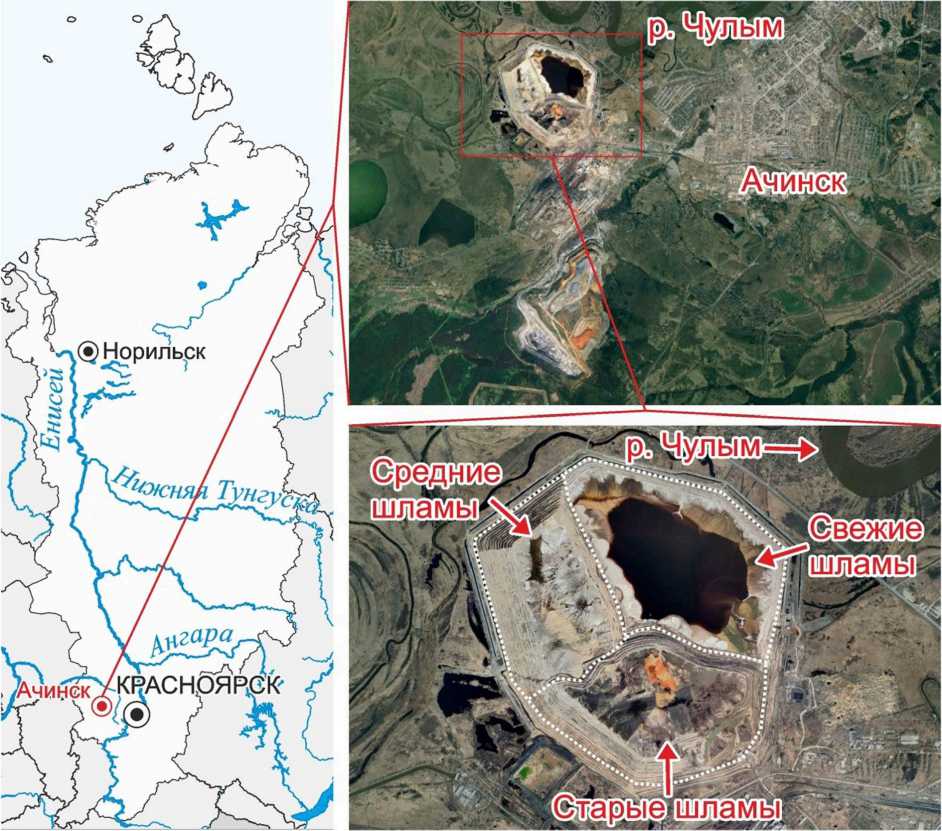
Рис. 1. Расположение шламохранилища АГК и его общий вид с отмеченными картами намыва различного срока заложения: свежие шламы (0–5 лет хранения); средние шламы (5–25 лет хранения); старые шламы (25–50 лет хранения)
ГОРНЫЕ НАУКИ И ТЕХНОЛОГИИ
2026;11(1):46–55 Makarov V. A. et al. Potential for using belite sludge from the Achinsk Alumina Refinery...
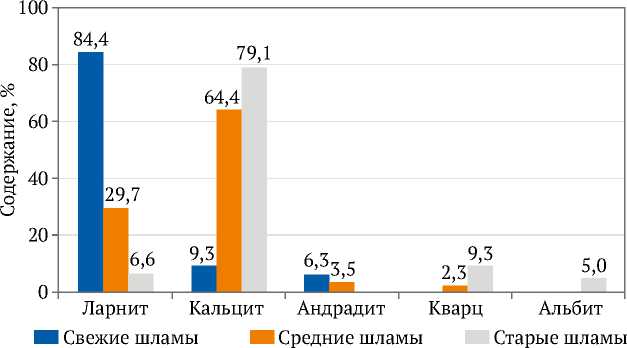
Рис. 2. Динамика изменчивости содержания ларнита и кальцита в шламах различного времени хранения (случайно отобранные пробы с поверхности карт):
свежие шламы (0–5 лет хранения); средние шламы (5–25 лет хранения); старые шламы (25–50 лет хранения)
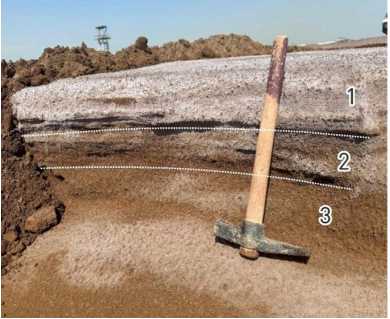
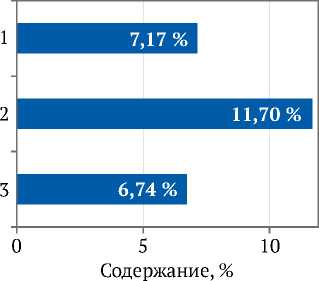
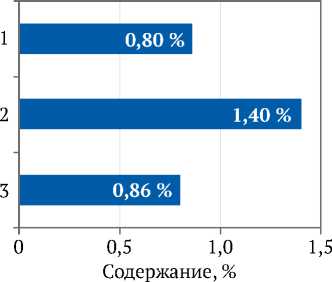
Рис. 3. Развитие белой корки, сложенной вторичными минералами (соли К и Na + карбонаты) в шламах (слева). Пробы (борозды длиной 15 см) отобраны в борту потока пульпы у точки слива из слоя двухмесячной давности. Справа графики распределения в пробах кальцита и углерода по данным рентгенофазового и рентгенофлуоресцентного анализов соответственно
Распределение кальцита
Распределение углерода
Формирование шламохранилища осуществляется путем намыва гидравлическим способом по системе пульпопроводов с оборотной системой движения воды. Это определяет слоистую текстуру шламов, свойственную осадочным породам. Слои залегают под углами 1–5° к центру хранилища. Состав шлама и структурно-текстурные особенности обусловливают его повышенную пористость и хороший дренаж поверхностной воды. Технологическая вода, поступающая на карту намыва по пульповоду, имеет температуру около 60 °С, что наряду с повышенной влажностью, хорошей аэрацией материала хвостов приводит к интенсивному формированию вторичных минералов, в том числе в холодное время года (рис. 3).
Показательно, что максимальное количество кальцита, как и углерода, концентрируется в интервале 15–30 см от поверхности, что, вероятно, связано с особыми условиями влажности и поглощением углекислого газа из воздуха.
Химический состав шламов и характер его изменчивости в зависимости от времени хранения отражены в табл. 1.
Из таблицы видно, что по большинству элементов серьезных изменений содержаний в шламах различного времени хранения не наблюдается. Активный вынос элементов с поверхности шламовых отвалов наблюдается только для магния и натрия.
Рентгенофазовые исследования шламов (изучены по две пробы, случайно отобранные с поверхности каждой карты намыва) показали, что из силикатов кальция кроме ларнита в пробах присутствуют волластонит и мервинит (табл. 2).
Из табл. 3 следует, что сумма силикатов кальция и магния в ряду свежий шлам–средний шлам–ста-рый шлам последовательно уменьшается: 79,44– 76,96–68,9 (%), а суммарное содержание карбонатов возрастает: 18,98–27,47–27,09 (%). Вместе с тем установленное в одной из проб свежих шламов (табл. 2, проба СВ1) высокое содержание карбонатов отражает быструю и неравномерную карбонизацию содержащихся в них силикатных минералов. Пример такой высокой скорости карбонизации при благоприятных условиях показан на рис. 3.
2026;11(1):46–55
Таблица 1
Химический состав белитовых шламов по данным ICP-AES* (средние содержания в выборках из 10 проб)
|
Элементы, г/т |
Категория шлама по времени хранения** |
||
|
Свежий (СВ) |
Средний (СР) |
Старый (СТ) |
|
|
As |
10,6 |
9,3 |
11,2 |
|
B |
22,0 |
22,8 |
20,8 |
|
Ba |
290,8 |
298,2 |
208,6 |
|
Ca |
297294,0 |
285448,4 |
296804,6 |
|
Co |
8,2 |
7,6 |
7,3 |
|
Cr |
29,3 |
22,5 |
25,5 |
|
Cu |
16,9 |
30,0 |
20,5 |
|
Li |
12,2 |
10,1 |
11,8 |
|
Mg |
10724,1 |
9314,8 |
7530,5 |
|
Na |
11587,7 |
7140,7 |
5346,8 |
|
Ni |
16,6 |
15,1 |
14,8 |
|
P |
1242,6 |
1119,9 |
1197,7 |
|
Pb |
16,4 |
22,7 |
17,2 |
|
S |
1338,3 |
787,3 |
889,4 |
|
Sb |
2,9 |
2,4 |
3,1 |
|
Sn |
1,3 |
1,2 |
1,2 |
|
Sr |
986,4 |
982,9 |
907,7 |
|
Ti |
2032,4 |
1833,0 |
1790,5 |
|
Zn |
46,4 |
48,3 |
52,4 |
* Анализы выполнены в лаборатории ООО ЦГИ «Прогноз».
** СВ – 0–5 лет; СР – 5–25 лет; СТ – 25–50 лет.
С целью оценки характера процессов замещения силикатов кальция карбонатом выполнены электронно-микроскопические исследования трех проб разновозрастных шламов. С использованием метода СЭМ-ЭДС изучены свежие, средние и старые шламы. Для микроскопических исследований из материала проб, цементированного эпоксидной смолой, изготовлены полированные препараты.
Анализы СЭМ-ЭДС выполнены в R&D Центре Норникель – СФУ на установке Tescan Vega III SBH с интегрированной системой Oxford X-Act при ускоряющем напряжении 20 кВ и токе зонда 2,0 нА (на чаше Фарадея); накопление спектров производилось из точки до шкалы в 300 тыс. импульсов. При анализе использованы образцы химически чистых элементов и соединений стандартов MAC (Micro-Analysis Consultants Ltd, Великобритания; рег. № 11192): O – SiO2, Al – Al2O3, Si – SiO2, Ca – волластонит, CaSiO3. Определение кислорода проводилось как прямым методом, так и по стехиометрии, что позволяло косвенно оценить наличие в минералах гидроксильной группы и/или воды. Измерение тока зонда производилось на стандарте металлического кобальта MAC (рег. № 9941) через каждые 60 мин исследования.
Образцы напылялись углеродом при помощи автоматической системы напыления токопроводящим слоем с контролем толщины напыляемого слоя Quorum 150 RES, толщина напыления составляет 20 нм.
Результаты исследований показали, что «свежие» шламы сложены преимущественно силикатами кальция (рис. 4). Размер частиц колеблется в диапазоне от первых десятков микрометров до 0,5 мм. Форма их неправильная, кляксовидная, амёбовидная, также отмечаются угловатые полигональные частицы.
Таблица 2
Минеральный состав проб белитовых шламов различного времени хранения* по данным количественного рентгенофазового анализа, %**
|
Материал |
Минерал |
|||||
|
Ларнит Ca 2 SiO 4 |
Волластонит CaSiO 3 |
Мервинит Ca 3 Mg[SiO 4 ] 2 |
Кальцит СаCO 3 |
Ватерит СаCO 3 |
Арагонит СаCO 3 |
|
|
Свежий шлам (СВ1) |
20,8 |
49,3 |
2,22 |
20,9 |
2,8 |
3,44 |
|
Свежий шлам (СВ2) |
44,4 |
34,8 |
7,36 |
7,94 |
2,18 |
1,15 |
|
Средний шлам (СР1) |
3,8 |
57,0 |
12,0 |
31,5 |
2,82 |
3,05 |
|
Средний шлам (СР2) |
16,5 |
62,5 |
3,13 |
12,2 |
2,35 |
2,91 |
|
Старый шлам (СТ1) |
9,54 |
58,4 |
1,7 |
18,8 |
5,1 |
1,89 |
|
Старый шлам (СТ2) |
8,97 |
58,4 |
0,85 |
23,50 |
3,28 |
1,58 |
* СВ – 0–5 лет; СР – 5–25 лет; СТ – 25–50 лет.
** Анализы выполнены в ЦКП Института цветных металлов СФУ.
Таблица 3
Средние содержания минералов в шламах различного времени хранения
Материал Минерал Ларнит Ca2SiO4 Волластонит CaSiO3 Мервинит Ca3Mg[SiO4]2 Кальцит СаCO3 Ватерит СаCO3 Арагонит СаCO3 Свежий шлам (СВ) 32,6 42,05 4,79 14,2 2,49 2,29 Средний шлам (СР) 10,15 59,25 7,56 21,85 2,64 2,98 Старый шлам (СТ) 9,25 58,4 1,25 21,15 4,19 1,75
2026;11(1):46–55
При детальном рассмотрении отмечаются:
– плотные частицы, сложенные агрегатом силиката кальция и некоторых примесных компонентов;
– частицы, сложенные тончайшим глобулярным агрегатом силиката кальция, размер глобул составляет первые микрометры;
– частицы, сложенные преимущественно глобулами силиката кальция размером 10–20 мкм.
В очень небольшом количестве в составе частиц присутствует карбонат кальция, изредка отмечаются округлые и неправильной формы частицы железа (яркие точки на рис. 4).
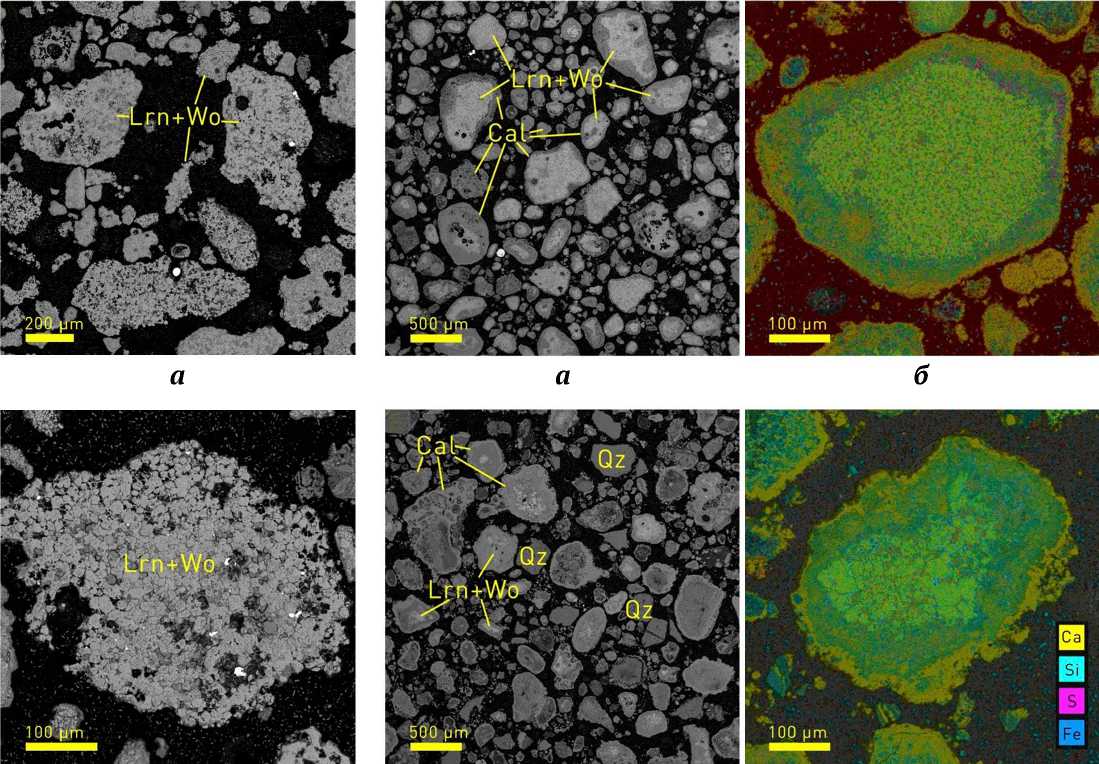
В «средних» и «старых» шламах наблюдается замещение силиката кальция карбонатом. На рис. 5 представлен общий вид распределения и характер изменений частиц в «средних» и «старых» шламах. Хорошо видно, что светлые области в ядрах частиц имеют незначительные размеры. Это характерно в большей степени для «средних» шламов, где они могут отсут- ствовать вовсе. Чаще полное замещение силикатов наблюдается в «старых» шламах, что свидетельствует о значительно большей степени изменения исходного материала. Также на рис. 5 представлены мультиэле-ментные карты отдельных частиц, в различной степени подвергшихся изменениям: их ядра сложены мелкими глобулями силиката кальция, а по периферии развивается плотная корка карбоната кальция, более тёмная в обратно-отражённых электронах в сравнении с ядром.
Обсуждение результатов
Полученные данные по минеральному составу белитовых шламов АГК и динамике его изменчивости показывают, что в хранилище в современных условиях идут процессы карбонизации силикатов. В атмосферных условиях все силикаты (ларнит, волластонит, мервинит), слагающие основную массу шламов, в различной степени способны поглощать CO2.
б в г
Рис. 4. «Свежие» шламы; хорошо видны глобулярные агрегаты силикатов кальция: ларнита Lrn и волластонита Wo светло-серого цвета, немногочисленные яркие точки – частицы железа. Фото в обратно-отражённых электронах
Рис. 5. «Средние» ( а, б) и «старые» ( в, г ) шламы; хорошо видно зональное строение частиц – в центральной части светло-серый материал – силикаты кальция: ларнит Lrn и волластонит Wo, на периферии развивается тёмно-серый кальцит Cal, отмечаются немногочисленные частицы кварца Qz; изображения б и г – мультиэлементные карты в псевдоцветах, условные обозначения представлены на изображении.
Фото в обратно-отражённых электронах
2026;11(1):46–55
Устойчивость данных силикатов в атмосферных условиях и скорость поглощения углекислого газа различны и зависят от целого ряда факторов, а именно: факторов окружающей среды, факторов, связанных с характером материала и продуктами, формирующимися в результате реакции [7, 8].
В первой группе факторов определяющим является концентрация CO2 в атмосфере (чем выше концентрация диоксида углерода в воздухе, тем быстрее идет реакция). Также критически важным фактором является влажность. При слишком низкой влажности (<~25%) недостаточно воды для протекания реакции гидратации и собственно карбонизации (CO2 должен раствориться в воде). При слишком высокой влажности (> ~90%) поры материала заполняются водой, что замедляет диффузию газа. Оптимальной считается влажность в диапазоне 50–70 % [9, 10]. Влияние температуры на скорость карбонизации двояко.
С повышением температуры скорость химической реакции увеличивается (правило Вант–Гоффа). Однако повышенная температура также может снизить относительную влажность и растворимость CO2, что в данных реакциях может привести к противоположному результату. Отраженная на рис. 3 динамика формирования вторичных минералов на поверхности хранилища свидетельствует о высокой скорости процессов формирования вторичных карбонатов и появления аномальных содержаний углерода под тонким поверхностным слоем. Очевидно, это связано с растворением углекислого газа воздуха в поровой воде, где минимально испарение и оптимальные для замещения силикатов кальция температурные условия.
В общем случае в умеренных диапазонах рост температуры ускоряет карбонизацию. Говоря о факторах окружающей среды применительно к условиям хранения белитовых шламов АГК, можно констатировать благоприятное их сочетание для карбонизации. Это относительно высокое содержание CO2 – хранилище находится в промышленной зоне города, повышенная влажность как за счет осадков (наблюдается вынос подвижных элементов, см. табл. 1), так и парения технологических вод в местах слива на картах намыва, температура которых может изменяться в диапазоне от 60 до 80 ° С. Горячие технологические воды также являются благоприятным температурным фактором карбонизации в зимний период. В месте их слива круглый год существует локальная термальная аномалия.
Ключевыми факторами, связанными с материалом, являются минеральный состав, а также пористость и проницаемость. Два последних фактора определяют доступ CO2 внутрь материала. Чем больше открытых пор и капилляров, тем легче CO2 проникает вглубь и тем выше скорость карбонизации. Для белитовых шламов АГК алевритовая и песчаная размерность зерен силикатов кальция, а также высокая пористость каждой отдельной частицы шлама (см. рис. 4), являются весьма благоприятными факторами. Это позволяет полагать, что хранилище белитовых шламов как минимум в верхней его части проницаемо для углекислого газа атмосферного воздуха.
Минеральный состав шламов существенно влияет на скорость карбонизации. Преобладающими силикатами в составе шламов АГК, которые будут определять его скорость карбонизации, являются ларнит и волластонит. Реакции и условия поглощения углекислого газа этими минералами различны. Для ларнита карбонизация происходит ступенчато через его гидратацию с образованием портландита и гидросиликата кальция (Ca 2 SiO 4 + 3H 2 O ^ Ca(OH) 2 + CaO • SiO 2 • aH 2 O), далее карбонизация портландита (Ca(OH) 2 + CO 2 ^ CaCO3 + H2O) и затем карбонизация гидросиликата кальция (CaO • SiO 2 • aH 2 O + CO 2 ^ CaCO 3 + SiO 2 • bH 2 O + + H2O) [11–13].
Литературные данные показывают, что скорость карбонизации ларнита в атмосферных условиях весьма велика. Однако она является переменной величиной и зависит от формирования на поверхности пассивирующей карбонатной пленки. На начальном этапе на свежеобразованной поверхности реакция начинается относительно быстро, так как концентрация CO2 и доступность ионов кальция максимальны. По мере образования слоя карбоната кальция CaCO3 на поверхности частиц ларнита этот слой начинает играть роль барьера. Для продолжения реакции молекулам CO2 и воде необходимо диффундировать через этот слой, а ионам кальция и кремниевой кислоте – выходить из него наружу. Этот процесс диффузии значительно замедляет общую скорость реакции [7, 11]. Описанные явления отчетливо фиксируются в белитовых шламах различного срока хранения на АГК. На рис. 5 видно, что крупные частицы силикатов кальция окружены каймой карбоната кальция, мелкие частицы зачастую полностью замещены карбонатом.
В мировой литературе известны работы по оценке динамики и масштаба поглощения ларнитом углекислого газа в атмосферных условиях [14, 15]. Описанные там наблюдения и эксперименты на сталеплавильных отходах (шлаках), основной минерал которых ларнит (50 % исходного шлака), показали, что объем поглощения CO2 при комнатной температуре составляет 243 кг на тонну свежего стального шлака.
Скорость карбонизации волластонита в атмосферных условиях (0,04 % CO 2 , 25 ° C) достаточно низкая и практически незаметна. Однако в оптимизированных условиях (высокие концентрации CO2, повышенная температура, тонкий помол, наличие воды) реакция может протекать достаточно быстро. Главное отличие от ларнита заключается в том, что волластонит не требует стадии гидратации и карбонизируется напрямую [16,17].
Оценки устойчивости волластонита к атмосферным воздействиям и его способность поглощать CO2 путем карбонизации в атмосферных условиях выполнены в работе канадских исследователей. Сравнительный анализ скорости поглощения CO2 хвостами обогащения кимберлитовых рудников на северо-западных территориях Канады и добываемой волла-стонитовой рудой, богатой СаSiO3, из месторождения в Онтарио, показал, что воллластонитовая руда более склонна к выветриванию и карбонизации, чем кимберлитовые хвосты (содержащие медленно вы-
2026;11(1):46–55
ветривающиеся гидратированные силикаты магния и алюмосиликаты). Однако в атмосферных условиях процесс идет медленно [8, 18, 19].
Исходя из проведенного анализа и литературных данных по поглощающей способности CO2 силикатами кальция в атмосферных условиях [12, 14, 20] можно сделать вывод, что максимальным потенциалом поглощения обладает ларнит. Применительно к условиям хранилища белитовых шламов АГК можно рассчитать предельный объем поглощенного газа, если минералы прореагируют с атмосферным воздухом полностью (табл. 4).
Таблица 4
Потенциал поглощения углекислого газа одной тонной белитового шлама АГК
|
Массы (минерала и поглощенного CO2) из 1 т шлама |
Свежий шлам (СВ), навески, кг |
|
|
Ларнит, CO2, кг |
Ларнит Ca2SiO4 |
326,00 |
|
CO 2 |
83,30 |
|
|
Волластонит, CO2, кг |
Волластонит CaSiO3 |
420,50 |
|
CO 2 |
159,31 |
|
|
Мервинит, CO2, кг |
Мервинит Ca3Mg[SiO4]2 |
47,90 |
|
CO 2 |
19,24 |
|
|
Сумма, кг |
CO 2 |
261,85 |
|
Минералы |
794,40 |
|
Основные выводы
-
1. Главными минералами белитовых шламов АГК являются силикаты кальция – ларнит, волластонит, мервинит, которые в различной степени склонны к карбонизации (поглощению углерода из атмосферного воздуха).
-
2. Изменение минерального состава шлама в зависимости от времени его хранения на шламовом поле в возрастных интервалах 0–5, 5–25, 25–50 лет
-
3. Из факторов, влияющих на скорость карбонизации шламов в атмосферных условиях, на действующем шламохранилище основными являются: минеральный состав, пористая структура силикатных частиц шлама и характер замещения их кальцитом. Благоприятными условиями, влияющими на скорость поглощения углекислого газа, являются повышенная влажность на поверхности и относительно высокая температура (60-80 ° С) оборотной воды, поступающей на карту намыва. Последнее является благоприятным фактором для протекания реакций поглощения CO2 в холодные периоды.
-
4. По результатам проведенного анализа сделан вывод, что по поглощающей способности CO2 в атмосферных условиях и скорости карбонизации максимальным потенциалом обладает ларнит. Применительно к условиям хранилища белитовых шламов АГК рассчитан предельный объем поглощенного CO2, который может быть поглощен при полном взаимодействии ларнита с атмосферным воздухом. При содержании ларнита 32,6 % одна тонна шлама будет поглощать 83,3 кг CO2.
-
5. Белитовые шламы АГК, помимо разнообразных направлений использования в народном хозяйстве, необходимо рассматривать как образование, потенциально пригодное для прямого поглощения углекислого газа из атмосферного воздуха. Исходя из накопленных объемов отходов, более 300 млн т, потенциал по поглощению углекислого газа, при условии что все силикаты кальция будут замещены кальцитом, достаточно велик – 80 млн т CO2. Понимание динамики процесса преобразования силикатов в объеме шла-мохранилища позволит учитывать объем поглощенного углекислого газа в расчетах углеродного следа конечной продукции предприятия – алюминия, произведенного из нефелинового сырья.
показывает устойчивое снижение содержания силикатов кальция (ларнит, волластонит, мервинит) и рост содержания карбонатов в ряду от свежих шламов к старым (лежалым).
