
Systematic Analysis of Artemisia L. Species and Contemporary Aspects of their Use (Based on Regional Floristic Studies)
Journal: Bulletin of Science and Practice @bulletennauki
Section: Естественные науки
Article in issue: 2 т.12, 2026.
Free access
The article presents an analysis of the systematic composition, ecological characteristics, and utilization directions of species belonging to the genus Artemisia L. distributed in the flora of the Nakhchivan Autonomous Republic, based on regional floristic studies. As a result of literature review and field investigations, it was determined that the genus Artemisia L., belonging to the family Asteraceae, is represented by 15 species in the territory of the Nakhchivan Autonomous Republic, and their systematic classification has been clarified. During the study, the use of wormwood species as medicinal, essential oil-bearing, forage, food, spice, dye, and resin-producing plants was evaluated, and their multifunctional and promising nature was demonstrated. The results confirm that species of the genus Artemisia have significant scientific, research, and practical-economic importance in the Nakhchivan Autonomous Republic.
Similar articles in the section Geographic botany. Plant geography (phytogeography). Floras. Geographic distribution of plants
Short address: https://sciup.org/14134416
IDS: 14134416 | UDC: 581.9 | DOI: 10.33619/2414-2948/123/04
Систематический анализ видов Artemisia L. и направления их использования (на основе региональных флористических исследований)
Проанализирован систематический состав, экологические особенности и направления использования видов рода Artemisia L., распространённых во флоре Нахичеванской Автономной Республики, на основе региональных флористических исследований. По результатам обзора литературы и полевых исследований установлено, что род Artemisia L. семейства Asteraceae представлен на территории Нахичеванской АР 15 видами, уточнена их систематическая классификация. В ходе исследования оценивалось использование видов полыни как лекарственных, эфиромасличных, кормовых, пищевых, пряно-ароматических, красящих и смолистых растений, показано, что эти виды являются многофункциональными и перспективными. Результаты подтверждают, что виды рода Artemisia L. имеют важное значение как для научно-исследовательской работы, так и для практического хозяйственного применения в Нахичеванской АР.
Text of the scientific article Systematic Analysis of Artemisia L. Species and Contemporary Aspects of their Use (Based on Regional Floristic Studies)
Бюллетень науки и практики / Bulletin of Science and Practice
UDC 581.9
The Nakhchivan Autonomous Republic, characterized by its unique relief structure, continental climate, and arid ecological conditions, possesses a vegetation cover of particular scientific interest. One of the plant families with a rich species composition in the flora of Nakhchivan is the family Asteraceae Bercht. et J. Presl. This family is considered one of the largest and most evolutionarily advanced among dicotyledonous plants in terms of species diversity. Representatives of the Asteraceae family include annual, biennial, and perennial herbs, as well as subshrubs. Members of the family are mainly distributed in open, sunny areas, dry and semi-desert landscapes, which indicates their high ecological plasticity. One of the largest and most polymorphic genera of the family Asteraceae is the genus Artemisia L. Among the xerophytic and semi-xerophytic plants distributed in the region, species of the genus Artemisia have a wide range of distribution and high adaptive capacity. Wormwood species play a key role as major components of phytocenoses in the desert, semi-desert, and foothill landscapes of Nakhchivan. These plants are important in preventing soil erosion, conserving biodiversity, and forming natural forage areas. At the same time, Artemisia species serve as ecological indicator plants and are valuable for studying the history of landscape formation. The floristic richness and natural isolation of the Nakhchivan territory allow for clearer observation of the morphological and ecological variability of the genus Artemisia. Therefore, the distribution and utilization aspects of the genus Artemisia in the flora of Nakhchivan have long been the focus of scientific research. Among useful plants, species belonging to the genus Artemisia L. are of particular importance. Based on numerous studies and literature sources, it has been established that species of this genus are used as medicinal, food and forage, essential oil-bearing, dye, resinproducing, and spice plants. These characteristics confirm the multifunctionality of Artemisia species and their high economic and scientific significance in the region, especially as medicinal, essential oil-bearing, and forage plants.
Material and research methods
In the course of the study, generally accepted floristic, geobotanical, bioecological, and related methods, as well as phenological observations, were applied. As the main research material, both literature sources and empirical data obtained during field investigations were used. The research objects included various territories of the region, while the research material comprised species belonging to the genus Artemisia L. In the study area, data on species of the genus Artemisia L. have been reported in a number of literature sources [3-7, 10-13].
Identification of species and clarification of their nomenclature were carried out using fundamental floristic works such as Flora of Azerbaijan , Flora of the Caucasus , and A. M. Asgarov’s Plant World of Azerbaijan , among others [2, 8, 9].
Recent taxonomic updates were conducted based on the World Flora Online database ; ; .
Discussion and conclusions of the study
In the flora of the Nakhchivan Autonomous Republic, species belonging to the genus Artemisia represent one of the economically important groups of plants and play a significant role. Based on the analysis of literature data and original field research materials, 15 species of the genus Artemisia L., belonging to the family Asteraceae , have been recorded in the territory of the Nakhchivan Autonomous Republic. The systematic analysis of the species belonging to this genus is presented below.
Fam: Asteraceae Bercht. & J.Presl, nom. cons. (= Compositae Giseke, nom. cons. Genus: Artemisia L.
Sect.1. Artemisia
1(1) Artemisia vulgaris L.
1(2) A. abrotanum L.
1(3) A. chamaemelifolia Vill.
1(4) A. armeniaca Lam.
1(5) A. splendens Willd.
1(6) A. austriaca Jacq.
1(7) A. absinthium L.
1(8) A. incana Druce.
1(9) A. nachitshevanica Rzazade.
1(10) A. fragrans Willd.
1(11) A. lercheana Weber ex Stechm.
1(12) A. fasciculata Hook. et Thomson ex Hook
Sect.2. Dracunculus Bess.
1(13) A. scoparia Waldst. & Kit
Sect.3. Seriphidium Bess.
1(14) A. araxina Takht.
1(15)* A. dracunculus L.
Medicinal plants distributed in the flora of the Nakhchivan Autonomous Republic are studied in a comprehensive manner by botanists, pharmacognosists, phytochemists, pharmacologists, and clinical specialists, and a scientific basis is being established for their application in medical practice. Among these plants, species of the genus Artemisia L. belonging to the family Asteraceae occupy a special place due to their medicinal significance. An analysis of the distribution of representatives of this genus within the flora of the autonomous republic shows that medically valuable species have a relatively wide range of distribution [1].
Recent scientific studies indicate that researchers, particularly Chinese scientists, have shown great interest in the investigation of the genus Artemisia L. and have achieved important results in this field. Notably, the pharmaceutical preparation caplarizin, used in the treatment of cardiovascular diseases, was developed based on the coumarin derivative esculetin isolated from Artemisia species.
The investigation of the utilization potential of Artemisia L. species distributed in the flora of the autonomous republic in various directions – such as spice plants, medicinal plants in traditional medicine, applications in cosmetology and light industry, pharmaceuticals, as well as dye production – along with the assessment of their natural resources, has been identified as one of the main priorities of current research. Wormwood species are characterized by high biological activity, and they contain important chemical compounds such as terpenoids, flavonoids, alkaloids, and glycosides. For this reason, the antioxidant, antiparasitic, antimicrobial, and fungicidal properties of representatives of this genus have been comprehensively investigated. The significance of wormwood species as forage plants has been noted in a number of scientific sources. Artemisia fragrans , widely distributed across various regions of Azerbaijan, is used as a forage plant in these areas and in some cases plays an edificator (dominant) role in the formation of plant communities (Figure 1).
In the upper mountain belt surrounding Payız village of the Kangarli District of the Nakhchivan Autonomous Republic, plants belonging to the genus Artemisia predominate in terms of natural reserves. The essential oils obtained from the species distributed in these areas are distinguished by their pleasant and specific aromatic characteristics. The sustainable development of the national economy and agricultural sectors necessitates the rational and targeted use of natural resources, including useful plants. For this purpose, species belonging to the genus Artemisia were studied individually, and it was determined that representatives of the genus can be classified into different groups according to their utilization directions. Thus, species used for medicinal purposes include A. absinthium L., A. scoparia , and A. austriaca ; essential oil-bearing plants include A. fragrans , A. armeniaca , and A. chamaemelifolia ; species of technical importance include A. fragrans and A. arenaria ; while those used as spices include A. absinthium , A. scoparia , and A. dracunculus L (Figure 2).
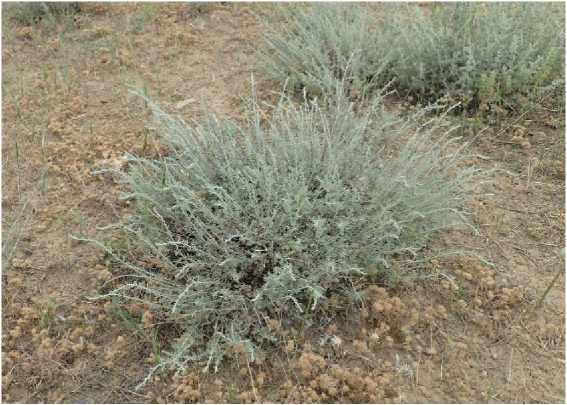
Figure 1. Artemisia fragrans
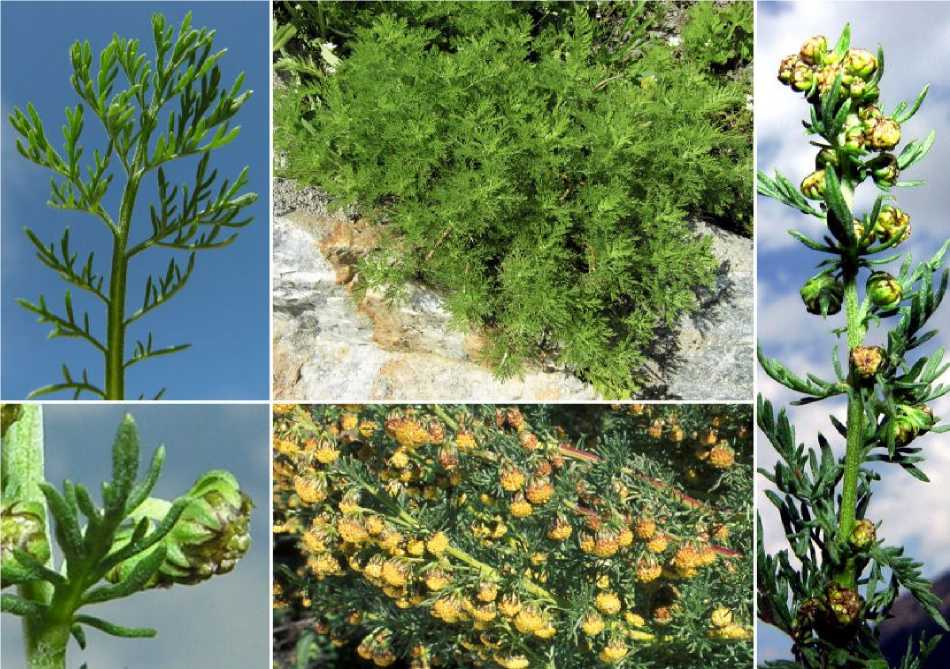
Figure 2. Artemisia chamaemelifolia
Species belonging to the genus Artemisia are distinguished both by the abundance of their natural reserves and by the richness of their chemical composition. Nevertheless, a large proportion of these species has not yet been studied in sufficient detail. Numerous studies have revealed the presence of sesquiterpene lactones, coumarins, and essential oil components in individual species of the genus, while the quantitative variability of chemical constituents under the influence of ecological factors has also been comprehensively investigated. It is well known that during the second half of the 20th century, a significant proportion of medicinal products used in medical practice in our country were derived from plant-based preparations. During that period, several species of the genus
Artemisia L. ( A. absinthium , A. annua , A. scoparia , and A. vulgaris ) were included in pharmacopoeial lists as official medicinal plants [14, 15].
Among the principal active components characteristic of Artemisia species, sesquiterpene lactones occupy a prominent place. In addition, these plants accumulate essential oils, phenolic compounds, tannins, flavonoids, coumarins, organic acids, vitamins, and other valuable substances. Some species of the genus Artemisia , particularly Artemisia dracunculus L., are widely used in the food industry. When added to dishes, this species imparts a pleasant aroma and simultaneously contributes to prolonged shelf life of food products. In general, wormwood plants are considered valuable due to the aromatic properties of their roots, stems, leaves, flowers, and fruits. In this regard, A. dracunculus L. is mainly used fresh as a flavoring agent in soups, whereas in dried form it has been identified by us as a medicinal plant possessing antihelmintic activity (Table).
Table
CLASSİFİCATİON OF USEFUL TYPES OF WORMWOOD FLORA OF NAKHCHİVAN
|
Species name |
be •S $ |
be |
be к |
bo |
|||
|
Artemisia vulgaris |
+ |
+ |
+ |
+ |
+ |
||
|
A. abrotanum |
+ |
+ |
+ |
+ |
+ |
+ |
|
|
A. chamaemelifolia |
+ |
+ |
+ |
||||
|
A. armeniaca |
+ |
+ |
+ |
||||
|
A. splendens |
+ |
+ |
+ |
+ |
|||
|
A. austriaca |
+ |
+ |
+ |
||||
|
A. absinthium |
+ |
+ |
+ |
+ |
+ |
+ |
+ |
|
A. incana |
+ |
+ |
+ |
||||
|
A. nachitshevanica |
+ |
+ |
+ |
+ |
+ |
||
|
A. fragrans |
+ |
+ |
+ |
+ |
+ |
||
|
A. lercheana |
+ |
+ |
+ |
||||
|
A. fasciculata |
+ |
+ |
+ |
+ |
|||
|
A. scoparia |
+ |
+ |
+ |
+ |
+ |
||
|
A. araxina |
+ |
+ |
+ |
||||
|
A. dracunculus |
+ |
+ |
+ |
+ |
+ |
+ |
+ |
The analysis of the presented table indicates that species of the genus Artemisia distributed in the flora of the Nakhchivan Autonomous Republic possess diverse directions of use in economic activities and traditional medicine. The majority of the species are characterized as essential oilbearing and medicinal plants, which demonstrates that wormwood species are rich in biologically active compounds and play an important role from a medical and pharmacological perspective.
As shown in the table, the essential oil-bearing property is observed in almost all species ( A. vulgaris , A. abrotanum , A. absinthium , A. dracunculus , etc.). At the same time, many species are used as medicinal plants, with this characteristic being particularly pronounced in A. absinthium , A. vulgaris , A. dracunculus , and A. abrotanum . These species are well known in traditional medicine for their effects on regulating the digestive system, as well as for their anti-inflammatory and antiseptic properties.
Resin-producing characteristics are mainly typical of certain species ( A. abrotanum , A. splendens , A. absinthium , A. nachitshevanica , A. fragrans , A. fasciculata , A. scoparia , A. dracunculus ), indicating the potential for their use for industrial and technical purposes. The number
Бюллетень науки и практики / Bulletin of Science and Practice Т. 12. №2 2026 of species with dye-producing properties is relatively limited and is mainly observed in A. abrotanum, A. absinthium, A. nachitshevanica, A. fragrans, and A. dracunculus.
Based on the data presented in the table, some species are also used as food and spice plants. In particular, A. dracunculus (tarragon) and A. vulgaris occupy an important place among food and spice plants. In addition, A. absinthium and A. dracunculus stand out as multifunctional species used for food, spice, and medicinal purposes. Forage value is mainly characteristic of certain species, and this property has been recorded for A. vulgaris , A. absinthium , A. nachitshevanica , A. fragrans , A. fasciculata , A. scoparia , and A. dracunculus . This indicates the importance of wormwood species as supplementary forage resources for livestock under arid and semi-desert conditions.
Overall, the analysis demonstrates that species of the genus Artemisia can be considered universal and promising plants in terms of their utilization potential. Their essential oil-bearing, medicinal, forage, food, and spice values confirm that these species possess significant potential for both scientific research and practical economic use in the Nakhchivan Autonomous Republic.
To more clearly illustrate the economic and scientific importance of wormwood species, the utilization directions of Artemisia species were summarized and analyzed based on percentage indicators. The diagram compiled for this purpose reflects the distribution of Artemisia species occurring in the flora of the Nakhchivan Autonomous Republic according to their use as resinproducing, essential oil-bearing, dye, food, medicinal, forage, and spice plants (Figure 3).
8% 12%
21% 21%
23%
6% 9%
Resin-producing
Essential oil- bearing
Dye-producing
Food
Medicinal
Forage
Spice
Figure 3. Percentage distribution of species of the genus Artemisia according to their utilization directions
Thus, the analysis of the diagram shows that species of the genus Artemisia are multifunctional and promising plants in terms of their utilization potential, with their most important applications being as medicinal and essential oil-bearing plants.
Conclusions
Based on a comprehensive literature review and long-term field studies, it has been determined that the flora of the Nakhchivan Autonomous Republic includes 15 species of the genus Artemisia L. belonging to the family Asteraceae . These species are classified into three sections ( Artemisia , Dracunculus , and Seriphidium ), which play a significant role in the systematic diversity of the regional flora. The analysis revealed that among the 15 Artemisia species distributed in the flora of the Nakhchivan Autonomous Republic, 21% are essential oil-bearing plants , 23% have medicinal value , 21% are used as fodder plants , 6% as food plants , 8% as spice plants , 12% as resin-producing plants , and 9% as dye plants . These results confirm that Artemisia species are multifunctional, biologically active, and economically promising plants, with particular importance as sources of medicinal raw materials and essential oils.
Acknowledgments: I would like to express my gratitude to Professor Dashgin Ganbarov for identifying the species studied.
Financing: The research it is financed and supported on the basis of the "Herbari Fund of Biology Department of Nakhchivan State University" project.
