
The Impact of AI-Powered Digital Assistants on Student Emotions, Engagement, and Academic Performance: A PLS-SEM Analysis in Higher Education
Journal: International Journal of Education and Management Engineering @ijeme
Article in issue: 4 vol.16, 2026.
Free access
This study investigates the impact of AI-powered digital assistants on students’ feelings, engagement, and academic success within higher education environments. The study aims to investigate post-adoption behaviour, emphasizing how service experiences, functional attributes, information quality, and ease of interaction influence emotional and behavioural results. A structured survey was used to gather data from 431 respondents in higher education at Exploits university, Malawi, and the study utilized a quantitative approach. Measurement scales were adapted from validated studies in the AI adoption and educational technology literature and contextualized for the higher education setting. Partial Least Squares Structural Equation Modelling (PLS-SEM) version 4.1.1.8 was utilized to examine the connections between variables. Common method bias was assessed using the full collinearity approach, and all VIF values were below the recommended threshold, indicating that common method bias was not a significant concern. The results indicate that Service experience leads to Positive emotions (β = 0.205, p = 0.002) and Student engagement (β = 0.242, p < 0.001), validating H1a and H1b. Quality of information → Positive feelings (β = 0.161, p = 0.005), backing H3a, whereas Functional characteristics → Student involvement (β = 0.409, p < 0.001), supporting H4b. Positive emotions → Student involvement (β = 0.190, p < 0.001) and Academic achievement (β = 0.460, p < 0.001), and Student involvement → Academic achievement (β = 0.310, p < 0.001), confirming H5–H7. Contextualization × Positive emotions → Academic performance was noteworthy (β = 0.063, p = 0.038), reinforcing H8a. Nonetheless, H2a, H2b, H3b, H4a, and H8b received no support (p - 0.05). The research advances theoretical understanding by broadening AI adoption literature to include emotional and behavioural effects, while also enhancing practical implications by highlighting service quality and system efficiency. Suggestions emphasize the importance of focusing on contextual, high-quality AI resources to enhance student engagement, emotional well-being, and educational achievement. The results demonstrate that service experience is the most influential antecedent of both emotional and behavioural outcomes, whereas the effects of functional features and information quality vary across the examined relationships.
Short address: https://sciup.org/15020556
IDS: 15020556 | DOI: 10.5815/ijeme.2026.04.08
Text of the scientific article The Impact of AI-Powered Digital Assistants on Student Emotions, Engagement, and Academic Performance: A PLS-SEM Analysis in Higher Education
AI-Powered Digital Assistants are becoming an integral part of daily life, changing the way people engage with technology and information [35]. These intelligent companions, equipped with human-like traits like natural language processing, conversation skills, and engaging design, along with their diverse functionalities, have transitioned from merely enhancing consumer convenience to being utilized in professional and educational fields [1]. In higher education, AI-powered digital assistants are becoming beneficial resources that aid students in organizing academic responsibilities, retrieving information effortlessly, and improving learning experiences with tailored support [4].
The worldwide uptake of AI-powered digital assistants has been impressive, with billions of devices available and forecasts suggesting rapid expansion in the years ahead [21,26]. Siri, Alexa and Bixby are leading platforms in usage, showcasing the extensive incorporation of voice-activated AI into smartphones, smart speakers, and various connected devices [25].
This work is open access and licensed under the Creative Commons CC BY 4.0 License.
While numerous studies by [3,26,31] have focused on consumer acceptance, adoption factors, and market penetration, the higher education sector shows distinct dynamics that remain to be thoroughly explored [3,26,31]. Recent research has focused more on AI-driven educational technologies, emphasizing elements like perceived usefulness, trust, system quality, and user satisfaction as crucial factors for adoption and ongoing usage. Nevertheless, results from recent global studies are still scattered, with the majority of research focusing on either technology acceptance or learning outcomes independently, rather than exploring their interrelated impacts in higher education environments.
Similarly, research by [14,30] has concentrated on functional aspects and the early adoption phase, yet post-adoption behaviours, particularly how students emotionally connect with these assistants and how these interactions influence academic involvement and achievement, have not been sufficiently examined [14,30]. Recent studies recognize that AIdriven assistants can improve learning experiences, but current models mainly focus on usage intention, ongoing intention, or system efficiency. Relatively little focus has been given to examining how students' emotional reactions to AI-driven digital assistants affect their behavioural engagement and, in turn, impact academic performance. This constraint hinders comprehension of the lasting educational benefits of AI technologies past their initial implementation.
The enduring success of innovations like AI-driven digital assistants depends not only on their acceptance but also on sustained usage and substantial educational outcomes [28]. Investigating these post-adoption elements is crucial for understanding the transformative potential of AI-driven digital assistants in educational environments [4]. Additionally, an examination of previous literature shows conflicting results concerning the significance of service experience, functional features, information quality, and ease of use in influencing users' experiences after adoption. These discrepancies indicate the necessity for a more holistic framework that can account for both emotional and behavioural results within one model.
Positive feelings and involvement are acknowledged as significant indicators of academic success [31]. Exploring how AI-driven digital assistants generate positive emotions, reduce frustration, and enhance engagement can provide valuable insights into the evolving relationship between learners and intelligent technologies [26]. Consequently, a significant theoretical void persists in current literature on AI adoption and educational technology. Current models fail to adequately clarify the dual-path mechanism by which AI-driven digital assistants affect academic success by concurrently shaping positive emotions and enhancing student engagement. To fill this gap, the current research combines emotional and behavioural viewpoints to analyse how service experience, functional attributes, information quality, and interaction simplicity affect positive emotions, engagement, and academic achievement in a higher education setting.
The study seeks to address several pressing issues within contemporary learning environments. At its core, the research interrogates how trust in AI systems influences students’ willingness to integrate digital assistants into their academic routines, and whether such trust acts as a catalyst for positive emotional experiences such as motivation, confidence, and reduced anxiety. It further examines the extent to which these emotional shifts translate into deeper academic engagement, fostering persistence, curiosity, and active participation in learning. Beyond individual outcomes, the study also investigates whether AI-driven support can measurably enhance academic performance, not merely through efficiency gains but by reshaping the quality of learning interactions. Importantly, the research highlights ecosystem-level concerns, including the ethical implications of AI adoption, risks of over-reliance, data privacy challenges, and the potential for unequal access among students. By linking trust, emotions, engagement, and performance into a coherent conceptual framework, the study aims to fill a critical gap in higher education literature, offering both theoretical insights and practical implications for institutions navigating the digital transformation of learning.
This study aims to explore the effects of service experience, interaction ease, information quality, and functional aspects of AI-driven digital assistants on students' positive emotions, engagement, and academic success in higher education, while also evaluating how contextualization moderates these relationships. Accordingly, this study is guided by the following research questions:
RQ1 . How do service experience, ease of interaction, information quality, and functional features of AI-powered digital assistants influence students' positive emotions and engagement in higher education?
RQ2. How do positive emotions and student engagement contribute to academic performance, and how does contextualization moderate these relationships?
This research adds to the AI-in-education literature by creating and evaluating a post-adoption model that combines emotional (positive feelings) and behavioural (involvement) routes resulting in academic success. It additionally broadens current models by exploring the moderating influence of contextualization in higher education settings.
Secondly, the research tackles a theoretical void in current AI adoption studies by concurrently investigating how service experience, ease of interaction, information quality, and functional attributes influence both emotional and behavioural outcomes, thus enhancing the understanding of students' behaviour after adopting AI-powered digital assistants.
Thirdly, the research provides empirical data from a higher education setting in a developing country (Malawi), where studies on AI-driven digital assistants are scarce. The results expand the applicability of AI adoption theories and provide context-related insights for educators, institutions, and policymakers aiming to enhance student engagement, emotional health, and academic achievement using AI-driven learning technologies.
2. Background Theory, Conceptual Model, and Hypotheses Formulation
2.1. Background Theory
2.2. Hypotheses Formulation2.2.1. Service Experience and Positive Emotions
2.2.2. Service Experience and Student Engagement
This research is based on Social Response Theory (SRT) developed by Reeves and Nass [32] and Uses and Gratifications Theory (UGT) by Katz [17], offering a cohesive framework to comprehend how AI-powered digital assistants impact positive emotions, involvement, and academic success in higher education environments [17,32]. SRT suggests that people socially interact with technologies that display indicators like voice, responsiveness, and collaborative interaction, viewing them as social beings and applying relational behaviours to these systems satisfaction [6]. In this research, SRT details how service experiences and interaction simplicity create perceptions of social presence and reciprocity, which subsequently encourage positive emotions and engagement [3]. In addition to this, UGT highlights the proactive involvement of students in utilizing AI-powered digital assistants to meet their academic and informational requirements [16]. In this context, UGT serves as the basis for exploring how the quality of information and functional characteristics influence gratifications like convenience, efficiency, and learning assistance, which in turn affect ongoing engagement and educational results [7]. By integrating these viewpoints, the research situates contextualization element as a moderating factor that influences how students understand and gain advantages from AI-powered digital assistants in varied educational contexts. SRT and UGT collaboratively create a robust theoretical foundation for examining the relationship among service experience, interaction ease, information quality, functional attributes, positive emotions, engagement, and academic achievement in higher education [18].
Views of an AI-driven personal digital assistant as offering in-depth, customized, and top-notch guidance are crucial to influencing user appreciation [14]. In the literature on services, service experience is consistently recognized as a vital precursor to emotional reactions, such as attitudes and satisfaction. For instance, [16] showed that interactions between students and chatbots have a considerable positive impact on attitudes and satisfaction levels [16]. Likewise, prior research has established that perceived value is positively associated with positive emotions in service contexts, reflecting the emotional benefits of high-quality experiences [14].
In higher education environments, learners who view AI-driven assistants as helpful and attentive are more inclined to feel positive emotions that improve their educational experience [38]. Thus, the proposed hypothesis:
H1a: Service experience has a positive influence on students’ positive emotions when engaging with AI-powered personal digital assistants.
Engagement essentially signifies the intensity of interaction and relational bond between users and a service or product [14]. Research studies by Rambocas and Arjoon [31] indicate that outstanding service provision enhances engagement by nurturing trust, satisfaction, and relationship quality [31].
The relational dimensions of trust, affect, and satisfaction are commonly acknowledged as key motivators of student engagement [2]. In higher education, when students view AI-driven digital assistants as trustworthy and helpful, their involvement is expected to increase, resulting in continued usage, active participation, and incorporation into their academic habits [14]. Thus, the proposed hypothesis:
H1b: Service experience has a positive influence on students’ engagement with AI-powered personal digital assistants.
2.2.3. Ease of Interaction and Positive Emotions
Ease of interaction denotes how users view their communication with AI-driven personal digital assistants as easy, instinctive, and demanding little effort. A smooth interaction minimizes mental strain and irritation, enabling students to accomplish academic tasks effectively while promoting pleasant user experiences [29]. Previous research has indicated that systems defined by high usability and simple interaction improve users' emotional reactions, such as satisfaction, enjoyment, happiness, and comfort while using technology [5,18]. Positive emotional experiences arise as seamless interactions boost users' confidence and perceived control when using AI technologies [19]. In higher education, positive emotions play a crucial role as they motivate students to cultivate favourable attitudes toward AI-driven learning tools, enhancing trust and boosting their desire to persist in using these technologies for academic assistance [3]. Consequently, the subsequent hypothesis is put forward:
H2a: Ease of interaction has a negative influence on students’ positive emotions toward AI-powered personal digital assistants.
2.2.4. Ease of Interaction and Student Engagement
Student engagement indicates the extent to which learners are actively involved in academic tasks via behavioural, cognitive, and emotional participation. In contrast to positive emotions that reflect students' feelings, engagement relates to how much effort, attention, and persistence students put into learning activities. Simplified interaction can boost engagement by allowing students to swiftly access information, obtain prompt feedback, and engage with AI-driven personal digital assistants without complications. When students view AI systems as user-friendly, they tend to utilize them regularly, investigate the learning resources offered, inquire further, and incorporate the technology into their everyday academic tasks. Studies on educational technologies indicate that intuitive digital platforms lessen obstacles to engagement and enhance ongoing interaction, thereby boosting students' participation in learning activities and enhancing overall educational results [3,29]. As a result, students who find it easy to interact with AI-driven digital assistants are likely to show greater engagement in their learning activities [3]. Thus, the proposed hypothesis:
H2b: Ease of interaction has a negative influence on students’ engagement with AI-powered personal digital assistants.
2.2.5. Information Quality and Positive Emotions
Information quality pertains to the assessed utility, trustworthiness, and appropriateness of information delivered by a system [20]. Reliable information boosts trust and satisfaction, consequently influencing emotional reactions. Previous research conducted by [6] supports this connection that the quality of information notably affects student emotional responses [6], whereas [3] showed its influence on perceptions of augmented reality shopping assistants. Equally, [30] found that the quality of information in AI-driven tools enhances student satisfaction in hospitality environments [3].
In higher education, students who see digital assistants as providing accurate, relevant, and trustworthy information are more inclined to feel positive emotions like confidence, satisfaction, and reassurance [30]. Thus, the study proposes the following hypothesis:
H3a: Information quality has a positive influence on students’ positive emotions toward AI-powered personal digital assistants.
2.2.6. Information Quality and Student Engagement
The level of student engagement in information technology enhanced learning settings is significantly linked to the quality of the information offered [28]. Low-quality information frequently results in unfavourable perceptions, decreased flow experiences, and lower engagement [18]. On the other hand, superior information promotes deep involvement, inquisitiveness, and ongoing interaction, thus improving engagement [8]. Within higher education, AI-driven digital assistants that reliably provide trustworthy and contextually appropriate information can engage students, encouraging them to incorporate these tools into their study habits [11]. Empirical findings from e-brand community research corroborate the beneficial impact of information quality on engagement [45]. Thus, the proposed hypothesis:
H3b: Information quality of AI-powered personal digital assistants has a negative influence on student engagement.
2.2.7. Functional Features and Positive Emotions
Recent research highlights that the design and adaptability of AI-driven digital assistants significantly influence learners' emotional experiences. [28] contend that “Positive Artificial Intelligence in Education” needs operational elements that minimize frustration and enhance pleasure, like tailored feedback and customized routes. In a similar vein, AI systems can evaluate and react to emotional signals can reduce negative feelings and boost positive emotions in educational settings [28]. These results indicate that timely feedback, personalization, and emotional awareness are essential in generating satisfaction, confidence, and happiness in students. Thus, the proposed hypothesis:
H4a: Functional features of AI-powered digital assistants negatively influence students’ positive emotions in higher education ecosystems.
2.2.8. Functional Features and Student Engagement
Functional features also underpin sustained engagement [34]. [38] demonstrate that AI assistants in higher education increase student involvement when they provide interactive, adaptive, and context-aware support. Sajja further shows that intelligent assistants offering personalized and adaptive learning pathways significantly boost behavioural and cognitive engagement by aligning tasks with individual needs [45]. Complementing these findings, [8] reports that students perceive functional features such as reminders, adaptive scheduling, and interactive problem-solving as key drivers of sustained participation and persistence [2]. Thus, the proposed hypothesis:
H4b: Functional features of AI-powered digital assistants positively influence student engagement in higher education ecosystems.
2.2.9. Positive emotions and student engagement.
Emotions are affective experiences that showcase strong feelings of delight, joy, and amazement that consumers associate with a specific technology [11]. Existing research indicates that positive emotions correlate positively with student engagement in a service setting [27]. Wen and Leung [39] backed this claim, proposing that positive emotions generate enjoyable and memorable experiences that enhance student engagement levels [45]. This suggests that positive emotions trigger intense feelings of joy, happiness, and surprise, resulting in enhanced interaction and engagement with digital assistants [23]. Thus, the proposed hypothesis:
-
H5: Positive emotions have a positive influence on student engagement.
Positive emotions cultivate deep attachment toward digital assistants, thereby establishing a basis for enhanced academic performance [15]. These emotions create a positive psychological condition where students feel assured in their choices, maintain ongoing interactions, and cultivate stronger connections with service providers [39]. Research evidence backs this connection. [1] discovered that positive feelings directly boost academic achievement [8] while Kim [18] showed that emotional states initiate behavioural actions that lead to better learning results. In the realm of higher education, the positive emotions generated by AI-driven digital assistants can enhance students' motivation and performance [19,44]. Thus, the proposed hypothesis:
-
H6: Positive emotions have a positive influence on academic performance.
Student engagement reflects continuous interaction and relational involvement with digital assistants [45]. Earlier research has repeatedly shown a significant link between engagement and academic success [38]. [11] argue that consumers who are highly engaged are likely to exhibit loyalty, disseminate positive word-of-mouth, and maintain long-lasting relationships [11]. These findings align with improved academic performance in educational contexts. Consequently, when students engage deeply with AI-powered digital assistants, they are more likely to integrate these tools into their educational experiences, resulting in enhanced academic achievement [44]. Thus, the proposed hypothesis:
H7: Student engagement has a positive influence on academic performance.
2.2.10. The Moderating Role of Contextualization
2.3. Conceptual Model
Contextualization involves tailoring content according to people's locations, preferences, and values, enhancing service experiences and interactions with digital assistants [11]. [24] showed that contextualization enhances the impact of service experience and functional characteristics on engagement [24]. In a similar way, [8,11] emphasized that contextual content improves anthropomorphism and service relevance, resulting in increased interaction with mobile applications and chatbots [8,11].
The personalization that meets consumer expectations boosts engagement in mobile shopping environments [11]. Applying these insights to higher education, contextualization is likely to enhance the effect of functional features and service experiences on student engagement. Thus, the proposed hypotheses:
H8a: Contextualization positively moderates the relationship between positive emotions and academic performance.
H8b: Contextualization passively moderates the relationship between service experience and academic performance.
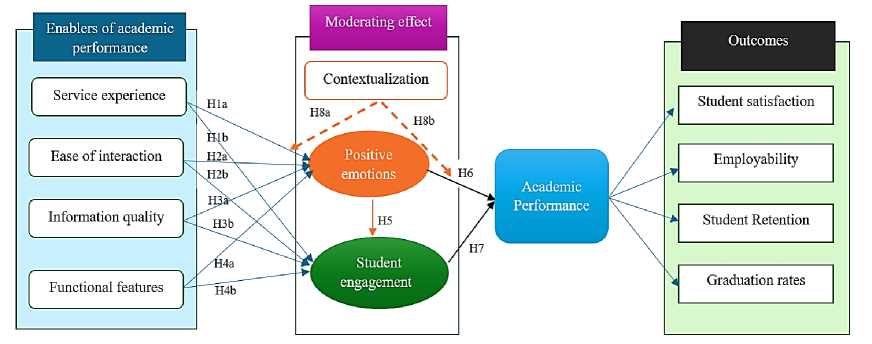
Fig. 1. Conceptual model
Based on Social Response Theory (SRT), and Uses and Gratifications Theory (UGT), the framework (Figure 1) suggests that the operational characteristics and qualities of AI-driven digital assistants, including ease of interaction, service experience, and information quality, directly influence students’ positive feelings and involvement. These factors, in turn, influence academic performance. Figure 1 of conceptual model is presented.
3. Materials and Research Methods
3.1. Data collection and sample size
3.2. Measurement
Data for testing the research model and hypotheses was collected through a self-administered online survey distributed via Facebook, WhatsApp, and email. The survey tool was created based on the conceptual framework and hypotheses outlined in Section 2.2. Every theoretical construct (i.e., service experience, functional attributes, ease of interaction, information quality, contextualization, positive emotions, student engagement, and academic performance) was implemented using measurement items derived from previously validated scales. This guaranteed uniformity between the theoretical connections suggested in the research model and their practical evaluation.
The research focused on people older than 18 who had previous experience with AI-driven digital assistants. Participants were chosen due to their relevant experience in assessing the constructs related to the proposed hypotheses and offering knowledgeable evaluations of their emotional, behavioral, and academic results linked to AI-driven digital assistants.
Survey invitations were sent by email, and responses were gathered over a sixteen-week period (6 November 2025 to 31 January 2026). A total of 440 responses were received; after removing incomplete responses, 431 valid responses remained for analysis. The sample size was deemed sufficient for data analysis [12]. The collected data were then analyzed through PLS-SEM version 4.1.1.8 to investigate the proposed relationships and moderating influences outlined in the conceptual framework.
Though the research utilized a dataset from a single institution and was cross-sectional, the sample of 431 participants was sufficient and similar to recent studies on the adoption and use of AI in higher education. For instance, Zhao et al. (2025) analysed the adoption of AI tools by 498 university students employing PLS-SEM, whereas the Digital Education Council Global AI Student Survey (2024) gathered answers from 3,839 students in 16 nations to explore AI utilization in higher education. These studies suggest that sample sizes of several hundred to several thousand participants are frequently employed in educational research concerning AI. The current sample of 431 participants surpasses the minimum criteria for PLS-SEM and offers adequate statistical power to assess the direct, mediating, and moderating relationships outlined in the suggested model [42].
The research utilized multi-item scales modified from previous studies to assess all constructs (Table 1). Functional characteristics were evaluated using four items from [8], service experience was measured with four items from [31], contextualization utilized items from [8], information quality was assessed with four items from [27], academic performance was gauged with four items from [11], student engagement was examined with items from [23], ease of interaction involved items from [24], and positive emotions were determined with four items from [27].
The items were modified to fit the context of AI-driven digital assistants in higher education. Example items included: “The AI-driven assistant offers valuable learning features” (functional attributes), “My interaction with the AI-driven assistant is pleasing” (service experience), “The assistant gives suggestions that align with my learning preferences” (contextualization), “The details provided are precise and trustworthy” (information quality), “The assistant is userfriendly and easy to engage with” (ease of interaction), “Using the assistant boosts my confidence and motivation” (positive emotions), “I regularly utilize the assistant in my educational tasks” (student engagement), and “The assistant contributes to enhancing my academic outcomes” (academic performance). Every item was assessed on a five-point Likert scale, with 1 indicating (strongly disagree) and 5 indicating (strongly agree).
To guarantee clarity and contextual appropriateness, the tool was tested with a limited number of students and experts in educational technology. According to their feedback, slight wording adjustments were implemented to clarify technical terms and enhance item understanding. Additionally, the scales were adapted across cultures to suit the Malawian higher education environment while maintaining the original significance of the constructs. Subject matter experts evaluated the modified items to confirm content validity and contextual relevance prior to the administration of the main survey.
As shown in Table 1, every item was assessed using a five-point Likert scale (1 = strongly disagree, 5 = strongly agree). The survey was tested with 30 participants from the intended population, verifying clarity, understanding, and ease with the questions. A reliability analysis was performed utilizing the pilot data. The Cronbach’s alpha varied between 0.866 and 0.937, indicating that the measures of constructs exhibited internal consistency [13].
Table 1. Measurement tool
|
Factor |
Source |
Items |
|
Service experience |
[31] |
SP1. The virtual assistant provides excellent support. |
|
SP2. The assistance I got from the digital helper meets my requirements. |
||
|
SP3. The digital assistant delivers high-quality essential services. |
||
|
SP4. The digital helper is dependable. |
||
|
Ease of interaction |
[24] |
EI1. I can effortlessly converse with the virtual assistant. |
|
EI2. Using the digital assistant allows me to navigate effortlessly. |
||
|
EI 3. I can effortlessly communicate with the digital assistant. |
||
|
EI4. I can effortlessly communicate with the digital assistant. |
||
|
Information quality |
[27] |
IQ1. I believe the information given by the digital assistant is trustworthy. |
|
IQ2. The digital assistant delivers the exact information I require. |
||
|
IQ3. The digital assistant offers me current information. |
||
|
IQ4. I believe the information offered by the digital assistant is trustworthy. |
||
|
Functional features |
[8] |
FF1. The assistant driven by AI aids me in effectively organizing my academic responsibilities. |
|
FF2. I consider the assistant's answers to be precise and dependable for my academic requirements. |
||
|
FF3. The functions of the assistant (such as reminders, scheduling, and information retrieval) are user-friendly. |
||
|
FF4. The assistant fits seamlessly into my everyday academic activities. |
||
|
Student engagement |
[23] |
SE1. Engaging with the digital assistant enhances my curiosity to explore further about it. |
|
SE2. I stay informed about matters concerning this digital assistant. |
||
|
SE3. Engaging with the digital assistant prompts me to consider this digital assistant. |
||
|
SE4. I focus intently on all aspects linked to this digital helper. |
||
|
Contextualization |
[8] |
CO1. AI assistants link education to practical situations. |
|
CO2. AI tools assist me in extending concepts beyond the classroom |
||
|
CO3. I identify distinct connections between AI direction and my academic objectives. |
||
|
CO4. The application of AI seems pertinent to my learning environment |
||
|
Positive emotions |
[27] |
PE1. Utilizing the AI assistant boosts my confidence in my academic tasks. |
|
PE2. I am encouraged when the assistant aids my educational tasks. |
||
|
PE3. The assistant alleviates my stress by making complicated tasks easier. |
||
|
PE4. I take pleasure in engaging with the assistant while studying. |
||
|
Academic performance |
[11] |
AP1. The AI assistant aids me in finishing assignments with greater efficiency. |
|
AP2. I attain higher marks when I utilize the assistant for educational help. |
||
|
AP3. The assistant alleviates my stress by making complicated tasks easier. |
||
|
AP4. The assistant’s support has led to an enhancement in my overall academic performance. |
3.3. Data analysis Procedures
The study employed Partial Least Squares Structural Equation Modelling (PLS-SEM) to evaluate the associations between latent constructs. The structural model can be depicted as a set of proposed pathways connecting the exogenous constructs to the endogenous constructs, with path coefficients reflecting the magnitude and direction of the associations. PLS-SEM was utilized to assess these connections and measure the explanatory and predictive capabilities of the suggested model:
η = Bη + Γξ + ζ (1)
where n represents endogenous constructs, Z represents exogenous constructs, в denotes path coefficients among endogenous variables, Г represents relationships between exogenous and endogenous variables, and Z represents residual errors.
Internal consistency reliability was assessed using Composite Reliability (CR) and Cronbach's Alpha (α). Composite Reliability was computed as:
CR =
(W2
(W 2 + Х(1-Л 2 )
where A i represents standardized indicator loadings.
Convergent validity was evaluated using the Average Variance Extracted (AVE):
Ул ?
AVE = (3)
п where n is the number of indicators associated with a construct. Reliability and validity were considered acceptable when Cronbach's Alpha and Composite Reliability exceeded 0.70 and AVE exceeded 0.50.
3.3.1. Common Method Bias
The full-collinearity variance inflation factor (VIF) method suggested by Kock (2015) was used to assess common method bias (CMB). Every latent construct underwent a thorough evaluation for complete collinearity, with all VIF values remaining below the advised limit of 3.3, suggesting that neither common method bias nor multicollinearity significantly compromised the validity of the findings. Moreover, procedural remedies, such as utilizing recognized measurement scales, precise wording in questionnaires, and guarantees of respondent confidentiality, were implemented to reduce possible method bias.
The importance of path coefficients was assessed through the bootstrapping method in PLS-SEM version 4.1.1.8. A bootstrap resampling technique that is bias-corrected and accelerated, utilizing 5,000 subsamples, was used to produce standard errors, t-values, confidence intervals, and p-values. Hypotheses were evaluated at a significance threshold of p < 0.05 [43].
3.3.2. Demographic profile of participants
The demographic characteristics of participants from Exploits University, Malawi, offer crucial background for exploring how AI-driven digital assistants affect positive emotions, engagement, and academic success in higher education. Table 2 displays the demographic features of the participants.
The sample represents a varied higher education demographic. Females made up a small majority (55.7%), with more than 70% of participants being aged 18–35 years, who are the main users of digital technologies in universities. The majority of participants were students pursuing bachelor’s degrees (75.6%), making the results particularly pertinent to the largest group of students. Academic areas of focus comprised business administration (30.6%), education (19.0%), IT/ICT (8.6%), along with other disciplines like health, community development, and communication. This distribution emphasizes the wide significance of AI assistants across various areas, aiding learning, productivity, and involvement in both technical and non-technical domains. In general, the demographics mirror the higher education landscape, enhancing the study's findings' credibility and relevance.
Table 2. Participants Demographic profile
|
Characteristics |
Category |
Frequence |
% |
|
Gender |
Male |
191 |
44.3 |
|
Female |
240 |
55.7 |
|
|
Age |
18 - 25 |
128 |
29.7 |
|
26 - 35 |
175 |
40.6 |
|
|
36 - 45 |
106 |
24.6 |
|
|
46 - 55 |
22 |
5.1 |
|
|
Education Level |
Diploma |
92 |
21.3 |
|
Bachelor’s degree |
326 |
75.6 |
|
|
Master’s degree |
13 |
3.0 |
|
|
Qualification majoring |
Business administration |
132 |
30.6 |
|
Logistics & Supply chain management |
27 |
6.3 |
|
|
Accounting/Taxation |
30 |
7.0 |
|
|
Public Health/ Clinical |
22 |
5.1 |
|
|
Community development |
35 |
8.1 |
|
|
IT/ICT |
37 |
8.6 |
|
|
Tourism management |
14 |
3.2 |
|
|
Education |
82 |
19.0 |
|
|
Mass communication |
23 |
5.3 |
|
|
Other |
29 |
6.7 |
3.3.3. Measurement model validation
To evaluate the measurement model, the first step included assessing the reliability of the latent construct metrics through Cronbach’s alpha [12]. The measurement model shows acceptable reliability and validity for the constructs analysed. Most items have outer loadings that surpass the suggested threshold of 0.70, reflecting robust indicator reliability; however, some items like CO1 (0.653), CO4 (0.669), EI4 (0.682), and SE1 (0.743) are just below but still seen as acceptable in exploratory situations. Cronbach’s alpha values typically exceed 0.70, indicating internal consistency; however, Student Engagement showed a value of 0.655, which is marginal and implies a need for improvement or more items.
Composite reliability scores for all constructs exceed 0.80, providing additional evidence for construct reliability. Convergent validity is established, with all constructs attaining Average Variance Extracted (AVE) values exceeding the 0.50 threshold, signifying that over half of the variance in the indicators is accounted for by their corresponding latent constructs. Positive Emotions (AVE = 0.722) and Academic Performance (AVE = 0.658) stand out as the most robust constructs, while Contextualization (AVE = 0.569) and Student Engagement (AVE = 0.592) are less strong but remain acceptable. The measurement model offers strong support for reliability and validity, although slight enhancements could be achieved by improving weaker items and reinforcing the Student Engagement construct to boost internal consistency [13].
Table 3. Cronbach's alpha, Reliability and average variance extracted (AVE) in measurement model
|
Variable |
Item |
Loadings |
Cronbach's alpha |
Composite reliability) |
Average variance extracted (AVE) |
|
Academic performance (AP) |
AP1 |
0.846 |
0.825 |
0.885 |
0.658 |
|
AP2 |
0.835 |
||||
|
AP3 |
0.737 |
||||
|
AP4 |
0.821 |
||||
|
Contextualization (CO) |
CO1 |
0.653 |
0.742 |
0.839 |
0.569 |
|
CO2 |
0.851 |
||||
|
CO3 |
0.823 |
||||
|
CO4 |
0.669 |
||||
|
Ease of interaction (EI) |
EI1 |
0.839 |
0.800 |
0.870 |
0.628 |
|
EI2 |
0.847 |
||||
|
EI3 |
0.790 |
||||
|
EI4 |
0.682 |
||||
|
Functional features (FF) |
FF1 |
0.845 |
0.738 |
0.851 |
0.656 |
|
FF2 |
0.814 |
||||
|
FF3 |
0.770 |
||||
|
Information quality (IQ) |
IQ1 |
0.759 |
0.809 |
0.874 |
0.634 |
|
IQ2 |
0.824 |
||||
|
IQ3 |
0.796 |
||||
|
IQ4 |
0.805 |
||||
|
Positive emotions (PE) |
PE1 |
0.834 |
0.871 |
0.912 |
0.722 |
|
PE2 |
0.878 |
||||
|
PE3 |
0.859 |
||||
|
PE4 |
0.827 |
||||
|
Service experience (SP) |
SP1 |
0.765 |
0.789 |
0.864 |
0.613 |
|
SP2 |
0.755 |
||||
|
SP3 |
0.817 |
||||
|
SP4 |
0.794 |
||||
|
Student engagement (SE) |
SE1 |
0.743 |
0.655 |
0.813 |
0.592 |
|
SE3 |
0.774 |
||||
|
SE4 |
0.790 |
Table 3. The measurement model shows strong overall reliability and validity, with Positive Emotions (PE) and Academic Performance (AP) identified as the most robust constructs.
3.3.4. Discriminant validity - Fornell-Lacker criterion
Table 4 displays the outcomes of the PLS-SEM algorithm employing the Fornell-Larcker criterion to evaluate discriminant validity [9]. The diagonal values, which indicate the square root of the Average Variance Extracted (AVE), are consistently greater than the related inter-construct correlations, thus affirming discriminant validity for all constructs. Academic Performance (0.811),
Positive Emotions (0.849), and Functional Features (0.810) exhibit notably robust discriminant validity, whereas constructs like Contextualization (0.754) and Student Engagement (0.769) reflect acceptable yet comparatively lesser distinctiveness. While certain inter-construct correlations are relatively high, such as between Academic Performance and Positive Emotions (0.699) and between Service Experience and Information Quality (0.697), they still fall short of the diagonal values, suggesting that each construct is adequately differentiated from the others. Table 4 Discriminant validity - Fornell-Lacker criterion.
Table 4. Discriminant validity - Fornell-Lacker criterion
|
Academic performance |
Contextualization |
Ease of interaction |
Functional features |
Information quality |
Positive emotions |
Service experience |
Student engagement |
|
|
Academic performance |
0.811 |
|||||||
|
Contextualization |
0.615 |
0.754 |
||||||
|
Ease of interaction |
0.454 |
0.551 |
0.792 |
|||||
|
Functional features |
0.580 |
0.583 |
0.518 |
0.810 |
||||
|
Information quality |
0.592 |
0.529 |
0.569 |
0.587 |
0.797 |
|||
|
Positive emotions |
0.699 |
0.629 |
0.512 |
0.501 |
0.561 |
0.849 |
||
|
Service experience |
0.634 |
0.618 |
0.620 |
0.564 |
0.697 |
0.609 |
0.783 |
|
|
Student engagement |
0.643 |
0.598 |
0.501 |
0.665 |
0.564 |
0.565 |
0.608 |
0.769 |
As shown in Table 4, the findings indicate that the measurement model satisfies the Fornell-Larcker criterion, reinforcing the constructs' validity and their capacity to represent distinct dimensions of the research [9].
3.3.5. Collinearity Assessment
Collinearity was evaluated through the Variance Inflation Factor (VIF) to confirm the measurement model's stability and reliability. The findings indicated that all VIF values were between 1.000 and 2.625, significantly below the advised limit of 3.3 and much lower than the stricter limit of 5.0. These results show that the indicators display a strong level of independence and that multicollinearity is not an issue in the model.
Table 5. Collinearity Assessment (VIF)
|
Item |
VIF |
|
AP1 |
2.159 |
|
AP2 |
2.154 |
|
AP3 |
1.413 |
|
AP4 |
1.750 |
|
CO1 |
1.336 |
|
CO2 |
1.856 |
|
CO3 |
1.746 |
|
CO4 |
1.254 |
|
EI1 |
2.389 |
|
EI2 |
2.432 |
|
EI3 |
1.758 |
|
EI4 |
1.208 |
|
FF1 |
1.525 |
|
FF2 |
1.497 |
|
FF3 |
1.395 |
|
IQ1 |
1.648 |
|
IQ2 |
1.851 |
|
IQ3 |
1.551 |
|
IQ4 |
1.703 |
|
PE1 |
1.979 |
|
PE2 |
2.625 |
|
PE3 |
2.347 |
|
PE4 |
1.862 |
|
SE1 |
1.211 |
|
SE3 |
1.318 |
|
SE4 |
1.342 |
|
SP1 |
1.466 |
|
SP2 |
1.490 |
|
SP3 |
1.725 |
|
SP4 |
1.637 |
|
Contextualization x Positive emotions |
1.000 |
|
Contextualization x Service experience |
1.000 |
As shown in Table 5, the relatively low VIF values suggest that each indicator provides distinct explanatory information for its specific construct, which improves the accuracy and clarity of the estimated relationships. Significantly, the interaction terms (Contextualization × Positive Emotions and Contextualization × Service Experience) showed VIF values of 1.000, indicating outstanding distinctiveness and consistency of the moderation effects. Moreover, the peak recorded VIF value (2.625) stayed well within acceptable thresholds, further supporting the reliability of the measurement model.
The collinearity evaluation verifies that the model is statistically robust and devoid of significant multicollinearity issues. Consequently, the results endorse the credibility of the parameter estimates and enhance trust in the legitimacy of the ensuing hypothesis testing and structural model outcomes. In line with established PLS-SEM guidelines, the low VIF values indicate that common method bias is probably not a significant factor affecting the relationships observed among the study constructs. (Kock, 2015).
3.3.6. Coefficient of Determination (R2) Assessment
The coefficient of determination (R²) evaluates the percentage of variation in an endogenous construct explained by its predictor constructs. It serves as a crucial metric of a model's ability to explain, with elevated values signifying enhanced predictive precision and improved explanatory strength.
Table 6. R2 Assessment
|
Variable |
R-square |
R-square adjusted |
|
Academic performance |
0.597 |
0.593 |
|
Positive emotions |
0.499 |
0.492 |
|
Student engagement |
0.548 |
0.543 |
As shown in Figure 6, the R² findings indicate the significant explanatory strength of the suggested model. The model accounts for 59.7% of the variance in academic outcomes (R² = 0.597), 54.8% of the variance in learner involvement (R² = 0.548), and 49.9% of the variance in favourable emotions (R² = 0.499). The modified R² values are quite similar to the associated R² values, showing model reliability and slight estimation bias. In general, these findings indicate that the model possesses significant predictive power and accurately identifies the main elements affecting students’ emotional, behavioural, and academic results regarding AI-driven digital assistants in higher education.
3.3.7. Analysis of Effect Size (f2) Assessment
The analysis of effect size (f²) was performed to evaluate the practical impact of each predictor on the endogenous constructs. The findings show that functional characteristics, contextual factors, positive feelings, and student involvement significantly enhanced the model, underscoring their relevance in understanding student engagement and academic success. In general, the results bolster the practical significance of the suggested connections and enhance the explanatory strength of the research framework.
Table 7. f 2 Assessment
|
f-square |
|
|
Contextualization -> Academic performance |
0.040 |
|
Contextualization -> Positive emotions |
0.119 |
|
Contextualization x Positive emotions -> Academic performance |
0.009 |
|
Contextualization x Service experience -> Positive emotions |
0.003 |
|
Ease of interaction -> Positive emotions |
0.007 |
|
Ease of interaction -> Student engagement |
0.002 |
|
Functional features -> Positive emotions |
0.002 |
|
Functional features -> Student engagement |
0.205 |
|
Information quality -> Positive emotions |
0.023 |
|
Information quality -> Student engagement |
0.004 |
|
Positive emotions -> Academic performance |
0.205 |
|
Positive emotions -> Student engagement |
0.044 |
|
Service experience -> Positive emotions |
0.033 |
|
Service experience -> Student engagement |
0.035 |
|
Student engagement -> Academic performance |
0.138 |
As Shown in Table 7, the f² results show that functional attributes significantly impacted student engagement (f² = 0.205), whereas positive emotions also had a strong influence on academic performance (f² = 0.205). Furthermore, student involvement significantly influenced academic success (f² = 0.138), while contextualization significantly impacted positive emotions (f² = 0.119).
Reduced yet significant effects were found for contextualization on academic performance (f² = 0.040), positive emotions on student engagement (f² = 0.044), and service experience relating to both positive emotions (f² = 0.033) and student engagement (f² = 0.035). Even though several relationships showed modest effect sizes, they combined to help clarify students' emotional, behavioural, and academic results. The results underscore functional aspects, contextual relevance, positive feelings, and student involvement as the key factors in the model, emphasizing the significance of emotional and behavioural pathways in AI-supported education.
3.3.8. Predict Manifest Variables (MV) Descriptive Statistics
The descriptive statistics for the PLS-SEM prediction indicators, ( see Appendix A ) presents including Performance Expectancy (PE), Social Influence (SE), and Adoption (AP) constructs. The results are based on 4,350 observations for each indicator, providing a robust dataset for predictive assessment. The mean values ranged from 1.562 (AP2) to 2.073 (SE4), indicating relatively low to moderate response levels across the indicators. The close proximity between the mean and median values for all items suggests a relatively balanced distribution of responses with minimal influence from extreme values.
The standard deviation values varied between 0.367 and 0.542, reflecting modest variability among respondents. Regarding distributional characteristics, the PE and SE indicators exhibited slight positive skewness (approximately 0.238–0.250) accompanied by negative excess kurtosis values (-0.448 to -0.420), indicating relatively flatter distributions than a normal distribution. In contrast, the AP indicators demonstrated higher positive skewness (0.489–0.498) and slightly positive kurtosis (0.106–0.146), suggesting a moderate concentration of responses around the mean with a tendency toward higher values.
Furthermore, the Cramér-von Mises test results yielded p-values of 0.000 for all indicators, indicating significant departures from normality. This finding suggests that the observed data do not follow a normal distribution, thereby supporting the appropriateness of Partial Least Squares Structural Equation Modelling (PLS-SEM), which is well suited for handling non-normal data distributions. Overall, the descriptive statistics demonstrate acceptable variability and distributional properties while confirming the suitability of the dataset for predictive and structural analyses within the PLS-SEM framework.
3.3.9. Latent Variables Descriptive Data Analysis
The descriptive statistics of the latent variables featured in the research. The findings show a balanced and high-quality dataset consisting of 431 valid observations, offering a solid empirical basis for the PLS-SEM version 4.1.1.8 analysis. The scores of the latent variables showed means near zero and standard deviations around one, indicating suitable standardization and enabling significant comparisons across constructs.
Table 8. Latent Variables- Descriptive statistics
|
Variables |
Mean |
Median |
Observed min |
Observed max |
Number of observatio ns used |
Standard deviation |
Excess kurtosis |
Skew ness |
Cramér-von Mises test statistic |
Cramér-von Mises p value |
|
Academic performance |
0.000 |
-0.008 |
-1.118 |
3.385 |
435.000 |
1.000 |
-0.203 |
0.659 |
1.561 |
0.000 |
|
Contextualization |
-0.000 |
0.144 |
-1.474 |
3.379 |
435.000 |
1.000 |
-0.404 |
0.187 |
0.533 |
0.000 |
|
Ease of interaction |
0.000 |
-0.043 |
-1.501 |
3.572 |
435.000 |
1.000 |
-0.089 |
0.264 |
0.492 |
0.000 |
|
Functional features |
-0.000 |
0.150 |
-1.341 |
3.688 |
435.000 |
1.000 |
0.315 |
0.585 |
1.144 |
0.000 |
|
Information quality |
0.000 |
0.000 |
-1.313 |
3.018 |
435.000 |
1.000 |
-0.440 |
0.393 |
0.873 |
0.000 |
|
Positive emotions |
-0.000 |
-0.208 |
-1.128 |
2.630 |
435.000 |
1.000 |
-0.624 |
0.501 |
2.044 |
0.000 |
|
Service experience |
0.000 |
0.189 |
-1.379 |
2.728 |
435.000 |
1.000 |
-0.709 |
0.283 |
0.775 |
0.000 |
|
Student engagement |
-0.000 |
0.187 |
-1.345 |
2.427 |
435.000 |
1.000 |
-0.951 |
0.172 |
1.009 |
0.000 |
As shown in Table 8, demonstrates that the constructs displayed adequate variability, reflecting varied experiences of respondents with AI-driven digital assistants in higher education. Skewness (0.172–0.659) and kurtosis (-0.951–0.315) measurements fell within acceptable limits, indicating near-normal distributions without significant outliers. The predominantly positive skewness values suggest that perceptions of AI-powered digital assistants are favourable. Even though the Cramér–von Mises tests showed significance, this is typical in large samples and does not raise issues for PLS-SEM, which does not necessitate strict normality. In general, the findings indicate satisfactory data quality, appropriate variability, and strong distributions, affirming the dependability of future measurement and structural model evaluations [12].
3.3.10. Structural model
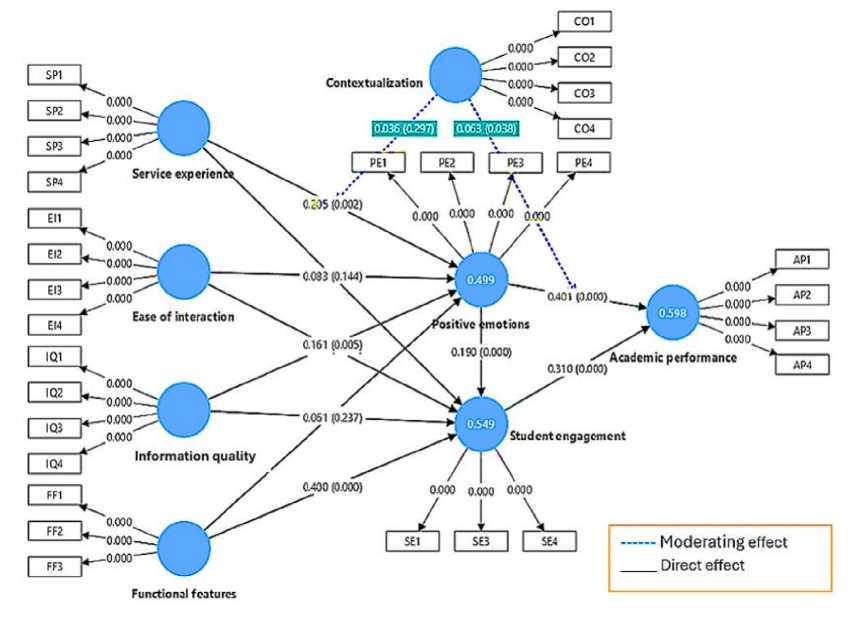
The structural model was assessed in two phases, taking into account both direct and moderating influences [12]. The most significant pathways were identified from functional features to student engagement (β = 0.400, p < 0.001), from positive emotions to academic performance (β = 0.401, p < 0.001), and from student engagement to academic performance (β = 0.310, p < 0.001), highlighting that system functionality and emotions are crucial factors for engagement and success. Service experience notably influenced emotions (β = 0.205, p = 0.002) and engagement (β = 0.242, p < 0.001), whereas ease of interaction and information quality exhibited weaker or non-significant impacts. Contextualization exhibited minor moderating influences on positive emotions, indicating that situational relevance amplifies emotional reactions that contribute to performance. The model emphasizes two primary pathways: service experience and functional characteristics enhance engagement, while positive emotions influence both engagement and performance, accounting for significant variance in results (R² = 0.499 for emotions, 0.549 for engagement, and 0.598 for performance). Figure 2 Structural model is presented.
C01
0.205 (0 002)
AP2
0401 (3000)
Positive emotions
0.161 (0.005)
0.190 0.000)
0.061 (0237)
Student engagement
0.400 (0.000)
0.000,
•0.000 ■
■0.000
0030'
0.030
0.000 0-000 0.000
0.000^/
0 000^>\ J ,0.000
Information quality
0.000
0.030-oooo.
0.000 /O\
0.000^/ A
0000^1 '
0.000^
Ease of interaction
0 000
o.ooo-^/ A O.OOO^A .
,0.000
Service experiem
Functional features
Contcxtualization
CO2
CO3
CO4
■^Academic performance X*l “ |
0.310(0000) | AP4 |
0 000 o.qoo 0.030
0.033 (0.144)
------Moderating effect
_____Direct effect
Fig. 2. Structural model
3.3.11. Direct Effects
The PLS-SEM findings reveal distinct factors influencing student engagement and academic achievement. Service experience was a significant predictor of both positive emotions (β = 0.205, t = 3.075, p = 0.002) and engagement (β = 0.242, t = 4.153, p < 0.001), underscoring its crucial role in influencing emotional and behavioural results. The simplicity of interaction did not significantly impact emotions (β = 0.083, t = 1.461, p = 0.144) or engagement (β = 0.051, t = 1.178, p = 0.239), indicating that usability on its own is inadequate. The quality of information affected emotions (β = 0.161, t = 2.811, p = 0.005) but did not impact engagement (β = 0.092, t = 1.751, p = 0.080). Functional features significantly increased engagement (β = 0.409, t = 7.422, p < 0.001) but had no impact on emotions (β = 0.048, t = 0.965, p = 0.335). In general, the experience of service and functional characteristics are crucial factors for engagement, whereas the quality of information mainly influences emotions, and the ease of interaction demonstrates minimal impact. This underscores the importance of prioritizing service quality and system effectiveness in educational settings, as these elements directly enhance engagement and indirectly promote academic achievement through emotional channels
3.3.12. Relationships Among Mediating and Outcome Variables
The analysis validated that positive emotions greatly boost student engagement (β = 0.190, t = 3.875, p < 0.001), backing H5. Positive emotions significantly enhance academic outcomes (β = 0.460, t = 11.378, p < 0.001), which confirms H6, while student engagement also enhances performance (β = 0.310, t = 6.632, p < 0.001), affirming H7. In general, emotional reactions and active participation are significant factors in achieving academic success.
The research investigated contextualization as a moderator. The relationship between contextualization and positive emotions on academic performance was notable (β = 0.063, t = 2.072, p = 0.038), affirming H8a and suggesting that contextualization enhances this link. Nonetheless, the interaction with service experience was not significant (β = 0.017, t = 1.020, p = 0.308), thus H8b was not upheld.
3.3.13. The Bootstrapping Multigroup Analysis (MGA)
The Bootstrapping Multigroup Analysis (MGA) findings show that the majority of structural connections are significant for both female and male students, though there are some differences in intensity [12]. The MGA affirms that although the general model applies to all genders, contextual factors and service experience have a larger impact on female students, while functional attributes and the influence of emotions and engagement are vital for everyone [13].
Table 9. Bootstrapping Multigroup analysis (MGA)
|
Relationship of Variables |
Original (Female) |
Original (Male) |
Mean (Female) |
Mean (Male) |
STDEV (Female) |
STDEV (Male) |
t value (Female) |
t value (Male) |
p value (Female ) |
p value (Male) |
|
Contextualization -> Academic performance |
0.214 |
0.141 |
0.216 |
0.144 |
0.063 |
0.063 |
3.382 |
2.245 |
0.001 |
0.025 |
|
Contextualization -> Positive emotions |
0.321 |
0.349 |
0.322 |
0.355 |
0.076 |
0.087 |
4.237 |
4.008 |
0.000 |
0.000 |
|
Contextualization x Positive emotions -> Academic performance |
0.104 |
0.042 |
0.106 |
0.041 |
0.043 |
0.044 |
2.452 |
0.958 |
0.014 |
0.338 |
|
Contextualization x Service experience -> Positive emotions |
-0.005 |
0.070 |
-0.004 |
0.067 |
0.052 |
0.044 |
0.090 |
1.603 |
0.928 |
0.109 |
|
Ease of interaction -> Positive emotions |
0.121 |
0.060 |
0.125 |
0.060 |
0.063 |
0.097 |
1.916 |
0.613 |
0.055 |
0.540 |
|
Ease of interaction -> Student engagement |
0.031 |
0.020 |
0.035 |
0.028 |
0.054 |
0.063 |
0.576 |
0.314 |
0.565 |
0.754 |
|
Functional features -> Positive emotions |
0.055 |
0.049 |
0.060 |
0.047 |
0.073 |
0.069 |
0.754 |
0.714 |
0.451 |
0.475 |
|
Functional features -> Student engagement |
0.412 |
0.388 |
0.409 |
0.388 |
0.071 |
0.084 |
5.800 |
4.641 |
0.000 |
0.000 |
|
Information quality -> Positive emotions |
0.115 |
0.195 |
0.111 |
0.195 |
0.072 |
0.088 |
1.584 |
2.228 |
0.113 |
0.026 |
|
Information qauality -> Student engagement |
0.023 |
0.096 |
0.028 |
0.093 |
0.063 |
0.084 |
0.364 |
1.147 |
0.716 |
0.252 |
|
Positive emotions -> Academic performance |
0.377 |
0.424 |
0.375 |
0.425 |
0.064 |
0.061 |
5.913 |
6.991 |
0.000 |
0.000 |
|
Positive emotions -> Student engagement |
0.233 |
0.146 |
0.231 |
0.143 |
0.062 |
0.070 |
3.760 |
2.072 |
0.000 |
0.038 |
|
Service experience -> Positive emotions |
0.251 |
0.144 |
0.248 |
0.144 |
0.087 |
0.099 |
2.869 |
1.459 |
0.004 |
0.145 |
|
Service experience -> Student engagement |
0.223 |
0.186 |
0.223 |
0.187 |
0.068 |
0.095 |
3.255 |
1.969 |
0.001 |
0.049 |
|
Student engagement -> Academic performance |
0.302 |
0.332 |
0.303 |
0.330 |
0.069 |
0.060 |
4.386 |
5.559 |
0.000 |
0.000 |
As shown in Table 9, the Bootstrapping Multigroup Analysis (MGA) indicates that the majority of paths are significant for both male and female students, demonstrating only slight variations [12]. Contextualization consistently affected academic performance and emotions in both groups, yet its interaction with emotions was meaningful solely for females. The impact of service experience on emotions and engagement was greater for females, whereas the findings for males were less pronounced. Functional attributes significantly boosted engagement for both groups, and positive emotions along with engagement were consistent indicators of academic success.
The MGA demonstrates that the model is applicable to both genders; however, contextualization and service experience have a more significant impact on females, whereas functionality, emotions, and engagement are equally vital for everyone [12].
3.3.14. Slopes Analysis of path coefficient
The slope analysis was performed to visually demonstrate the notable moderation effects revealed in the structural model. The simple slope graphs illustrate how the link between the predictor and outcome variables varies at low, moderate, and high levels of the moderator. In PLS-SEM, the slope denotes the path coefficient, reflecting the direction and intensity of the relationship between latent constructs. Variations in the slopes illustrate how the moderator enhances or diminishes the primary relationship, offering a visual representation of the moderation effects that supports the statistical findings discussed in Section 4.2. Figures 3 and 4 present the simple slopes analysis of the association between the variables.
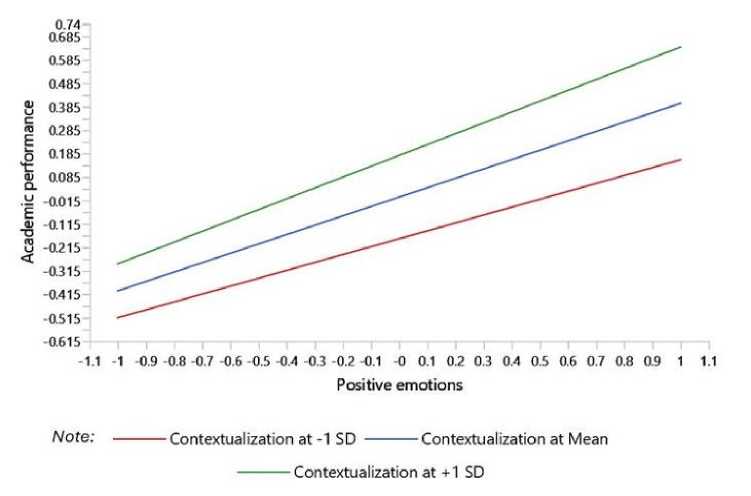
Fig. 3. Contextualization x Positive emotions
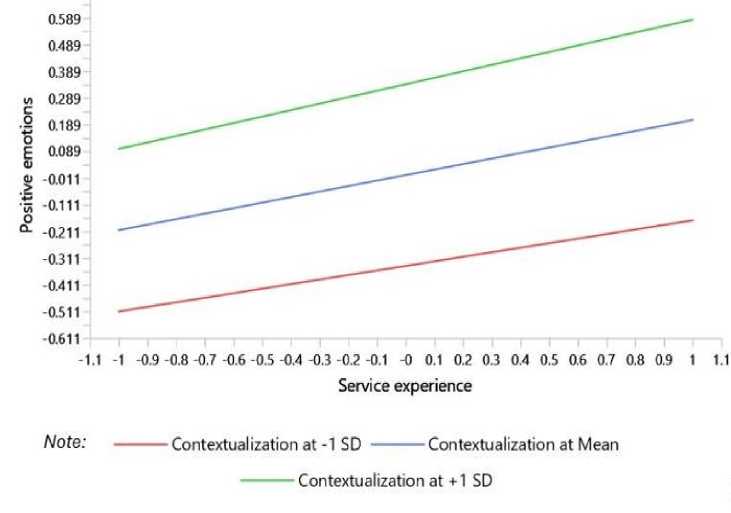
Fig. 4. Contextualization x Service experience
Figures 3 and 4 demonstrate moderation slope analyses in PLS-SEM, emphasizing how contextualization impacts the strength of relationships among constructs. In Figure 3, positive emotions reliably enhance academic performance; however, the incline is steepest at high contextualization (+1 SD), suggesting that supportive environments enhance this impact, whereas the incline is shallowest at low contextualization (-1 SD), signifying weaker improvements. Likewise, (Figure 4) illustrates that service experience boosts positive emotions at every level, although the impact is most pronounced when contextualization is high and least pronounced when it is low. Collectively, these examinations reveal a typical moderation effect: situating experiences enhances the predictive strength of positive emotions and service interactions, highlighting the significance of conducive circumstances in optimizing results.
3.3.15. Summary of Hypotheses Testing Results
The (Table 10) below offers a brief overview of the hypothesis testing outcomes for the research. It describes the suggested relationships between constructs, the statistical importance of each path, and whether the hypotheses were confirmed or dismissed.
Table 10. Summary of Hypotheses testing results
|
Hypothesis |
Relationship |
Original sample (O) |
Sample mean (M) |
Standard deviation (STDEV) |
T statistics (|O/STDEV|) |
P values |
Results |
|
H1a |
Service experience -> Positive emotions |
0.205 |
0.205 |
0.067 |
3.075 |
0.002 |
Supported |
|
H1b |
Service experience -> Student engagement |
0.242 |
0.242 |
0.058 |
4.153 |
0 |
Supported |
|
H2a |
Ease of interaction -> Positive emotions |
0.083 |
0.084 |
0.057 |
1.461 |
0.144 |
Not Supported |
|
H2b |
Ease of interaction -> Student engagement |
0.051 |
0.055 |
0.043 |
1.178 |
0.239 |
Not Supported |
|
H3a |
Information quality -> Positive emotions |
0.161 |
0.16 |
0.057 |
2.811 |
0.005 |
Supported |
|
H3b |
Information quality -> Student engagement |
0.092 |
0.092 |
0.053 |
1.751 |
0.08 |
Not Supported |
|
H4a |
Functional features -> Positive emotions |
0.048 |
0.048 |
0.05 |
0.965 |
0.335 |
Not Supported |
|
H4b |
Functional features -> Student engagement |
0.409 |
0.406 |
0.055 |
7.422 |
0 |
Supported |
|
H5 |
Positive emotions -> Student engagement |
0.19 |
0.19 |
0.049 |
3.875 |
0 |
Supported |
|
H6 |
Positive emotions -> Academic performance |
0.46 |
0.46 |
0.04 |
11.378 |
0 |
Supported |
|
H7 |
Student engagement -> Academic performance |
0.31 |
0.31 |
0.047 |
6.632 |
0 |
Supported |
|
H8a |
Contextualization x Positive emotions -> Academic performance |
0.063 |
0.063 |
0.03 |
2.072 |
0.038 |
Mediating effect Supported |
|
H8b |
Contextualization x Service experience -> Academic performance |
0.017 |
0.017 |
0.016 |
1.02 |
0.308 |
Mediating effect not supported |
As shown in Table 10, hypothesis testing was performed utilizing the PLS-SEM version 4.4.1.8 bootstrapping method, employing path coefficients (β), t-statistics, and p-values to evaluate significance [13]. Hypotheses were considered supported when p < 0.05 and t > 1.96. Results indicate that seven hypotheses were upheld (H1a, H1b, H3a, H4b, H5, H6, H7, and H8a), whereas five hypotheses lacked support (H2a, H2b, H3b, H4a, and H8b). The findings highlight the significance of service experience, information quality, functional attributes, positive emotions, and student involvement in improving academic performance, whereas ease of interaction displayed no notable impact.
4. Discussion
4.1. Theoretical Contributions
The results of this research highlight the crucial importance of service experience in influencing positive feelings and student involvement. This is consistent with recent findings that quality service interactions promote emotional contentment and greater academic engagement [33]. In the present study, students who experienced superior service reported heightened emotions and increased engagement, highlighting service quality as a key factor influencing learning results.
The quality of information had a notable impact on positive emotions, but not on engagement, indicating that while precise and pertinent information boosts emotional reactions, it might not directly lead to behavioural participation. This aligns with recent research indicating that emotional involvement in online learning is more closely related to perceptions of content quality and resilience than to direct engagement metrics [10]. In this research, the quality of information mainly influenced emotional results instead of behavioural ones.
Functional characteristics were significant predictors of student engagement but did not influence emotions, reinforcing that effective systems and tools foster active involvement. Recent evaluations of student engagement emphasize that technological and functional capabilities are crucial for maintaining behavioural participation in learning settings [40]. This supports the existing finding that functional aspects are a crucial factor in engagement, even if they don't directly affect emotional states.
The mediating analysis demonstrated that positive emotions markedly improve both engagement and academic achievement, and that engagement further boosts performance. This aligns with recent diary studies indicating that positive emotions forecast both engagement and concrete academic results [33] and with mapping reviews that recognize engagement as a significant predictor of academic achievement [22]. This research indicated that emotional and behavioural pathways distinctly surfaced as vital factors for academic success.
The moderation analysis ultimately showed that contextualization enhances the link between positive emotions and academic performance, but not between service experience and performance. This discovery corresponds with recent moderated mediation models in educational psychology, indicating that situational and contextual elements enhance the advantages of emotional states on success [8]. In this study, contextualization served as a boundary condition, amplifying the effects of emotions on performance results.
This study investigated the influence of the functional and human-like traits of AI-Powered digital assistants on student engagement and feelings, and how these factors ultimately affect academic performance. New evidence confirms these results. For instance, [8] showed that voice assistants enhance study effectiveness and efficiency, highlighting the importance of functional features in improving learning results. Likewise, Rienties et al. [2] discovered that students view institutional AI assistants as beneficial for improving engagement, indicating that user-friendly interaction and system design lower cognitive load and encourage participation. The findings show that elements affecting emotions and involvement are separate. Functional attributes significantly boost engagement but do not affect emotions, whereas seamless interaction enhances engagement without influencing emotional responses [52]. This is consistent with [10], who observed that ease of interaction is essential for maintaining engagement, even if emotional reactions are limited. Service experience greatly enhanced emotions but did not boost engagement, indicating that students perceive service quality as a standard expectation. This aligns with [41], who discovered that emotional contentment with voice assistants relies more on perceived quality of service than on results of engagement. Information quality, in contrast, encouraged engagement more than emotions, aligning with research indicating that content relevance enhances behavioural participation in digital learning [36].
Building on these results, this research offers improved theoretical insights into the analysis of AI-powered digital assistants in higher education. It initially suggests a dual-pathway theoretical framework that distinguishes how functional and experiential traits of AI-Powered digital assistants affect student outcomes. Functional traits like ease of interaction and information quality mainly enhance engagement, while service experience and perceived quality influence emotional responses. This distinction challenges traditional theories of technology acceptance and involvement, which usually assume a singular mechanism, and instead highlights that emotions and engagement are distinct yet complementary pathways that collectively improve academic performance [46]. This research advances the understanding of human–AI interaction by demonstrating that positive emotions directly enhance both engagement and achievement, while also revealing that engagement independently affects performance, offering deeper insights into how digital assistants influence learning results.
Moreover, the study introduces a contextual moderation framework illustrating how instructional relevance alters the balance between functional utility and anthropomorphic design. Contextualization strengthens the influence of service experience on engagement, while reducing the impact of human-like characteristics, suggesting that anthropomorphism isn't always beneficial and varies based on the educational setting [50]. This finding strengthens theories regarding social response and contextualized learning by showing that contextual relevance boosts functional benefits while changing how learners perceive human-like characteristics in AI systems [54]. Together, these inputs provide a more refined theoretical viewpoint for understanding the unique methods AI-powered digital assistants foster emotions, engagement, and academic achievement, while situating these effects within the broader context of contextualized educational design [57].
4.2. Practical Implications of the study
The results of this research provide valuable insights for participants in the digital assistant environment. Since functional attributes and service experiences significantly influence students' emotional reactions, system developers must prioritize these aspects during the design process. Incorporating human-like traits and guaranteeing smooth service provision via precise answers and effortless integration across various platforms can enhance emotional bonds with users.
Interaction simplicity and the quality of information were recognized as essential factors in fostering engagement [49]. Consequently, developers ought to prioritize streamlining user interfaces and ensuring the accuracy and significance of information [47]. Marketers serve a supportive function by highlighting these advantages, focusing on usability and content excellence, and creating feedback systems to facilitate continuous improvement [56].
Contextualization poses a complicated difficulty. Although it improves the connection between service experience and engagement, it surprisingly reduces the impact of anthropomorphism on engagement. This indicates that overlocalizing human-like traits, like accents or cultural signals, could diminish user engagement [49]. A balanced strategy is necessary utilizing contextualized content to enhance service experience while not overstating human-like characteristics.
The research emphasizes the significance of emotional design [55]. Given that positive emotions greatly impact engagement and academic outcomes, companies should prioritize the emotional aspects of technology utilization. Marketing strategies must highlight how digital assistants foster emotional connections and become part of students' academic habits [48].
Ultimately, since engagement is a significant indicator of academic success, companies ought to enhance product attributes that promote active involvement [53]. Integrating practical, human-like commands for routine activities (such as managing lights, securing doors, sending texts) can enhance involvement and expand the function of digital assistants in both educational and personal settings.
Finally, hence engagement strongly predicts academic performance, firms should expand product features that encourage active interaction. Adding practical, human-like commands for everyday tasks (e.g., switching lights, locking doors, sending messages) can deepen engagement and broaden the role of digital assistants in students’ academic and personal ecosystems [56].
-
5. Limitations, Future Research Directions, and Conclusion
This research must be viewed considering various limitations. Initially, the results derive from cross-sectional data obtained from one higher education institution, restricting both causal inference and the applicability of the findings to various educational settings. Secondly, all constructs, such as academic performance, were evaluated through selfreported perceptions, leading to the potential for common method bias and effects of subjective reporting. Moreover, academic achievement was not confirmed through objective measures like GPA, test scores, or completion of courses. Third, some proposed relationships yielded outcomes that were inconsistent with theoretical expectations, especially regarding the moderating influence of contextualization, indicating that the fundamental mechanisms might not be entirely represented by the existing model. Ultimately, while the measurement model generally satisfied acceptable standards, any lingering issues of reliability and validity should be taken into account when analysing the findings.
Subsequent studies ought to tackle these constraints by utilizing longitudinal or experimental methodologies to more effectively evaluate causal links and variations in student engagement as time progresses. To minimize common method bias, researchers ought to utilize varied data sources, including merging survey feedback with learning management system (LMS) logs, AI assistant usage data, and institutional academic information. To enhance validity, it is essential to include objective performance measures such as GPA, assessment scores, and course outcomes. Considering the unforeseen moderating impacts noted, subsequent research should investigate further contextual and psychological elements that might influence students' reactions to AI-powered assistants. Personal traits like technology readiness, digital literacy, self-efficacy, and innovativeness can be measured with established scales to evaluate their impact on engagement and educational results. Broadening the research to include various institutions, fields, and cultural contexts would strengthen the reliability and applicability of the results.
All the Declarations and StatementsAuthor Contributions Statement
Dennis Franscico Chandiona was solely responsible for the conceptualization of the study, methodology development, investigation, data curation, formal analysis, validation, interpretation of findings, visualization, manuscript writing (original draft preparation), manuscript review and editing, project administration, and final approval of the manuscript for publication.
Conflict of Interest Statement
The author declares that there are no potential conflicts of interest associated with this study.
Funding Declaration
This research was conducted without any financial support from private or public institutions, commercial organizations, or not-for-profit agencies.
Data Availability Statement
The data supporting the results of this research can be obtained from the corresponding author upon a reasonable request.
Ethical Declarations
The Departmental Ethics Committee of the pertinent institution reviewed and approved this study. The study adhered to recognized ethical guidelines for research with human subjects, which encompassed informed consent, confidentiality, and voluntary involvement.
Acknowledgments
The author expresses his sincere gratitude to the experts for their critical evaluation and constructive suggestions, which contributed substantially to the refinement of the study and the robustness of its results.
Declaration of Generative AI in Scholarly Writing
During the preparation of this manuscript, the author used OpenAI solely for language refinement.
Abbreviations
This study used the following abbreviations:
AI -Artificial intelligent
PLS-SEM - Partial Least Square Structural Equation Modelling
MGA - Multigroup Analysis
AVE - Average Variance Extracted
SRT - Social Response Theory
UGT - Uses and Gratifications Theory
IT - Information technology
H - Hypothesis
PE - Positive Emotions
MV- Manifest Variables
AP - Academic Performance
SP - Service experience
Co - Contextualization
SE - Student engagement,
EI - Ease of interaction
IQ - Information quality
FF- Functional features
