
A meta-analysis of the effects of high-intensity interval training on the physical health of college students

Journal: Human. Sport. Medicine @hsm-susu
Section: Спортивная тренировка
Article in issue: 1 т.26, 2026.
Free access
Aim. This study aims to evaluate and compare the effects of high-intensity interval training (HIIT) and moderate-intensity continuous training (MICT) on the physical health of college students through meta-analysis and empirical research.
Similar articles in the section Sport. Games. Physical exercises
Short address: https://sciup.org/147254056
IDS: 147254056 | UDC: 796.015.52:613.7 | DOI: 10.14529/hsm260115
Метаанализ влияния высокоинтенсивных интервальных тренировок на физическое здоровье студентов вузов
Цель: данное исследование направлено на оценку и сравнение влияния высокоинтенсивных интервальных тренировок (ВИИТ) и постоянной тренировки средней интенсивности (ПТСИ) на физическое здоровье студентов посредством метаанализа и эмпирического исследования.
Text of the scientific article A meta-analysis of the effects of high-intensity interval training on the physical health of college students
Цзюнь Юй1, , 0009-0004-1232-6363 Фэнкуй Ду2, , Хаотун Юй1, , 0009-0001-9860-1810 1 Российский университет спорта «ГЦОЛИФК», Москва, Россия 2 Хэйхэский университет, Хэйхэ, Китай
Introduction. In recent years, the continuous decline in college students’ physical health has become a focal issue of widespread concern across various sectors of Chinese society [15, 22, 27]. In alignment with the national strategies of “Healthy China” and the development of a “leading sports nation”, the State Council of China issued the National Standards for Student Physical Health, which mandates that universities establish a sustainable “Sunshine Sports” mechanism to ensure students engage in at least one hour of physical exercise daily. This document also specifies mandatory physical fitness test items for college students and requires the inclusion of test results in individual student records. The Healthy China Initiative (2019–2030) further strengthens the accountability of higher education institutions in health promotion by, for the first time, designating physical education as a compulsory credit-bearing course with rigorous assessment criteria. Additionally, the Opinions on Comprehensively Strengthening and Improving School Physical Education in the New Era links the results of physical fitness assessments to graduation eligibility, thereby instituting binding requirements. The 14th Five-Year Plan for Sports Development introduces a dynamic monitoring and evaluation system, through which a policy framework integrating goal setting, process supervision, and outcome assessment has gradually taken shape in China [4, 17]. However, with the interaction of societal transformation and technological innovation, the lifestyles of contemporary college students have undergone profound changes. Factors such as academic pressure, employment anxiety, and the widespread use of the internet and digital devices have significantly reduced students’ exercise time. Sedentary behavior and physical inactivity have become the norm among college students [3, 6, 10]. In a sample survey conducted by the Ministry of Education of China in September 2021 involving 1.15 million college students, approximately 30% were found to have failed the national physical fitness test. This alarming figure not only highlights the practical challenges facing physical education governance in higher education but also poses a serious challenge to the “Youth Physical Health Promotion Initiative” proposed in the Healthy China 2030 Plan Outline [8, 25].
High-intensity interval training (HIIT) consists of short bursts of high-intensity exertion alternated with strictly controlled recovery intervals. Specifically, each bout of high-intensity activity generally lasts less than 45 s (extendable to 2–4 min depending on the exercise type), with exercise intensity reaching 85% of the individual’s maximal oxygen uptake (VO2max), interspersed with 10–20 s of active recovery in a repeated cycle format [20]. HIIT concurrently activates both the aerobic metabolic system – powered by mitochondrial oxidative phosphorylation – and the anaerobic glycolytic system – generating ATP through rapid glycogenolysis in skeletal muscles. MacInnis has highlighted that, compared to MICT, HIIT shows superior mechanistic advantages in improving cardiopulmonary function by significantly increasing the maximal activity of citrate synthase and enhancing mitochondrial oxidative phosphorylation capacity [18]. These combined effects are manifested in concurrent improvements in VO2max and the fatigue threshold of skeletal muscles. Mahjoub’s study further revealed significant improvements in the left ventricular mass index (LVMI), left ventricular end-diastolic diameter (LVEDD), and left ventricular end-systolic diameter (LVESD) in subjects undergoing HIIT, suggesting that HIIT offers an optimal cardiovascular conditioning regimen suitable for protective and adaptive endurance training in athletes [19]. Numerous studies have also confirmed that HIIT is highly effective in reducing body fat among overweight and obese youth and adolescents [1, 11, 21, 23, 31].
The present study employs meta-analysis and empirical methods to systematically review existing literature and experimental data, aiming to compare the effectiveness of HIIT and MICT in improving college students’ physical fitness. From a theoretical perspective, it seeks to elucidate the health-promoting effects of HIIT in the context of college students’ physical well-being.
The purpose of this study. This study aims to evaluate and compare the effects of high-intensity interval training (HIIT) and moderateintensity continuous training (MICT) on the physical health of college students through metaanalysis and empirical investigation. The ultimate goal is to identify more effective strategies and approaches for promoting physical fitness among the university student population.
Materials and methods. A comprehensive database search yielded a total of 515 articles, including 108 from the China National Knowledge Infrastructure (CNKI), 129 from Web of Science, 63 from Scopus, 164 from Google Scholar, and 51 from Elibrary.ru. After initial screening, 178 articles remained within the scope of analysis. Based on a review of titles and abstracts, irrelevant and duplicate studies were excluded, resulting in 53 articles for full-text evaluation. Ultimately, 15 studies met the inclusion criteria and were incorporated into the meta-analysis. The detailed screening process is illustrated in Fig. 1.
Results. A total of 15 studies were included in the final meta-analysis, comprising both control and experimental groups, with a combined sample size of 1001 participants. The number of subjects per study ranged from 26 to 120. The basic information of the included studies is presented in chronological order by year of publication. Detailed information regarding each study and its corresponding exercise prescription is provided in Table 1.
A total of 13 studies were included in the meta-analysis of body mass index (BMI), with college students categorized into two subgroups based on gender: male and female students. The results indicated no significant heterogeneity among the included studies (I² = 11.92%, p = 0.32 > 0.1). A fixed-effect model was applied
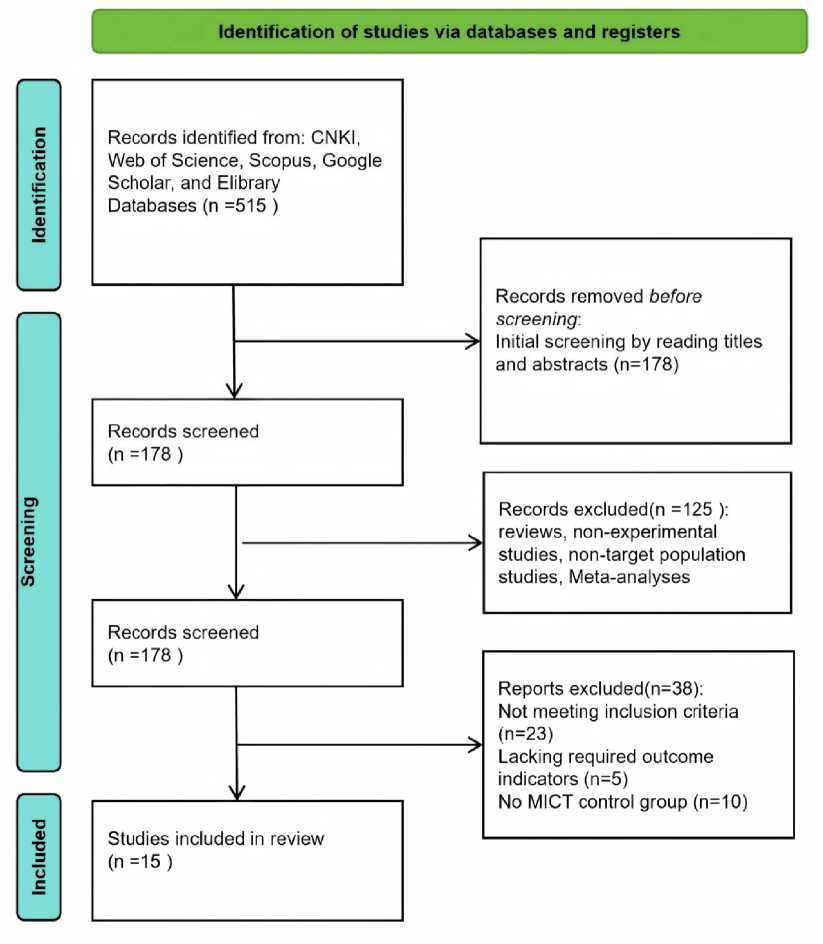
Fig. 1. Flowchart of literature screening and inclusion process
for analysis, yielding a pooled overall effect size and 95% confidence interval (CI) of –0.32 [–0.47, –0.17], with p < 0.01, demonstrating high statistical significance. This suggests that, compared to MICT, HIIT has a more favorable effect on BMI outcomes among college students.
For male college students, eight studies were included. No heterogeneity was observed among the studies (I² = 10.04%, p = 0.35 > 0.1). The pooled effect size and 95% CI were –0.20 [–0.40, –0.00], with p = 0.05, indicating no statistically significant difference between HIIT and MICT in terms of BMI intervention effects for male students.
For female college students, seven studies were included. The analysis showed no hetero- geneity (I² = 0%, p = 0.61 > 0.1). The pooled effect size and 95% CI were –0.47 [–0.68, –0.27], with p < 0.01, indicating a highly significant statistical difference. These findings suggest that HIIT is more effective than MICT in improving BMI outcomes among female college students (Fig. 2).
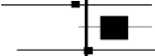
A total of five studies were included in the meta-analysis of 1000-meter and 800- m eter endurance performance, with college students divided into two subgroups b a sed on gender: male and female students. The a nalysis revealed no significant heterogeneity among the studies (I² = 14.42%, p = 0.32 > 0.1). A fixed-effect model was employed, yielding a combined effect size and 95% confidence interval (CI) of –0.76
Table 1
Basic characteristics of included studies and descriptions of exercise prescriptions
[–1.00, –0.52], with p < 0.01, indicating high statistical significance. These results suggest that, compared to MICT, HIIT produces significantly greater improvements in college students’ performance in the 1000 m and 800 m endurance events.
For male college students, four studies focusing on the 1000-meter run were included. No heterogeneity was observed (I² = 25.30%, p = 0.26 > 0.1). The pooled effect size and 95% CI were –0.90 [–1.27, –0.53], with p < 0.01, indicating a statistically significant difference. This demonstrates that HIIT yields significantly better outcomes than MICT in enhancing 1000-meter endurance performance in male students.
For female college students, three studies assessing the 800-meter run were included. No heterogeneity was present (I² = 0%, p = 0.60 > 0.1).
The pooled effect size and 95% CI were –0.59 [–0.89, –0.29], with p < 0.01, also indicating statistical significance. These findings suggest that HIIT significantly outperforms MICT in improving 800-meter performance among female college students (Fig. 3).
A total of five studies were included in the meta-analysis of 50-meter sprint performance, with college students divided into male and female subgroups. The overall analysis revealed no significant heterogeneity among the studies (I² = 8.71%, p = 0.36 > 0.1). Using a fixed-effect model, the pooled effect size and 95% confidence interval (CI) were –0.70 [–0.92, –0.47], with p < 0.01, indicating high statistical significance. These results suggest that HIIT is more effective than MICT in improving 50-meter sprint performance among college students.
|
Study |
Hedges[95°/o Cl] |
Weight |
||||
|
Dou Li, 2020 |
-0.09 [-0.47, 0.29] |
12.330/0 |
||||
|
Hu Fei, 2020 Xu Pengfei, 2020 Shandu Nduduzo Msizi, 2022 Liu Canke, 2022 Xu Yuan, 2023 |
-------■--- |
0.32 [-0.40, 1.04]
|
7.77% 4.01% 4.21% 4.05% 11.32% |
|||
|
Wang Yu, 2023 |
—■-- |
-0.02 [-0.54, 0.49] |
7.37% |
|||
|
ZhuYiwendan, 2024 Overall Heterogeneity: tau5 = 0.01,15 = 10.04% Test Of 0i = 0j: Q = 7.78, p = 0.35 Test of 6 = 0: z = -1.96, p = 0.05 Lin Jian, 2016 |
----■----- |
0.11 [-0.60, 0.83] -0.20 (-0.40, -0.00] -0.74 [-1.42, -0.06] |
4.09% 4.50% |
|||
|
JiTianyi, 2020 Xu Pengfei, 2020 Liu Canke, 2022 |
-0.28 [-1.05, 0.50] -0.22 [-0.94, 0.50] -0.73 [-1.45, -0.01] |
3.52% 4.04% 4.04% |
||||
|
Cai Xiaolin, 2023 |
-0.14 [-0.86, 0.58] |
4.06% |
||||
|
LuYining, 2023 |
-0,33 [-0.69, 0.04] |
13.00% |
||||
|
Liu Juan, 2025 |
-0.70 [-1.09, -0.30] |
11.68% |
||||
|
Overall Heterogeneity: tau2 = 0.00,12 = 0.00% Test of 9i = 6j: Q = 4.49, p = 0.61 Test of 0 = 0: z = -4.50, p = 0.00 |
-0.47 [-0.68, -0.27] |
|||||
|
Overall Heterogeneity: tau5 = 0.01,11 = 11.92% Test of 0i = Oj: Q = 15.90, p = 0.32 Test of 0 = 0: z = -4.19, p= 0.00 |
-0.32 [-0.47, -0.17] |
100.00% |
||||
|
-2 |
-1 |
0 |
1 |
2 |
||
Fig. 2. Forest plot of the effect of HIIT versus MICT on BMI among college students
Study Hedges[95% Cl] Weight
Hu Fei, 2020
Xu Pengfei, 2020
Zhou Lingli, 2021
Liu Canke, 2022
Overall
Heterogeneity: tau2 = 0.04, I2 = 25.30%
Test of 0i = 0j: Q = 4.02, p = 0.26
Test of 6 = 0: z = -4.77, p = 0.00
Xu Pengfei, 2020
WanYi, 2021
-0.83 [-1.35, -0.31]
-0.41 [-1.14,0.31]
-1.37 [-1.99, -0.75]
17.61o/o
9.94%
13.06%
-0.91 [-1.64, -0.18] 9.74%
I iu Canke, 7097
Heterogeneity: tau2 = 0.00,11 = 0.00%
Test of Qi = 0j: О = 101, p= 0.60
Test of 9 = 0: z = -3.89, p = 0.00
-0.90 [-1.27, -0.53]
-0.87 [-1.62, -0.12] 9.26%
-0.49 [ 0.85, 0.12] 30.34%
-0.74 [-1.46,-0.02] 10.06%
-0.59 [-0.89, -0.29]
Overall
Heterogeneity: tau1 = 0.02. P= 14.42%
-0.76 [-1.00, -0.52]
100.00%
Test of 0i - Sj: Q - 7.01, p = 0,32
Test of 0 = □: z = -6.16, p= 0.00
-3
Fig. 3. Forest plot of the effect of HIIT versus MICT on 1000 m and 800 m endurance performance among college students
A total of 4 studies were included in the 50-meter index for male college students, and there was no overall heterogeneity among the included studies (I2 = 0%, p = 0.41 > 0.1), with a statistically significant 95% CI for the combined study effect size of –0.79 [–1.09, –0.48], p < 0.01, indicating statistical significance. This suggests that HIIT significantly outperforms MICT in enhan- cing 50-meter performance among male students.
A total of three studies were inclu d ed in the 50-meter index for female college students, and there was no overall hetero g eneity among the included studies (I 2 = 30.75% , p = 0.24 > 0.1), and the 95% CI of the combined study effect sizes was –0.64 [–1.03, –0.26], p < 0.01, indicating
Hu Fei, 2020
XuPengfei, 2020
Zhou Lingli, 2021
Liu Binbin, 2025
Overall
Heterogeneity: tau3 = O.OO, I3 = 0.00%
Test of 0i = Oj: Q = 2*90, p = 0.41
Test of 0 = 0: z = -5.07, p — 0.00
Xu Pengfei, 2020
WanYi, 2021
Liu Binbin, 2025
Overall
Heterogeneity: tau2 -0.04, l2 = 30.75%
Test of 0i = 6j: Q = 2.89, p = 0.24
Test of 0 = 0: z = -3.27, p = 0.00
Overall
Heterogeneity: tau2 = 0.01, I2 = 8.71%
Test of Oi = 0j: Q = 6.57, p = 0.36
Test of 0 = 0: z = -6.11, p = 0.00
-2


-
- 0.59 [-1.10,-0.08] 17.28%
-
- 0.47 [-1.19,0.26) 8.98%
-
- 1.13 [-1.74, -0.53] 12.80%
-
- 0.96 [-1.62, -0.30] 10.81%
0.79 [1.09, -0.48]
-
- 0.59 [-1.32, 0.14] 8.82%
-
- 1.11 [-1.78, -0.44) 10.45%
-
- 0.45 [-0.81, -0.08] 30.85%
-
- 0.64 [-1.03,-0.26]
-0.70 [-0.92, -0.47] 100.00%
Fig. 4. Forest plot of the effect of HIIT versus MICT on 50 m sprint performance among college students statistical significance. These findings confirm that HIIT has a significantly greater effect than MICT on improving 50-meter performance among female college students (Fig. 4).
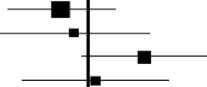
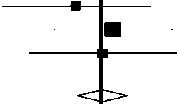
A total of five studies were included in the meta-analysis of standing long jump performance, with participants divided into male and female college student subgroups. The analysis showed no heterogeneity among the studies (I² = 0%, p = 0.58 > 0.1). A fixed-effect model was used, yielding a combined effect size and 95% confidence interval (CI) of 0.75 [0.51, 0.99], with p < 0.01, indicating high statistical significance. These results suggest that HIIT is more effective than MICT in improving standing long jump performance among college students.
For male college students, four studies were included. No substantial heterogeneity was found (I² = 26.69%, p = 0.25 > 0.1). The pooled effect size and 95% CI were 0.78 [0.41, 1.16], with p < 0.01, indicating statistical significance. This suggests that HIIT significantly outperforms MICT in enhancing standing long jump performance among male students.
For female college students, three studies were included. No heterogeneity was observed (I² = 0%, p = 0.74 > 0.1). The pooled effect size and 95% CI were 0.71 [0.33, 1.10], with p < 0.01, also indicating statistical significance. These findings confirm that HIIT has a significantly greater effect than MICT on improving standing long jump performance among female college students (Fig. 5).
Discussion. Analysis of the 15 included studies revealed that progressive HIIT protocols exert significant positive effects on cardiorespiratory function and athletic p erformance in college students.
The progressive lengthening of exercise duration challenges the muscle tissue’s lactate buffering threshold, forcing a higher reliance on aerobic metabolism. This metabolic s t ress is key to stimulating VO 2 max enhancement.
Progressive HIIT protocols improve fat meta b olism efficiency through a two-ph a se mechanism. In the early phas e (weeks 1 – 4), shortduration high-intensity bo u ts (20 seconds per set) primarily activate hormone-sensitive l ipase, prom o ting lipolysis. In the mid-to-late phase (weeks 5–12), as bout duration increases to 25–30 s, exercise intensity approac h es the anaerobic threshold, compelling the body to mobilize visceral fat as a compensatory ene r gy source. T his phased stimulus strategy overcomes the “sele c tive subcuta n eous fat depletion bottleneck” commonly associated with traditional aerobic training, making it particularly effective fo r sedentary college students.
In terms of endurance performan c e (1000 m and 800 m), progressive HIIT enhances performance through multiple mechanisms: increasing the lactate threshold to d e lay fatigue onset, improving myocardial compliance to enable higher power output at a given heart rate, an d enhancing exercise economy by reducing energy expenditure per unit distance. F o r 50-meter sprint per-
Hu Fei, 2020
Xu Pengfei, 2020
Zhou Lingli, 2021
LiuCanke, 2022
Overall
Heterogeneity: tau2 = 0.04, I2 =26.69%
Test of ©i = 9j: Q = 4.09, p = 0.25
Test of © = 0: z = 4.10, p = 0.00
Xu Pengfei, 2020
Zhou Lingli, 2021
Liu Canke, 2022
Overall
Heterogeneity: tau2 = 0.00,12 = 0.00%
Test of ©i = ©j: Q = 0.60, p = 0.74
Test of © = 0: z = 3.64, p = 0.00
Overall
Heterogeneity: tau2 = 0.00,12 = 0.00%
Test of ©i = ©j: Q = 4.75, p = 0.58
Test of © = 0: z = 6,01, p = 0,00
0.47 [-0.06, 1.01] 20.93%
0.60 [-0.13, 1.33] 11.11%
1.28 [0.67,1.89] 15.93%
0.81 [0.08,1.53] 11.41%
0.78 [0.41,1.16]
0.48 [-0.25,1.21] 11.31%
0.84 [0.26,1.42] 17.76%
0.74 [0.02,1.46] 11.56%
0.71 [0.33,1.10]
0 12
0.75 [0.51, 0.99] 100.00%
Fig. 5. Forest plot of the effect of HIIT versus MICT on standing long jump performance among college students formance, improvements are primarily attributed to the optimization of anaerobic energy systems. The 20–30 s high-intensity range coincides with the transition from the phosphagen system to glycolysis. As training progresses, the body increases the resynthesis rate of phosphocreatine and enhances the tolerance of type II muscle fibers to acidic environments.
Gains in standing long jump performance rely on improved neuromuscular coordination. In progressive HIIT, extended durations of explosive exercise require sustained muscle tension while maintaining high-power output. This training stimulus enhances motor unit recruitment efficiency, particularly the synchronized activa- tion of fast-twitch muscle fibers. Repeated eccentric-concentric contraction cycles further improve the storage and release efficiency of elastic potential energy in tendons, directly contributing to greater power output during take-off.
Conclusion. This met a -analysis systematically compared the effects of HIIT and MICT on the physical health of college students. HIIT was significantly superior to MICT in improving BMI, 1000-meter run, 800-meter run, 50-meter dash, and standing long jump pe r formance. G iven the exis t ence of gender differen c es in training effects, it is recommended that participants make appropriate adjustments to their training selection to maximize health and athletic performance.
